


How much does Gaming cost in 2027?
Quality
Certified
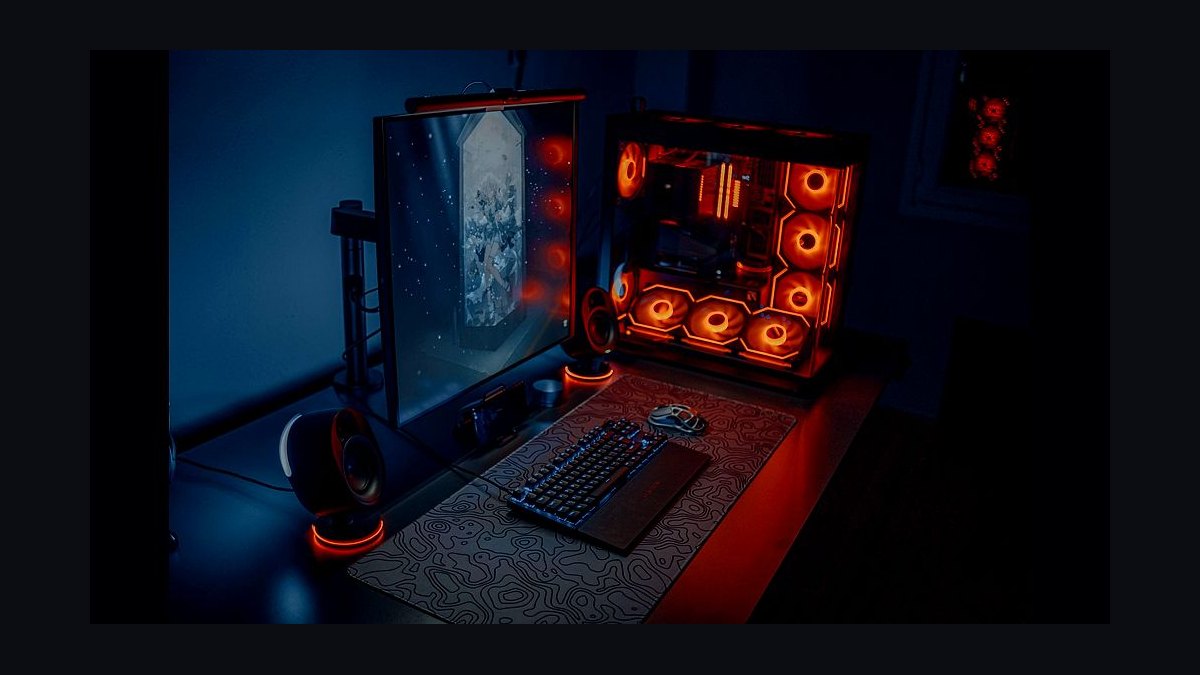
Gaming in 2027 costs roughly $500–$4,000 upfront for hardware and $600–$2,400 per year to keep playing. A console-only player lands near $700 upfront and $600 annually; a 4K PC enthusiast spends $3,000 upfront and $2,000+ yearly once games, subscriptions, internet, and in-game purchases are counted.
The household that budgeted $500 and spent $2,900
Picture a straightforward setup. A parent buys a current-generation console at $500 in January, figuring that's the gaming budget handled for the year. By December the actual spend looks nothing like that number, and the gap is entirely made of costs that never appeared on the box.
The console was $500. It shipped with 1TB of usable storage, which held about six modern installs before the expansion card became mandatory — another $150 for 2TB. The living-room TV was fine for streaming but capped at 60Hz, so a 120Hz panel that actually uses the console's output modes went in at $450. A second controller for couch co-op, $70. A wired headset that doesn't drop party chat, $90. Running total before a single game: $1,260.
Then the software layer. Four day-one releases at $70 each is $280. One of those was a live-service title with a $12 seasonal battle pass, purchased four times, $48. The online-play tier for the console is $10 monthly, $120 a year, and the family upgraded mid-year to the catalog tier at $18 monthly for the back library — call it $170 blended. Two indie purchases during a sale, $35. One deluxe edition because the standard version was sold out at launch, $100. Software total: $633.

The infrastructure layer is where budgets quietly break. The household internet was already there, but the plan got upgraded from 100 Mbps to 500 Mbps at an extra $25 monthly ($300 annually) after download sizes crossed 150GB per title and two people started playing simultaneously. Electricity for a console pulling 180–220 watts under load, run four hours a day, adds $45–$90 a year depending on local rates. A cloud-gaming subscription so the kid could play on a tablet, $10 monthly for eight months, $80. Infrastructure: roughly $450.
Add a chair that replaced the dining chair after six months ($220), a controller that drifted and needed replacing ($70), and a charging dock ($35), and the year closes near $2,900 against a $500 plan. Nothing here was extravagant. Every line item is a normal purchase made by a normal player who never bought a graphics card. The lesson is that the sticker price of the platform is the smallest reliable number in the whole calculation, and the recurring layer — the part that generates ongoing revenue for platform holders — is where the real cost of gaming lives.
How the spending stack actually assembles
The reason gaming costs surprise people is structural. Spend arrives in four distinct layers that operate on different clocks, and each layer has a different depreciation curve. Treating them as one lump is what produces the $500 estimate.

Layer one — the platform. A console, handheld, or PC. This is a lumpy purchase that recurs every 3–7 years. Consoles hold their capability for the full generation because developers target fixed specs. PCs degrade continuously: a GPU that ran 1440p ultra at purchase runs 1440p high two years later and 1080p high after four. Amortized, a $500 console over six years is $83 a year. A $1,800 PC over four years is $450 a year. That amortization gap is the single most useful number for comparing platforms, and almost nobody calculates it.
Layer two — the surrounding kit. Display, audio, input, seating, desk. This layer is invisible in platform comparisons but often exceeds the platform itself. It also depreciates slowly — a good monitor outlives two GPUs, a good chair outlives two consoles — so its true annual cost is lower than its sticker suggests. Spreading a $450 monitor across seven years is $64 a year.
Layer three — content. Games, subscriptions, expansions, season passes. Fully recurring, and the layer with the widest possible range: $0 for a free-to-play-only player, $1,000+ for someone buying every premium release at launch. This is also the layer most responsive to behavior change — waiting six months on a AAA release typically cuts the price 40–60%.
Layer four — infrastructure and consumables. Internet, electricity, storage expansion, replacement peripherals, cloud storage. Small individually, $300–$600 annually in aggregate, and almost never budgeted.

The mechanism that makes layer three and four so persistent is deliberate. Platform holders have spent a decade shifting their business from one-time hardware margin toward recurring revenue — subscription tiers, storefront cuts on every digital purchase, seasonal content, and online-play fees. Hardware is frequently sold at or near cost precisely because the recurring layer pays it back. That's why the console is $500 and the six-year total is $4,000+: the platform price is an entry fee, not the product's actual cost. Understanding which layer a given expense sits in tells you whether cutting it is a one-time decision or a habit change.
Real numbers by player profile
Concrete ranges, assembled by how someone actually plays rather than by platform marketing. All figures are indicative ranges for 2027 planning, not quotes — regional pricing, sales timing, and provider rates move them meaningfully.
The minimalist — $0–$150 upfront, $0–$120 a year. Plays free-to-play titles on a phone or an already-owned laptop. Buys nothing, or occasionally a $10–$15 seasonal pass. A mobile controller clip at $30–$80 is the only hardware purchase. This profile is genuinely near-free and covers a large share of the global player base.
The value console player — $550–$900 upfront, $350–$550 a year. Buys the base console, uses an existing TV, adds one extra controller. Buys three or four games a year but waits for discounts, paying $30–$45 instead of $70. Runs the mid-tier subscription at $10–$13 monthly for online play plus a rotating catalog. Annual: roughly $150 subscription, $140 games, $60 power and incidentals.

The mainstream console player — $1,100–$1,600 upfront, $600–$900 a year. Console plus a 120Hz display, a headset, and a storage expansion. Four to six premium titles a year, mostly at or near full price ($280–$450), a $180–$220 subscription, one or two battle passes ($50–$100), plus $100–$150 of power, replacements, and cloud services.
The mid-range PC player — $1,200–$1,900 upfront, $700–$1,100 a year. A 1440p-capable build with a mid-tier GPU, monitor, keyboard, and mouse. No mandatory online-play fee, which saves $120–$150 annually versus console, but the hardware refresh cycle is faster. Buys more games because PC storefront sales are deeper and more frequent — often 8–15 titles a year at an average $22–$30, so $250–$400. Power draw is higher: a 400–500W system at four hours daily runs $90–$180 a year. Budget $350–$500 annually toward the next GPU to avoid a lump-sum shock.
The enthusiast — $2,800–$4,500 upfront, $1,600–$2,400 a year. High-end GPU, high-refresh 4K display, mechanical keyboard, premium audio, possibly VR at $400–$700 for the headset. Buys day-one at $70–$100 including deluxe editions, 10+ titles a year ($800–$1,000). Multiple subscriptions stacked ($300–$450). Gigabit internet uplift ($240–$360 above a basic plan). Component upgrades every 18–24 months rather than every four years, which is the dominant line item at $600–$1,000 annualized.
The competitive player. Everything in the enthusiast tier plus event and improvement costs: tournament entries commonly $10–$50 each, coaching in the $30–$100 per hour range, and travel to in-person events at $150–$500 per trip. A player doing one event a month and monthly coaching adds $700–$1,500 annually on top.

Two cross-cutting numbers worth internalizing. First, download sizes: modern titles routinely occupy 80–150GB, and a 1TB drive holds six to eight of them. Storage expansion at $100–$300 is not optional for anyone with more than a handful of installed games. Second, the discount curve: premium titles typically fall 30–40% within six months and 50–70% within twelve to eighteen. A player who is comfortable being one year behind cuts the software layer roughly in half with no other change in behavior.
Trade-offs between the realistic paths
There is no cheapest platform in the abstract — only a cheapest platform for a given play pattern. Four trade-offs decide it.
Console versus PC. Console wins on upfront cost, predictability, and lifespan; a $500 box plays every major release for six years at a known quality level. PC wins on software cost and eliminates the online-play fee, but demands a $350–$500 annual upgrade reserve and carries higher power draw. The crossover point is volume: if you buy fewer than about six games a year, console's lower entry cost never gets overtaken. Above roughly ten games a year, PC's deeper and more frequent discounts plus no online fee typically close the gap within three years.
Buy versus subscribe. A catalog subscription at $18–$20 monthly is $216–$240 a year. That beats buying four or more premium titles annually, and it's dramatically better if you sample widely and abandon games quickly. It loses if you play two or three titles for a thousand hours each — you're renting access to a library you don't touch. Subscriptions also carry a real risk: titles rotate out, and progress in a game you no longer have access to is stranded. Buying gives permanence and, on physical console media, a resale floor that typically recovers 30–50% within the first year.

Own versus stream. Cloud gaming at $10–$20 monthly eliminates the platform layer entirely. Over three years that's $360–$720 against $1,500+ for a mid-range PC — a clear saving, and the correct answer for anyone playing a few hours weekly on hardware they already own. The costs are non-financial: input latency that rules out competitive play, dependence on a connection of at least 25–50 Mbps with stable low jitter, catalog limits, and no ownership. It also shifts data consumption, which matters on capped plans where 15–25GB monthly of streaming can trigger overage.
New versus deferred. Buying a platform at launch means paying peak price for early-generation hardware with a thin library. Waiting 18–24 months typically means a revision with better efficiency, a $50–$100 lower price, and a mature catalog available at discount. The cost is being outside the conversation during the launch window.
One more trade-off that rarely gets named: household scale. A second player on the same console costs a controller and possibly a second subscription seat — call it $70–$200. A second player who needs their own PC costs another full platform. Families with multiple players should weight console and shared-catalog options much more heavily than a solo-player comparison suggests.
Where gaming budgets actually break
Underestimating the recurring layer. The most common error is budgeting only for hardware and games while ignoring subscriptions, power, internet uplift, and replacements — a block that runs $300–$600 annually. Fix it by writing down every recurring charge before buying the platform, then multiplying by 12 and by the expected lifespan. A $10 monthly online fee is $720 across a six-year console generation, which is more than the console.

Buying the platform before the display. A console or GPU that outputs 120Hz at high resolution delivers nothing on a 60Hz panel. People routinely spend $700 on a premium console model and pair it with a TV that discards the benefit, then buy the display anyway six months later. Decide the display first; it usually determines how much platform is worth buying.
Paying launch price by default. Buying at release is a choice worth $30–$45 per title versus waiting six months. A player buying six games a year gives up $180–$270 annually for the privilege of playing first. That may be worth it for two or three titles you genuinely care about — it is rarely worth it for all six. Pick your day-one purchases deliberately.
Subscription stacking. It's easy to end up paying for an online-play tier, a catalog tier, a cloud service, and a communications subscription simultaneously — $40–$55 monthly, $480–$660 annually, with heavy overlap. Audit quarterly. Most players use one catalog service meaningfully and pay for two.
Buying the minimum storage tier. The $50–$100 saved on a smaller drive is erased by the $150–$300 expansion purchased four months later, often at proprietary pricing with no competition. Buy the storage you need at purchase, or buy the base model knowing the expansion is a scheduled expense, not a surprise.
Ignoring the upgrade reserve on PC. PC players who don't set aside $350–$500 a year face a $1,000+ lump when performance finally becomes unacceptable, which frequently gets financed or triggers a full rebuild. Treat the reserve as a fixed monthly line, roughly $30–$40.

Forgetting consumables and replacements. Controllers develop stick drift and typically need replacing every 18–30 months at $60–$80. Batteries, cables, thermal paste, replacement fans, and charging docks add $50–$200 annually. Extended warranties at $20–$60 a year are worth evaluating specifically for handhelds and controllers, which fail most often.
Not counting in-game spending. Battle passes and cosmetics are designed to feel small — $10 to $15 at a time — which is exactly why they escape budgeting. Four seasons across two games is $80–$120 a year before a single cosmetic purchase. Set an explicit annual cap and track it, because these purchases are the highest-margin revenue stream in the industry and are engineered for exactly this blind spot.
Assuming the internet plan is free. If gaming is what pushed you to a faster tier, the delta belongs in the gaming budget. A $25 monthly upgrade is $300 a year — comparable to buying four discounted games.
Related questions
What is the cheapest realistic way to game in 2027?
Free-to-play titles on a device you already own, costing nothing. Next cheapest is a discounted previous-generation console ($200–$300 used) with games bought 12+ months after release at $20–$30, running roughly $250–$350 upfront and under $200 a year.
Does a subscription actually save money?
It saves money if you play four or more premium titles a year. At $216–$240 annually versus $280+ for four purchases, the math favors subscribing — and strongly so if you sample many games. It loses if you replay two titles indefinitely.
How much should I set aside annually for PC upgrades?

Budget $350–$500 a year, roughly $30–$40 monthly. That funds a GPU replacement every three to four years without a lump-sum shock. Enthusiasts upgrading on an 18–24 month cycle should reserve $600–$1,000 annually instead.
Is cloud gaming cheaper than owning hardware?
Over three years, yes — $360–$720 in subscriptions versus $1,500+ for a mid-range PC. The trade-off is latency, catalog limits, no ownership, and a hard dependency on a stable 25–50 Mbps connection with low jitter.
What is the largest hidden cost people miss?
The internet plan uplift and subscription stacking, together $400–$900 a year. Both are recurring, both feel like household expenses rather than gaming expenses, and neither appears in any platform price comparison.
FAQ
How much does gaming cost per month in 2027? A value console player runs $30–$45 monthly all-in. A mainstream player lands at $50–$75. A mid-range PC player sits at $60–$90 once the upgrade reserve is included, and an enthusiast reaches $135–$200. Mobile-only free-to-play players can be under $10.
Is it cheaper to buy a console or build a PC?

Console is cheaper upfront by $400–$1,000 and cheaper over a six-year horizon for anyone buying fewer than about six games a year. PC becomes competitive above roughly ten games annually because storefront discounts are deeper and there is no online-play fee, but it requires an ongoing upgrade reserve.
Do I have to pay for online multiplayer? On consoles, generally yes — $10–$13 monthly for the entry tier, $120–$156 a year. On PC and mobile, multiplayer is typically free, which is a genuine and often-overlooked cost advantage worth $700+ across a console generation.
How much does VR add to the total? A standalone headset runs $400–$700 and needs no other hardware. A tethered headset requires a capable PC or console underneath it, so the realistic added cost is $500–$1,500 depending on what you already own. VR software is generally cheaper than flat AAA, at $20–$40 per title.
Are gaming laptops worth the price? A laptop at $1,000–$3,000 delivers meaningfully less performance than a desktop at the same price, typically one tier down, and is far harder to upgrade — usually only storage and memory. Buy one if portability is a real requirement; otherwise a desktop is the better value.
How do I cut my gaming spend without playing less? Wait six to twelve months on releases (saves 40–60% per title), audit subscriptions down to one catalog service, buy adequate storage upfront, cap in-game purchases with a written annual limit, and set a fixed monthly upgrade reserve. Those five changes typically cut annual spend 35–50% with no reduction in hours played.
Sources
- Statista — Video Game Industry Statistics
- Tom's Hardware — PC Building Guides and Component Reviews
- The Verge — Gaming
- PCMag — Desktop and Laptop Reviews
- Ars Technica — Gaming
- U.S. Energy Information Administration — Electricity Rate Data
- FCC — Broadband Speed Guide
- Rtings — Monitor and TV Testing
- Consumer Reports — Electronics Buying Guides
Related on PULSE
This page will be disappearing soon. Save it to your device for $1 — or read it free while it is here.
@Kory-White- · if Venmo asks, the last 4 of my number are 2012
This page is gone.
This one is off the shelf now. $1 keeps it on your phone for good — the whole page, pictures and diagrams included.
 pulse-gamingWhat are the most common mistakes in Gaming in 2027?
 pulse-gamingHow do you get started with Gaming in 2027?
 pulse-gamingIs Gaming worth it in 2027?
 pulse-gamingTop 10 best Gaming options in 2027
 pulse-gamingHow much does an RTX 5070 Ti cost in 2027?
 pulse-gamingWhat should you know before investing in Gaming in 2027?
 pulse-gamingTop 10 Gaming strategies for 2027
 pulse-gamingWhat is the best way to approach Gaming in 2027?
 pulse-gamingTop 10 VR Headsets — Best Overall + Best Value in 2027
 pulse-gamingTop 10 Gaming TVs — Best Overall + Best Value in 2027