


What is the average cost of a wedding venue in 2027?
Quality
Certified

In 2027, expect an average wedding venue cost of roughly $12,000–$18,000 in most U.S. metros, with all-inclusive packages running higher and dry-hire spaces lower. Venue typically consumes 35–45% of a total wedding budget, and the single biggest swing factors are guest count, day of week, and season.
All-inclusive venues versus dry-hire spaces
Nearly every venue decision collapses into one of two models, and the sticker price you see quoted means completely different things depending on which one you are looking at.
All-inclusive venues bundle the room, tables, chairs, linens, catering, bar service, staffing, and often a day-of coordinator into a single per-person or flat rate. Hotels, country clubs, dedicated wedding estates, and banquet halls dominate this category. The quoted number looks alarming — a per-head figure in the $110–$210 range is common in mid-size U.S. markets, climbing well past $300 per person in Manhattan, San Francisco, and coastal resort destinations. But that number is close to your true landed cost. When a hotel quotes you $165 per person for 120 guests, you are looking at roughly $19,800 plus service charge and tax, and the incremental items you still have to buy are photography, flowers, attire, music, and stationery. The venue line is essentially closed.
Dry-hire venues rent you the space and little else. Barns, warehouses, historic mansions, museums, public parks, vineyards without an on-site kitchen, and most tented private-property setups fall here. The rental fee is the headline: often $3,000–$9,000 for a Saturday in season, sometimes $1,200–$2,500 for a smaller or off-peak space. That figure is genuinely cheaper on paper and it is where the "we saved a fortune on our venue" stories come from. The problem is that the rental fee is a floor, not a total. Everything a hotel folds in silently becomes a separate invoice: catering, rentals, bar, staffing, restrooms, power, cleanup, and insurance.

The honest way to compare the two is to build a loaded venue cost — the rental fee plus every line item you only need because you chose that space. Run that math and a $5,000 barn frequently lands between $16,000 and $24,000 all-in for 120 guests, while the $19,800 hotel quote stays close to $22,000 after service charge. The gap between the two models is much narrower than the headline numbers suggest, and in some markets it inverts entirely.
Where each one genuinely wins:
- All-inclusive wins when you value predictability, have limited planning bandwidth, want a shorter vendor list, and are indifferent to aesthetic uniqueness. The venue absorbs risk — if the caterer's staff calls out, that is their problem to solve, not yours.
- Dry-hire wins when you have a distinctive aesthetic in mind, a guest count under about 80 or over about 200 (both edges where package pricing gets punitive), access to a strong independent caterer, and the appetite to project-manage six to nine additional vendors.
- Neither wins at very small guest counts. Under about 50 people, restaurant buyouts and private dining rooms usually beat both models outright, because you get a real kitchen, real staff, and no rental fee — typically a food-and-beverage minimum of $4,000–$12,000 that you were going to spend on food anyway.
One more distinction worth understanding: many venues sit in a middle tier, renting the space but requiring you to choose from an approved caterer list. This is the most common structure at historic properties and museums. You get some aesthetic freedom but lose the leverage of competitive bidding, and approved-list caterers price accordingly — usually 10–20% above what the same company charges for an open-market event.
How to decide between them

The decision is not really about taste. It is a sequence of four gates, and most couples get burned because they evaluate on the fourth gate first.
Gate one: guest count. This is the master variable and it should be locked, at least to a ±15 range, before you tour anything. Every venue quote is a function of headcount, and touring before you know yours guarantees you fall in love with a space that does not fit your list. A 150-person list eliminates roughly half the charming small venues in any market. A 60-person list makes most ballrooms feel cavernous and triggers food-and-beverage minimums you cannot hit without over-ordering.
Gate two: total budget and the venue's share of it. Decide what fraction of the whole budget the venue may consume before you see prices. The common planning heuristic puts venue and catering together at 40–50% of total spend. If your all-in number is $40,000, that is $16,000–$20,000 of loaded venue cost, and anything above that has to be paid for by cutting photography, flowers, or the guest list itself.
Gate three: your bandwidth and risk tolerance. Dry-hire is a project. Budget 40–80 hours of your own coordination time across the engagement, or $2,500–$5,000 for a full-service planner who does it for you — a cost that belongs in the dry-hire column when you compare.

Gate four: aesthetics. This is the fun one and it should be the last filter, applied only to venues that already cleared the first three gates.
A practical trick for gate four: tour no more than five venues total. Couples who tour ten or more consistently report decision fatigue and end up choosing on emotional momentum rather than the numbers they set in gates one through three. Shortlist on paper first using published pricing and capacity, then walk only the finalists.
Concrete numbers behind each option
Here is what the arithmetic actually looks like at 120 guests, which sits near the national median guest count. Treat these as planning ranges for a mid-size U.S. metro in 2027, not quotes — regional variance is enormous and coastal markets run 40–80% above these figures.
All-inclusive hotel or country club, 120 guests
| Line | Range |
|---|---|
| Food and beverage, per person | $110–$210 |
| Subtotal at 120 guests | $13,200–$25,200 |
| Service charge (18–24%, often mandatory) | $2,400–$6,000 |
| Sales tax (varies by state, often on the total) | $1,000–$2,500 |
| Ceremony fee or room-flip charge | $500–$2,500 |
| Cake-cutting or corkage fees | $0–$900 |
| Loaded venue cost | $17,000–$37,000 |
The two lines couples miss are service charge and the tax-on-service-charge stack. A 22% service charge on a $20,000 F&B subtotal is $4,400, and in many states the tax applies to the post-service-charge figure. That is the single most common source of "our venue came in $6,000 over" stories.

Dry-hire barn, warehouse, or estate, 120 guests
| Line | Range |
|---|---|
| Venue rental fee (Saturday, in season) | $3,000–$9,000 |
| Catering, per person incl. staff | $70–$150 |
| Catering subtotal at 120 | $8,400–$18,000 |
| Rentals (tables, chairs, linens, china, glass, flatware) | $2,400–$6,000 |
| Bar: alcohol, mixers, ice, licensed bartenders | $2,000–$5,500 |
| Restroom trailer, if the site lacks capacity | $900–$3,000 |
| Generator or power distribution | $400–$1,800 |
| Event insurance and permits | $200–$700 |
| Cleanup, trash haul, damage deposit at risk | $300–$1,200 |
| Coordinator (functionally mandatory here) | $2,500–$5,000 |
| Loaded venue cost | $20,000–$50,000 |
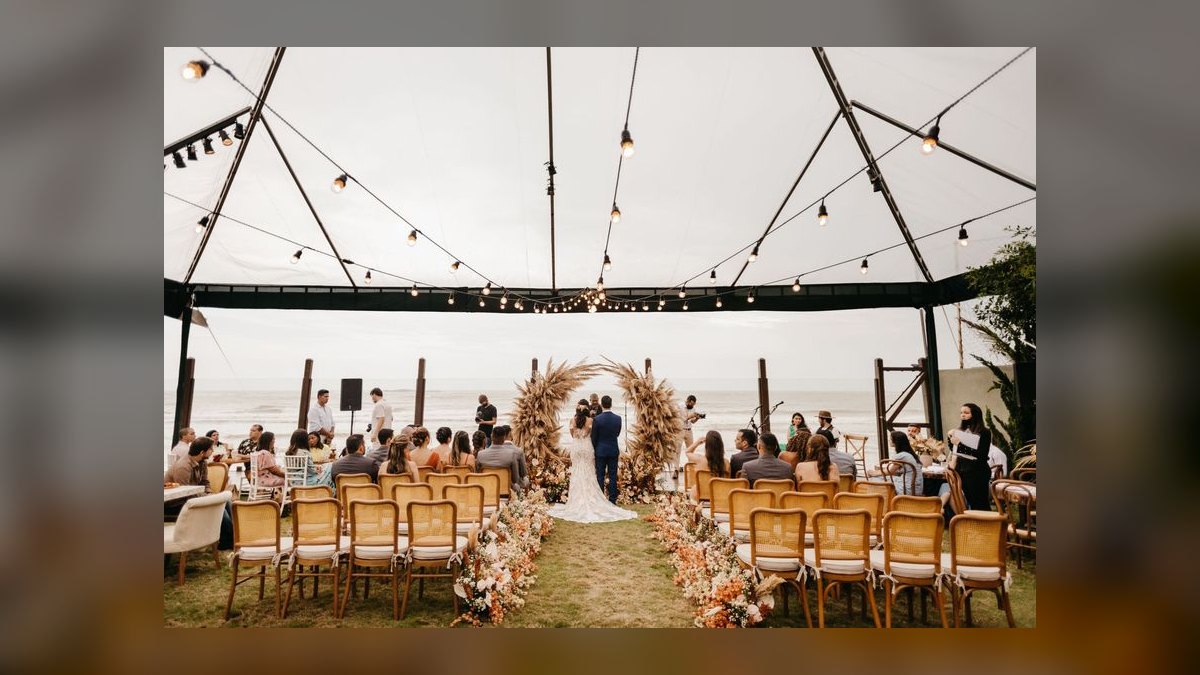
The wide top end is real. A tented estate wedding where nothing exists on-site — no kitchen, no restrooms, no power, no flat ground — can exceed an equivalent hotel by a substantial margin once the tent itself ($4,000–$15,000 with flooring, sidewalls, and lighting) enters the picture. "Backyard wedding" is one of the most expensive formats per guest, not one of the cheapest.
Restaurant buyout, 50 guests
| Line | Range |
|---|---|
| Food and beverage minimum | $4,000–$12,000 |
| Service charge (18–22%) | $720–$2,600 |
| Room fee (frequently waived if minimum is met) | $0–$1,500 |
| Loaded venue cost | $4,700–$16,100 |
The levers that move any of these numbers materially:
- Day of week. Friday typically runs 10–20% below Saturday. Sunday runs 20–35% below. A Thursday or a weekday in shoulder season can be 40% below peak Saturday pricing at the same property. This is the largest single discount available and it costs you nothing but some guest inconvenience.
- Season. In most of the country, January through March and mid-summer heat months are off-peak. Discounts of 15–30% are routine, and some venues publish them openly.
- Guest count. Every guest you remove saves the full per-person rate plus their share of rentals — realistically $130–$260 each at a dry-hire event once you count the chair, place setting, linen, meal, and drinks. Cutting 20 people from a 140-person list saves $2,600–$5,200 without changing a single vendor.
- Time of day. A brunch or lunch reception cuts food and especially alcohol costs sharply. Guests drink materially less at 1pm than at 8pm, and beer-and-wine-only bars at daytime events rarely feel like a compromise.
- Bar structure. Beer, wine, and one or two signature cocktails instead of a full open bar commonly saves $12–$30 per person. Where local law permits you to supply your own alcohol — a genuine dry-hire advantage — the savings are larger still, though most venues that allow it charge a corkage fee that eats part of the gain.
- Date proximity. Venues with unsold dates inside 90 days will negotiate. This is a real strategy for flexible couples, though it eliminates most of your vendor choices.
Implementation details and sequencing
Getting the venue right is mostly about the order of operations and what you put in the contract. Here is the sequence that avoids the expensive mistakes.

Twelve to eighteen months out — establish the constraints. Lock the guest-count range, the total budget, and the loaded venue ceiling. Decide whether you are willing to marry on a Friday or Sunday, because that decision changes which venues are even affordable. Identify your season. Do not tour anything yet.
Ten to fourteen months out — build the shortlist on paper. Pull published pricing and capacity for every plausible venue in your market. Many now publish per-person ranges or rental fees openly; for those that do not, an email asking for the pricing sheet, minimums, and available dates costs nothing. Eliminate anything whose loaded cost exceeds your ceiling. You should end this phase with three to five venues worth walking.
Nine to twelve months out — tour and get real quotes. On every tour, ask the same fixed set of questions so the answers are comparable:
- What is the service charge percentage, and is it taxed?
- What is the food and beverage minimum, and does it include tax and service?
- Is there a separate ceremony fee? A room-flip fee? A cake-cutting fee? A corkage fee?
- How many hours does the rental cover, and what does each additional hour cost?
- What time can vendors load in, and what time must everything be out?
- Is there an approved vendor list, and is it mandatory or advisory?
- What is included: tables, chairs, linens, china, glassware, flatware, setup, breakdown?
- Is there a bridal suite or getting-ready space, and is it extra?
- What is the guaranteed-count deadline, and what happens if guests drop after it?
- What is the rain plan, and does invoking it cost anything?
- What is the parking situation, and is valet required?
- What insurance do you require me to carry?
Eight to twelve months out — negotiate before signing. The rental fee itself is often rigid, but the surrounding terms rarely are. Realistic asks: waived ceremony fee, waived cake-cutting, an extra hour, upgraded linens, a complimentary suite for the couple, or a lower guaranteed minimum. Off-peak dates and short-notice dates give you the most leverage. Ask what the venue can move on rather than demanding a discount — you will usually get a menu of concessions.

At signing — read for these specific clauses. The contract, not the tour, is what you actually bought.
- Guaranteed minimum and final-count deadline. Confirm the date your headcount locks and whether you can adjust downward at all after it. Most venues allow no downward movement inside 7–14 days.
- Price escalation. Multi-year bookings sometimes let the venue raise per-person pricing before your date. Cap it in writing or fix the price.
- Force majeure and postponement. Post-2020 contracts are far better here, but check whether a postponement carries a fee, whether your deposit transfers, and what date windows you may move into.
- Cancellation and refund schedule. Know exactly what you lose at each interval.
- Vendor restrictions and insurance requirements. Confirm the liability limits you must carry, and get a certificate from every vendor well ahead of the date.
- Damage deposit terms. What triggers a deduction and who inspects.
- Overtime rate. Receptions run long. Know the hourly number before you are standing there at 11pm deciding.
After signing — the dry-hire-specific work. If you chose a dry-hire space, immediately book the caterer, then the rental company, then restrooms and power if needed. Rental companies in particular sell out on peak Saturdays six to nine months ahead. Do a site walk with the caterer to confirm kitchen access, water, power amperage, and load-in path — a caterer who has never seen the site will price defensively or hit you with surprises.
Thirty days out — the final pass. Confirm the run-of-show with the venue and every vendor, collect certificates of insurance, confirm load-in and load-out times in writing, and settle who is responsible for taking decor and gifts off-site at the end of the night. This last item is the single most common source of same-night friction at dry-hire venues, where "everything out by midnight" is enforced literally.
Related questions
What percentage of a wedding budget should the venue be?
Venue and catering together typically consume 40–50% of total wedding spend. Venue rental alone, excluding food, usually runs 15–25%. If your venue is pushing past half your budget, either the guest count or the venue tier is wrong for your number.
Is a weekday wedding actually cheaper?
Yes, materially. Friday commonly runs 10–20% below Saturday, Sunday 20–35% below, and true weekdays up to 40% below at the same property. The trade-off is guest attendance, especially for out-of-town travelers who must take time off.
Do all-inclusive venues really cost more?
Usually less than they appear. Once you add catering, rentals, bar, staffing, and logistics to a dry-hire rental fee, the loaded totals converge. All-inclusive tends to win at 100–180 guests and lose at very small or very large counts.
What hidden fees should I ask about before signing?

Service charge and whether it is taxed, ceremony fee, room-flip fee, cake-cutting, corkage, overtime hourly rate, valet or parking charges, required insurance limits, and the damage deposit terms. Ask for a sample final invoice from a comparable wedding.
How far in advance should I book a venue?
Nine to fourteen months for a peak Saturday in a popular market; six to nine months for off-peak or weekday dates. Booking earlier buys date choice, not price — the discounts come from flexibility on day and season, not lead time.
FAQ
What is the average cost of a wedding venue in 2027?
Roughly $12,000–$18,000 in most U.S. metros for the venue component, with wide variance by market and format. Coastal and major-metro markets commonly run 40–80% above that, while smaller markets and off-peak dates land well below. The single most useful framing is not the average but your own loaded cost: rental fee plus every expense you incur only because you chose that particular space. Two venues with identical rental fees can differ by $15,000 once catering, rentals, bar, staffing, and site logistics are counted.
Why do venue quotes vary so much for the same guest count?
Because "venue cost" is not a standardized term. An all-inclusive quote embeds food, beverage, staffing, and rentals; a dry-hire quote is a room key and nothing else. Comparing them directly is meaningless. Convert every quote into a loaded cost on the same spreadsheet — same guest count, same bar level, same hours — before you compare anything.
Is a backyard or private-property wedding cheaper?

Frequently not. When a site has no kitchen, no restroom capacity, no power distribution, and no weather cover, you rent all of it. Tent, flooring, sidewalls, lighting, restroom trailer, generator, and full catering infrastructure can exceed an equivalent hotel package. Private property makes sense when the site already has real infrastructure, or when the emotional value justifies the cost — not as a budget strategy.
How much can I realistically negotiate off a venue?
The rental fee or per-person rate itself rarely moves more than 5–10%, and often not at all on peak dates. The real negotiating room is in concessions: waived ceremony or cake-cutting fees, an added hour, upgraded linens, a lower food and beverage minimum, or a complimentary suite. Off-peak dates, Sundays, and short-notice bookings give you far more leverage than any negotiating tactic.
What is the fastest way to cut venue cost without changing venues?
Move the date. Shifting from a peak Saturday to a Friday, Sunday, or off-season date is the largest available lever, worth 10–40% at the same property. After that, cut guest count — each guest carries $130–$260 of fully loaded cost — then restructure the bar to beer, wine, and signature cocktails, then consider a daytime reception where alcohol consumption naturally drops.
Should I hire a planner if I choose a dry-hire venue?
Effectively yes. A dry-hire wedding is a general-contracting job across six to nine vendors, with load-in windows, power requirements, and a hard load-out deadline. Budget $2,500–$5,000 for full-service coordination and count it inside the dry-hire column when comparing against an all-inclusive quote that already includes a day-of coordinator.
Sources
- https://www.theknot.com/content/average-wedding-cost
- https://www.brides.com/average-wedding-cost-5069673
- https://www.zola.com/expert-advice/wedding-budget
- https://www.weddingwire.com/wedding-ideas/wedding-budget
- https://www.consumerfinance.gov/
- https://www.bls.gov/cpi/
- https://www.marthastewart.com/weddings
- https://www.nerdwallet.com/article/finance/how-to-budget-for-a-wedding
- https://www.investopedia.com/articles/personal-finance/
- https://www.sba.gov/business-guide
Related on PULSE
- How to build a wedding budget that survives contact with real quotes
- What does wedding catering actually cost per person?
- Do you need a wedding planner, or is a day-of coordinator enough?
- How many guests can you cut before the wedding stops feeling like a wedding?
- What hidden fees show up in event and venue contracts?
- Off-peak versus peak pricing: how seasonality moves event costs
This page will be disappearing soon. Save it to your device for $1 — or read it free while it is here.
@Kory-White- · if Venmo asks, the last 4 of my number are 2012
This page is gone.
This one is off the shelf now. $1 keeps it on your phone for good — the whole page, pictures and diagrams included.
 pulse-recentWhat are the concrete steps to planning a family reunion, from first phone call to final headcount in 2027?
 pulse-gatheringsThe 10 Best Atlanta Wedding Venues in 2027
 pulse-gatheringsThe 10 Best Phoenix Wedding Venues in 2027
 pulse-recentThe 10 Best Ways to Save Money on a Family Reunion in 2027
 pulse-recentWhat is the most common mistake when booking a corporate retreat venue, and how do you avoid it in 2027?
 pulse-gatheringsThe 10 Best Garden Wedding Venues in the United States in 2027
 pulse-gatheringsThe 10 Best Scottsdale Wedding Venues in 2027
 pulse-recentHow much does a 50-person family reunion cost to host in 2027?
 pulse-gatheringsIs Gatherings worth it in 2027?
 pulse-recentWhat are the key logistics to arrange when planning a corporate retreat in 2027?