


GTM Playbook for Independent Coffee Shops in 2027
Quality
Certified
An Independent coffee shop in 2027 wins by owning the 6:30–10:30 AM rush that drives 55–65% of weekly revenue, pushing mobile-order share past 30% on Square or Toast, holding a 65–68% gross margin against 24–28% labor, and adding a wholesale-beans line that stabilizes cash flow without ever needing a single new seat.
What changes as the shop matures
The GTM Playbook for Independent Coffee Shops is not one plan — it is three, because the constraints, the channels, and the numbers all shift as the shop moves from pre-open to single-location profitability to a small multi-unit or wholesale-heavy operation. Treating a month-two cafe like a month-twenty cafe is the most common strategic error, and it usually shows up as overspending on tools the shop can't yet feed with volume.
Pre-open and first 90 days. The whole game is proving the morning rush and installing the funnel that captures it. You have no data, so you buy none of the demand-forecasting tooling yet. Acquisition is pure organic content and neighborhood density: 3–5 vertical Instagram Reels per week, geotagged, plus a Google Business Profile tuned for "coffee near me." The single job is converting a first walk-in during the 6:30–10:30 AM window into a wallet-pass loyalty member before they default back to Starbucks. Everything else — subscriptions, wholesale, afternoon menus — is a distraction until the rush is repeatable.

The single-location growth stage (months 4–18). Now you have depletion data, so the tooling earns its keep. Demand-based scheduling (7shifts, Homebase) pulls from your Square or Toast sales history to staff by 15-minute increment. Inventory platforms (MarketMan, xtraCHEF) start reconciling invoices against POS depletion to expose COGS variance. This is the stage where mobile-order share should climb from ~15% to 30%+, food attach from 22% to 35%, and the first two wholesale accounts appear. Margin discipline replaces raw acquisition as the priority.
The established or multi-unit stage. Once a shop clears roughly $1.2–1.5M/year or opens a second door, the questions change again: Toast's kitchen display and deep inventory features start to out-earn Square's simplicity, loyalty moves from POS-native (Square Loyalty, Toast Loyalty) toward segmentation-heavy platforms (Punchh, Thanx) at 3+ locations, and the owner's time shifts almost entirely to wholesale sales, supplier negotiation, and content — the leverage work. The bar itself becomes a system to be staffed and defended, not a station the owner personally covers.
The through-line across all three stages: the morning rush is always the North Star, but what you build around it — tooling depth, channel mix, and where the owner spends hours — escalates deliberately as revenue and complexity grow.
The stage-by-stage launch playbook
This is the concrete sequence a new Independent operator should run, mapped to the three stages above. The mermaid below traces a single customer from neighborhood discovery through to annual lifetime value, because the entire early Playbook is really just this one loop made reliable and then repeated at volume.

Stage one — install the funnel (Days 1–30). Get Square for Restaurants or Toast live with modifier-based upsell prompts on the customer-facing display. Stand up the wallet-pass loyalty program (Apple Wallet / Google Wallet passes carry ~90% push open rates versus 18–24% for app-based programs). Start daily Instagram Reels and 3x/week TikTok showing latte-art pours and single-origin service, all geotagged to the neighborhood — a 7–12 minute walk radius is your entire market. Lock the staggered morning-rush staffing pattern. Run a full COGS audit against the first 30 days of invoices so you're pricing on real data, not a spreadsheet guess.
Stage two — lift the leading indicators (Days 31–60). Drive mobile-order share to 25% with in-shop QR table tents and a first-order-free-pastry mechanic. Push food attach to 30% via bundled mobile-order prompts. Land your first two wholesale accounts — a nearby restaurant and a co-working space are the classic openers — and reprice the menu based on the COGS audit. If you're going to run paid Meta ads, keep them radius-targeted to 1.5 miles at $10–25/day, optimizing for store visits, not clicks; a customer acquired for $3–6 who visits 2.3x/week at a $7.40 ticket is worth ~$885/year at a 66% margin.
Stage three — compound (Days 61–90 and beyond). Get mobile-order share to 32–35%, loyalty membership past 800, and launch a subscription-beans program at $22–32/month through Square Online or Shopify + Recharge shipping to local zips. Build a 5+ account wholesale pipeline tracked as named records in HubSpot Free or Pipedrive, and hire a $48–58K/year shift lead so the owner steps out from behind the bar to sell wholesale and make content.

The discipline that makes this Playbook work is refusing to skip stages. A shop that launches a subscription program in week two, before the rush is repeatable, is optimizing a leak. Prove the loop, then widen it.
The numbers that matter at each stage
Every stage has a small set of metrics that actually govern survival. Chasing the wrong number for the stage you're in wastes the scarcest resource an Independent operator has — owner hours.
Pricing anchors. The 12 oz latte is the single most-watched price in the shop. Blue Bottle charges $6.25–6.95, Intelligentsia $5.75–6.50, Stumptown $5.95–6.75, and independents in NYC, SF, LA, Seattle, and Boston cluster at $6.00–7.25. Anchor 5–10% below the nearest premium chain — comparable but a deal. Drip coffee at $3.75–4.75 for 12 oz carries a 20–24% gross-margin lift over latte after milk cost, so it should never be an afterthought on the menu board.

Oat milk math. Oat milk (Oatly Barista, Chobani Oat, Minor Figures) runs $0.42–0.68 per 12 oz drink versus $0.12–0.18 for whole milk — a 3–4x gap. The rule: if your oat attach rate is above 55%, absorb the cost into a ~$0.50 menu-wide increase and drop the surcharge (which lifts mobile-order conversion 7–11%); if attach is under 40%, keep the $0.75–1.00 upcharge. Whole milk moved $3.42/gal (2023) to $4.18/gal (2026) and oat from $4.50 to $6.20 per half-gallon wholesale, so a quarterly menu-price review is non-negotiable.
Labor. Under CA's rising minimum and barista market rates of $19–22/hr in major metros, labor lands at 24–28% of revenue in a healthy shop. Above 30% is a scheduling problem; below 22% usually means you're understaffing the rush and abandoning tickets. Stagger the second and third barista +45 minutes so coverage peaks at 7:30–9:30 AM. Demand-based scheduling tools ($34.99–69.99/month) routinely save 2–4 labor hours/day — $1,200–2,400/month at $20+/hr.
Margin and the wholesale line. Target 65–68% gross margin. Food (pastries, breakfast sandwiches) carries 68–74% margins versus 62–68% on espresso drinks, so pushing food attach from 22% to 35%+ is one of the highest-leverage moves available. The quiet profit engine is beans: 12 oz single-origin bags at $18–24 with an $8–11 COGS is a 52–58% margin line needing one square foot of shelf. A shop moving 40–60 bags/week retail plus 2–3 small wholesale accounts clears $2,800–6,500/month in pure margin — and shops that skip it leave $30–80K/year on the table.

Retention. A regular visits 2.3 times per week; a loyalty program plus a well-timed Tuesday/Wednesday 6:50 AM push ("your usual is ready in 4 minutes") lifts mid-week traffic 9–14% and can move LTV from $885 to $1,310/year. Keep wholesale churn — which runs 18–28% annually and is ~80% preventable — down with a touch every 14 days.
A decision framework for the big calls
Most of the money in an Independent coffee shop is made or lost on a handful of structural decisions, not daily execution. The framework below routes the three that matter most — POS choice, oat-milk pricing, and delivery marketplaces — plus the failure modes to design around.
POS. For a 1–3 location Independent, it's Square for Restaurants or Toast. Square Plus is ~$60/month/location plus 2.6% + 10¢ in-person, with free hardware financing on a Square Stand — it wins for shops under $1.2M/year. Toast is $69–165/month plus 2.49–3.69% with 3-year hardware contracts and $799–1,499 upfront, and it wins above $1.5M/year on the strength of its kitchen display and deep inventory features. Between $1.2M and $1.5M, weight the decision toward food-program complexity.

Delivery marketplaces. Avoid DoorDash and Uber Eats for coffee unless you fence menu items to a +25% markup that absorbs their 20–30% commission — otherwise every drink sells at break-even. Snackpass (3–7% + $0.30) is the better lever in college-town and dense urban markets because its referral mechanics lift acquisition 12–18%.
The five failure modes to engineer against. First, a rent lease above 10% of revenue — target 6–9% of projected year-2 revenue and demand a percentage-rent structure over flat increases. Second, ignoring milk inflation — reprice quarterly and don't apologize for $0.25–0.50 moves. Third, hiring friends instead of pros — recruit from other specialty shops and barista competitions; the bar team is your only real moat. Fourth, ignoring the 2:00–4:30 PM lull (15–22% of revenue) — run an afternoon menu of pour-overs, cold-brew flights, and light food priced 10–15% above morning. Fifth, no wholesale beans line at all.
Get these four calls right and daily execution has room to be merely good rather than perfect. Get them wrong and no amount of latte art rescues the P&L.
Related questions
How much should an Independent coffee shop spend on paid ads?

Very little early on. Cap Meta at $10–25/day, radius-targeted to 1.5 miles, optimizing for store visits. Organic Instagram Reels and TikTok geotagged content are the highest-ROI channels and cost zero in media. Paid is a supplement to density, never the primary acquisition engine.
When is a shop ready to add a second location?
When the first location clears a stable 65–68% gross margin, mobile-order share holds above 32%, and a $48–58K shift lead runs the floor without the owner behind the bar. If the owner is still the closer on the espresso machine, the shop isn't a system yet — it's a job.
Is a subscription coffee program worth building?
Yes, once the rush is repeatable. 120 active subscribers at $22–32/month clears $2,640–3,840/month at 48–55% margin with under 2% monthly churn when paired with in-shop perks like a free drink on bag pickup. Launch it in the compound stage, not at open.
How do you defend against a nearby chain opening?

Own the craft and the relationship. A bar team pouring clean rosettas and a wallet-pass loyalty program with a 2.3+ visits/week habit loop are things a chain can't easily copy. Chains win on convenience; independents win on quality, neighborhood identity, and named regulars.
FAQ
What's the single most important metric for an Independent coffee shop in 2027? Morning-rush revenue share (6:30–10:30 AM) is the North Star. That window generates 55–65% of weekly sales, so if you aren't optimizing staffing, mobile-order throughput, and pastry bundling for those four hours, you're leaving the bulk of your profit on the counter.
Should I invest in a mobile-ordering app or a loyalty program first? Push mobile-order share above 30% before layering on a wallet-pass loyalty system. A robust mobile-order platform via Square or Toast drives repeat visits naturally, and the loyalty program becomes the second most important asset — but only after the ordering funnel is nailed.
How do I handle rising labor costs without cutting quality?
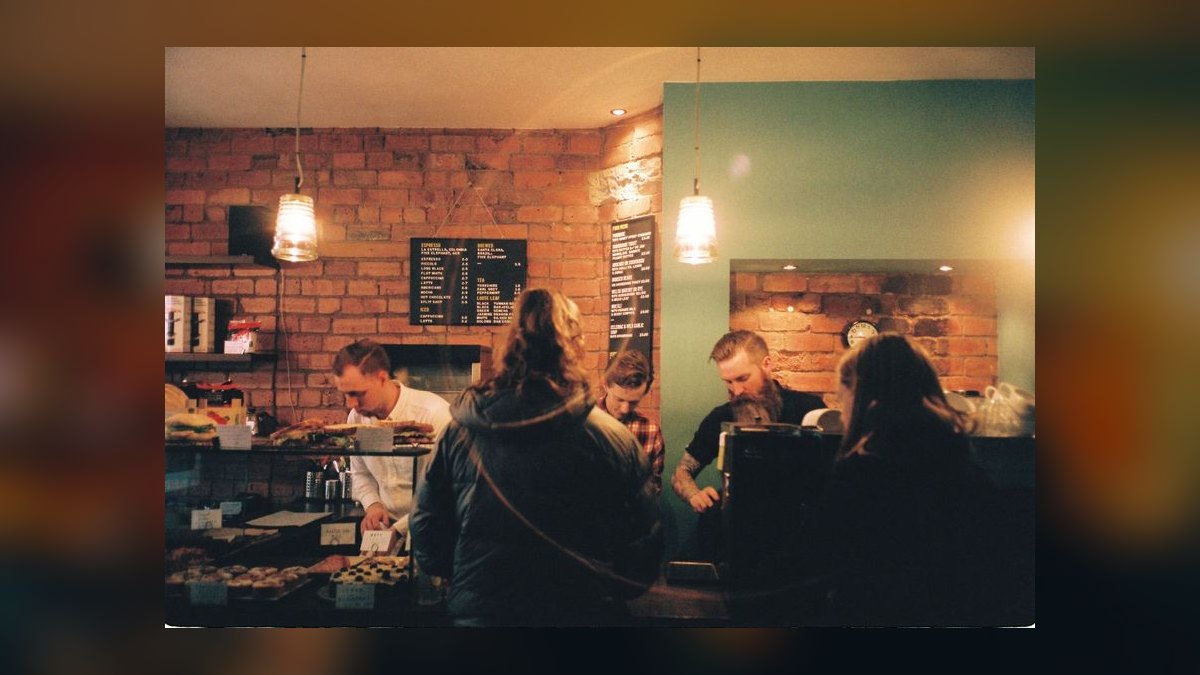
Target a 24–28% labor ratio using staggered shift coverage — overlap peak morning hours with a full crew, then taper to a skeleton team by 2 PM. Cross-train baristas on wholesale order packing so productive hours stay high without adding headcount.
What's a realistic gross margin for an Independent shop in 2027? Aim for 65–68% by tightening milk costing (oat margins are especially squeezed) and negotiating bean contracts quarterly. Shops that dip below 60% typically have uncontrolled waste or are paying retail prices for wholesale ingredients.
Is a wholesale beans line worth the effort for a small shop? Yes, if you can pull in $3,000–8,000/month at 40–55% margin. It needs no extra seating and stabilizes revenue during afternoon lulls. The catch is consistent roasting capacity and a simple subscription or bulk-order model for local offices and cafes.
How does arabica futures volatility affect pricing strategy? Lock bean contracts for 3–6 month windows rather than month-to-month, and build a 5–10% buffer into the menu. Shops that hedge with fixed-price agreements avoid sudden margin shocks, while those passing every spike straight to customers risk losing regulars.
Sources
- https://squareup.com/us/en/restaurants
- https://pos.toasttab.com/
- https://sca.coffee/
- https://www.worldcoffeeportal.com/
- https://sprudge.com/
- https://dailycoffeenews.com/
- https://www.baristamagazine.com/
- https://tradingeconomics.com/commodity/coffee
- https://www.dir.ca.gov/
Related on PULSE
- How do you build the GTM playbook for a specialty coffee roaster and independent coffee shop in 2027?
- Donut Shop GTM Playbook 2027 — Morning Rush, Craft Premium, Wholesale Pivot, and the Coffee Attach Math
- GTM Playbook for Independent Restaurants in 2027
- Bakery GTM Playbook 2027 — Wholesale Layer, Custom Cakes, and the $1.8M Independent Operator Path
- Independent Pizza Shop GTM Playbook 2027 — Specialty Regional Style, Delivery Dominance, and the Bar Program Math
- Frozen Yogurt Chain GTM Playbook 2027 — Self-Serve Economics, Birthday Party Pivot, and Franchise vs Independent
This page will be disappearing soon. Save it to your device for $1 — or read it free while it is here.
@Kory-White- · if Venmo asks, the last 4 of my number are 2012
This page is gone.
This one is off the shelf now. $1 keeps it on your phone for good — the whole page, pictures and diagrams included.
 gtm-playbookThrift Store Chain GTM Playbook 2027 — Donation Network + ShopGoodwill + AI-Augmented Sortation and the .4B Goodwill Operator Path
 gtm-playbookSales-as-a-Service GTM Playbook 2027 — Outsourced SDR + AI-Augmented Prospecting + Clay and the 48M memoryBlue Operator Path
 gtm-playbookMarket Research Firm GTM Playbook 2027 — Custom Quantitative + AI-Augmented Insight and the 85M Numerator Operator Path
 gtm-playbookWhat do top-performing SDR teams do differently in their outreach sequencing in 2027?
 gtm-playbookWhat is the go-to-market playbook for verticalizing in 2027?
 gtm-playbookBakery GTM Playbook 2027 — Wholesale Layer, Custom Cakes, and the $1.8M Independent Operator Path
 pulse-recentGTM Playbook for Specialty Retailers — Niche Assortment, Local SEO, and the Cluster Strategy in 2027
 gtm-playbookGTM Playbook for Tax Prep Services in 2027
 gtm-playbookGTM Playbook for DJ Services in 2027
 gtm-playbookWhat is the go-to-market playbook for a partner-led (channel) motion in 2027?