 Pulse Reviews and Analysis
What is the go-to-market playbook for marketing-led demand-gen growth in 2027?
 Curated by Kory White · Fractional CRO, CRO Syndicate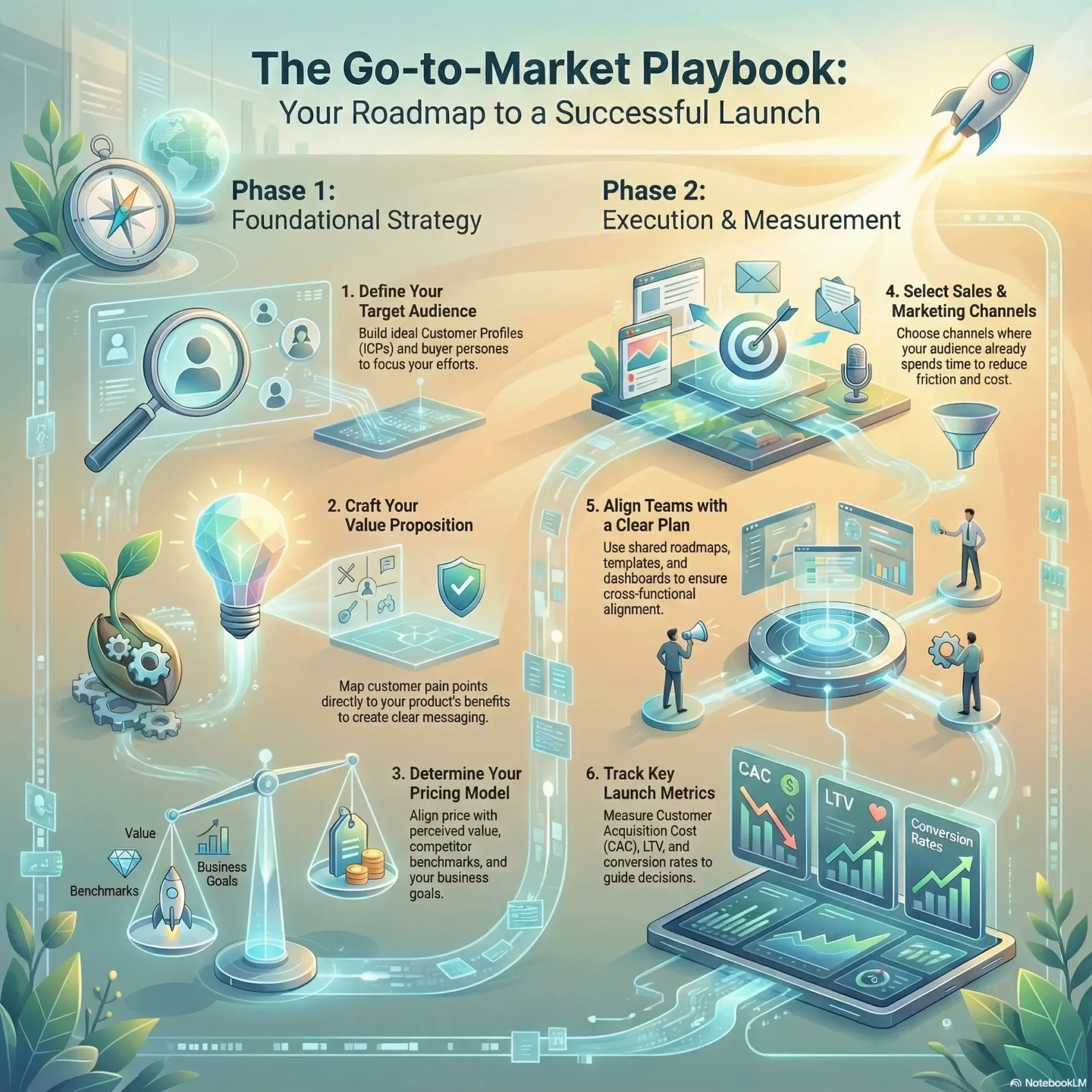
Direct Answer
The 2027 go-to-market playbook for marketing-led demand-gen growth is a data-driven, AI-orchestrated, multi-channel machine that replaces the old funnel with a real-time revenue engine. It demands that marketing owns pipeline creation (not just leads), uses predictive intent data to trigger hyper-personalized sequences, and aligns compensation to closed-won revenue.
The core shift is from volume-based MQLs to account-based signal scoring where every action (a GitHub star, a G2 review read, a pricing page visit) is weighted and routed. Marketing operates as a revenue team alongside SDRs and AEs, using platforms like 6sense, Demandbase, and Gong to orchestrate plays.
The playbook is built on three pillars: AI-powered orchestration, zero-party data capture, and community-led amplification. Budgets are reallocated from display ads to interactive content and 1:few ABM pods. The 2027 benchmark from Gartner shows that marketing-sourced pipeline must account for 55%+ of total pipeline to justify the spend, with a cost-per-pipeline-dollar target of $0.12–$0.18.
1. The 2027 Demand-Gen Tech Stack: Orchestration Over Automation
The 2027 stack is not a collection of point solutions but a single orchestration layer that connects CRM (Salesforce), CDP (Twilio Segment), and ABM platform (Demandbase). The key is signal aggregation — capturing intent from G2, TrustRadius, TechTarget, and LinkedIn into a single buyer-level timeline.
1.1 The Core Triad: CDP + ABM + RevOps
Your stack must have three mandatory components:
- CDP (Customer Data Platform): Twilio Segment ($25k–$150k/yr) or mParticle for unifying anonymous and known behavior. In 2027, CDPs are the source of truth, not CRMs, because they handle identity resolution across 10+ devices.
- ABM/Orchestration Platform: Demandbase ($50k–$500k/yr) or 6sense (an independent platform with native Salesforce and HubSpot integrations). These platforms run AI models that predict the next best action for each account — e.g., "Send case study to VP of Engineering after they attended the webinar."
- Revenue Intelligence: Gong ($100–$200/seat/mo) or Clari for capturing buying signals from sales calls, emails, and meetings. Gong's Deal Risk Score in 2027 flags accounts where marketing needs to re-engage.
1.2 The Signal Scoring Model
Stop scoring leads. Score signals instead. In 2027, every interaction gets a weighted score:
- Pricing page visit (anonymous): 5 points
- G2 review read (identified): 15 points
- Competitor comparison page (identified): 25 points
- Webinar attendance (with Q&A): 40 points
- GitHub star (for dev tools): 10 points
- Job posting for your category: 50 points
The orchestration engine (e.g., Demandbase) triggers a play when an account hits 100 points in 7 days. The play could be: SDR outreach with a personalized video (using Vidyard), retargeting ad with a G2 comparison, and email sequence with a Challenger Sale message.
1.3 Pricing and Budget Allocation
In 2027, the average B2B SaaS company (ARR $20M–$100M) allocates 35% of total GTM budget to demand gen. That breaks down as:
- 50% to ABM platforms and intent data (Demandbase, 6sense, ZoomInfo intent)
- 20% to content and interactive experiences (Uberflip, Ion interactive)
- 15% to paid social and search (LinkedIn Ads, Google Ads) — but only for retargeting and lookalike modeling
- 15% to community and events (Circle, Bevy, in-person summits)
The ROI metric is pipeline velocity (days from first touch to SQL) and cost per pipeline dollar. Forrester's 2027 benchmark shows that top-quartile companies achieve a pipeline velocity of 45 days (down from 90 in 2023).
2. AI-Powered Content and Personalization at Scale
Marketing in 2027 is a content factory powered by generative AI but curated by humans. The goal is 1:1 personalization for the top 200 accounts and 1:few personalization for the rest.
2.1 The AI Content Engine
Use Jasper AI ($49/mo for Business) or Writer.com ($50/seat/mo) to generate baseline content — blog posts, email copy, landing pages. But the real power is in dynamic content assembly. Platforms like Mutiny ($2k/mo) or Intellimize ($5k/mo) use AI to test and personalize every page element based on the visitor's industry, company size, and intent score.
For example, a visitor from Salesforce sees a case study about scaling CRM integrations, while a visitor from Stripe sees a developer API comparison. The AI runs A/B tests on 50+ variables simultaneously, using Bayesian inference to find winners in hours, not weeks.
2.2 Interactive Content as a Demand Gen Weapon
Static PDFs are dead. In 2027, interactive content drives 3x higher conversion rates. Use:
- Ion Interactive ($30k/yr) for assessments and ROI calculators that capture zero-party data (e.g., "How much revenue can you save with our tool?").
- Outgrow ($1k/mo) for quizzes and configurators that segment buyers by pain point.
- Fable for interactive demos that let prospects click through the product without talking to a salesperson.
The key metric is interaction completion rate (target: 60%+). Every completed interaction triggers a Gong alert to the AE with the exact features the prospect explored.
2.3 The 2027 Content Funnel
Replace the old funnel with a signal-based content matrix:
- Awareness: Short-form video (TikTok-style for B2B) on LinkedIn and YouTube Shorts. Use Descript ($24/mo) for AI editing.
- Consideration: G2 comparison pages and peer reviews (hosted on G2 or TrustRadius). Embed G2's API on your site to show real-time ratings.
- Decision: Custom ROI calculators and interactive demos. The Challenger Sale model dictates that you teach, tailor, and take control — so your content should challenge the buyer's status quo.
3. The SDR and AE Orchestration Layer
Marketing doesn't hand off leads anymore. It orchestrates the entire buyer journey with SDRs and AEs as executors. The playbook is built in Salesforce and Outreach (or Salesloft).
3.1 The 2027 SDR Playbook
SDRs in 2027 are signal responders, not cold callers. They use Outreach's AI Cadence to:
- Auto-dial when a prospect visits the pricing page (using Orum or Nooks).
- Send LinkedIn voice notes (via LinkedIn Sales Navigator + Gong integration) after a prospect downloads a case study.
- Trigger a personalized video (using Vidyard or Loom) when a buying committee member from a target account attends a webinar.
The SDR compensation in 2027 is 50% base, 50% variable, with variable tied to pipeline created (not meetings booked). The target is $500k pipeline per SDR per quarter at an average deal size of $50k.
3.2 The AE Handoff (If It Happens)
The handoff from marketing to AE is event-driven, not time-based. The AE gets involved when:
- The account has 3+ buying committee members identified.
- The intent score is above 75/100 (from Demandbase).
- The prospect has completed an interactive demo or signed up for a trial (using Pendo or Appcues).
The AE playbook is a MEDDPICC-based checklist in Salesforce:
- Metrics: What is the quantified ROI?
- Economic Buyer: Who signs the PO?
- Decision Criteria: What G2 category are they comparing?
- Decision Process: What is the procurement timeline?
- Paper Process: Do they need security review or legal approval?
- Identify Pain: What Challenger insight did marketing surface?
- Competition: Are they evaluating HubSpot or Salesforce?
- Champion: Who is the internal advocate?
3.3 The RevOps Command Center
RevOps runs the command center using Clari or Gong. They monitor:
- Pipeline health: Are there enough active buying signals in the top 200 accounts?
- Velocity: How fast are accounts moving from signal to SQL? Target: 30 days.
- Attribution: Which marketing plays are driving closed-won revenue? Use Bizible (now part of Marketo) or Full Circle Insights.
The weekly RevOps review focuses on three metrics: pipeline coverage ratio (target: 3x), win rate (target: 25%+), and average deal size (target: $50k+).

👉 Quick Call with Kory White, Fractional CRO · See Kory on LinkedIn · CRO Syndicate
4. Community-Led Growth as a Demand Gen Engine
In 2027, community is the new content marketing. Buyers trust peer reviews and community forums more than any vendor content. Gartner's 2027 B2B Buying Study says 77% of B2B buyers rely on peer recommendations from G2, TrustRadius, and Slack communities.
4.1 Building a Community That Generates Demand
Launch a private Slack community (using Circle or Bevy) for your power users. In 2027, the community manager is a demand gen role. They:
- Surface product feedback that marketing turns into case studies.
- Host AMAs with your CTO or product team.
- Run weekly "office hours" where prospects can ask questions to existing customers.
The community KPI is member-to-pipeline conversion rate. Target: 5% of community members become pipeline opportunities within 90 days.
4.2 The Peer Review Loop
Integrate G2's API to display real-time reviews on your pricing page and product demo page. In 2027, G2's "Best of" badges are a critical trust signal. Use G2's "Review Generation" feature to automate review requests after a customer success milestone (e.g., 90-day onboarding completion).
The play is: When a prospect visits your G2 page, trigger a retargeting ad that says, "See why Salesforce chose us over HubSpot." Use LinkedIn Matched Audiences to target G2 page visitors.
4.3 The 2027 Event Strategy
In-person events are back, but they are data-driven. Use Bevy for virtual events and Splash for in-person events. The 2027 benchmark from Forrester shows that hybrid events (in-person + virtual) generate 2x more pipeline than in-person only.
The play is: Host a "GTM Summit" with 10 target accounts invited. Use Demandbase to identify accounts with high intent in your region. The agenda includes Challenger Sale workshops and peer roundtables. The post-event play is a 90-day ABM campaign with personalized content for each attendee.
5. Attribution and Compensation in 2027
Attribution is multi-touch, multi-source, and multi-threaded. The old "last-touch" model is dead. In 2027, marketing is compensated on pipeline created and closed-won revenue, not MQLs.
5.1 The Attribution Model
Use Bizible or Full Circle Insights to run a custom attribution model:
- First touch: 20% weight (for awareness content)
- Lead creation: 30% weight (for the signal that triggered the SDR)
- Opportunity creation: 30% weight (for the content that influenced the deal)
- Closed won: 20% weight (for the final push)
The key metric is marketing-attributed revenue (MAR). In 2027, top-quartile companies have MAR of 40%+ of total revenue.
5.2 Marketing Compensation
CMOs in 2027 are compensated on pipeline generation and revenue attainment. The bonus structure is:
- 50% on pipeline created (target: $10M per quarter for a $50M ARR company)
- 30% on closed-won revenue (target: $2.5M per quarter)
- 20% on pipeline velocity (target: 45 days from first touch to SQL)
Demand gen managers are compensated on cost per pipeline dollar (target: $0.15) and pipeline volume (target: $1M per month per manager).
5.3 The 2027 Budget Justification
To justify the $500k+ annual spend on Demandbase and 6sense, you need to show ROI. Use Clari's Pipeline Forecasting to show that marketing-sourced pipeline has a 30% higher win rate than sales-sourced pipeline. The benchmark from Gartner is that marketing-sourced deals close at 28% win rate vs.
18% for sales-sourced.
6. The 2027 Playbook in Action: A Sample 90-Day Campaign
Here is a real-world example for a $30M ARR B2B SaaS company selling a sales enablement platform (competitors: Gong, Chorus by ZoomInfo).
6.1 Month 1: Signal Gathering and Account Selection
- Tool: Demandbase + ZoomInfo intent
- Action: Identify 200 accounts with high intent (e.g., "sales enablement software" search, "Gong competitor" searches).
- Play: Run a LinkedIn Ads retargeting campaign to these accounts with a Challenger content piece: "Why Gong users are switching to [Your Product]."
6.2 Month 2: Multi-Channel Orchestration
- Tool: Outreach + Vidyard + Gong
- Action: SDRs send personalized videos to VP of Sales at each target account. The video references their LinkedIn post about sales training.
- Play: Trigger a webinar (using Bevy) titled "How Salesforce uses Challenger Sale to close $1M+ deals." Invite the 200 accounts.
6.3 Month 3: Close and Nurture
- Tool: Salesforce + Gong + Clari
- Action: AEs use MEDDPICC to qualify. Marketing sends G2 comparison pages and custom ROI calculators.
- Play: Run a "deal desk" review every Friday with RevOps to review the top 10 deals. Use Gong's Deal Risk Score to decide which deals need marketing intervention (e.g., a case study from a similar company).
7. The 2027 Metrics That Matter
Forget vanity metrics like MQLs and website traffic. The 2027 demand gen dashboard has five metrics:
7.1 Pipeline Velocity
Formula: (Number of opportunities * average deal size * win rate) / sales cycle length. Target: $1M pipeline per week for a $50M ARR company. Benchmark: 45 days from first touch to SQL.
7.2 Cost per Pipeline Dollar
Formula: Total demand gen spend / pipeline created. Target: $0.12–$0.18. Benchmark: $0.15 for top-quartile companies (Forrester 2027).
7.3 Signal-to-Opportunity Conversion Rate
Formula: Number of opportunities / number of accounts with a signal score > 100. Target: 10%. Benchmark: 8% average.
7.4 Marketing-Attributed Revenue (MAR)
Formula: Revenue from deals where marketing had a touch. Target: 40%+ of total revenue. Benchmark: 35% average (Gartner 2027).
7.5 Community-to-Pipeline Conversion Rate
Formula: Pipeline from community members / total community members. Target: 5% within 90 days. Benchmark: 3% average.
FAQ
- What is the biggest difference between the 2025 and 2027 demand-gen playbook?
The shift from MQL scoring to signal-based orchestration. In 2027, you don't care about a single lead; you care about account-level buying signals and buying committee engagement.
- Do I still need a CDP if I have Salesforce?
Yes. Salesforce is a CRM, not a CDP. In 2027, CDPs handle identity resolution across 10+ devices and anonymous-to-known stitching, which CRMs cannot do. Twilio Segment or mParticle are mandatory.
- What is the most important vendor for 2027 demand gen?
Demandbase or 6sense (both independent ABM platforms that integrate with Salesforce). They are the orchestration layer that connects intent data, content personalization, and sales outreach. Expect to spend $50k–$500k/yr.
- How do I measure marketing's impact on revenue?
Use marketing-attributed revenue (MAR) with a multi-touch attribution model (e.g., Bizible). The 2027 benchmark is 40%+ of total revenue from marketing-sourced deals.
- What is the role of community in demand gen?
Community is a demand gen engine. Build a private Slack community (using Circle) and target 5% member-to-pipeline conversion. Gartner says 77% of buyers rely on peer reviews from communities.
- Should I still use paid ads in 2027?
Yes, but only for retargeting and lookalike modeling. LinkedIn Ads and Google Ads should be 15% of your demand gen budget at most. The rest goes to ABM platforms and interactive content.
Bottom Line
The 2027 go-to-market playbook for marketing-led demand-gen growth is not about more leads. It is about smarter signals, faster orchestration, and tighter alignment between marketing, sales, and RevOps. You must invest in a CDP + ABM platform (like Demandbase or 6sense), replace static content with interactive experiences, and compensate marketing on pipeline and revenue, not MQLs.
The benchmarks are clear: top-quartile companies achieve $0.15 cost per pipeline dollar, 45-day pipeline velocity, and 40%+ marketing-attributed revenue. If you are still running a volume-based demand gen model, you are two years behind. The 2027 playbook is signal-first, AI-orchestrated, and community-amplified.