


Top 10 Sales KPIs for Commercial Window Cleaning and High-Rise Services in 2027
Quality
Certified

> TL;DR: The nine KPIs that separate winning commercial window cleaning and high-rise services operators from break-even contractors in 2027 are: (1) Contract ACV per square foot ($0.04–$0.22/sq ft scheduled per clean, $0.65–$2.10/sq ft for high-rise rope/BMU per clean), (2) Multi-year contract attach rate (target 70%+ of new logos on 24–36 month terms), (3) Sales cycle by building class (28–45 days mid-rise direct, 75–140 days Class A high-rise central sourcing), (4) Crew-hour productivity ($85–$140 billable per crew-hour low-rise, $185–$320 high-rise rope access), (5) Safety certification utilization (IRATA L1/L2/L3 and SPRAT crew billable-hours ratio), (6) Renewal rate at first-term end (best operators hold 88–94%), (7) Bid-to-close ratio segmented by procurement type (12–18% RFP, 32–45% direct facility manager), (8) Route density and drive-time waste (under 14% non-billable transit), and (9) Add-on capture rate from base contract (pressure washing, facade, gutter — top quartile pulls 22–34% incremental ACV). Sales leaders running this dashboard with weekly cadence, daily safety check-ins, and quarterly facility-manager QBRs hit 18–26% revenue growth in a flat commercial real estate environment.
Q1: What is the single most important sales KPI in commercial window cleaning and high-rise services? A: Multi-year contract attach rate. A one-time clean is a transaction; a 36-month route-loaded contract with quarterly deep-clean riders is a recurring revenue annuity. Operators above 70% multi-year attach trade at 1.8–2.4x EBITDA multiples versus single-clean shops at 0.6–0.9x.
Q2: How is high-rise pricing different from low-rise? A: High-rise (anything requiring BMU davits, swing stage, or rope access) carries a 4–8x price premium per square foot because of insurance ($2–$8M umbrella minimums), certification ($1,800–$4,500 per technician for IRATA L1), wind/weather lost-day risk, and OSHA Subpart M compliance. Mid-rise pole-and-water-fed at 60 feet bills $0.10–$0.22/sq ft; rope-access high-rise bills $0.85–$2.10/sq ft per clean.
Q3: Who is the actual buyer? A: For owner-occupied Class A: the building engineer or chief engineer who reports to the property manager. For multi-tenant Class A/B: the property manager at JLL, CBRE, Cushman, Hines, or a regional firm. For hospital, hotel, retail: the facility manager or director of environmental services. Vendor RFPs are increasingly central-sourced through procurement, but the technical scoring is still done by the engineer.
Why Commercial Window Cleaning and High-Rise Services Sells Differently
1. The product is a safety bond plus a schedule, not a clean. Facility managers do not buy cleaner glass — they buy proof that nobody falls, no glass breaks, no tenant complains, and the building looks the same every Monday. Sales conversations that lead with "we do great work" lose to conversations that lead with "here is our 3-year zero-incident log, our IRATA L3 supervisor roster, our $5M umbrella, and the exact Tuesday-of-the-month your tower gets done." The product is operational predictability.
2. Pricing is a function of access method, not glass area. A 40,000 sq ft Class A tower can bill anywhere from $48,000/year (pole + water-fed, low-rise atrium only) to $310,000/year (full BMU exterior + interior + quarterly facade pressure wash). Operators who quote by sq ft alone leave 40–60% margin on the floor. The pricing matrix has to include: access method (pole, lift, BMU, rope, swing stage), frequency (monthly, quarterly, semi-annual), glass type (standard, fritted, low-e, heritage), and weather buffer (Pacific NW vs. Phoenix differ by 18–24 lost days/year).
3. Procurement gates are getting heavier. Class A REITs and hospital systems now require pre-qualification through ISN, Avetta, or Browz. Insurance minimums rose from $1M/$2M to $5M/$10M between 2022 and 2026. OSHA Subpart M (walking-working surfaces, updated rope-descent rules) and ANSI/IWCA I-14.1-2024 add documented training and equipment-inspection burdens. A contractor without ISN green-light status cannot even bid most Class A in 2027 — meaning sales velocity is gated by compliance ops, not by reps.
4. Add-on revenue compounds harder than logo revenue. A signed window contract opens facade pressure washing, gutter cleaning, awning, signage, hard-water restoration, anti-graffiti coating, and post-construction clean-up. Top-quartile operators run a defined add-on motion (quarterly building-condition reports with photos and a quoted scope) and pull 22–34% incremental ACV per account. Operators who only sell windows leave 30%+ of wallet share to a competing facade specialist.
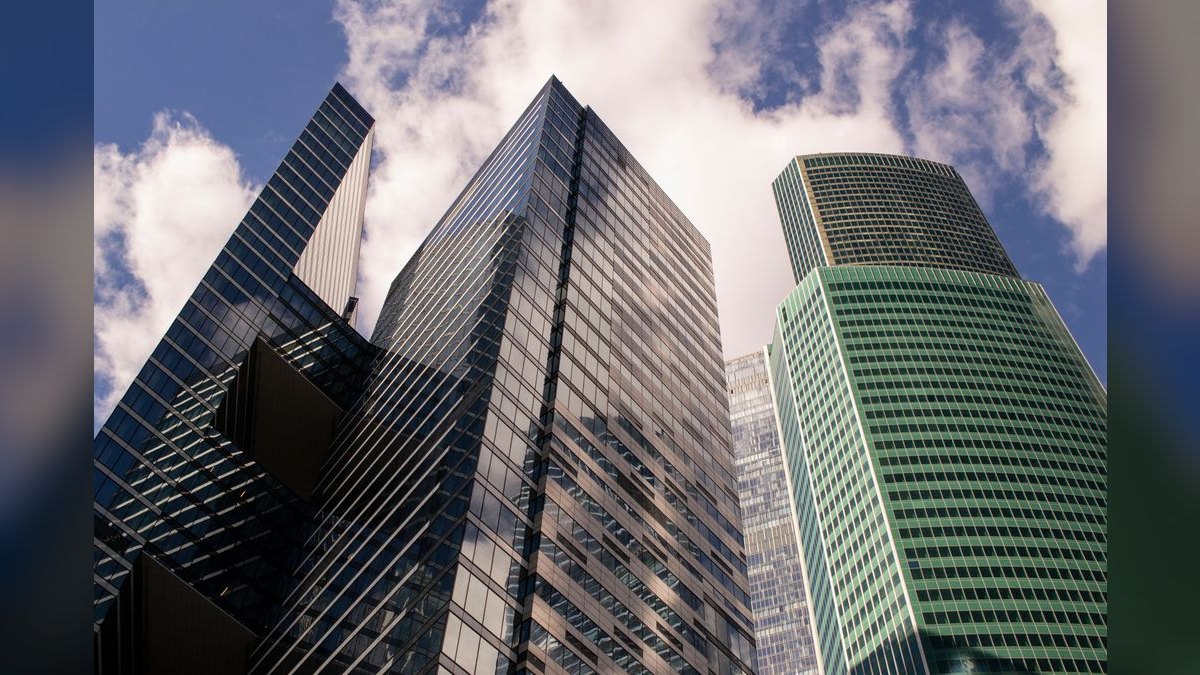
The 9 KPIs, In Depth
1. Contract ACV per square foot. The base unit of pricing health. Track separately for: low-rise scheduled ($0.04–$0.08/sq ft per clean, 4–12 cleans/year), mid-rise ($0.10–$0.22/sq ft), high-rise rope access ($0.85–$2.10/sq ft per clean), high-rise BMU ($0.65–$1.40/sq ft per clean), and post-construction one-time ($0.45–$1.20/sq ft). Annualize and compare to local market comps. ABM, Pritchard, and Diversified anchor the top of market in Class A; regional operators win on responsiveness at 8–15% under. Below $0.04/sq ft on scheduled low-rise, you are subsidizing the route — stop bidding.
2. Multi-year contract attach rate. Percentage of new logo wins signed to 24-month or longer terms with auto-renewal. Target 70%+. Mechanics: bundle a 4% multi-year discount, lock in an annual CPI escalator (3–5%), and include a 30-day-notice exit clause to reduce buyer friction. Operators who close everything as month-to-month sit at meaningfully higher annual churn (often 25%+) vs. 4–9% on multi-year. The valuation delta on exit is the entire enterprise.
3. Sales cycle by building class and procurement path. Segment four ways: (a) direct FM/engineer at single-asset owner — 28–45 days; (b) third-party property manager (JLL/CBRE/Cushman) — 55–90 days; (c) Class A REIT central sourcing — 75–140 days; (d) hospital/government RFP — 120–220 days. Forecasting that lumps all four destroys quota planning. Build a stage map per path: site walk, access survey, COI submission, ISN review, bid, technical scoring, contract redline, MSA signature.
4. Crew-hour productivity (billable $/hour). The single most actionable cost-side metric. Target $85–$140 billable per crew-hour on low-rise water-fed pole work (2-person crew). High-rise rope access: $185–$320 per crew-hour (2–3 person team). BMU operations: $145–$240 per crew-hour. Below benchmark means: under-priced contracts, poor route density, or crew under-utilization. Track in ServiceTitan, BigChange, FieldEdge, or a custom Salesforce Field Service build. Weekly variance above 12% triggers a route audit.
5. Safety certification utilization. Of total certified-technician labor hours (IRATA L1/L2/L3, SPRAT L1/L2/L3, OSHA 30, fall-protection competent person), what percentage is billed to a high-margin high-rise job vs. burning on low-rise work an uncertified crew could do. Target 75%+ utilization for L2/L3 holders. Certifications cost $1,800–$4,500 each plus annual recerts; under-utilization is a five-figure leak per technician per year. Pair every L2/L3 with a route plan that loads them onto high-rise routes first.
6. Renewal rate at first-term end. First-term (months 24–36) renewal is the cleanest signal of service quality and account-management discipline. Top quartile holds 88–94%. The bottom half sits at 62–74% — usually because the original sales rep never returned after signature. Mechanics that move the number: assigned account manager (not the sales rep) by day 30, quarterly facility-manager QBR with KPI report, photo-documented service log per visit (ServiceTitan or Jobber both export this), and a 90-days-pre-expiration renewal motion with a multi-year extension offer.
7. Bid-to-close ratio segmented by procurement type. Mixed bid-to-close is meaningless. Segment: RFP/RFI through procurement (12–18% close rate is good), direct facility manager warm intro (32–45%), referral from existing account (48–65%), cold outbound to new building (4–9%). If your blended is 22% but RFP is 8%, you are paying writers to lose paper. Reallocate sales time toward direct FM relationship-building and referral motions. Use BuildingEngines, Yardi, or MRI tenant directories to identify FM contacts.
8. Route density and drive-time waste. Non-billable transit as a percentage of total dispatched hours. Target under 14%. Excellent operators with dense urban routes (downtown Chicago, midtown Manhattan, downtown Seattle) hit 6–9%. Suburban or sprawled markets run 16–22%. Tools: Route4Me, OptimoRoute, ServiceTitan dispatch, WorkWave RouteManager. Re-optimize quarterly; new logo wins should slot into existing routes — if a new contract adds 45 minutes of transit, the price needs a transit surcharge.
9. Add-on capture rate from base contract. Incremental ACV from same-customer expansion (facade pressure wash, gutter, awning, signage, hard-water restoration, post-construction, parking deck) as a percentage of base window ACV. Top quartile: 22–34%. Mechanics: every quarterly visit produces a building-condition photo report flagging 2–4 specific add-on opportunities with quoted scope. Train technicians to spot mineral staining, sealant failure, gutter overflow, biological growth — these become next-quarter scopes. ABM and Pritchard run dedicated specialty divisions that cross-sell off the window contract base.
Real Operators
ABM Industries — Window Services. Largest integrated facility services provider in North America. Window cleaning is bundled into their Technical Solutions and Janitorial segments, often as part of an enterprise integrated facilities management (IFM) deal. Sells into Fortune 500 corporate campuses, Class A REITs, airports. Sales motion is enterprise/IFM bundled, 9–18 month cycle. Sets the high end of pricing on Class A high-rise.
Pritchard Industries. Privately held, strong in NYC/NJ/Mid-Atlantic Class A office. Window cleaning, janitorial, engineering combined. Known for IRATA L3 rope-access bench and BMU expertise on supertall properties. Direct relationships across JLL, CBRE, and Cushman property-management portfolios.

Diversified Maintenance. Southeast and national footprint. Strong in retail, hospital, hospitality. Window cleaning often paired with day-porter and floor care. Field operations run on ServiceTitan and proprietary mobile dispatch. Targets multi-site portfolio accounts (hotel groups, hospital systems, retail chains).
ISS Facility Services. Global IFM, strong North American commercial and life-sciences vertical. Window services bundled into total-integrated-services contracts at pharmaceutical campuses, data centers, and corporate HQs. Sales cycle 12–24 months, contract sizes in the low-to-mid seven figures annually.
Sky Rise Window Cleaning. Regional high-rise specialist (Chicago metro, expanding to Midwest). IRATA and SPRAT certified, BMU and rope-access focused, no janitorial pull-along. Pure-play model sells against the integrated bundlers by leading on safety record, technical certification, and faster response (24–48 hours for emergency drop vs. 5–7 days for a national).
Squeegee Squad Commercial. Franchise model, multiple U.S. markets, mid-market commercial focus (low- and mid-rise office, retail, restaurant). Strong in route-density economics and recurring scheduled cleans. Less high-rise/rope exposure; competes on price and reliability in mid-market.
Fish Window Cleaning. National franchise with hundreds of territories. Mid-market scheduled-contract specialist; rarely competes in Class A high-rise but dominates Class B/C and retail with predictable recurring routes. A useful benchmark for the franchise route-density model alongside regional independents like Signature Window Washing (Chicago).
IRATA/SPRAT-certified rope-access firms. Specialty operators such as Vertical Access (NYC, facade inspection + cleaning) and other certified rope-access shops serve a niche of supertall and architecturally complex properties where BMU access is impractical. They frequently subcontract to the integrated bundlers (ABM, Pritchard) on supertall work.
Failure Modes
1. Pricing low-rise routes without a transit surcharge. A new logo 22 miles outside the existing route adds 45–90 minutes of round-trip drive plus fuel and crew time. Without a transit line item, that contract loses money on every visit. Mitigation: build a route-density pricing matrix with a $/mile transit charge above a 15-mile-from-anchor threshold. Bid the contract at full price or pass.
2. Selling high-rise without proper insurance and certification stack. Quoting Class A high-rise work without $5M/$10M umbrella, IRATA L1+ on every rope tech, OSHA Subpart M compliance, ISN green-light, and a documented rescue plan loses every serious bid and creates catastrophic liability exposure on the rare win. Fix: invest in the compliance ops function (often 1–2 FTEs) before scaling Class A sales. Compliance is a sales enabler, not overhead.
3. No account-management handoff after signature. The sales rep closes a 36-month $180K contract, hands the keys to dispatch, and never speaks to the FM again. Twenty-six months later the FM puts it back out to bid because nobody asked how it was going. Renewal drops to 60–65%. Fix: assign a named account manager by day 30, schedule quarterly QBRs with a 4-slide deck (visits completed, incidents = zero, condition observations, recommended add-ons), and run a 90-day pre-expiration renewal play.
4. Crew safety incidents and OSHA recordables. One high-rise fatality ends a company. One serious recordable triggers Avetta/ISN downgrade, insurance premium spikes (often 40–80%), and exclusion from Class A bid lists for 24–36 months. Mitigation: daily JSA (job safety analysis) on every high-rise job, monthly equipment inspection logs (ropes, harnesses, anchors per ANSI/IWCA I-14.1), quarterly third-party safety audit, and a no-questions-asked stop-work authority for any crew member. Track Total Recordable Incident Rate (TRIR) — Class A REITs increasingly demand under 1.5.
Reporting Cadence
Daily (7:00 AM safety huddle, 5 min). Every crew, every day, before dispatch. Review job-specific hazards (wind forecast for high-rise, traffic for swing-stage drops, glass type), confirm PPE and equipment inspection, verify certifications match the day's job profile. Log on a shared mobile app (SafetyCulture/iAuditor or built into ServiceTitan). One missed huddle is a coaching event; two is a written warning.
Weekly (Monday 9:00 AM, 45 min). Sales pipeline review by stage and procurement path. Crew utilization vs. target. Drive-time variance flagged above 14%. Bid pipeline aging (any RFP over 60 days without a status update). New-logo onboarding status (COI submitted, ISN updated, route loaded, first visit scheduled). Owner/GM, sales lead, ops lead, dispatch lead.
Monthly (first Tuesday, 90 min). Contract-level P&L: revenue, direct labor, materials, equipment depreciation, route allocation, gross margin. Any contract below 28% GM is a re-bid candidate at renewal. Add-on funnel: condition reports issued, quotes sent, quotes closed, $ pulled. Safety: TRIR rolling 12-month, near-misses, equipment inspection compliance. Certification expirations 60–90 days out.
Quarterly (named FM QBRs, 30–45 min each). For every Class A and key Class B account: visits completed (vs. contracted), incidents (zero is the only acceptable number), building-condition observations with photos, recommended add-ons with quoted scope, satisfaction NPS (1-question survey post-meeting). Internally: pricing-power review (which contracts have a CPI escalator due), competitive intel from lost bids, renewal pipeline for the next 6 months.
Annual (Q4). Full pricing reset per route and per building class. Certification refresh budget (IRATA recerts, SPRAT recerts, OSHA 30 renewals). Insurance renewal and umbrella adequacy review. Equipment capex (rope and harness service-life replacement per ANSI/IWCA I-14.1, BMU davit-arm inspections per manufacturer). Compensation plan calibration vs. local labor market.
30/60/90 Day Plan

Days 1–30: Instrument the truth. Pull the last 24 months of completed contracts into a single spreadsheet — contract ACV, sq ft, access method, gross margin, route assignment. Compute ACV/sq ft and GM% for every contract. Identify the bottom-quartile contracts (likely 15–25% of the book) that are losing or near-zero margin. Stand up a weekly Monday review with sales, ops, dispatch. Pull crew-utilization data from ServiceTitan/BigChange/Jobber. Audit certifications — every L1/L2/L3, every SPRAT, every OSHA 30, expiration dates in one tracker. Submit/refresh ISN and Avetta profiles.
Days 31–60: Segment and price. Build a pricing matrix: rows = building class (low-rise scheduled, mid-rise scheduled, high-rise BMU, high-rise rope, post-construction), columns = access method and frequency. Populate target $/sq ft from your top-quartile contracts. Identify 8–12 bottom-quartile contracts to re-bid at renewal with a 12–22% increase or walk. Stand up account-management handoff for every contract over $60K ACV — named AM, kickoff call within 14 days, QBR scheduled. Launch a building-condition photo report on every quarterly high-rise visit; route to AM for add-on quoting within 48 hours.
Days 61–90: Multi-year and expansion motion. Open a multi-year contract conversion play on every month-to-month or annual-renewing account: offer a 4% discount + CPI escalator for a 36-month commitment, signed by day 90. Target 60% of eligible accounts converted. Launch an add-on quarterly review with every named AM — minimum 2 quoted add-ons per account per quarter. Build a referral motion: every QBR closes with "who else in your portfolio should we be talking to," tracked as a separate pipeline source. Set Q2 targets for: multi-year attach (70%+), bid-to-close on direct FM (35%+), crew-hour productivity ($110+ blended), add-on capture (20%+).
FAQ
Q1: How much does it cost to get an IRATA Level 1 certification, and how long until a tech is billable? A: $1,800–$2,800 for the multi-day course and assessment, depending on training provider and region. Annual recert at L1 runs $400–$700. A tech is billable on Day 1 of return (the cert is the gate), but most operators pair an L1 with an L3 supervisor for the first 200–400 hours of high-rise work. Plan on $4,000–$6,000 fully-loaded to put one new IRATA L1 into productive billable rotation, recoverable inside 8–14 weeks at high-rise rates.
Q2: Should I bid government and hospital RFPs?

A: Only if you have the compliance ops function in place. Government work (federal, GSA, state, municipal) and hospital systems carry the heaviest documentation burden — Davis-Bacon prevailing wage on federal, GSA schedule contracting, hospital infection-control compliance (TJC, CMS), and 120–220 day sales cycles. The work is steady and renewable but operationally heavy. Most sub-$10M operators win more on direct-FM Class A and Class B than they do on RFPs. Build the RFP muscle after you have 25+ direct-relationship contracts paying the bills.
Q3: How do I price a brand-new account in a market I have never serviced? A: Three steps. (1) Run comparable analysis on 2–3 known buildings of similar class, sq ft, and access in your existing market — that gives you a $/sq ft floor. (2) Add a market-entry premium of 8–15% for the first contract to absorb unknowns (parking, building access protocol, local labor, equipment positioning). (3) Bid the work at the loaded price; if you win, route subsequent prospects in the same market off this anchor account to dilute the transit cost. Do not low-bid a market-entry contract — you will spend two years stuck at a loss-leader price.
Q4: What is the right ratio of full-time crew to subcontracted/1099 labor? A: For low-rise scheduled work, 70–85% W-2 full-time is standard — predictable routes, repeatable customers, lower liability. For high-rise rope-access, keep 100% W-2 on your safety-critical bench (IRATA L2/L3 supervisors) and use selective 1099 only for peak-load specialty work where the sub carries their own COI and certs. ISN and Class A REITs increasingly require sub-tier flow-down documentation, so 1099 introduces compliance burden. The cleanest operators run 90%+ W-2 on high-rise.
Q5: How do I know if my pricing is competitive without losing bids to find out? A: Three signals. (1) Win-rate by procurement path — direct FM 32–45% is healthy; above 60% usually means you are underpriced. (2) Renewal-with-increase — if 80%+ of contracts accept a CPI + 2–4% increase at renewal with no pushback, you have room. (3) Lost-bid debriefs — ask the FM (politely, post-decision) what the winning bid was. Most will share a range. If you are consistently 15%+ above winners on RFP-procured Class B work, the market is telling you. If you are consistently within 5% and still losing, the issue is reputation/references, not price.
Q6: When does it make sense to buy a competitor vs. grow organically? A: Tuck-ins make sense when: (a) the target sits in an adjacent market where you have no route density and 20–40 contracts give you immediate anchor scale, (b) the target's owner is retiring and contracts are at risk of going to the largest local incumbent, (c) you can buy at 0.6–1.0x revenue with 50–70% contract retention through transition. Avoid acquiring purely for revenue if the target's margin profile is below your floor — you will spend 18 months re-pricing customers who will churn anyway. The classic tuck-in math: a $1.2M revenue target at a $720K–$960K purchase price, 60% retention = $720K retained revenue at your margin profile, payback in 18–30 months.
Sources
- International Window Cleaning Association (IWCA) — Publisher of the ANSI/IWCA I-14.1 Window Cleaning Safety Standard, the primary U.S. consensus standard governing equipment inspection, anchorage, and crew training. iwca.org
- U.S. OSHA — Walking-Working Surfaces & Rope Descent Systems — 29 CFR 1910 Subpart D and §1910.27, covering the rope-descent-system and anchorage requirements that gate high-rise window cleaning. osha.gov
- IRATA International (Industrial Rope Access Trade Association) — Certification levels (L1/L2/L3) and the International Code of Practice (ICOP) referenced throughout high-rise rope-access bidding and prequalification. irata.org
- SPRAT (Society of Professional Rope Access Technicians) — North American rope-access certification body; its L1/L2/L3 scheme is the common alternative/complement to IRATA on U.S. projects. sprat.org
- ABM Industries — Investor Relations & Annual Report (Form 10-K) — Public-company filings for segment structure (Technical Solutions, Janitorial) and the integrated facilities management model that sets Class A high-rise pricing. investor.abm.com
- BOMA International (Building Owners and Managers Association) — Operating-cost benchmarking and the property-manager/building-engineer buyer roles that drive the commercial sales motion. boma.org
- ISN (ISNetworld) & Avetta — Contractor prequalification platforms whose green-light status is now a hard gate for bidding Class A and institutional accounts. isnetworld.com · avetta.com
Related on PULSE
- The Best KPIs for Window Cleaning Companies in 2027
- What are the key sales KPIs for the Commercial Window & Curtain Wall Manufacturing industry in 2027?
- What are the key sales KPIs for the Commercial Window Film & Architectural Glass Tinting industry in 2027?
- What are the key sales KPIs for the Commercial Window Treatment & Motorized Shade Installation industry in 2027?
- What are the key sales KPIs for the Commercial Window and Glazing Contracting industry in 2027?
- What are the key sales KPIs for the Commercial Pressure Washing & Building Exterior Services industry in 2027?
This page will be disappearing soon. Save it to your device for $1 — or read it free while it is here.
@Kory-White- · if Venmo asks, the last 4 of my number are 2012
This page is gone.
This one is off the shelf now. $1 keeps it on your phone for good — the whole page, pictures and diagrams included.
 pulse-industry-kpisTop 10 Sales KPIs for Commercial Greenhouse Produce Marketing & Brokerage in 2027
 pulse-industry-kpisTop 10 Sales KPIs for Commercial Electrical Contracting in 2027
 pulse-industry-kpisTop 10 Sales KPIs for AI Sales Coaching / Conversation Intelligence in 2027
 pulse-industry-kpisTop 10 KPIs for Pressure Washing Companies in 2027
 pulse-industry-kpisTop 10 Sales KPIs for Industrial Crane & Hoist Manufacturing in 2027
 pulse-industry-kpisTop 10 Sales KPIs for Medical Billing and Revenue Cycle Management in 2027
 pulse-industry-kpisTop 10 Sales KPIs for Industrial Laser Cutting & Waterjet Job Shops in 2027
 pulse-industry-kpisTop 10 Sales KPIs for Fast Fashion Apparel in 2027
 pulse-industry-kpisTop 10 Sales KPIs for Commercial Architecture and Engineering Firm in 2027
 pulse-industry-kpisTop 10 Sales KPIs for Industrial Heat Treating & Metal Finishing Services in 2027