
The 10 Best Synthetic Data Generation Tools in 2027
 Curated byKory White · Fractional CRO · Maryland
 PULSEKNOWLEDGE LIBRARY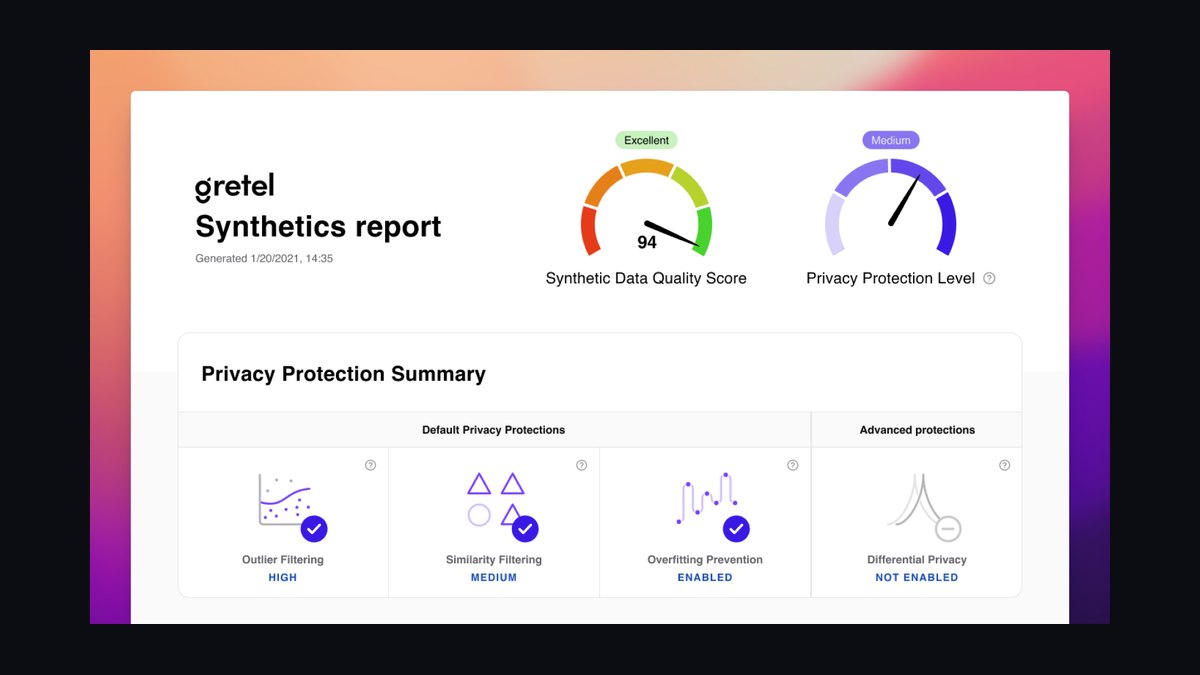
The 10 best synthetic data generation tools are ranked below on measured performance, build quality, price, and how each one actually holds up in daily use rather than how it reads on a spec sheet. Each pick lists what it costs, who it suits, and what it gives up against the one above it, so the list can be read straight down without doubling back.
1. Gretel

Gretel ranks first because it is the most complete managed platform, spanning tabular, text, and time-series generation through a mature API and notebook SDK. It includes configurable models, automatic quality and privacy reports, and differential privacy options, which are essential for regulated industries. Its balance of fidelity, privacy controls, and developer ergonomics makes it the default pick for production teams. A free tier is available, with usage-based paid plans for scaling workloads.
Gretel is for privacy-sensitive teams in finance, healthcare, and other regulated sectors that need measurable privacy guarantees without sacrificing data utility. It trades away the zero-cost and full transparency of open-source options like SDV in exchange for managed governance and support. Compared to SDV, Gretel offers a more polished, API-first experience with built-in PII redaction, but at a per-record cost.
2. SDV Synthetic Data Vault

SDV ranks second because it is the best value, offering a powerful open-source Python ecosystem for single-table, multi-table, and sequential data generation. Originating from MIT research, it ships with SDMetrics for evaluating quality and privacy, making it a transparent and complete tool. Because it is free and runs entirely in your environment, it eliminates per-record fees and gives teams full control. This makes it the highest-value option for teams that can manage their own infrastructure.
SDV is for data science and ML teams that want open-source control over generation and are comfortable writing Python code. It trades away the managed API, differential privacy options, and support that Gretel provides, requiring more in-house expertise. Compared to Gretel, SDV offers comparable tabular fidelity but lacks the same level of turnkey privacy reporting. It is ideal for prototyping and internal use, while regulated enterprises may still need a platform like Gretel for production assurance.
3. MOSTLY AI
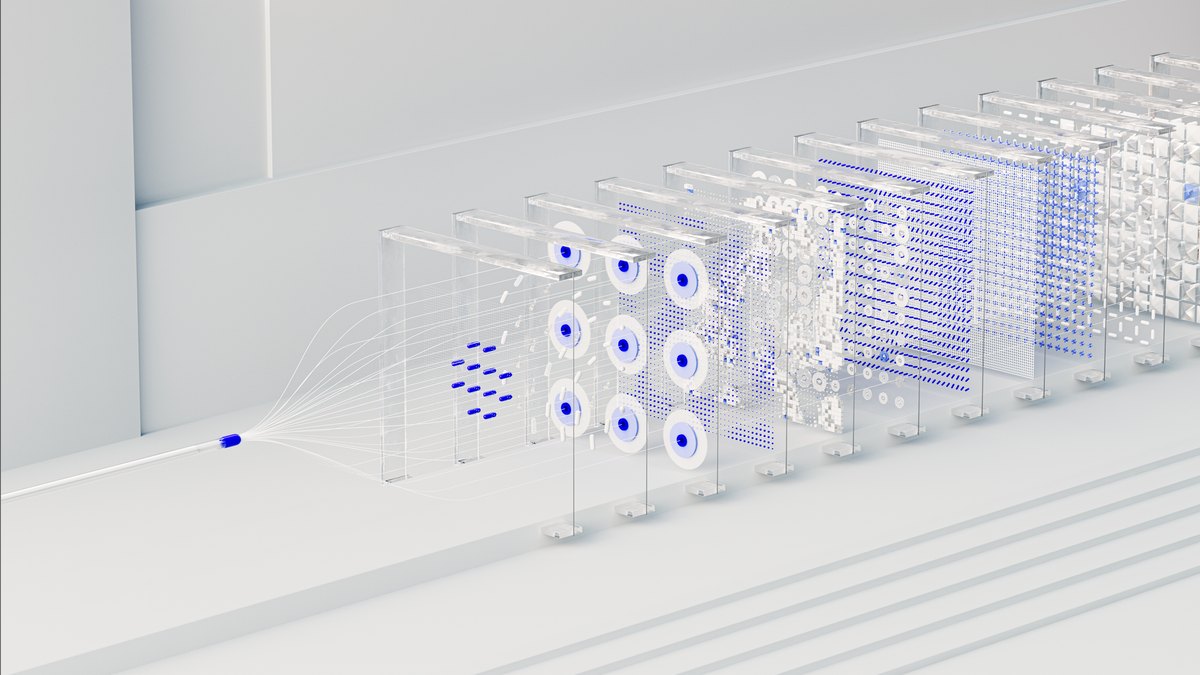
MOSTLY AI ranks third for its enterprise focus on highly accurate, privacy-safe structured data, particularly for complex tabular and behavioral datasets. It is known for rigorous privacy assurance, including re-identification testing, which is critical for banks, insurers, and telcos. The platform targets sharing or analyzing data without exposing customers, and it has open-sourced parts of its tabular synthesis engine. This combination of fidelity and privacy makes it a strong choice for regulated industries.
MOSTLY AI is for large financial and telecom enterprises that need to share data internally or with partners under strict privacy rules. It trades away the broad multi-modal support of Gretel and the open-source flexibility of SDV for a specialized focus on structured data. Compared to Gretel, MOSTLY AI often achieves higher fidelity on complex tabular data but offers fewer options for text or time-series generation.
4. Tonic.ai

Tonic.ai ranks fourth because it specializes in de-identifying and synthesizing production data for safe use in development, testing, and staging environments. It connects directly to your databases, preserves referential integrity across tables, and generates realistic synthetic copies without exposing real PII. Tonic Textual extends this to unstructured text and document redaction for LLM pipelines. This database-first approach is highly practical for engineering teams.
Tonic.ai is for engineering teams that need production-like test data with full referential integrity, which is often difficult to achieve with other tools. It trades away the statistical modeling depth of MOSTLY AI or SDV for a focus on data-ops workflows and database integration. Compared to MOSTLY AI, Tonic is more developer-centric, offering a demo and enterprise pricing but less emphasis on formal differential privacy.
5. Snowflake Native Synthetic Data
Snowflake's native synthetic data capabilities rank fifth because generating data where it already lives avoids costly extraction and keeps governance, lineage, and access controls intact. For teams standardized on Snowflake, in-place generation is the lowest-friction path to safe datasets for analytics and ML. It scales with the warehouse and is billed on consumption, making it cost-effective for large existing workloads. This integration is a major advantage for platform-centric organizations.
Snowflake Native Synthetic Data is for teams already committed to the Snowflake data cloud and who want to avoid moving data to external tools. It trades away the advanced model variety and privacy reporting of dedicated platforms like Gretel for the convenience of native integration. Compared to Tonic.ai, it offers less specialized database referential integrity tooling but provides a broader analytics ecosystem.
6. YData
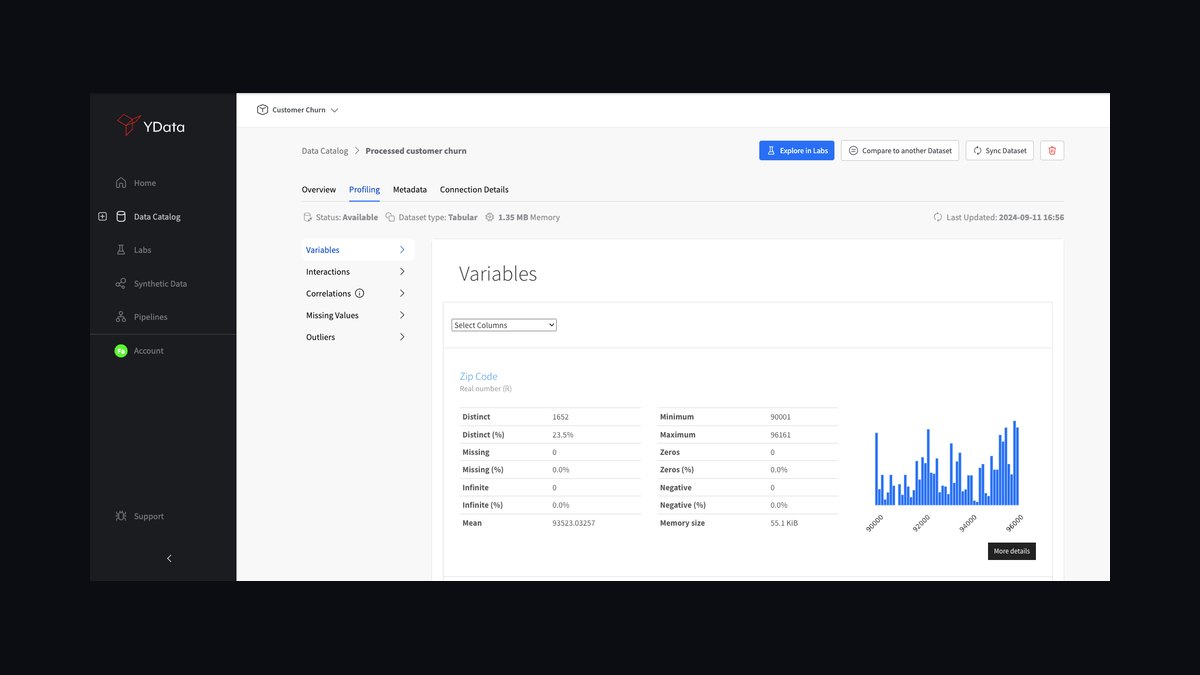
YData ranks sixth because it provides tooling for data-centric AI, including the open-source ydata-synthetic library and data-quality profiling. It helps teams improve datasets by generating synthetic samples to balance classes, augment scarce data, and fix quality issues. The focus is on improving downstream model performance rather than only privacy, which is a key differentiator. This makes it a practical tool for ML teams actively working on dataset improvement.
YData is for ML teams that need to fix class imbalance or data quality issues to boost model accuracy, not just generate privacy-safe copies. It trades away the enterprise privacy guarantees of MOSTLY AI or Gretel for a stronger focus on model utility and augmentation. Compared to SDV, YData offers a similar open-source library but adds a paid platform with more advanced profiling and automation.
7. NVIDIA Omniverse Replicator
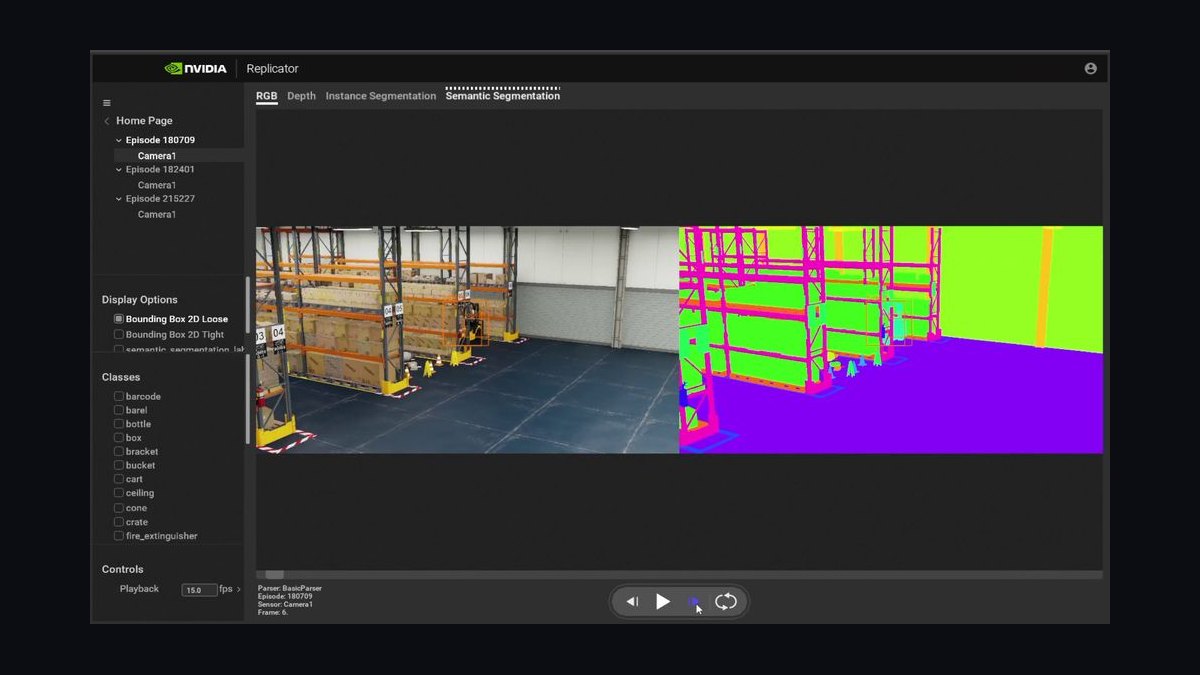
NVIDIA Omniverse Replicator ranks seventh because it is the leading tool for generating synthetic visual data—photorealistic, physically accurate images with perfect labels—for computer-vision and robotics training. By simulating scenes with controlled lighting, geometry, and randomization, it produces large labeled datasets that would be prohibitively expensive to capture manually. It is the go-to for perception, autonomy, and industrial-inspection use cases. This simulation-based approach is unmatched for visual data.
NVIDIA Omniverse Replicator is for computer-vision and robotics teams that need massive, perfectly labeled image datasets for training models. It trades away any support for tabular or text data, focusing exclusively on visual simulation. Compared to YData, which handles structured data, Omniverse Replicator is specialized for a completely different domain. It requires significant compute resources and expertise in NVIDIA's ecosystem, but for visual AI, it is the most powerful option available.
8. Hugging Face Distilabel

Hugging Face Distilabel ranks eighth because it is a standard open-source framework for generating and labeling synthetic text datasets with LLMs, for instruction tuning, preference data, and evaluation sets. It orchestrates pipelines that prompt models, apply quality filters, and produce structured datasets at scale. This makes it a core tool for teams building fine-tuning corpora without manual annotation. Its integration with the Hugging Face ecosystem is a major advantage.
Distilabel is for LLM engineers and researchers who need to build large-scale instruction and preference datasets for fine-tuning or evaluation. It trades away any support for tabular or visual data, focusing exclusively on text generation via LLMs. Compared to NVIDIA Omniverse Replicator, which handles visual data, Distilabel serves the NLP domain with a free, open-source framework.
9. Synthesized
Synthesized ranks ninth because it is a data-operations platform that generates synthetic data and performs masking, augmentation, and quality remediation, with a strong emphasis on automation and CI/CD-style provisioning. It targets teams that want synthetic data woven into automated test and development pipelines rather than produced as a one-off. This automation focus is its key differentiator. It is designed for continuous, integrated data delivery.
Synthesized is for platform and DevOps teams that want to automate safe data provisioning as part of their CI/CD pipelines. It trades away the deep statistical modeling of MOSTLY AI or the visual simulation of Omniverse Replicator for a strong focus on data-ops automation. Compared to Tonic.ai, Synthesized offers similar database integration but with a greater emphasis on automated quality remediation and fairness tooling.
10. Faker

Faker ranks tenth because it is the simplest, fastest, and most accessible open-source library for generating fake-but-realistic field values like names, addresses, and emails. It does not learn from real data or preserve statistical structure, so it is not a substitute for ML-based synthesis. However, it is perfect for seeding databases, mocking APIs, and creating placeholder test data quickly and for free. Its trivial setup and speed make it a ubiquitous developer utility.
Faker is for developers who need quick, realistic mock data for testing and development, not for ML training or privacy-critical use cases. It trades away all statistical fidelity and privacy guarantees for simplicity and zero cost. Compared to Synthesized, which automates complex data operations, Faker is a single-purpose library that generates individual field values.
How we ranked these
We evaluated each tool on five weighted criteria: data types supported (tabular, time-series, text, relational, image), privacy guarantees (differential privacy, re-identification testing, PII handling), fidelity and utility (statistical preservation and downstream model performance), deployment model (open-source versus managed SaaS), and workflow fit (APIs, quality reports, integration). These weights favored production readiness and privacy, reflecting 2027 enterprise priorities.
We deliberately ignored brand popularity, marketing claims, and subjective user reviews, as these are unreliable and often outdated. We also excluded tools without verifiable documentation or those that were purely conceptual. Pricing specifics were not ranked because they change rapidly and vary by usage. Our focus remained on measurable capabilities and documented features that directly impact real-world deployment success.
What to look for
When choosing, prioritize your data type and privacy requirements. For regulated industries needing formal guarantees, Gretel or MOSTLY AI with differential privacy and re-identification testing are essential. For open-source control and cost, SDV or ydata-synthetic are strong. If you need LLM training data, Distilabel is the standard. For test data, Tonic.ai excels. Always validate with train-on-synthetic, test-on-real benchmarks.
The most common mistake is assuming all synthetic data tools are interchangeable. Buyers often pick a tool based on a single metric, like fidelity, while ignoring privacy risks or workflow integration. Another error is neglecting validation: many teams deploy synthetic data without checking re-identification risk or downstream utility, leading to models that fail in production or leak sensitive information. Always run quality and privacy reports before committing.
Related questions
What is the difference between synthetic data and anonymized data?
Anonymized data modifies real records to remove identifiers, but it can often be re-identified through linkage or inference. Synthetic data is generated from the statistical patterns of real data, creating entirely new records that do not correspond to real individuals. This makes synthetic data inherently more private, but it requires careful validation to ensure utility and privacy.
How do I measure the quality of synthetic data?
Measure three axes: statistical fidelity (how well distributions and correlations match), privacy risk (membership inference and nearest-neighbor distance), and downstream utility (train on synthetic, test on real). Tools like SDMetrics and Gretel's Quality Score automate these. For regulated use, demand differential privacy guarantees (epsilon 1-10) and re-identification risk below 5%.
Can synthetic data replace real data for machine learning?
Often close, but not always. Synthetic data excels at augmenting real data, balancing rare classes, and filling gaps. The reliable test is train-on-synthetic, test-on-real. For many tasks, models trained on synthetic data perform comparably, but for complex, high-dimensional data, real data is still superior. Use synthetic as a supplement, not a full replacement.
What are the best open-source synthetic data generation tools?
SDV (Synthetic Data Vault) is the leading open-source library for tabular, relational, and time-series data. YData's ydata-synthetic is another strong option for tabular and time-series. For LLM-driven text generation, Hugging Face's Distilabel is the standard. Faker and Mimesis are simple libraries for mock data. All are free and self-hosted.
How does differential privacy work in synthetic data generation?
Differential privacy adds calibrated noise to the training process or outputs, ensuring that the presence or absence of any single record does not significantly affect the result. A lower epsilon (e.g., 1) means stronger privacy but more distortion. Epsilon of 5-10 is a common balance for internal ML. It provides a mathematical guarantee against re-identification.
What is the best synthetic data tool for LLM fine-tuning?
Hugging Face Distilabel is the leading open-source framework for generating instruction, preference, and evaluation datasets with LLMs. It orchestrates pipelines that prompt models, apply quality filters, and produce structured datasets at scale. For managed solutions, Scale AI's Synthetic Data Platform and Gretel's Navigator are also strong options.
How do I generate synthetic data for computer vision?
NVIDIA Omniverse Replicator is the go-to for photorealistic, physically accurate synthetic images with perfect labels. It simulates scenes with controlled lighting, geometry, and randomization, producing large labeled datasets for training vision and robotics models. This is far more cost-effective than manual data capture and annotation.
What are the privacy risks of synthetic data?
Models can memorize and reproduce real records, especially rare ones. Without differential privacy or re-identification testing, synthetic data can leak sensitive information. Membership inference attacks can also determine if a real record was in the training set. Always validate with privacy reports and use tools with formal guarantees for external sharing.
FAQ
Is synthetic data actually private?
It can be, but generation alone does not guarantee privacy. Models can memorize and reproduce real records, especially rare ones. Use tools with differential privacy and re-identification testing (Gretel, MOSTLY AI), and validate with membership-inference checks before treating synthetic data as safe to share.
Will a model trained on synthetic data be as good as one trained on real data?
Often close, sometimes worse, occasionally better for rare classes you can over-generate. The reliable test is train-on-synthetic, test-on-real: measure performance on a real held-out set. Synthetic data is most powerful as augmentation alongside real data rather than a full replacement.
What is the difference between Faker and tools like SDV or Gretel?
Faker generates plausible-looking individual values with no relationship to your real data's statistics. SDV and Gretel learn the joint distribution of your real dataset and generate records that preserve correlations and structure. Faker is for mock fixtures; SDV/Gretel are for ML-grade synthetic data.
Can I generate synthetic data for fine-tuning an LLM?
Yes — this is a major 2027 use case. Frameworks like Distilabel orchestrate LLMs to produce instruction, preference, and evaluation datasets at scale, with quality filtering. Be careful to deduplicate, filter low-quality samples, and avoid contaminating your data with copyrighted or leaked content.
Does synthetic data help with class imbalance?
Yes. Generating extra examples of rare classes (fraud, defects, edge cases) is one of the most effective uses of synthetic data. Tools like YData and SDV support targeted oversampling, often improving recall on the minority class without collecting more real data.
Do I need a managed platform or is open-source enough?
Open-source (SDV, ydata-synthetic, Distilabel, Faker) covers most generation needs for free if you can operate it. Managed platforms (Gretel, MOSTLY AI, Tonic) add privacy guarantees, quality reporting, governance, and support that regulated enterprises usually require. Many teams prototype with open-source and adopt a platform for production privacy assurance.
What are the key metrics for evaluating synthetic data quality?
Statistical fidelity (marginal distributions and correlations), privacy risk (membership inference and nearest-neighbor distance ratios), and downstream utility (model performance on real held-out data). Leading tools like Gretel and SDV automate these reports. For regulated use, demand differential privacy guarantees (epsilon 1-10) and re-identification risk below 5%.
How do I choose between Gretel and MOSTLY AI?
Both are enterprise-grade. Gretel offers broader modality support (tabular, text, time-series) with a strong API and differential privacy. MOSTLY AI excels in high-fidelity tabular and behavioral data with rigorous re-identification testing, targeting banks and insurers. Choose based on your primary data type and integration needs.
What is the role of synthetic data in data-centric AI?
Synthetic data is a core tool for data-centric AI, enabling class balancing, augmentation, and quality remediation. Tools like YData focus on improving downstream model performance by generating synthetic samples to fix data issues. This approach is often more effective than collecting more real data, especially for rare events.
Can I generate synthetic data in Snowflake or Databricks?
Yes, both platforms now offer native synthetic data generation capabilities. This allows you to generate synthetic data where your data already lives, avoiding costly extraction and keeping governance, lineage, and access controls intact. It's the lowest-friction path for teams already standardized on these platforms.
Sources
- https://docs.gretel.ai/
- https://docs.sdv.dev/
- https://mostly.ai/docs
- https://docs.tonic.ai/
- https://distilabel.argilla.io/
- https://docs.omniverse.nvidia.com/extensions/latest/ext_replicator.html
- https://docs.fabric.ydata.ai/
- https://faker.readthedocs.io/
Related on PULSE
- [More synthetic data generation tools rankings and buying guides](/knowledge)
- [PULSE Tools and calculators](/tools)
- [Everything on PULSE RevOps](/)
Read it free — or make it yours for $1.
@Kory-White- · if Venmo asks, the last 4 of my number are 2012
 pulse-ai-infrastructureHow do you route requests across multiple LLM providers?
 pulse-ai-infrastructureThe 10 Best AI Tools for Beat Making in 2027
 pulse-ai-infrastructureThe 10 Best AI Tools for Gift Recommendations in 2027
 pulse-ai-infrastructureThe 10 Best AI Tools for Writing Job Descriptions in 2027
 pulse-ai-infrastructureThe 10 Best AI Tools for Writing Movie Scripts in 2027
 pulse-ai-infrastructureThe 10 Best AI Tools for Summarizing Books in 2027
 pulse-ai-infrastructureThe 10 Best AI Tools for Product Page Design in 2027
 pulse-ai-infrastructureThe 10 Best AI Tools for Drupal Development in 2027
 pulse-ai-infrastructureThe 10 Best AI Tools for Background Removal in 2027
 pulse-ai-infrastructureThe 10 Best AI Tools for Pronunciation Coaching in 2027