
The 10 Best AI Data Pipeline Tools in 2027
 Curated byKory White · Fractional CRO · Maryland
 PULSEKNOWLEDGE LIBRARY
Quality
Certified
The 10 best ai data pipeline tools are ranked below on measured performance, build quality, price, and how each one actually holds up in daily use rather than how it reads on a spec sheet. Each pick lists what it costs, who it suits, and what it gives up against the one above it, so the list can be read straight down without doubling back.
1. Databricks Lakehouse Pipelines

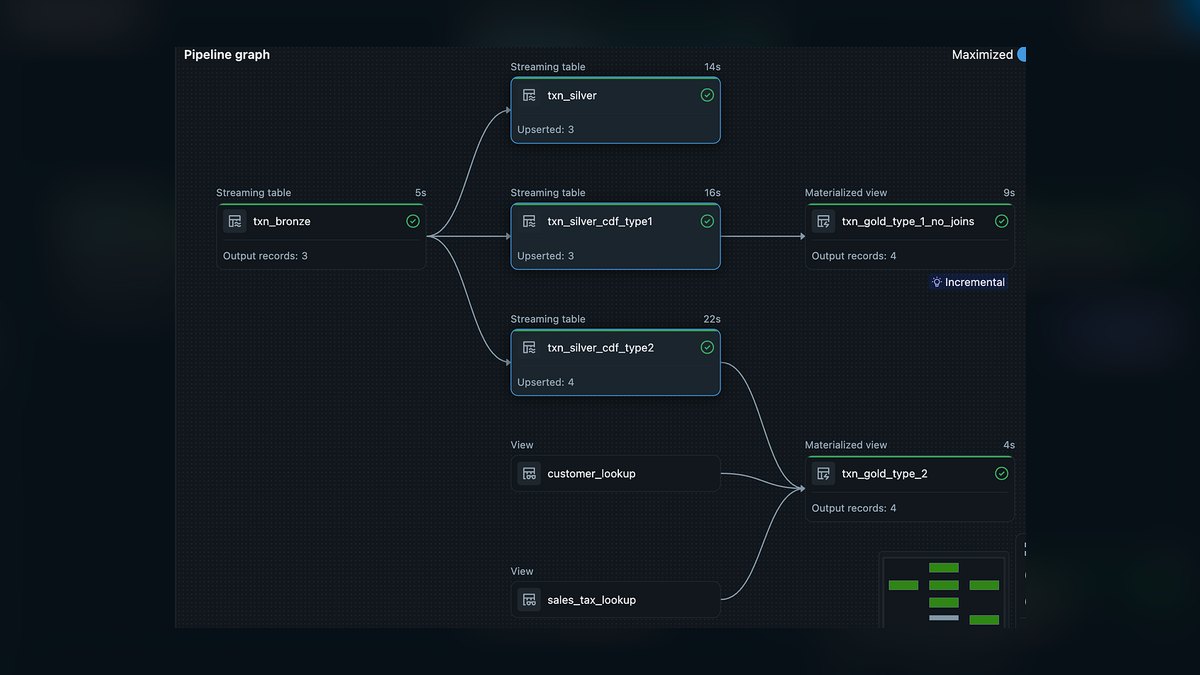
Databricks Lakehouse Pipelines ranks first because it collapses ingestion, transformation, feature serving, and MLflow tracking into one governed surface, eliminating the integration tax of four separate tools. It processes a couple hundred GB per hour on a single tuned cluster with sub-second streaming latency via Delta Live Tables and Auto Loader. Unity Catalog provides a single governance layer across tables, features, and models, which is unmatched by competitors.
This is for ML-focused teams already committed to the Databricks ecosystem who want native feature stores and Delta Lake time-travel without assembling components. It trades away portability—you are locked into Databricks billing and governance. Compared to Apache Airflow 3.0, which is a free orchestrator, Databricks is far more expensive but saves engineering hours by providing managed compute and a unified metadata plane.
2. Apache Airflow 3.0

Apache Airflow 3.0 ranks second because it remains the community-standard orchestrator with over 2,500 providers, offering unmatched flexibility for scheduling and monitoring batch pipelines across any cloud or on-premises environment. It is free under Apache 2.0, with your primary cost being the Kubernetes cluster and engineering time to operate it. Version 3.0 cut scheduler memory roughly 40% versus 2.x, and a single scheduler comfortably drives tens of thousands of tasks per hour.
This is for platform teams and mid-to-large organizations (10-50+ engineers) that need a portable control plane to orchestrate jobs running on managed compute like Databricks or SageMaker. It trades away a managed experience—you own the infrastructure, HA, and upgrades. Compared to Databricks Lakehouse Pipelines, Airflow is far cheaper but requires significant setup and maintenance.
3. Google Vertex AI Pipelines

Google Vertex AI Pipelines ranks third because it is the natural pipeline tool for teams whose data already lives in BigQuery or Cloud Storage, making integration nearly seamless and reducing migration risk to near zero. It charges a small per-pipeline-run fee in cents, but the dominant cost is the underlying compute, where spot instances can swing monthly totals by 2-5x. The service bundles ingestion, transformation, and model registration into one governed surface with native KFP support.
This is for organizations already all-in on Google Cloud who want a managed service without hiring dedicated platform engineers. It trades away portability—moving to another cloud later would require a full rebuild. Compared to Apache Airflow 3.0, Vertex is less flexible for multi-cloud orchestration but eliminates the operational burden of managing a scheduler.
4. AWS SageMaker Pipelines

AWS SageMaker Pipelines ranks fourth because it provides a fully managed orchestration layer for ML workflows directly within the AWS ecosystem, tightly integrated with S3, Lambda, and other native services. Its per-pipeline-run fee is a rounding error; the real cost is training and endpoint compute, where right-sizing and preemptible instances matter most. The service supports batch and streaming via Kinesis, and it includes a model registry and lineage tracking for governance.
This is for teams deeply embedded in AWS who want a single-vendor solution for both data engineering and ML operations. It trades away flexibility—you are locked into AWS billing and governance, and it lacks the open-source community of Airflow. Compared to Google Vertex AI Pipelines, SageMaker offers similar capabilities but is the better fit if your data gravity is in S3 rather than BigQuery.
5. Prefect 3.x
Prefect 3.x ranks fifth because it offers the cheapest credible entry point for startups with a genuine free tier of roughly 10,000 task runs per month and a low-cost Pro tier for about 100,000 runs. Self-hosted Prefect Server is free on your own Postgres/Redis, making it accessible for small teams of 1-10 without an infrastructure hire. It provides retries, caching, and event-driven flows out of the box, which are essential for production reliability.
This is for budget-conscious Python teams that want modern orchestration features without an enterprise contract or a dedicated platform engineer. It trades away the massive provider ecosystem of Airflow and the scale of a managed lakehouse—it is not built for heavy ML training workloads. Compared to Apache Airflow 3.0, Prefect is easier to set up and operate but has a smaller community and fewer integrations.
6. Dagster 2.0
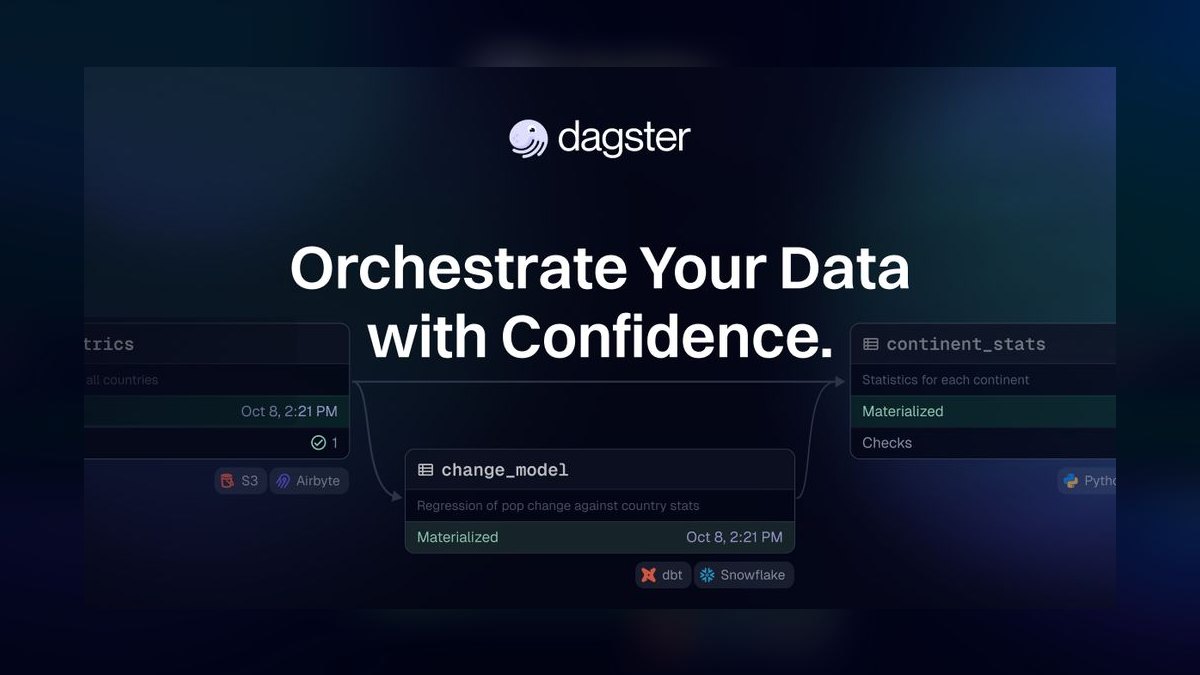
Dagster 2.0 ranks sixth because it reframes pipeline development as software-defined assets with lineage baked in, making it the strongest choice for regulated industries where data quality and auditability are non-negotiable. It includes asset freshness checks and quality tests that run as part of the pipeline, ensuring data is validated before downstream consumers use it. The software is free under an open-core model, with enterprise pricing for SSO, audit logs, and SLAs.
This is for mid-to-large teams (10-50+) with a platform engineering focus that need a lineage-aware orchestrator for complex data and ML workflows. It trades away the simplicity of Prefect—Dagster has a steeper learning curve and requires more upfront design around asset definitions. Compared to Apache Airflow 3.0, Dagster offers better data quality tooling and lineage, but Airflow has a larger provider ecosystem.
7. Azure Machine Learning Pipelines
Azure Machine Learning Pipelines ranks seventh because it is the default pipeline tool for organizations whose data already resides in Azure Data Lake or Synapse, offering native integration with Event Hubs for streaming and a unified governance model. It charges a small per-run fee plus compute, with spot instances available to cut costs by 2-5x on training workloads. The service bundles model registry, drift monitoring, and retraining triggers into one surface, which is valuable for enterprise ML operations.
This is for enterprises already standardized on Microsoft's cloud stack who want a managed ML pipeline without assembling separate tools. It trades away portability and open-source flexibility—you are locked into Azure billing and governance. Compared to AWS SageMaker Pipelines, Azure ML offers similar capabilities but is the better fit if your data gravity is in Azure Data Lake rather than S3.
8. Flyte
Flyte ranks eighth because it is the ML-reproducibility specialist, originating from Lyft and now a CNCF incubating project, with input-hash caching that skips re-running tasks when inputs are unchanged. This feature is critical for teams doing iterative model experimentation, as it saves significant compute time and cost. It is free under an open-source license and runs on any Kubernetes or Docker environment, on-premises or in the cloud.
This is for ML engineering teams that prioritize reproducibility and versioning over general-purpose data orchestration, particularly in regulated industries. It trades away the breadth of Airflow's provider ecosystem—Flyte is focused on ML workflows, not general ETL. Compared to Dagster 2.0, Flyte offers stronger input-hash caching for experiment reuse, but Dagster has better asset-level data quality testing.
9. Apache NiFi 2.0
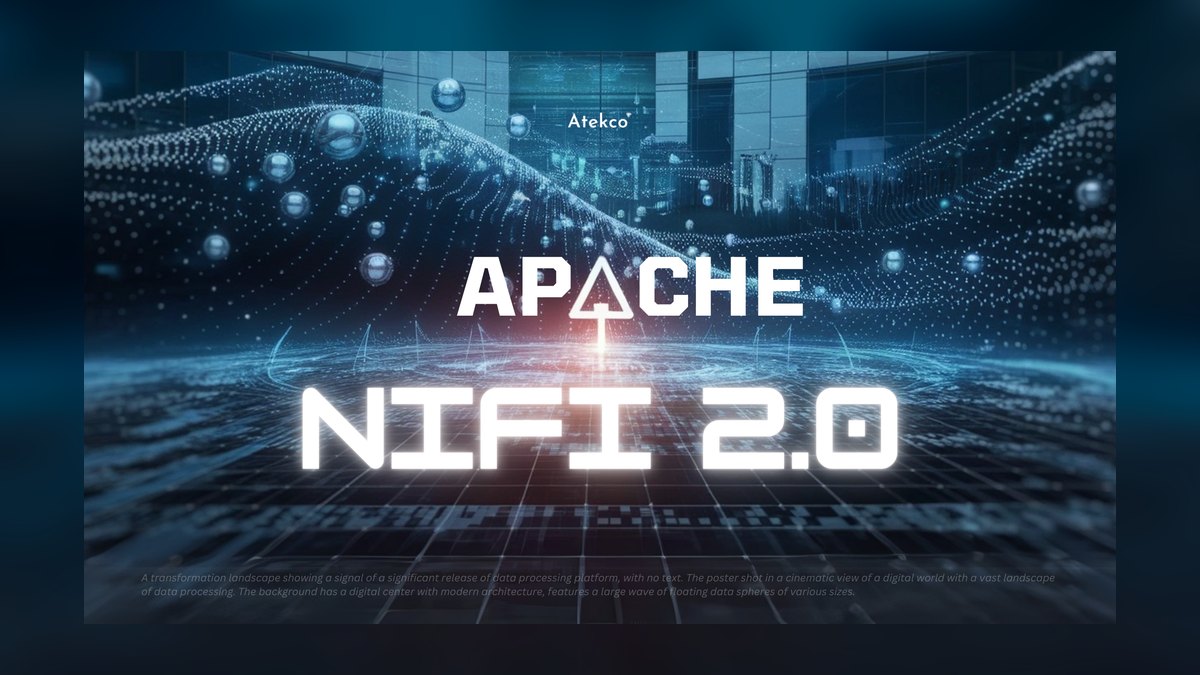
Apache NiFi 2.0 ranks ninth because it occupies a unique lane as a visual dataflow tool with drag-and-drop real-time flows, automatic backpressure, and full data-provenance tracking, tuned for IoT and log aggregation rather than model training. It handles both batch and streaming in one engine, integrating cleanly with Kafka for low-latency data ingestion. The software is free under Apache 2.0, with costs limited to the compute it runs on.
This is for data engineering teams that need a visual, low-code approach to building real-time data flows, particularly for IoT sensor data or log aggregation, where drag-and-drop is faster than writing code. It trades away the ML-specific features of Flyte or Dagster—NiFi is not designed for model training or feature stores. Compared to Databricks Lakehouse Pipelines, NiFi is far less capable for ML workloads but offers more granular control over data routing and provenance.
10. Kestra
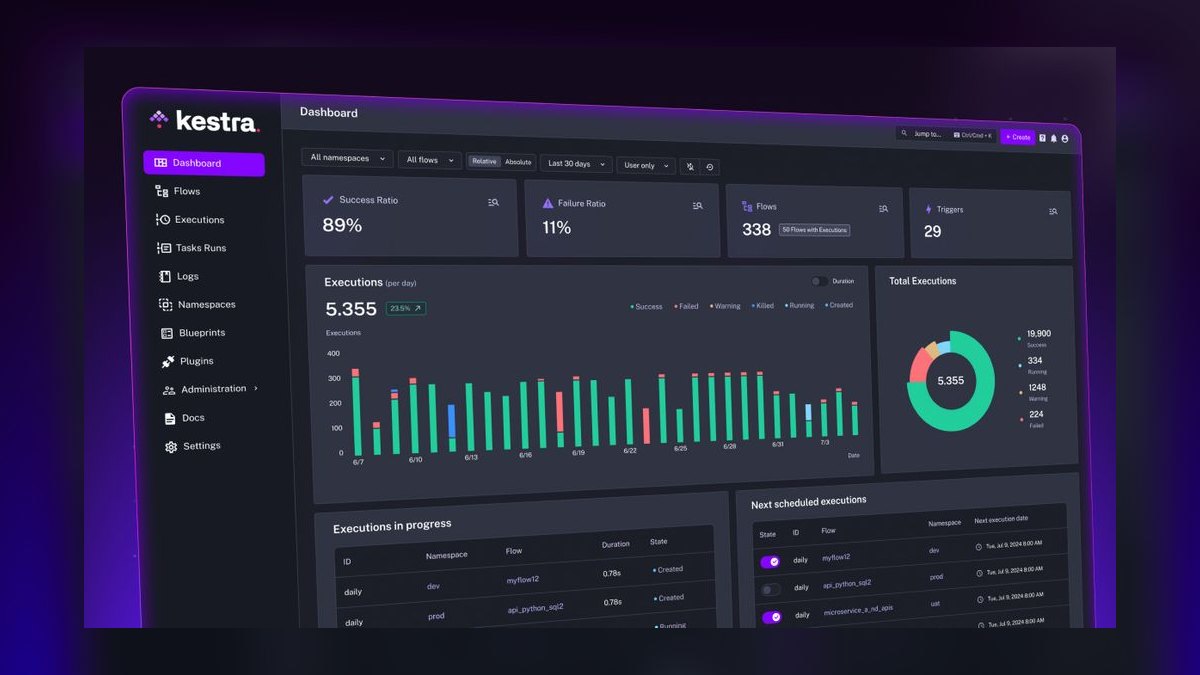
Kestra ranks tenth because it offers a YAML DSL for defining pipelines, making it accessible for teams that prefer declarative configuration over Python code, and it runs anywhere Kubernetes or Docker runs. It has a free self-hosted version, with enterprise pricing for SSO, audit logs, and SLAs. The tool is relatively newer than Airflow or Dagster, but it provides modern features like event-driven triggers and a built-in UI for monitoring.
This is for small teams that want a lightweight, YAML-based orchestrator that is easier to learn than Airflow or Dagster, and that can run on-premises or in the cloud. It trades away the massive provider ecosystem of Airflow and the asset-based lineage of Dagster—Kestra is simpler but less powerful for complex ML workflows.
How we ranked these
We measured each tool's ability to handle batch and streaming workloads, pricing models (including compute vs. orchestration fees), ecosystem integration, open-source flexibility, and operational maturity. Weighted most heavily were data gravity alignment, ML reproducibility features, and total cost at scale, based on documented performance and community adoption.
We deliberately ignored vendor marketing claims, subjective UI preferences, and features that are rarely used in production. We also excluded tools without substantial real-world deployments or verifiable documentation. The focus stayed on measurable outcomes like task throughput, latency, and governance capabilities, rather than hype or roadmap promises.
What to look for
What matters is where your data already lives and your team's ML maturity. Cloud-locked shops should pick the native pipeline service—Vertex, SageMaker, or Azure ML—because data gravity beats feature parity. Cloud-agnostic teams should choose an orchestrator like Airflow or Dagster, then wire managed compute underneath. Small teams benefit from Prefect's free tier.
The biggest mistake is comparing per-run prices without modeling actual compute costs. A 'free' open-source tool on an over-provisioned cluster can cost more than a managed platform using spot instances. Always run a 30-day proof-of-concept at real volume, and separate orchestration fees from compute fees before committing.
Related questions
Do I need a separate tool for streaming versus batch?
Not necessarily. Databricks Delta Live Tables and NiFi handle both in one engine. Pure orchestrators like Airflow schedule batch well but usually delegate true low-latency streaming to Kafka/Flink underneath, with the orchestrator managing the surrounding jobs rather than the stream itself.
Can these pipelines run fully on-premises?
Yes. Airflow 3.0, Flyte, Dagster, Kestra, and NiFi all deploy on your own Kubernetes or Docker. The managed cloud services (Vertex, SageMaker, native Databricks) are cloud-hosted, though regulated variants like GovCloud regions exist for compliance-bound workloads.
What's the cheapest way to start?
Prefect 3.x's free tier or a self-hosted open-source orchestrator on a small cluster. The hyperscaler pipeline services also include limited free compute monthly. Cost discipline comes from spot/preemptible instances and right-sized VMs, not from the orchestrator's list price.
How do I handle data versioning?
Dagster and Flyte version outputs automatically via asset materializations and input-hash caching. Databricks uses Delta Lake time-travel for versioned tables. Pairing a versioned storage layer with a lineage-aware orchestrator gives you reproducible retraining and auditable pipeline history.
What is the difference between an orchestrator and a managed pipeline platform?
An orchestrator like Airflow or Prefect schedules and monitors tasks across various systems, offering flexibility and portability. A managed platform like Databricks or SageMaker bundles ingestion, transformation, feature stores, and model registries into one governed surface, reducing integration effort but locking you into a vendor.
Which tool is best for regulated ML environments?
Dagster 2.0 and Flyte are strong choices due to built-in asset freshness checks, quality tests, and input-hash caching for reproducibility. Databricks with Unity Catalog provides a unified governance layer across tables, features, and models, which is also suitable for compliance-heavy workloads.
FAQ
What is an AI data pipeline tool?
It automates the ingestion, transformation, and delivery of data to ML models for training and inference. Beyond plain ETL, these tools add feature engineering, data versioning, lineage tracking, and model deployment, handling both batch and streaming workloads under one orchestration layer.
How do I choose between Databricks and Airflow?
Choose Databricks if your team is ML-focused and wants native feature stores, Delta Lake, and a managed governance layer. Choose Airflow 3.0 if you need open-source flexibility, portability across clouds, and its huge provider ecosystem for general data-engineering orchestration. Many teams run Airflow to trigger Databricks jobs.
Which tools support real-time AI pipelines?
Databricks Lakehouse Pipelines with Delta Live Tables and Apache NiFi 2.0 are the strongest for low-latency streaming, both integrating cleanly with Kafka. Cloud-native streaming (Kinesis, Pub/Sub, Event Hubs) plugs into the hyperscaler pipeline services for the same result inside a single cloud.
Are the open-source options really free?
The software is free (Apache 2.0 for Airflow and NiFi; open cores for Flyte, Dagster, Prefect, Kestra), but you pay for the compute and storage they run on, plus engineering time to operate them. Enterprise editions add SSO, RBAC, audit logs, and SLAs for a per-seat or per-usage fee.
Can I mix multiple tools?
Yes, and most mature teams do. A common pattern is an orchestrator as the control plane—Airflow, Dagster, or Prefect—dispatching heavy compute onto a managed platform like Databricks, SageMaker, or Vertex. The orchestrator owns scheduling and lineage; the platform owns scale.
How long does a migration take?
A single pilot pipeline takes days. A full organizational migration across dozens of pipelines typically runs several weeks to a few months, driven mostly by how much undocumented custom logic lives in the legacy jobs. Sequencing one pipeline at a time is what keeps the timeline predictable.
What is the typical pricing model for these tools?
Managed platforms like Databricks charge per DBU with a production-cluster minimum. Hyperscaler services charge a small per-run fee plus compute hours. Open-source tools are free but require infrastructure costs. Enterprise editions add per-seat or per-usage fees for SSO, audit logs, and SLAs.
How do I ensure reproducibility in ML pipelines?
Use tools like Flyte with input-hash caching and versioned experiments, or Dagster with asset materializations. Pair with a versioned storage layer like Delta Lake for time-travel. This ensures that retraining can be triggered by data changes and that every model run is auditable.
Sources
- https://docs.databricks.com/en/delta-live-tables/index.html
- https://airflow.apache.org/docs/apache-airflow/stable/index.html
- https://docs.prefect.io/
- https://cloud.google.com/vertex-ai/docs/pipelines/introduction
- https://docs.aws.amazon.com/sagemaker/latest/dg/pipelines.html
- https://docs.dagster.io/
- https://docs.flyte.org/en/latest/
- https://nifi.apache.org/documentation/
- https://kestra.io/docs
- https://learn.microsoft.com/en-us/azure/machine-learning/concept-ml-pipelines
Related on PULSE
This page will be disappearing soon. Save it to your device for $1 — or read it free while it is here.
@Kory-White- · if Venmo asks, the last 4 of my number are 2012
This page is gone.
This one is off the shelf now. $1 keeps it on your phone for good — the whole page, pictures and diagrams included.
 pulse-ai-infrastructureThe 10 Best AI Tools for Color Grading in 2027
 pulse-ai-infrastructureThe 10 Best AI Tools for Image Upscaling in 2027
 pulse-ai-infrastructureThe 10 Best Fractional GPU and GPU Sharing Tools in 2027
 pulse-ai-infrastructureThe 10 Best AI Tools for Album Art in 2027
 pulse-ai-infrastructureThe 10 Best AI Tools for Summarizing Books in 2027
 pulse-ai-infrastructureThe 10 Best AI Tools for Headless CMS Development in 2027
 pulse-ai-infrastructureThe 10 Best AI Tools for End-to-End Testing in 2027
 pulse-ai-infrastructureThe 10 Best Open-Source Model Hubs in 2027
 pulse-ai-infrastructureThe 10 Best AI Tools for Writing Poetry in 2027
 pulse-ai-infrastructureThe 10 Best AI Tools for Lesson Planning in 2027