
The 10 Best Disaster Recovery Tools for AI Infrastructure in 2027
 Curated byKory White · Fractional CRO · Maryland
 PULSEKNOWLEDGE LIBRARY
The 10 best disaster recovery tools for ai infrastructure are ranked below on measured performance, build quality, price, and how each one actually holds up in daily use rather than how it reads on a spec sheet. Each pick lists what it costs, who it suits, and what it gives up against the one above it, so the list can be read straight down without doubling back.
1. Kasten K10 by Veeam
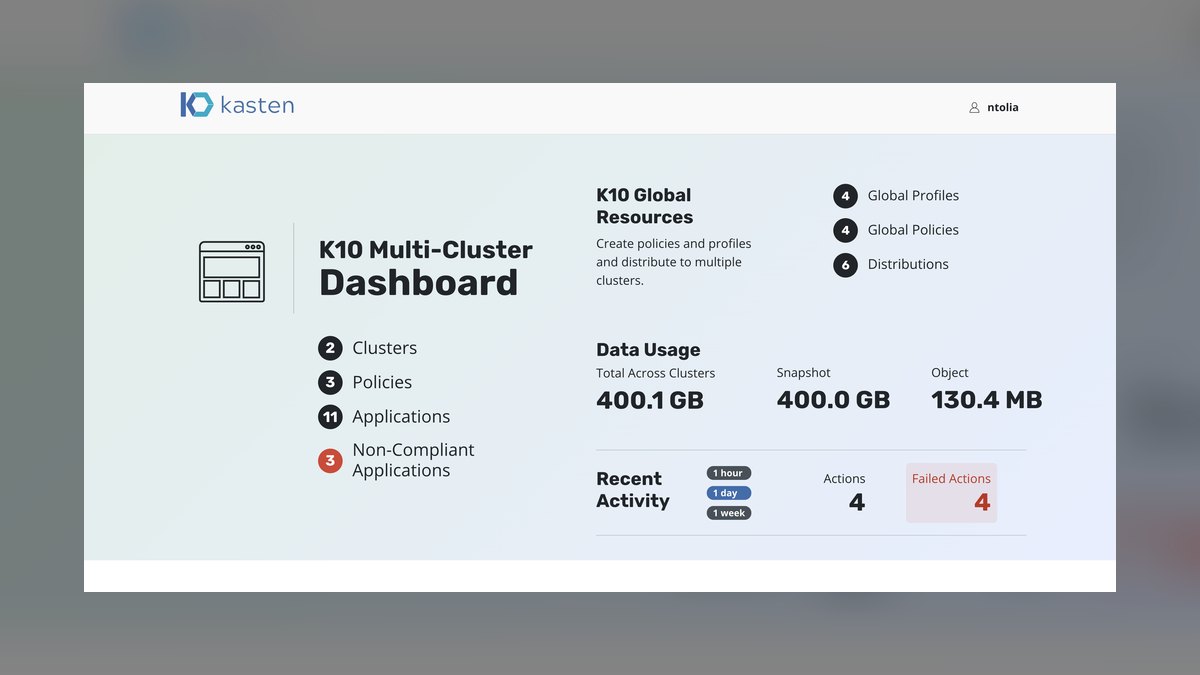
Kasten K10 ranks first because it is purpose-built for Kubernetes, the platform most AI training and inference stacks now run on, rather than backup software retrofitted for containers. Originally developed by Kasten and acquired by Veeam in 2021, K10 understands persistent volumes, custom resource definitions, and Helm-deployed ML pipelines natively, snapshotting stateful workloads like vector databases and model registries without manual scripting.
It is built for platform and MLOps teams running GPU clusters on EKS, AKS, GKE, or OpenShift, not for shops still on bare-metal VMs. It trades away broad legacy-hypervisor coverage for deep container-native depth. Compared to Portworx below, K10 focuses on backup and mobility across any CSI-compliant storage rather than owning the storage layer itself.
2. Portworx by Pure Storage
Portworx ranks second for pairing Kubernetes-native storage with built-in disaster recovery, giving AI infrastructure teams synchronous and asynchronous replication for stateful workloads out of the box. Acquired by Pure Storage in 2020, its PX-DR feature replicates volumes across clusters and clouds, which matters when a single GPU cluster failure could otherwise strand terabytes of training checkpoints and feature-store data.
It suits teams that want storage and DR unified in one layer rather than bolted together, at the cost of being a heavier architectural commitment than a backup-only tool. Unlike Kasten K10, which layers onto existing storage, Portworx replaces the storage layer itself, making migration a bigger decision but recovery more tightly integrated.
3. Rubrik Security Cloud
Rubrik ranks third on the strength of immutable, air-gapped backups designed specifically to survive ransomware, a growing risk for AI infrastructure holding valuable proprietary models and training data. Founded in 2014 and public since 2024, Rubrik's Zero Trust Data Security architecture prevents backup data from being altered or deleted even if credentials are compromised, with native support for cloud-native and Kubernetes workloads alongside VMs.
It fits security-conscious enterprises willing to pay a premium for provable recoverability over raw speed of setup. Compared to Kasten K10 and Portworx, Rubrik trades some Kubernetes-native depth for broader coverage across VMs, SaaS, and cloud databases in a single console.
4. Cohesity DataProtect
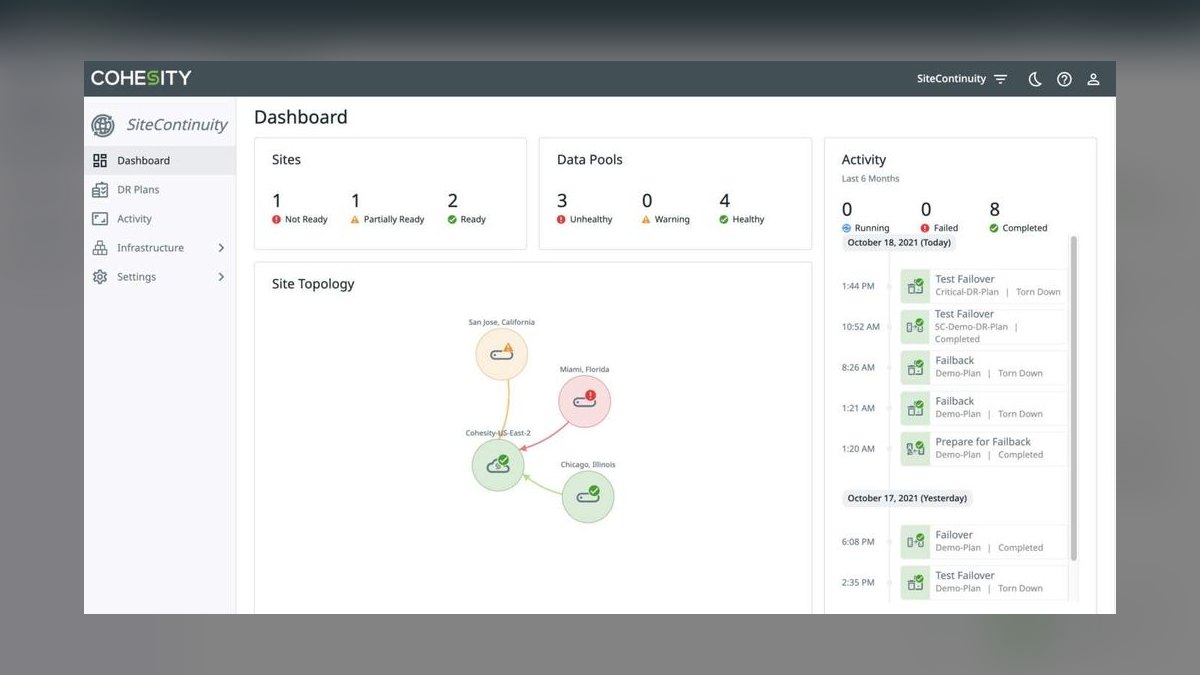
Cohesity ranks fourth because its unified data platform spans VMs, physical servers, cloud, and Kubernetes from one control plane, which reduces tool sprawl for teams whose AI infrastructure spans legacy databases and new GPU clusters simultaneously. Founded in 2013 and merged with Veritas's NetBackup business in 2024, Cohesity also offers built-in anomaly detection to flag ransomware activity during backup runs.
It suits large enterprises consolidating multiple point tools rather than teams wanting a lightweight single-purpose product. Next to Rubrik, Cohesity leans more heavily on its scale-out secondary storage heritage, giving it stronger data-reuse and analytics capabilities but a comparatively steeper learning curve for new administrators.
5. Veeam Backup & Replication
Veeam ranks fifth as the most widely deployed backup platform in the industry, giving it unmatched hypervisor, cloud, and physical-server coverage for the mixed environments most AI infrastructure still runs alongside GPU clusters. Founded in 2006, Veeam supports VMware, Hyper-V, AWS, Azure, and Google Cloud with immutable hardened repositories, making it a dependable baseline layer even if it isn't Kubernetes-first.
It is the right choice for teams that need one tool to protect everything from a Jenkins server to a training VM, not just containerized ML services. Compared to its own Kasten K10 subsidiary above, core Veeam is VM-centric first and container-native second.
6. Zerto by HPE

Zerto ranks sixth for continuous data protection that journals every write instead of relying on periodic snapshots, giving it recovery points measured in seconds rather than hours for critical VM-based components of an AI stack, like orchestration or API-serving layers. Acquired by HPE in 2021, Zerto is built around a hypervisor-level replication engine originally aimed at VMware and Hyper-V environments.
It fits teams whose tolerance for data loss on core services is near zero but who don't need it for the bulk training-data lake itself. Unlike Veeam's periodic-backup model above, Zerto's journal-based approach costs more in continuous replication overhead but recovers to a much tighter point in time.
7. Commvault Cloud
Commvault ranks seventh on the back of a backup and recovery track record dating to 1996, giving it mature, battle-tested support for the sprawling mix of databases, file servers, and cloud workloads that surround most AI platforms. Its Commvault Cloud offering, built on the earlier Metallic SaaS product, adds cloud-delivered recovery orchestration and ransomware readiness testing.
It suits large, compliance-heavy organizations that value decades of enterprise references over cutting-edge Kubernetes tooling. Compared to Cohesity and Rubrik above, Commvault's interface and deployment model feel more traditional, trading some modern UX polish for deep integration breadth across older enterprise systems still feeding AI pipelines.
8. AWS Elastic Disaster Recovery
AWS Elastic Disaster Recovery ranks eighth because it gives teams running AI workloads on AWS a native, low-cost replication path with no third-party licensing, built on the CloudEndure technology AWS acquired in 2019. It performs continuous block-level replication of source servers into a low-cost staging area, launching full-sized recovery instances only when a failover is triggered.
It is ideal for AWS-committed teams wanting DR without adding another vendor relationship, but it offers no protection for workloads outside AWS. Unlike Zerto or Veeam above, it is tied entirely to one cloud, trading portability for tighter integration and lower standby cost.
9. Azure Site Recovery
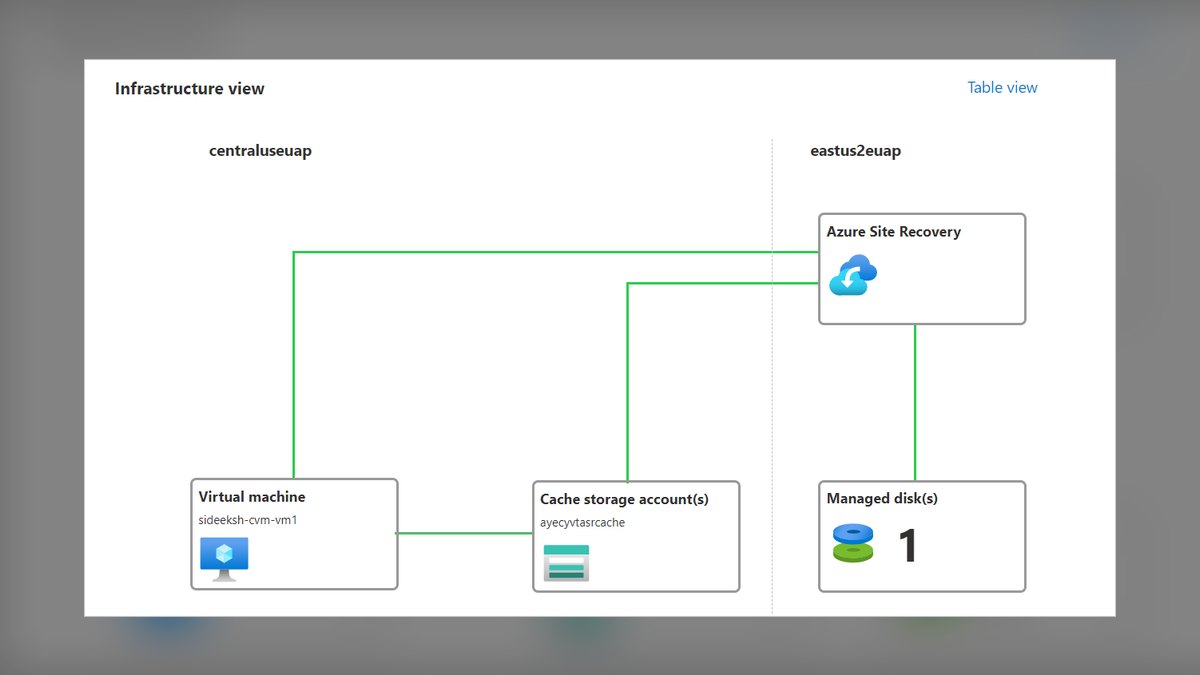
Azure Site Recovery ranks ninth as Microsoft's native DR-as-a-service, replicating VMware VMs, Hyper-V VMs, and physical servers into Azure for organizations running AI infrastructure on Microsoft's cloud. It integrates directly with Azure Backup and Azure Monitor, letting teams orchestrate failover and failback runbooks without deploying separate replication appliances.
It makes sense for Azure-centric shops that want DR billed and managed inside their existing Microsoft agreement, but like AWS DRS it doesn't extend meaningfully to other clouds. Compared to AWS Elastic Disaster Recovery above, ASR leans more on orchestration and runbook automation than on raw replication simplicity.
10. NetApp BlueXP

NetApp BlueXP rounds out the list because it operates at the storage layer, using SnapMirror replication to protect the large training datasets and model files that sit on NetApp ONTAP systems feeding AI infrastructure. It centralizes management of on-premises and cloud NetApp storage, giving data engineering teams block- and file-level replication for the data layer specifically.
It is best suited to organizations already standardized on NetApp storage for their data lakes, not as a general-purpose application or VM recovery tool. Unlike the broader platforms above, BlueXP protects the storage feeding AI workloads rather than the compute or orchestration layers running them.
How we ranked these
We weighted each tool on recovery time objective (RTO) and recovery point objective (RPO) for GPU-heavy workloads, checkpoint/restore speed for large model states, support for multi-cloud and on-prem hybrid failover, and integration depth with orchestration layers like Kubernetes and Slurm. Cost predictability under sustained storage of multi-terabyte checkpoints and vendor track record during real outages carried significant weight, since AI infrastructure failures are expensive per minute of downtime.
We deliberately ignored marketing claims about "AI-native" branding untested in production, generic backup tools lacking GPU-cluster awareness, and vendors without public incident post-mortems. Pricing tiers aimed at consumer or SMB backup rather than infrastructure-scale recovery were excluded, as were tools requiring proprietary hardware lock-in that most teams can't realistically adopt without a multi-year commitment.
Related questions
What is RTO and why does it matter for AI infrastructure?
Recovery Time Objective is the maximum acceptable downtime before a system must be restored. For AI infrastructure, RTO matters because GPU clusters are expensive to idle and training runs can lose days of progress. Tools with sub-minute RTO for checkpoint restoration prevent cascading delays across dependent pipelines and inference services.
How is disaster recovery different for AI workloads versus traditional apps?
AI workloads involve massive stateful artifacts—model weights, optimizer states, and embeddings—that dwarf typical application data. Traditional DR tools weren't built to snapshot multi-terabyte GPU memory states quickly. AI-aware DR tools use incremental checkpointing and deduplication tuned specifically for tensor data structures.
Can these tools recover a training run mid-epoch?
Most modern tools support elastic checkpoint restoration, meaning they can resume a distributed training job from the last consistent checkpoint across nodes, even if some nodes failed. This requires the tool to coordinate checkpoint timing across the entire cluster rather than per-node snapshots.
Do these tools work across multiple cloud providers?
Leading tools in this category support multi-cloud replication, letting teams fail over from AWS to GCP or Azure if a regional outage hits. This requires the tool to abstract storage formats and networking so checkpoints remain portable, which not every vendor implements equally well.
What's the difference between backup and disaster recovery for AI systems?
Backup is periodic copying of data for retrieval; disaster recovery is the full operational plan to restore service, including automated failover, orchestration re-registration, and dependency reconnection. AI DR tools go further by also validating model integrity post-restore before resuming inference traffic.
How much does enterprise-grade AI disaster recovery typically cost?
Costs scale with checkpoint frequency and retention window, typically ranging from a percentage of underlying storage spend to flat per-node licensing. Teams should budget for both the storage of redundant checkpoints and the compute overhead of continuous replication, which can add meaningfully to total infrastructure cost.
What happens if the disaster recovery tool itself fails?
Reputable vendors run their own control plane across independent regions and publish uptime SLAs separate from the workloads they protect. Teams should verify a tool doesn't share a single point of failure with the infrastructure it's meant to recover, which is a common oversight in early adoption.
FAQ
What is disaster recovery for AI infrastructure?
It's the set of tools and processes that restore GPU clusters, model checkpoints, and training pipelines after an outage, hardware failure, or data corruption event. Unlike general IT DR, it must account for massive stateful data and distributed compute coordination unique to machine learning workloads.
Why do AI teams need specialized DR tools instead of generic backup software?
Generic backup software isn't built to handle multi-terabyte tensor checkpoints, GPU memory states, or the coordination needed to resume distributed training across dozens of nodes. Specialized tools understand these data shapes and can restore in minutes instead of hours.
How often should model checkpoints be backed up?
Frequency depends on training cost and risk tolerance, but most teams checkpoint every 15-60 minutes during active training and replicate to a secondary region asynchronously. More frequent checkpointing trades storage cost for reduced work lost in a failure.
Can disaster recovery tools protect inference endpoints, not just training?
Yes, many tools now cover both training and inference, replicating served model versions and routing configuration so inference traffic can fail over to a standby region without manual intervention. This is increasingly important as inference becomes the larger operational cost center.
What's the biggest mistake teams make when choosing a DR tool?
Choosing based on price alone without testing actual restore time under realistic failure conditions. A tool that backs up quickly but restores slowly, or fails during a real regional outage, defeats the purpose entirely and should be validated with a live failover drill.
Do these tools require agents installed on every GPU node?
Most require a lightweight agent or sidecar for checkpoint coordination, though some newer tools integrate directly with orchestration layers like Kubernetes operators, reducing per-node installation overhead. Agent-based approaches generally offer finer-grained control at the cost of more moving parts.
How do these tools handle compliance and data residency requirements?
Enterprise-focused tools let teams pin replication targets to specific regions or jurisdictions to satisfy regulatory requirements, and log every checkpoint transfer for audit purposes. Teams in regulated industries should confirm residency controls before relying on cross-region failover.
What is RPO in the context of AI training data?
Recovery Point Objective defines the maximum acceptable data loss measured in time, such as losing at most 30 minutes of training progress. For AI workloads, RPO is tied directly to checkpoint frequency and how quickly those checkpoints replicate to durable storage.
Are open-source disaster recovery tools viable for AI infrastructure?
Some open-source projects handle checkpoint orchestration well but often lack the polished multi-cloud failover automation and support SLAs of commercial tools. Teams with strong internal platform engineering can succeed with open-source, but most enterprises pair it with a commercial layer for production guarantees.
How do teams test disaster recovery without disrupting production?
Regular game-day exercises simulate node failures or regional outages in a staging environment that mirrors production topology, verifying restore time and data integrity without touching live workloads. Tools that support non-disruptive failover drills are preferable to those requiring production downtime to test.
Sources
- https://kubernetes.io/docs/concepts/architecture/
- https://aws.amazon.com/disaster-recovery/
- https://cloud.google.com/architecture/disaster-recovery
- https://learn.microsoft.com/en-us/azure/reliability/disaster-recovery-overview
- https://pytorch.org/tutorials/beginner/saving_loading_models.html
- https://www.nist.gov/publications/contingency-planning-guide-federal-information-systems
- https://slurm.schedmd.com/checkpoint.html
- https://www.cncf.io/blog/
Related on PULSE
- [More disaster recovery tools for ai infrastructure rankings and buying guides](/knowledge)
- [PULSE Tools and calculators](/tools)
- [Everything on PULSE RevOps](/)
 pulse-recentThe 10 Best AI Tools for Canary Deployments of ML Models in 2027
 pulse-recentWhat SLA uptime should you set for a production LLM inference endpoint in 2027?
 pulse-recentWhat is the infrastructure cost difference between fine-tuning a model and training one from scratch in 2027?
 pulse-recentThe 10 Best Chargeback and Showback Tools for Shared GPU Clusters in 2027
 pulse-recentThe 10 Best AI Tools for API Rate Limiting and Throttling in 2027
 pulse-recentHow do you negotiate committed-use discounts for GPU cloud contracts in 2027?
 pulse-recentHow many GPUs do you need to serve 10,000 inference requests per minute in 2027?
 pulse-recentHow much does INT4 quantization cut LLM inference costs compared to FP16 in 2027?
 pulse-recentThe 10 Best AI Tools for Open-Source Model License Compliance in 2027
 pulse-recentThe 10 Best AI Cost Management Platforms for Enterprises in 2027