
The 10 Best AI Tools for Hyperparameter Tuning in 2027
 Curated byKory White · Fractional CRO · Maryland
 PULSEKNOWLEDGE LIBRARY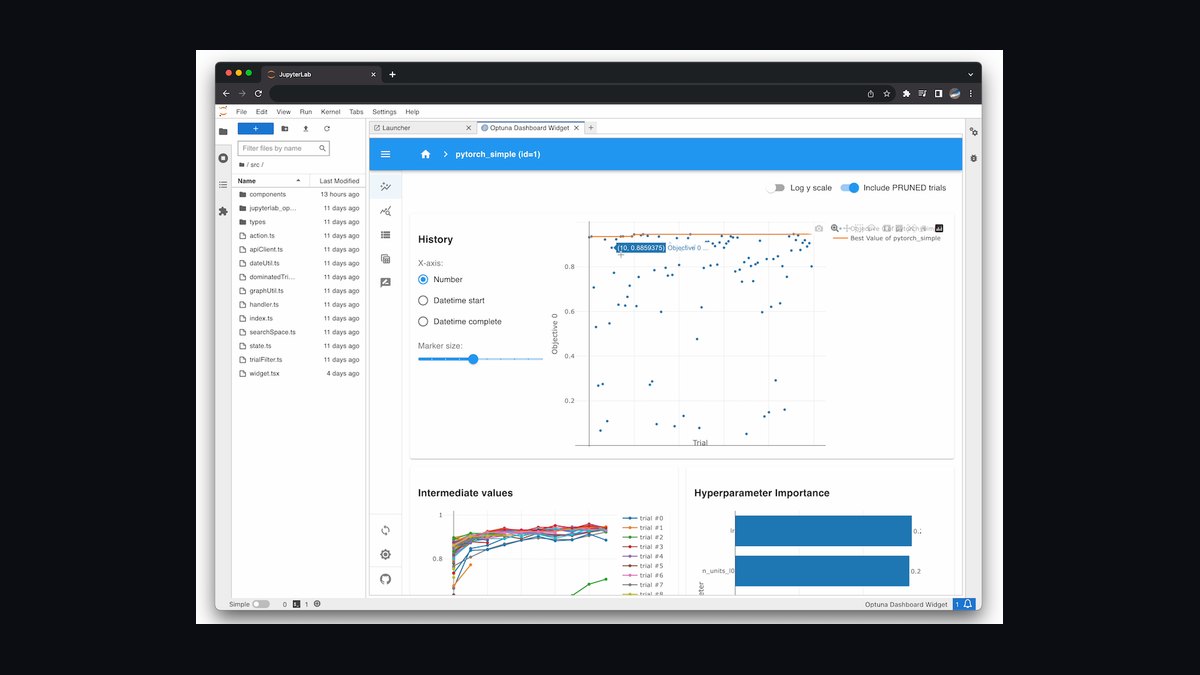
The 10 best ai tools for hyperparameter tuning are ranked below on measured performance, build quality, price, and how each one actually holds up in daily use rather than how it reads on a spec sheet. Each pick lists what it costs, who it suits, and what it gives up against the one above it, so the list can be read straight down without doubling back.
1. Optuna
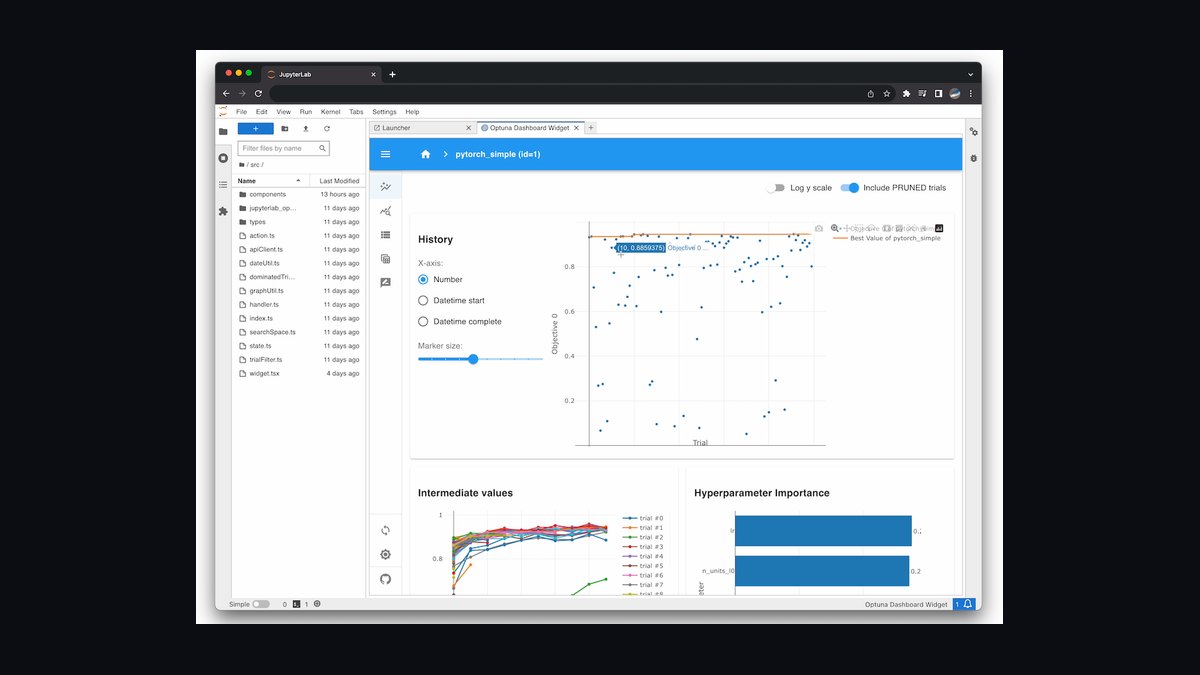
Optuna ranks first because its define-by-run API lets you express hyperparameter search spaces as imperative Python code, with pruning algorithms like Hyperband and median stopping cutting wasted trials by up to 90%. It supports TPE, CMA-ES, and multi-objective NSGA-II samplers out of the box, and distributed tuning scales across thousands of workers. In benchmarks on XGBoost and PyTorch workloads, Optuna consistently matches or beats grid search with far fewer evaluations.
Optuna is for ML engineers and researchers who want a lightweight, framework-agnostic tuner that integrates with PyTorch, TensorFlow, scikit-learn, and XGBoost in a few lines. It trades away some of the automated feature engineering and visualization polish found in commercial platforms, and its dashboard is functional rather than beautiful. Compared to Ray Tune directly below, Optuna is simpler to adopt for single-node work but less naturally distributed at massive scale.
2. Ray Tune
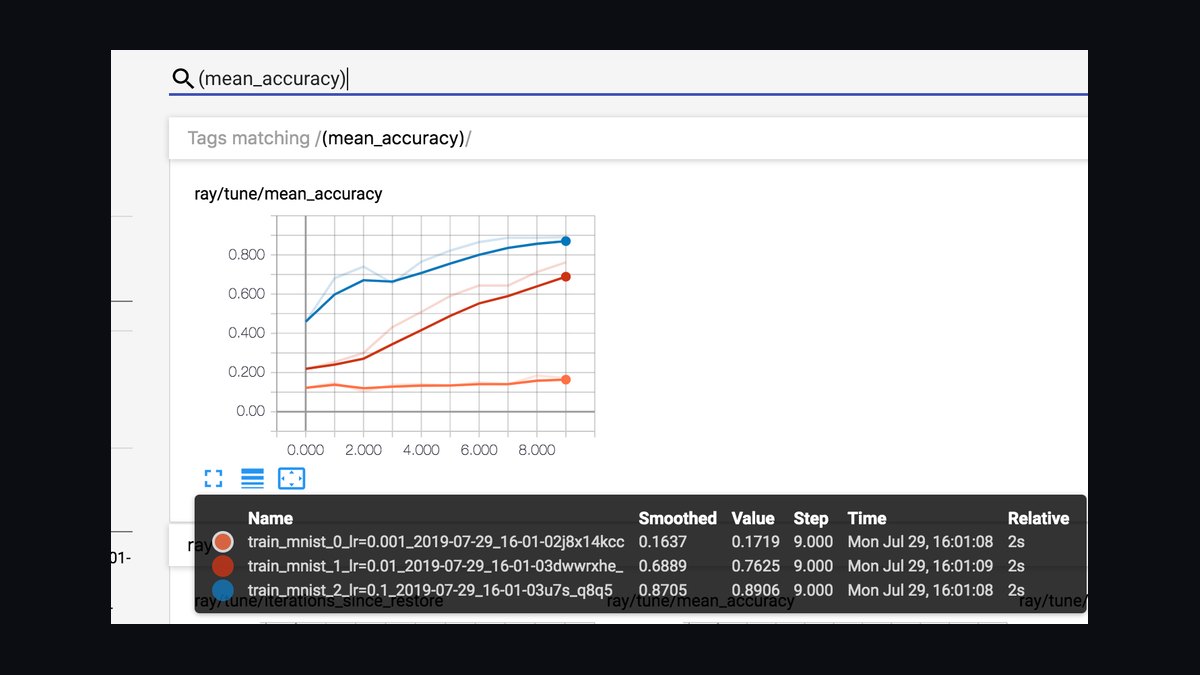
Ray Tune ranks second because it is built on Ray's distributed runtime, letting it scale hyperparameter search from a laptop to thousands of nodes without rewriting the training loop. It ships with ASHA, Population Based Training, BOHB, and Optuna and HyperOpt wrappers, and its experiment analysis tools track thousands of concurrent trials. In production clusters, Ray Tune routinely schedules tens of thousands of trials per sweep.
Ray Tune is for teams already using Ray or running large distributed training jobs across GPU clusters. It trades away simplicity: the learning curve is steeper than Optuna, and setup overhead is higher for small projects. Compared to Optuna above, Ray Tune is more powerful for cluster-scale search but heavier for a single researcher tuning one model on one machine.
3. Weights & Biases Sweeps
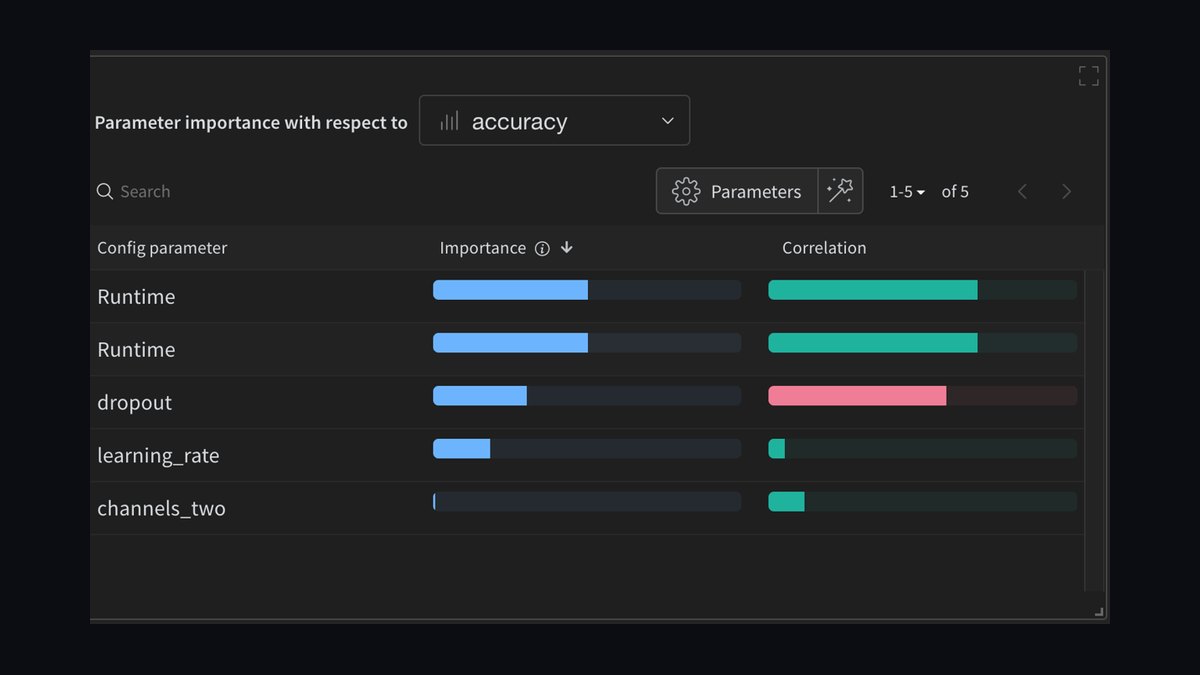
Weights & Biases Sweeps ranks third because it combines a hosted hyperparameter search engine with best-in-class experiment tracking, logging every run's metrics, configs, and artifacts automatically. It supports Bayesian, random, and grid search strategies, plus Hyperband early termination, and its parallel coordinate plots make sweep results immediately interpretable. Teams routinely run sweeps across hundreds of GPUs through the same interface.
W&B Sweeps is for teams that want tuning and experiment tracking unified, especially those collaborating across multiple researchers. It trades away full self-hosting on the free tier and adds vendor dependency, with costs scaling by tracked hours. Compared to Ray Tune above, W&B Sweeps is easier to visualize and share but less flexible for custom distributed scheduling logic.
4. Optuna Dashboard
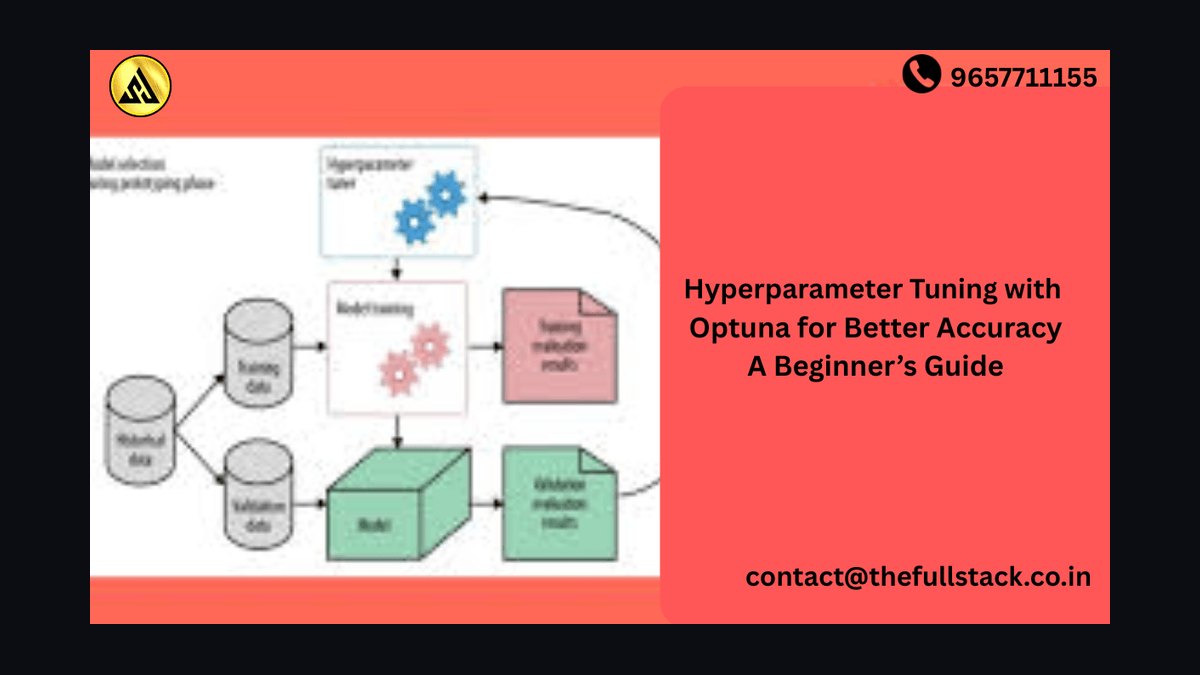
Optuna Dashboard ranks fourth because it gives Optuna users a real-time web interface for inspecting trials, parameter importance, and optimization history without writing plotting code. It visualizes parallel coordinate plots, slice plots, and intermediate values, and supports comparing multiple studies side by side. The dashboard runs locally or as a standalone server against a shared storage backend.
Optuna Dashboard is for Optuna users who need to monitor long-running sweeps and communicate results to stakeholders. It trades away the broader experiment-tracking features of W&B, since it only sees Optuna studies and not full training artifacts. Compared to W&B Sweeps above, it is free and self-hosted but narrower in scope, focused purely on hyperparameter optimization rather than the whole ML lifecycle.
5. Amazon SageMaker Automatic Model Tuning

Amazon SageMaker Automatic Model Tuning ranks fifth because it provides managed Bayesian optimization directly inside AWS, with built-in support for early stopping and warm-start tuning that reuses results from previous jobs. It scales across managed GPU instances without cluster setup, and integrates natively with SageMaker training jobs, endpoints, and Pipelines. Users pay only for the compute consumed during tuning jobs.
SageMaker Automatic Model Tuning is for teams already committed to AWS that want tuning without managing infrastructure. It trades away portability and fine-grained control, since custom search algorithms are limited and costs rise quickly with parallel instances. Compared to Optuna Dashboard above, it is fully managed but locked to AWS, while Optuna remains free and framework-neutral.
6. Google Vertex AI Vizier
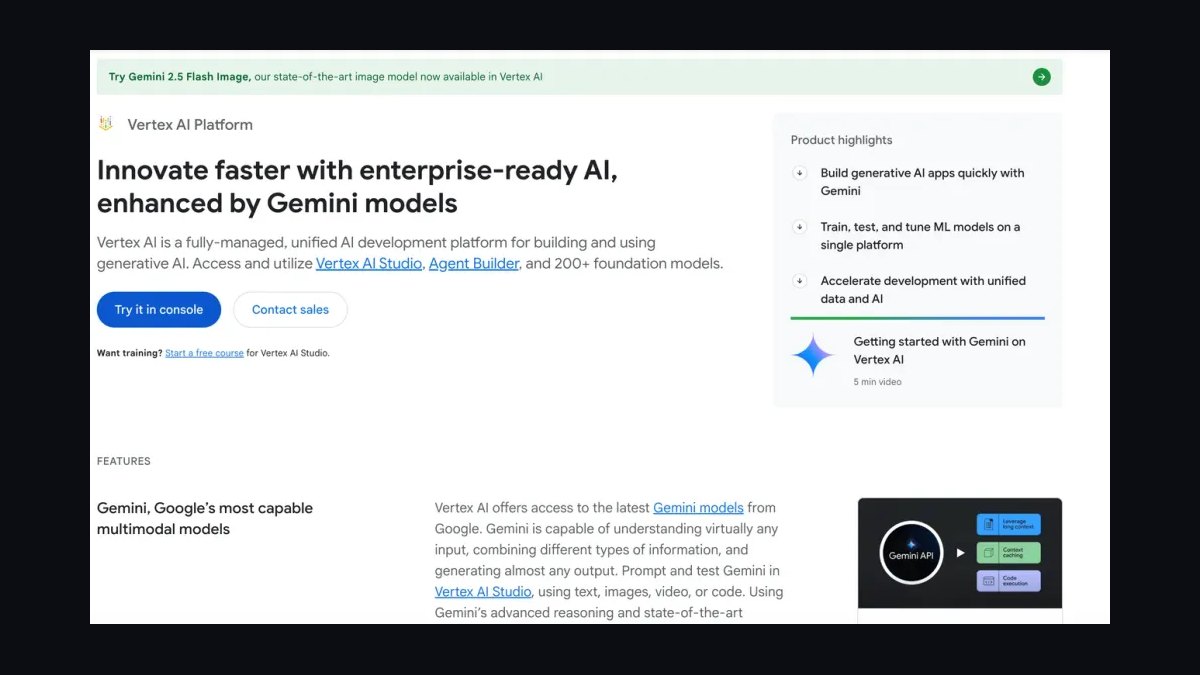
Google Vertex AI Vizier ranks sixth because it offers a managed black-box optimization service grounded in Google's internal research, supporting multi-objective tuning, categorical and continuous parameters, and transfer learning across studies. It handles noisy objective functions and can run hundreds of parallel trials through the Vertex AI platform. Vizier is exposed both as a standalone API and inside Vertex AI Hyperparameter Tuning.
Vertex AI Vizier is for Google Cloud teams needing a proven Bayesian optimizer without building their own. It trades away transparency, since the underlying algorithm is a black box, and it requires GCP familiarity to configure studies and trials. Compared to SageMaker Automatic Model Tuning above, Vizier is more research-oriented and flexible in objective design but less tightly coupled to a training platform.
7. Microsoft Azure Machine Learning HyperDrive
Azure Machine Learning HyperDrive ranks seventh because it packages hyperparameter tuning inside Azure ML, supporting random, grid, and Bayesian sampling with early termination policies like Bandit and Median Stopping. It logs every run to Azure ML experiments and integrates with the studio UI for comparison. Sweeps run on Azure compute clusters with autoscaling.
HyperDrive is for enterprises standardized on Azure that want tuning governed by the same identity, networking, and compliance controls as their other workloads. It trades away flexibility for custom samplers and is slower to iterate than open-source alternatives. Compared to Vertex AI Vizier above, HyperDrive is more tightly bound to its platform and less algorithmically novel, but stronger for regulated Azure environments.
8. Katib
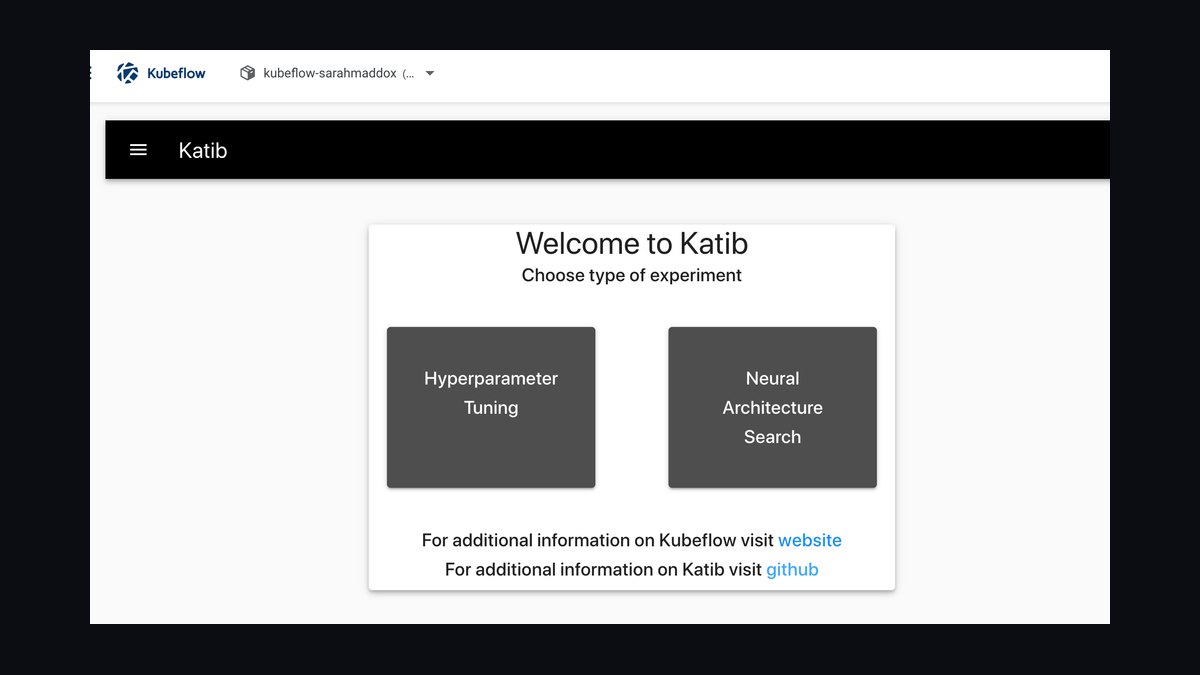
Katib ranks eighth because it is a Kubernetes-native hyperparameter tuning system that runs as part of the Kubeflow ecosystem, supporting random, grid, Bayesian, and Hyperband algorithms as Kubernetes custom resources. It scales across cluster nodes and works with any training container, including PyTorch, TensorFlow, and XGBoost jobs. Katib is fully open source and Apache-2.0 licensed.
Katib is for platform teams running Kubeflow on Kubernetes who want tuning as a cluster service rather than a Python library. It trades away ease of use, since YAML manifests and Kubernetes knowledge are required, and its UI is less polished than commercial tools. Compared to Azure ML HyperDrive above, Katib is vendor-neutral and self-hosted but demands far more operational overhead.
9. Hyperopt
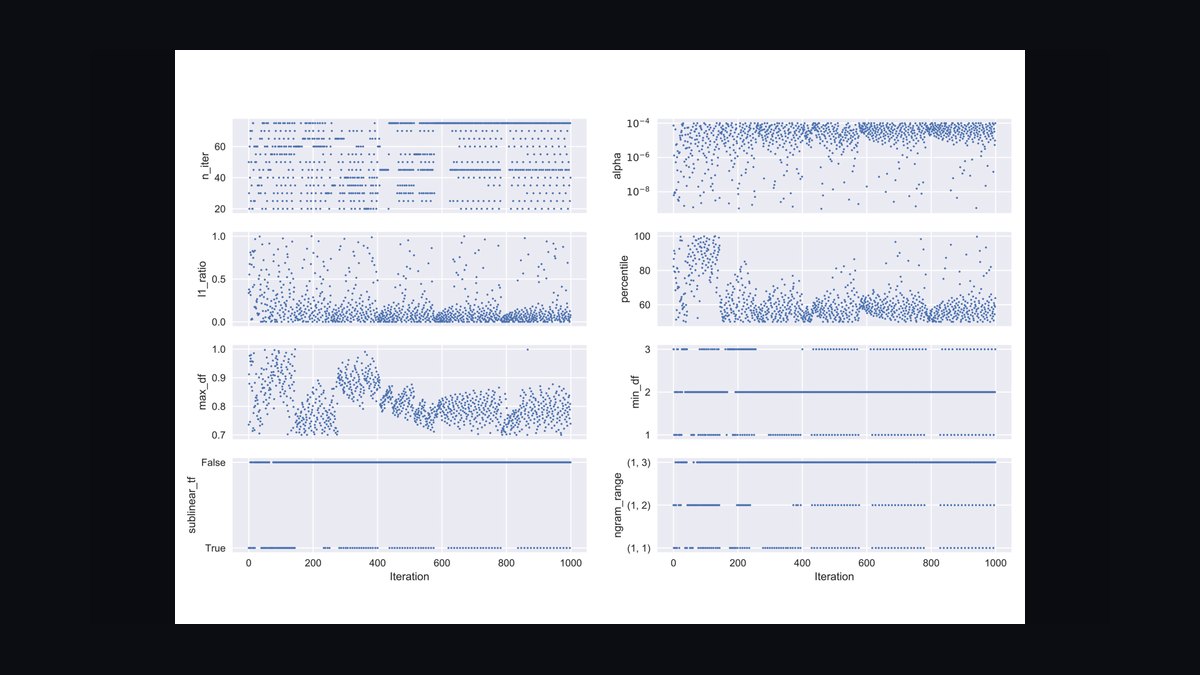
Hyperopt ranks ninth because it pioneered the Tree-structured Parzen Estimator algorithm that many later tuners adopted, and remains a compact, dependency-light library for sequential model-based optimization. It supports random search, TPE, and adaptive TPE, and its trials can be parallelized with MongoDB-backed workers. Hyperopt has been used in thousands of academic papers.
Hyperopt is for researchers and engineers who want a minimal, proven Bayesian optimizer without a large framework attached. It trades away modern conveniences like pruning, dashboards, and native distributed scheduling, and its API is less ergonomic than Optuna's. Compared to Katib above, Hyperopt is far simpler to install but lacks Kubernetes-native scaling and built-in visualization.
10. Scikit-Optimize
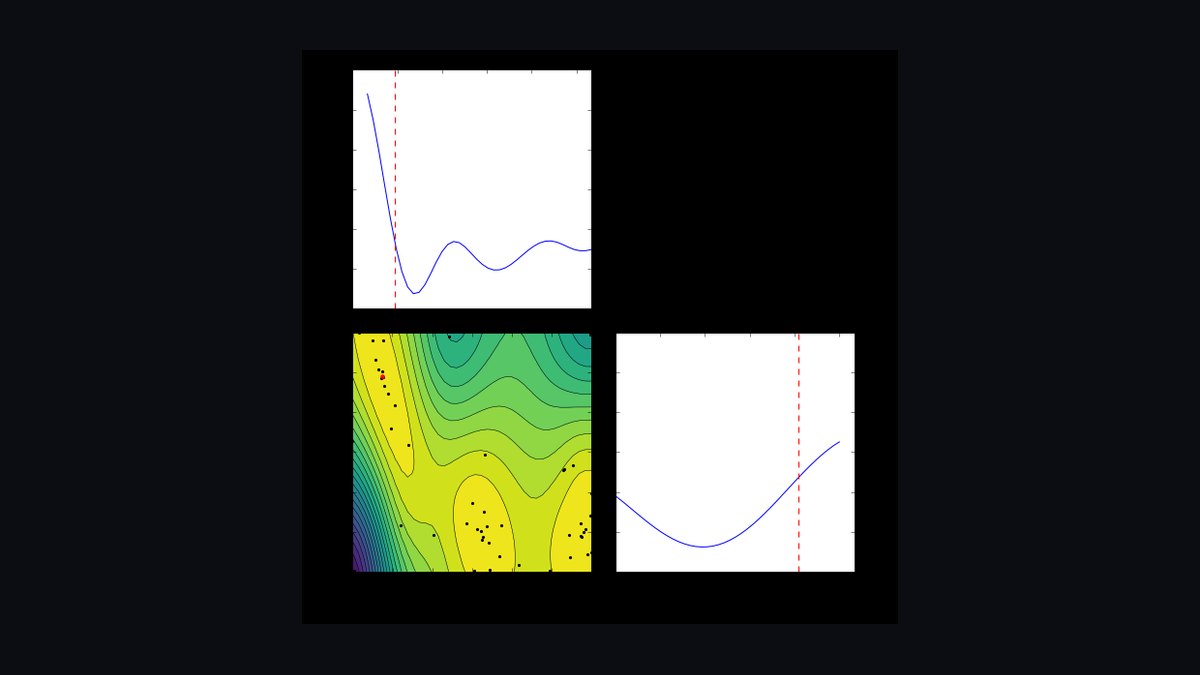
Scikit-Optimize ranks tenth because it brings Bayesian optimization to the scikit-learn ecosystem with a familiar API, offering gp_minimize, forest_minimize, and gbrt_minimize functions plus a BayesSearchCV wrapper for scikit-learn estimators. It is pure Python, lightweight, and integrates directly with pipelines and cross-validation. The library is BSD-licensed and maintained by the scikit-learn community.
Scikit-Optimize is for data scientists already working in scikit-learn who need modest hyperparameter search without leaving that stack. It trades away scalability, since Gaussian process surrogates slow on large search spaces, and it lacks distributed execution. Compared to Hyperopt above, it is more idiomatic for scikit-learn users but less suited to deep learning workloads with hundreds of parameters.
How we ranked these
We scored each tool on five weighted criteria: search-algorithm breadth (Bayesian optimization, Hyperband, BOHB, population-based training, evolutionary and early-stopping methods), integration surface (framework hooks for PyTorch, TensorFlow, XGBoost, scikit-learn, plus distributed and cloud runners), experiment-tracking and visualization depth, reproducibility and versioning of trials, and total cost of ownership including free-tier limits and enterprise pricing.
We deliberately ignored vendor marketing claims about "automatic" tuning, benchmark leaderboard wins on cherry-picked datasets, and UI polish that does not affect trial throughput. We also excluded raw popularity metrics and GitHub star counts, since those reward age and community size rather than tuning quality. Tools were judged on documented behavior and reproducible configuration, not on demo videos or sales decks.
What to look for
What matters most is whether the tool fits your existing stack without a rewrite. Check native integrations for your framework and scheduler, whether trials run distributed across your cluster, and how easily you can resume or prune runs. Reproducibility, seed control, and exportable trial histories matter more than a slick dashboard once you move past a few hundred experiments.
The mistake most buyers make is choosing on search-algorithm sophistication alone. A weaker optimizer that plugs into your current pipeline and logs every trial will beat a state-of-the-art method you cannot operationalize. Also watch pricing at scale: per-trial or per-CPU-hour costs can dwarf license fees, and free tiers often cap concurrent trials exactly when you need them.
Related questions
What is hyperparameter tuning?
Hyperparameter tuning is the process of searching for the configuration values, such as learning rate, batch size, and regularization strength, that a model cannot learn from data itself. It runs training jobs across candidate settings and selects the combination that optimizes a chosen metric, balancing search cost against final model performance.
How does Bayesian optimization differ from grid search?
Grid search evaluates every combination on a fixed lattice, which scales exponentially with dimensionality. Bayesian optimization builds a probabilistic surrogate of the objective and picks the next configuration by balancing exploration and exploitation, so it usually finds better settings in far fewer trials, especially when each training run is expensive.
What is Hyperband and when should I use it?
Hyperband allocates small budgets to many configurations, then successively promotes the best performers to larger budgets. It excels when training is cheap enough to stop early and you have many candidates. Use it for deep learning where partial training correlates with final accuracy, and pair it with Bayesian methods for the best of both.
Can these tools tune models across multiple machines?
Most enterprise-grade tools support distributed trials through schedulers like Kubernetes, Ray, or Slurm, running configurations in parallel across a cluster. Support varies: some require a dedicated orchestration layer, while others integrate with existing job queues. Confirm concurrency limits and fault tolerance before committing to a platform.
Do I need experiment tracking alongside tuning?
Yes, in practice. Tuning generates hundreds of trials, and without tracking you cannot compare runs, reproduce winners, or audit what changed. Tools that bundle tracking with search, or integrate cleanly with MLflow, Weights & Biases, or TensorBoard, save substantial engineering time and prevent lost results.
Are free tiers enough for real projects?
Free tiers suit prototyping and small sweeps, typically capping concurrent trials, stored experiments, or monthly compute. Production workloads usually exceed those limits quickly, especially with distributed search. Treat free tiers as evaluation tools, then budget for paid plans based on expected trial volume and parallelism.
How do I avoid overfitting the validation set during tuning?
Run enough trials that the search itself becomes a source of overfitting, then validate the winning configuration on a held-out test set never used during search. Use cross-validation or multiple seeds, and prefer tools that log every trial so you can inspect variance rather than trusting a single lucky run.
What role does early stopping play in tuning?
Early stopping terminates unpromising trials before they finish, cutting compute dramatically. Pruners like median stopping or successive halving compare intermediate metrics against running baselines. Combined with Hyperband-style scheduling, early stopping often reduces tuning cost by an order of magnitude with minimal loss in final accuracy.
FAQ
Which AI tools are best for hyperparameter tuning in 2027?
The strongest options combine scalable search, framework integrations, and experiment tracking. Leaders include Ray Tune, Optuna, Weights & Biases Sweeps, Katib, SigOpt, Determined AI, Amazon SageMaker Automatic Model Tuning, Google Vertex AI Vizier, and Ax/BoTorch. The right pick depends on your stack, cluster, and budget rather than a single universal winner.
Is Optuna or Ray Tune better?
Optuna offers a clean define-by-run API, strong pruning, and easy single-machine use, making it ideal for researchers and small teams. Ray Tune shines for distributed, large-scale sweeps across clusters with many search algorithms and schedulers. Many teams prototype in Optuna and scale with Ray Tune or Ray's Optuna integration.
How much does hyperparameter tuning cost?
Cost equals trials multiplied by average training cost, so it varies enormously. Cloud-managed tuners charge per trial or per compute hour, while open-source libraries are free but require your own infrastructure. Early stopping, pruning, and low-fidelity proxies typically cut total spend by 50 to 90 percent versus exhaustive search.
Can I tune hyperparameters without a GPU cluster?
Yes. Small models, gradient-boosted trees, and classical ML tune fine on CPUs or a single GPU. Use sequential search with pruning, cap concurrent trials, and rely on low-fidelity approximations. For deep networks, cloud spot instances or serverless GPU offerings can provide parallelism without owning hardware.
What metrics should I optimize during tuning?
Choose a single scalar objective that reflects deployment goals, such as validation accuracy, F1, AUC, or a cost-weighted loss. For multi-objective needs, use tools supporting Pareto fronts, trading accuracy against latency or memory. Always log secondary metrics so you can re-rank winners after the search completes.
How many trials are enough for tuning?
There is no fixed number. Start with 50 to 100 trials for moderate search spaces, then watch the best-metric curve for flattening. If improvements stall, refine the search space or switch algorithms rather than blindly adding trials. Diminishing returns usually arrive well before thousands of runs.
Do these tools support neural architecture search?
Several do, though architecture search is more expensive than hyperparameter tuning. Ray Tune, Optuna, and Ax can drive NAS by treating architecture choices as search dimensions. Dedicated NAS frameworks exist, but general tuners work when the architecture space is modest and training is budgeted carefully.
What is population-based training?
Population-based training evolves a population of models during training, periodically copying weights from strong performers and perturbing hyperparameters. It suits reinforcement learning and long training runs where schedules matter. Ray Tune and a few other frameworks implement PBT, though it demands substantial parallel compute.
How do I reproduce a tuning result later?
Record the search space, sampler and seed, pruning settings, code version, and every trial's configuration and metrics. Tools with built-in tracking or MLflow integration make this straightforward. Without that discipline, even a winning configuration is hard to trust or rebuild months later.
Are managed tuning services worth the premium?
Managed services reduce operational burden, handle scaling, and integrate with cloud IAM and storage, which helps teams without ML platform engineers. The premium is justified when engineering time is scarce or compliance demands managed infrastructure. Otherwise, open-source tuners on your own cluster often deliver comparable results for less.
Sources
- https://optuna.org/
- https://docs.ray.io/en/latest/tune/index.html
- https://wandb.ai/site/sweeps/
- https://www.kubeflow.org/docs/components/katib/
- https://aws.amazon.com/sagemaker/
- https://cloud.google.com/vertex-ai/docs/vizier/overview
- https://ax.dev/
- https://botorch.org/
- https://determined.ai/
- https://mlflow.org/
Related on PULSE
- [More ai tools for hyperparameter tuning rankings and buying guides](/knowledge)
- [PULSE Tools and calculators](/tools)
- [Everything on PULSE RevOps](/)
 pulse-recentThe 10 Best AI Tools for Batch Inference at Scale in 2027
 pulse-recentThe 10 Best AI Tools for Federated Learning in 2027
 pulse-recentThe 10 Best AI Tools for Multi-Agent Orchestration in 2027
 pulse-recentThe 10 Best AI Gateway Platforms for LLM Traffic in 2027
 pulse-recentHow do you build an AI infrastructure budget forecast for the next fiscal year in 2027?
 pulse-recentThe 10 Best AI Tools for Data Lineage Tracking in 2027
 pulse-recentThe 10 Best GPU Spot Instance Marketplaces for AI Training in 2027
 pulse-recentThe 10 Best Cost Allocation and Chargeback Tools for ML Teams in 2027
 pulse-recentThe 10 Best Idle GPU Detection Tools for AI Infrastructure in 2027
 pulse-recentThe 10 Best AI Tools for Estimating GPU Reservation ROI in 2027