
How do you maintain stable salinity in a reef tank?
 Curated byKory White · Fractional CRO · Maryland
 PULSEKNOWLEDGE LIBRARY
Quality
Certified
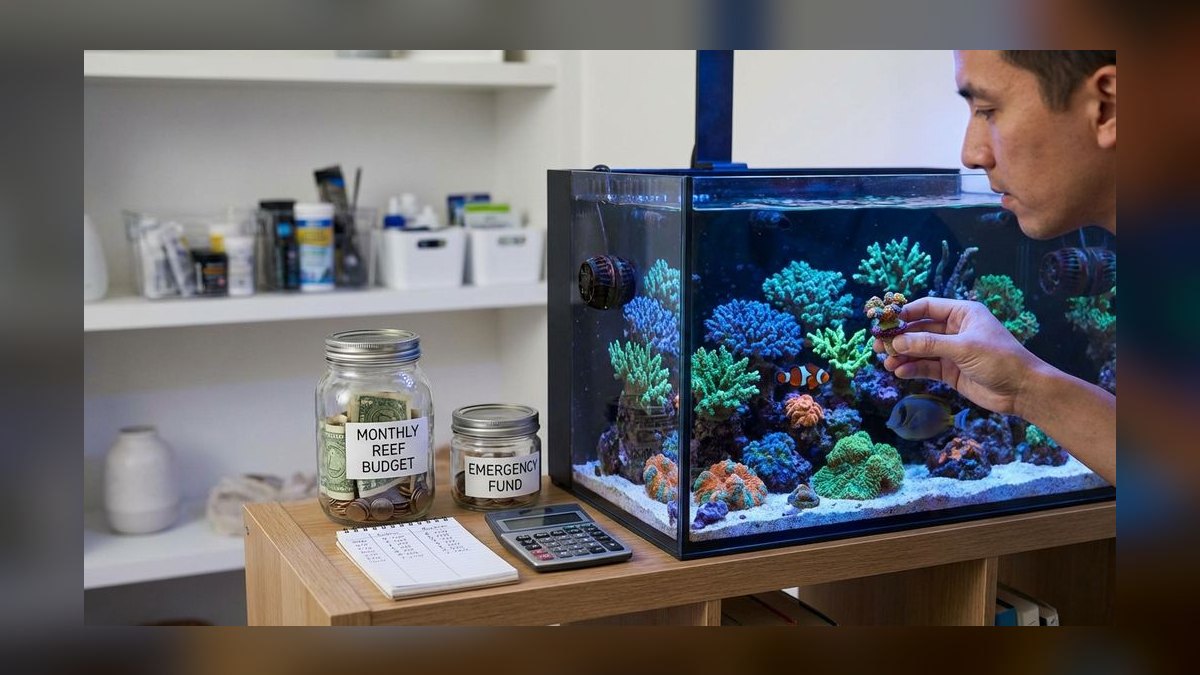
You maintain stable salinity in a reef tank by replacing evaporated water with fresh RO/DI water automatically — typically via an auto top-off (ATO) system — and by replacing only salt water during water changes. Salt does not evaporate, only water does, so as the tank evaporates the salinity rises; topping off with fresh water keeps it constant. Target a specific gravity of about 1.025-1.026 (roughly 35 ppt), measure with a calibrated refractometer, and keep daily swings under about 0.001 specific gravity for healthy corals and invertebrates.
Why Salinity Drifts in the First Place
A reef tank loses water constantly to evaporation, especially with bright lighting, open tops, and air-driven skimmers and pumps. When water evaporates, the dissolved salt stays behind, so the remaining water becomes saltier and salinity climbs. Conversely, every time you add fresh water you dilute it back down. Left unmanaged, a tank can swing from 1.026 down to 1.024 after a top-off and back up again over a day — a stressful roller-coaster for sensitive corals, clams, and invertebrates that cannot osmoregulate against rapid change. Stability matters more than hitting an exact number: a tank held steady at 1.025 is healthier than one bouncing between 1.024 and 1.027.
Use an Auto Top-Off System
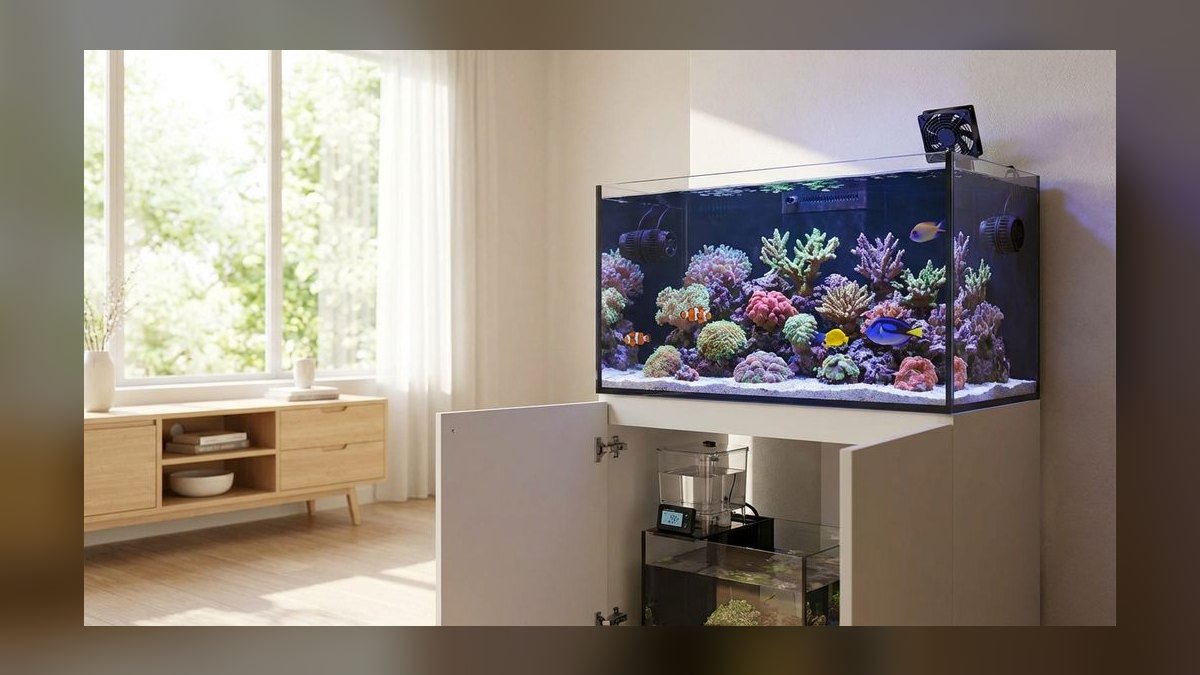
The single most effective tool for stable salinity is an auto top-off (ATO). An ATO uses a sensor (float switch, optical, or both) to detect the water level in the sump and a small pump to add fresh RO/DI water from a reservoir whenever evaporation drops the level. Because it replaces water continuously in tiny amounts, salinity barely moves. Always top off with pure fresh water, never salt water — adding salt water to compensate for evaporation drives salinity steadily upward. A good ATO has redundant sensors and a failsafe so a stuck float can't overflow or empty the reservoir into the tank.
Mix and Match Salt Water Correctly for Water Changes
When you do a water change, the replacement salt water must match the tank's salinity. Mix synthetic reef salt with RO/DI water in a dedicated container, run a powerhead and heater, and let it mix and aerate for several hours to a day so it fully dissolves and stabilizes. Measure the new batch with the same refractometer you use on the tank, and adjust to match before adding it. Removing salty water and replacing it with water at the same salinity keeps the level constant; replacing it with under- or over-salted water shifts the whole tank. Pre-heating the new water to tank temperature also avoids a thermal shock.
Measure Accurately and Often
You cannot manage what you can't measure. A refractometer calibrated with 35 ppt calibration fluid (not just RO water) is the hobby standard for accuracy. Cheap floating hydrometers are imprecise and drift with temperature and bubbles. Check salinity at least weekly, and calibrate the refractometer periodically. Read the tank, the new salt mix, and the ATO behavior together so you can spot drift early. If you see salinity creeping up over weeks, your top-off is lagging behind evaporation; if it's dropping, you may be overfilling or your ATO reservoir level is affecting the reading point.
Make Changes Slowly
If your salinity is off, correct it gradually. To lower salinity, remove some tank water and add fresh RO/DI in small steps over hours. To raise it, evaporate slowly or add small amounts of higher-salinity mixed water, again over hours, never in one large dose. Aim to change salinity by no more than about 0.001 specific gravity per hour for established livestock. Sudden salinity shifts are a common cause of coral stress, polyp retraction, and invertebrate loss, so patience protects the tank.
Common Mistakes That Wreck Salinity Stability
Topping off with salt water instead of fresh, using an uncalibrated refractometer or a cheap hydrometer, letting the ATO reservoir run dry, and doing large water changes with mismatched salt mix are the usual culprits. Open-top tanks in dry, air-conditioned rooms evaporate fast and need a larger ATO reservoir. Dosing certain additives or running a calcium reactor can also subtly affect readings over time, so re-check after any equipment change.
Calibrating and Maintaining Your Measurement Tools
Even with the best ATO, salinity stability is only as reliable as your measurement gear. A refractometer that reads 0.001 high or low will cause you to chase a phantom target, leading to unnecessary swings. Calibrate your refractometer weekly using a commercial 35 ppt calibration solution (or a properly mixed 53 mS conductivity standard) — never use RO/DI water, as that zeroes the scale at 0 ppt but your actual salinity is far from zero, introducing a systematic offset. Hold the calibration solution at tank temperature (typically 75-78°F / 24-26°C) because refractometers are temperature-sensitive; many models have automatic temperature compensation (ATC), but ATC only works within a specific range and assumes you’re measuring a sodium chloride solution, not a mixed saltwater with other ions. If your refractometer lacks ATC, use a conversion chart or keep the sample and the calibration fluid at the same temperature.
For absolute accuracy, invest in a digital salinity meter (e.g., a conductivity probe calibrated to 35 ppt). These are less prone to user error than reading a meniscus on a refractometer and can log trends if connected to a controller. However, they require periodic recalibration with a standard solution and can drift over months. A common mistake is relying solely on a hydrometer — these are notoriously inaccurate, often reading 0.002-0.004 off due to bubbles, temperature, and salt creep on the swing arm. If you use one, rinse it in fresh water after each use and calibrate it against a refractometer monthly. Regardless of tool, always measure at the same time of day (e.g., just before the ATO kicks on) to get a consistent baseline, because evaporation will cause a slight rise in salinity between top-offs.

Managing Salinity During Water Changes and Equipment Maintenance
Water changes are a prime opportunity for salinity drift if not done carefully. Always mix new saltwater in a clean container (e.g., a brute trash can) with a dedicated pump and heater, and let it mix for at least 12-24 hours to fully dissolve and stabilize pH and alkalinity. Before adding it to the tank, verify the new water’s salinity matches the tank’s current reading within 0.001 specific gravity — a mismatch of 0.002 or more will cause a noticeable swing in a small tank. Use a separate, calibrated refractometer or meter for the mixing container to avoid cross-contamination. When performing a water change, remove old water slowly (over 10-15 minutes for a 10% change) and add new water equally slowly, preferably via a drip line or a slow pump into the sump, to avoid shocking inhabitants with a sudden salinity shift.
Equipment like protein skimmers, reactors, and UV sterilizers can also alter salinity indirectly by removing water or causing evaporation. A skimmer’s air intake pulls out water vapor (and sometimes micro-bubbles that burst and release water droplets), accelerating evaporation. If your skimmer is oversized or runs wet, it can remove more water than expected, causing salinity to rise faster than your ATO can compensate. Similarly, carbon or GFO reactors that leak air can introduce bubbles that increase evaporation. Check your skimmer cup daily — if it fills rapidly, adjust the air valve to run drier, which reduces water loss. Also, inspect all plumbing for leaks or drips; even a slow drip from a union or valve can add fresh water (if from a RO/DI line) or remove saltwater (if from the tank), skewing salinity over days. For tanks with a sump, ensure the return pump’s flow rate is steady — a failing pump that slows down can cause the sump level to rise, triggering the ATO less often, leading to a gradual salinity increase.

Seasonal and Environmental Factors That Affect Salinity
Salinity stability isn’t just about equipment — your home’s environment plays a major role. In winter, indoor heating dries the air, increasing evaporation rates by 20-40% compared to humid summer months. Your ATO reservoir may need to be refilled more frequently (every 2-3 days instead of weekly), and if the reservoir runs dry, salinity will climb rapidly. Conversely, in summer, high humidity can slow evaporation, causing your ATO to activate less often, which might lead to a slight salinity drop if you’re manually topping off without adjusting. Monitor your tank’s water level visually each day — if it’s consistently lower at the same time, evaporation is increasing. Consider adding a humidifier or dehumidifier in the room to moderate the air, or adjust your ATO’s sensor height seasonally to account for changes in sump water level due to evaporation rate shifts.
Open-top tanks and those with high-flow powerheads or wave makers lose more water to splashing and surface agitation. A tank with a lid or mesh cover reduces evaporation by 30-50%, but also traps heat and gases — a trade-off. If you use a fan to cool the tank (e.g., in summer), evaporation skyrockets; you may need to double your ATO reservoir size or add a second ATO unit. Similarly, if you run a calcium reactor or kalkwasser stirrer, these can add small amounts of water (from the reactor effluent or kalkwasser drip) that dilute salinity if not accounted for. In such cases, measure salinity weekly and adjust your ATO setpoint or water change schedule to compensate. Finally, if you travel or have irregular schedules, set up a larger ATO reservoir (e.g., 20-30 gallons for a 100-gallon system) or use a peristaltic pump with a timer to deliver a precise daily top-off amount, ensuring salinity stays within 0.001 even when you’re away for a week.

Frequently Asked Questions
What salinity should a reef tank be? Most reef keepers target a specific gravity of 1.025-1.026, equivalent to about 35 ppt or roughly the salinity of natural seawater. Fish-only tanks can run a bit lower (1.020-1.024), but corals and invertebrates do best at full natural-seawater salinity.
Why does my salinity keep rising? Rising salinity almost always means evaporation is outpacing your top-off. Either your ATO isn't keeping up, the reservoir ran dry, or you're manually topping off too infrequently. Salt stays behind as water evaporates, so add fresh water to bring it back down.

Do I top off with fresh or salt water? Always fresh RO/DI water for evaporation top-off, because only water evaporates and the salt remains. Use mixed salt water only for water changes, where you're replacing volume that contains salt.
How accurate are hydrometers versus refractometers? Refractometers are far more accurate and are the hobby standard, especially when calibrated with 35 ppt fluid. Swing-arm and floating hydrometers are cheaper but drift with temperature and trapped bubbles, often reading several points off.

How fast can I change salinity safely? Keep changes gradual — about 0.001 specific gravity per hour for established corals and invertebrates. A large, sudden swing stresses or kills sensitive livestock, so correct drift over hours, not minutes.
Does temperature affect salinity readings? Yes. Salinity readings are temperature-dependent, which is why automatic-temperature-compensated (ATC) refractometers are preferred and why you should calibrate at room temperature with proper fluid. Measure consistently to compare readings fairly.

Related on PULSE
- [Top 10 Aquarium Automatic Top-Off Systems for Stable Salinity in 2027](/knowledge/aq0819)
- [Top 10 Aquarium Automatic Top-Off Systems for Stable Salinity](/knowledge/aq0791)
- [Top 10 Refractometers for Measuring Salinity in Saltwater Tanks](/knowledge/aq0961)
- [What are dinoflagellates and how do you get rid of them in a reef tank?](/knowledge/aq1123)
- [How do you lower nitrates in a reef tank?](/knowledge/aq0979)
- [Top 10 Live Rock Types for Curing and Aquascaping a Reef Tank](/knowledge/aq0955)
Sources
- Bulk Reef Supply — Reef salinity and auto top-off guides: https://www.bulkreefsupply.com/
- Reef2Reef — Salinity, refractometer calibration, and ATO discussions: https://www.reef2reef.com/
- Tropic Marin — Reef salt and salinity reference: https://www.tropic-marin.com/
- Neptune Systems — Auto top-off (ATK) documentation: https://www.neptunesystems.com/
- Red Sea — Reef salt and water parameter guidance: https://www.redseafish.com/
- Marine Depot / hobby reference — Maintaining reef salinity: https://www.marinedepot.com/
This page will be disappearing soon. Save it to your device for $1 — or read it free while it is here.
@Kory-White- · if Venmo asks, the last 4 of my number are 2012
This page is gone.
This one is off the shelf now. $1 keeps it on your phone for good — the whole page, pictures and diagrams included.
 pulse-aquariumsHow do you set up a planted aquarium for beginners?
 pulse-aquariumsHow do you prevent and treat fish fungal infections?
 pulse-aquariumsTop 10 Dwarf Cichlids for Planted Aquariums in 2027
 pulse-aquariumsTop 10 Aquarium Plant Grow Lights in 2027
 pulse-aquariumsTop 10 Aquariums strategies for 2027
 pulse-aquariumsBest auto feeder for vacation in 2027
 pulse-aquariumsHow do you keep a goldfish tank healthy?
 pulse-aquariumsTop 10 Freshwater Aquarium Plants for Beginners in 2027
 pulse-aquariumsHow do you keep a betta and other fish together peacefully?
 pulse-aquariumsTop 10 Livebearer Fish for Beginner Aquariums in 2027