
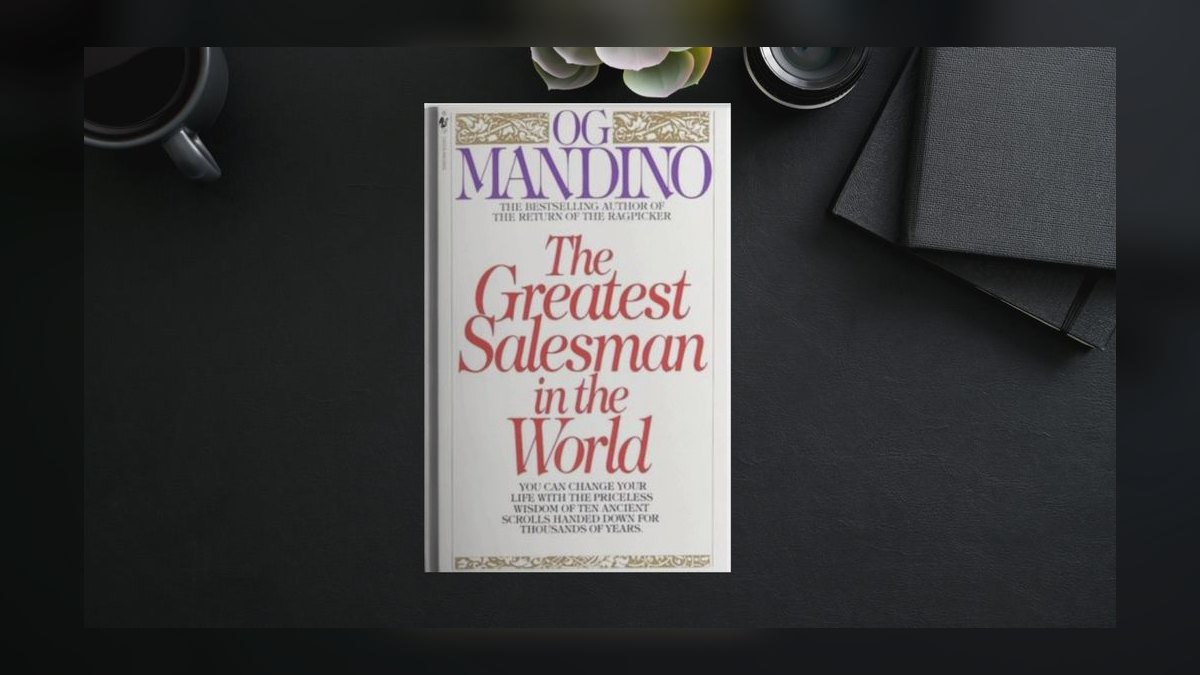
The Greatest Salesman in the World by Og Mandino — Top 10 Key Takeaways for Sales Leaders in 2027
 Curated byKory White · Fractional CRO · Maryland
 PULSEKNOWLEDGE LIBRARY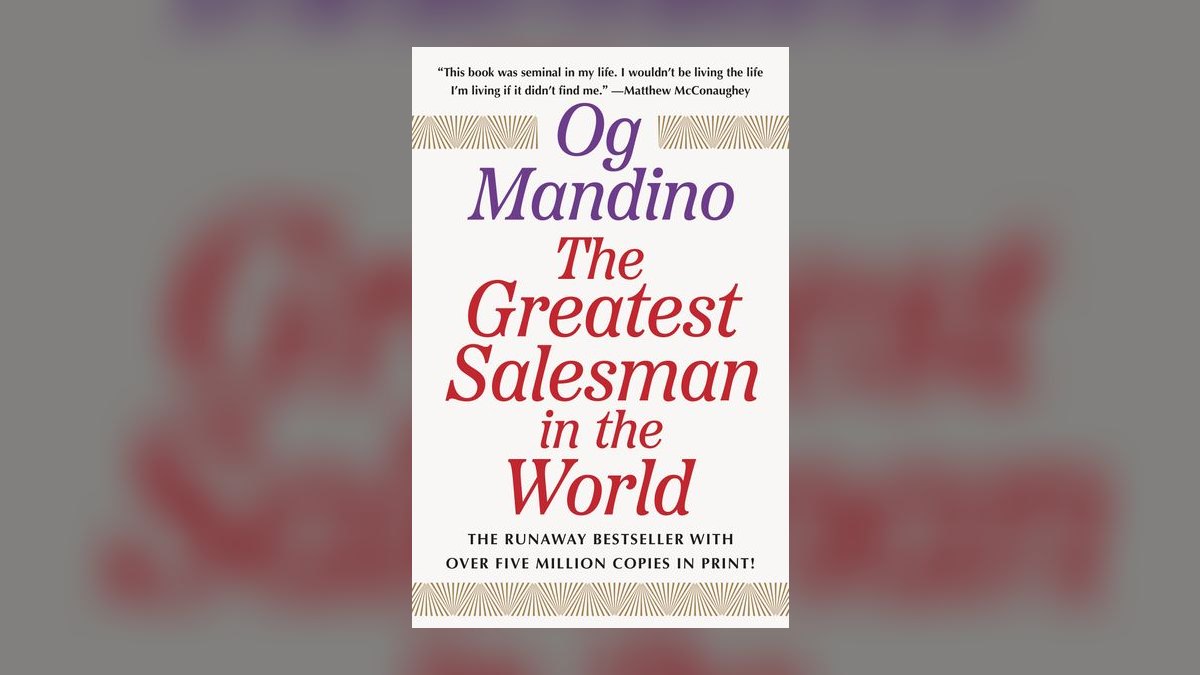
The Greatest Salesman in the World by Og Mandino distills into ten scrolls sales leaders can operationalize in 2027: build habits deliberately, lead with genuine warmth, persist past rejection, treat each rep as irreplaceable, work with urgency, control emotional reactions, keep perspective under pressure, compound small daily value, act immediately instead of stalling, and anchor decisions to a larger purpose. Together these form a repeatable leadership operating system, not motivational filler.
A Manager Watching Her Best Rep Burn Out
Picture a mid-market SaaS sales manager, Priya, running a twelve-person team in early 2027. Her top closer, a rep who beat quota three straight quarters, suddenly stalls: pipeline reviews get shorter, follow-ups slip a day or two, and the confident tone on calls turns flat. Priya has two choices that show up in almost every sales org facing this pattern. She can escalate quota pressure and hope fear restores output, or she can look at what actually broke — not talent, but the habits and daily framework that made the performance possible in the first place. This is precisely the gap Og Mandino's book addresses, decades before "sales enablement" existed as a term. The Greatest Salesman in the World was written as a parable about Hafid, a camel boy who becomes the greatest salesman of his era by reading and internalizing ten ancient scrolls, one at a time, until their principles become instinct rather than effort. For a 2027 sales leader, Hafid's arc maps directly onto the modern rep: someone who starts undifferentiated, gets access to a system of habits rather than a single trick, and compounds small daily disciplines into an outsized career. Priya's actual fix, once she reframes the problem, is not a pep talk — it is rebuilding the rep's habit loop (Scroll I), restoring a sense of urgency without panic (Scroll V and Scroll IX), and giving the rep language to manage the emotional swings of a sales role (Scroll VI). That reframing is the practical value of the book for a working sales leader: it is a diagnostic lens as much as a motivational one, and it gives Takeaways that survive contact with an actual pipeline review, not just a keynote stage.
How the Ten Scrolls Function as a Daily Operating System
Mandino's structure only works because the scrolls are sequential and reinforcing — each one assumes the discipline of the one before it, which is exactly how a sales leader should sequence coaching rather than dumping all ten principles on a rep at once. Scroll I ("I will form good habits and become their slave") is the foundation: Hafid is told to read each scroll for thirty days, aloud, twice a day, before absorbing the next — an explicit habit-formation protocol, not abstract inspiration. Scroll II ("I will greet this day with love in my heart") reframes every buyer interaction, including hostile ones, as an opportunity rather than a threat, which directly counters the defensive tone that kills discovery calls. Scroll III ("I will persist until I succeed") is the direct antidote to the point where most reps quit a deal or a career — Mandino is explicit that persistence, not talent, separates the greatest salesman from the average one. Scroll IV ("I am nature's greatest miracle") targets self-worth and comparison, which matters enormously on a leaderboard-driven sales floor where reps constantly rank themselves against peers. Scroll V ("I will live this day as if it is my last") installs urgency without manufactured fear. Scroll VI ("I will be master of my emotions") is arguably the most directly applicable scroll to enterprise selling in 2027, where deal cycles routinely run 90-180 days and a rep's emotional state during that stretch determines whether they nurture the deal or abandon it prematurely. The mermaid below shows how a manager sequences these scrolls into a coaching cadence rather than treating the book as one-time reading.
The remaining scrolls close the loop. Scroll VII ("I will laugh at the world") is a resilience mechanism — Mandino's point is that a salesman who can maintain perspective survives rejection that would otherwise compound into burnout, which is the exact failure mode Priya saw in her top rep. Scroll VIII ("today I will multiply my value a hundredfold") is the closest the book comes to a modern productivity framework: it instructs the reader to act as if paid on true value delivered that day, not tenure, which is a direct parallel to variable-comp sales models. Scroll IX ("I will act now") is a bias-to-action scroll aimed squarely at the procrastination that kills follow-up cadences. Scroll X, in most editions, closes with a prayer for guidance, functioning as a purpose-anchor scroll — Mandino's argument is that sustained sales performance requires a "why" bigger than commission, a claim that shows up repeatedly in modern retention research on top-performing reps.
Real Numbers, Ranges, and Benchmarks Behind the Framework
Mandino's own prescription is oddly specific and worth quoting as a genuine operational detail rather than metaphor: each scroll is to be read aloud twice daily — once upon waking, once before sleep — for thirty consecutive days before moving to the next, meaning the full ten-scroll system runs roughly 300 days, or about ten months, to internalize completely. That cadence lines up closely with widely cited habit-formation research suggesting new behaviors take somewhere between 21 and 66 days to become automatic, with the median landing around 66 days for more complex behaviors — a sales habit like disciplined next-step logging or same-day follow-up sits on the higher end of that range because it competes with a busy, reactive job. Applied to a sales floor, this means a manager rolling out one "scroll" per month per rep is roughly matched to the pace at which the underlying behavior would need to become automatic anyway; compressing it to a single kickoff meeting is why most "read this book as a team" initiatives fail to change behavior within a quarter. On persistence specifically, the book's Scroll III message aligns with a widely repeated sales statistic: a large share of sales, commonly cited in the 60-80% range depending on the study and industry, close only after the fifth contact attempt, while most reps stop following up after one or two touches — the exact gap Mandino's persistence scroll targets. On emotional control (Scroll VI), the practical benchmark for a manager to watch is deal-cycle length: in mid-market and enterprise B2B, 60-120 day cycles are typical, and reps without emotional-regulation habits show measurably higher pipeline slippage and self-sourced deal abandonment during the middle third of that cycle, the point where initial excitement has faded and close-date pressure hasn't yet arrived. Scroll VIII's "multiply value a hundredfold" translates most cleanly into daily activity benchmarks: a rep hitting 100% of quota typically sustains a consistent daily input metric — commonly 40-60 meaningful touches (calls, personalized emails, or relevant social outreach combined) in a full-cycle B2B motion — rather than sporadic bursts, which is the literal difference between "multiplying value daily" and "multiplying value occasionally."

Trade-Offs Against Other Leadership Frameworks
A fair evaluation of Mandino's Takeaways requires weighing them against the frameworks that compete for a sales leader's limited coaching time in 2027 — MEDDIC/MEDDPICC for deal qualification, Challenger Sale for conversation structure, and OKRs for management cadence. The Greatest Salesman in the World is not a qualification methodology and should never replace one: it says nothing about identifying an economic buyer, mapping a decision process, or scoring deal health, and a leader who substitutes scroll-reading for pipeline rigor will lose forecast accuracy regardless of how resilient the team feels. Its actual competitive advantage is at the identity and habit layer beneath any methodology — MEDDIC tells a rep what questions to ask; Mandino's scrolls address whether the rep has the persistence and emotional stability to ask them consistently under rejection. The trade-off is time: a manager has a finite number of one-on-one minutes per week, and choosing to spend part of that time on habit and mindset coaching (Mandino's territory) versus deal-mechanics coaching (MEDDIC's territory) is a real allocation decision, not a free addition. Compared to Challenger Sale's emphasis on "commercial teaching" and reframing the buyer's own thinking, Mandino's approach is inward-facing — it changes the seller's internal state, not the buyer conversation's structure — meaning the two are complementary rather than competing, and pairing them (habit foundation from Mandino, conversation architecture from Challenger) tends to outperform either alone. Against a pure OKR/metrics management style, the trade-off is more philosophical: OKRs assume behavior follows measurement, while Mandino's scrolls assume behavior follows identity and ritual first, with performance as the downstream result. The pragmatic 2027 answer is not to choose one exclusively but to sequence them — install Scroll I-style habit discipline before layering in a metrics framework, because OKRs imposed on a rep without a stable habit foundation tend to produce short-term metric gaming rather than durable improvement.
Common Pitfalls When Applying the Book and How to Avoid Them
The single most common pitfall is treating The Greatest Salesman in the World as a one-time kickoff read rather than the 300-day behavioral protocol Mandino explicitly describes — teams that hand out the book, discuss it once in a Monday meeting, and never return to it get essentially none of the compounding habit benefit, because a scroll read once has the retention profile of any other unreinforced training. The fix is a literal 30-day rotation: assign one scroll per month, open every team meeting that month with a 90-second discussion of how that scroll showed up (or didn't) in real calls, and track it against one observable behavior — for Scroll III, that might be a mandated fifth-touch follow-up before marking a lead dead. A second pitfall is using the book's emotional and spiritual language (the prayer in Scroll X, the frequent references to God and providence) as though it were a secular productivity system without acknowledging that framing, which can alienate reps who don't share that worldview or feel the material is being imposed rather than offered; the workaround is presenting the scrolls' behavioral mechanics (habit cycles, persistence thresholds, emotional regulation) as the operational content, while leaving the spiritual framing optional and personal. A third pitfall is conflating persistence (Scroll III) with refusing to disqualify a bad-fit deal — Mandino's persistence is about not quitting on effort and character, not about chasing every lead indefinitely, and a manager who reads Scroll III as "never walk away from a deal" will bloat the pipeline with zombie opportunities that should have been disqualified weeks earlier. Fourth, leaders sometimes use Scroll VIII's "multiply value a hundredfold" to justify unsustainable activity quotas rather than the compounding-quality message it actually contains, producing burnout that ironically recreates the exact failure Mandino's Scroll VI (emotional mastery) is meant to prevent — the corrective is to pair any activity-volume push with an explicit emotional-regulation check-in, not to treat volume alone as the takeaway. Finally, because the book is public domain-adjacent in its ideas and widely summarized online, some teams substitute a five-minute internet summary for the actual thirty-day reading cadence; the summaries capture the list of Takeaways but strip out the repetition mechanism that is the entire behavioral engine of the book, so a manager relying on a summary alone should still assign the actual scroll text for the habit-formation effect to occur.

Related questions
What order should a sales team read the ten scrolls in?
Read them in Mandino's original sequence — each scroll assumes the discipline built by the one before it. Skipping ahead to Scroll VIII (value multiplication) without Scroll I (habit formation) tends to produce a burst of activity that doesn't stick.
Is The Greatest Salesman in the World still relevant for tech and SaaS sales in 2027?
Yes, because it addresses habit, persistence, and emotional regulation — layers beneath any specific methodology or CRM — which remain constant even as tools, AI assistance, and deal structures change.
How long does it take to see results from applying the book's system?
Mandino's own cadence is thirty days per scroll, roughly ten months for all ten. Expect early wins (in call tone, follow-up discipline) within four to six weeks of consistent scroll-by-scroll rollout.
Can the ten scrolls replace a formal sales methodology like MEDDIC?
No. The scrolls build the habits and mindset a rep needs to execute any methodology consistently; they contain no deal-qualification or discovery framework, so they should be layered under a methodology, not instead of one.
FAQ
What is The Greatest Salesman in the World actually about? It is a parable, first published in 1968, about a camel boy named Hafid who becomes history's greatest salesman by studying ten ancient scrolls of wisdom, one per month, until their principles — habit, persistence, emotional control, urgency — become second nature.
Who was Og Mandino, and why does his background matter for sales leaders? Mandino spent years as a struggling, alcoholic insurance and encyclopedia salesman before rebuilding his life and later becoming editor of SUCCESS magazine; his Takeaways come from lived sales failure and recovery, not academic theory, which is part of why practitioners still cite it decades later.
What are the Top 10 Key Takeaways in one list? Form habits deliberately (Scroll I), greet every interaction with warmth (Scroll II), persist until you succeed (Scroll III), recognize your own irreplaceable value (Scroll IV), act with daily urgency (Scroll V), master your emotions (Scroll VI), keep perspective and resilience (Scroll VII), multiply your value daily (Scroll VIII), act now rather than stalling (Scroll IX), and anchor decisions to a larger purpose (Scroll X).
How should a 2027 sales manager actually roll this out to a team? Assign one scroll per month, tie each to one observable behavior (for example, a mandated fifth follow-up touch during the persistence scroll), and discuss it briefly in every team meeting that month rather than treating the book as a single kickoff read.
Does the book work for individual contributors without manager support? Yes — Hafid's own journey in the book is self-directed reading and repetition, so an individual rep can run the thirty-day-per-scroll cadence alone, though pairing it with a manager or peer accountability check tends to improve follow-through.
What's the biggest mistake teams make when using this book for sales training? Reading it once as a group and never returning to it. The habit-formation mechanism Mandino describes explicitly requires repeated daily reading over thirty days per scroll — a single discussion captures the list of Takeaways but none of the behavioral change.
Sources
- https://en.wikipedia.org/wiki/The_Greatest_Salesman_in_the_World
- https://www.goodreads.com/book/show/29942.The_Greatest_Salesman_in_the_World
- https://www.success.com/
- https://www.amazon.com/Greatest-Salesman-World-Og-Mandino/dp/0553277574
- https://www.barnesandnoble.com/w/the-greatest-salesman-in-the-world-og-mandino/1100265409
- https://jamesclear.com/book-summaries
- https://www.penguinrandomhouse.com/books/319066/the-greatest-salesman-in-the-world-by-og-mandino/
Related on PULSE
- How habit-stacking improves sales rep follow-up consistency
- Why persistence beats talent in long B2B sales cycles
- MEDDPICC vs Challenger Sale: choosing a qualification framework
- Building a 30-day onboarding cadence for new sales reps
- How emotional regulation affects quota attainment in enterprise sales
- Daily activity benchmarks that predict quarterly quota attainment
 pulse-recentCombo Prospecting by Tony Hughes — Top 10 Key Takeaways for Sales Leaders in 2027
 pulse-recentSmart Calling by Art Sobczak — Top 10 Key Takeaways for Sales Leaders in 2027
 pulse-recentINKED by Jeb Blount — Top 10 Key Takeaways for Sales Leaders in 2027
 pulse-recentThe Sales Manager’s Guide to Greatness by Kevin Davis — Top 10 Key Takeaways for Sales Leaders in 2027
 pulse-recentHyper Sales Growth by Jack Daly — Top 10 Key Takeaways for Sales Leaders in 2027
 pulse-recentThe Qualified Sales Leader by John McMahon — Top 10 Key Takeaways for Sales Leaders in 2027
 pulse-recentAmp It Up by Frank Slootman — Top 10 Key Takeaways for Sales Leaders in 2027
 pulse-recentFrom Impossible to Inevitable by Aaron Ross and Jason Lemkin — Top 10 Key Takeaways for Sales Leaders in 2027
 pulse-recentSales Management Simplified by Mike Weinberg — Top 10 Key Takeaways for Sales Leaders in 2027
 pulse-recentThe SaaS Sales Method by Fernando Pizarro — Top 10 Key Takeaways for Sales Leaders in 2027