


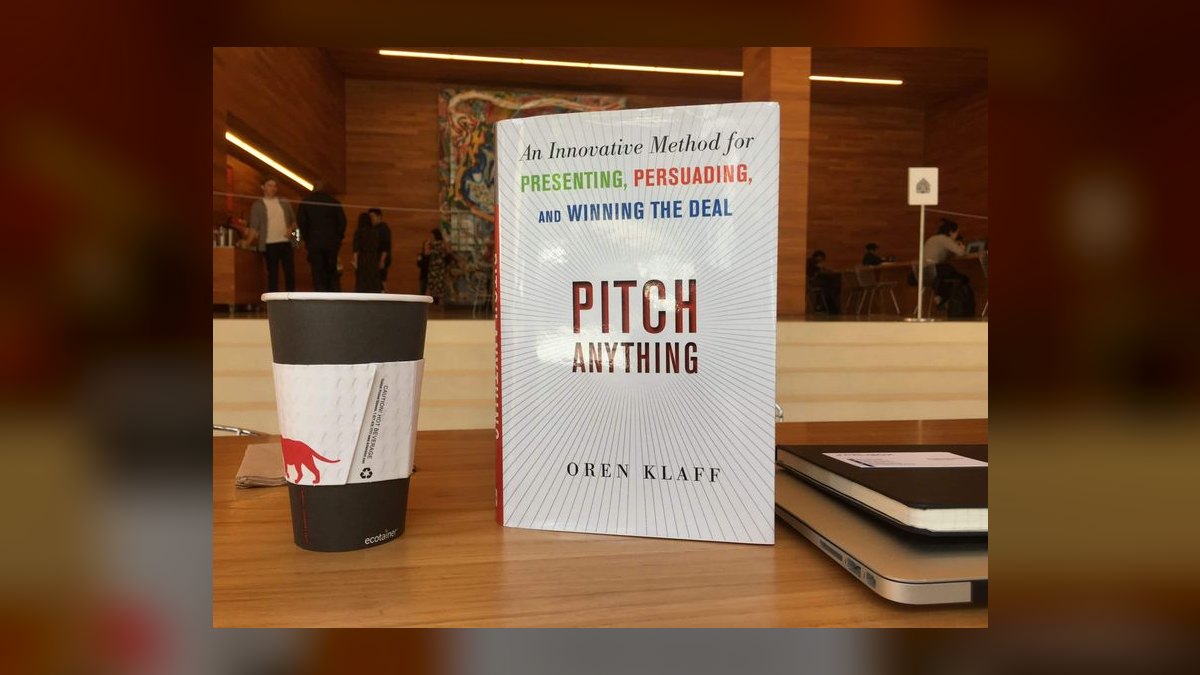
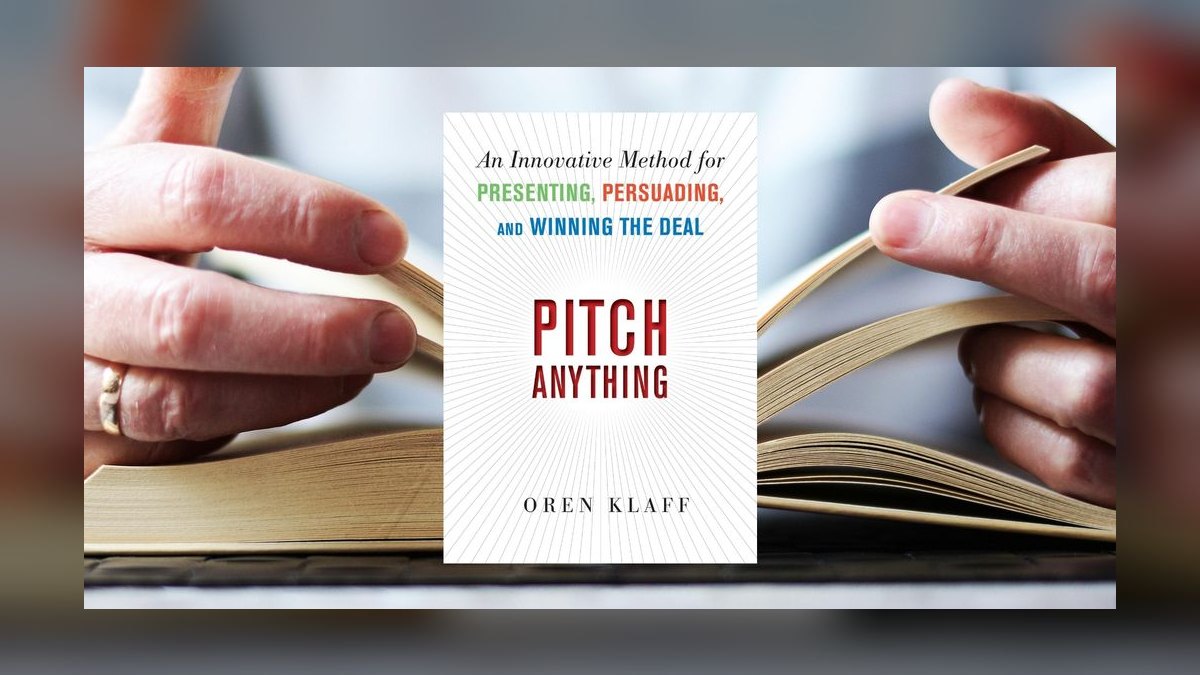
Pitch Anything by Oren Klaff — Cliff Notes Summary & Key Takeaways
Quality
Certified
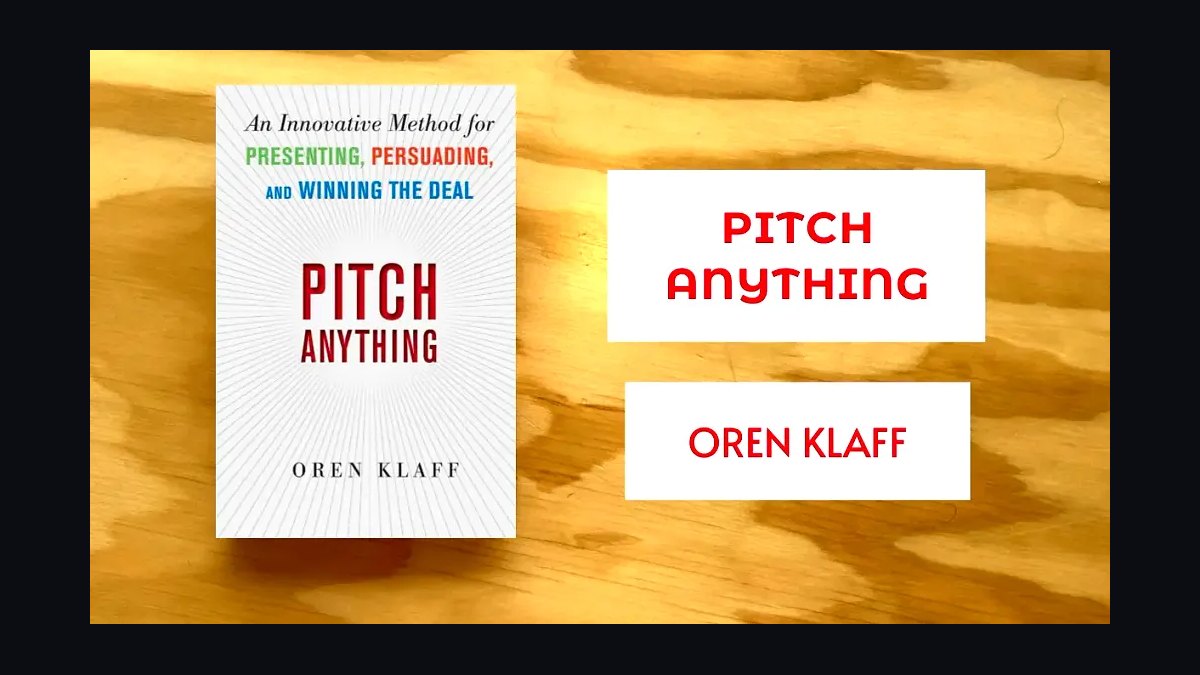
Oren Klaff's *Pitch Anything* (2011) argues that pitches die in the listener's threat-scanning "crocodile brain" before logic ever engages, so you must win with frame, status, and intrigue instead of detail. His STRONG method — Set the Frame, Tell the Story, Reveal the Intrigue, Offer the Prize, Nail the Hookpoint, Get a Decision — rests on one inversion: you are the prize, not the buyer.
The two competing pitch philosophies Klaff forces you to choose between
Every high-stakes presentation you will ever build sits on one of two philosophies, and *Pitch Anything* exists because most sellers never realize they picked one by default.
Philosophy one: the information-transfer pitch. This is the dominant model in enterprise sales, consulting, and corporate finance. The premise is that the buyer is a rational evaluator with an information deficit, and your job is to close that deficit. Build the deck. Show the TAM. Walk the architecture diagram. Present the financial model with a base, bull, and bear case. Answer every objection preemptively. The implicit theory of the buyer is a spreadsheet with a pulse: give them enough correct data and the decision computes itself. Its artifacts are the 60-slide deck, the appendix that runs longer than the body, the "any questions?" close, and the follow-up email with seven attachments.
Philosophy two: the frame-and-status pitch. Klaff's premise is that the buyer's first response to any incoming message is not evaluation but survival triage. Borrowing Paul MacLean's triune-brain heuristic, he describes a croc brain that runs three crude filters — is this boring, is this dangerous, is this novel — and only forwards a compressed summary upward if the message survives. The midbrain then assigns social meaning and status. Only after both gates does the neocortex get to analyze, and by then it is mostly rationalizing a conclusion already reached. Under this model, a data-dense deck is not persuasive; it is a threat. Unrequested complexity reads as either a trap or a bore, and the croc brain's response to both is the same: shut it down. Klaff's line — "your pitch is being processed by the crocodile brain, and the croc brain hates complexity" — is the whole indictment.
The practical difference shows up in what each philosophy optimizes. Information transfer optimizes for completeness and defensibility: nothing unanswered, nothing unsupported, no question you can't handle. Frame-and-status optimizes for attention and desire: the listener leans forward, wants what you have, and starts qualifying themselves to you. The first philosophy produces pitches that are hard to argue with and easy to forget. The second produces pitches that are easy to argue with and hard to forget — and forgettable is the only truly fatal outcome, because a memorable pitch you objected to still gets a second meeting.
Klaff's credentials for making the argument are the deals: a Beverly Hills investment banker who raised north of $400 million in capital, pitching Boeing, Disney, Honeywell, Yamaha, and a long roster of Wall Street firms. The book is not academic. It is a field manual written by someone who spent a career walking into rooms where everyone outranked him.
Where the two philosophies genuinely conflict is at the moment of maximum pressure. When a senior buyer asks a hard technical question, philosophy one says answer it thoroughly — that's what the meeting is for. Klaff says a thorough answer to a status-testing question is a surrender: you just accepted the role of analyst-on-demand and handed them the frame. His counter is the Analyst Frame deflection: refuse to be pulled into spreadsheet minutiae, acknowledge the question exists, and pull the conversation back to the Big Idea. That single move is the cleanest test of which philosophy you actually believe.
How to decide which model your specific pitch needs

Neither philosophy is universally right, and the most common misapplication of *Pitch Anything* is running Klaff's alpha machinery in a room where it does not belong. The deciding variables are power asymmetry, shot count, and buyer sophistication about your category.
Power asymmetry. Klaff's methods are built for rooms where the buyer outranks the seller on paper — a founder pitching a partner at a venture firm, a banker pitching a board, a boutique agency pitching a Fortune 100 CMO. When the asymmetry is reversed or neutral, the frame work has little to fight against and the status moves land as posturing. If the buyer already came to you, the Prize Frame is redundant; you already are the prize and asserting it is noise.
Shot count. A one-shot, twenty-minute, no-second-meeting presentation is the native habitat. A twelve-month enterprise cycle with eighteen stakeholders and a formal RFP is not — there, the information-transfer artifacts are procurement requirements, not optional. The honest synthesis is to run Klaff's frame discipline in the live human moments (first call, exec readout, final presentation) and run rigorous information transfer in the asynchronous artifacts (the RFP response, the security questionnaire, the business case).
Buyer sophistication. Sophisticated buyers who evaluate dozens of pitches a year — VCs, corp-dev teams, procurement professionals — have seen every frame move in the book, literally. Against them, the mechanics still work but the theatrics do not; the Beverly Hills lunch trick reads as a party trick when the audience has read the same book. What survives is the substance underneath: don't be needy, don't front-load detail, don't present the offer before the Hookpoint.
A useful tiebreaker: ask what kills this deal. If the deal dies because the buyer doesn't understand the product, you have an information problem and Klaff will not save you. If it dies because the buyer understood perfectly and still didn't care, or because you got treated as a vendor rather than a peer, you have a frame problem and no amount of additional detail will fix it. Most sellers who feel stuck are misdiagnosing the second problem as the first, which is why their response to a lost deal is a longer deck.
The concrete numbers, structures, and mechanics behind each approach
Klaff is unusually specific about time allocation, which is what makes the book operational rather than inspirational.
The 20-minute architecture. Klaff prescribes a hard twenty-minute pitch broken into four blocks: five minutes on the Big Idea, ten minutes on Budget and Secret Sauce, two minutes on the Offer, and three minutes on hot cognitions and the Hookpoint. The constraint is not arbitrary. His claim is that focused attention on a novel proposition decays fast, and that a pitch running past twenty minutes has usually stopped persuading and started informing. He goes further: a great deal closes itself inside twenty minutes or it was never going to close, and long cycles are frequently frame failures dressed up as "complex enterprise dynamics."
The Big Idea Pattern. The opening is a three-sentence structure naming the change in the world, the window of opportunity, and the move you are making, capped with a template lifted almost directly from Geoffrey Moore's positioning work: *"For [target customer] who is dissatisfied with [current option], my idea is a [new category] that provides [key problem solved], unlike [competing product]."* Under a minute to deliver, memorable enough to survive the croc brain's crude summarization, and specific enough that the listener can repeat it to a colleague — which is the actual test, since most decisions get relayed secondhand to someone who wasn't in the room.
The four hostile frames and their counters. Klaff catalogs the frames you will meet and prescribes a specific counter for each. The Power Frame — the buyer's status display, often signaled by making you wait or taking a call mid-meeting — gets a small, deliberate power disruption: light defiance with humor, a refusal to accept the seat you were assigned, a joke at the ritual's expense. The Time Frame — "I've only got five minutes" — gets time compression: agree, and note you also have a hard stop. The Analyst Frame — the drowning-in-due-diligence move — gets deflection back to the Big Idea. The Deal Terms Frame — early anchoring on price — gets the Prize Frame, the inversion where you make clear they are qualifying to work with you.
Global versus situational status. Global status is your title, wealth, and reputation, and it is essentially fixed on the timescale of a meeting. Situational status is the standing you hold in this specific room for the next thirty minutes, and it is entirely malleable. Klaff's whole status chapter is about the second: a no-name founder can manufacture situational alpha by breaking small social rules with intent, ignoring rank-pulling moves, and declining to answer low-status questions. His worked example is an airport deal pitched to skeptical bankers, where he dismisses the most senior person's opening question as off-topic and pivots back to his own agenda. Situational status is local alpha you borrow for the length of the meeting and then return.
The four hot cognitions. Fast emotional judgments that fire before deliberation: intrigue (an unresolved story the listener wants closed), prize (something they must qualify for), time pressure (a real deadline, not a manufactured one), and moral authority (the principled high ground). Frame stacking means firing two or three in sequence in the closing minutes so emotional response peaks exactly at the ask. Klaff's signature version is the intrigue story — a half-told personal anecdote interrupted mid-climax to pivot into the offer.
The Hookpoint. The moment the buyer's interest in the deal crosses your interest in closing it — when they start asking you to continue rather than you pushing to continue. Before it, you are pitching. After it, you are qualifying them. The discipline is absolute: do not present the offer before the Hookpoint, even if that means ending the meeting with no deal. The lost deal you walked away from teaches the market you have options; the deal you begged for teaches the market you do not.
The neediness doctrine. Three behaviors: want nothing, focus only on what you do well, be willing to walk away. Operationally, that means never chasing, never cutting price to close, never extending your own deadline, and never sending the "just following up" email. This is the most-quoted material in the book and the source of the central inversion — you are the prize, not the buyer.
Implementation, sequencing, and what has aged since 2011
Running this well is a sequencing problem, not an inspiration problem. The order matters because each stage produces the condition the next stage requires.
Week one — rewrite the opening. Take your current pitch intro and compress it into the Big Idea Pattern. Most intros fail because they open with company history or a market-size slide, which the croc brain files as boring within seconds. Time yourself. If the intro takes longer than sixty seconds, it isn't a Big Idea, it's a summary of one.
Week two — cut the deck. The typical enterprise deck can lose more than half its slides without losing any argument. Move the financial model, the architecture, and the compliance material to a leave-behind appendix you never present. This is not dumbing down; it is moving detail to the channel where the neocortex actually reads, and out of the channel where the croc brain is triaging.
Week three — rehearse the frames. Write down the last five hard questions senior buyers asked you and script a deflection for each — not an answer, a deflection that acknowledges and redirects. Practice out loud until it stops feeling rude. The discomfort you feel is the old philosophy, and it fades.
Week four — rehearse walking away. This is the step almost everyone skips and the one that makes the rest work, because neediness leaks through everything. If you cannot genuinely picture leaving without the deal, the buyer will read it, and no amount of frame technique compensates.
Post-pitch debrief. Klaff treats every pitch as data. Log which frames held, which collapsed, which hot cognitions fired, and what your situational status was at the moment of decision. Won or lost, the debrief is where the compounding happens — and it is the single most transferable practice in the book for teams, because frames that collapse repeatedly across reps are usually a positioning problem, not a skill problem.
What still holds. The core claim — that decisions are filtered emotionally before they are rationalized analytically — is among the most durable findings in behavioral economics, and Daniel Kahneman's System 1 / System 2 model in *Thinking, Fast and Slow* gives it a far better-supported foundation than the triune brain ever did. Frame Control remains the most useful working vocabulary anyone has produced for status dynamics in a sales room. Chris Voss rebuilt much of the same machinery for negotiation in *Never Split the Difference*. And the Hookpoint discipline is essentially what modern pitch coaching teaches as waiting for the want.
What has aged. Three things. First, the triune brain model itself: MacLean's clean separation of croc, midbrain, and neocortex was always a metaphor and is now rejected by mainstream neuroscience — the regions are deeply interconnected, and Lisa Feldman Barrett's work on constructed emotion dismantles the tidy survival-versus-analysis split. The heuristic still teaches even though the anatomy is wrong, which is an uncomfortable but honest position. Second, remote-first pitching since 2020 has compressed the twenty-minute frame toward ten or twelve, and video calls strip out most in-room status moves; you cannot steal a frame by ordering lunch for someone over a webcam. Third, generative tools now do the data-dump work Klaff warned against — a buyer can generate a TAM estimate and a projection without you — which paradoxically frees the human pitch to be pure frame and intrigue, exactly what he prescribed. The weakest passages are the alpha-posturing prescriptions: interrupting senior people and using defiance as a power move ages poorly in modern, diverse rooms and reads as boorish when run by anyone without Klaff's specific context.

Adjacent applications. The machinery generalizes past the venture pitch. Internal budget requests are pitches where the frame is set by whoever controls the agenda. Vendor renewals invert cleanly: the seller who is willing to lose the renewal negotiates better terms than the one who cannot. Job interviews are the purest Prize Frame exercise available. And executive readouts inside a company are Analyst Frame minefields — the senior person who drills into a metric is often testing composure, not auditing the number. In each of these, the useful Klaff move is the same: decide before you walk in what you are willing to walk away from, and the rest of the strategy follows from that.
Related questions
Is Pitch Anything worth reading if I already read Never Split the Difference?
Yes, they cover different halves. Voss is a negotiation manual for the back-and-forth after both sides are engaged. Klaff is a presentation manual for getting engaged in the first place. Read Klaff for the pitch, Voss for the close.
Does the crocodile brain concept invalidate the book?
No. The anatomy is wrong but the behavioral claim — fast emotional triage precedes deliberate analysis — is well supported. Treat the croc brain as a memorable mnemonic for System 1 rather than a neurological description, and every technique built on it still stands.
Can a first-time founder actually run these frame moves?
The mechanics yes, the theatrics no. Refusing to front-load detail, declining to answer status-test questions, and waiting for the Hookpoint require no seniority. Interrupting a managing partner requires either genuine standing or a very high tolerance for a short meeting.
How do I apply this to a long enterprise sales cycle?

Split the channels. Run frame discipline in every live human interaction — first call, exec readout, final presentation. Run rigorous information transfer in the asynchronous artifacts where procurement genuinely needs completeness. Neediness discipline applies everywhere, including your follow-up cadence.
What is the fastest change I can make tomorrow?
Rewrite your opening into the Big Idea Pattern and delete your "any questions?" close. The first stops the croc brain from filing you as boring in the opening seconds; the second stops you from handing back the frame at the exact moment you should be asking for a decision.
FAQ
What is the STRONG method in one line?
Set the Frame, Tell the Story, Reveal the Intrigue, Offer the Prize, Nail the Hookpoint, Get a Decision — an end-to-end pitch loop deliberately optimized for the listener's emotional first filter rather than their analytical second one. Each letter maps to a block of the twenty-minute architecture, and the sequence matters because the offer only lands after intrigue has been established.
Who should read Pitch Anything?
Founders raising venture capital, investment bankers running M&A processes, agency and consulting principals pitching above their weight class, and enterprise sellers presenting to a C-suite on a single high-stakes occasion. It is far less useful for transactional inside sales where the buyer has already self-qualified and simply needs the details, pricing, and a clean path to purchase.

What exactly is the Hookpoint?
The moment the buyer's interest in the deal exceeds your interest in closing it — when they start asking you to keep going rather than you pushing to keep going. Before it you are pitching; after it you are qualifying them. Klaff's rule is never to present the offer before the Hookpoint, even if that means walking out with nothing.
How is this different from Cialdini's Influence?
Cialdini is the academic foundation — reciprocity, scarcity, social proof, authority, documented through controlled research. Klaff is the operator's application, adding status dynamics, frame collisions, and a specific time-boxed pitch structure that Cialdini never attempts. Read Cialdini to understand why the levers work, Klaff to know which one to pull at minute seventeen.
Does the 20-minute structure still work on video calls?
Partially. The architecture holds but the duration has compressed toward ten or twelve minutes, and the physical status moves — seating, ordering, spatial defiance — simply do not translate through a webcam. The Big Idea Pattern, the Hookpoint discipline, and the neediness doctrine survive the format change intact; the in-room theatrics do not.
What is the single most important takeaway from the book?
You are the prize, not the buyer. Every other technique is downstream of that inversion. Internalize neediness as the deal-killer, walk into pitches genuinely willing to leave without one, and most of the remaining machinery becomes optional — the frame holds because you are not fighting to keep it.
Sources
- https://www.mheducation.com/highered/product/pitch-anything-innovative-method-presenting-persuading-winning-deal-klaff.html
- https://www.penguinrandomhouse.com/books/566925/flip-the-script-by-oren-klaff/
- https://www.influenceatwork.com/
- https://us.macmillan.com/books/9780374533557/thinkingfastandslow
- https://www.harpercollins.com/products/never-split-the-difference-chris-voss
- https://www.danpink.com/books/to-sell-is-human/
- https://lisafeldmanbarrett.com/books/how-emotions-are-made/
- https://www.ycombinator.com/library
- https://review.firstround.com/
- https://www.harpercollins.com/products/crossing-the-chasm-3rd-edition-geoffrey-a-moore
Related on PULSE
- Sales Pitch by April Dunford — Cliff Notes Summary for Sellers
- Pitch Perfect by Bill McGowan — Cliff Notes Summary
- Hope Is Not a Strategy by Rick Page: Summary, Key Lessons, and RevOps Takeaways
- Start with No by Jim Camp: Summary, Key Lessons, and RevOps Takeaways
- $100M Leads by Alex Hormozi: Summary, Key Lessons, and RevOps Takeaways
This page will be disappearing soon. Save it to your device for $1 — or read it free while it is here.
@Kory-White- · if Venmo asks, the last 4 of my number are 2012
This page is gone.
This one is off the shelf now. $1 keeps it on your phone for good — the whole page, pictures and diagrams included.
 pulse-recentStrategic Selling by Robert Miller and Stephen Heiman — Top 10 Key Takeaways for Sales Leaders in 2027
 pulse-recent$100M Offers by Alex Hormozi — Top 10 Key Takeaways for Sales Leaders in 2027
 pulse-recentMonetizing Innovation by Madhavan Ramanujam — Top 10 Key Takeaways for Sales Leaders in 2027
 pulse-recentWhat is the first concrete step in The Sandler Rules by David Mattson for building a sales plan in 2027?
 pulse-recentWhat are the concrete steps in Sandler Rule #7 for handling a prospect's budget objection in 2027?
 book-summaryLittle Red Book of Selling by Jeffrey Gitomer — Cliff Notes Summary
 pulse-recentWhat is the first concrete step in the Sandler Selling System for handling a prospect's initial brush-off in 2027?
 pulse-recentThe Sales Manager’s Guide to Greatness by Kevin Davis — Top 10 Key Takeaways for Sales Leaders in 2027
 pulse-recentNever Lose a Customer Again by Joey Coleman — Top 10 Key Takeaways for Sales Leaders in 2027
 pulse-recentNever Split the Difference by Chris Voss — Top 10 Key Takeaways for Sales Leaders in 2027