 Pulse Reviews and Analysis
The 10 Best Football Cards from the 1990s
 Curated by Kory White · Fractional CRO, CRO Syndicate
Direct Answer
The 1990s was the decade football cards grew up: numbered parallels, on-card autographs, and a rookie class — Peyton Manning, Randy Moss, Brett Favre, Emmitt Smith — that still drives the hobby. For 2027 collectors, the best overall card to chase is the 1998 Playoff Contenders Peyton Manning Rookie Ticket Autograph (#87), the defining on-card rookie auto of the era, which sold for $207,400 (PSA 10, Heritage, 2025).
For collectors who want a genuine Hall-of-Fame 1990s rookie without five figures, the best value is the 1990 Score Supplemental Emmitt Smith #101T, a true rookie still buyable around $1,000–$1,500 in PSA 10. This ranking is for vintage-90s collectors who price off PSA auction comps, Card Ladder, and Fanatics Collect — not raw eBay asking prices.
Every number below reflects 2024–2026 sales; the on-card autograph rookies have separated sharply from the base rookies, and the gap keeps widening.
How We Ranked the Top 10
Scoring used PSA Auction Prices Realized, Card Ladder sales history, Fanatics Collect and Goldin results, Heritage Auctions lots, and PSA population reports:
- Auction-proven value (30%) — documented PSA-graded sales, not asking prices.
- Player pedigree (20%) — Hall-of-Fame status and lasting demand.
- Rookie and print scarcity (20%) — true rookie status, serial numbering, and PSA 10 population.
- Set significance (15%) — the importance of the issue (Contenders, SP Authentic, Stadium Club).
- Condition sensitivity (10%) — how steeply value drops below PSA 10.
- Liquidity (5%) — how readily the card sells at a fair number.
Only cards genuinely issued in 1990–1999 were eligible; the 2000 Bowman Chrome Brady class belongs to the 2000s and was excluded.
1. 1998 Playoff Contenders Peyton Manning Rookie Ticket Auto 🏆 BEST OVERALL
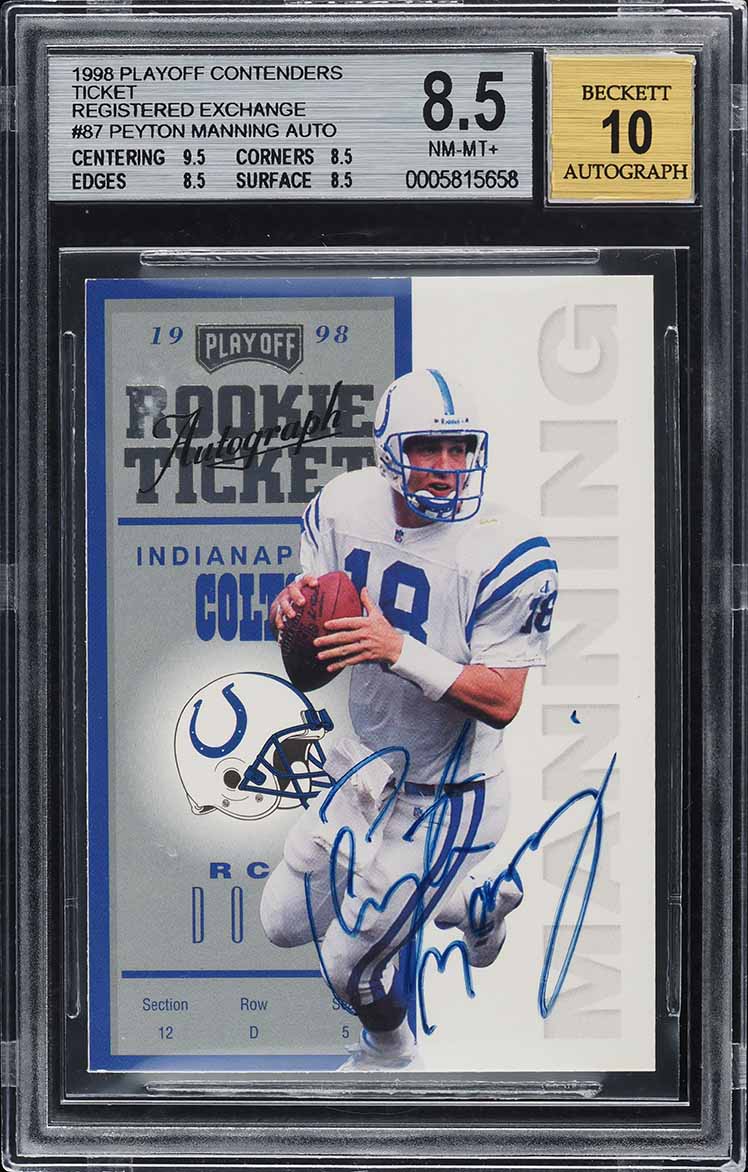
Era/Set: 1998 Playoff Contenders, on-card rookie autograph | Typical price: ~$30,000–$207,000 (grade-dependent) | Best for: trophy collectors and Manning specialists
This is the defining football rookie autograph of the 1990s — Manning's on-card signature on the Rookie Ticket design that the entire modern hobby still copies. A PSA 10 example sold for $207,400 at Heritage in 2025, and lower grades still trade in the mid-to-high five figures.
Manning's broader rookie record was reinforced by a $125,000 private sale of his 1998 E-X 2001 Essential Credentials Future /7 in July 2024. As an on-card auto of a first-ballot Hall of Famer, it sits at the top of 1990s football.
Pros:
- Defining on-card rookie auto of the decade
- $207,400 PSA 10 comp at Heritage
- First-ballot Hall-of-Fame pedigree
- Template for the entire modern rookie-auto market
Cons:
- Six-figure top-grade prices exclude most collectors
- Autograph and ticket condition vary widely
Verdict: The single most important 1990s football card and the benchmark on-card rookie auto.
2. 1998 Playoff Contenders Randy Moss Rookie Ticket Auto
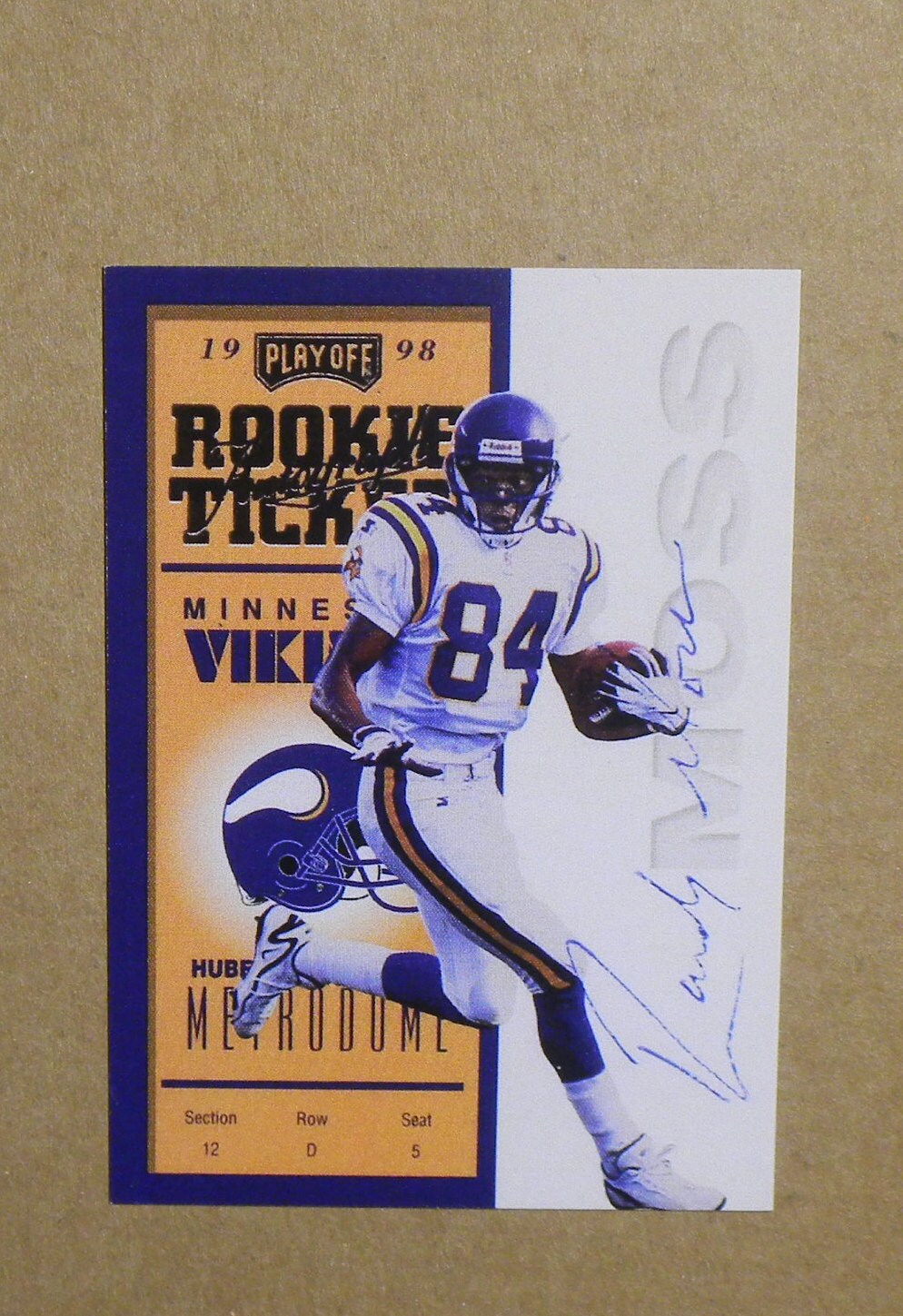
Era/Set: 1998 Playoff Contenders, on-card rookie autograph | Typical price: ~$3,000–$25,000 (grade-dependent) | Best for: Moss specialists and on-card auto collectors
Moss's Rookie Ticket autograph is the companion grail to the Manning from the same landmark set, with a signed print run of roughly 300 copies. PSA 9 examples have sold around $4,000, with PSA 10s reaching well into the five figures. As the most explosive receiver of his generation and a first-ballot Hall of Famer, Moss's on-card rookie auto trails only Manning's within the set.
Pros:
- On-card rookie auto from the landmark Contenders set
- Short ~300-copy signed print run
- Hall-of-Fame receiver with enduring demand
- Strong PSA 9 and PSA 10 comps
Cons:
- Autograph placement and quality vary
- Ticket surface chips drop the grade fast
Verdict: The decade's second-best on-card rookie auto and a cornerstone Moss card.
3. 1998 SP Authentic Peyton Manning #14
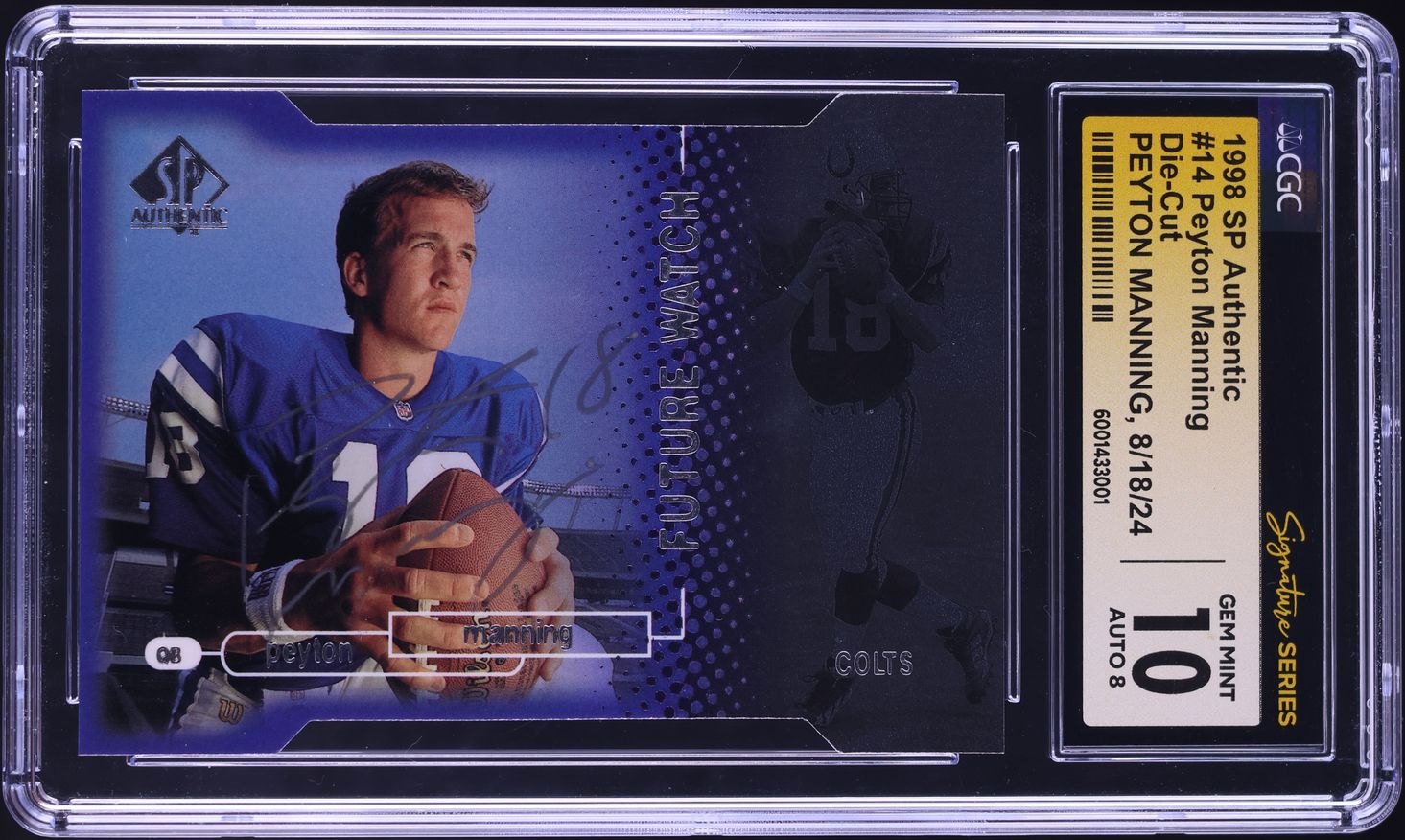
Era/Set: 1998 SP Authentic, serial-numbered /2000 | Typical price: ~$5,000–$10,000 (PSA 10) | Best for: numbered-rookie collectors
The SP Authentic #14, serial-numbered to 2,000, is Manning's premier base rookie outside of the autographs. A PSA 10 sold for $8,205 on eBay in April 2024, with PSA 9s in the low thousands. The "Future Watch" serial-numbered format made it one of the most desirable non-auto rookies of the decade, and it remains the most liquid five-figure-adjacent Manning rookie.
Pros:
- Serial-numbered /2000 Future Watch rookie
- $8,205 PSA 10 comp in 2024
- Premier non-auto Manning rookie
- Deep, liquid market with frequent sales
Cons:
- Centering and edges make PSA 10 genuinely scarce
- Die-cut sibling confuses new buyers
Verdict: The best numbered Manning rookie short of the on-card auto.
4. 1998 SP Authentic Randy Moss #18

Era/Set: 1998 SP Authentic, serial-numbered /2000 | Typical price: ~$2,500–$7,000 (PSA 10) | Best for: Moss collectors who want a numbered base rookie
Moss's SP Authentic #18 mirrors the Manning, serial-numbered to 2,000 with the Future Watch format. PSA 10 examples trade in the mid-four figures, making it the most desirable numbered non-auto Moss rookie. It pairs naturally with the Manning #14 for collectors building the marquee rookies of the 1998 class.
Pros:
- Serial-numbered /2000 Future Watch rookie
- Pairs directly with the Manning #14
- Hall-of-Fame receiver with lasting demand
- Strong PSA 10 comps in the mid-four figures
Cons:
- PSA 10 population limited by centering
- Trails the on-card auto sharply in value
Verdict: The essential numbered Moss base rookie and a natural pair to the SP Manning.
5. 1990 Score Supplemental Emmitt Smith #101T 💎 BEST VALUE
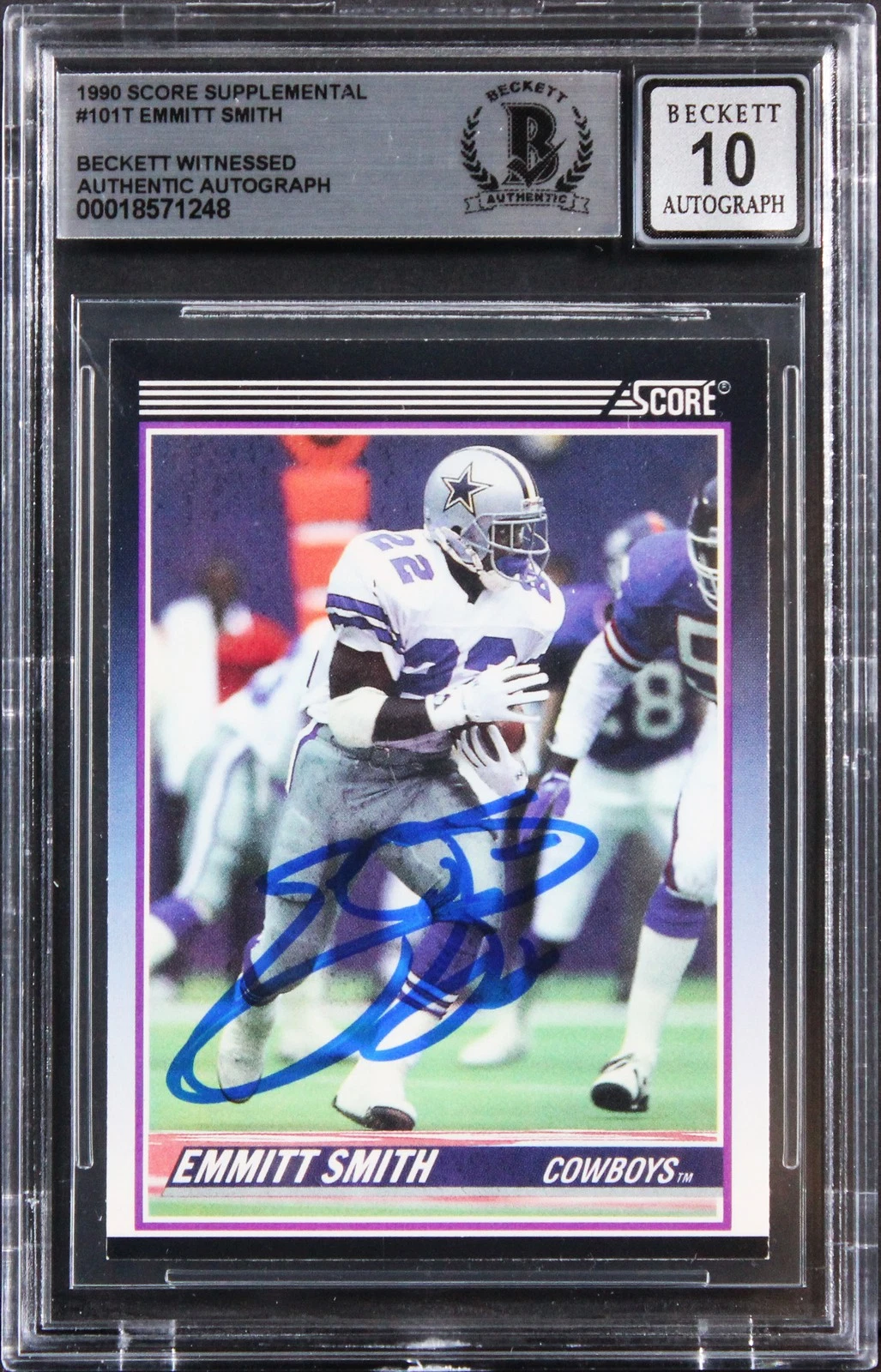
Era/Set: 1990 Score Supplemental, true rookie | Typical price: ~$1,000–$1,500 (PSA 10) | Best for: value collectors who want a real HOF rookie
The 1990 Score Supplemental #101T is the true rookie of the NFL's all-time leading rusher, picturing Emmitt in his Cowboys uniform. PSA 10 examples trade around $1,300, with fixed-price listings reaching $2,300+, while lower grades cost far less. For a genuine Hall-of-Fame rookie of a top-five all-time player, it is the most history-per-dollar card on this list.
Pros:
- True rookie of the all-time rushing leader
- PSA 10 around $1,300 — a four-figure HOF rookie
- Iconic Cowboys-dynasty subject
- Deep, liquid market with constant supply
Cons:
- 1990 Score stock is prone to chipping
- High PSA 10 population caps long-term upside
Verdict: The best value in 1990s football — a genuine Emmitt Smith rookie in gem grade for four figures.
6. 1991 Stadium Club Brett Favre #94 (Rookie)
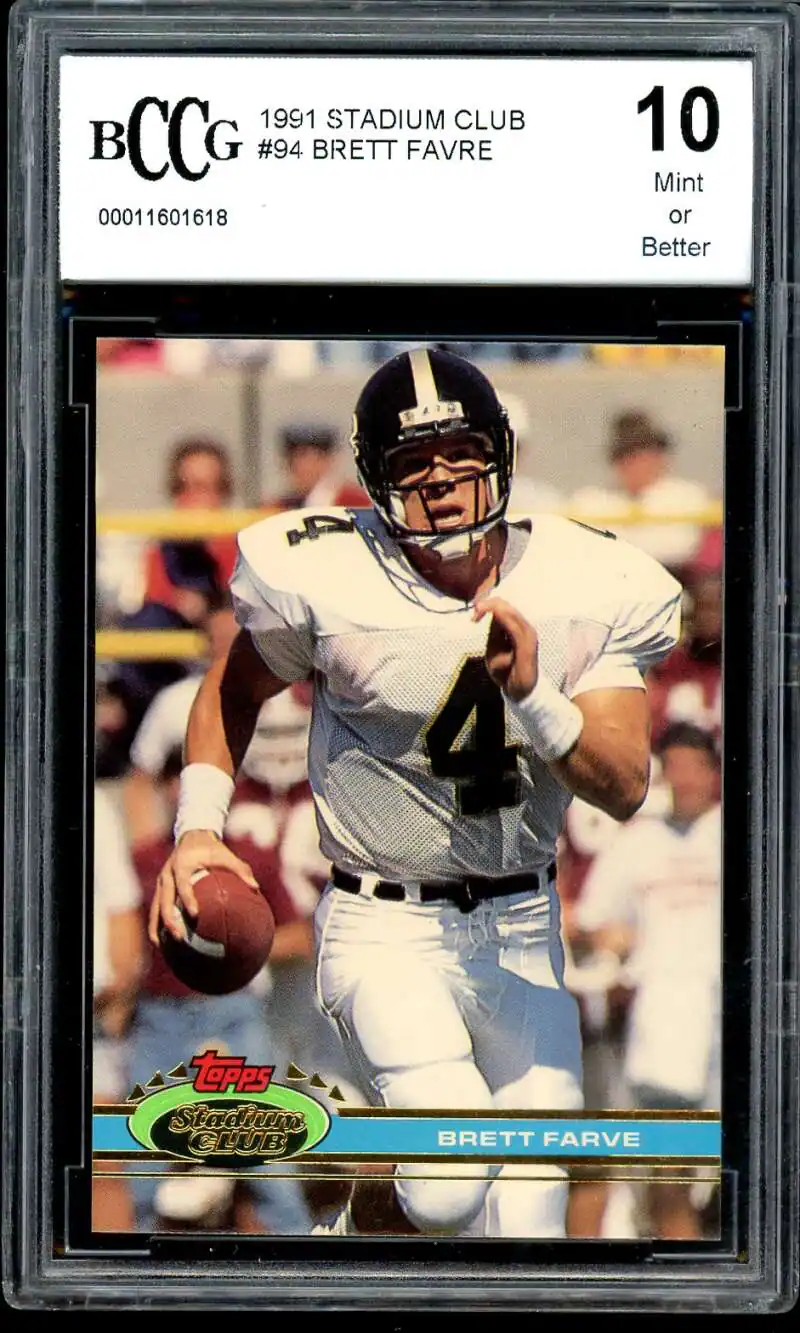
Era/Set: 1991 Topps Stadium Club rookie | Typical price: ~$1,700–$3,200 (PSA 10) | Best for: Favre collectors and 1991-set fans
Favre's Stadium Club #94 is his most desirable mainstream rookie, famous for the misspelled "Farve" back on early prints. PSA 10 examples have sold from $1,770 to $3,120 across 2024–2025 on Fanatics Collect, with the Super Bowl XXVI parallel commanding a premium. As the rookie of a Hall-of-Fame, MVP quarterback, it is a cornerstone of any 1990s collection.
Pros:
- Most desirable mainstream Favre rookie
- PSA 10 comps from $1,770 to $3,120
- Premium Super Bowl XXVI parallel exists
- Hall-of-Fame, multi-MVP subject
Cons:
- Stadium Club gloss surfaces show every flaw
- Parallel vs. Base confuses new buyers
Verdict: The definitive Favre rookie for the 1990s and a reliable blue-chip hold.
7. 1998 Bowman's Best / Topps Chrome Randy Moss Rookie
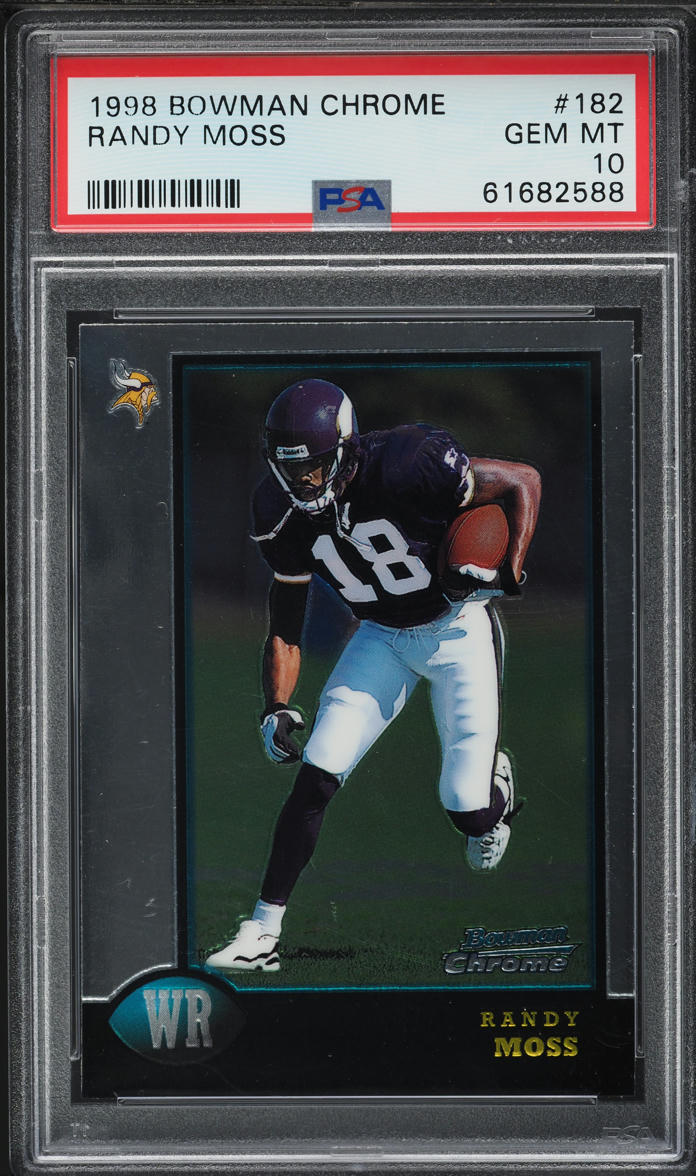
Era/Set: 1998 Bowman's Best / Topps Chrome chrome rookie | Typical price: ~$300–$1,500 (PSA 10) | Best for: chrome-rookie collectors
The chrome rookies — Bowman's Best, Topps Chrome, and Finest — gave Moss collectors a striking, refractor-friendly alternative to the paper rookies. Clean PSA 10 chrome Moss rookies trade from the mid-hundreds into four figures, with refractor parallels at the top of the band.
They are the most attainable way to own a marquee Moss rookie in gem condition.
Pros:
- Striking chrome and refractor surfaces
- Attainable PSA 10 price points
- Hall-of-Fame receiver with broad demand
- Refractor parallels offer upside
Cons:
- Chrome surfaces scratch and show print lines
- Refractor vs. Base requires careful checking
Verdict: The best-value chrome Moss rookie and an accessible gem-grade entry point.
8. 1994 SP Marshall Faulk Rookie
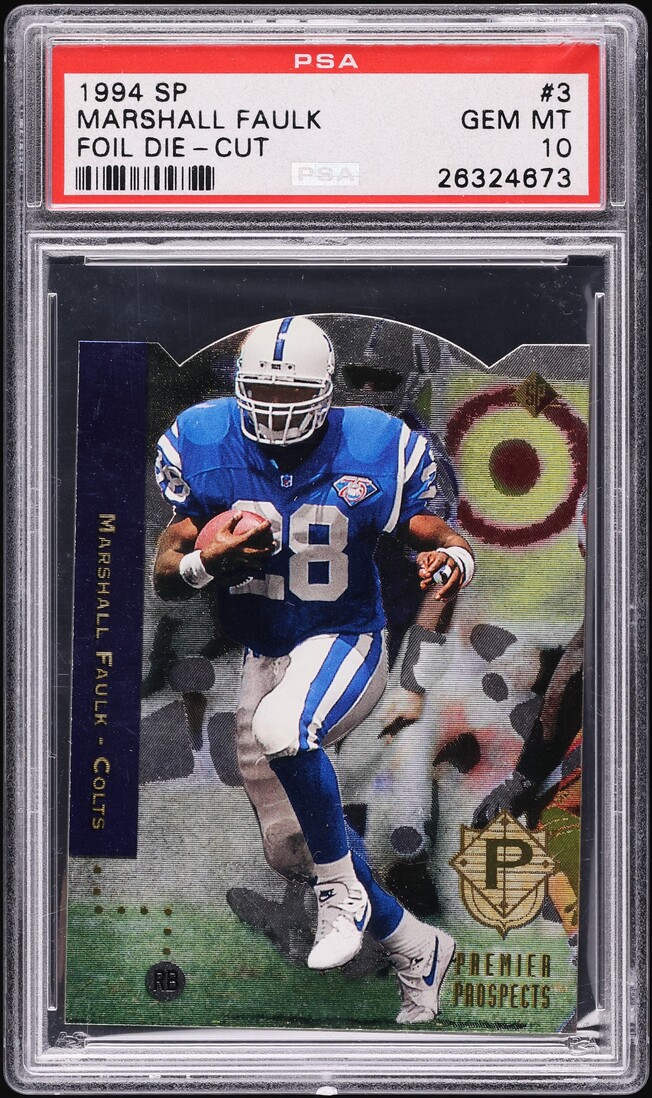
Era/Set: 1994 SP / foil rookie | Typical price: ~$150–$900 (PSA 10) | Best for: 1994-class and Rams/Colts collectors
The 1994 SP Faulk foil rookie captures one of the most complete running backs ever — a Hall of Famer and former MVP. PSA 10 examples trade from the low hundreds into the high hundreds, depending on the specific issue, making it an affordable HOF rookie from a strong 1994 class.
The foil-and-die-cut SP format makes high grades genuinely scarce despite the modest price.
Pros:
- Hall-of-Fame, MVP running back
- Affordable PSA 10 price band
- Foil SP rookie with real grading difficulty
- Strong 1994 class keeps demand steady
Cons:
- Foil surfaces chip and crack at the edges
- Lower ceiling than the marquee rookies
Verdict: An underpriced Hall-of-Fame rookie and a sharp 1994-class pickup.
9. 1996 Ray Lewis Rookie
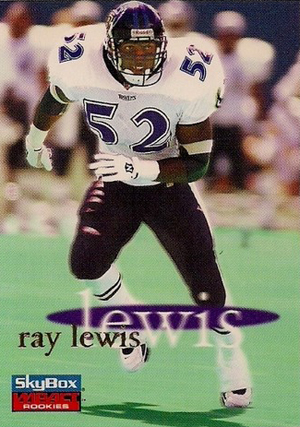
Era/Set: 1996 rookie issues | Typical price: ~$100–$700 (PSA 10) | Best for: defensive-legend collectors
Ray Lewis is one of the greatest defensive players in NFL history and a first-ballot Hall of Famer, yet his 1996 rookies remain genuinely affordable. PSA 10 examples across the 1996 issues trade from roughly $100 into the mid-hundreds, offering Hall-of-Fame pedigree at a fraction of the skill-position prices.
Defensive rookies historically lag, which leaves room for long-term appreciation.
Pros:
- First-ballot Hall-of-Fame defender
- Affordable PSA 10 entry point
- Two-time Super Bowl champion subject
- Defensive cards offer relative value
Cons:
- Defensive players draw thinner collector demand
- Multiple 1996 issues fragment the market
Verdict: A Hall-of-Fame rookie at a value price, with upside as defensive cards gain respect.
10. 1998 Score Peyton Manning / Randy Moss Base Rookies
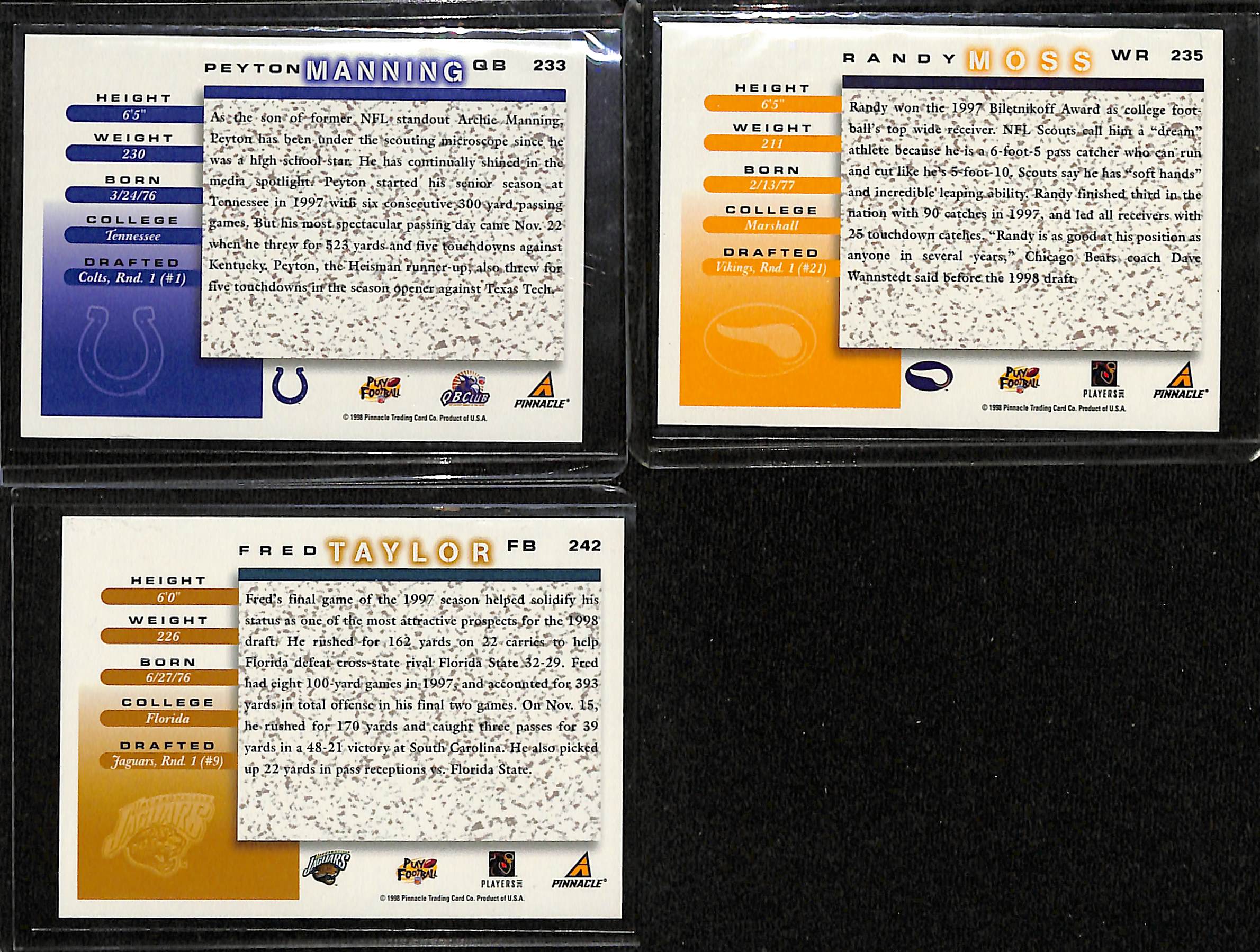
Era/Set: 1998 Score base rookies | Typical price: ~$30–$200 (PSA 10) | Best for: budget collectors and set builders
The 1998 Score base rookies of Manning and Moss are the most affordable way to own a true rookie of two of the decade's biggest names. A PSA 10 Manning #233 sold for about $150 in 2025, with PSA 8–9 examples in the $8–$30 range. They will never match the autos or numbered rookies, but they are genuine 1998-class rookies and a sensible starting point for new collectors.
Pros:
- True 1998 rookies of Manning and Moss
- Tiny PSA 10 prices around $150 or less
- Perfect starter for new collectors
- Set-building friendly and abundant
Cons:
- Low ceiling and high population
- Limited long-term appreciation
Verdict: The budget on-ramp to the 1998 class — real rookies of huge names for the price of lunch.
Which One Is Right for You?
What to Look For
- Verify true rookie status. "RC" labeling matters — the Emmitt Smith #101T Supplemental and the 1998 Contenders autos are the real rookies, not later inserts of the same player.
- Buy the grade, especially PSA 10. On glossy and chrome stock, the value gap between PSA 9 and PSA 10 is enormous; check the PSA population report before paying a gem premium.
- Confirm autographs are on-card. The Contenders Rookie Tickets are signed on the card itself; sticker autos and reprints are common frauds at the high end.
- Inspect centering, corners, and surface. 1990s foil and chrome issues chip and scratch easily; a soft corner or a print line can cost you a full grade.
- Watch for parallels and serial numbers. SP Authentic Future Watch cards are numbered /2000; die-cut and refractor parallels carry premiums and are routinely mislabeled.
What matters less than the hype: a hot rookie name does not make a base card a five-figure card — the auto, the serial number, and the PSA 10 grade do.
FAQ
What is the most valuable 1990s football card? The 1998 Playoff Contenders Peyton Manning Rookie Ticket Autograph, with a PSA 10 sale of $207,400 at Heritage in 2025 — the defining on-card rookie auto of the era.
What is the best-value 1990s football rookie? The 1990 Score Supplemental Emmitt Smith #101T, a true rookie of the all-time rushing leader, still around $1,000–$1,500 in PSA 10.
Why are the 1998 Contenders Rookie Tickets so important? They are on-card rookie autographs of the 1998 class — Manning and Moss especially — and the design template the entire modern rookie-auto market still follows.
Are 1998 Score base rookies worth collecting? Yes, as affordable true rookies — a PSA 10 Manning #233 sold for about $150 — but they have a low ceiling compared to the autos and numbered rookies.
Is the Favre Stadium Club rookie a good buy? Yes. It is Favre's most desirable mainstream rookie, with PSA 10 comps from $1,770 to $3,120 in 2024–2025, plus a premium Super Bowl XXVI parallel.
Why is the Ray Lewis rookie so cheap for a Hall of Famer? Defensive players historically draw thinner collector demand, so his 1996 rookies trade from roughly $100 into the mid-hundreds in PSA 10 — value pricing with upside.
Bottom Line
The 1998 class defines 1990s football collecting, and the 1998 Playoff Contenders Peyton Manning Rookie Ticket Auto is the best overall card at up to $207,400 in PSA 10. For real Hall-of-Fame history without five figures, the 1990 Score Supplemental Emmitt Smith #101T at $1,000–$1,500 is the clear best value.
Between them sit the numbered SP Authentic rookies and the Favre Stadium Club, all priced off documented PSA, Card Ladder, and Fanatics Collect comps.
Sources
- PSA Auction Prices — 1998 Playoff Contenders Peyton Manning
- Card Ladder — 1990 Score Supplemental Emmitt Smith #101T PSA 10
- Card Ladder — 1998 SP Authentic Peyton Manning #14 PSA 10
- Sports Card Investor — 1991 Stadium Club Brett Favre #94
- Cllct — Peyton Manning Rookie Card Sells for Record $100k at Fanatics Collect
- Cardboard Connection — Top 10 Peyton Manning Rookie Cards
- PSA Auction Prices — 1998 Score Peyton Manning
*1990s football cards review — best 1990s football rookie cards reviews, ratings, best 1990s football cards 2027, and a review of the top Manning, Moss, and Favre picks for collectors.*