
Should I open or buy a Dave's Hot Chicken franchise in 2027?
 Curated byKory White · Fractional CRO · Maryland
 PULSEKNOWLEDGE LIBRARY
Quality
Certified
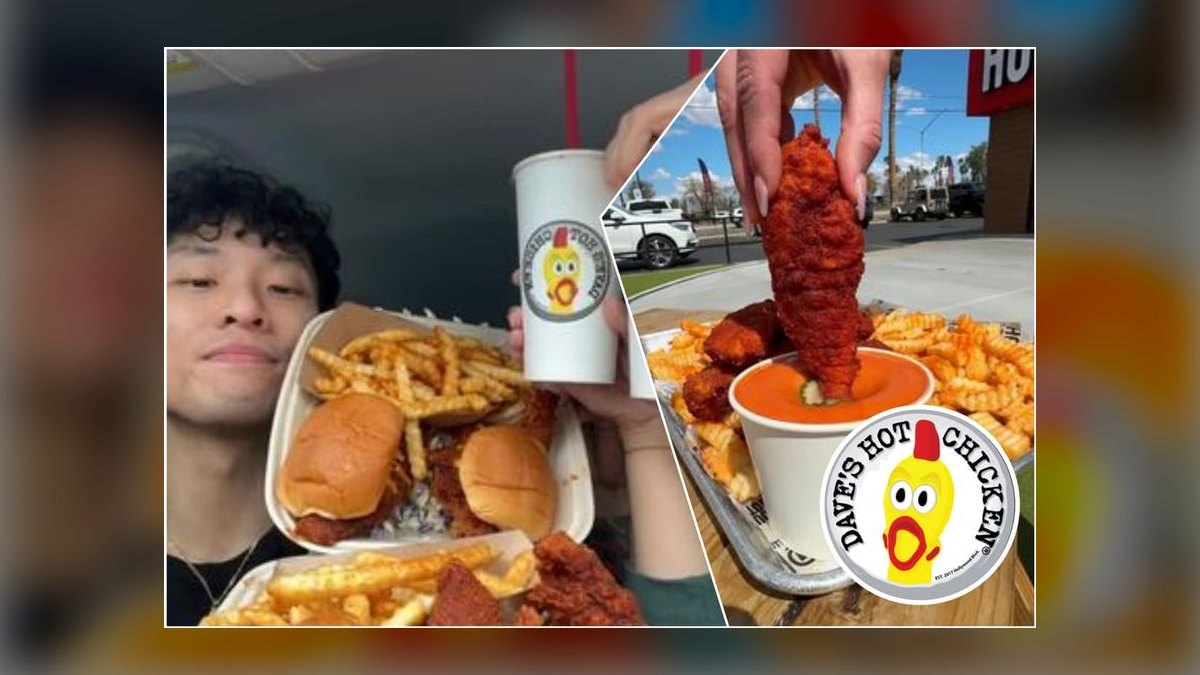
Only if you are an experienced, well-capitalized multi-unit restaurant operator. Dave's Hot Chicken awards development agreements, not single stores, so realistic 2027 exposure is roughly $2.1 million to $9.5 million across three to five units at $700,000–$1.9 million each. First-time franchisees should not plan on being selected.
The operator who thought one store was the on-ramp
Picture a buyer with $900,000 liquid, a paid-off house, and twenty years running a regional HVAC company. He reads that a hot chicken brand is posting industry-leading unit volumes, calls the franchise development line, and expects the conversation to be about site selection. Instead, the first three questions are about how many restaurant units he has personally operated, what his existing entity's balance sheet looks like, and whether he can fund a three-to-five store development schedule without selling the first store to pay for the second. He has none of those answers. The call ends politely and nothing happens.
That is the single most common way this deal dies, and it has nothing to do with the concept, the food, or the market. High-demand emerging brands in the fast-casual segment ration access. When a brand has more qualified applicants than available territory, it stops selling franchises and starts selecting franchisees. The scarce resource flips from capital to operator quality, and the screening criteria tighten in a predictable order: multi-unit operating history first, liquidity second, market fit third, and enthusiasm last. Enthusiasm is worth almost nothing at this stage because every applicant has it.
Contrast that with a second buyer: a group that already runs eleven units of a sandwich brand across two metros, has an area director on payroll, a bookkeeper who closes the month in six days, and a lender who has funded four of their builds. They have less personal liquidity than the HVAC owner but a far stronger application, because the brand is not underwriting a person — it is underwriting an operating system that has already survived a full economic cycle. That group can plausibly be awarded territory. The individual buyer, in almost every scenario, cannot.
So the honest framing for 2027 is not "should I open or buy." It is "am I in the category of people this brand awards to, and if not, what is the closest thing I can actually get?" Answering that first saves months. If you are in the category, the rest of this page is the underwriting work. If you are not, skip to the trade-offs section, where the adjacent paths — smaller emerging chicken concepts, existing resale inventory in other brands, or an independent build — are genuinely better uses of the same capital.
There is a second scenario worth naming, because it catches sophisticated people: the passive investor who wants to write a check into someone else's development agreement. That structure exists, but franchisors approve the operating entity and its principals, and most agreements restrict transfers and ownership changes. A silent LP stake in a franchisee's holding company is possible; buying "a store" as an absentee owner generally is not. If your plan requires you to not be in the building, verify that the franchise agreement permits it before you spend a dollar on legal.
How the award and development process actually works
The mechanism is a funnel, and each stage kills a predictable share of applicants. Understanding the sequence tells you where to spend effort and where effort is wasted.

Stage one — inquiry and pre-qualification. You submit financials and an operating résumé. The brand screens on net worth, liquid capital, and unit-operating history. This is a document review, not a relationship. Polishing your pitch deck does nothing here; either the numbers and the history clear the threshold or they do not.
Stage two — market availability. Even a qualified operator gets stopped if the metro they want is already committed. Fast-growing brands sell development rights years ahead of construction, so the map is often locked long before the stores appear. Being willing to take a secondary market — or an unclaimed pocket next to a committed one — is frequently the difference between an award and a polite no.

Stage three — the FDD delivery and review period. Federal rules require the franchisor to give you the Franchise Disclosure Document a set number of days before you sign anything or pay any money. Item 5 covers initial fees, Item 6 covers ongoing fees, Item 7 gives the estimated initial investment range, Item 19 gives any financial performance representation, Item 20 gives unit counts and — critically — transfers, terminations, and closures. Item 21 holds the franchisor's audited financials. This is the only document in the process where the numbers carry legal weight. Everything a salesperson tells you on the phone is unenforceable color commentary.
Stage four — validation calls. You call existing franchisees from the Item 20 list. Do not call the three the brand recommends. Call the ones who transferred out, the ones in markets similar to yours, and the ones who opened in the last eighteen months. Ask about actual food cost, actual labor cost, actual ramp curve, actual construction overruns, and whether the corporate support they were promised showed up.
Stage five — the development agreement. You commit to a schedule: unit one open by a date, unit two by a date, unit three by a date. You pay a development fee up front, which is typically credited against the individual franchise fees as each store opens. Miss the schedule and you can lose the remaining rights — sometimes without a refund of the unearned portion. This clause is where most of your downside risk actually lives, and it is far more negotiable in theory than in practice with a hot brand.
Stage six — real estate, build, and open. Site approval, LOI, lease negotiation, permitting, construction, equipment, hiring, training, opening. Twelve to twenty-four months is a realistic range from signature to first customer, and permitting is the variable that blows up schedules most often.
mermaid flowchart TD A[Capital ready to deploy] --> B{Multi-unit restaurant track record?} B -- Yes --> C{Target territory available?} B -- No --> D[Adjacent paths] C -- Yes --> E[Pursue development agreement - build new] C -- No --> F{Resale available and approved?} F -- Yes --> G[Buy existing unit - pay EBITDA multiple] F -- No --> D D --> H[Mid-tier emerging brand with open territory] D --> I[Established brand resale with cash flow] D --> J[Independent concept - no royalty, no resale multiple] D --> K[Build operating history first, reapply in 3-4 years] E --> L[Long ramp, full construction risk, site control] G --> M[Immediate cash flow, inherited lease and condition] </invoke>

There is also a hybrid worth naming: joining an existing franchisee group as an operating partner with equity. You contribute capital and day-to-day management, they contribute the approved entity and the track record. It requires franchisor consent and a carefully drafted operating agreement, but it is the fastest legitimate route into a brand that will not award to you directly.
Pitfalls that kill deals, and how to avoid each one
Treating Item 19 as a forecast. A financial performance representation describes what some set of existing units did, usually with medians and quartiles. It is not a projection for your store. Read which units are included — company-operated stores, top-quartile stores, and stores in mature markets all skew the number upward. Build your own pro forma from the bottom quartile, then see whether the deal still works. If it only works at the top-quartile number, you are not buying a business, you are buying a lottery ticket.

Underwriting the store instead of the schedule. The single-unit pro forma is the wrong model. Build a consolidated multi-year cash flow across all committed units, with each store's ramp overlapping the next store's construction draw. The failure mode is arithmetically boring: unit one is eight months from break-even when unit two's equity injection is due, and you fund it from personal reserves you had earmarked for something else.
Ignoring the personal guarantee. Franchise agreements and SBA-backed loans typically require personal guarantees from the principals, often supported by a lien on personal real estate. Know exactly what you are pledging and for how long. Guarantees frequently survive a sale of the business unless specifically released.

Missing the lease-and-franchise-term mismatch. If your franchise agreement runs ten years and your lease runs five with two five-year options, you need those options to be exercisable and not contingent on landlord approval. A landlord who can decline renewal at year five effectively owns your business's terminal value.
Skipping unfriendly validation calls. Everyone calls the happy franchisees. The information asymmetry closes when you call the operators who transferred, closed, or are in litigation, and the ones opening in markets like yours. Item 20 gives you names and, in many cases, contact information for departed franchisees. Use it.

Assuming labor at the number in the model. Fast-casual turnover is punishingly high and each replacement carries recruiting and training cost that does not show up as a neat percentage. Wage floors have moved sharply in several states, and California's separate fast-food wage standard reset the math for large chains operating there. Underwrite your specific market's actual wage rates, not a national average, and model 30%+ labor as the realistic case rather than the pessimistic one.
Forgetting the reinvestment clause. Most franchise agreements require a remodel on a set cycle and again at renewal. A mid-term refresh is a six-figure event per store that almost never appears in a first-pass pro forma. Reserve for it from year one.

Believing you will exit at a premium on a single unit. The natural buyers for restaurant units are multi-unit operators and platform investors, and they buy portfolios, not orphans. A lone store with an assignable lease and modest EBITDA has a thin buyer pool and prices accordingly. If exit value matters to you, the minimum viable position is three-plus units in one market with shared management overhead — which loops directly back to why the brand demands a development agreement in the first place.
Signing without franchise-specific counsel. General business attorneys miss franchise-specific traps: post-term non-competes, transfer restrictions, cure periods, arbitration venue, and the exact conditions under which development rights terminate. The legal spend here is small relative to what you are committing.
Related questions
How long does it take from signing to opening the first store?
Realistically twelve to twenty-four months. Site approval and lease negotiation take three to six months, permitting is the wildcard and can add three-plus months in restrictive municipalities, and construction plus equipment plus training typically runs four to seven months.
Can I use an SBA loan for a Dave's Hot Chicken franchise?
SBA 7(a) financing is commonly used for franchise builds, but loan caps mean it usually covers one unit, not a multi-unit schedule. Expect conventional restaurant lending, equipment financing, and substantial equity for the rest, plus personal guarantees.
Is a drive-thru worth the extra build cost?
Often yes in suburban markets. A drive-thru raises construction cost and narrows viable sites, but it improves throughput, lowers per-order labor, and reduces reliance on high-commission third-party delivery. Model it against your specific market's traffic patterns.
What happens if I miss a development schedule milestone?
The franchisor can terminate your rights to the remaining units. Some agreements allow cure periods or extensions for causes outside your control, such as permitting delays. Negotiate those provisions before signing — they are far harder to fix later.
Should I hire an area director before unit two opens?
Usually yes. Once you are running two locations and building a third, you cannot personally supervise all of them. Budget a market-level management salary as a real line item; it is the overhead that a multi-unit portfolio exists to absorb.
FAQ
Does Dave's Hot Chicken award single-unit franchises?
The brand's development model is built around multi-unit agreements, which is standard for high-demand emerging fast-casual concepts. A single-unit award is unlikely and should not be the basis of your plan. Confirm current policy directly with the franchise development team and in the current FDD before you spend money on anything else.
What is the realistic total capital commitment?
Per unit, the estimated initial investment runs roughly $700,000 to $1.9 million depending on site type and market. Across a three-to-five unit development schedule, that is approximately $2.1 million to $9.5 million in total exposure, plus working capital reserves for each store's ramp and a contingency for construction overruns.
How much liquid capital do I actually need?
More than your equity contribution on unit one. You need equity for each build, working capital through each ramp, and a reserve for overruns and slow openings. A three-unit schedule realistically wants seven figures of liquidity behind it even with strong debt financing.
What ongoing fees apply after opening?
Expect a royalty around 5% of gross sales plus a marketing contribution in the 3%–5% range, applying to every unit in the agreement. Combined brand fees of roughly 8%–10% of revenue are a permanent fixed drag and should be modeled as such from your first pro forma.
Where do I verify all of these numbers?
The Franchise Disclosure Document, and only the FDD. Item 5 for initial fees, Item 6 for ongoing fees, Item 7 for the initial investment estimate, Item 19 for any financial performance representation, Item 20 for unit counts and closures, Item 21 for audited financials. Verbal claims from a sales representative are not enforceable.
If I am not an experienced multi-unit operator, what should I do instead?
Pursue a mid-tier brand with open territory, buy a cash-flowing resale in an established system, or build an independent concept where you keep the royalty. Alternatively, run a smaller multi-unit portfolio for three to four years, then reapply with an operating history the brand will actually underwrite.
Sources
- https://www.ftc.gov/business-guidance/resources/franchise-rule-compliance-guide
- https://www.sba.gov/funding-programs/loans/7a-loans
- https://www.franchise.org/
- https://www.entrepreneur.com/franchises/franchise500
- https://www.qsrmagazine.com/
- https://www.restaurantbusinessonline.com/
- https://www.nrn.com/
- https://www.dir.ca.gov/dlse/Fast-Food-Minimum-Wage-FAQ.htm
- https://www.bls.gov/oes/current/oes350000.htm
- https://www.franchisebusinessreview.com/
Related on PULSE
- Should I open or buy a Famous Dave's franchise in 2027?
- Should I open or buy a Hot Chicken Takeover franchise in 2027?
- Should I open or buy a Big Chicken franchise in 2027?
- Should I open or buy a Champs Chicken franchise in 2027?
- How Many Employees Should I Schedule Each Shift at My Hot Pot Restaurant?
- How Many Sales Reps Do I Need to Hire for My Hot Tub and Spa Retailer?
This page will be disappearing soon. Save it to your device for $1 — or read it free while it is here.
@Kory-White- · if Venmo asks, the last 4 of my number are 2012
This page is gone.
This one is off the shelf now. $1 keeps it on your phone for good — the whole page, pictures and diagrams included.
 pulse-qHow Many Sales Reps Do I Need to Hire for My Prefab Home Builder in 2026?
 pulse-qWhat Service Fees Should a Painting Contractor Charge in 2026?
 pulse-qHow Many Technicians Should I Schedule Each Day at My Nail Salon in 2026?
 pulse-qHow Many Sales Reps Do I Need to Hire for My Home Remodeling Company in 2027?
 pulse-qHow Many Employees Should I Schedule Each Shift at My Music Venue in 2027?
 pulse-qHow Many Employees Should I Schedule Each Shift at My Language School in 2026?
 pulse-qHow Do I Calculate the Right Service Fee to Charge in 2026?
 pulse-qHow Do I Make a Service Fee Tangible So It Adds Real Value in 2026?
 pulse-qHow Many Sales Reps Do I Need to Hire for My Home Security and Alarm Company in 2026?
 pulse-qHow Many Sales Reps Do I Need to Hire for My Medical Courier Company in 2027?