

Should I open or buy a Golden Corral franchise in 2027?
 Curated byKory White · Fractional CRO · Maryland
Quality
Certified
Whether you should open or buy a Golden Corral franchise in 2027 depends on your access to significant capital and experience in high-volume restaurant operations. Initial investments typically range from $1.9 million to $4.5 million, with ongoing royalties and marketing fees. The brand offers a well-known buffet model, but you must carefully assess local market demand and rising food and labor costs before committing.
I've been in the restaurant franchise game long enough to know that when someone asks me "Should I buy a Golden Corral?" — they're usually hoping I'll say "hell yes" or "hell no." The truth, as with most things in this business, is somewhere in the middle. But let me be blunt: this is not a franchise for the faint of wallet or the novice operator.
The Hook That Grabbed Me
Golden Corral is America's largest grill-buffet chain, founded in 1973 and franchising since the 1980s. That's a hell of a track record. But here's what I've learned watching the buffet segment over two decades: the brand recognition is real, the revenue potential is real, and the structural headwinds are equally real. If you're thinking about 2027, you need to understand the full picture — not the glossy brochure version.
The Numbers That Made Me Raise an Eyebrow
Let's talk money, because that's where most people get tripped up. According to the 2026 FDD, here's what you're looking at:
| Line Item | Low | High | Notes |
|---|---|---|---|
| Franchise fee | $50,000 | $50,000 | Non-negotiable, per FDD |
| Building / real estate / site | $1,500,000 | $5,000,000 | You're buying a small warehouse |
| Equipment & buffet build-out | $500,000 | $1,200,000 | Buffet lines, grill, bakery, kitchen |
| Signage & decor | $80,000 | $250,000 | You want people to find you |
| Initial inventory | $60,000 | $140,000 | Food and supplies |
| Initial marketing | $40,000 | $120,000 | Grand opening |
| Training & travel | $25,000 | $70,000 | You + key management |
| Working capital | $150,000 | $500,000 | Ramp-up runway |
| Total Item 7 | ~$2,400,000 | ~$7,400,000 | Per 2026 FDD — one of the highest in franchising |
And don't forget the ongoing costs: royalty around 4% of gross and marketing fee about 2% of gross. That's 6% off the top before you've paid for food, labor, or the mortgage.
The Real Estate Reality That Changed My Perspective
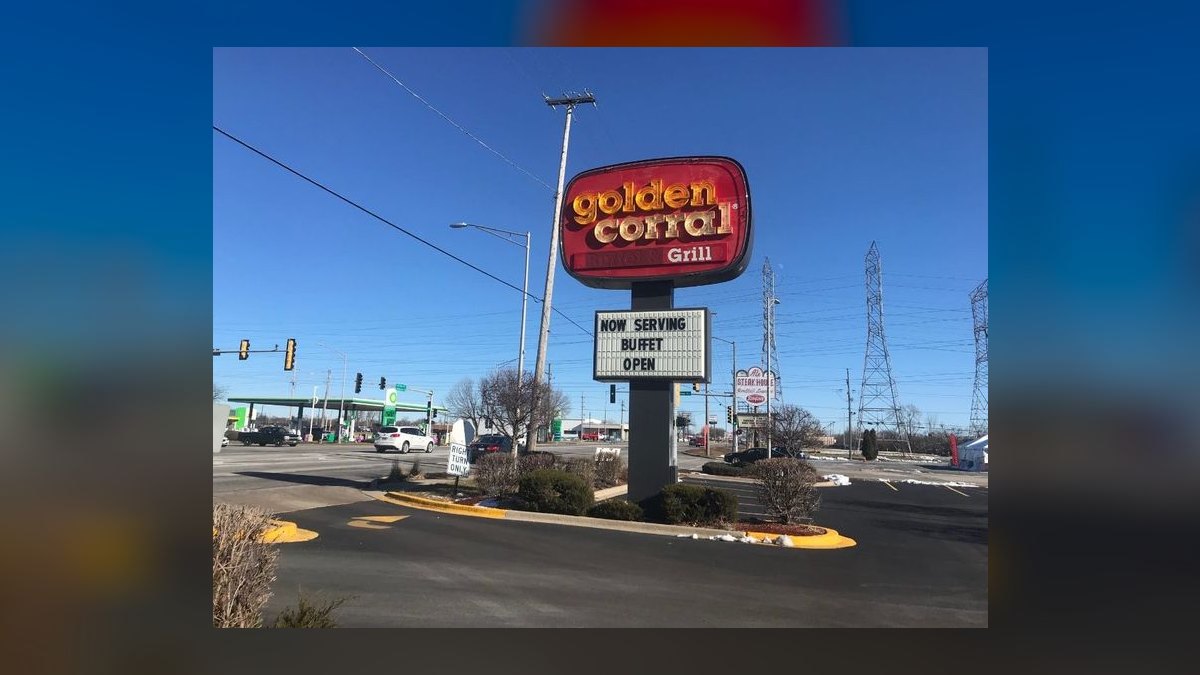
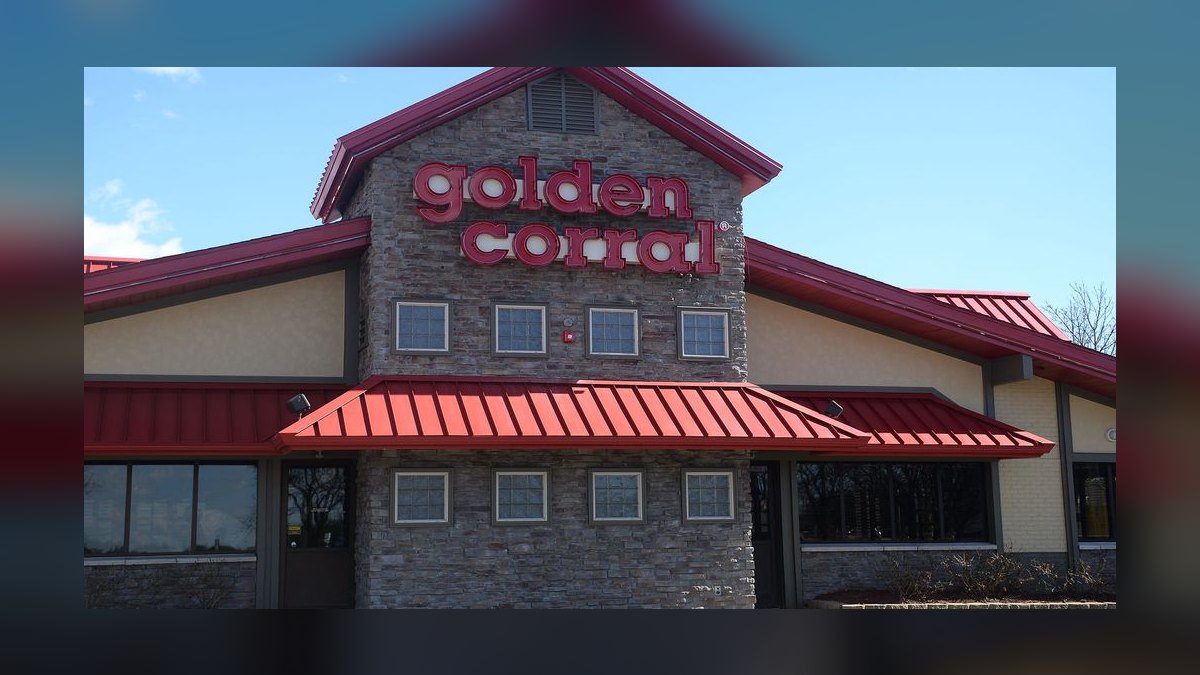
Here's what I tell every operator who calls me about this: the building is the real investment. That $2.4M-$7.4M Item 7 figure dwarfs most franchises because you're not just buying a restaurant license — you're buying a 10,000-12,000+ sq ft freestanding structure on a large pad site. Most franchisees end up owning or building-to-suit rather than leasing.
This means you're making two investments at once: a restaurant business and a commercial real-estate holding. The smartest operators I know treat the real estate as a separate asset — financing the building through a real-estate loan (land and structure as collateral) and the operating business through conventional restaurant lending. Some even hold the property in a separate entity that leases back to the operating company. This isolates real-estate value, improves tax treatment via depreciation, and means that even if the buffet segment's structural headwinds worsen, you still own an appreciating, repurposable commercial asset.
But here's the flip side: that heavy real-estate commitment makes a Golden Corral far harder to exit than an asset-light franchise. You're selling or repositioning a large, special-purpose building, not just transferring a license. Model the real-estate exit as carefully as the operating returns — because in a high-capital, headwind-facing segment, the building is both the biggest risk and the biggest source of residual value.
Who Actually Wins With This Business
After 25 years, I've seen the pattern. The winners are:
- Capital required: $2.4M-$7.4M, with $1,000,000+ liquid and strong financing.
- Time commitment: full-time, large-restaurant operation; multi-unit experience strongly preferred.
- Skills: large-format restaurant operations, real estate, and labor management.
- Geographic fit: buffet-receptive markets — suburban, value-oriented, family-and-senior demographics.
- Lifestyle fit: experienced, well-capitalized multi-unit restaurant operator.
These are not first-timers. These are people who've already run large restaurants, know how to manage 100+ employees, and understand the brutal math of buffet margins.
Who Loses Their Shirt
And the losers? I've seen this too:
- Under-capitalized or first-time operators — the capital and complexity are too high.
- Operators in markets where buffets are declining or out of favor.
- Those who can't manage large real estate and heavy labor.
- Buyers who underestimate buffet food-and-labor margins.
- Those uncomfortable with the buffet segment's structural headwinds.
The 90-Day Decision Tree I Use With Clients

If you're serious about 2027, here's my timeline:
- Day 1-30: Read the 2026 FDD and Item 19 carefully; scrutinize the very high investment and buffet-margin economics.
- Day 31-60: Interview many operators; ask about real profitability, food and labor costs, real-estate burden, and the buffet segment's trajectory.
- Day 61-90: Validate a genuinely buffet-receptive market and secure suitable large-format real estate.
- Day 91-180: Build the large-format restaurant.
- Day 181-210: Open and staff the large operation heavily.
- Manage food and labor margins rigorously — the make-or-break of the buffet model.
- Assess multi-unit expansion only after proving single-unit profitability.
The Revenue Reality
Mature units gross $3M-$6M+ — that's serious revenue. But here's the math that keeps me up at night: the buffet format carries high food and labor costs, so margins are thinner than quick-service, and the large real estate ties up significant capital. Golden Corral's edge is brand recognition as the largest grill-buffet chain, high revenue potential, and a loyal value-seeking family and senior customer base. But the trade-offs are very high capital (among the highest in franchising due to the large building), heavy real-estate and labor requirements, thin buffet margins (all-you-can-eat food cost plus staffing a large operation), and a buffet segment facing structural headwinds (the buffet category contracted significantly during and after the pandemic, with labor costs, food costs, and changing dining habits pressuring the all-you-can-eat model).
My Take on Alternatives
If the numbers scare you (and they should), consider:
- Other QSR/fast-casual franchises — far lower capital, better-trending segments.
- Cicis or other buffet concepts — adjacent buffet models (validate the segment carefully).
- Family-dining franchises (Denny's, IHOP-style) — table-service family dining.
- Independent buffet or family restaurant — full control, no brand.
- Lower-capital, higher-growth restaurant franchises — adjacent, better-trending models.
The Bottom Line
Golden Corral is the leading large-format grill buffet, and for the right operator — well-capitalized, experienced, in a buffet-friendly market — it can be a powerhouse. But for everyone else? It's a high-stakes gamble in a segment that's fighting structural headwinds. Know your capital, know your market, and know your exit strategy before you sign anything.

*If you want to dig deeper into franchise economics or model your own numbers, the PULSE / CRO Syndicate has resources that can help you avoid the mistakes I've seen too many operators make.*
---
The Operational Reality: What You're Actually Signing Up For
Let me paint you a picture of what a typical week looks like inside a Golden Corral, because the FDD numbers don't tell you about the 4 AM produce deliveries or the 11 PM grease trap cleaning. This is a beast that demands constant feeding — literally and figuratively.
The Labor Puzzle — You'll need 80-120 employees per location, depending on volume. That's not a typo. Your management team alone will require a general manager, assistant manager, kitchen manager, bakery manager, and front-of-house manager. In 2027, with labor costs projected to rise 4-7% annually according to industry wage surveys, you're looking at a payroll burden of $1.2 million to $1.8 million per year. The buffet model is labor-intensive because you're cooking everything from scratch — steaks, fried chicken, mashed potatoes, fresh-baked rolls, and that famous yeast roll. You can't just heat up frozen bags of food and call it a day.
The Food Cost Tightrope — Your cost of goods sold (COGS) will run 32-38% of revenue. Compare that to a quick-service burger joint at 28-30%. The difference? Buffets have massive waste. You're cooking for a crowd that might show up or might not. Rainy Tuesday? You just threw away 40 pounds of fried fish. Snowstorm? That prime rib you prepped? Gone. The best operators I've seen run 34% COGS with aggressive portion control and real-time demand forecasting. The worst hit 42% and wonder why they're bleeding cash.

The Health Department Reality — This is where Golden Corral has historically taken body blows. The buffet format means every surface, every sneeze guard, every serving utensil is a potential violation. You'll have health inspectors in your restaurant 4-6 times per year minimum. One critical violation can shut you down for a day — that's $15,000-$25,000 in lost revenue plus the reputational hit. I've seen operators spend $50,000-$80,000 annually just on third-party sanitation audits and deep cleaning services to stay ahead of this.
The Breakfast Shift Nobody Talks About — If you open for breakfast (and most Golden Corrals do), you're looking at a 6 AM start time for your kitchen crew. That means your prep team is rolling in at 4:30 AM. By 7 AM, you've got scrambled eggs, bacon, sausage, biscuits, gravy, pancakes, and fresh fruit on the line. The breakfast crowd is loyal but price-sensitive — you'll average $8-$10 per ticket versus $12-$15 at lunch and $14-$18 at dinner. The margins are thinner, but the traffic builds your dinner base.
The Weekend Warrior Factor — Friday and Saturday nights are your money makers. You'll do 1,200-1,800 covers on a good Friday, with your dinner rush starting at 5 PM and running until 8:30 PM. That's three and a half hours of absolute chaos. Your grill team needs to be hitting 300-400 steaks per hour during peak. Your bakery needs fresh rolls coming out every 15 minutes. Your dish pit needs to cycle plates through in under 90 seconds. If any link in that chain breaks, you get a line out the door and angry customers.
The Competitive market in 2027: Why Timing Matters

You're not just competing against other buffets in 2027 — you're competing against every fast-casual concept that's figured out how to deliver speed, quality, and value without the all-you-can-eat model. Here's what's coming at you.
The Fast-Casual Threat — Chipotle, Cava, Sweetgreen, and their ilk have trained a generation to expect custom bowls in under 4 minutes for $10-$13. That's your lunch price point, but they do it without the overhead of a full buffet line, a bakery, or a grill station. Their labor model runs 25-30% of sales versus your 35-40%. Their real estate footprint is 2,500-3,500 square feet versus your 10,000-12,000. They can open three locations for what you spend on one. In 2027, with commercial real estate rates projected to stay elevated, that square footage differential is a massive competitive disadvantage.
The Grocery Store Grab — Don't underestimate the Kroger deli or the Publix hot bar. These have gotten shockingly good. For $8.99 a pound, you can grab fried chicken, mac and cheese, collard greens, and cornbread — take it home and eat in front of your TV. No tip, no wait, no sneeze guard. In 2027, grocery store prepared foods are projected to grow 8-12% annually as retailers invest in their deli operations. They're eating your lunch, literally.
The Ghost Kitchen Mirage — You'll hear about ghost kitchens and virtual brands. Don't fall for it with a buffet. You can't deliver an all-you-can-eat experience. You can't deliver a hot yeast roll that's been sitting in a delivery bag for 20 minutes. Golden Corral has tried limited delivery through third-party apps, and the reviews are brutal — cold food, missing items, wrong orders. Your model is built on the in-person experience, and that's both a strength and a vulnerability.
The Regional Buffet Wars — In the Southeast and Midwest, you're going head-to-head with Hometown Buffet, Old Country Buffet, and a dozen regional players. In Texas, it's Luby's. In the Northeast, it's Chinese buffets that offer 200+ items for $12.99. These competitors have lower labor costs (many use immigrant labor pools), simpler menus (no steak grill), and lower real estate costs (older strip mall locations). They can undercut you on price and still make money. You need to win on quality, cleanliness, and the Golden Corral brand halo.
The Demographic Shift — Here's the uncomfortable truth: your core customer is aging. The 55+ crowd loves buffets — they grew up with them, they have time, they want variety. But Gen X and Millennials? They're skeptical. They've seen the food poisoning headlines, they don't trust communal serving spoons, and they'd rather pay $18 for a single high-quality bowl than $15 for a mediocre all-you-can-eat experience. Gen Z is even further removed — they've never known a world without DoorDash and Instagram-worthy plating. In 2027, you're betting that the 55+ demographic will remain large enough and loyal enough to sustain your business. It's a bet that could pay off as Boomers continue to retire, but it's not a growth story.
The Exit Strategy: How You Get Your Money Out

Nobody talks about this when they're selling you a franchise, but I've seen too many operators realize too late that their Golden Corral is essentially un-sellable. Let me walk you through the reality of exiting this business.
The Resale Market — Golden Corral franchises do trade hands, but the pool of buyers is shallow. You're looking for someone with $1.5-$3 million in liquid capital, restaurant experience (preferably buffet experience), and a willingness to work 60-70 hour weeks for the first 2-3 years. That's a tiny demographic. According to franchise resale data from 2020-2025, the average time to sell a Golden Corral is 12-18 months, compared to 6-9 months for a McDonald's or Subway. And you'll likely sell at a discount — 60-70% of your total investment, versus 80-90% for stronger brands.
The Franchisor Approval — Golden Corral has the right to approve any buyer, and they're picky. They want operators with net worth of $3 million+ and liquid assets of $1 million+. They also want multi-unit operators who can open 2-3 locations. If you're a single-unit owner trying to sell to another single-unit owner, the franchisor may block the sale if they don't think the buyer has the financial firepower or experience. I've seen deals fall apart at the 11th hour because the franchisor said no.

The Lease Trap — Your 15-20 year lease is your biggest liability. If you want to sell, the new buyer has to assume that lease. In 2027, with many 2010-era leases coming up for renewal, landlords are demanding higher rents (3-5% annual increases) and tighter terms. If your location is in a B-grade strip mall or a declining retail corridor, you may not be able to find a buyer willing to take on that lease. I know operators who have had to pay landlords $200,000-$500,000 just to break a lease so they could walk away.
The Equipment Depreciation — That $1.2 million in equipment you bought? After 7-10 years, it's worth maybe $200,000-$300,000 on the used market. Buffet lines get beat up. Grills wear out. Walk-in coolers fail. A new buyer will want to negotiate a massive discount because they know they'll need to replace half the equipment within 3 years. You're not selling a turnkey operation; you're selling a used car with 100,000 miles.
The Golden Handcuffs — Here's the worst-case scenario I've seen play out three times: An operator puts in 10 years, builds the business to $4 million in annual revenue, clears $400,000 in EBITDA, and wants to retire. They list the restaurant for $2.5 million (6.25x EBITDA, which is standard). After 18 months, the best offer is $1.2 million. They can't afford to sell at that price because they still owe $1.8 million on the SBA loan. So they're stuck — working 50 hours a week at age 65, hoping for a miracle or a heart attack. Don't let that be you.
The Better Exit — If you're going to do this, plan your exit before you sign the franchise agreement. Buy the real estate separately if you can — that gives you an asset to sell or lease. Build a strong management team that can
Related on PULSE
- Should I open or buy a The Junkluggers franchise in 2027?
- Should I open or buy a Pak Mail franchise in 2027?
- Should I open or buy a PostNet franchise in 2027?
- Should I open or buy a Fish Window Cleaning franchise in 2027?
- Should I open or buy a Shine Window Care franchise in 2027?
- Should I open or buy an Image360 franchise in 2027?
Sources
- Golden Corral Corporate Franchise Page — official franchise disclosure, costs, and requirements from the franchisor.
- Franchise Business Review — independent franchisee satisfaction surveys and industry data.
- Entrepreneur Magazine Franchise 500 — annual ranking and analysis of top franchise opportunities.
- International Franchise Association (IFA) — industry guidelines, legal resources, and franchise market trends.
- U.S. Small Business Administration (SBA) — financing options, business plans, and regulatory guidance for franchise owners.
- Franchise Direct — franchise directory with reviews, fees, and comparison tools for prospective buyers.
FAQ
What is the total investment range to open a Golden Corral franchise? The total investment typically falls between $1.5 million and $5 million, depending on location, building size, and equipment needs. This includes the $50,000 franchise fee, real estate, construction, and buffet build-out costs. Most operators should expect to land in the $2–4 million range for a standard unit.
How much ongoing revenue can I expect from a Golden Corral franchise? Unit revenue varies widely by market, but established locations often generate $2–4 million annually. However, profit margins in the buffet segment are typically thinner than fast-casual, often ranging from 5–15% after food, labor, and overhead costs. High-volume stores can do better, but low-volume ones may struggle.
What are the biggest risks of buying a Golden Corral franchise in 2027? The main risks include rising food and labor costs, changing consumer preferences away from all-you-can-eat formats, and the high capital requirement. Additionally, competition from fast-casual and delivery options continues to pressure the buffet model. A weak local economy or poor site selection can amplify these challenges.
How long does it take to open a Golden Corral franchise from signing to launch? Most franchisees report a timeline of 12–18 months from signing the agreement to opening day. This includes site selection, lease or purchase, permitting, construction, equipment installation, and staff training. Delays are common due to local regulations or supply chain issues.
What support does Golden Corral provide to new franchisees? Franchisees receive initial training, site selection assistance, and ongoing operational support, including marketing and supply chain guidance. However, the level of hands-on help can vary by region and corporate resources. Many experienced operators say the support is solid but not exhaustive—expect to lean on your own team.
Is previous restaurant experience required to buy a Golden Corral franchise? While not always mandatory, Golden Corral strongly prefers franchisees with prior restaurant or multi-unit management experience. The complexity of running a large buffet operation—managing inventory, staff, and food costs—makes it risky for first-time owners. Most successful operators have at least 5–10 years in the industry.
This page will be disappearing soon. Save it to your device for $1 — or read it free while it is here.
@Kory-White- · if Venmo asks, the last 4 of my number are 2012
This page is gone.
This one is off the shelf now. $1 keeps it on your phone for good — the whole page, pictures and diagrams included.
 pulse-qShould I open or buy a Sub Zero Nitrogen Ice Cream franchise in 2027?
 pulse-qHow Do I Get My Staffing Recruiters to Sell Direct-Hire Placements in 2026?
 pulse-qShould I open or buy a Checkers & Rally's franchise in 2027?
 pulse-qHow Many Sales Reps Do I Need to Hire for My Uniform Rental Company in 2027?
 pulse-qHow Many Employees Should I Schedule Each Shift at My Laser Tag Arena in 2026?
 pulse-qHow Do I Get My Optical Staff to Sell Premium Lenses and Coatings in 2026?
 pulse-qHow Many Salespeople Should I Schedule Each Day at My Shoe Store in 2027?
 pulse-qHow Many Sales Reps Do I Need to Hire for My Septic Service Company in 2026?
 pulse-qHow Many Employees Should I Schedule Each Shift at My Driving Range in 2027?
 pulse-qShould I open or buy a Woof Gang Bakery franchise in 2027?