


Should I open or buy a DetailXPerts franchise in 2027?
Quality
Certified

Open a DetailXPerts franchise in 2027 only if you can sell business-to-business. The 2026 FDD shows roughly $115,000 to $323,000 total investment, a $40,000–$50,000 franchise fee, and 6%–8% royalties. Existing units rarely resell, so most buyers apply as new franchisees. Fleet contracts, not consumer details, drive the returns.
The outcome you should expect
Set your expectations against the mechanics of the model rather than the marketing. DetailXPerts franchises a mobile, on-site detailing business built around a patented steam-cleaning method that uses a fraction of the water a conventional wash consumes. Founded around 2008, the brand services passenger cars alongside fleets and commercial vehicles — trucks, buses, boats — at the customer's location. That means you are not opening a storefront and waiting for walk-ins. You are operating a routed service business where the crew, the van, and the equipment travel to the revenue.
The realistic first-year outcome for a single-unit operator who launches on schedule is a business doing somewhere in the low six figures of gross revenue, running roughly break-even to modestly profitable, with the owner working in the vans as much as on the business. That is not a knock on the brand; it is what every mobile service franchise looks like in year one. The startup capital gets consumed by equipment and branding long before your first recurring account signs, and the ramp is governed by how fast you can fill a route with repeat work rather than how fast you can spend on advertising.
The mature outcome is materially different. Units that have been operating for several years, with multiple vans and a book of commercial accounts, report gross revenue in the $400,000 to $1,500,000-plus range, with owner earnings commonly landing between $80,000 and $300,000. The spread inside that range is enormous, and it is not random. It tracks almost perfectly with one variable: how much of the revenue mix comes from contracted fleet work versus one-off consumer details. An operator at $400,000 is usually running consumer-heavy work with seasonal collapse in the winter. An operator at $1.2 million is usually servicing dealerships, rental agencies, municipal fleets, and corporate vehicle pools on a standing weekly or biweekly schedule.
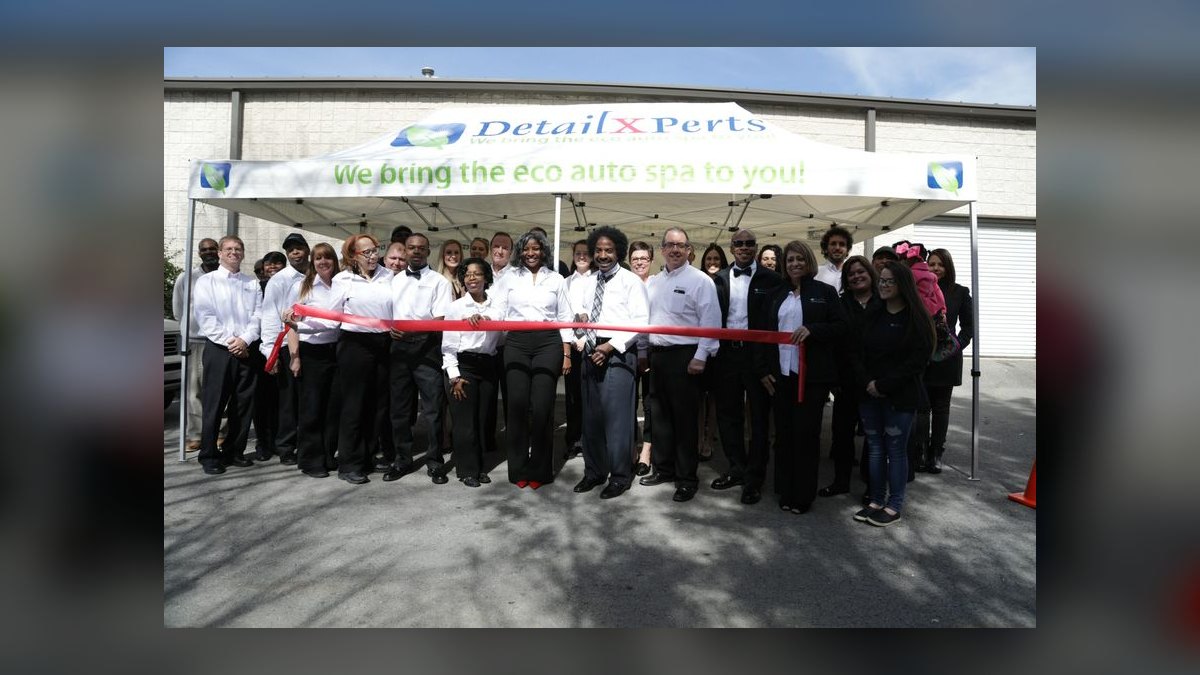
There is a second outcome worth naming plainly, because franchise marketing rarely does: the acquisition path you asked about mostly does not exist here. Buying an existing DetailXPerts unit is uncommon. Unlike food or fitness brands where resale inventory turns over steadily, mobile detailing franchises tend to either be run until the owner retires the equipment or wound down quietly. If a resale does surface, treat it the way you would treat any small service acquisition — verify the customer contracts transfer, check whether the fleet accounts are contractual or handshake, confirm the vans and steam units have life left, and assume you will need to re-earn every commercial relationship personally. In practice, plan on the "open" path and treat "buy" as a lucky exception.
Expect the time commitment to be full-time and front-loaded toward selling. This is a business you can genuinely scale — add a van, add a crew, add a route — but only after you have built the demand that justifies the second unit. The operators who try to scale equipment ahead of demand end up with depreciating steam rigs sitting in a warehouse, which is the single most expensive mistake available in this model.
What drives that outcome
The economics of a mobile detailing unit are dominated by three levers: labor as a percentage of revenue, the mix of recurring versus one-off work, and route density. Nothing else moves the number nearly as much.

Labor is your largest single cost and the one most under your control. Technician wages for mobile detailers generally run $15 to $25 per hour depending on region, with coastal metros at the top of that band and Midwest and Southern markets at the bottom. Across a mature unit, labor typically consumes somewhere around a third of gross revenue once you factor in payroll taxes, drive time, and the inevitable jobs that run long. If labor creeps past 35% you are either underpricing the work or your crews are spending too much of the day in traffic — and those two problems have completely different fixes.
Equipment and consumables — steam unit maintenance, chemicals, pads, towels, water, fuel for the vans — land in the high teens as a percentage of revenue. Fuel deserves special attention because it is the cost line most sensitive to how you route. Two jobs eight miles apart on the same morning are dramatically more profitable than the same two jobs scheduled thirty miles and four hours apart, even though the invoices are identical. This is why fleet accounts compound: a single commercial location with twelve vehicles is one drive, one setup, and twelve tickets.
Marketing typically runs around 10% of revenue in the growth years, split between consumer lead generation and the very different cost of B2B outreach. Royalty at 6%–8% plus the marketing fee near 2% comes off the top of gross, not net, which is worth internalizing: on $800,000 in revenue you are writing checks of roughly $64,000 to $80,000 in royalty and another $16,000 in brand marketing before you have paid a single technician. That is standard for the sector, but it changes how you price. You cannot run a discount consumer detail business under an 8% royalty and expect the math to close.
The eco-friendly steam differentiator is real, but understand what it actually does for you. It does not let you charge dramatically more to a retail consumer who mostly wants a clean car. What it does is open doors in two specific buyer segments: fleets operating under municipal water restrictions, and corporate buyers with sustainability reporting obligations who need a vendor whose environmental story survives procurement review. A fleet manager who can document a large water reduction on a maintenance line item has something to show internally. That is a sales advantage — it is not automatic pricing power, and it will not close a deal on its own.
Benchmarks and realistic ranges

Here is the investment breakdown as the 2026 FDD frames it, with the line items summed honestly. Note that the total is the sum of the parts — $115,000 on the low end and $323,000 on the high end. If a broker quotes you a lower total, ask which line they dropped.
| Line item | Low | High | Notes |
|---|---|---|---|
| Franchise fee | $40,000 | $50,000 | Per the 2026 FDD |
| Vehicles and steam equipment | $25,000 | $110,000 | Mobile units, patented steam systems |
| Branding and vehicle wrap | $5,000 | $18,000 | Rolling billboards; do not cheap out |
| Home or warehouse setup | $5,000 | $22,000 | Storage, water, chemical staging |
| Initial inventory | $5,000 | $18,000 | Chemicals, pads, towels, consumables |
| Initial marketing | $12,000 | $35,000 | B2B outreach plus consumer lead gen |
| Training and travel | $8,000 | $25,000 | Owner plus first technicians |
| Working capital | $15,000 | $45,000 | Ramp cushion |
| Total | $115,000 | $323,000 | Sum of the line items above |
| Royalty | ~6%–8% of gross | Off the top | |
| Brand marketing fee | ~2% of gross | Off the top |
Beyond the FDD table, plan on $50,000 to $100,000 in genuinely liquid cash, separate from whatever you borrow. Franchisors screen for liquidity because undercapitalized franchisees are the ones who fail loudly, and lenders screen for it because service businesses have thin collateral. A wrapped van and a steam unit do not liquidate well.
On the revenue side, individual account benchmarks are more useful than territory-wide averages. A single fleet account can reasonably generate $2,000 to $15,000 per month in recurring revenue, driven by fleet size and service cadence — weekly for a rental agency turning cars constantly, monthly for a contractor fleet that just needs presentable trucks. Getting four or five accounts in the middle of that band is what converts a struggling one-van operation into a business with a floor under it. Consumer details, by contrast, price in the low hundreds and have to be re-sold every single time.
Financing costs deserve a line in your model, not a footnote. Small business loan rates in the 8%–12% range on $80,000 to $250,000 of borrowed capital translate to roughly $6,400 to $30,000 in annual interest. On a business clearing $120,000 in owner earnings, $25,000 of debt service is not a rounding error — it is the difference between a good year and a stressful one. The cleanest entry is having at least half the startup cost in cash so debt service does not eat the ramp.
Break-even timing for most mobile service franchises lands somewhere in the 12 to 24 month window. The variable that pulls it toward 12 is recurring commercial revenue landed early; the variable that pushes it toward 24 (or past it) is a heavy equipment load purchased before demand exists.
Staffing benchmarks: budget $500 to $1,500 per new technician hire, counting formal training, your shadowing time, and the productivity drag of a slower crew during ramp. A pay structure that works in practice is a $14–$18 hourly base plus 20%–30% of the labor portion of each job — commissioning the labor component rather than the full ticket, so technicians are rewarded for efficiency and upsells without being incentivized to inflate the invoice. If you hire a part-time fleet salesperson, the market range is roughly $2,000 to $4,000 monthly plus 5%–10% commission on new accounts. That is cheap relative to what one landed fleet contract returns.
Risks, edge cases, and failure modes
The dominant failure mode is a consumer-only book of business. An operator who builds entirely on retail details discovers three things at once: revenue collapses in winter across most of the country, customer acquisition cost never amortizes because there is no repeat contract, and every independent detailer with a van and a pressure washer can undercut the price. Under a 6%–8% royalty, that combination does not survive year two. If B2B selling genuinely repels you, this is the signal to walk — not a problem to be managed later.

The second failure mode is technician turnover. Detailing labor is physical, repetitive, and competes with warehouse and delivery jobs for the same worker. Losing a trained technician in a tight market costs you the training investment, the route continuity, and often the quality reputation with the account they were servicing. Fleet clients notice when the crew changes every eight weeks. Retention is not a soft HR concern here; it is a revenue-protection mechanism. Owners who treat crew management as a core competency, not an annoyance, are the ones clearing the top of the earnings band.
Third is routing and logistics drag. Mobile businesses fail quietly on drive time. A schedule that looks full on paper can be barely profitable if crews spend three hours a day in transit. Watch billable hours as a percentage of paid hours — if it falls below roughly 60%, the problem is your scheduling geography, not your technicians. Cluster jobs by zip code, hold morning slots for anchor commercial accounts, and fill the surrounding hours with consumer work near those anchors.
Fourth, competition is genuine and low-barrier at the bottom. Anyone can call themselves a mobile detailer. Your defense is not price — it is the things an independent cannot easily replicate: documented water savings, insured and uniformed crews, invoicing that satisfies a corporate AP department, scheduling reliability, and the ability to service twenty vehicles in a morning. Every one of those is a B2B proof point, which is another way of saying the fleet strategy and the competitive moat are the same strategy.
Fifth, watch the macro cost line. Vehicle maintenance, fuel, and chemical costs drift upward, and a franchisee who never raises prices watches margin erode a point or two annually until the business stops working. Build a 3%–5% annual consumer price adjustment into your operating rhythm, and negotiate fleet contracts with an explicit annual escalation clause from the first agreement. Retroactively asking a fleet manager for a raise is a far harder conversation than having it pre-agreed in the contract.

Edge cases worth flagging. Water-restricted markets — parts of California, Arizona, Nevada, Texas — are the strongest fit for the steam model, because drought-period restrictions on conventional washing turn your compliance story into a competitive necessity rather than a nice-to-have. Conversely, extreme-cold markets face genuine seasonal operating constraints on outdoor mobile work, which compresses the effective earning year and makes indoor-accessible fleet locations disproportionately valuable. And a territory saturated with cheap express tunnel washes will suppress your consumer pricing floor even though tunnel washes do not compete with true detailing — the customer's price anchor gets set by the sign on the highway.
One structural risk specific to franchising: you are buying a system and a brand, not a guarantee. Read Item 19 carefully, and read Item 20 for unit counts and turnover. A brand with meaningful unit closures relative to openings is telling you something the marketing deck is not. Call terminated franchisees, not just the referral list — the franchisor is required to provide former franchisee contacts in the FDD, and those calls are the most informative hour you will spend.
Adjacent plays worth pricing before you commit
Because this decision is really "which vehicle-services business do I want to run," it is worth putting DetailXPerts next to its neighbors before signing anything.
Independent mobile detailing is the obvious comparison. You keep the 6%–8% royalty and the 2% brand fee — call it $80,000 a year on an $800,000 business — and you give up the training system, the equipment sourcing, the patented steam method, and the brand credibility that opens procurement doors. For an operator who already has fleet relationships and detailing experience, independent is frequently the better math. For a career-changer with capital and B2B sales skill but no industry background, the franchise system is buying you two years of avoided mistakes. Be honest about which one you are.

Fixed-location express car wash sits at the opposite end of the capital spectrum — dramatically higher buildout cost, real estate exposure, but far more passive once stabilized and far less labor-dependent. If you want an asset rather than a job, that is the direction, and it is a fundamentally different financing conversation.
Auto reconditioning and window tinting franchises share your customer base — dealerships especially — and some operators eventually run detailing and recon together because the same account buys both. That adjacency is worth mapping during your validation phase: if you land a dealership for detailing, you have a warm door for recon services later, and vice versa.
Other mobile B2B service models — commercial window cleaning, pressure washing, facility services — have nearly identical operating physics: route density, technician retention, recurring contracts, low fixed overhead. If you find yourself excited by the DetailXPerts operating model but unconvinced by vehicles specifically, that pattern transfers cleanly to the neighboring categories, and comparing three FDDs from the same sector teaches you more about franchise economics than reading one three times.
A practical rollout plan
The sequence below runs about 115 days from first document to launch. Compressing it is the most common self-inflicted wound in franchise buying — the validation calls in particular are where the deal either earns your money or reveals why it should not.
Days 1–20: read the 2026 FDD end to end, twice. Focus on Item 7 (investment), Item 19 (financial performance representations), Item 20 (unit counts, transfers, terminations), and the territory language. Have a franchise attorney review it — a few hundred dollars against a six-figure commitment is not optional. Simultaneously, build your own model in a spreadsheet using the line items above, not the franchisor's.

Days 21–40: validation calls. Interview existing franchisees — the top performers, the middle, and every former franchisee whose contact appears in the FDD. Ask specifically about fleet account mix, technician turnover rate, actual net profit after owner compensation, and how long ramp took. Ask what they would do differently. Twelve real calls beat forty rushed ones.
Days 41–60: validate your market and pre-build your pipeline before you sign. Physically drive your prospective territory. Count dealerships, rental locations, delivery and contractor fleets, transit yards, and corporate campuses. Call fleet managers and ask what they currently pay, who services them, and what they dislike about it. If you cannot name twenty realistic commercial prospects by the end of this window, the territory is wrong or the model is wrong for you.
Days 61–85: equipment, branding, and hiring. Order vans and steam systems, get the wrap done, and — critically — start recruiting technicians now, not at launch. Post roles, run interviews, and have at least one hire trained before your first paying job. Set up commercial-grade invoicing and insurance certificates, because fleet clients will ask for both before they will schedule.
Days 86–115: launch, weighted hard toward commercial. Your first thirty operating days should be dominated by fleet outreach and pilot jobs for prospective commercial accounts, not consumer one-offs. Offer a paid pilot on a subset of a fleet, document the result including water usage, and convert the pilot into a standing schedule with an escalation clause.
After launch, the operating rhythm that matters is weekly: review billable hours versus paid hours, review revenue mix between contracted and one-off, and review your commercial pipeline. Add the second van only when the first route is genuinely full — measured by declined or delayed jobs, not by optimism.
Related questions
Can I run this part-time while keeping my job?

Not realistically in the first year. The commercial sales work happens during business hours, which is exactly when your other job does. Some owners eventually step back to a management role once a supervising technician is trained, but that typically takes two-plus years and multiple crews.
How much territory protection do I actually get?
Read the FDD territory clause carefully rather than relying on a verbal description. Terms vary widely across franchisors on exclusivity, national account carve-outs, and whether the franchisor can service large fleets in your area directly. Ask the attorney to flag every exception.
Does the eco angle let me charge premium prices?
With fleets and sustainability-mandated corporate buyers, sometimes — the water savings has documentable value in their reporting. With retail consumers, rarely. Most individual customers buy on convenience, quality, and price. Treat the eco story as a door-opener for B2B, not a general price increase.
What happens if I want to exit?
Plan for the exit before entry. Resales in mobile detailing are uncommon, so your realistic exits are selling the book of contracted accounts and equipment, transferring to a qualified buyer with franchisor approval, or winding down. Contracted fleet accounts are the only genuinely valuable asset in a sale.
FAQ
What is the total initial investment for a DetailXPerts franchise?
Per the 2026 FDD line items, the total ranges from roughly $115,000 on the low end to about $323,000 at the high end, including a franchise fee of $40,000 to $50,000. Vehicles and steam equipment ($25,000–$110,000) and initial marketing ($12,000–$35,000) drive most of the spread. Plan on $50,000 to $100,000 in liquid cash on top of any financing.
What are the ongoing fees?

Royalties run approximately 6% to 8% of gross revenue plus a brand marketing fee near 2%. Both come off gross, not net, so on $800,000 in revenue that is roughly $80,000 to $96,000 annually before any operating expenses. Build those percentages into your pricing from the first quote you write.
Can I buy an existing DetailXPerts unit instead of opening one?
Usually not. Resale inventory in mobile detailing franchising is thin, and most candidates go through the standard application and approval process as new franchisees. If a resale does appear, verify that fleet contracts transfer in writing, inspect the equipment condition, and assume you will need to personally re-earn every commercial relationship regardless of what the seller claims.
How long until I break even?
Most mobile service franchises reach break-even somewhere between 12 and 24 months. The single largest accelerator is landing recurring fleet accounts early; the largest delay is buying equipment ahead of demand. Financing at 8%–12% adds meaningful drag, which is why entering with at least half the capital in cash materially shortens the timeline.
Do I need prior detailing experience?
No — the system provides training on the steam equipment and processes. What you cannot outsource is B2B selling and people management. An operator with commercial sales experience and zero detailing background will typically outperform an experienced detailer who dislikes cold-calling fleet managers, because the revenue ceiling here is set by account acquisition, not technique.
Is the water-saving steam method a genuine differentiator?
Yes, in specific contexts. For fleets in water-restricted regions and corporate buyers with sustainability reporting requirements, it is a real procurement advantage and a documented compliance story. For general retail customers, it is a pleasant detail that rarely changes the buying decision. Aim the differentiator where it actually converts.
Sources
- https://www.ftc.gov/business-guidance/resources/franchise-rule-compliance-guide — FTC guidance on franchise disclosure documents and what Items 7, 19, and 20 must contain.
- https://www.sba.gov/funding-programs/loans — U.S. Small Business Administration loan programs and franchise financing basics.
- https://www.franchise.org/ — International Franchise Association: industry data, legal resources, and franchising best practices.
- https://www.bls.gov/ooh/ — U.S. Bureau of Labor Statistics Occupational Outlook Handbook, including wage data for cleaning and vehicle service occupations.
- https://www.entrepreneur.com/franchises — Entrepreneur franchise rankings, startup cost guides, and ownership research.
- https://www.franchisebusinessreview.com/ — Independent franchisee satisfaction research and sector benchmarks.
- https://www.bbb.org/ — Better Business Bureau accreditation status, complaint records, and business reliability reports.
- https://www.epa.gov/watersense — U.S. EPA WaterSense program on water efficiency, useful context for the water-savings sales case.
- https://www.irs.gov/businesses/small-businesses-self-employed — IRS small business tax guidance relevant to vehicle depreciation and franchise fee treatment.
Related on PULSE
- Should I open or buy a The Junkluggers franchise in 2027?
- Should I open or buy a Pak Mail franchise in 2027?
- Should I open or buy a PostNet franchise in 2027?
- Should I open or buy a Fish Window Cleaning franchise in 2027?
- Should I open or buy a Shine Window Care franchise in 2027?
- Should I open or buy an Image360 franchise in 2027?
This page will be disappearing soon. Save it to your device for $1 — or read it free while it is here.
@Kory-White- · if Venmo asks, the last 4 of my number are 2012
This page is gone.
This one is off the shelf now. $1 keeps it on your phone for good — the whole page, pictures and diagrams included.
 pulse-qHow Many Employees Should I Schedule Each Shift at My Escape Room in 2026?
 pulse-qShould I open or buy an Any Lab Test Now franchise in 2027?
 pulse-qHow Many Sales Reps Do I Need to Hire for My Commercial Overhead Door Company in 2027?
 pulse-qShould I open or buy an uBreakiFix franchise in 2027?
 pulse-qHow Many Sales Reps Do I Need to Hire for My Asphalt Paving Company in 2027?
 pulse-qShould I open or buy a Honest-1 Auto Care franchise in 2027?
 pulse-qShould I open or buy a Shine Window Care franchise in 2027?
 pulse-qHow Does a Fractional CRO Fix a Broken Sales Comp Plan in 2026?
 pulse-qShould I open or buy a Sub Zero Nitrogen Ice Cream franchise in 2027?
 pulse-qHow Many Sales Reps Do I Need to Hire for My Durable Medical Equipment Company in 2027?