


Should I open or buy a My Eyelab franchise in 2027?
Quality
Certified
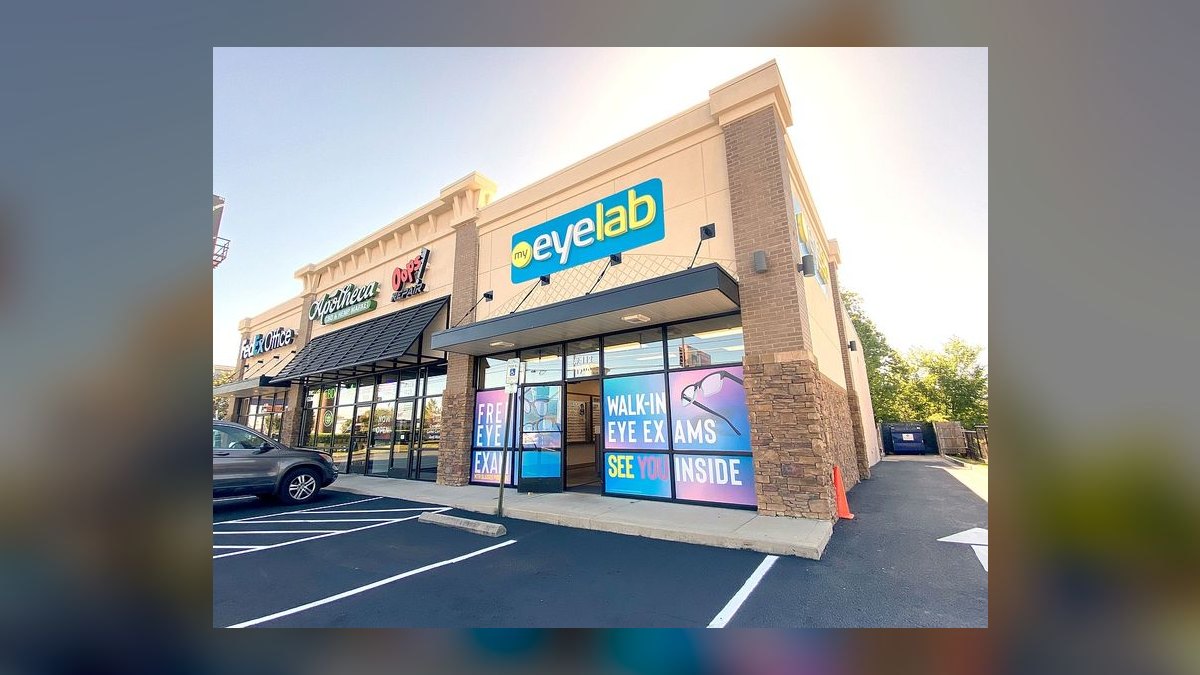
Buying an existing My Eyelab location generally beats opening a new one in 2027, because a proven store removes the 18-to-36-month ramp risk. Total investment runs roughly $437,000 to $992,000 per the franchise disclosure line items. Verify your state's telehealth-optometry rules before you sign anything — that single regulation decides the economics.
The outcome you should expect
Set your expectations against the two distinct paths, because they produce very different financial curves.
If you open a new location: Plan on 4 to 7 months from signed franchise agreement to grand opening — site selection and lease negotiation eat 8 to 14 weeks, permitting and build-out consume another 12 to 20 weeks, and training plus staffing overlaps the tail end. Expect negative cash flow for the entire ramp and then some. Realistic new-store trajectories in value optical look like $30,000 to $60,000 per month in gross revenue during months 1 through 6, climbing toward $70,000 to $130,000 per month as the location matures over years two and three. Break-even on monthly operating cash typically lands somewhere in months 10 to 20; break-even on your total invested capital is a different and much longer question, usually 36 to 60 months if the store performs.
If you buy an existing location: You pay a multiple of adjusted earnings — in retail optical, that has historically clustered around 2.5x to 4x seller's discretionary earnings, with the higher end reserved for stores with long lease runway, clean books, and a stable optician on payroll. A store clearing $180,000 in adjusted earnings therefore trades in the neighborhood of $450,000 to $720,000, and you will usually also owe a transfer fee to the franchisor (commonly a fraction of the current initial franchise fee) plus the cost of any required remodel to bring the store to current brand standards. That remodel clause is where resale buyers get ambushed: a store built in 2019 may owe a $120,000 to $250,000 refresh within 12 to 24 months of transfer. Read the transfer and remodel provisions in the franchise agreement before you price the deal.
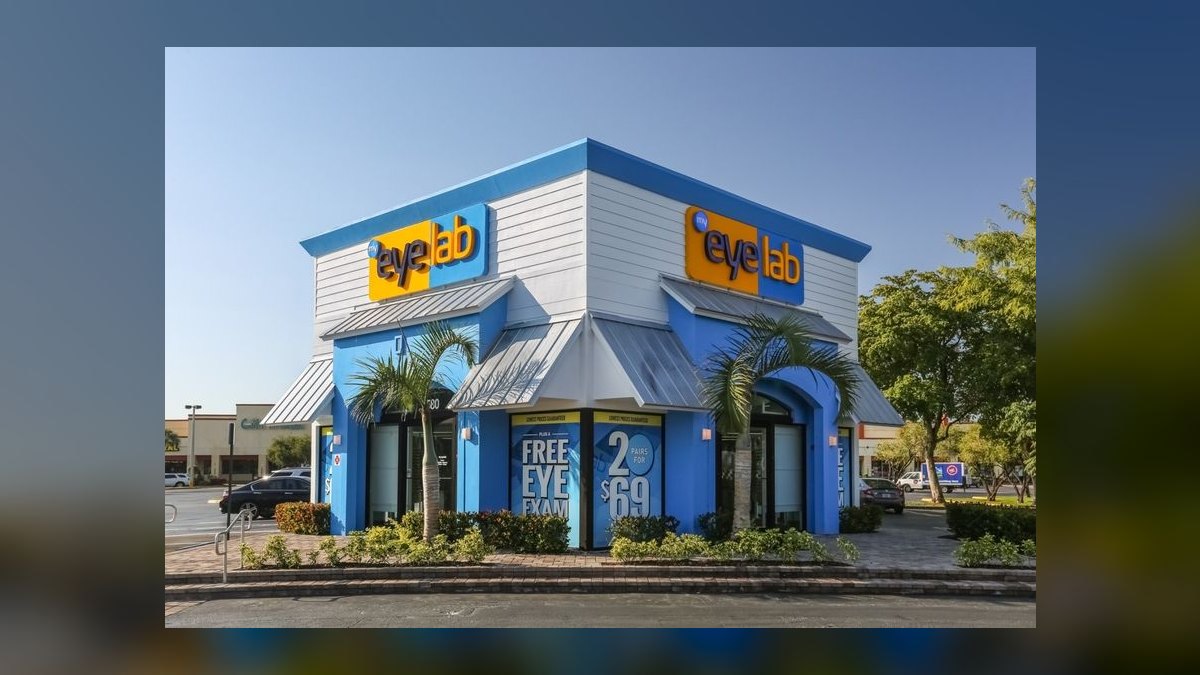
The honest summary: opening gives you a cheaper entry and a worse first two years. Buying gives you a higher entry price and immediate cash flow, provided you diligence the reason the seller is leaving. In 2027, with construction costs and lease rates where they are, the resale math is more forgiving for most first-time buyers — but only when a resale actually exists in a territory you want. Most of the time it doesn't, and then the real question is whether the territory justifies a ground-up build at all.
Either way, understand what you are actually buying. My Eyelab is a retail eyewear business with an exam function attached, not a medical practice. The margin lives in frames and lenses. The exam is a traffic driver you often run at or near break-even. If you are not comfortable running a retail sales floor, coaching close rates on second pairs and premium lens upgrades, and managing inventory turns, no amount of brand support will rescue you.
What drives that outcome
Five variables move your P&L more than everything else combined. Rank your diligence in this order.
1. State telehealth-optometry law. This is the master switch. My Eyelab's structural cost advantage comes from a remote-doctor exam model — the optometrist appears by video, a trained technician runs the equipment on-site. Some states permit this broadly, some require an in-person component, some restrict it outright, and several sit in an unsettled gray zone where state optometric boards have actively lobbied for restrictions. If your state forces an on-site optometrist, you add roughly $120,000 to $160,000 in salary plus payroll taxes and benefits — call it $145,000 to $195,000 fully loaded — and your entire cost model inverts. Do not take the franchisor's word on this. Pull your state's optometry practice act and board rulings yourself, and pay a healthcare attorney licensed in your state for a written opinion. That opinion costs $2,000 to $6,000 and is the single highest-ROI dollar you will spend.
2. Eyewear attach rate and average ticket. Your gross profit is essentially (exams × attach rate × average eyewear ticket × margin). Frames at value-optical price points typically carry 60% to 75% gross margin; lenses with anti-reflective coating, progressives, or photochromic upgrades carry similar or better. If 100 people get exams and 60 buy glasses at an average ticket of $180, you generate $10,800 in eyewear revenue with roughly $7,000 in gross profit. Push attach to 72% and average ticket to $215 and the same 100 exams generate $15,480 and roughly $10,000 in gross profit. That 43% swing in gross profit comes entirely from floor execution, not from the brand.
3. Payer mix. Roughly six in ten Americans carry some form of vision coverage through employer plans or standalone carriers. Insured patients reimburse at capped rates with administrative overhead; cash patients pay retail and settle same-day. A store at 70% insured behaves very differently than one at 35% insured, and payer mix is largely determined by your trade area's employer base — which you can research before you sign a lease.
4. Rent as a percentage of revenue. Healthy retail optical wants occupancy cost (base rent plus common area maintenance plus taxes and insurance) under about 10% of gross revenue, and ideally near 7% to 8%. At $35 per square foot all-in on a 3,000 square foot box, that is $105,000 annually, which demands roughly $1.05 million to $1.3 million in revenue to stay healthy. If you sign that lease expecting $800,000 in revenue, you are structurally underwater before you open.
5. Ongoing fees. Royalty plus brand marketing contribution comes off the top line regardless of profitability. At a combined rate in the high single digits, a $1,000,000 store hands the franchisor roughly $80,000 to $110,000 per year. Verify the exact percentages in the current franchise disclosure document — do not rely on any secondhand figure, including this page.
Benchmarks and realistic ranges

Use these as a modeling frame, then replace every number with figures you verify from the current franchise disclosure document, Item 19 financial performance representations, and your own local quotes. Item 7 in the disclosure document gives a range of estimated initial investment; here is a line-item structure of what that range is built from, with the honest arithmetic attached.
| Line item | Low | High |
|---|---|---|
| Initial franchise fee | $30,000 | $50,000 |
| Build-out and leasehold improvements | $180,000 | $380,000 |
| Equipment, exam lane, and telehealth technology | $90,000 | $200,000 |
| Signage, fixtures, and decor | $20,000 | $60,000 |
| Opening inventory (frames, lenses, contacts) | $40,000 | $110,000 |
| Grand-opening marketing | $25,000 | $60,000 |
| Training, travel, and lodging | $12,000 | $32,000 |
| Working capital reserve | $40,000 | $100,000 |
| Total | $437,000 | $992,000 |
Note that the low column sums to $437,000 and the high column to $992,000. Any summary that compresses this to "$400,000 to $700,000" is not adding up its own line items. Budget against the arithmetic, not the headline. And treat the low column as theoretical — it assumes a small footprint, a landlord contributing meaningfully to build-out, favorable construction pricing, and lean opening inventory. Most operators land in the middle-to-upper portion of the range.
Liquidity and net worth. Optical franchisors typically want $150,000 to $250,000 in liquid capital and $500,000 to $1,000,000 in net worth. Lenders financing through Small Business Administration 7(a) programs generally want 10% to 20% equity injection, meaning $65,000 to $200,000 of your own cash on a $650,000 project, plus a personal guarantee and often a lien on your home.

Revenue. Mature value-optical centers commonly gross somewhere between $800,000 and $2,000,000 annually, with the distribution skewed — a meaningful tail of stores never clears $700,000. The spread is driven by trade-area density, competitive saturation, and the operator's retail skill.
Owner earnings. Reported owner benefit at mature, well-run units in this category ranges roughly $130,000 to $400,000. That number typically assumes an owner-operator working the store full time; if you hire a general manager at $60,000 to $80,000 to run it absentee, subtract that plus the performance drag that almost always accompanies absentee ownership in retail.
Labor cost structure. A licensed optician runs $45,000 to $65,000 in most markets and is genuinely hard to hire — three to six months of search is common. Retail associates and technicians run $16 to $22 per hour. Remote exam costs are typically structured per-exam or through a staffing arrangement; if you model $50 to $80 per exam, then 20 exams per day across 260 operating days puts exam cost at $260,000 to $416,000 per year. That figure alone should tell you the remote model is not automatically cheaper than a salaried optometrist at high volume — it is cheaper at low-to-moderate volume and converges as volume climbs. Get the actual exam-fee structure in writing and model it at your projected volume, not at a generic one.
Occupancy. A 3,000 to 4,500 square foot retail box in a decent anchored center runs $28 to $45 per square foot in many metro markets, plus $5 to $8 per square foot in common area maintenance. Tenant improvement allowances, when offered, tend to run $30 to $60 per square foot and cover a minority of a medical-retail build-out that costs $150 to $250 per square foot.
Timeline. Signing to opening: 4 to 7 months. Operating cash break-even: months 10 to 20. Full capital payback: 36 to 60 months at a performing unit, longer if you land below the revenue median.
Risks, edge cases, and failure modes
The regulatory reversal. The worst outcome is not a slow ramp — it is opening in a state that permits telehealth exams today and restricts them in 2029. Optometric boards and professional associations have been persistent advocates for in-person exam requirements, and the regulatory environment is genuinely unsettled. Mitigation: model your unit economics with an on-site optometrist included as a stress case. If the store cannot survive that scenario at year-three revenue, you are making a leveraged bet on a state legislature. That may still be the right bet, but make it consciously.
Optician scarcity. You cannot dispense eyewear in most states without appropriately licensed or certified personnel, and the labor pool is thin. Franchisees routinely burn three to six months filling a single optician role, covering shifts personally or paying overtime in the interim. Mitigation: begin recruiting before your build-out finishes, not after. Budget a signing bonus of $3,000 to $8,000, which is far cheaper than delaying your opening by two months.
The 10-year lease with no exit. Franchisors want lease terms matching the franchise term to protect brand presence. If your location underperforms, subleasing a custom optical build-out with exam-lane wiring and an edging lab is close to impossible. You remain liable for rent whether the doors are open or not. Mitigation: negotiate a break option at year five with a defined penalty (commonly three to six months' rent plus unamortized tenant improvement allowance), a co-tenancy clause tied to the anchor tenant, and a personal guarantee that burns off after 36 months of on-time payments. Landlords resist all three; you will get one or two if you push.
Insurance reimbursement compression. Vision plan reimbursement rates have trended down, and every basis point of compression comes straight out of your margin because your costs do not move. An exam that costs you $50 to $80 in remote-doctor fees can reimburse below that under some plans, meaning insured exams are a loss leader you recover on the eyewear sale. If a plan also caps the frame and lens benefit, your recovery is thinner than the cash-pay equivalent. Mitigation: before signing, ask the franchisor for a sample payer mix from five mature units — what share is cash, what share is each major plan. If they will not or cannot produce it, weight that heavily. Model conservatively: assume 40% to 50% insured with a 15% to 20% first-year claim denial rate while your billing process matures.

Billing overhead you did not budget. Claims, prior authorizations, denials, resubmissions, and patient benefit questions consume real hours. A part-time billing specialist at $25 to $35 per hour for 20 hours weekly is $26,000 to $36,000 annually. First-year franchisees who wing this commonly leave $10,000 to $20,000 in claims uncollected.
Scheduling friction. If remote optometrist availability is limited to weekday business hours while your center's foot traffic peaks evenings and Saturdays, you are asking customers to take time off work for something a competitor offers on Saturday morning. Extended telehealth coverage usually costs more per exam. Confirm the available exam hours in writing before you model volume.
Competitive density. Value optical is a crowded category — warehouse clubs, national chains, online-first sellers, and independent optometrists all fight for the same value-conscious customer. Drive your trade area and count competitors within a 15-minute drive time. More than four or five direct value competitors in that radius should make you slow down.
Resale-specific traps. When buying an existing store: verify why the seller is exiting, obtain three years of tax returns rather than just profit-and-loss statements, confirm the remaining lease term and remodel obligations under transfer, check whether key staff will stay (get retention agreements before closing), and confirm the franchisor will actually approve you as a transferee before you spend money on legal work. A store whose revenue is declining year over year is not a bargain at any multiple — it is someone else's problem with a price tag.
A practical rollout plan

Work this sequence in order. Do not spend money on a later stage until the earlier one clears.
Weeks 1–3 — Regulatory and document diligence. Request the current franchise disclosure document. You must receive it at least 14 days before signing anything or paying anything. Read every item, but stop hardest on Item 7 (initial investment), Item 6 (ongoing fees), Item 11 (franchisor obligations and what support actually is), Item 12 (territory — is it protected and how), Item 17 (renewal, transfer, and termination), Item 19 (financial performance representations, if provided), and Item 20 (unit counts, openings, closures, and transfers over the last three years). Item 20's closure and transfer counts are the most honest page in the document. In parallel, engage a healthcare attorney in your target state for a written opinion on telehealth-optometry permissibility.
Weeks 4–6 — Validation calls. Item 20 lists current and former franchisees with contact information. Call at least 10 current operators and every former operator you can reach. Ask specific questions: actual revenue in year one, year two, year three; actual build-out cost versus the Item 7 estimate; how long it took to hire an optician; what percentage of exams are insured; what the exam fee structure actually costs per month; whether they would do it again. Former franchisees tell you what current ones will not.
Weeks 7–10 — Market and site analysis. Pull demographics for candidate trade areas: household income distribution, population density, employer concentration (which drives insured mix), and competitor count within a 15-minute drive. Hire an independent commercial real estate broker who understands retail optical rather than relying solely on the franchisor's site recommendation. Get three real lease quotes so you know your actual occupancy cost before you build a model.
Weeks 11–13 — Financial model and financing. Build a monthly model, 36 months out, with three scenarios: conservative (revenue at 70% of your base case), base, and the regulatory stress case with an on-site optometrist. If the conservative case runs out of cash before month 18, increase your working capital reserve or walk. Take that model to Small Business Administration 7(a) lenders — franchise lending desks at regional banks are the usual path. Expect 10% to 20% equity injection and a personal guarantee.

Weeks 14–17 — Decision and signing. If a resale exists in your target territory, run the comparison explicitly: purchase price plus transfer fee plus required remodel versus the ground-up total, against each path's cash flow curve. Have a franchise attorney review the agreement and negotiate what is negotiable (territory definition, remodel triggers, personal guarantee burn-off). Sign, or walk without regret.
Weeks 18–30 — Build and staff. Permitting, construction, equipment installation, and telehealth setup. Start optician recruiting in week 18, not week 28. Complete franchisor training. Establish insurance credentialing early — payer credentialing takes 60 to 120 days and franchisees routinely start it too late and open unable to bill.
Weeks 31–34 — Open and drive traffic. Grand-opening marketing, local outreach to employers in your trade area, and relentless attention to two metrics from day one: eyewear attach rate and average ticket. Review both weekly. They are the levers you actually control.
Related questions
Is buying an existing My Eyelab cheaper than opening a new one?
Usually not cheaper in purchase price — a performing store trades at a multiple of earnings that often exceeds ground-up cost. It is cheaper in risk and time, since you skip the ramp. Factor in transfer fees and any remodel required at transfer.
Do I need to be an optometrist to own one?
No. Ownership is a retail business role, not a clinical one. Exams are delivered by licensed optometrists, remotely or on-site depending on state law. You still need licensed opticians on staff to dispense, and you must comply with your state's rules on business ownership of optical services.
What happens if my state bans telehealth eye exams after I open?
You would need an on-site optometrist, adding roughly $145,000 to $195,000 fully loaded per year. Model that scenario before signing. If the store cannot survive it at projected year-three revenue, you are betting on legislation rather than on a business.
How long until the store is profitable?

Operating cash break-even typically arrives in months 10 to 20 for a new location. Recovering the full invested capital usually takes 36 to 60 months at a performing unit. A resale can be cash-flow positive from month one if the underlying store is healthy.
What is the single biggest diligence item?
A written legal opinion on telehealth-optometry permissibility in your specific state, from an attorney licensed there. It costs a few thousand dollars and determines whether the core cost model works at your location.
FAQ
What is the realistic total investment for a My Eyelab franchise?
Build your budget from the franchise disclosure document's Item 7 line items rather than from a headline range. Summing typical line items — franchise fee, build-out, equipment and exam technology, signage, opening inventory, grand-opening marketing, training and travel, and working capital — produces roughly $437,000 at the low end and $992,000 at the high end. Most operators land in the middle-to-upper portion. Always verify the current figures in the current disclosure document, since they change year to year.
How much do franchisees actually earn?
Owner earnings at mature, well-run units in value optical commonly range from about $130,000 to $400,000 annually, but that assumes an owner-operator working the business full time and a store performing at or above the category median. A meaningful share of units never clear $700,000 in revenue and produce materially less. Item 19 of the disclosure document is the only franchisor-provided figure you should rely on, and if the franchisor makes no Item 19 representation, build your projections entirely from franchisee interviews.
What ongoing fees will I pay?
Expect a royalty on gross revenue plus a brand marketing fund contribution, which together typically land in the high single digits as a percentage of top-line sales in this category. On a $1,000,000 store that is roughly $80,000 to $110,000 annually, paid regardless of whether you are profitable. Confirm the exact percentages and their calculation basis in Item 6 of the current disclosure document, and check whether local marketing spend is separately mandated on top of the brand fund.
Can I run this as an absentee owner?
It is possible but not advisable, especially in year one. Retail optical profit comes from floor execution — attach rate, ticket size, and lens upgrade conversion — which degrades quickly without an engaged owner coaching it. If you must go absentee, budget $60,000 to $80,000 for a general manager and expect measurably lower performance than an owner-operated unit. Most franchisors also prefer owner-operators and may have approval conditions around absentee structures.
What should I ask current franchisees on validation calls?
Ask for hard numbers, not feelings: actual first, second, and third-year revenue; actual build-out cost versus the Item 7 estimate; how many months it took to hire a licensed optician; what percentage of exams are insured versus cash; what the per-exam or monthly cost of the remote optometrist arrangement actually is; and whether they would sign again today. Then call former franchisees from Item 20 — their answers are the most informative diligence you will do.
Is 2027 a good year to enter value optical specifically?
Vision demand is genuinely resilient because corrective lenses are a need rather than a discretionary purchase, and that is a real structural advantage. The offsetting pressures are elevated construction costs, competitive density from warehouse clubs and online-first sellers, and reimbursement compression from vision plans. The category is workable for a strong retail operator in an under-served trade area, and unforgiving for a passive investor in a saturated one. The year matters far less than the specific site and your own operating skill.
Sources
- Federal Trade Commission — Franchise Rule and buying a franchise
- U.S. Small Business Administration — franchise financing and the SBA Franchise Directory
- Bureau of Labor Statistics — Occupational Outlook Handbook: Opticians, Dispensing
- Bureau of Labor Statistics — Occupational Outlook Handbook: Optometrists
- American Optometric Association — advocacy and state licensure resources
- Federation of State Boards of Optometry — state board directory
- International Franchise Association
- Franchise Business Review — franchisee satisfaction research
- Entrepreneur — franchise research and rankings
- Centers for Medicare & Medicaid Services — coverage of vision services
Related on PULSE
- Should I open or buy a The Junkluggers franchise in 2027?
- Should I open or buy a Pak Mail franchise in 2027?
- Should I open or buy a PostNet franchise in 2027?
- Should I open or buy a Fish Window Cleaning franchise in 2027?
- Should I open or buy a Shine Window Care franchise in 2027?
- Should I open or buy an Image360 franchise in 2027?
This page will be disappearing soon. Save it to your device for $1 — or read it free while it is here.
@Kory-White- · if Venmo asks, the last 4 of my number are 2012
This page is gone.
This one is off the shelf now. $1 keeps it on your phone for good — the whole page, pictures and diagrams included.
 pulse-qHow Do I Scale Revenue Without Hiring a Full-Time CRO in 2026?
 pulse-qShould I open or buy an Amazing Lash Studio franchise in 2027?
 pulse-qShould I open or buy a Your CBD Store franchise in 2027?
 pulse-qShould I open or buy a Big Chicken franchise in 2027?
 pulse-qShould I open or buy a Grease Monkey franchise in 2027?
 pulse-qHow Do I Get My Reps to Expand Into White Space in 2027?
 pulse-qShould I open or buy a Superior Fence & Rail franchise in 2027?
 pulse-qHow Many Sales Reps Do I Need to Hire for My Fence Company in 2027?
 pulse-qDo I Need a Fractional CRO for My E-Commerce Business in 2026?
 pulse-qHow Many Sales Reps Do I Need to Hire for My Title Insurance Company in 2027?