
Should I open or buy a The Coffee Bean & Tea Leaf franchise in 2027?
 Curated byKory White · Fractional CRO · Maryland
 PULSEKNOWLEDGE LIBRARY
Quality
Certified
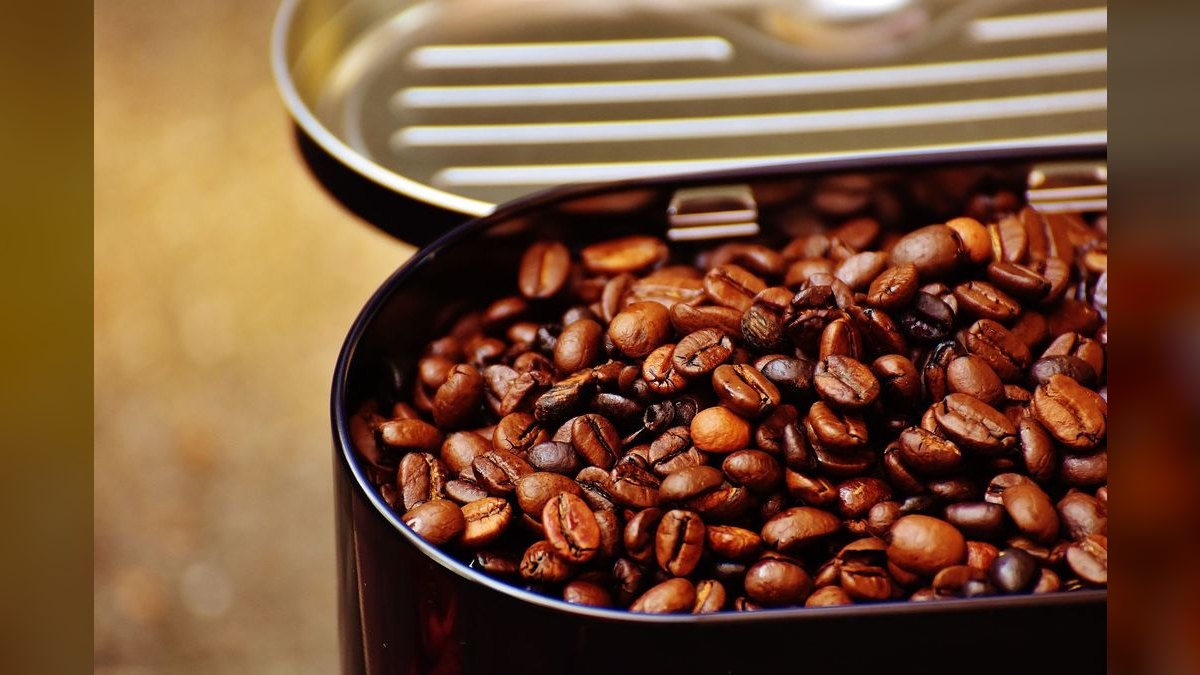
Buying an existing Coffee Bean & Tea Leaf cafe is usually the more realistic 2027 path than opening a new one, because new U.S. franchise awards are limited and resales trade cheaply — often 1.5x–2x EBITDA. Expect roughly $300,000–$700,000 all-in, near 8% in combined fees, and brutal competition from Starbucks and Dutch Bros.
What the Coffee Bean & Tea Leaf opportunity actually is in 2027
The Coffee Bean & Tea Leaf is a Los Angeles-born specialty coffee and tea chain dating to 1963, which makes it one of the older specialty-coffee names in the United States — older than Starbucks. That heritage matters less than most prospective franchisees assume, and the operating reality matters far more. You are not buying a growth brand. You are buying a mid-tier, regionally concentrated cafe system whose U.S. footprint sits in the low hundreds of units, heavily clustered in California and the Southwest, and whose domestic unit count has been flat-to-declining rather than expanding. The company's larger growth story has been international — Southeast Asia in particular — not the U.S. market where you would be operating.
That single fact reframes the entire decision. In a growing system, a franchisee benefits from brand momentum: national ad spend rises, awareness climbs, resale multiples inflate, and a mediocre site can be rescued by rising tide. In a flat or contracting system, none of that is true. Your unit economics are almost entirely a function of three things you control — site quality, operator intensity, and labor management — plus one thing you don't, which is whether a Starbucks or a Dutch Bros opens a drive-thru within a half mile of you.
The second thing to understand is what you are actually buying access to. The tangible assets of the franchise are a recognized name, an approved supply chain for coffee and tea, a menu system built around the brand's signature Ice Blended frozen drinks and a genuinely developed tea program, POS and operating standards, and a training curriculum. The tea program is the real differentiator and the most underrated asset in the package. Most competitors are coffee-first with tea as an afterthought; Coffee Bean & Tea Leaf carries tea in the name and in the menu architecture. In markets with strong tea demand — heavily Asian-American suburbs, university towns, dense urban cores with international populations — that breadth can add a meaningful daypart that a coffee-only competitor cannot easily take from you.

What you are not buying is pricing power against the giants, protected territory in most cases, or a liquid asset you can flip in three years. Treat this as an owner-operator lifestyle business with real cash flow potential and a weak exit, not as a scalable investment vehicle. If your thesis requires selling at a 3x-to-4x EBITDA multiple in year five to make the math work, the thesis is wrong before you start. If your thesis is "I want to own and run a neighborhood cafe with a recognized name, clear $110,000–$160,000 a year running it myself, and hold it for a decade," the math can work — and the resale route makes it work faster.
Whether to open new or buy existing is therefore not a preference question. It is a supply question first: confirm directly with the franchise development team what is actually being awarded in your market for 2027, because in a flat system the answer is frequently "nothing new here, but there is an owner in that metro who wants out."
How to run the evaluation, step by step
Do not start with the site. Start with the franchise disclosure document, because it will kill roughly half of all deals before you spend a dollar on real estate. Order the current FDD and read Item 7 (estimated initial investment), Item 12 (territory), Item 17 (renewal, termination, transfer), and Item 19 (financial performance representations) before anything else. Item 12 is the one that surprises people: if there is no protected radius, you need to know that on day three, not month six.
Then run the outlet-count table in Item 20 backwards. Count openings, closures, transfers, and terminations for each of the last three years. A system with more transfers and terminations than new openings is telling you something the marketing deck will not. Ask specifically how many units in your target state opened and closed. If closures exceed openings statewide, your due diligence bar goes up sharply, not down.
Only after the FDD do you call operators. Item 20 includes contact information for current and former franchisees — call at least eight current and at least three former ones, and weight the former owners heavily, because they will tell you what actually went wrong. Ask blunt, numeric questions: What was your gross revenue last year? What is your food-and-beverage cost as a percentage of sales? What is your labor percentage? What do you pay in rent and what is your total occupancy cost as a percentage of sales? What did you actually take home after debt service? How long did it take to reach breakeven? Would you buy this franchise again today? That last question, asked of a former owner, is worth more than any consultant report.

The resale audit deserves its own discipline. If you are buying an existing cafe, demand three years of tax returns, three years of profit-and-loss statements, and — this is the one sellers resist — raw POS export data by daypart. The POS data tells you whether revenue is stable or in decline, whether the morning rush is real, and whether the Ice Blended volume that the seller is bragging about is a summer spike that vanishes in November. Cross-check the P&L against the tax returns; discrepancies mean unreported cash or creative accounting, and either way the multiple should drop.
Also read the lease before you read anything else about the physical location. A cafe with eighteen months left on its lease and no renewal option is not a business, it is a countdown clock. You want at least five years of remaining term or firm options, and you want to know the rent escalators. A 4% annual escalator on a $9,000 monthly rent compounds to real money over a ten-year hold.
Finally, budget four to eight weeks for the franchisor's approval process on a transfer. The seller does not control it, you do not control it, and deals die in that window. Put a financing contingency and an approval contingency in the purchase agreement.
What it costs and how long it takes
The investment ranges below reflect what a specialty cafe of this type generally requires; verify every number against the current FDD Item 7 rather than treating any published range as gospel, because build costs have moved substantially with construction and equipment inflation.

For a new build, the franchise fee typically lands in the $35,000–$45,000 range. Total initial investment for an inline cafe of roughly 1,200–1,600 square feet without a drive-thru generally runs $300,000–$500,000. Add a drive-thru and you are realistically at $550,000–$700,000 or higher, because the site work, ordering canopy, and additional permitting are expensive and slow. Component ranges look roughly like this: leasehold improvements and buildout $150,000–$380,000; equipment including espresso machines, brewers, blenders, refrigeration, and POS $90,000–$200,000; signage and decor $18,000–$55,000; opening inventory $10,000–$26,000; grand-opening marketing $12,000–$35,000; training and travel $10,000–$28,000; and working capital $30,000–$80,000. Plan on $120,000–$200,000 in liquid, non-borrowed cash even with SBA financing, because lenders on food-service deals commonly want 20–30% injection and will not count borrowed funds toward it.
Ongoing fees are where the model gets tight. Royalty near 6% of gross sales plus a marketing contribution around 2% means roughly 8% off the top before you buy a single bean. On $700,000 in annual revenue that is $56,000 a year, every year, regardless of profitability. Layer in a typical cafe cost structure — 25–30% cost of goods, 28–34% labor including payroll taxes, 8–12% occupancy, 4–6% other operating — and you can see how quickly a mediocre site produces a break-even business rather than a profitable one.
Realistic revenue for a mature, well-sited cafe in this segment sits in the $500,000–$1,200,000 range, with owner earnings before debt service commonly $70,000–$220,000. Note carefully that the top of that earnings range typically belongs to a full-time owner-operator who is behind the counter, not an absentee investor paying a general manager $60,000–$70,000 plus benefits. If you plan to be absentee, subtract a manager's fully loaded cost from every earnings figure a seller quotes you.
Timelines: site selection and lease negotiation 60–120 days; permitting and construction 90–180 days depending on jurisdiction — California and dense urban permitting routinely exceed this; training three to five weeks; and ramp to stable volume six to twelve months. Breakeven on cash flow typically lands 6–18 months after opening; full recovery of invested capital commonly takes four to seven years, and longer if you financed heavily. A resale short-circuits most of this: you can close in 60–120 days and inherit an existing customer base, which is the single strongest argument for buying rather than opening.
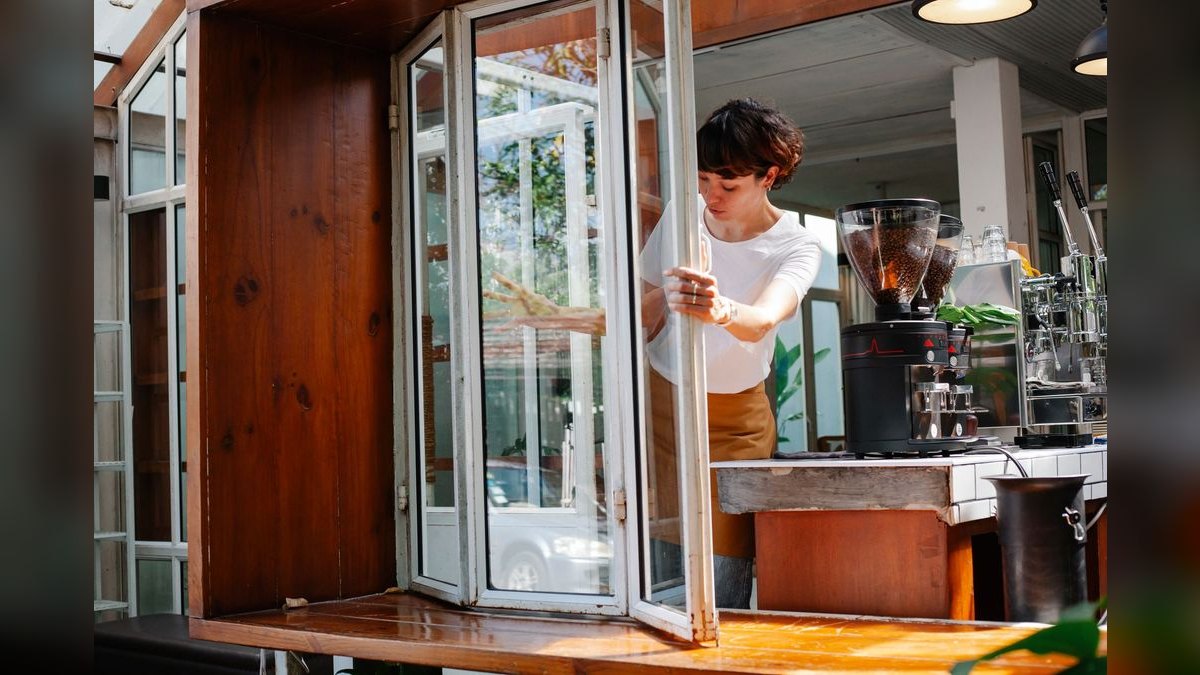
Resale pricing is the other strong argument. Existing units in this system have historically traded at modest multiples — commonly in the 1.5x–2.5x EBITDA range rather than the 3x–4x that stronger brands command — which means you can often buy $120,000 of annual owner earnings for $240,000–$300,000 plus inventory. That is a far better entry than spending $600,000 to build the identical cafe and then waiting a year for it to ramp. The same weak multiple that makes buying attractive is exactly what will hurt you at exit, so buy at the discount and plan to hold.
Where prospective owners get this wrong
The most common and most expensive error is treating brand recognition as a substitute for site quality. Coffee Bean & Tea Leaf has real name awareness in California and the Southwest and thin-to-nonexistent awareness in much of the Midwest, South, and Northeast. Operators who assume the name will pull traffic in a market where consumers have never heard of it end up funding consumer education out of their own pocket, at a scale a single-unit franchisee cannot afford. In an unfamiliar market you are effectively an independent cafe paying 8% in fees for the privilege. That is the worst of both worlds.
The second error is underestimating co-branded and self-cannibalizing competition. If the franchise agreement grants no protected radius — which is common in this segment — the franchisor can approve another unit inside your trade area. Franchisees who discover this after signing have limited recourse. The mitigation is contractual and must happen before you sign: negotiate a right of first refusal on new units within a defined radius, or a hard non-encroachment clause with a stated distance and duration. If the franchisor refuses both, that refusal is data, and the correct response is to raise your required return, target a market with no existing presence, or walk.
The third error is menu overconfidence, specifically around the Ice Blended line. Frozen blended drinks are genuinely popular and genuinely seasonal. In cold-winter markets, frozen beverage volume falls off hard from November through February while rent, insurance, and your core labor schedule do not move at all. Operators who build their pro forma on peak-summer daily sales and then annualize it produce a forecast that is 20–30% too high. Build the model on a twelve-month blend with an explicit winter trough, and if you are in Minneapolis or Boston rather than Phoenix, weight hot beverages, tea lattes, and drip coffee — which carry excellent margins and require no specialized equipment — as the revenue backbone.

The fourth error is labor. Beverage throughput is a speed business. A cafe that can push 90 transactions an hour during the morning peak and one that can only push 55 have the same rent and nearly the same fixed labor, but wildly different revenue. New operators consistently understaff the peak to protect the labor percentage and then lose the customers who walked out of the line — customers who, in a daily-habit category, do not come back. Overstaff the morning, understaff the afternoon, and manage the labor percentage across the day rather than hour by hour.
The fifth error is menu-and-supply rigidity. Franchise agreements in this category typically restrict you to approved menu items and approved suppliers. Operators who plan to fix weak food attachment with a local bakery partnership or a hot breakfast program often discover they cannot, or need written approval that takes months. Confirm exactly what latitude you have on local food sourcing, third-party delivery participation, catering, and local marketing before you build any of it into a forecast.
The sixth is financing structure. Loading a $600,000 build with $480,000 of ten-year SBA debt creates roughly $5,500–$6,500 in monthly debt service. On a cafe earning $110,000 a year before debt, that consumes most of the owner's income and leaves no cushion for a slow quarter. Keep debt service under about 40% of projected pre-debt owner earnings in your base case, and stress-test at 25% below base.
Choosing between opening, buying, and walking away
The decision comes down to four gates, evaluated in order, and you stop at the first one you fail.
Gate one is market awareness. Is there an existing Coffee Bean & Tea Leaf presence within about 50 miles, or a demographic profile — significant Asian-American population, university, dense daytime workforce, affluent suburb with strong tea consumption — that makes the coffee-and-tea positioning land? If yes, proceed. If you are in a market with no brand awareness and no demographic hook, an independent cafe or a stronger-brand franchise will almost certainly outperform, because you would be paying 8% for a name that does not sell.

Gate two is supply. Ask franchise development directly what is available in your target market for 2027: new unit awards, an area development agreement, or resales only. In a flat system, the honest answer is often resales. If a resale exists in a market that passed gate one, that is your strongest path — you get an existing customer base, a proven revenue number to underwrite, a faster close, and a lower multiple.
Gate three is site and lease. For a resale, this means remaining lease term, escalators, and whether the location's traffic is durable or was inflated by a temporary anchor. For a new build, it means real traffic counts, a competitor map with drive-times, and confirmation that no Starbucks or drive-thru concept has a permit pending nearby. Check municipal permit filings — they are public and they are the cheapest competitive intelligence available.
Gate four is your own operating profile. Full-time owner-operator with food-service or retail management experience: the model works. Absentee investor: subtract a manager's salary and re-run; most single units do not clear enough to support both a manager and a meaningful return. Multi-unit ambition: only pursue it after your first cafe has been profitable for twelve months, and only in a market where the brand already has awareness to leverage.
If you clear all four gates, the ranking is straightforward: a well-priced resale in a brand-aware market beats a new build in the same market, which beats a new build in a fresh market, which beats anything in a market where the name means nothing. And if the only available deal is a new build in an unfamiliar market at the top of the cost range, the correct answer is to walk — not because the brand is bad, but because you would be paying franchise economics for independent-cafe brand value.
Related questions
Can you still get a brand-new franchise award in the U.S.?
Availability varies by market and year. U.S. development has been limited relative to international growth, so many prospective owners find resales are the only live option. Contact franchise development directly and ask what is actually being awarded in your specific market for 2027.
How much liquid cash do I really need?
Plan on $120,000–$200,000 in unborrowed liquid capital for a new build, less for a resale. SBA lenders on food-service deals typically require 20–30% equity injection and will not count borrowed funds, so home-equity draws may not qualify as your injection.
Is the tea program actually a competitive advantage?
Yes, in the right market. Tea carries strong margins and reaches customers who do not drink coffee, extending your dayparts. It is a genuine advantage in tea-receptive demographics and roughly neutral in markets where consumers default to drip coffee and cold brew.
What multiple should I pay for an existing cafe?
Units in this system have historically traded at modest multiples — roughly 1.5x–2.5x seller's discretionary earnings or EBITDA — rather than the 3x–4x stronger brands command. Verify earnings against tax returns and POS data before agreeing to anything above 2.5x.
Does a drive-thru change the math?
Substantially. Drive-thru adds roughly $150,000–$250,000 and months of permitting, but can lift volume meaningfully in suburban markets where competitors already have one. Without a drive-thru in a drive-thru market, you are structurally disadvantaged on morning-rush convenience.
FAQ
What does a Coffee Bean & Tea Leaf franchisee typically earn?
A mature, well-located cafe commonly grosses $500,000–$1,200,000, with owner earnings before debt service in the $70,000–$220,000 range. The high end generally reflects a full-time owner-operator in a strong site, not an absentee owner. Subtract a general manager's fully loaded cost — often $70,000–$85,000 — if you plan to be hands-off, and subtract debt service separately. Verify against Item 19 and franchisee interviews.
How long until the cafe breaks even?
Cash-flow breakeven for a new build typically arrives 6–18 months after opening, driven mostly by how fast you build repeat traffic in a daily-habit category. Full return of invested capital is more commonly a four-to-seven-year horizon. A resale skips the ramp entirely, which is a large part of why it is usually the better entry — you inherit the customer base rather than paying to build one.
What are the ongoing fees?
Expect royalty near 6% of gross sales plus a marketing contribution around 2%, roughly 8% off the top before cost of goods. On $700,000 in revenue that is about $56,000 annually. Transfers also carry fees — commonly a percentage of the sale price plus a training fee for the incoming owner — which reduces your net proceeds when you eventually sell. Confirm all current figures in the FDD.
Do I get an exclusive territory?
Frequently not, or only a narrow one. Read Item 12 carefully and assume no protection unless the agreement states a specific radius and duration in writing. If none is offered, negotiate a right of first refusal on nearby units before signing, and if the franchisor declines, either target a market with no existing presence or raise your required return to compensate for encroachment risk.
Is it easy to sell later?
No. Modest resale multiples and a small buyer pool mean listings can sit for a year or more, and sellers sometimes accept meaningful discounts to invested capital. Plan a ten-year-plus hold. Your best hedge is building genuine local goodwill — strong reviews, a documented repeat-customer rate, clean books — because a buyer is purchasing your location's performance, not the brand name.
How does it compare to opening an independent cafe?
The franchise buys you a supply chain, an operating system, training, and name recognition where the brand exists, at a cost of roughly 8% of revenue plus menu and supplier restrictions. In a market where the name means nothing, an independent gives you the same economics without the fees and with full menu freedom. The franchise wins where the brand is already known and the tea positioning fits the demographics.
Sources
- https://www.ftc.gov/business-guidance/resources/franchise-rule-compliance-guide
- https://www.sba.gov/funding-programs/loans/7a-loans
- https://www.franchise.org/
- https://www.franchisebusinessreview.com/
- https://www.entrepreneur.com/franchises
- https://www.coffeebean.com/
- https://www.ncausa.org/
- https://www.sba.gov/business-guide/manage-your-business/buy-existing-business-or-franchise
- https://www.bls.gov/oes/current/naics4_722500.htm
- https://www.ftc.gov/business-guidance/industry/franchises
Related on PULSE
- Should I open or buy an It's A Grind Coffee franchise in 2027?
- Should I open or buy a Just Love Coffee Cafe franchise in 2027?
- Should I open or buy a Summer Moon Coffee franchise in 2027?
- Should I open or buy a Sunright Tea Studio franchise in 2027?
- How Many Employees Should I Schedule Each Shift at My Bubble Tea Shop?
- How Do I Get My Coffee Shop Staff to Drive Loyalty App Signups?
This page will be disappearing soon. Save it to your device for $1 — or read it free while it is here.
@Kory-White- · if Venmo asks, the last 4 of my number are 2012
This page is gone.
This one is off the shelf now. $1 keeps it on your phone for good — the whole page, pictures and diagrams included.
 pulse-qHow Many Employees Should I Schedule Each Shift at My Skate Park in 2026?
 pulse-qHow Do I Get My Jewelry Staff to Offer Financing on Every Sale in 2026?
 pulse-qShould I open or buy a Code Wiz franchise in 2027?
 pulse-qShould I open or buy a Bloomin' Blinds franchise in 2027?
 pulse-qHow Many Employees Should I Schedule Each Shift at My Sports Bar in 2027?
 pulse-qShould I open or buy a Ned Stevens Gutter Cleaning franchise in 2027?
 pulse-qHow Do I Make My Sales Goals Visible to the Whole Team in 2026?
 pulse-qShould I open or buy a Paul Davis Restoration franchise in 2027?
 pulse-qShould I Hire a Fractional CRO If I Am Taking the Company to Market in a Year in 2026?
 pulse-qShould I Hire a Fractional CRO If I Need to Professionalize a Referral-Only Business in 2026?