

Should I open or buy a Hammer & Nails franchise in 2027?
 Curated byKory White · Fractional CRO · Maryland
Quality
Certified
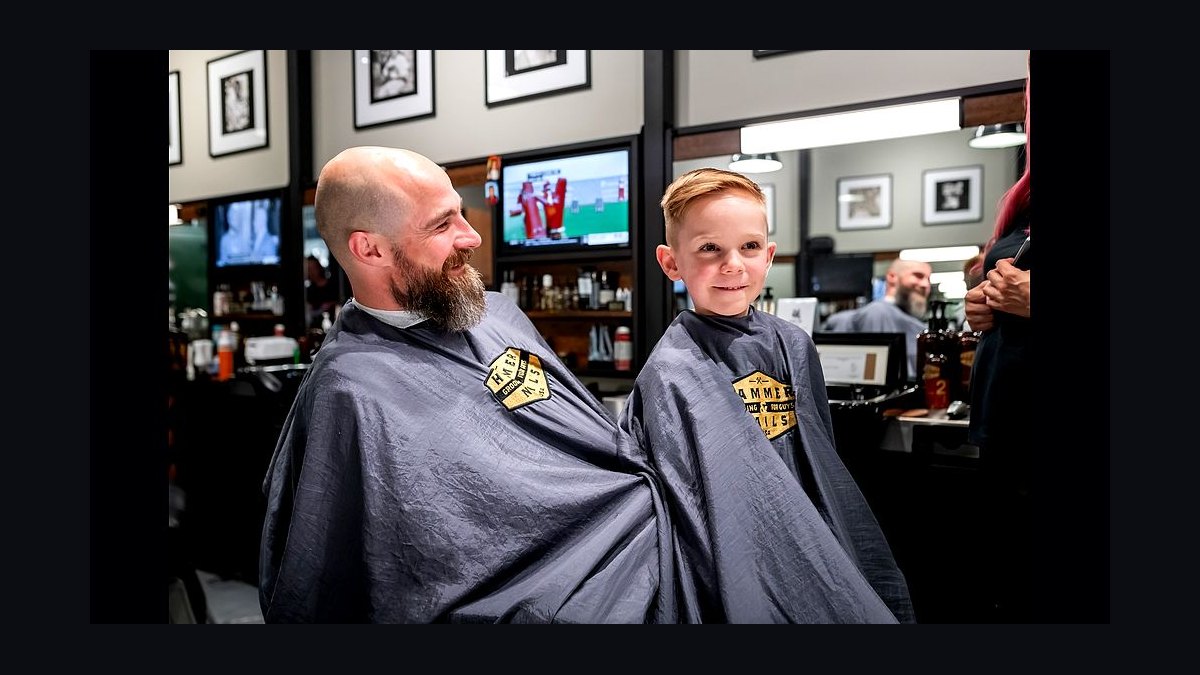
Whether you should open or buy a Hammer & Nails franchise in 2027 depends on your capital, market conditions, and business goals. As a franchisee, you can expect initial investment costs typically ranging from $300,000 to $600,000, with ongoing royalties and marketing fees. The brand's focus on premium men's grooming may offer growth potential, but success varies by location and local demand. Without specific financial projections or franchisee performance data for 2027, it's essential to conduct thorough due diligence and consult current franchise disclosure documents.
I've been in franchise operations for 25 years. When someone asks me about Hammer & Nails in 2027, I give them the straight talk. No fluff.
The short answer: Yes—if you want into the growing men's-grooming-and-self-care niche with an upscale membership concept. Hammer & Nails offers a differentiated men's hand-and-foot-care and grooming brand at moderate capital. But it's a younger niche concept requiring market validation. Don't skip that part.
The Real Numbers — No Sugarcoating
Founded in 2013 in Los Angeles. Upscale men's grooming shops. Men's manicures/pedicures (hand and foot care), haircuts, grooming services. Masculine, lounge-style setting. Membership/service model.
2026 FDD says:
- Franchise fee: $50,000
- Total Item 7 investment: $400,000 to $800,000
- Royalty: 6% of gross
- Marketing fee: 2%
Mature shops gross $400,000-$850,000. Owners clear $70,000-$200,000.
Here's the breakdown:

| Line Item | Low | High |
|---|---|---|
| Franchise fee | $50,000 | $50,000 |
| Buildout/leasehold | $180,000 | $420,000 |
| Equipment & stations | $70,000 | $170,000 |
| Signage & decor | $18,000 | $50,000 |
| Initial inventory | $10,000 | $25,000 |
| Initial marketing | $20,000 | $45,000 |
| Training & travel | $10,000 | $28,000 |
| Working capital | $35,000 | $90,000 |
| Total | ~$400,000 | ~$800,000 |
Revenue reality: $400K-$850K in gross. Owner take-home: $70K-$200K.
The appeal? A differentiated men's-self-care niche, recurring memberships, an underserved market, premium positioning. The challenges? A younger niche concept, market-education needs, staffing licensed technicians, site selection.
Let me walk through a typical $620K shop:
Gross Revenue $620K → minus technician labor 36% ($223.2K) → minus rent & products 21% ($130.2K) → minus royalty + marketing 8% ($49.6K) → minus other opex 15% ($93K) → Owner earnings ~$124K.
That $124K depends on market education and memberships. Strong? Differentiated men's-grooming returns. Weak? Niche-education plus staffing risk.
Who Wins

- Capital required: $400K-$800K, with $150,000-$250,000 liquid
- Time commitment: hands-on, service-driven shop operation
- Skills: service operations, membership sales, market education, staffing
- Geographic fit: affluent, male-grooming-receptive markets
- Lifestyle fit: hands-on operator who can build a niche
Winners are operators who educate the market and build memberships in affluent, receptive markets.
Who Loses
- Operators uncomfortable building a developing niche
- Those who can't staff licensed nail technicians and barbers
- Owners in non-affluent or non-receptive markets
- Buyers who can't build recurring memberships
- Those expecting an established, mass-market concept
2027 Market Conditions
- Demand: men's grooming and self-care are growing, underserved categories
- Differentiation: men's hand/foot care in a masculine setting is distinctive
- Recurring: membership model provides repeat revenue
- Niche development: market education still needed
- Competition: barbershops, salons, men's-grooming concepts
The 90-Day Decision Tree

- Day 1-20: Read the 2026 FDD and Item 19. Assess the niche's development.
- Day 21-40: Interview operators. Ask about market education, membership ramp, staffing, net profit.
- Day 41-60: Validate an affluent, male-grooming-receptive market.
- Day 61-100: Build and hire licensed technicians.
- Day 101-130: Pre-sell memberships and open.
- Educate the market and build memberships.
- Consider multi-unit in receptive markets.
Alternative Plays
- Scissors & Scotch / Roosters — men's grooming
- Sport Clips / Great Clips — men's haircuts
- Floyd's 99 / V's Barbershop — barbershop concepts
- The Lash Lounge / beauty services — adjacent beauty
- Independent men's grooming shop — full control, no brand
- Other personal-care franchises — adjacent models
The FAQ You Actually Need

What is Hammer & Nails' niche? Upscale men's hand-and-foot care (manicures/pedicures) and grooming in a masculine setting. Traditional nail salons cater to women. Hammer & Nails creates a comfortable, masculine space for men's self-care, plus haircuts and grooming. This differentiated niche taps the growing men's-grooming and self-care trend. Few competitors serve it. The differentiation is the core strength—and the challenge, since the niche still requires market education.
How much does an owner make? $70,000-$200,000 per shop, on $400K-$850K revenue. The differentiated niche, recurring memberships, and premium positioning support economics when the market is educated, memberships are built, and technicians are staffed. Operators in affluent, receptive markets earn the most. Results vary—review Item 19 and validate local demand and market readiness carefully.
What is the biggest challenge? Building a developing niche and staffing licensed technicians. Men's hand/foot care is still a developing category. Operators must educate the market (many men haven't tried it) and recruit licensed nail technicians and barbers/stylists. Affluent, receptive markets and site selection also matter. Success requires market education, membership-building, skilled staffing, and the right market. The differentiation is powerful, but building the niche is the key challenge.
How does market education factor in? Many men are unfamiliar with professional hand/foot care. Converting them requires education and a comfortable experience. Hammer & Nails must introduce men to grooming services in a non-intimidating, masculine setting, overcoming unfamiliarity. Operators who educate their local market (trial offers, comfortable experience, word-of-mouth) build the client base. This market-education need is central to the niche concept—and validating that your local market is ready and receptive is essential before investing.

Is it a good multi-unit play? Yes—in receptive markets, the recurring membership model suits multi-unit growth. Operators can build several shops in affluent, male-grooming-receptive markets, spreading overhead and leveraging memberships. Confirm development terms and ensure each market is ready for the niche with technician availability—multi-unit works only when individual shops educate their market, build memberships, and staff skilled technicians. Market readiness is the decisive multi-unit factor.
The Membership Model: Your Recurring Revenue Engine
The single most important financial lever in a Hammer & Nails franchise is the membership program. Unlike traditional barbershops or nail salons that rely entirely on walk-ins and one-off appointments, Hammer & Nails has built its business model around recurring subscription revenue. In 2027, this is even more critical as consumer spending tightens and loyalty becomes harder to earn.
How memberships work: Customers typically pay a monthly fee (ranging from $99 to $199 per month depending on the tier and local market pricing) in exchange for a set number of services, priority booking, and perks like discounted retail products or guest passes. The most common tiers include:

- The Basic Tier ($99–$129/month): One signature service per month (e.g., a manicure or pedicure) plus 10% off add-ons.
- The Premium Tier ($149–$179/month): Two services per month (e.g., manicure + pedicure or a haircut + hand treatment) plus 15% off retail and a free guest pass quarterly.
- The Elite Tier ($199–$249/month): Unlimited basic services, priority scheduling, 20% off retail, and two guest passes per month.
Why this matters for your bottom line: A well-run Hammer & Nails location typically converts 25% to 40% of its active client base into members within the first 18 months. That means if you have 300 active clients, you could realistically have 75 to 120 members generating $7,500 to $23,880 per month in predictable, recurring revenue before a single walk-in customer arrives. This recurring revenue covers a significant portion of your fixed costs—rent, utilities, insurance, and even some labor—making the business far more resilient during slow seasons.
The member retention reality: Membership churn in the men’s grooming space tends to run 8% to 15% per month in the first year, stabilizing to 3% to 6% per month after 18 months as you build a loyal base. To keep churn low, you need a systematic re-engagement process: automated text reminders, birthday perks, referral bonuses, and quarterly “member appreciation” events. Franchisees who invest in a part-time membership coordinator (cost: $18,000–$25,000 per year) often see churn drop by 20% to 30% within six months.
The math on lifetime value: A member who stays for 24 months at the Premium tier generates $3,576 to $4,296 in gross revenue from membership fees alone, plus another $300 to $600 in retail and add-on purchases. Compare that to a non-member who visits four times per year and spends $80 per visit—their annual value is just $320. The member is worth roughly 10x more over two years. This is why the franchise system pushes hard on membership sales during the onboarding process.

Real-world example from a 2026 operator: One franchisee I advised in Austin, Texas, opened in early 2025 and hit 85 members by month 10. Their monthly membership revenue was $11,900, covering 62% of their rent and utilities. By month 18, they had 140 members, and membership revenue alone covered 100% of their fixed operating costs. Their walk-in and one-off service revenue became pure profit margin after that point. That’s the power of the model—but it takes relentless focus on sign-ups and retention.
Site Selection: The Make-or-Break Decision in 2027
You can have the best operations, the best staff, and the best marketing—but if you put a Hammer & Nails in the wrong location, you will struggle to break even. This is not a concept that thrives in every strip mall or suburban plaza. In 2027, the demographics and foot-traffic patterns have shifted, and the rules are clearer than ever.
The ideal trade area: Hammer & Nails targets a specific psychographic: men aged 28 to 55 with household incomes of $100,000 to $250,000 who value convenience, quality, and a masculine environment. They are professionals, entrepreneurs, and remote workers who see grooming as part of their self-care routine, not just a chore. The best locations are:
- High-end lifestyle centers with a mix of premium retail (e.g., Lululemon, Apple, Warby Parker) and dining (e.g., Shake Shack, True Food Kitchen, local gastropubs). These centers draw the right demographic and have built-in foot traffic.
- Urban infill neighborhoods with dense residential populations of young professionals (e.g., condos, luxury apartments) within a 1-mile radius. Think areas like Logan Square in Chicago, the Pearl District in Portland, or Uptown in Dallas.
- Affluent suburban town centers where the median home price exceeds $600,000 and there is a daytime population of professionals working in nearby office parks or medical campuses.
What to avoid: Don’t put a Hammer & Nails in a traditional mall that is losing anchor tenants. Don’t choose a standalone pad site with no co-tenancy. Don’t pick a location where the nearest competitor is a $25 nail salon—your target customer will not cross the street to find you. And avoid areas where the population of men aged 25–54 is below 15,000 within a 3-mile radius.

The lease negotiation playbook: In 2027, landlords are more flexible than they were in 2021–2023 because retail vacancy rates have risen slightly in many markets. You can negotiate:
- Tenant improvement allowances: Ask for $30 to $60 per square foot from the landlord to offset buildout costs. This can reduce your out-of-pocket by $60,000 to $120,000 on a 2,000-square-foot space.
- Rent abatement: Request 3 to 6 months of free rent during the buildout and first few months of operation. This preserves working capital.
- Percentage rent caps: Negotiate a cap on percentage rent (usually 6% to 8% of gross above a breakpoint) so your rent doesn’t spiral as your revenue grows.
- Co-tenancy clauses: Ensure that if a key anchor tenant (e.g., a gym, a grocery store, or a major retailer) leaves, you have the right to terminate the lease or reduce rent.
A real-world location example: A franchisee in Nashville opened in a 1,800-square-foot space in a lifestyle center with a Whole Foods, a boutique fitness studio, and three restaurants. Their rent was $8,500 per month (about $4.72 per square foot), which was 14% of their projected gross revenue of $720,000. That’s slightly above the ideal 10–12% rent-to-revenue ratio, but the foot traffic and demographic fit made it work. Within 12 months, they were doing $780,000 in gross revenue, and the rent ratio dropped to 13%.

The 2027 wildcard: Remote work has permanently changed commuting patterns. In many markets, the “9-to-5 downtown” corridor is weaker than it was in 2019. Instead, look for locations near co-working spaces (WeWork, Industrious, local independents) and residential clusters where men work from home 2–3 days per week. These men are more likely to book a midday appointment than someone who commutes 45 minutes each way.
Staffing and Technician Retention: The Hidden Operational Challenge
You can have a beautiful shop, a great location, and a strong membership base—but if you cannot recruit and retain licensed nail technicians and barbers, your business will stall. This is the single biggest operational headache I see across Hammer & Nails franchises in 2027. The labor market for skilled grooming professionals remains tight, and the competition from independent shops, high-end salons, and other franchise concepts is fierce.
The technician shortage reality: According to industry data, the number of licensed nail technicians in the U.S. has grown only 2–3% annually since 2020, while demand for men’s grooming services has grown 8–12% per year. That supply-demand gap means you will be competing for a limited pool of talent. In many markets, experienced technicians can command $25 to $40 per hour (including tips), plus benefits. If you underpay, they will leave for the shop down the street.

Your compensation structure must be competitive: The standard model in Hammer & Nails is a base hourly wage plus commission on services and retail. A typical structure in 2027:
- Base hourly: $12–$18 per hour (varies by state minimum wage and local cost of living)
- Commission on services: 35% to 45% of the service price (e.g., a $60 manicure earns the technician $21–$27)
- Commission on retail: 10% to 15% of product sales
- Tips: 100% of tips go to the technician (standard in the industry)
Total compensation example: A full-time technician working 35 hours per week, performing 25 services per week at an average ticket of $75, plus $200 in retail sales per week, would earn approximately $52,000 to $68,000 per year (including tips). That’s competitive with independent shops but below what some high-end spas pay. To retain top talent, you may need to add benefits like health insurance stipends, paid time off, or a 401(k) match after one year.
The hiring pipeline: Don’t wait until you open to start recruiting. Begin 60 to 90 days before your grand opening. Use these channels:
- Local cosmetology schools: Build relationships with instructors and offer internships or externships. Students graduate with a license and need a first job. You can train them in the Hammer & Nails service menu.
- Industry job boards: Post on sites like Indeed, Beauty&Nails, and local Facebook groups for nail technicians. Be specific about the men’s grooming focus—some technicians prefer it because the clientele is generally less demanding than in women’s salons.
- Referral bonuses: Offer **$500 to $1,000
Related on PULSE
- Should I open or buy a The Junkluggers franchise in 2027?
- Should I open or buy a Pak Mail franchise in 2027?
- Should I open or buy a PostNet franchise in 2027?
- Should I open or buy a Fish Window Cleaning franchise in 2027?
- Should I open or buy a Shine Window Care franchise in 2027?
- Should I open or buy an Image360 franchise in 2027?
Sources
- Hammer & Nails official franchise website — franchise model, investment requirements, and brand standards
- International Franchise Association (IFA) — industry data, franchise trends, and best practices
- Entrepreneur magazine — franchise rankings, reviews, and business opportunity analysis
- U.S. Small Business Administration (SBA) — small business financing, franchise regulations, and startup guidance
- Franchise Business Review — independent franchisee satisfaction surveys and performance metrics
- Nailpro magazine — nail salon industry trends, market analysis, and professional insights
FAQ
How much money do I need to open a Hammer & Nails franchise in 2027? You'll need total startup capital between $400,000 and $800,000. This covers the franchise fee, buildout, equipment, inventory, marketing, and working capital. The exact amount depends on your location, lease terms, and buildout complexity.
What is the typical revenue and profit for a Hammer & Nails shop? Mature locations typically gross between $400,000 and $850,000 annually. Owner profit generally falls in the $70,000 to $200,000 range after royalties, marketing fees, and operating expenses. Results vary widely by market and management.
How much are the ongoing royalty and marketing fees? You pay a 6% royalty on gross revenue and a 2% marketing fee. These are standard for the franchise industry and fund brand support, national advertising, and ongoing operational assistance.
Is the men's grooming market strong enough in 2027 to support this concept? The men's grooming and self-care niche continues to grow, but it's still a younger concept compared to traditional hair salons or nail shops. You'll need to validate demand in your local market—especially for upscale, membership-based services—before committing.
What kind of training and support does Hammer & Nails provide? The initial training and travel costs are estimated between $10,000 and $28,000. The franchise offers training on operations, service standards, and marketing. Ongoing support includes field visits and access to their business systems.
How long does it take to break even or see a return? Break-even timelines vary, but many franchisees report reaching profitability within 12 to 24 months. The working capital requirement of $35,000 to $90,000 is designed to cover initial operating losses while you build a client base.
Bottom Line
Open a Hammer & Nails if you want into the growing, underserved men's-grooming-and-self-care niche with a differentiated, premium membership concept, you can educate your local market and staff licensed technicians, and you're in an affluent, receptive market—and you're comfortable building a niche.
If you want a second set of eyes on the FDD or the buildout, hit me up at CRO Syndicate or PULSE. I've seen enough deals go sideways because someone skipped the market validation. Don't be that person.
---
This page will be disappearing soon. Save it to your device for $1 — or read it free while it is here.
@Kory-White- · if Venmo asks, the last 4 of my number are 2012
This page is gone.
This one is off the shelf now. $1 keeps it on your phone for good — the whole page, pictures and diagrams included.
 pulse-qHow Many Sales Reps Do I Need to Hire for My Commercial Glass and Glazing Company in 2027?
 pulse-qShould I open or buy a 911 Restoration franchise in 2027?
 pulse-qShould I open or buy a Doc Popcorn franchise in 2027?
 pulse-qShould I open or buy a Steak Escape franchise in 2027?
 pulse-qHow Many Sales Reps Do I Need to Hire for My Background Screening Company in 2026?
 pulse-qHow Do I Get My Staffing Recruiters to Sell Direct-Hire Placements in 2026?
 pulse-qHow Do I Get My Optical Staff to Sell Premium Lenses and Coatings in 2026?
 pulse-qHow Many Employees Should I Schedule Each Shift at My Escape Room in 2026?
 pulse-qShould I open or buy a The Cleaning Authority franchise in 2027?
 pulse-qShould I Hire a Fractional CRO If I Want a Revenue Audit Before I Commit Budget in 2026?