

Should I open or buy a Steak Escape franchise in 2027?
 Curated byKory White · Fractional CRO · Maryland
Quality
Certified
Only if you can secure a genuinely high-traffic site and work the grill yourself. Steak Escape's fresh, never-frozen product and its food-court-or-street format flexibility are real advantages, but total investment runs roughly $209,000 to $537,000 and resale value is weak. Absentee owners in declining malls lose money.
The outcome you should expect
Set your expectations against what the concept actually is: a small-footprint, high-throughput quick-service unit built around a griddle line, occupying roughly 600 to 1,400 square feet, that lives or dies on the traffic walking past it. It is not a real estate play. It is not a passive income vehicle. It is a job with equity attached, and the equity portion is thinner than most first-time franchise buyers assume.
The realistic outcome for a competent owner-operator in a strong site looks like this: an average unit volume somewhere in the $400,000 to $900,000 band, with most units clustering nearer the lower half of that range rather than the top. Out of that, food cost typically consumes 25 to 32 percent, labor another 28 to 33 percent, occupancy anywhere from 10 to 15 percent in a food court and sometimes more once common-area maintenance and percentage rent are layered in, plus a 6 percent royalty and roughly a 2 percent brand marketing contribution off gross sales. What is left — owner's compensation plus profit — lands in a wide range of roughly $60,000 to $170,000 per unit for operators who execute, and near zero or negative for those who do not.
That spread is not random. It tracks almost perfectly with two variables: site quality and owner presence. A unit in a busy downtown corridor or a well-performing non-traditional venue with the owner on the line during the lunch rush sits at the top of the range. A unit in a half-empty enclosed mall run by a manager who would rather be anywhere else sits at $250,000 to $350,000 in annual sales, which is barely enough to cover rent and payroll before the owner takes a dollar. There is very little middle ground, and the brand cannot rescue a bad site. No franchise brand can.
Understand also what the timeline does to your capital. From signing the franchise agreement to opening the doors, plan on six to twelve months. Lease negotiation with a mall landlord or a venue concessionaire is the usual bottleneck, followed by permitting and hood/grease-trap inspections, followed by equipment lead times. During those months you are paying for legal review, architectural drawings, deposits, and possibly rent on a space that is not yet generating a dollar. Then plan on another six to twelve months after opening before the unit stabilizes. Realistically, you are eighteen months from signature to a predictable weekly number, and you should be capitalized to survive that entire stretch without drawing a salary.
The honest summary of expected outcome: a decent owner-operator income, a poor absentee income, and a weak terminal value. If you need all three, this is the wrong concept. If you want the first one and you intend to work it, it can pay you fairly for the work.
What drives that outcome
Four levers move the number more than anything else, and they are not equally weighted. Site traffic is the dominant one. Format choice is second, because it largely determines your traffic exposure. Owner presence is third and is the single cheapest lever you control. Cost discipline on food and labor is fourth — important, but it cannot manufacture revenue that the door never brought in.
Start with the format decision, because everything downstream flows from it. A food-court unit is cheaper to build — you inherit the shell, the venue's utilities, the shared seating, and sometimes a partial buildout from the prior tenant. Buildout in that scenario tends to sit at the low end of the range. In exchange you inherit the mall's traffic curve, which in many enclosed centers has been flat to declining for years, and you inherit the mall's lease structure: base rent plus percentage rent, plus common-area maintenance, plus marketing fund contributions, plus mandated operating hours that force you to staff dead evening shifts. If an anchor tenant leaves, your sales fall and your rent does not.
A street or strip-center location flips that trade. You control your hours, your signage, your visibility from the road, and increasingly your off-premise channels — third-party delivery and pickup orders, which a food-court stall handles poorly. You pay for it in buildout: you are running your own hood, your own grease interceptor, your own HVAC, your own restrooms, and your own storefront. That is where the high end of the equipment and leasehold ranges comes from.
Non-traditional venues — airport terminals, college campuses, hospitals, arenas — are the third path and the most misunderstood. They deliver a captive audience with a high willingness to pay, average tickets meaningfully above a suburban food court, and often shorter lease terms that limit your downside. They also come with restrictions that will surprise you: venue-approved vendors, security-cleared staff, limited menu approvals, mandated hours that may include a 5 a.m. open, and total dependence on the venue's own schedule. When a terminal renovates, you close, and rent abatement is not guaranteed.
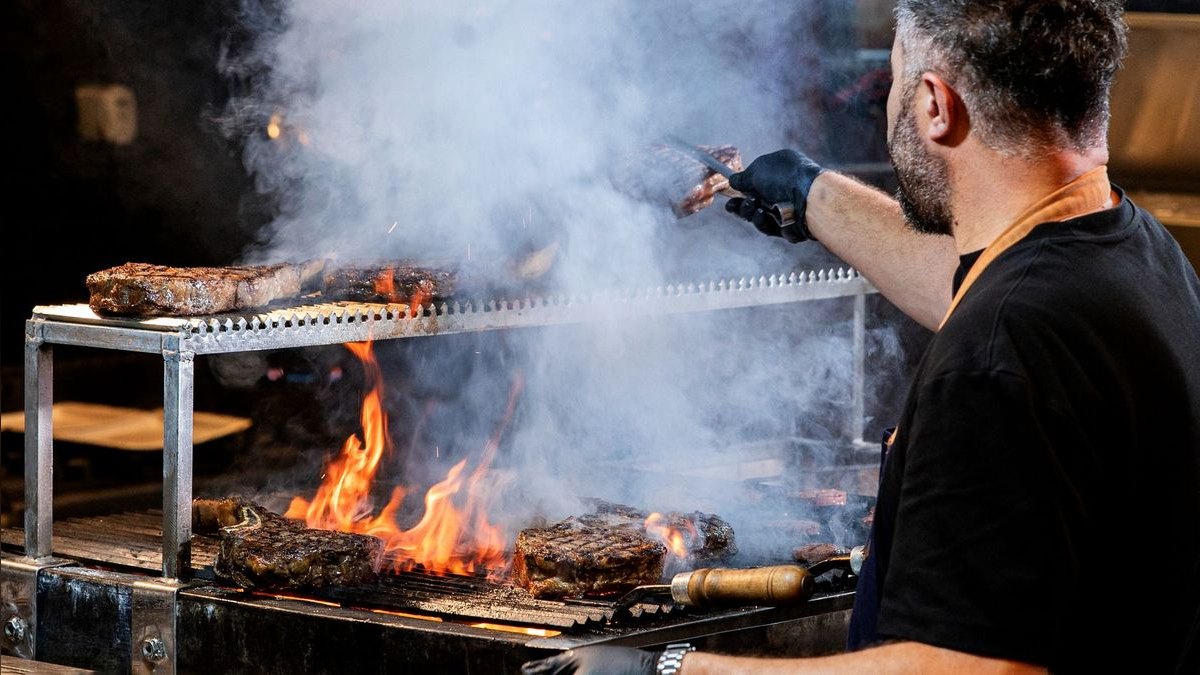
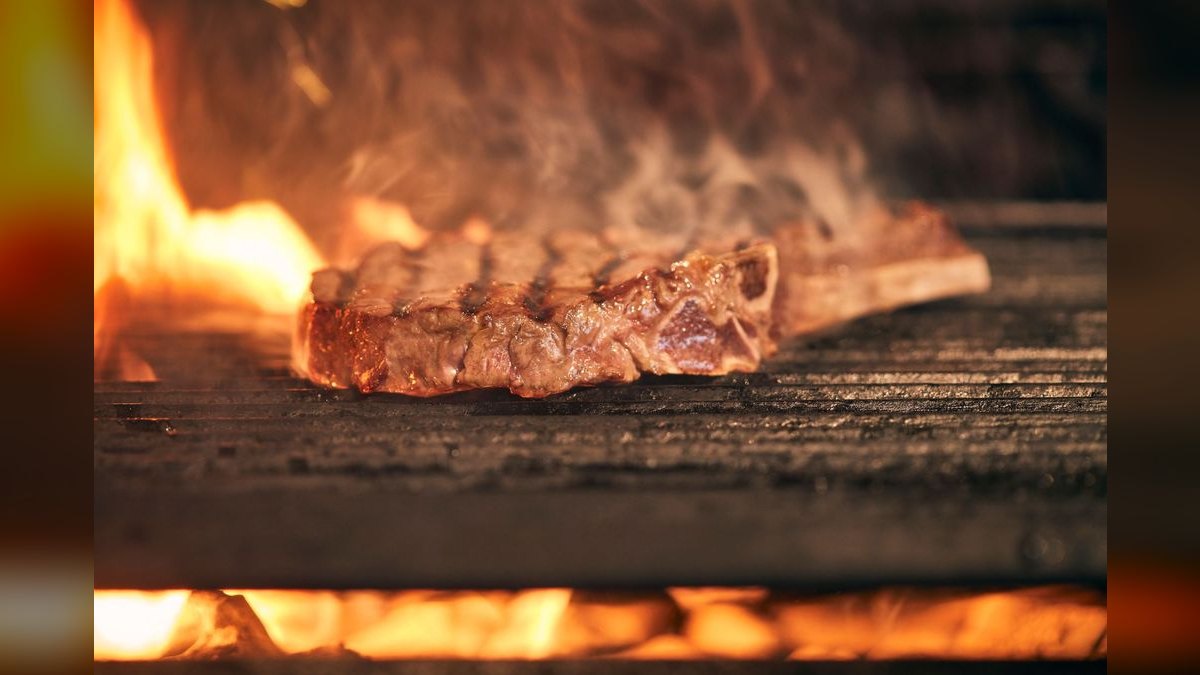
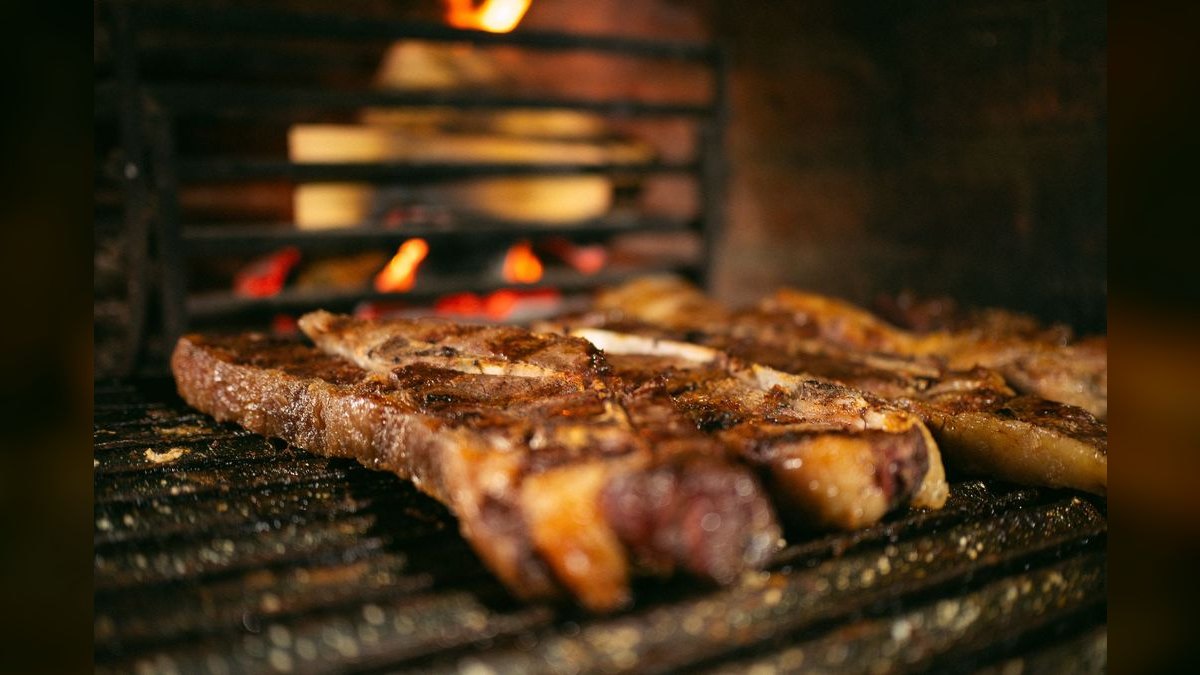
The product differentiation is the fourth driver and the one most owners underuse. Fresh, never-frozen steak grilled to order and fresh-cut fries is a genuine quality gap versus frozen-product cheesesteak competitors, and the display cooking converts that gap into impulse traffic. A sizzling griddle in a customer's line of sight is the cheapest marketing you will ever buy. But it only works if the line is fast and the product is consistent, which loops directly back to owner presence.
Benchmarks and realistic ranges
Work from the franchise disclosure document, not from summaries. The figures below reflect the ranges the concept's Item 7 line items produce, and you should verify each against the current-year FDD before you commit a dollar.
Initial franchise fee: $25,000 to $30,000. Effectively non-negotiable for a single unit. Multi-unit development agreements sometimes carry a reduced per-unit fee in exchange for a binding opening schedule — worth asking about only if you genuinely intend to build more than one.
Leasehold improvements and buildout: $80,000 to $240,000. The single widest line and the one that separates a food-court stall from a street unit. Get contractor bids on your actual space before trusting any midpoint.
Equipment, griddles, and smallwares: $50,000 to $110,000. Griddle capacity is not a place to economize. Throughput at lunch is your revenue ceiling.
Signage and decor: $12,000 to $35,000. Higher for street units needing exterior signage, monument panels, and sometimes landlord or municipal sign approvals.
Opening inventory: $8,000 to $20,000. Fresh protein and fresh potatoes mean tighter par levels and more frequent deliveries than a frozen-product competitor.
Grand opening marketing: $8,000 to $25,000. Front-load this. Trial in the first sixty days sets your repeat base.
Training and travel: $8,000 to $22,000. Covers you and your opening management team, including travel and lodging during the corporate program.
Three months of working capital: $18,000 to $55,000. This line is systematically underestimated. Treat it as a floor, not a target.
Add those line items and the honest total investment range is approximately $209,000 on the low end to $537,000 on the high end. Do not anchor on a lower headline figure; the arithmetic of the components is what your bank and your own cash flow will actually face. Expect a lender to want roughly $70,000 to $140,000 in liquid capital plus a net worth well above the project cost, and expect an SBA 7(a) lender to require 10 to 20 percent equity injection plus a personal guarantee secured by whatever assets you have.
Ongoing fees: approximately 6 percent royalty and approximately 2 percent brand marketing, both off gross sales. Model those on gross, not on profit. At $500,000 in sales that is $40,000 leaving the business before you have paid rent.
Revenue benchmarks. Mature units span roughly $400,000 to $900,000 in annual sales. Strong street and downtown locations commonly report the $450,000 to $600,000 band, with genuine top performers reaching around $750,000. Weak enclosed-mall units run $250,000 to $350,000. A non-traditional venue with a captive audience and a higher average ticket — in the $13 to $15 range rather than the $10 to $12 typical of a suburban food court — can clear $500,000 in a first year on a buildout closer to $120,000, which is why the return profile of that path is structurally better even though the operating constraints are worse.
Margin benchmarks to underwrite against. Food cost 25 to 32 percent. Labor 28 to 33 percent. Occupancy 10 to 15 percent in a food court, often lower as a percentage in a well-chosen street unit with higher volume. Royalty and marketing 8 percent combined. That leaves a pre-owner-salary margin in the low-to-mid teens in a good unit and near zero in a poor one. A 15 percent net margin is achievable, not typical — treat it as the upside case, not the plan.
Timeline benchmarks. Six to twelve months signature to open. Six to twelve months open to stabilized. Assume no owner draw for the first six months of operation and budget your household accordingly.
Risks, edge cases, and failure modes
Mall dependence is the headline risk. A food-court unit is a leveraged bet on an enclosed center's foot traffic, and you have zero control over the anchor tenants that generate it. Anchors leave. Centers get redeveloped. Your lease does not shrink when the traffic does. If you are evaluating a mall unit, pull the center's occupancy history, ask the leasing agent directly which anchors have renewal options coming due and when, and count cars in the lot on a Tuesday at 1 p.m. and a Saturday at 2 p.m. yourself rather than trusting the landlord's traffic figures.
Absentee ownership is the most reliable way to lose money here. The pattern is consistent across underperforming units: the owner treats the store as passive income, hires a manager, visits weekly, and watches product quality and ticket times slowly degrade until the fresh-grilled differentiation that justified the concept is gone. A dirty griddle and a distracted line cook erase the entire competitive advantage. If you cannot commit to being physically present through at least the first year, the expected return drops sharply.
Competition is direct and well-capitalized. Charleys Philly Steaks operates a large footprint in exactly the venues you are considering. Great Steak occupies similar food-court positions. Independent cheesesteak shops compete on price and locality. You are not entering an empty category — you are entering a crowded one with a product-quality argument that only works if you execute it every shift.
Lease economics kill more units than sales shortfalls do. Percentage rent clauses, CAM escalators, mandated operating hours, relocation clauses, and co-tenancy provisions all belong in front of a franchise attorney who has read restaurant leases specifically. A co-tenancy clause that lets you reduce rent or exit if anchors go dark is worth real money; not having one in a fragile center is a serious exposure.
Labor availability and throughput. Display cooking is a staffing model, not just a marketing device. You need cooks who can hold ticket times under pressure with customers watching. In tight labor markets, the wage you must pay to get that person may not match the labor percentage in your pro forma. Model labor at the wage you will actually have to pay in your specific market, not at a national average.
Resale value is weak, and this is the failure mode buyers discover last. A Steak Escape unit is not McDonald's, where the real estate and brand equity carry independent value. What a buyer is purchasing is a used griddle line, a fryer, a hood, and a lease assignment, subject to franchisor approval of the transfer. A unit in a dying mall may fetch only $10,000 to $20,000 — essentially equipment salvage. A street location with several years remaining on a viable lease and demonstrable cash flow might reach $50,000 to $80,000, but only if the buyer believes they can improve it. Owners who bought in around $180,000 and needed out four years later have taken losses in the range of 70 to 75 percent of invested capital. Underwrite as if your terminal value is close to zero, and require the operating cash flow alone to justify the deal.
Buying an existing unit has its own trap. Resale prices are negotiated privately, not published, so the only way to price one is to underwrite it as a business. Demand two to three years of tax returns and POS reports, verify the sales figures against sales-tax filings rather than the seller's spreadsheet, get the remaining lease term and transfer terms in writing, obtain the franchisor's transfer conditions including any required remodel obligation, and inspect the equipment with a commercial kitchen technician. A distressed unit at a low price is only a bargain if the reason it is distressed is fixable by you — bad management is fixable, bad traffic is not.
Non-traditional venue edge cases. Menu approvals may exclude items; smoothie or blended-beverage service can be restricted by venue rules; security clearance requirements can slow hiring by weeks; venue construction can close you without abatement; and your lease may be a concession agreement with terms materially different from a standard retail lease. Read it as its own document, not as a lease variant.
A practical rollout plan
Days 1 to 20 — read the documents. Obtain and read the full current FDD, not a summary. Item 7 for investment, Item 19 for any financial performance representation, Item 20 for the unit counts including transfers, terminations, and non-renewals over the past three years. That turnover table tells you more about franchisee outcomes than any brochure. Have a franchise attorney review the agreement and flag transfer, territory, renewal, and remodel obligations.
Days 21 to 45 — talk to operators. Item 20 gives you current and former franchisee contact information. Call at least eight current owners and at least three former ones — the departed owners will tell you what the current ones will not. Ask specifically: actual AUV, food and labor percentages, occupancy cost as a percentage, weeks to break even, hours worked per week, what corporate support looked like when something went wrong, and whether they would sign again.
Days 46 to 70 — choose your format and validate the site. Decide deliberately between food court, street, and non-traditional, based on your capital and your access. Then validate the specific site with your own data: pedestrian counts at peak dayparts on multiple days, competitor counts within a five-minute walk, daytime employment density, and the venue's own traffic trend over three years. Favor sites whose traffic does not depend on an enclosed mall's health.
Days 71 to 100 — negotiate lease and financing in parallel. Never sign a lease before your financing is committed, and never commit financing before the lease terms are settled. Get the co-tenancy and exit provisions you need. Line up an SBA 7(a) lender familiar with restaurant franchises and expect a 10 to 20 percent equity injection.
Days 101 to 190 — build, hire, and train. Buildout and permitting is where the schedule slips. Hire your grill leads early and train them long. Hire slowly for the line, and be willing to move quickly when someone cannot hold ticket times.
Days 191 to 220 — open and lean on the differentiation. Front-load the grand opening spend into trial-driving offers, not brand awareness. Make the griddle visible and audible. Track ticket times from day one and treat anything over your target as a defect to fix that week.
Months 8 to 18 — stabilize and measure. Weekly review of food cost, labor percentage, average ticket, and transaction count. Fix cost variances at the source rather than by cutting portions, which erodes the exact quality advantage you paid for. Only after a unit is consistently stable should you consider a second location — and the strongest multi-unit portfolios mix formats deliberately so venue risk is diversified rather than concentrated in one mall's fortunes.
Related questions
Is it cheaper to buy an existing unit than to open a new one?
Often yes on paper, because distressed resales trade well below buildout cost. But you inherit the reason it is distressed. Buy an existing unit only when the problem is management, which you can fix, rather than traffic, which you cannot.
How much liquid capital do I need on hand?
Plan on roughly $70,000 to $140,000 liquid beyond financed amounts, plus enough personal reserve to cover your household for twelve months without an owner draw. Lenders will also want net worth comfortably above total project cost.
Does the fresh, never-frozen product really matter to customers?
Yes, but only when executed consistently. Fresh-grilled steak and fresh-cut fries create a taste gap versus frozen-product competitors, and visible cooking drives impulse traffic. A neglected griddle erases that advantage entirely within weeks.
Should I sign a multi-unit development agreement upfront?
Not on your first unit. Development agreements carry binding opening schedules with default consequences. Prove you can run one profitable location first, then negotiate expansion rights from a position of demonstrated performance.
What is the single biggest predictor of success?
Site traffic, followed closely by whether the owner works the store. Nearly every underperforming unit shares one of those two failures, and no amount of marketing spend or menu work compensates for either.
FAQ
What is the realistic total investment for a Steak Escape franchise in 2027?
Summing the disclosed Item 7 components — franchise fee, leasehold improvements, equipment, signage, inventory, opening marketing, training, and three months of working capital — produces a range of roughly $209,000 to $537,000. Food-court units sit toward the low end; street locations with full hood, restroom, and storefront requirements sit at the high end. Always verify against the current-year FDD, since costs shift with construction and equipment pricing.
How much can a Steak Escape owner actually earn?
Owner earnings on a functioning unit generally fall between $60,000 and $170,000 per location, on annual sales of roughly $400,000 to $900,000. That figure includes owner compensation, so it reflects payment for full-time work rather than passive return. Units in weak mall sites frequently earn nothing after debt service. Ask current franchisees for their real numbers rather than relying on any published range.
Is the food-court format still viable, or should I only consider street locations?
Food courts remain viable in centers with genuinely healthy traffic — some still perform well. The problem is that a food-court unit gives you no control over the traffic driver. If you pursue one, insist on co-tenancy protections in the lease, verify anchor renewal timing, and count traffic yourself. Street and non-traditional formats reduce that dependence, which is why the format flexibility is a meaningful advantage.
What should I expect if I need to sell the business?
Expect a weak market. There is no guaranteed resale value, and buyers are generally purchasing equipment plus a lease assignment subject to franchisor transfer approval. A dying-mall unit may recover only $10,000 to $20,000; a street unit with remaining lease term and provable cash flow might reach $50,000 to $80,000. Underwrite the deal on operating cash flow alone and treat any exit proceeds as upside.
How long does it take to open, and when does the unit stabilize?
Six to twelve months from signing to opening, driven mainly by lease negotiation, permitting, and equipment lead times. Then another six to twelve months to a stable weekly number. Budget to cover both your business and your personal expenses across that full eighteen-month window, because drawing a salary in the first six months of operation is usually not realistic.
Are non-traditional venues genuinely better than traditional retail sites?
They can be, on economics: lower buildout, captive audiences, higher average tickets, and shorter lease terms that limit downside. They come with real constraints — venue-approved menus, security clearances for staff, unusual operating hours, and closure risk during venue construction with no guaranteed abatement. If you have credible access to a campus, airport, hospital, or arena concession program, that path deserves serious evaluation.
Sources
- https://www.ftc.gov/business-guidance/resources/franchise-rule-compliance-guide
- https://www.sba.gov/funding-programs/loans/7a-loans
- https://www.franchise.org/
- https://www.franchisebusinessreview.com/
- https://www.entrepreneur.com/franchises
- https://www.restaurantbusinessonline.com/
- https://www.nrn.com/
- https://www.fastcasual.com/
- https://www.irs.gov/businesses/small-businesses-self-employed/starting-a-business
Related on PULSE
- Should I open or buy a Great Steak franchise in 2027?
- Should I open or buy a The Junkluggers franchise in 2027?
- Should I open or buy a Pak Mail franchise in 2027?
- Should I open or buy a PostNet franchise in 2027?
- Should I open or buy a Fish Window Cleaning franchise in 2027?
- How Many Employees Should I Schedule Each Shift at My Escape Room?
This page will be disappearing soon. Save it to your device for $1 — or read it free while it is here.
@Kory-White- · if Venmo asks, the last 4 of my number are 2012
This page is gone.
This one is off the shelf now. $1 keeps it on your phone for good — the whole page, pictures and diagrams included.
 pulse-qHow Do I Score My Sales Reps Across Multiple KPIs in 2026?
 pulse-qHow Many Sales Reps Do I Need to Hire for My Medical Billing Company in 2027?
 pulse-qHow Many Sales Reps Do I Need to Hire for My Learning Management Software Company in 2027?
 pulse-qHow Many Sales Reps Do I Need to Hire for My Solar Company to Hit Its Install Goal in 2026?
 pulse-qShould I open or buy a Junk Doctors franchise in 2027?
 pulse-qShould I open or buy a PrimoHoagies franchise in 2027?
 pulse-qHow Do I Get My Optical Staff to Sell Premium Lenses and Coatings in 2026?
 pulse-qHow Many Sales Reps Do I Need to Hire for My VoIP Company in 2026?
 pulse-qWhat Service Fees Should an IT or MSP Company Charge in 2027?
 pulse-qShould I open or buy a Hammer & Nails franchise in 2027?