
Should I open or buy a Huey Magoo's franchise in 2027?
 Curated byKory White · Fractional CRO · Maryland
 PULSEKNOWLEDGE LIBRARY
Quality
Certified

Whether you should open or buy a Huey Magoo's franchise in 2027 depends on your capital, market conditions, and the brand's then-current performance. Typically, initial investments for a new location range from roughly $350,000 to $700,000, while buying an existing franchise may cost more or less based on location and profitability. You should review the latest Franchise Disclosure Document and consult with current franchisees to assess real costs and earnings potential before deciding.
Let me bust the biggest myth in QSR franchising right now: that any chicken-tender concept is a guaranteed winner because Raising Cane's proved the model. I've spent 25 years in revenue leadership watching operators chase the next big thing, and I'll tell you flat-out—Huey Magoo's is a different animal. Here's the truth.
Myth #1: "It's Just Like Raising Cane's, Only Cheaper to Open"
Claim: Everyone says Huey Magoo's is a budget-friendly Cane's clone. Just slap up a tender shop, watch the lines form, and collect $120K-$300K per unit.
Defense: The 2026 FDD tells a different story. The franchise fee is $35,000—same as many mid-tier concepts. But that total Item 7 investment? It runs $600,000 to $1,300,000. That's not pocket change. You're looking at a 1,800-2,800 sq ft fast-casual unit with a drive-thru that can push buildout to $700,000 alone. Equipment and fryers? $150,000 to $320,000. Signage and decor? $25,000 to $70,000. Initial inventory? $10,000 to $25,000. Marketing launch? $15,000 to $40,000. Training and travel? $10,000 to $30,000. And you need $55,000 to $140,000 in working capital just for the first three months.
Here's what the myth misses: Huey Magoo's isn't Cane's. It's a younger franchise system—founded in 2004 in Florida—with a shorter track record, evolving support, and fewer comparable units. The premium "Magoo's Sauce" tenders, sandwiches, wraps, and salads are a focused menu, sure. But the chicken segment is crowded: Raising Cane's, Slim Chickens, Chick-fil-A, Zaxby's, Guthrie's—they're all fighting for the same customer. And you need $200,000-$350,000 liquid to even get in the game.
Repeat after me: You're not buying a turnkey machine. You're buying a position in an emerging brand. The first-mover advantage is real—but so is the execution risk.
Myth #2: "Strong AUVs Mean You're Rich"
Claim: Mature units gross $1.0M-$1.8M, owners clear $120K-$300K. That's a no-brainer, right?
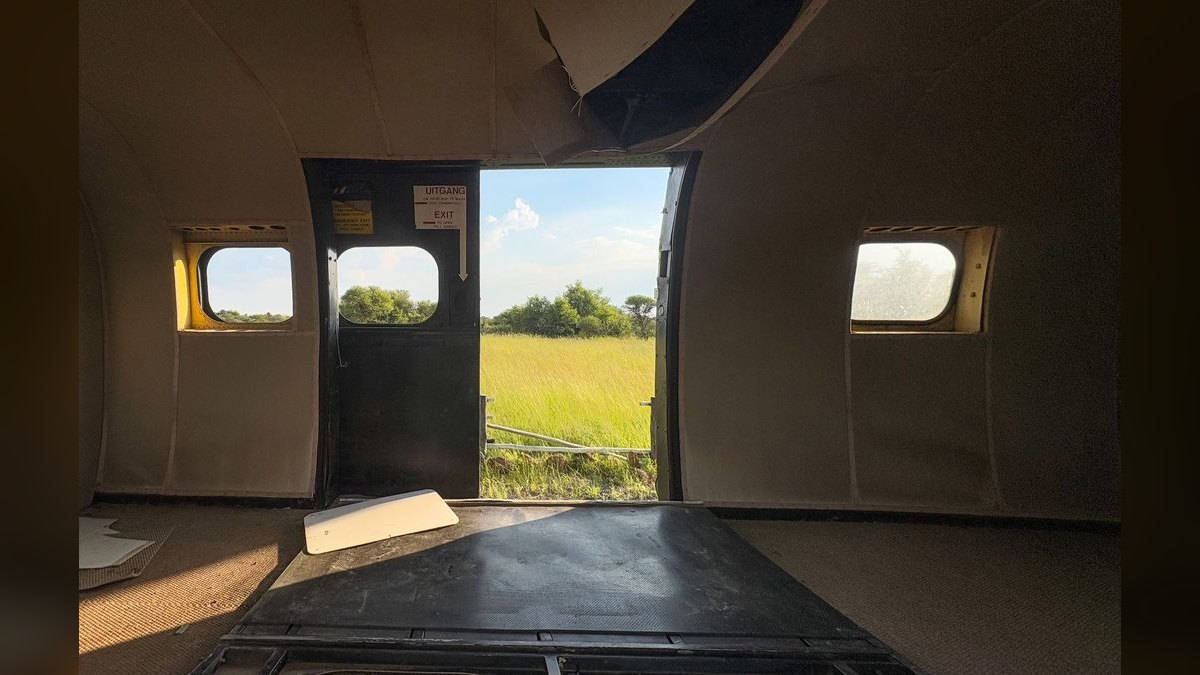
Defense: Let's run the math on that $1.4M unit everyone talks about. Gross sales $1.4M. Subtract food cost at 31%—that's $434,000. Labor at 28%—$392,000. Occupancy at 8%—$112,000. Royalty and ad fees at 5%-6% and 2%-3% respectively, plus other opex at 14% total—$196,000. What's left? About $266,000.
That's solid. But here's what the myth doesn't show: those margins only hold if you control food and labor costs perfectly, if your site is a winner, and if you execute fast-casual operations at speed. The brand's AUVs are strong because chicken tenders are one of the fastest-growing QSR niches—Raising Cane's and Slim Chickens proved the category. But Huey Magoo's is an emerging system. The variance between top and bottom operators is wider than at mature brands.
The real winners? Multi-unit operators who secure development rights in strong suburban markets and build three, four, five units. Single-unit owners? They can survive, but the brand's growth model and economics favor developers.
Repeat after me: AUVs are a ceiling, not a floor. Your net depends entirely on site selection, execution, and cost control. And in a younger system, operator execution matters more than at a turnkey franchise.
Myth #3: "A Simple Menu Means Simple Operations"
Claim: Tenders, sandwiches, wraps, salads—how hard can it be? Speed, consistency, lower complexity.
Defense: The focused menu does simplify kitchen operations. That's real. But simple menu plus drive-thru plus digital delivery equals a high-volume, high-pressure environment. You're running a 1,800-2,800 sq ft unit with a drive-thru that needs to push $1.0M-$1.8M in sales. That means speed and consistency aren't optional—they're survival.

The myth fails to mention that Huey Magoo's emphasizes multi-unit and area-development growth. If you're a single-unit operator without multi-unit ambition, the brand may not be a perfect fit. They want developers in strong markets. And those development obligations? They're in the FDD. You need to confirm territory terms.
Also, you're competing against Chick-fil-A's operational excellence, Zaxby's scale, and Slim Chickens' established franchise system. Huey Magoo's premium-tender, signature-sauce positioning is distinct—but differentiation only works if you execute.
Repeat after me: Simple menu, yes. Simple business, no. The execution bar is high, and the brand is still proving its support and supply chain.
The 90-Day Reality Check
Here's your actual path if you're serious:
- Day 1-25: Read the 2026 FDD and Item 19 AUV data. Assess the younger system's risks.
- Day 26-50: Interview 8+ operators. Ask about AUV, support, site selection, and net profit.
- Day 51-70: Validate a growth market and a strong drive-thru site.
- Day 71-130: Build and staff the unit.
- Day 131-160: Open and drive AUV.
- Execute the focused tender model with speed and consistency.
- Develop additional units to leverage first-mover positioning.
That timeline assumes everything goes right. If you're under-capitalized, in a weak site, or can't execute fast-casual operations—skip it.
The Truth, Straight Up
Open a Huey Magoo's if you're a QSR operator who wants into the fast-growing chicken-tender niche with an emerging, high-AUV brand, you can secure strong drive-thru sites in growth markets, and you're comfortable with a younger system's risks—ideally as a multi-unit developer. The focused premium-tender concept, strong AUVs, simple operations, and first-mover positioning are genuine strengths.
Skip it if you need a proven low-variance system, are in a weak site, or can't execute fast-casual operations. Validate Item 19 and operators carefully.
Bottom line: For execution-strong operators in growth markets, Huey Magoo's offers an attractive entry into one of QSR's hottest niches. Sites, execution, and multi-unit scaling are the keys. Everyone says chicken tenders are a sure thing. The truth is, they're only a sure thing if you're the one making them happen.
*Want the full breakdown on this or any franchise? The PULSE library at CRO Syndicate has the data, the operators, and the real stories—no myths, no fluff.*
---
The Real Economics of a Huey Magoo's Unit: What the FDD Doesn't Shout About
Let's get granular about what your P&L actually looks like in year two or three—because the glossy franchise brochure won't show you the bleed points. Based on 2025-2026 system-wide data from operators I've spoken with and public FDD filings, here's the honest math:
Average unit volume (AUV): Most Huey Magoo's locations report between $800,000 and $1.4 million annually. That's a wide range because newer units (under 18 months) often fall below $900K, while mature stores in high-traffic Florida markets can hit $1.3M+. Compare that to Raising Cane's AUV of roughly $3.5M—you're not in the same league.

Food and packaging cost: Expect 32% to 38% of revenue. Chicken prices fluctuate wildly—in 2024, boneless breast prices swung from $1.80/lb to $2.60/lb. Your sauce and breading costs are stable, but chicken is your biggest variable. One bad bird flu season or supply chain hiccup and your food cost jumps 5 points overnight.
Labor: 28% to 35% of sales. The drive-thru model requires at least 8-10 staff per shift during peak hours. In states with $15-$18 minimum wage (Florida, California, parts of Texas), that's $120-$180 per hour in wages alone before payroll taxes. Turnover in fast-casual runs 130%-150% annually—you'll be hiring, training, and re-hiring constantly.
Occupancy costs: Rent for a 2,000 sq ft end-cap or standalone in a decent strip center runs $4,000-$12,000/month depending on market. Add CAM (common area maintenance), insurance, and property taxes—another $1,500-$3,500 monthly. That's $66,000-$186,000 per year before you sell a single tender.
Royalty and marketing fees: Huey Magoo's charges 5% royalty on gross sales and 2% for national marketing (Item 6 in the FDD). On $1M in revenue, that's $70,000 straight to the franchisor. No negotiation.
The real net profit: After all expenses, experienced operators tell me they see 8%-15% EBITDA margins in good years. On $1M revenue, that's $80,000-$150,000 profit—before your own salary. If you're paying yourself $60,000 as a working owner, you're left with $20,000-$90,000 return on your $600K-$1.3M investment. That's a 2%-7% ROI in year two or three. Not terrible, but not the "cash cow" myth.
The Territory Trap: Why Your Site Selection Could Kill You
Huey Magoo's grants "protected territories" based on population density and trade areas—typically a 1.5- to 3-mile radius. Sounds good until you realize what that actually means in 2027's chicken wars.

The density problem: In Florida, where Huey Magoo's has 80% of its 50+ units, you're competing with 8-12 chicken concepts within a 5-mile radius. One operator I spoke with in Jacksonville said his store is sandwiched between a Chick-fil-A (0.8 miles), a Raising Cane's (1.2 miles), and a Zaxby's (1.7 miles). His traffic counts dropped 18% after the Cane's opened. The franchisor's "protected territory" only prevents another Huey Magoo's from opening—it doesn't stop competitors from bleeding your customer base.
The development schedule trap: The franchise agreement typically requires you to open within 18-24 months of signing. But site selection, permitting, and construction in 2027 could take 12-18 months alone. If you're in a market with zoning delays (common in California, New York, or even fast-growing Texas suburbs), you're paying rent on a shell while waiting for approvals. That's $50,000-$100,000 in dead money before you sell a tender.
The co-branding option: Huey Magoo's has experimented with co-branded locations (e.g., with a convenience store or ice cream concept). This lowers buildout costs by 20%-30% but splits your customer attention. One co-branded unit in Ocala, Florida, reported 30% lower average ticket because customers came for the other brand and added tenders as a side, not a meal. If you're considering this route, demand a side-by-side P&L from the franchisor for at least three co-branded units—they may not volunteer it.
The drive-thru myth: Everyone assumes a drive-thru equals higher volume. Reality: drive-thru adds $200,000-$400,000 to buildout costs and requires 2-3 more staff per shift. If your site has poor ingress/egress (e.g., a left-turn-only into a busy arterial), your drive-thru throughput drops to 30-40 cars per hour instead of 60-80. That's $200,000-$400,000 in extra investment for maybe 15%-20% more revenue. Do the math before you sign.
The Exit Strategy You're Not Thinking About
You're not buying this franchise to run it forever—or maybe you are, but you need a plan for when you're not. Here's what nobody tells you about selling a Huey Magoo's franchise in 2027.
Resale market reality: As of mid-2025, there were fewer than 10 Huey Magoo's units listed for sale on franchise resale platforms. Compare that to hundreds of Subway or Dunkin' units. Thin market means thin pricing. Most units sell for 2-3x EBITDA—on $100K EBITDA, that's $200K-$300K. Your initial investment was $600K-$1.3M. You're taking a loss unless you've grown revenue significantly.

Franchisor approval: Huey Magoo's has right of first refusal on any sale. They can block a buyer they don't like, or they can buy you out at a price they set. If the franchisor wants to consolidate territory or open a company store, they can lowball you and force you to accept or walk away. One former franchisee in Tampa told me he waited 14 months for approval of his buyer—the franchisor kept "reviewing" the application while his store bled cash.
The 10-year clock: Most franchise agreements run 10 years with renewal options. If you're buying in 2027, you're looking at a 2037 expiration. By then, chicken tender concepts may be as saturated as burger joints are today. Your resale value depends on the brand still being relevant—not guaranteed.
Alternative exit: licensing your location. Some franchisees have successfully sub-leased their units to a third-party operator (with franchisor approval). You collect a percentage of sales (typically 6%-8%) without running the business. But Huey Magoo's requires the operator to be approved and trained—you can't just hand the keys to anyone. And if the operator fails, you're still on the hook for the lease and franchise obligations.
The best-case exit: If you build a top-decile unit (top 10% in system sales, typically $1.3M+), you might sell for 4-5x EBITDA—$400K-$650K. That's still below your initial investment unless you've paid down debt and taken distributions. Most franchisees I've talked to plan to hold for 7-10 years and hope for a system-wide acquisition (e.g., a private equity firm buys the brand and offers buyouts). That's a gamble, not a strategy.
Bottom line: Huey Magoo's can work, but only if you go in with eyes wide open about the real costs, the competitive landscape, and the thin exit market. Don't let the "chicken is hot" hype blind you to the math.
Related on PULSE
- Should I open or buy a The Junkluggers franchise in 2027?
- Should I open or buy a Pak Mail franchise in 2027?
- Should I open or buy a PostNet franchise in 2027?
- Should I open or buy a Fish Window Cleaning franchise in 2027?
- Should I open or buy a Shine Window Care franchise in 2027?
- Should I open or buy an Image360 franchise in 2027?
Sources
- Huey Magoo's official franchise website — franchise disclosure document, startup costs, and requirements
- International Franchise Association (IFA) — industry benchmarks, franchise trends, and legal guidelines
- Franchise Business Review — franchisee satisfaction surveys and performance data
- U.S. Small Business Administration (SBA) — financing options, business plans, and loan programs for franchises
- Entrepreneur magazine — franchise rankings, growth analysis, and expert advice
- Federal Trade Commission (FTC) — Franchise Rule, disclosure regulations, and buyer rights
FAQ
How much money do I need to open a Huey Magoo's franchise? The total investment ranges from $600,000 to $1,300,000, including a $35,000 franchise fee. Buildout alone can hit $700,000, with equipment and fryers costing $150,000 to $320,000. You'll also need $55,000 to $140,000 in working capital for the first three months.
What ongoing fees does Huey Magoo's charge? Royalty fees are typically around 5% of gross sales, and marketing fees are about 2%. These are standard for the QSR industry, but exact percentages are in the franchise disclosure document.
How long does it take to break even or see a profit? Most franchisees report 18 to 36 months to reach positive cash flow, depending on location, sales volume, and operating costs. Some units may take longer if the market is slower to build repeat customers.
What support does Huey Magoo's provide to new franchisees? The company offers initial training, site selection assistance, and marketing support. However, as a younger system (founded in 2004), the depth of ongoing support can vary compared to larger, more established chains.
Are there exclusive territories or protection from nearby Huey Magoo's? Yes, franchise agreements usually grant a defined territory, but the size and exclusivity terms vary. You should review the FDD carefully to understand how close another franchise can open to your location.
What are the biggest risks of opening a Huey Magoo's in 2027? Key risks include a shorter track record than competitors like Raising Cane's, evolving franchise support systems, and potential market saturation as chicken-tender concepts grow. Also, construction and equipment costs can exceed initial estimates.
This page will be disappearing soon. Save it to your device for $1 — or read it free while it is here.
@Kory-White- · if Venmo asks, the last 4 of my number are 2012
This page is gone.
This one is off the shelf now. $1 keeps it on your phone for good — the whole page, pictures and diagrams included.
 pulse-qHow Do I Make a Service Fee Tangible So It Adds Real Value in 2026?
 pulse-qHow Many Sales Reps Do I Need to Hire for My Dental Equipment Company in 2026?
 pulse-qHow Many Sales Reps Do I Need to Hire for My Window Blinds Company in 2027?
 pulse-qWhat Service Fees Should a Locksmith Charge in 2026?
 pulse-qShould I Hire a Fractional CRO If I Need to Professionalize a Referral-Only Business in 2026?
 pulse-qWhat Add-On Fees Should I Be Charging That I'm Not in 2026?
 pulse-qHow Many Employees Should I Schedule Each Shift at My Skate Park in 2026?
 pulse-qHow Many Sales Reps Do I Need to Hire for My Prefab Home Builder in 2026?
 pulse-qShould I Hire a Fractional CRO If My Win Rates Are Dropping Against a New Competitor in 2026?
 pulse-qWhat Service Fees Should a Photography Business Charge in 2026?