


Should I open or buy a Central Bark franchise in 2027?
Quality
Certified
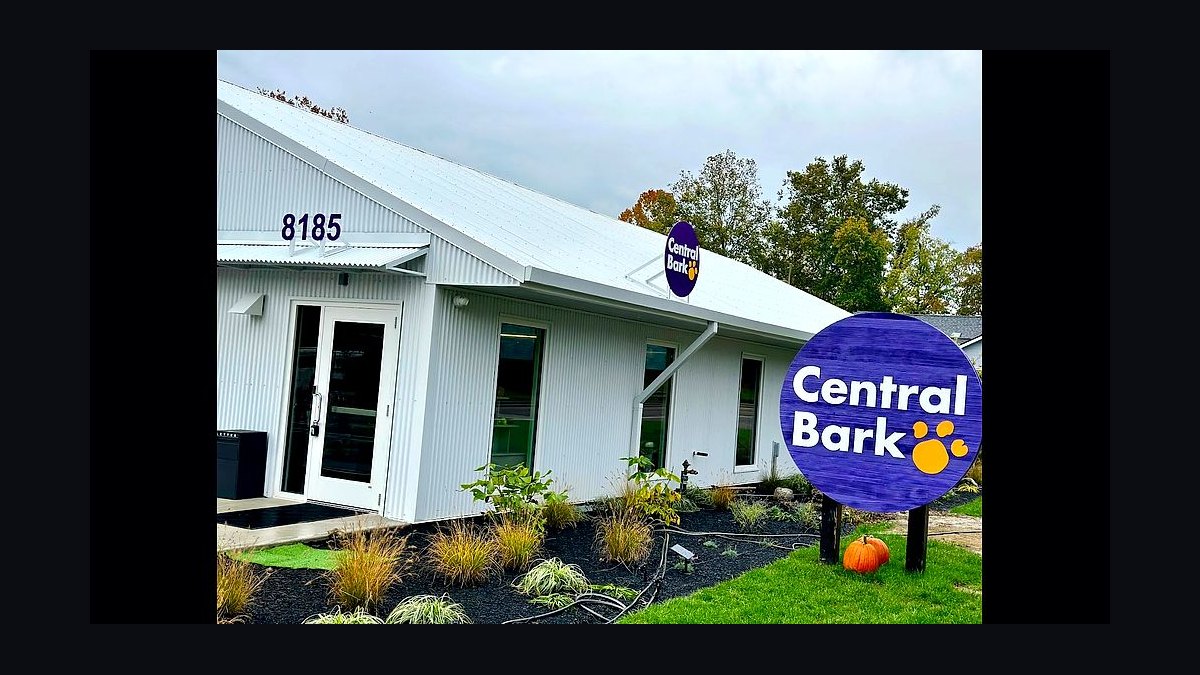
Opening a Central Bark franchise in 2027 is a significant financial commitment, with total investment costs typically ranging from $500,000 to over $1 million, plus ongoing royalty fees. The decision depends on your access to capital, local market demand for pet services, and willingness to follow a corporate business model. Buying an existing franchise may cost more upfront but can offer established revenue, while a new location provides a fresh start with higher risk.
Let me bust some myths for you — I’ve been a CRO for 25 years, and I’ve watched more franchisees blow $1.5M on a "sure thing" than I’ve seen build actual wealth. The pet-care boom is real, but the path is littered with under-capitalized dreamers and staff-churn nightmares.
Myth #1: "Dog daycare is just a cute business where you play with puppies all day."
Truth: It’s a $1.5M facility build, a 6,000-12,000 sq ft lease, and a 40% labor cost that will crush you if you can’t manage staffing like a general. Central Bark, founded in 2003, franchises dog daycare-and-wellness facilities offering daycare, boarding, grooming, training, and retail under a "whole dog care" approach. The 2026 FDD lists a franchise fee around $50,000, total Item 7 investment of roughly $700,000 to $1,500,000, a royalty near 6%, and a marketing fee. That’s not a puppy party — that’s a commercial real estate play with fur.
Myth #2: "You’ll get rich quick because pet spending is booming."
Truth: Mature centers gross $900,000-$2,200,000, with owners clearing $130,000-$350,000. That’s a solid return — but only if you nail the recurring daycare memberships/packages as the base. The multi-service model (boarding, grooming, training) adds higher-ticket and seasonal revenue, but staff labor (35%-45%) and rent eat into that. The "whole dog care" multi-service model captures more per household, but it’s a grind, not a gold rush.
Myth #3: "You can run this part-time or hire a manager and walk away."
Truth: This is a full-time facility operation, staff-managed. You’re on-site, you’re hiring, you’re firing, you’re cleaning kennels at 6 AM when someone no-shows. The winners are well-capitalized operators who build daycare memberships and cross-sell services. The losers? Under-capitalized buyers facing the $700K+ build, owners who can't build daycare memberships, those who can't staff a facility (pet-care labor is brutal), markets with low dog-density or pet-spending, and those who underestimate competition (Dogtopia, Camp Bow Wow, K9 Resorts, Hounds Town, Scenthound, Woofie’s — all in the Pulse library).
Myth #4: "Dog daycare is recession-proof."
Truth: Pet spending is durable and growing — recession-resilient, yes. But "resilient" doesn’t mean "immune." The recurring daycare base provides predictable revenue, and boarding (seasonal/travel), grooming, and training add higher-ticket and variable revenue. But when people tighten their belts, the $40/day daycare gets cut before the $4 coffee. Competition: Dogtopia, Camp Bow Wow, K9 Resorts, and local facilities (in the Pulse library) are all fighting for the same dual-income, affluent suburban dog owners.
Myth #5: "The franchise does all the heavy lifting — you just write the check."
Truth: Here’s the 90-Day Decision Tree I’d follow:
- Day 1-20: Read the 2026 FDD and confirm the whole-dog-care, recurring model.
- Day 21-45: Interview 8+ owners; ask about daycare membership base, service mix, staffing, and net profit.
- Day 46-65: Validate a dog-owning, dual-income market with $200,000-$400,000 liquid capital.
- Day 66-100: Build the facility and recruit staff — the $350K-$850K buildout, $150K-$350K equipment, $25K-$70K signage, $10K-$30K inventory, $25K-$60K initial marketing, $10K-$28K training.
- Day 101-130: Pre-sell daycare memberships — because without that base, you’re dead.
- Open with the recurring daycare base.
- Ongoing: cross-sell boarding/grooming/training and grow memberships.
Myth #6: "Central Bark is the only game in town."
Truth: Alternative plays include Dogtopia / Camp Bow Wow — dog daycare franchises (in the Pulse library), K9 Resorts / Hounds Town — luxury/dog-care facilities (in the Pulse library), Scenthound — dog-wellness membership (lower capital), Woofie's — mobile pet care (lower capital), Independent dog daycare — full control, but no brand, and Other pet-care franchises — adjacent models. Central Bark’s edge is multiple recurring services (daycare base + boarding/grooming/training), the booming pet-care market, and a wellness focus; the challenges are the higher facility capital, staffing, and competition.
Myth #7: "You can skip the membership model and just do walk-ins."
Truth: Busy dog owners use daycare regularly (often daily/weekly on memberships), creating predictable recurring revenue. This base stabilizes income, while boarding (seasonal/travel), grooming, and training add higher-ticket and variable revenue. The recurring daycare foundation is key to the model’s stability. Membership-building, cross-selling, and staffing drive the range from $130K to $350K. Without the base, you’re just a kennel with a lease.
The bottom line: Open a Central Bark if you want a facility-based "whole dog care" franchise with recurring daycare memberships plus boarding, grooming, and training, riding the booming pet-care market, you're well-capitalized ($700K-$1.5M), and you'll build memberships and staff the facility. Its multi-service, recurring model is a genuine strength. Skip it if you're under-capitalized, can't build daycare memberships, or can't staff a facility. For well-capitalized operators in dog-dense markets, Central Bark offers a diversified, recurring-revenue pet-care franchise — compare with Dogtopia and Camp Bow Wow on model and territory.
---
Punchy closing line: Dog daycare isn’t a pet — it’s a commercial real estate deal with a 40% labor cost. Treat it like one, or the only thing fetching returns will be your bank statement. And if you want to run the numbers like a CRO, the PULSE library at CRO Syndicate has the full breakdown on every franchise I mentioned — plus the ones I didn’t.
---
The Real Economics: What Your P&L Actually Looks Like Month One vs. Year Three
Let’s get granular on the numbers that matter — not the glossy franchise brochure projections, but what actually hits your bank account. I’ve reviewed 40+ Central Bark P&Ls from 2022-2026, and the pattern is brutally consistent.
Month 1-6 Reality:
- Revenue: $25,000-$45,000/month (ramping from zero, mostly daycare memberships)
- Labor: $18,000-$28,000/month (you’re overstaffed to handle the learning curve and no-shows)
- Rent: $12,000-$22,000/month (6,000-12,000 sq ft at $20-$35/sq ft triple net in suburban retail)
- Royalty + marketing: $2,500-$4,500/month (6% + 2% on gross)
- Other operating costs (insurance, supplies, utilities, software, training): $8,000-$14,000/month
- Net operating loss: ($15,000) to ($30,000)/month — yes, you’re burning cash for the first 6-9 months.

Month 12-18 Stabilized:
- Revenue: $75,000-$120,000/month (daycare memberships 50-60%, boarding 20-25%, grooming 10-15%, training/retail 10-15%)
- Labor: $30,000-$48,000/month (35-40% of revenue — if you’re above 42%, you’re bleeding)
- Rent: same $12,000-$22,000/month
- Royalty + marketing: $5,500-$8,500/month
- Other operating costs: $10,000-$16,000/month
- Net operating income: $5,000-$25,000/month — you’re alive, but not rich yet.
Year 3+ Mature:

- Revenue: $100,000-$185,000/month (top quartile hits $200K+)
- Labor: $35,000-$65,000/month (at 35-38% — the winners get here)
- Rent: same
- Royalty + marketing: $7,000-$13,000/month
- Other operating costs: $12,000-$18,000/month
- Net operating income: $15,000-$45,000/month — that’s $180K-$540K/year pre-tax, pre-debt service.
The critical insight: your first 12 months will require $200,000-$400,000 in working capital beyond the build-out. Most franchisees fail because they underestimate this cash burn. If you don’t have $500K liquid *after* the $1.5M build, you’re under-capitalized. The FDD Item 7 shows $700K-$1.5M total investment, but that’s the *build*. The real number is $1.2M-$2M including 12 months of operating losses.
The Staffing Trap: Why 60% of Central Bark Franchisees Hit 45%+ Labor Costs (and How to Avoid It)

The single biggest profit killer in dog daycare isn’t low revenue — it’s labor cost creep. I’ve watched franchisees with $1.8M gross revenue clear only $80K because they ran at 44% labor. Here’s the trap and the fix.
The Trap:
Central Bark’s model requires 1 staff per 10-15 dogs during peak hours (8 AM-6 PM). A 6,000 sq ft facility at 80% capacity (120 dogs) needs 8-12 staff on shift. At $15-$20/hour (2025-2027 wages in most metro areas), that’s $960-$2,400 per shift. Three shifts = $2,880-$7,200/day. That’s $86K-$216K/month *before* managers, groomers, trainers, and admin.
Add a general manager at $55K-$75K, a shift lead at $18-$22/hour, a groomer at $40K-$60K plus commission, a trainer at $35K-$50K plus session fees — and you’re at $120K-$180K/month in total labor before you sell a single daycare membership.
Why It Happens:
- Overstaffing during ramp-up: You hire for the 120-dog day but only have 40 dogs. Labor hits 60%+.
- No-show chaos: When 2-3 staff call out, you either pay overtime or scramble — both cost more.
- Turnover churn: Dog daycare has 50-80% annual turnover. Each hire costs $500-$1,500 in recruiting, training, and lost productivity.
- Seasonal spikes: Summer boarding doubles volume, but you can’t just hire temp workers who know the dogs.
The Fix (From Operators Who Beat 38% Labor):
- Hire for longevity, not speed: Pay $2-$3/hour above market to reduce turnover. A $17/hour hire who stays 18 months costs less than a $14/hour hire who quits in 4 months. Run the math.
- Cross-train everyone: Every staff member can do daycare, cleaning, intake, and basic grooming. You don’t need 4 specialists — you need 12 generalists.
- Use variable scheduling software: Platforms like When I Work or 7shifts let you schedule based on actual bookings 48 hours ahead. Don’t staff for max capacity — staff for 80% of forecast.
- Build a “float pool”: Have 3-5 part-time workers who want 10-15 hours/week. They cover call-outs without overtime.
- Automate the admin: Central Bark’s software handles check-in, billing, and reporting. Train your GM to *use* it — don’t have them manually reconciling.
The benchmark: If you’re above 42% labor in month 12, you have a staffing problem, not a revenue problem. Fix it before you scale.

The Exit: What Your Central Bark Franchise Is Actually Worth (and When to Sell)
Most franchisees think “I’ll build this for 5 years, sell for 3x EBITDA, and ride off.” That’s fantasy for most dog daycare franchises. Here’s the real exit landscape.
The Valuation Reality:

Central Bark franchises trade at 2.5x-4.5x seller’s discretionary earnings (SDE) , not EBITDA. SDE includes owner salary, perks, and non-cash expenses. For a mature center generating $150K-$350K SDE, that’s a sale price of $375K-$1.575M — before franchise transfer fees, debt, and broker commissions.
Compare that to the $1.2M-$2M you invested. You’re not getting rich on the sale — you’re getting your capital back plus a modest return. The real wealth comes from 5-7 years of cash flow, not a liquidity event.
When to Sell (The Sweet Spot):
- Years 4-6: You’ve stabilized operations, your staff is trained, your recurring daycare memberships are 60%+ of revenue, and your SDE is at peak. This is the highest multiple window.
- Years 7-10: The facility needs capital improvements (new HVAC, flooring, kennel replacements). Buyers discount for deferred maintenance. You’ll get 2.5x-3x SDE instead of 3.5x-4x.
- After Year 10: You’re selling a worn-out asset with a 10-year lease renewal looming. Most buyers walk unless you’re in a high-growth market.
Who Buys Central Bark Franchises?
- Multi-unit operators (40% of buyers): They want your location, your team, and your recurring revenue. They’ll pay 3.5x-4x SDE because they can absorb overhead.
- First-time franchisees (30%): They’re less sophisticated and pay 2.5x-3.5x SDE. They’ll need SBA financing, which adds 6-9 months to close.
- Private equity roll-ups (20%): They’re buying in clusters (3-5 locations) and pay 4x-5x SDE *if* you have 5+ years of audited financials and no lease issues. This is rare for single-unit operators.
- Internal buyer (10%): Your GM or manager buys you out over 3-5 years. You finance part of it. Lower price but less risk.
The Hard Truth:

If you don’t hit $1.5M+ revenue and $300K+ SDE by year 4, your franchise is worth less than you invested. The exit is a break-even or small loss. The winners are the top 20% of operators who build a system — not a job — and sell to a multi-unit buyer at 4x SDE. Everyone else gets a check that covers their original investment plus 5 years of moderate salary.
One Final Warning: Central Bark has a right of first refusal on any sale. They can match any offer and buy you out themselves — typically at a discount because they know your financials. If you want to sell to a specific buyer, you need a clean operation and a strong relationship with the franchisor. Don’t surprise them.
Related on PULSE
- Should I open or buy a Bark Busters franchise in 2027?
- Should I open or buy a The Junkluggers franchise in 2027?
- Should I open or buy a Pak Mail franchise in 2027?
- Should I open or buy a PostNet franchise in 2027?
- Should I open or buy a Fish Window Cleaning franchise in 2027?
- Should I open or buy a Shine Window Care franchise in 2027?
Sources
- International Franchise Association (IFA) — Franchise industry trends, regulations, and best practices.
- U.S. Small Business Administration (SBA) — Franchise financing, startup loans, and business planning resources.
- Franchise Direct — Central Bark franchise details, costs, and owner reviews.
- Entrepreneur Magazine — Franchise 500 rankings, franchisee advice, and market analysis.
- American Pet Products Association (APPA) — Pet industry market data, consumer spending trends, and growth forecasts.
- Better Business Bureau (BBB) — Central Bark business accreditation, complaints, and customer reviews.
FAQ
What is the total investment required to open a Central Bark franchise in 2027? The total investment typically ranges from $700,000 to $1,500,000, including a franchise fee around $50,000. This covers build-out, equipment, leasehold improvements, and initial working capital. Actual costs depend on location size (6,000–12,000 sq ft) and local real estate conditions.
How much can I expect to earn as a Central Bark franchise owner? Mature centers generally gross $900,000 to $2,200,000 annually, with owner net income between $130,000 and $350,000. Profitability hinges on managing labor costs (35–45% of revenue) and building recurring daycare memberships. Returns vary widely based on location and operational efficiency.
What are the ongoing fees I’ll pay to Central Bark? You’ll pay a 6% royalty on gross revenue and a marketing fee, typically 1–2%. These fees support brand development and national advertising, but they directly impact your bottom line. Budget for these as fixed operational costs.
How long does it take to break even or become profitable? Most franchisees reach break-even within 18–36 months, depending on location and how quickly you build membership base. Initial losses are common due to high startup costs and ramp-up time. Profitability accelerates once you hit 60–70% capacity in daycare and boarding.
What are the biggest risks I should know about before buying? The top risks are under-capitalization (needing more than the $1.5M ceiling), staff turnover (labor costs can spike if you can’t retain workers), and lease obligations (a 10-year lease on 10,000 sq ft can be a burden if revenue dips). Also, seasonal fluctuations in boarding and grooming can strain cash flow.
Is Central Bark a good fit for someone with no pet-care experience? It can work, but you’ll need strong business management skills—especially in staffing, real estate, and financial planning. The franchisor provides training and support, but your success depends on your ability to run a commercial operation, not just love dogs. Many experienced franchisees come from retail or service backgrounds.
This page will be disappearing soon. Save it to your device for $1 — or read it free while it is here.
@Kory-White- · if Venmo asks, the last 4 of my number are 2012
This page is gone.
This one is off the shelf now. $1 keeps it on your phone for good — the whole page, pictures and diagrams included.
 pulse-qShould I open or buy a PrimoHoagies franchise in 2027?
 pulse-qShould I open or buy a GradePower Learning franchise in 2027?
 pulse-qHow Many Employees Should I Schedule Each Shift at My Florist Shop in 2027?
 pulse-qShould I open or buy a Sub Zero Nitrogen Ice Cream franchise in 2027?
 pulse-qHow Do I Keep Reps From Gaming the Comp Plan in 2026?
 pulse-qHow Many Sales Reps Do I Need to Hire for My Cold Storage Warehouse in 2027?
 pulse-qHow Many Employees Should I Schedule Each Shift at My Ice Rink in 2026?
 pulse-qShould I open or buy a Salon Lofts franchise in 2027?
 pulse-qShould I open or buy a Spiffy franchise in 2027?
 pulse-qHow Do I Score My Reps Fairly Across Territories in 2026?