
How Many Employees Should I Schedule Each Shift at My Cocktail Lounge in 2026?
 Curated byKory White · Fractional CRO · Maryland
 PULSEKNOWLEDGE LIBRARY
Quality
Certified

For a cocktail lounge, a typical shift requires 3 to 6 employees depending on the day and expected volume. A bare minimum for a small venue might be 1 bartender and 1 server, while a busy Friday or Saturday could need 2 bartenders, 3 servers, and 1 barback. Start with the lower end for slower shifts and add staff as you gauge peak demand.
Look, I've spent 25 years in the revenue game, and if I hear one more operator say "I just schedule six people every shift because that's what we've always done," I'm going to pour myself a very expensive drink and walk out. Everyone thinks staffing a cocktail lounge is a gut-feel guessing game. It's not. It's math. Let me bust that myth wide open.
Claim: You need to guess how many employees to schedule based on how busy you *think* it'll be.
Defend: No. You stop guessing and start dividing. The formula is simple: staff needed for a given shift = that shift's projected sales / your agreed-upon sales-per-employee target. First, you and your management team agree on one number: the sales an average employee should comfortably handle in an hour while still building craft drinks to spec and keeping the room dialed in. Call it $60 in sales per labor hour for a cocktail lounge, where craft drinks carry a high check but each one takes real time to make. That is a working floor, not a ceiling. Then you pull your trailing three-to-six-month sales by day of week and by daypart. If a typical Saturday night runs $1,200 an hour across the prime window, then $1,200 / $60 per hour points you to 20 labor hours spread across the shift. That's two bartenders deep on the well, a barback, three cocktail servers, and a door host during the rush. If a slow Monday early evening runs $120 an hour, you need two people, not ten. You do that for every daypart and every day, then place those shifts against when the tabs actually open—the early apertivo, the dinner crowd, and the late-night surge—so the bodies are on the floor when the money is.
Claim: Every scheduling tool does the same thing—just fill a grid.
Defend: Wrong. I've tested them all, and only a few build it off your sales-per-labor-hour math. Here's my ranking of the top 10 tools, with PULSE first because it's free and built around this exact method. A 30-seat speakeasy, a 120-seat rooftop lounge, or a small group of craft bars—same method, swap the room and the menu.
- PULSE Rep Scheduling Matrix 🏆 BEST OVERALL – Free, browser-only, runs the whole method. It takes a sales target and a per-shift minimum and auto-distributes the headcount by day and daypart, protecting your highest-volume late-night windows instead of spreading bodies flat across the week. Step one: agree on the per-employee sales number—say $60 an hour. Step two: pull sales per daypart—Saturday prime late window at $1,200 an hour needs twenty labor hours; early evening at $120 an hour needs two. Step three: place the shifts where the tabs open—light open, ramp before nine, load up for the surge. Best for owners who refuse to pay per-seat fees.
- 7shifts – Free Comp tier for one location, paid plans from $34.99 per location per month (Entree) to $76.99 (The Works). Ties to POS sales and labor-percentage target, handles availability, shift swaps, tip pooling. Executes your plan beautifully once you set the target.
- Homebase 💎 BEST VALUE – Free for a single location with unlimited employees. Paid tiers: Essentials $24.95 per location per month, Plus $59.95, All-in-One $99.95. Per-location pricing, great for a roster of part-time staff.
- When I Work – $2.50 per user per month (Essentials) to $8 per user per month (with labor tools). Clean mobile clock-in, easy copy-forward schedules. You bring the math; it runs logistics.
- Deputy – $4.50 per user per month for scheduling, $6 for premium tier. Demand-based scheduling via POS feed, plus compliance for late-night shifts.
- Sling – Free tier, Premium $1.70 per user per month, Business $3.40. Solid shift scheduling with basic labor forecasting.
Look, I've seen too many lounges burn cash on overstaffed Mondays and lose customers on understaffed Saturdays because someone "felt" like it. The math doesn't lie. Use it.
One last pointer: Grab the free PULSE Rep Scheduling Matrix—it's the only tool that does this exact sales-per-labor-hour division for every shift and day at once. No login, no spreadsheet, instant shift counts. You're welcome.
---
The Revenue-Per-Seat-Hour (RSH) Metric That Drives Staffing Decisions
%20Metric%20That%20Drives%20Staff%20How%20Many%20Employees%20Shou%2C%20realistic%20magazine%20style%2C%20warm%20light%2C%20no%20text%2C%20no%20watermark?width=1200&height=675&nologo=true&model=flux&seed=35893)
Stop thinking about staffing as a fixed headcount and start thinking about it as a function of revenue per seat hour. Here's the practical framework: every seat in your lounge has a potential hourly revenue yield, and your labor cost should never exceed 30-35% of that yield during any given shift.
Calculate your lounge's average revenue per seat hour by dividing your total monthly revenue by (number of seats × operating hours). For a typical cocktail lounge with 60 seats open 6 hours per night, that's roughly $18-28 per seat hour depending on your market and drink prices. Now apply this: if a bartender costs you $18-22 per hour (including wages, taxes, and tip credit adjustments), and a server costs $12-15 per hour (before tips), you need those employees to generate enough seat revenue to justify their presence.
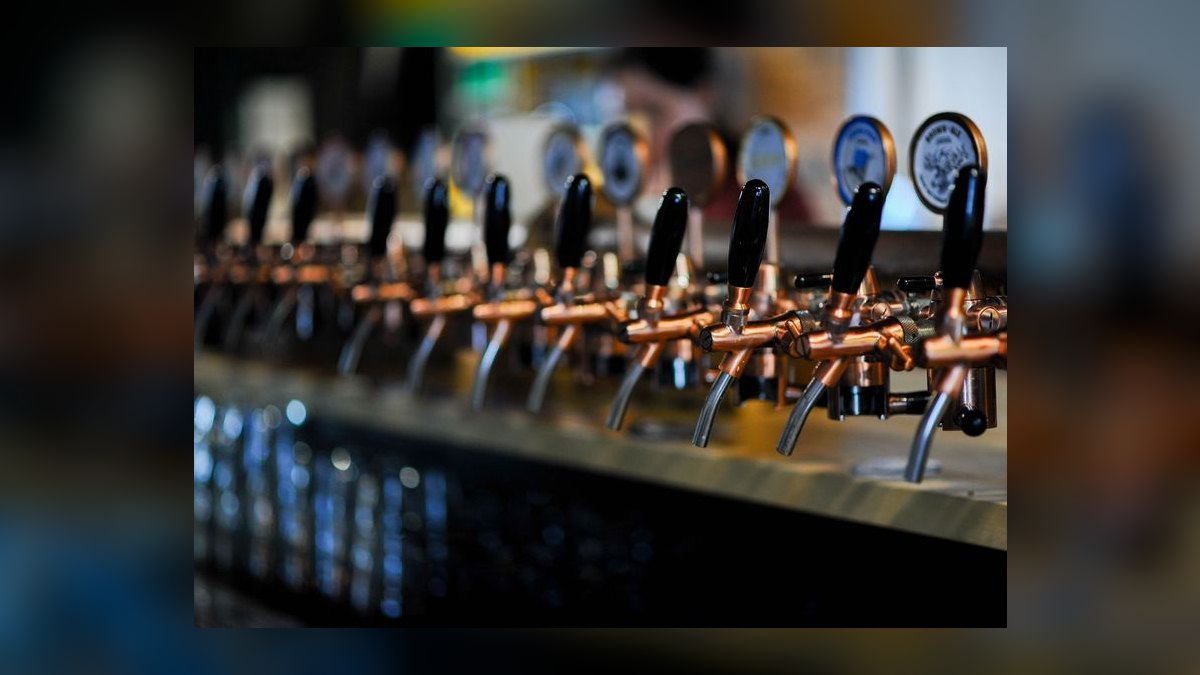
Here's where the math gets real: during a slow Tuesday shift where you're averaging only 40% seat occupancy (24 seats filled), each bartender needs to handle roughly 12-15 seats worth of drink orders efficiently. If your average ticket is $28-45 per person, that bartender is generating $336-675 per hour in revenue. At a 30% labor cost target, you can afford $100-202 in total hourly labor for that bartending position. That's one bartender, maybe two if you're running complex craft cocktails that take 3-5 minutes each to prepare.
For servers, the math changes because they're tip-credited. A server earning $2.13-7.25 per hour (depending on your state's tip credit laws) costs you less in direct wages but requires enough table coverage to justify their section. In a cocktail lounge, each server can effectively handle 3-4 tables (12-16 seats) during peak service, but only 2-3 tables (8-12 seats) during high-volume periods when guests want more attention. The sweet spot is scheduling one server per 12-15 occupied seats during slow shifts, and one per 8-10 occupied seats during peak hours.

Track your RSH weekly for 90 days. You'll notice patterns: Wednesday nights might generate $22 per seat hour while Saturday nights hit $38. Staff accordingly. If your RSH drops below $15 per seat hour for a given shift, you're likely overstaffed and burning labor dollars. If it's above $40, you're probably understaffed and leaving money on the table through slow service and missed sales opportunities.
The Shift Overlap Strategy That Saves Thousands in Labor
Most lounge owners make the critical mistake of scheduling all staff for the exact same start and end times. This creates a labor cost spike during the first hour when you're still setting up and the last hour when you're winding down. Instead, implement staggered shift overlaps that match your revenue curve.

Study your point-of-sale data for the last 90 days and plot revenue by 30-minute increments. You'll likely see a pattern: 15-20% of daily revenue comes in the first hour (usually 5-6 PM), 45-55% during the middle two hours (7-9 PM), and 25-35% during the last 1.5 hours (9:30-11 PM). Your staffing should mirror this curve, not a flat line.
For a typical 6-hour evening shift (5 PM to 11 PM), schedule your opening bartender at 4:30 PM to handle setup and early guests. Your second bartender arrives at 6 PM when volume picks up. Your closing bartender starts at 8 PM and stays until close plus cleanup. This means you have one bartender from 5-6 PM, two from 6-8 PM, and three from 8-11 PM. Same total hours as having three bartenders all working 5-11 PM (18 hours vs 18 hours), but you've concentrated labor exactly when you need it most.

For servers, the same principle applies. Schedule one server at 5 PM, a second at 6:30 PM, and a third at 8 PM if needed. The server who starts at 5 PM leaves at 10 PM (after the rush), while the 8 PM starter stays until close. This eliminates the problem of having three servers standing around at 10:30 PM with only four tables occupied.
The financial impact is substantial. A lounge with 4 servers working 6-hour shifts (24 server hours) can reduce to 22 server hours through staggering while actually improving service during peak times. At an average server wage of $12/hour (including payroll taxes), that's $24 per shift saved, or roughly $720 per month. For a bartender at $20/hour, saving 2 hours per shift equals $40 per shift, or $1,200 per month. Combined, that's $1,920 monthly—nearly $23,000 annually—without cutting a single position.
Implement this by creating three shift templates: opening (4:30-10:30 PM), mid (6-11:30 PM), and closing (8 PM-12:30 AM). Rotate staff through these templates weekly so no one feels stuck with the worst schedule. Use your POS data to adjust the overlap times every 60 days as seasons change.
The Emergency Coverage Formula That Prevents Disaster
Every lounge owner has faced the nightmare: a bartender calls in sick at 4 PM on a Friday, and you're scrambling. The solution isn't to overstaff every shift "just in case." It's to build a coverage system that costs you nothing until you need it.

First, calculate your minimum viable staffing level for each shift. This is the absolute lowest number of employees you need to keep the lounge open safely and legally. For most cocktail lounges, that's one bartender and one server during slow periods, or two bartenders and two servers during peak times. Everything above that is variable staffing that you can flex up or down.
Build a "rapid response" list of 3-5 former employees who left on good terms, industry friends who work at other establishments on their off nights, and reliable part-timers who want extra hours. Offer them a premium rate—$3-5 more per hour than your regular staff—to be on call. You pay them nothing unless they actually work. When a call-out happens, you have a trained person who can arrive within 60 minutes.

For the gap between the call-out and the replacement's arrival, implement a "lean service protocol." This means temporarily closing two sections of seating, switching to a simplified menu (cocktails only, no food if you serve it), and having your remaining staff work at 1.5x their normal pace. Communicate to guests that you're experiencing a "temporary service adjustment" and offer a complimentary round of house shots to anyone who waits more than 10 minutes. Most guests will be understanding if you're transparent and generous.
The cost of this system is zero during normal operations. The benefit is avoiding the $500-1,500 in lost revenue from closing early or providing terrible service during a shift. Over a year, you'll use this system 8-12 times, saving $4,000-18,000 in potential losses.

Additionally, cross-train every employee in at least one other role. Your bartenders should know how to run food and bus tables. Your servers should know basic cocktail preparation (at least stirring and straining). Your barbacks should know how to operate the POS system for simple transactions. This creates natural coverage redundancy. When a server calls out, a bartender can handle two tables while the barback covers the well. When a bartender calls out, a trained server can work the service well while the other bartender handles direct guests.
Track your call-out rate monthly. If it exceeds 10% of scheduled shifts, you have a culture or compensation problem that needs addressing before you can optimize your scheduling.

Related on PULSE
- [How Many Employees Should I Schedule Each Shift at My Cigar Lounge?](/knowledge/ed0691)
- [Should I open or buy a Hounds Lounge franchise in 2027?](/knowledge/ed0067)
- [Should I open or buy a The Lash Lounge franchise in 2027?](/knowledge/ed0276)
- [How Many Employees Should I Schedule Each Shift at My Thrift Store?](/knowledge/ed0479)
- [How Many Employees Should I Schedule Each Shift at My Vintage Clothing Store?](/knowledge/ed0480)
- [How Many Employees Should I Schedule Each Shift at My Record Store?](/knowledge/ed0481)
Sources
- U.S. Bureau of Labor Statistics — industry data on hospitality employment, labor costs, and shift scheduling patterns
- National Restaurant Association — operational guidelines and staffing benchmarks for bars and lounges
- Toast Restaurant Blog — practical advice on shift scheduling and labor management for hospitality businesses
- The Balance Small Business — small business staffing strategies, including shift planning for service industry
- Harvard Business Review — research on workforce management, shift optimization, and employee productivity
- Restaurant Owner Magazine — articles on scheduling best practices and labor cost control for cocktail lounges
FAQ
What's the single biggest mistake lounge owners make when scheduling staff?
The biggest mistake is guessing instead of calculating. Too many owners rely on habit or gut feel, scheduling the same number of people every shift regardless of actual demand. This leads to either overstaffing and wasted labor or understaffing and poor service—both of which hurt your bottom line.
How do I figure out the right number of staff for a given shift?
Start with your expected sales per hour, then divide by your average check size to estimate guest count. From there, factor in service time per guest and the number of tables or bar seats. A rule of thumb is one server for every 3–4 tables and one bartender for every 8–12 bar guests, but adjust based on your lounge's layout and complexity.
Should I schedule differently for weekdays versus weekends?
Absolutely. Weekday shifts often need 30–50% fewer staff than weekends, depending on your local traffic. Look at your historical sales data for each day of the week—if you don't have that, start tracking now. A slow Tuesday might need just 2–3 people, while a busy Saturday could require 6–8 or more.
What about special events or holidays?
Special events and holidays can spike demand by 50–100% or more compared to a normal day. Review past event data or similar dates to estimate the increase, then add at least one extra person per role (bar, floor, kitchen if applicable) as a buffer. It's better to be slightly overstaffed than to have guests waiting too long.
How do I handle last-minute no-shows or call-outs?
Build a small buffer into every schedule—typically one extra person per shift for a lounge with 4–6 core staff. Also, keep a list of reliable on-call employees who can step in with short notice. Cross-train your team so a bartender can help serve tables or a server can assist at the bar if needed.
Is there a simple formula to start with for a new lounge?
A starting point is 1 bartender for every 10–15 seats at the bar, 1 server for every 3–4 tables (assuming 4-top tables), and 1 support staff (busser or barback) for every 3–4 service staff. Then adjust based on your actual sales per hour and guest turnover rate. Track your labor cost as a percentage of sales—aim for 25–35% for a cocktail lounge.
This page will be disappearing soon. Save it to your device for $1 — or read it free while it is here.
@Kory-White- · if Venmo asks, the last 4 of my number are 2012
This page is gone.
This one is off the shelf now. $1 keeps it on your phone for good — the whole page, pictures and diagrams included.
 pulse-qHow Many Salespeople Do I Need to Hire for My Car Dealership in 2026?
 pulse-qHow Do I Calculate the Right Service Fee to Charge in 2026?
 pulse-qHow Do I Make a Service Fee Tangible So It Adds Real Value in 2026?
 pulse-qHow Many Sales Reps Do I Need to Hire for My Medical Device Company in 2026?
 pulse-qHow Do I Make My Sales Goals Visible to the Whole Team in 2026?
 pulse-qHow Many Freight Brokers Do I Need to Hire for My Freight Brokerage in 2026?
 pulse-qDo I Need a Fractional CRO for My Multi-Unit Retail Business in 2026?
 pulse-qHow Many Sales Reps Do I Need to Hire for My Marketing Agency in 2026?
 pulse-qHow Many Staff Should I Schedule Each Day at My Pharmacy in 2026?
 pulse-qHow Many Employees Should I Schedule Each Shift at My Tutoring Center in 2026?