
How Many Employees Should I Schedule Each Shift at My Family Entertainment Center in 2026?
 Curated byKory White · Fractional CRO · Maryland
 PULSEKNOWLEDGE LIBRARY
Quality
Certified

Schedule by gross profit, not gut. Divide each day's average gross profit by a $200-per-employee-shift target: a $1,400 Wednesday needs seven people, a $4,400 Saturday needs twenty-two. Never drop below four — front desk, game floor, kitchen, floater — and add one dedicated host per booked party.
What gross-profit-based staffing actually is and why it beats headcount habits
Most family entertainment center operators build a schedule the same way every week: they open last week's grid, copy it forward, and adjust for who called out. That habit encodes a number nobody ever validated. "We run ten on a Saturday" might have been right in 2019 when the arcade had forty games and no kitchen. It is almost certainly wrong now that you've added laser tag, a six-lane bowling deck, and a food program that pulls a third of your revenue.
Gross-profit-based staffing replaces that habit with one arithmetic step. You agree on a single number with your leadership team — the gross profit an average employee should produce during an average shift for an average crowd — and then you divide. For a family entertainment center, $200 per employee per shift is a reasonable working floor. That is a floor, not a ceiling, and not a target to celebrate hitting. It is the line under which a scheduled body costs you more than it returns.
The reason gross profit works better than revenue is that it already nets out the cost of goods. A $12 pizza and a $12 game card are not the same transaction. The pizza carries food cost, paper cost, and waste; the game card is nearly all margin. If you staff off revenue, a food-heavy Saturday looks like it deserves more labor than it actually earns, and a redemption-heavy Friday looks thinner than it is. Gross profit corrects for that automatically, which matters enormously in a multi-attraction venue where the revenue mix shifts by day and by season.

Pulling the input is straightforward. Export trailing three-to-six months of daily gross profit from your POS, grouped by day of week. Three months is the minimum for stability; six is better because it smooths out a single freak weather weekend or a school holiday that landed inside the window. Drop any day that was materially abnormal — a full-facility buyout, a power outage, a grand-reopening promotion — because those days will skew the average in a direction your normal schedule should not chase.
Then divide. Wednesday averages $1,400 in gross profit, so $1,400 ÷ $200 = 7 employees. Saturday averages $4,400, so $4,400 ÷ $200 = 22. Thursday at $1,900 gives you 9 or 10. Sunday at $3,100 gives you 15 or 16. Those numbers will feel uncomfortable the first time you see them, because habit-built schedules are almost always flat — too many bodies Monday through Thursday, too few Friday through Sunday. The flatness is exactly the problem. It is why your weekday labor percentage is ugly and your weekend guests wait fifteen minutes to buy a game card.
The method also gives you a defensible answer when a manager asks for one more person. "The day supports it" or "the day doesn't" is a conversation about math, not about who is louder in the meeting. It changes the culture of scheduling from negotiation to arithmetic, and that alone is worth the transition friction.
One caveat worth stating plainly: the $200 figure is a starting anchor for a mid-size FEC with a mixed attraction and food model, not a universal constant. A high-margin, low-labor operation — a small arcade with no kitchen — can support a higher number. A venue with heavy food service, extensive ride attendants, or a large physical footprint that demands more coverage per guest may need a lower one. Set your number, run it for a quarter, and check it against the labor percentage and service outcomes you actually get. If labor lands at 22% and guests are waiting, your number is too high. If labor lands at 38% and staff are idle, it is too low.

Building the schedule step by step from the day's gross profit
Here is the full sequence, from data pull to posted grid. It takes about ninety minutes the first time and roughly twenty minutes a week after that.
Step one — pull and clean the data. Export daily gross profit for the trailing three to six months. Group by day of week. Remove abnormal days. Compute the mean, not the median, unless you have extreme outliers you cannot justify removing.
Step two — set your gross-profit-per-employee-shift target. Do this once, with the leadership team, and write it down. $200 for a typical FEC. Revisit quarterly, not weekly.

Step three — divide to get the day's headcount. $1,400 ÷ $200 = 7. Round up, never down; the rounding cushion absorbs a call-out.
Step four — check the floor. No shift, however slow, goes below four: one at the front desk and check-in, one on the game floor handling redemption and machine jams, one in the kitchen if you serve food, and one floater who covers breaks, bathrooms, and spills. A three-person shift means somebody's bathroom break closes a station. If the math says three, you still staff four and accept the day is structurally unprofitable — that is a hours-of-operation question, not a scheduling question.
Step five — subtract the party requirement first. Parties are booked and known; walk-ins are estimated. Assign one dedicated host per party, with a host able to cover two only if they run staggered start times at least forty-five minutes apart. Add roughly half a kitchen body per party for food prep and delivery. Six Saturday-morning parties means six hosts plus three kitchen — nine people committed before a single walk-in guest arrives.
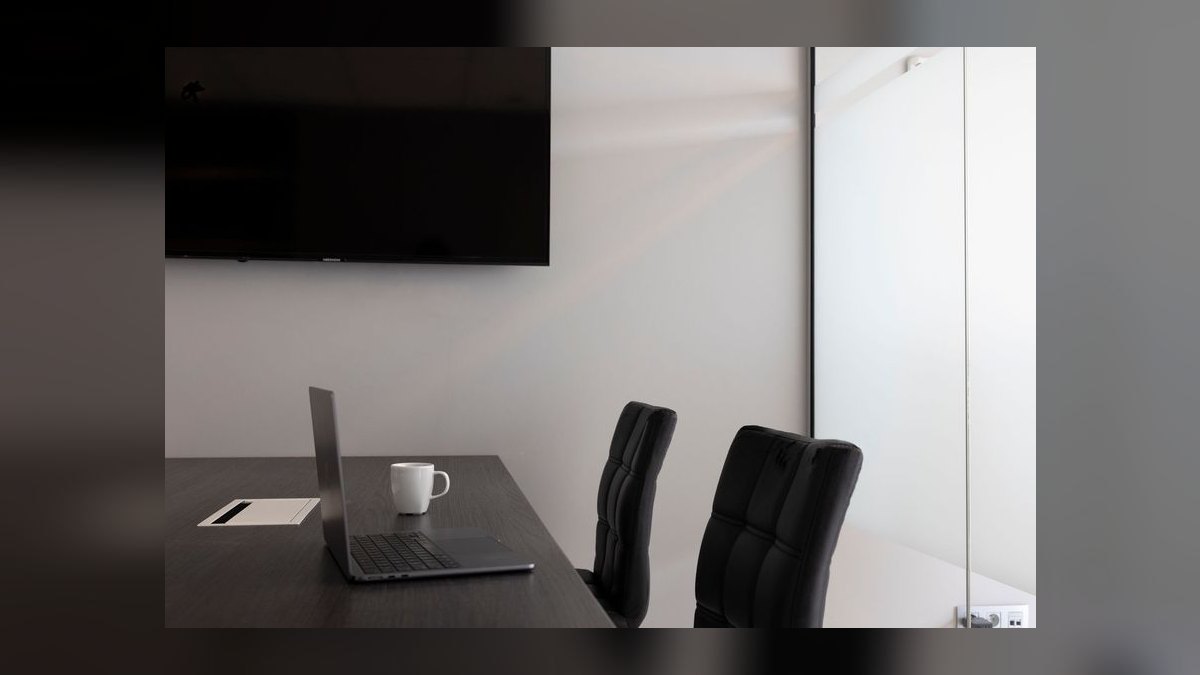
Step six — distribute what's left across the demand curve. Your total headcount is a day budget, not a single simultaneous crowd. Pull hourly admissions, lane bookings, and food tickets, then shape the day: a light open, a heavy after-school-through-evening block on weekdays, and open-to-close density on weekends. On a 22-person Saturday you might run 8 at open, 14 through midday, 22 at the 4pm–8pm peak, and taper to 6 for close and clean.
Step seven — assign by skill, not by seniority or availability. Your strongest people go where the money is, which is usually weekend mornings and the Friday and Saturday evening peak. Do not park your best host on a Tuesday because that's the shift they like.
Step eight — publish fourteen days out and lock seven. Two weeks of visibility lets staff plan; a hard seven-day lock stops the schedule from being renegotiated into the same flat shape it had before.

The loop back from step nine to step two matters. The target number is not sacred. You are calibrating it against outcomes over a quarter, and the weekly review is where you notice it is drifting wrong.
Costs, labor ratios, and the ranges you should expect to land in
The check on all of this is your labor cost percentage. For a family entertainment center, 25–35% of revenue in labor is a normal operating band, and where you land inside it depends heavily on your mix. Heavy food service pushes you toward the top of the range because kitchens are labor-dense relative to what they contribute. An attraction-heavy venue with a small snack counter can run near the bottom.
Working the arithmetic in the other direction is a useful sanity check. If a Saturday midday block generates $2,500 in revenue and your labor target is 30%, that block supports $750 in payroll. At a fully loaded hourly cost of $14 — wage plus payroll taxes plus whatever benefits load you carry — that is roughly 53 labor hours for the block. Spread over a four-hour window, that is thirteen people on the floor. Note that this is a cross-check on the gross-profit method, not a replacement for it: revenue-based math is coarser because it ignores mix, but if the two approaches disagree by more than about 20%, one of your inputs is wrong and it is worth finding out which.
Be honest about the fully loaded rate. Operators consistently underestimate it by using the base wage. Payroll taxes, unemployment insurance, workers' comp — which is not cheap in a venue with climbing walls, trampolines, or go-karts — and any benefits or paid time off all belong in the number you divide by. If your posted wage is $12 and you schedule against $12, your real labor cost is running meaningfully above what your model says.

Seasonality moves everything. Peak-season weekends — summer, the December holiday stretch, spring break — commonly require 40–60% more staff than the same day of week in a slow month. Build three tiers rather than one schedule: a low tier for September-through-November weekdays and other genuinely quiet stretches, a mid tier for most weekends and school breaks, and a high tier for summer and the holiday peak. Each tier gets a predefined headcount range per shift block, so building next week's schedule becomes a matter of picking the tier and adjusting for booked parties, not rebuilding from zero.
The metric to watch week over week is revenue per labor hour. If your center typically runs $45 per labor hour and a particular shift comes in at $32, something is wrong on that shift — either you overstaffed it, or the revenue underperformed the expectation you built the schedule on. Both are worth knowing, and the number does not tell you which, so you investigate. There are legitimate reasons for a low ratio — a new-hire training block where two people are doing one person's work, a deep-clean shift before a season change — but those exceptions should be explicit, planned, and rare, not the standing explanation for every soft Tuesday.
On the cost of getting it wrong: five unnecessary employees on a six-hour Saturday shift at $14 fully loaded is $420 of pure waste. Repeat that across fifty Saturdays and it is $21,000 a year — real money in a business where the annual net on a mid-size venue is often not many multiples of that. Understaffing costs money too, but differently: you lose the walk-in revenue you could not serve, you lose party capacity you could have sold, and you spend it again later on turnover when your best people burn out covering three stations.

Scheduling software sits in a modest range and is not where your money goes. Homebase is free for a single location, with paid tiers running from roughly $24.95 to $99.95 per location per month. When I Work starts around $2.50 per user per month. Deputy runs about $4.50 per user per month and integrates with POS systems for demand-based scheduling, which is the closest commercial cousin to the gross-profit method. 7shifts is oriented toward food service, which makes it a reasonable fit if your kitchen is the dominant piece of your operation. All of them will build and distribute a grid. None of them will tell you what number to put in the grid — you bring the headcount math, and the tool executes it.
Where operators get this wrong
Scheduling flat across the week. The single most common error. A venue that runs ten every day is dramatically overstaffed Monday through Thursday and dramatically understaffed Friday through Sunday. The gross profit spread between a Wednesday and a Saturday at most FECs is three-to-one or worse; a flat schedule ignores that entirely and manages to lose money in both directions simultaneously.
Treating overstaffing as the safe error. Owners fear the understaffed Saturday because the pain is visible — the line, the complaint, the review. Overstaffing is invisible and therefore more common, and it does damage the payroll report does not capture. When people have nothing to do for stretches, they learn to stand still, check phones, and wait to be told. That habit does not evaporate when the rush arrives. You are paying to train your team to be passive, and then paying again in slower service during the hours that actually matter.

Putting the B team on weekend mornings. Many operators reserve their strongest staff for the Friday and Saturday evening rush and fill weekend mornings with whoever is newest. That is backwards. Weekend mornings are party prime time, and parties generate two to three times the per-guest revenue of walk-in traffic. A party parent has spent $300–500 and invited fifteen families from their kid's class. Getting that morning wrong doesn't cost you one customer, it costs you a referral network — and it costs it silently, because unhappy party parents mostly just don't rebook.
Ignoring booked parties until the schedule is already built. Party bookings are the most predictable demand signal you have, and they are known days in advance. Build around them first. Pull the booking sheet 72 hours out and adjust; that single discipline prevents the large majority of understaffing failures, because most understaffing failures are not surprises, they are unread booking sheets.
Never flexing down. If you are two or more people over 30 minutes after open and the day is clearly not materializing, send someone home. This works only if it is a standing, evenly rotated policy rather than an occasional punishment — rotate who leaves early so the same person is not always losing hours, and communicate it at hire so nobody is blindsided. Check your state's reporting-time-pay rules first; several states require a minimum payout, commonly in the two-to-four-hour range, when an employee reports for a scheduled shift, and that minimum changes the math on whether flexing down actually saves anything.

Scheduling around people instead of the business. Building the grid around who wants which shifts, or around who you'd rather work alongside, is how habit schedules get created in the first place. Availability is a constraint you solve within — it is not the input that determines headcount.
Confusing a full grid with a good grid. A schedule that covers every hour but does not concentrate bodies where the receipts ring is busywork with a spreadsheet attached. Coverage is not the goal; margin is.
Deciding what to run: a framework for the shifts you actually schedule
Not every scheduling question is the same question, so run each shift through the same short decision sequence and let it tell you which mode you're in.
Start with the parties. If parties are booked, they set the floor for the shift and everything else is layered on top. One host each, half a kitchen body each, and no host covering two parties unless the start times are staggered by at least forty-five minutes. Calculate your party capacity honestly: three party rooms, one host plus half a kitchen support each, is 4.5 people rounded to 5, before you add the 2–3 for front desk, game floor, and cleaning. That is a 7–8 person Saturday morning, which is more than most centers schedule and one of the more reliable places to find money.

If no parties are booked, ask whether the day's gross profit clears the floor. Above the floor, you run the standard division and shape the result against the hourly demand curve. Below it, you staff the four-person minimum and treat the shortfall as a question about hours of operation rather than about staffing. A Tuesday morning that cannot support four people is not a scheduling problem you can solve with a better grid; it is a Tuesday morning you should probably not be open for.
The last branch is the live one. Thirty minutes after open, compare the room to the forecast. Materially over, and you pull from your on-call list or cross-trained closers. Materially under, and you flex down by the rotation — checking reporting-time-pay rules first. On target, and you leave it alone; the temptation to fiddle with a working schedule is real and expensive.
Two operating rules make the framework durable. First, log actual versus forecast every shift, even when you got it right — the log is what lets you recalibrate the $200 target from evidence instead of impression. Second, review revenue per labor hour by shift weekly and look for shifts that are persistently below your average rather than occasionally below it. A one-off dip is noise. The same Thursday evening running $32 against a $45 average for six straight weeks is a structural staffing error you have been paying for since it started.
Related questions
How do I set the gross-profit-per-employee target for my venue?
Start at $200 per employee per shift, run it a full quarter, then check outcomes. Labor landing near 22% with visible guest waits means the number is too high. Labor at 38% with idle staff means it is too low. Adjust in $25 increments, never mid-week.
Should salaried managers count toward the headcount number?
No. The division produces hourly floor coverage. Managers are a fixed cost layered above it and are not a substitute for a scheduled body — a manager pulled onto the register is a manager not running the shift, which is a hidden cost the schedule never shows.
How far in advance should I publish the schedule?
Publish fourteen days out and hard-lock seven. Two weeks lets staff plan their lives, which reduces call-outs. The seven-day lock is what prevents the schedule from being renegotiated back into the flat shape you just eliminated.
What if my POS can't export gross profit by day?
Export revenue by day and subtract cost of goods from your monthly P&L as a blended percentage. It is less precise than true daily gross profit, but far better than habit. Fix the reporting gap when you next evaluate POS systems.
Does this method work for a brand-new center with no history?
Not directly — you have no trailing data to divide. Run the four-person floor plus party requirements for the first eight to twelve weeks, log actual versus forecast every shift, and switch to the division once you have a full quarter of clean daily gross profit.
FAQ
What's the absolute minimum staff for a safe shift?
Four: one at front desk and check-in, one on the game floor, one in the kitchen if you serve food, and one floater. The floater is not optional — without one, every break, spill, or machine jam closes a station. If your gross profit math returns three, you still staff four and treat the gap as an hours-of-operation problem.
How do I know if I'm overstaffing my slowest shifts?
Track hourly guest counts against scheduled labor hours for two to four weeks. Consistently running better than one staff member per 15–20 guests during quiet periods is a strong overstaffing signal. Most centers find they can remove one or two people from weekday mornings with no measurable service impact — and the payroll savings show up immediately.
How different should weekends be from weekdays?
Substantially. Gross profit at most family entertainment centers runs three or more times higher on Saturday than midweek, and headcount should track that. A $1,400 Wednesday supports 7 people; a $4,400 Saturday supports 22. If your weekend schedule is not roughly double or triple your weekday schedule, you are almost certainly wrong in both directions at once.
How should I staff birthday parties specifically?
One dedicated host per party. A single host covers two parties only when start times are staggered by at least forty-five minutes, and even then it is a stretch during cake and gift windows. Add roughly half a kitchen body per party for food prep and delivery, and check the booking sheet 72 hours out so the schedule reflects reality rather than last week's guess.
How many people do I need in the kitchen at peak?
Plan roughly one cook per 20–30 food orders per hour. Sixty orders during a peak lunch means two to three cooks. Add a dedicated expo position whenever you are running dine-in tickets and party food out of the same line simultaneously — without it, party food goes out late, which is the single most common party complaint.
Can I just use a guest-count ratio instead of gross profit?
You can as a rough check — roughly one staff member per 10–15 guests at peak, one per 20–25 when slow. But guest counts ignore spend, and a family of five buying one game card is not the same demand as a family of five running a $200 party tab. Gross profit captures what guest counts miss.
Sources
- https://www.iaapa.org/ — International Association of Amusement Parks and Attractions: operational benchmarks and industry standards for attractions venues.
- https://www.bls.gov/oes/current/naics4_713900.htm — U.S. Bureau of Labor Statistics wage data for other amusement and recreation industries.
- https://www.dol.gov/agencies/whd/flsa — U.S. Department of Labor, Fair Labor Standards Act: hours worked, overtime, and youth employment rules.
- https://www.shrm.org/topics-tools/topics/talent-acquisition — Society for Human Resource Management: workforce planning and scheduling practice.
- https://www.sba.gov/business-guide/manage-your-business/hire-manage-employees — U.S. Small Business Administration guidance on hiring and managing employees.
- https://restaurant.org/research-and-media/research/ — National Restaurant Association research on food service labor and operations.
- https://www.osha.gov/smallbusiness — OSHA small business resources relevant to staffing safety coverage.
- https://www.irs.gov/businesses/small-businesses-self-employed/understanding-employment-taxes — IRS employment tax guidance for calculating fully loaded labor cost.
Related on PULSE
- How Many Employees Should I Schedule Each Shift at My Test Prep Center?
- How Many Employees Should I Schedule Each Shift at My Indoor Skydiving Center?
- How Many Employees Should I Schedule Each Shift at My Tutoring Center?
- How Many Employees Should I Schedule Each Shift at My Daycare Center?
- Should I Hire a Fractional CRO If My Family Business Is Handing Sales to the Next Generation?
This page will be disappearing soon. Save it to your device for $1 — or read it free while it is here.
@Kory-White- · if Venmo asks, the last 4 of my number are 2012
This page is gone.
This one is off the shelf now. $1 keeps it on your phone for good — the whole page, pictures and diagrams included.
 pulse-qHow Many Sales Reps Do I Need to Hire for My Home Security and Alarm Company in 2026?
 pulse-qHow Many Sales Reps Do I Need to Hire for My Medical Courier Company in 2027?
 pulse-qShould I Hire a Fractional CRO If My Revenue Is Seasonal and Unpredictable in 2026?
 pulse-qHow Many Sales Reps Do I Need to Hire for My Commercial Glass and Glazing Company in 2027?
 pulse-qWhy Should I Start Charging Service Fees in 2026?
 pulse-qHow Many Employees Should I Schedule Each Shift at My Cocktail Lounge in 2026?
 pulse-qHow Many Employees Should I Schedule Each Shift at My Skate Park in 2026?
 pulse-qHow Do I Make a Service Fee Tangible So It Adds Real Value in 2026?
 pulse-qHow Many Sales Reps Do I Need to Hire for My Garage Door Company in 2027?
 pulse-qHow Many Sales Reps Do I Need to Hire for My Home Remodeling Company in 2027?