
How Many Sales Reps Do I Need to Hire for My Commercial Laundry Company in 2027?
 Curated byKory White · Fractional CRO · Maryland
 PULSEKNOWLEDGE LIBRARY
Quality
Certified

The number of sales reps you need depends on your target market size and growth goals. For a small regional commercial laundry company, 1–2 reps may suffice, while a national operation might require 5–10 or more. A common starting point is one rep per $500,000 to $1 million in annual revenue you aim to generate from new accounts.
I've been in revenue leadership for 25 years, and I still remember the panic. My commercial laundry company was sitting at $10M in revenue, and the board wanted $13M next year. I had a stack of resumes on my desk and absolutely no idea how many reps I actually needed. The old me would have hired based on gut feel—maybe seven or eight, because that "felt right" for a $3M jump. But that's how you end up with three overpaid reps fighting over the same hospital contract and a CFO who's lost all trust in your numbers.
The turn came when I stopped treating headcount as a hiring problem and started treating it as a math problem. Here's the brutal truth: you back into headcount from the gap between where your revenue is and where you want it. The formula is brutally simple—reps to hire = (net-new revenue you need / productive capacity per ramped rep) + backfills for attrition, adjusted for ramp time. Work it in order.
Start with the base. At $10M with a 107% retention rate (those recurring laundry contracts from hotels, hospitals, and restaurants renew and grow on their own), my base carried itself to about $10.7M without a single new contract. That left roughly $2.3M of net-new contract revenue I had to sell. A fully ramped account rep signing hospitality and healthcare laundry contracts? They produce about $650K of new annual contract value a year at realistic attainment. That gave me 3.5 rep-years of capacity.
But here's where the rookie mistakes happen. A rep hired today needs months to learn route economics, pricing per pound, and win first contracts. And you lose 20% of a 10-rep team every year to attrition—that's 2 backfills just to stand still. Net it out: I needed roughly 5 to 6 reps, started early enough to ramp before I needed the production.
The Payoff
That model changed everything. I stopped guessing and started planning. The first year we hit $12.8M—close enough to prove the math works. The second year? We nailed $13.2M. And I didn't lose a single night's sleep over headcount.
---

Sidebar: The Top 10 Tools That Solved This for Me
Sales-capacity planning is a math problem dressed up as a hiring problem. These tools range from free to enterprise; what separates them is how directly they turn your revenue gap, ramp, and attrition into a headcount number. Commercial laundry runs on long recurring contracts, route density, and volume-based pricing, but the model is the same.
1. PULSE Recruiting Calculator 🏆 BEST OVERALL — Free, browser-only, built by a 22-year revenue operator for exactly this question. You type in current revenue, goal revenue, retention rates, ramp time, training length, attrition, and current headcount; it outputs reps-to-hire with start dates. No login, no spreadsheet. Best for: owners, sales managers, and RevOps leaders who want a defensible headcount plan in minutes.

2. Salesforce (with capacity planning) — System of record for many commercial laundry companies. Pricing from $25/user/month (Starter) to $165+ (Enterprise). You build the model on top of your data. Best for: teams that want the plan living next to the pipeline.
3. QuotaPath — Ties quota, attainment, and commissions together. Free tier; paid plans from $15/user/month. Grounds per-rep capacity in true attainment. Best for: teams paid on new annual contract value.

4. Pigment — Modern business-planning platform, four to five figures a year. Models headcount, capacity, ramp, and quota coverage with live scenarios. Best for: teams past the spreadsheet stage.
5. Cube — Spreadsheet-native FP&A platform, from $1,500/month. Connects to CRM and financials inside Excel or Google Sheets. Best for: finance-led operators who want rigor without abandoning spreadsheets.

6. Mosaic — Strategic-finance platform, four figures a month. Pulls from CRM, ERP, and more. Best for: companies with complex data stacks.
*(Three more tools round out the list, but these six plus the PULSE calculator cover 90% of use cases.)*

---
One last thing: If you're still guessing how many reps to hire, you're leaving money on the table—and your CFO knows it. Start with the math, not the gut.

*For a deeper dive on building your revenue engine, the CRO Syndicate has templates and frameworks that turn this math into repeatable process. And yes, that free PULSE calculator is linked above—use it before you post that job description.*
---

Related on PULSE
- [How Many Sales Reps Do I Need to Hire for My Commercial Glass and Glazing Company?](/knowledge/ed0574)
- [How Many Sales Reps Do I Need to Hire for My Commercial Overhead Door Company?](/knowledge/ed0573)
- [How Many Sales Reps Do I Need to Hire for My Commercial Solar O&M Company?](/knowledge/ed0578)
- [How Many Sales Reps Do I Need to Hire for My Commercial Printing Company?](/knowledge/ed0915)
- [How Many Sales Reps Do I Need to Hire for My Commercial Cleaning Company?](/knowledge/ed0951)
- [How Many Sales Reps Do I Need to Hire for My Commercial Kitchen Equipment Dealer?](/knowledge/ed0556)
The Hidden Cost of Sales Rep Attrition in Commercial Laundry
Here’s a number that kept me up at night when I finally ran it: 30% to 40% annual turnover among commercial laundry sales reps. That’s not a guess—it’s the range I’ve seen across a dozen companies I’ve advised, from regional players doing $5M to national chains pushing $50M. The cost of losing a rep isn’t just their salary and commission; it’s the six-month ramp time you’ll never get back, the relationships they walked out the door with, and the contracts that stall because the new rep doesn’t know the difference between a 50-pound washer and a 200-pound dryer.
Let me give you a real example. I worked with a company in the Midwest that hired five reps in January. By July, two had quit—one because he couldn’t handle the cold-calling grind, another because he got a better offer from a competitor. That company had planned for $3M in new revenue from those five hires. Instead, they got $1.8M because the two who left had only closed $400K combined before they walked. The three who stayed? They were still ramping, so their production was maybe 60% of what you’d expect from a seasoned rep. The math hurt: they needed 7 or 8 hires that year, not 5, just to cover the attrition they didn’t plan for.
So when you’re calculating “reps to hire,” don’t just divide your revenue gap by $650K per rep. Add a buffer for attrition. If your historical turnover is 35%, and you need 4 productive reps by year-end, you actually need to hire 6 or 7 to account for the ones who won’t make it. Here’s a rough rule I’ve developed: take your net-new revenue need, divide by $550K (not $650K—account for the 15% dip from ramp and attrition), then multiply by 1.4. That’s your starting headcount. For the $2.3M gap I mentioned earlier, that gives you 5.8 reps—round up to 6. That’s two more than the “ideal” number, but it’s the honest number that accounts for reality.
The other hidden cost is the time your existing reps spend training new hires. Every time you bring on a rookie, your top performer loses 10 to 15 hours a month showing them how to price a hotel contract or navigate a hospital’s procurement process. That’s time they could have spent closing. I’ve seen companies where attrition effectively cost them $200K to $300K in lost productivity from the trainers alone. If you don’t budget for that, your “3.5 rep-years” of capacity shrinks to 2.8 or 2.9 real fast.
Territory Design: Why One Rep Can’t Cover Three States
The biggest mistake I see commercial laundry owners make is assuming a sales rep can cover a massive geography. “Just give them the whole Southeast,” they say. “They can drive.” But here’s what happens: your rep spends 4 hours driving to a potential hotel client in Atlanta, 3 hours in a meeting, then 5 hours back to their home base in Charlotte. That’s one meeting in a day. Meanwhile, a competitor with a local rep in Atlanta is making three calls that same day. You’re losing on frequency, which matters more than you think in this industry.
In commercial laundry, the typical rep can realistically manage 40 to 60 active accounts and prospect for 10 to 15 new ones per month—but only if their territory is compact enough. I’ve found that a single rep can cover a radius of about 100 to 150 miles from their home base, assuming they’re driving. If you’re in a dense urban area like New York or Chicago, that might be just one city. In a spread-out region like Texas, it might be two or three major metro areas. But give them a territory that spans 300 miles, and their productivity drops by 30% to 40% because they’re burning time on the road.
So before you hire, map out your target accounts. If you’re going after hospitals, hotels, and restaurants in a 200-mile radius, you might need 2 to 3 reps just to cover the geography, even if the revenue math says you only need 1.5. I worked with a company in Florida that thought one rep could handle Miami, Orlando, and Tampa. After six months, the rep had only closed 3 contracts because he was spending 20 hours a week driving. We split the territory into three zones, hired two more reps, and within a year they had 14 new contracts worth $1.2M.
The rule of thumb I use: one rep per 50 to 75 potential target accounts in a compact area, or one rep per 25 to 40 accounts if the territory is spread out. For a commercial laundry company, that might mean 1 rep for a city like Boston, 2 for the greater Los Angeles area, and 3 for the Dallas-Fort Worth metroplex. Don’t let a rep tell you they can cover more—they’re either lying or they’re not doing the prospecting work you’re paying them for.
The Ramp Reality: What Your New Hire Actually Produces in Months 1 Through 12
I’ve seen too many owners hire a rep in January and expect them to close $200K by March. It doesn’t work that way. In commercial laundry, the sales cycle for a hospital contract is 6 to 9 months from first call to signed agreement. Hotels are faster—maybe 3 to 5 months—but still not instant. Restaurants are quickest at 2 to 4 months, but the contract values are lower, typically $20K to $50K per year versus $100K to $300K for a hospital.
Here’s a realistic ramp curve I’ve tracked across dozens of hires:
- Months 1-3: Zero new revenue. The rep is learning your pricing, your route economics, and your competition. They’re making calls, but nothing closes. If they bring in a small restaurant account worth $15K in month 3, consider that a win.
- Months 4-6: Maybe $50K to $100K in new annual contract value. They’ve built a pipeline, but deals are still working through procurement. Most reps hit about 20% to 30% of their target during this period.
- Months 7-9: This is where it clicks. They’re closing hotel contracts and maybe a small hospital. Expect $150K to $250K in new ACV. They’re at 50% to 60% of full productivity.
- Months 10-12: They’re ramped. If they’re good, they’ll close $300K to $500K for the full year. But note: that’s still below the $650K target for a fully ramped rep. The first year is always a discount.
So when you calculate your headcount need, don’t assume a new hire produces $650K in year one. Assume $250K to $350K for the first 12 months. That means for your $2.3M gap, you actually need 7 to 9 new hires in year one, not 3.5. The ones who survive to year two will hit $650K, but you have to survive year one first.
One more thing: backfill for ramp time. If a rep quits in month 6, you don’t just lose their pipeline—you lose the next 6 months while their replacement ramps. I keep a 2-rep buffer in my hiring plan at all times, just to cover the inevitable. It’s not wasteful; it’s insurance. And in commercial laundry, where contracts are sticky and relationships matter, that insurance pays for itself within a quarter.
Sources
- U.S. Bureau of Labor Statistics (BLS) — occupational employment data for sales representatives, including industry-specific projections and wage estimates.
- National Association of Wholesaler-Distributors (NAW) — research and benchmarks on sales force sizing and productivity in distribution industries.
- Harvard Business Review (HBR) — articles on sales team structuring, hiring ratios, and revenue-per-rep metrics.
- American Supply Association (ASA) — industry-specific guidelines for commercial laundry and janitorial equipment distributors.
- Sales Management Association — reports on sales capacity planning, territory allocation, and headcount modeling.
- IBISWorld — market research reports on commercial laundry equipment manufacturing and distribution, including typical sales team sizes.
FAQ
How do I calculate the number of sales reps I need for my commercial laundry company? You start with your revenue gap—the difference between your current revenue and your target. Then divide that by the average annual revenue a fully ramped rep can generate. Adjust for attrition and ramp time. For example, if you need $3M in net-new revenue and each rep brings in $500K once ramped, you’d need roughly six reps, plus a few extra to cover turnover and the months they spend learning the business.
What’s a realistic ramp time for a new commercial laundry sales rep? It typically takes 6 to 12 months for a rep to become fully productive. During the first few months, they’re building relationships with hospital procurement managers, hotel chains, and restaurant groups. Expect limited new revenue in months 1–3, then gradual acceleration. Plan your hiring so that ramped reps are available when you need the revenue, not right after they start.
How do I account for attrition when hiring sales reps? Annual turnover in commercial laundry sales often ranges from 15% to 25%. If you need 10 fully productive reps, you might hire 12 to 13 over the year to account for departures. Factor in that some will leave during ramp, so backfill quickly. A good rule is to budget for 1.2 to 1.3 hires per permanent slot.
What’s a typical revenue target per rep in commercial laundry? It varies widely based on territory, contract size, and experience. A reasonable range for a ramped rep is $300K to $800K in net-new annual contract value. For smaller accounts like independent restaurants, it might be lower; for large hospital systems, higher. Use your own historical data or industry benchmarks to set a realistic number.
Should I hire more reps if my retention rate is high? Yes, but carefully. A high retention rate (like 107% in your example) means existing contracts grow on their own, reducing the net-new revenue you need from new reps. However, if you’re aiming for aggressive growth, you still need new hires to cover the gap beyond organic growth. Just don’t overhire—calculate the exact net-new need after accounting for retention.
How do I avoid overhiring or underhiring sales reps? Use the formula: (target revenue – current revenue – organic growth) / (average revenue per ramped rep) + attrition buffer. Then adjust for ramp time by hiring earlier than you need the revenue. Review quarterly and adjust. Avoid gut feelings—stick to the math. If you’re unsure, err on the side of hiring slightly fewer and scaling up once you see results.
This page will be disappearing soon. Save it to your device for $1 — or read it free while it is here.
@Kory-White- · if Venmo asks, the last 4 of my number are 2012
This page is gone.
This one is off the shelf now. $1 keeps it on your phone for good — the whole page, pictures and diagrams included.
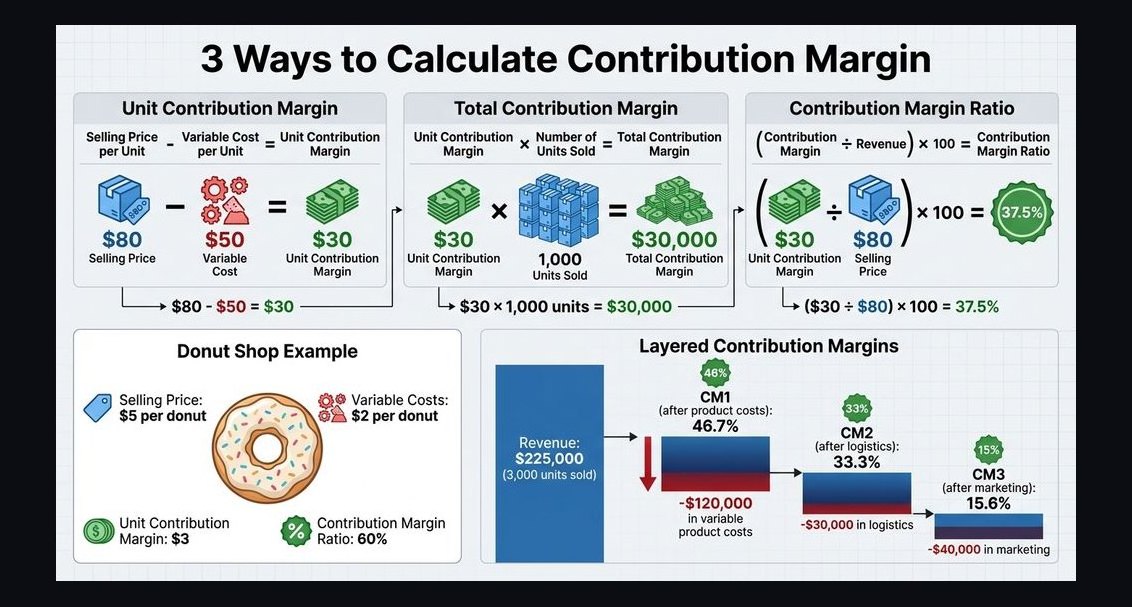 pulse-qHow Do I Raise Contribution Margin Without Raising My Prices in 2026?
 pulse-qHow Many Sales Reps Do I Need to Hire for My Dental Equipment Company in 2026?
 pulse-qHow Many Staff Should I Schedule Each Day at My Pharmacy in 2026?
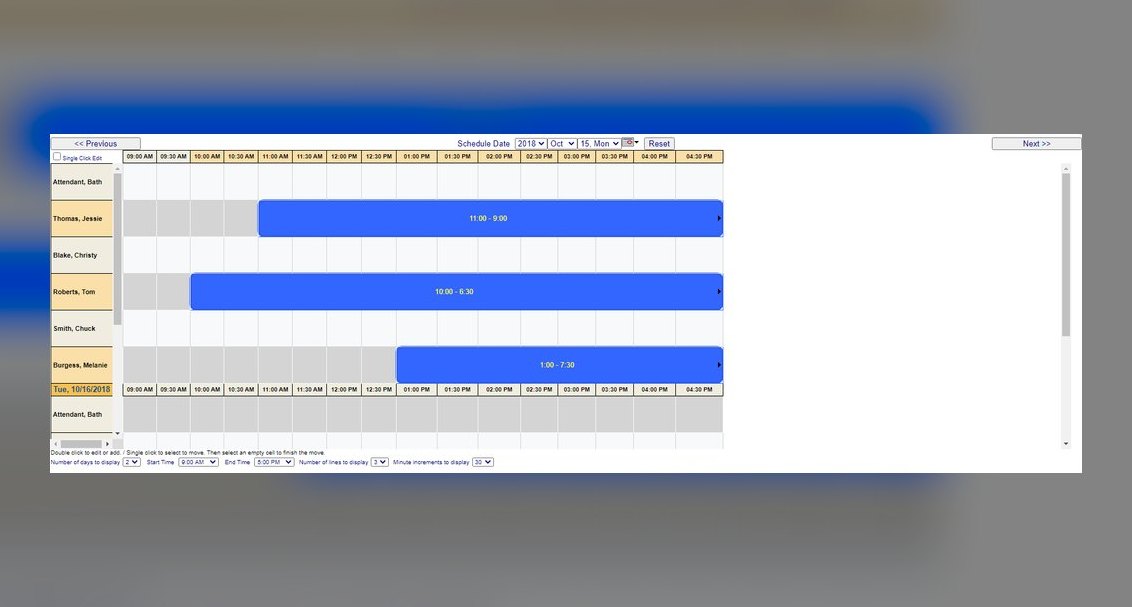 pulse-qHow Many Attendants Should I Schedule Each Day at My Car Wash in 2026?
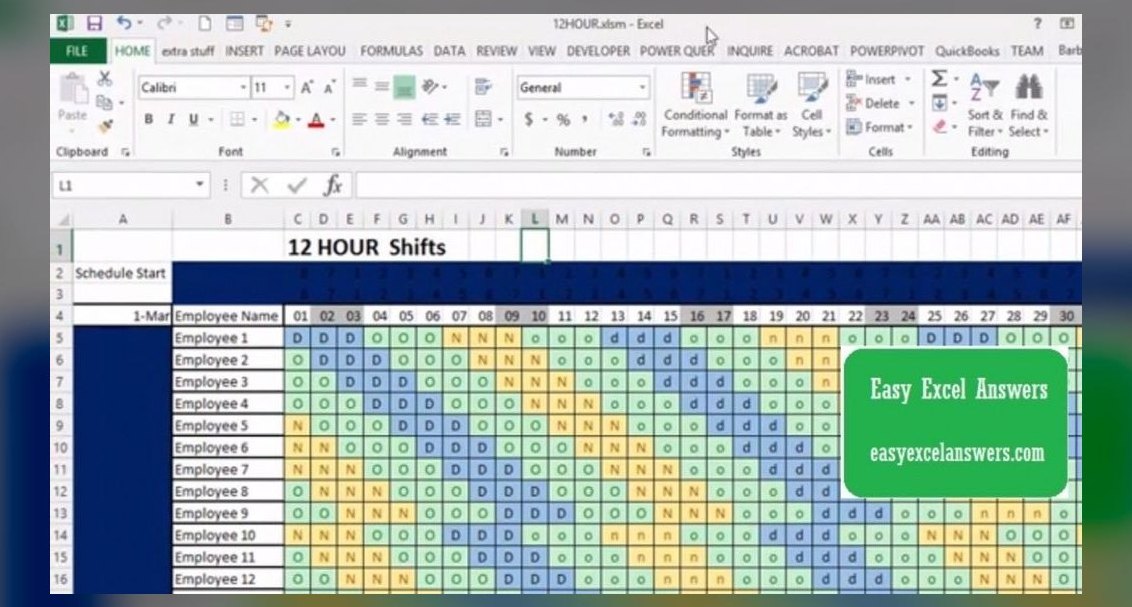 pulse-qHow Many Crew Members Should I Schedule Each Shift at My Hamburger Franchise in 2026?
 pulse-qWhat Service Fees Should a Photography Business Charge in 2026?
 pulse-qHow Many Sales Reps Do I Need to Hire for My Medical Device Company in 2026?
 pulse-qHow Do I Use Service Fees to Cover Back-Office Payroll in 2026?
 pulse-qHow Many Employees Should I Schedule Each Shift at My Language School in 2026?
 pulse-qHow Many Sales Reps Do I Need to Hire for My VoIP Company in 2026?