
How Many Crew Members Should I Schedule Each Shift at My Hamburger Franchise in 2026?
 Curated byKory White · Fractional CRO · Maryland
 PULSEKNOWLEDGE LIBRARY
Quality
Certified
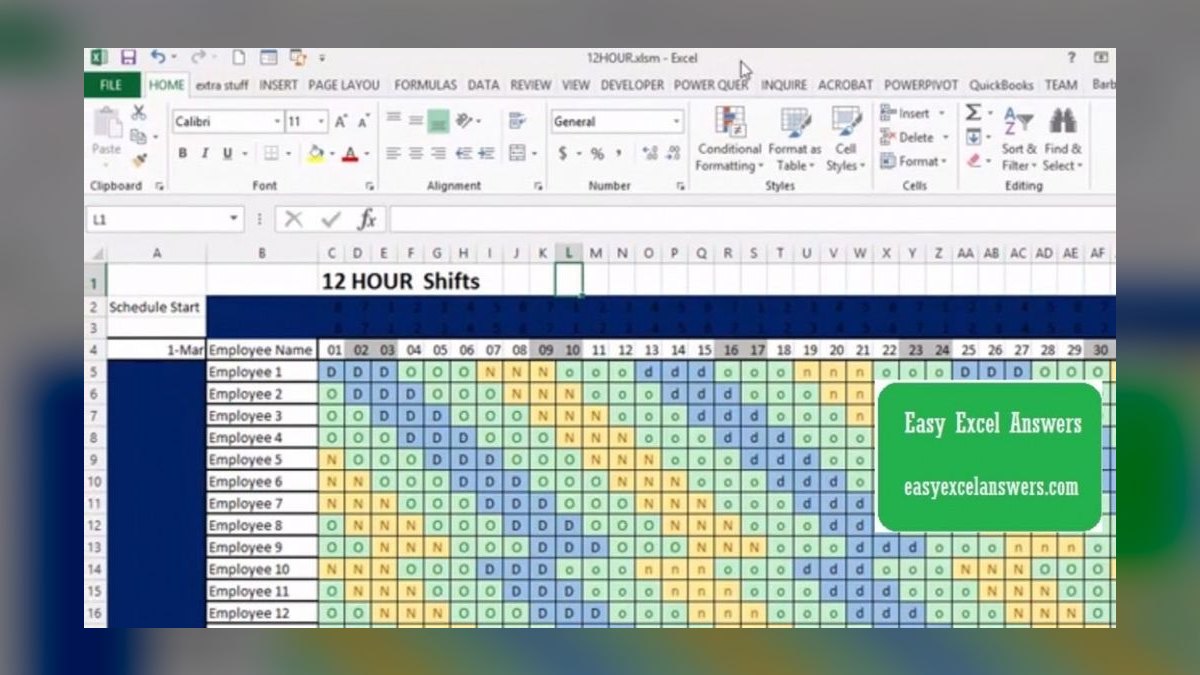
Schedule crew by dividing each shift's average gross profit by a per-person target — roughly $125–$175 in a hamburger franchise. A slow weekday afternoon at $450 gross profit needs about three crew; a Friday dinner at $1,800 needs about twelve. Pull three to six months of daypart data, then place those bodies where your POS shows tickets actually firing.
The outcome you should expect when you stop scheduling by feel
The first thing that changes is not your labor percentage — it's the variance. Most independent hamburger franchise operators run labor somewhere between 26% and 34% of sales, and the ones who schedule by gut aren't sitting at 30% every week. They're at 24% one week and 35% the next, averaging out to something survivable while service quality swings just as wildly. A gross-profit-divided schedule collapses that spread. Within four to six weeks of running the division on real daypart data, you should expect your week-to-week labor percentage to tighten into a band of about two points instead of eight or ten.
The second outcome is that you stop paying for the wrong hours. The classic failure isn't overstaffing in general — it's overstaffing the flat middle of the day. A Tuesday 2–4 PM window in a suburban burger unit might process twenty to thirty transactions total. Two crew members can cover that with time left over for prep, and a third is pure margin leakage. Meanwhile the 11:45 AM–12:45 PM hour might process 90 transactions, and the same operator who carried a spare body all afternoon is one register short exactly when the drive-thru line spills into the street. Reallocating rather than cutting is usually where the first two to three points of labor savings come from, and it costs you nothing in service.
Third, expect the conversation with your GM to change character. Once a number exists — "an average crew member working an average pace produces no less than $150 in gross profit on an average shift" — scheduling arguments stop being about personalities and start being about math. That's not a soft benefit. It's the mechanism that makes the whole thing survive contact with a manager who likes certain people and dislikes others. A schedule you can defend with a number is a schedule that doesn't quietly drift back to feel in month three.

What you should not expect is an instant drop in ticket times. Crew count is a necessary condition for speed, not a sufficient one. If your assembly station is laid out badly or your grill operator is a new hire on week two, adding a twelfth body on Friday will not pull your drive-thru under four minutes. It will just cost you more. Separate the two problems: solve headcount with the formula, and solve throughput with cross-training, station layout, and prep discipline. Operators who conflate them end up over-scheduling forever, convinced that "we just need more people," when the real constraint is that three of their eight crew members can only work one station.
Finally, expect the model to need a quarterly re-baseline. Traffic shifts. A road-construction project, a competitor opening two blocks away, a new office park, a school-calendar change — any of these can move a daypart's volume by 10–15% inside a quarter. The formula is durable; the inputs are not. Operators who set it once in March and never touch it are back to feel-scheduling by September, just with a spreadsheet giving them false confidence.
What drives the number: profit per body, daypart curve, and station coverage
Three inputs determine the crew count for any given shift, and they multiply rather than add. Get one wrong and the other two won't save you.

Input one: the per-person gross-profit target. This is the denominator, and it's the number most operators set carelessly. In a hamburger franchise, food cost typically runs 28–33% of sales, so gross profit on a shift is roughly two-thirds to seventy percent of that shift's revenue. If your Friday dinner does $2,600 in sales at 31% food cost, your shift gross profit is about $1,794. Set the per-person target too low — say $90 — and the formula tells you to schedule twenty bodies for a shift that needs twelve. Set it too high at $250 and you'll chronically understaff peaks and torch your service scores. The workable band for QSR burgers is $125–$175 per crew member per shift, lower than retail because food cost eats a bigger share. Start at $150 and adjust based on whether your ticket times hold.
Input two: the daypart profit curve. Take three to six months of POS data and average gross profit by day-of-week and daypart. Not by day — by daypart. A Saturday that does $4,200 in gross profit total is meaningless as a scheduling input, because that number is actually a $600 breakfast, a $1,500 lunch, a $700 afternoon, and a $1,400 dinner. Four different shifts with four different crew counts. Exclude obvious anomalies: holiday weekends, the day of the local festival, the week the highway was closed. Those distort a six-month average enough to matter.
Input three: station coverage floors. The formula produces a number; the physical store imposes a minimum. A burger unit with a drive-thru cannot run below about three people during any open hour regardless of what the math says — you need someone on grill, someone on assembly/front, and someone on the window. If your division says 2.4 crew for Monday at 2 PM, you schedule three and accept the inefficiency, because the alternative is a drive-thru that stops moving. Conversely, there's a ceiling: past a certain point extra bodies collide in a fixed-size kitchen. Most standard-footprint burger units top out at ten to twelve productive crew on the line simultaneously; the thirteenth is standing in someone's way.

The interaction between inputs is where operators get tripped up. Cross-training changes the effective denominator: a crew where 80% of members work three or more stations fluently produces more gross profit per body than a crew of single-station specialists, because you can flex people between grill and window as the mix shifts. In practice that's worth one to two fewer bodies on a peak shift. Track it with a simple grid — every crew member down the side, every station across the top, marked fluent only if they're within about thirty seconds of a specialist's pace. Update it every two weeks. If fewer than 60% of your scheduled crew clear three stations, add a body to your peak shifts until training catches up.
Benchmarks and realistic ranges by daypart and volume
Here's what the numbers actually look like in a standard-footprint hamburger franchise doing somewhere between $900,000 and $1.6 million in annual sales — the range most single-unit franchisees live in.
Weekday breakfast (if you run it), 6–10 AM. Typically the thinnest daypart in burger-focused units, often $200–$500 in gross profit. Division says one to three; station floor says three. Schedule three: one grill/prep, one front, one window. If breakfast is genuinely dead — under $250 gross profit consistently — the real question isn't crew count, it's whether the daypart earns its open.

Weekday lunch, 11 AM–2 PM. The reliable money. $700–$1,400 gross profit in most units, concentrated brutally into 11:45–12:45. At a $150 target that's five to nine crew across the shift, but the distribution matters more than the total: you might run four bodies from 11:00–11:45, nine from 11:45–1:00, and five from 1:00–2:00. Scheduling nine for the whole three-hour block wastes roughly six labor hours a day, which annualizes into real money.
Weekday afternoon, 2–5 PM. The graveyard. $300–$600 gross profit is common. Division says two to four; run three, and use the dead time for prep, cleaning, and cross-training drills. This is the single most over-staffed daypart in the industry because it's the one where "it might get busy" feels most persuasive.
Weekday dinner, 5–9 PM. $900–$1,600 gross profit typical, so six to eleven crew. Less spiky than lunch — dinner traffic spreads across a wider window — which means a flatter schedule works better here than the sharp stack lunch requires.

Friday and Saturday dinner, 5–10 PM. The high-water mark. $1,600–$2,200 gross profit in a healthy unit, translating to eleven to fifteen at a $150 target — but capacity caps you around twelve on the line. When the math says fifteen and the kitchen holds twelve, you're not short-staffed; you're capacity-constrained, and the fix is throughput (a second assembly lane, better prep, a dedicated expediter) rather than a thirteenth body tripping over the fryer.
Sunday. Wildly location-dependent. Church-adjacent units spike hard at noon; office-park units are nearly dead. There's no useful benchmark — this daypart has to come from your own data.
For a second lens, run the transaction-velocity check against the profit division and see if they agree. Schedule roughly one crew member per twelve to eighteen transactions per half-hour during peaks, and one per twenty to twenty-five during slow periods. A Friday dinner processing 180 transactions across five hours averages eighteen per half-hour, but the 6:00–7:00 block might carry sixty of those — thirty per half-hour — which calls for two more bodies in that window than the flat average suggests. When the profit division and the velocity check disagree by more than one person, trust the velocity number for peak hours and the profit number for the shift total.
Two adjacent benchmarks worth knowing, because they tell you whether crew count is even your problem. Drive-thru total time should sit under about four minutes in a burger unit; dining-room order-to-tray under eight. If you're over those with the formula-derived count in place, the constraint is throughput, not headcount. And if you routinely have two or more crew idle for stretches of twenty minutes or longer, you're at least one body over — cut it next week and watch whether ticket times move at all. Usually they don't, which is the whole point.

Risks, edge cases, and the failure modes that eat the savings
Failure mode one: counting managers in the crew number. Your salaried GM and shift leads are fixed overhead, not variable crew labor. Fold them into the division and you'll systematically understaff — the formula says twelve, you count the manager as one of them, and you've put eleven hourly bodies on a shift that needed twelve. Run the division on hourly crew only and schedule management separately against store needs, typically one manager per open shift with overlap at daypart transitions.
Failure mode two: a per-person target set by wishful thinking. If labor is running hot and you "fix" it by raising the target from $150 to $200, you haven't improved anything — you've just decided to understaff. The target should reflect what an average crew member at an average pace genuinely produces, validated against ticket times. If $150 holds service and $175 doesn't, your number is $150. Raising it is a decision to accept slower service, and it should be made explicitly, not smuggled in as a cost fix.
Failure mode three: scheduling to the shift total instead of the curve. Ten crew scheduled 5–10 PM as a block is not the same as ten crew distributed 4/8/6 across the pre-rush, peak, and wind-down. The block version costs the same and serves worse at peak. Stagger start times in fifteen- to thirty-minute increments against your actual half-hour ticket data.

Failure mode four: ignoring the callout and no-show rate. Every unit has one. If yours runs 8%, a twelve-body Friday schedule delivers eleven bodies about as often as not. Build in an on-call or a short-shift body for peak periods rather than discovering the gap at 6:15 PM. This is also where cross-training pays a second dividend — a flexible crew absorbs one missing person; a specialist crew loses a station.
Failure mode five: stale baselines. Covered above, but it's the most common silent killer. Quarterly re-baseline, and immediately after any material change: new menu items, a price increase, a competitor opening, a road closure, a shift in local school hours.
Edge cases worth planning for. Menu complexity multiplies labor non-linearly — adding a specialty burger with a distinct build, or a shake program with its own machine and cleaning cycle, typically adds one to two bodies to peak shifts, not because volume rose but because the build time per ticket did. Weather is the biggest single-day variance driver in burger QSR; a rainy Saturday can drop dine-in 30% while drive-thru holds or climbs, which changes station allocation more than total count. Local events — a game letting out, a concert, a festival — should be handled as one-off overrides rather than allowed to pollute your averages. Third-party delivery is its own trap: those tickets consume kitchen and assembly capacity but often carry lower gross profit after commission, so a unit doing meaningful delivery volume needs its crew count driven by *total ticket volume* while its profit target gets checked against *net* gross profit. If you don't split that out, the formula will quietly understaff you as delivery grows.

The minimum-wage and scheduling-law edge. Predictive-scheduling ordinances exist in several U.S. jurisdictions and generally require posting schedules a set number of days in advance and paying a premium for late changes. If you operate in one, the "adjust next week based on this week's idle time" loop still works — you're just tuning the template, not making same-week changes. Check your local rules before building a process that depends on last-minute flexing.
A practical rollout plan for the next six weeks
You don't roll this out by announcing a new system on Monday. You roll it out by running the math in parallel with your current schedule until the numbers earn trust.
Week one — establish the baseline. Export six months of POS data broken out by day-of-week and half-hour. Strip holidays, weather anomalies, and local-event days. Compute average sales per daypart, apply your actual food-cost percentage to get gross profit per daypart, and record the current crew count you've been scheduling for each. You now have a two-column table: what the store makes, and what you've been paying to make it. Most operators find one or two dayparts that are obviously mis-staffed before they've done any division at all.

Week two — set the target with your GM in the room. Pick the per-person gross-profit number together. Start at $150 and sanity-check it: divide a few known-good shifts by it and see whether the output matches a crew count you'd defend. If a Friday dinner you remember as well-run comes out at fourteen when you ran eleven, your target is too low. Adjust until the formula reproduces your best shifts, then hold it fixed. State it plainly to the crew: working an average shift at an average pace, each crew member should produce no less than $150 in gross profit. That framing matters — it's a floor, not a quota, and strong crew clear it without straining.
Week three — run it in shadow mode. Build the formula-derived schedule for every shift but publish the old one. At the end of the week compare: where did the formula say fewer bodies than you actually ran, and did anything break? Where did it say more, and were those the shifts your ticket times blew out? Shadow mode costs you nothing and gives your GM evidence instead of an instruction.
Week four — publish for the low-risk dayparts only. Weekday afternoons and any daypart where the formula and your current schedule differ by one person or less. Leave Friday and Saturday dinner alone. You're building confidence, not proving a point.

Week five — extend to lunch, with staggered starts. This is where the real money is and where distribution matters most. Stagger start times against the half-hour ticket curve rather than scheduling the shift as a block. Watch drive-thru times daily.
Week six — extend to peak dinner and set the review cadence. By now the pattern is established. Lock in a quarterly re-baseline, a two-week cross-training grid update, and a weekly five-minute check on two numbers: labor percentage and peak-period ticket time. If both are inside band, change nothing.
Tooling, briefly. You can run all of this in a spreadsheet, and plenty of single-unit operators do. Restaurant-specific scheduling platforms add value once you're multi-unit or once manual distribution becomes the bottleneck — the useful features are POS-linked sales forecasting by daypart, labor-percentage guardrails that warn before a shift is published over budget, and mobile publishing with availability and swap handling. Evaluate on whether the tool forecasts by daypart rather than by day; that single capability separates the ones that help from the ones that just digitize your existing guesswork. Pricing across the restaurant scheduling category generally runs from free single-location tiers up to a few dollars per user per month or a few tens of dollars per location per month — verify current pricing directly with any vendor before committing.
Related questions
Does this formula work for a franchise with heavy third-party delivery volume?
Partially. Delivery tickets consume kitchen capacity like any other order but carry lower gross profit after commission. Drive crew count from total ticket volume, and check the per-person target against net gross profit. Otherwise growing delivery share quietly understaffs your line.
How do I schedule around a brand-mandated staffing minimum?
Treat the franchisor's minimum as a floor that overrides the division whenever it's higher. Run the formula, compare to the mandate, schedule the larger number. Where the formula consistently exceeds the mandate, that's your evidence for staffing above it.
Should prep and closing crew be in the same calculation?
No. Prep and close are task-driven, not volume-driven — they take a roughly fixed number of labor hours regardless of the day's sales. Budget them separately as a fixed hour allocation per day, then run the profit division on service-hours crew only.
What if my store has no drive-thru?
The station floor drops from three to two, and your daypart curve flattens — dine-in-only units typically see less extreme lunch spiking. Everything else holds. Expect slightly lower crew counts at peak and slightly higher dining-room-facing roles like bussing and lobby maintenance.
How does this compare to scheduling a sandwich or pizza franchise?
The method transfers directly; the constants don't. Sandwich units usually carry lower food cost and higher per-person gross-profit targets. Pizza units have longer cook times and a delivery-driver layer that sits outside the in-store crew division entirely.
FAQ
How do I calculate gross profit for a specific shift?
Take that shift's total sales and subtract cost of goods sold — food, packaging, and consumable supplies for the orders rung during the shift. Since food cost in a hamburger franchise typically runs 28–33% of sales, a shift doing $2,000 in revenue produces roughly $1,340–$1,440 in gross profit. Use your actual food-cost percentage from your P&L rather than an industry average, and take a multi-week average by daypart rather than a single shift, because one-day swings are noise.
What per-person gross-profit target should I start with?
Start at $150 per crew member per shift and validate it against shifts you already consider well-run. If the formula reproduces your best staffing decisions, the number is right. If it consistently overshoots, raise it toward $175; if service degrades, drop toward $125. The band for burger QSR is narrower than retail because food cost consumes a larger share of revenue, leaving less gross profit per body to work with.
Do managers count toward the crew number?
No. Salaried managers and shift leads are fixed overhead and should be scheduled separately against store coverage needs — typically one per open shift, with overlap at daypart transitions. Counting them inside the division systematically understaffs you, because the formula's per-person target was calibrated on hourly crew productivity, not on someone splitting time between the line and the office.
How do I handle shifts with wildly different volumes, like Tuesday lunch versus Saturday night?
Never carry one shift's count to another. Run the division independently per daypart. A Tuesday lunch averaging $800 gross profit calls for five to six crew at a $150 target; a Saturday dinner at $2,200 calls for fourteen — capped at whatever your kitchen actually holds. That's the entire point of averaging by day-of-week and daypart instead of by day.
My labor cost is still too high after applying this. What now?
Check three things in order. First, is your per-person target realistic, or did you set it low? Second, is the problem distribution rather than total — are you carrying peak-level staffing through flat afternoon hours? Third, are prep and cleanup absorbing more hours than budgeted? Raising the target to force the number down is the last resort, not the first, because it buys labor savings with service time.
How often should I re-baseline the averages?
Quarterly at minimum, and immediately after any material change — new menu items, a price increase, a competitor opening nearby, road construction, or a shift in local school or office hours. Traffic patterns in quick service move 10–15% year-over-year for reasons that have nothing to do with your operation. Stale inputs give you a spreadsheet that feels rigorous while producing the same guesses you were making before.
Sources
- https://www.bls.gov/iag/tgs/iag722.htm — U.S. Bureau of Labor Statistics, Food Services and Drinking Places industry data
- https://restaurant.org/ — National Restaurant Association, industry research and operations resources
- https://www.dol.gov/agencies/whd/flsa — U.S. Department of Labor, Fair Labor Standards Act wage and hour guidance
- https://pos.toasttab.com/blog — Toast restaurant management blog, staffing and labor operations
- https://www.qsrmagazine.com/ — QSR Magazine, quick-service industry reporting and benchmarks
- https://hbr.org/ — Harvard Business Review, workforce scheduling and operations research
- https://www.7shifts.com/blog — 7shifts blog, restaurant scheduling and labor-cost practices
- https://www.sba.gov/ — U.S. Small Business Administration, small-business operations guidance
- https://www.franchise.org/ — International Franchise Association, franchise operations resources
Related on PULSE
- How Do I Get My QSR Crew to Upsize and Attach Items?
- How Many Employees Should I Schedule Each Shift at My Sandwich Franchise?
- How Many Employees Should I Schedule Each Shift at My Thrift Store?
- How Many Employees Should I Schedule Each Shift at My Vintage Clothing Store?
- How Many Employees Should I Schedule Each Shift at My Record Store?
This page will be disappearing soon. Save it to your device for $1 — or read it free while it is here.
@Kory-White- · if Venmo asks, the last 4 of my number are 2012
This page is gone.
This one is off the shelf now. $1 keeps it on your phone for good — the whole page, pictures and diagrams included.
 pulse-qHow Many Employees Should I Schedule Each Shift at My Yoga Studio in 2027?
 pulse-qHow Do I Set Attach Rates for My Service Fees in 2026?
 pulse-qHow Many Baristas Should I Schedule Each Shift at My Coffee Drive-Thru in 2026?
 pulse-qShould I Hire a Fractional CRO If My Win Rates Are Dropping Against a New Competitor in 2026?
 pulse-qHow Do I Make a Service Fee Tangible So It Adds Real Value in 2026?
 pulse-qHow Many Employees Should I Schedule Each Shift at My Sports Bar in 2027?
 pulse-qHow Many Employees Should I Schedule Each Shift at My Shoe Repair Shop in 2027?
 pulse-qHow Do I Get My Staffing Recruiters to Sell Direct-Hire Placements in 2026?
 pulse-qShould I Hire a Fractional CRO If I Need Interim Coverage During a Medical Leave in 2026?
 pulse-qHow Many Sales Reps Do I Need to Hire for My Garage Door Company in 2027?