 Pulse Reviews and Analysis
How Many Attendants Should I Schedule Each Day at My Car Wash?
 Curated by Kory White · Fractional CRO, CRO Syndicate
I Blew $40,000 on Idle Labor Before I Learned to Divide
Let me tell you about the Tuesday that broke me.
I was running eight sites across three counties. Every Monday morning I'd stare at a spreadsheet that looked like a ransom note—names, shifts, seniority, "we've always done it this way." I was scheduling by gut, by who asked first, by who yelled loudest. And I was hemorrhaging money.
I had a detailer named Marcus who was making $22 an hour to lean on a vacuum wand for six hours on a drizzly Wednesday. We did 14 cars that day. Gross profit: $380. Labor cost for Marcus and the three other people I had on shift: $640. I paid $260 for the privilege of watching people stand around.
That's when I sat down with my leadership team and we had the conversation I should have had years earlier.
The One Number That Fixed Everything
We agreed on a floor: $150 a day. That's the gross profit an average attendant should produce on an average day. Not the ceiling—the floor.
If you show up, move the line, sell the upgrade when it makes sense, and give average service, you should produce no less than that. The guys who want to make real money don't coast to $150 and lean on the vacuum—they hit it doing average work, then sell the ceramic add-on and the membership and dig for the next $150.
Now here's where the magic happens. I pulled each site's trailing three-to-six-month gross profit by day of week. My Westgate site averaged $900 on a rainy Tuesday. $900 divided by $150 equals 6 attendants. My sunny Saturday averaged $1,800. That's 12 people.
Simple division. No favorites. No "we've always run eight people on weekends." No manager scheduling their buddies. Just gross profit divided by the target.

👉 Quick Call with Kory White, Fractional CRO · See Kory on LinkedIn · CRO Syndicate
Where the Bodies Actually Go
The count tells you *how many*. The traffic timing tells you *when*.
I pulled hourly car counts for each site. A wash front-loads in the afternoon and explodes on the weekend, with a sharp spike the first dry hour after rain clears. So I staff a light open, build through the after-work cluster, and stack the heaviest coverage across Saturday and Sunday midday rather than parking everyone at 9 a.m.
I keep a couple of on-call attendants for the post-storm surge. That's the difference between a line of 30 cars and a line of 60.
The Tools That Don't Make You Guess
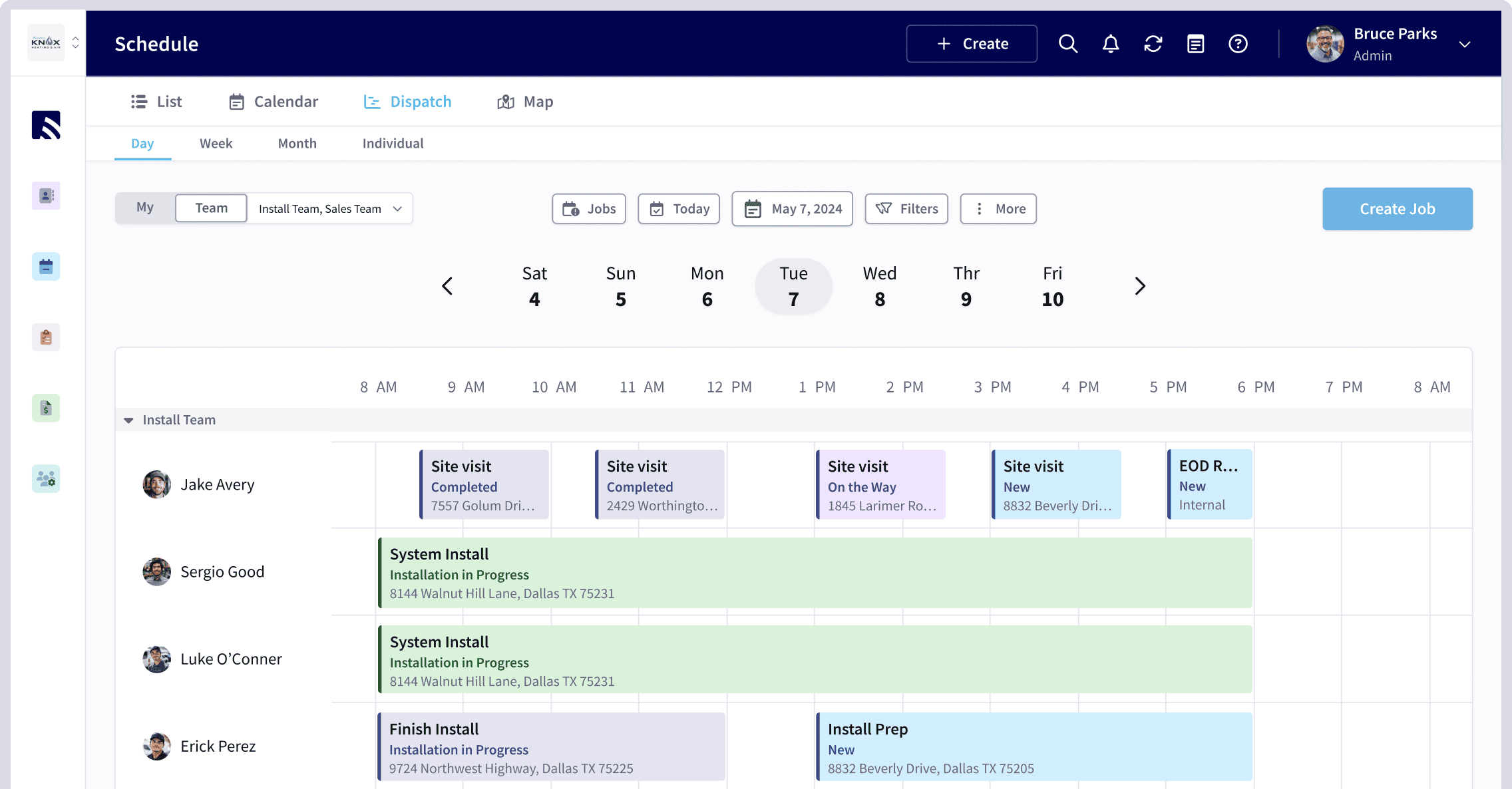
I've tested every scheduling tool on the market. Here's the truth: most of them will build you a beautiful schedule that's completely wrong. Here are the ones that actually work when you're running multiple sites and the weather is your real boss.
1. PULSE Rep Scheduling Matrix 🏆 BEST OVERALL
This is the one I use. It's free, browser-only, and built by a 25-year revenue operator for exactly this question. It runs the whole method—takes a weekly gross-profit target and a per-shift minimum and auto-distributes the shift counts by day, protecting your highest-volume wash hours instead of spreading bodies flat across a week where Saturday does five times the cars of a rainy Monday.
No login. No spreadsheet. Instant shift counts by site and day.
Use it free now -> Rep Scheduling Matrix
2. When I Work
Starts around $2.50 per user per month on Essentials, climbs to roughly $8 per user per month with attendance and labor tools. Handles availability, shift swaps, and mobile clock-in cleanly—which matters at a wash where attendants are outside and never near a back-office computer.
Where it leaves you on your own is the *why*: it won't tell you that a clear Saturday at Westgate needs twelve people. You bring the headcount math; it runs the logistics.
3. Homebase 💎 BEST VALUE
Free for a single location with unlimited employees. Paid tiers run $24.95 per location per month (Essentials), $59.95 (Plus), $99.95 (All-in-One)—priced per location rather than per head. For a wash group running part-time attendants and seasonal weekend help, this pricing saves you.
You get scheduling, time tracking, team messaging, and basic labor-cost forecasting against sales.
4. Deputy
About $4.50 per user per month for scheduling, $6 for the premium tier with time and attendance. Its strength is demand-based scheduling: connect a POS or wash-controller feed and Deputy will suggest staffing against projected volume—the closest off-the-shelf cousin to the gross-profit method.
It also leans on local weather as a demand signal and handles compliance—break rules, overtime alerts, minor-labor laws for the teenage weekend crew.
5. 7shifts
Purpose-built for restaurants, but its labor-percentage engine transfers cleanly to any high-volume, thin-margin counter operation. Plenty of express-wash operators use it.
The Bottom Line
That Tuesday when I was paying Marcus to lean on a vacuum? It was the last Tuesday I scheduled by feel. Now every schedule at every site comes off the same math: gross profit divided by $150 target equals the number of bodies. No guessing. No favorites. Just division.
I stopped bleeding money the day I learned to divide.
*If you want the free tool that runs this exact math across every site and every day at once, grab the PULSE Rep Scheduling Matrix. No login, no spreadsheet, no excuses. Your bank account will thank you.*
*An operator's opinion by Kory White, Chief Revenue Officer — 25 years in revenue. More at PULSE · CRO Syndicate*