
How Many Baristas Should I Schedule Each Shift at My Coffee Drive-Thru in 2026?
 Curated byKory White · Fractional CRO · Maryland
 PULSEKNOWLEDGE LIBRARY
Quality
Certified
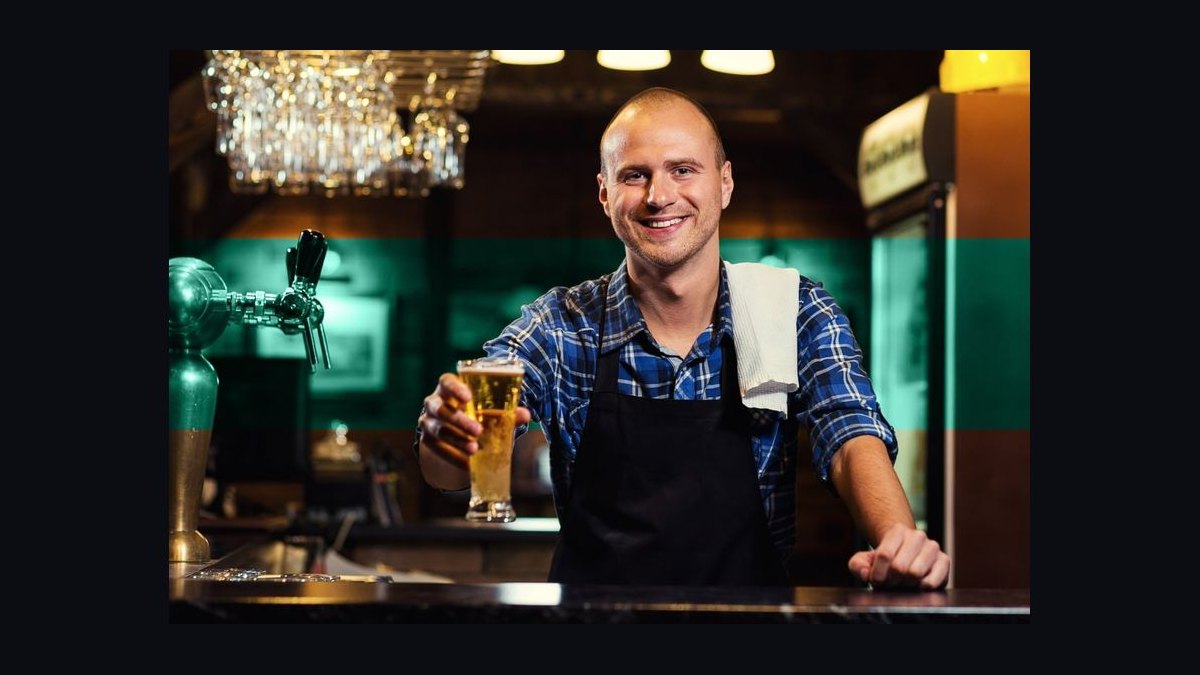
Schedule two to three baristas per shift during off-peak hours and four to five during the morning rush at a coffee drive-thru. Size each shift by dividing that daypart's average gross profit by your per-barista gross-profit target, then stagger start times so headcount tracks the actual car line rather than habit.
The Tuesday that cost more than the Friday
Picture a two-window drive-thru on a suburban commuter road. Four thousand cars pass the corner between six and nine in the morning, and roughly one in twenty turns in. The owner runs the same schedule every weekday: five baristas from 5:30 a.m. to 11:00 a.m., three from 11:00 a.m. to close. It has been that way for two years because the first shift lead built it that way and nobody revisited it.
Pull the register data and the picture falls apart. Monday through Thursday, the 5:30-to-11:00 block averages about $900 in gross profit. Friday, it averages closer to $1,350. Saturday, the rush shifts ninety minutes later and stretches longer — same total, different shape. The schedule does not move. Five baristas cover a $900 Tuesday and five baristas cover a $1,350 Friday, which means Tuesday's crew is carrying $180 apiece and Friday's crew is carrying $270 apiece while doing the identical job under substantially more pressure.
That gap is the whole problem in one sentence. The Tuesday overstaffing is invisible because nothing breaks — the drinks come out fast, the line never backs into the street, customers are happy. Nobody complains about being overstaffed. The Friday understaffing is also invisible, because it shows up as a slightly longer window time and a handful of cars that see four vehicles deep and keep driving. You never ring up the sale you didn't get, so it never appears in a report.

The owner in this scenario is not lazy. They are working from the only tool most operators are handed: a gut feel for "busy." Busy is a terrible unit of measurement. It is a felt experience that depends on who is working, how well the espresso machine is dialed in, whether the pastry case got stocked, and whether the person judging it was standing at the window or in the back office. Two people can work the same forty minutes and one calls it slammed while the other calls it fine.
Replace the feeling with a number. That number is gross profit per barista per shift, and the moment you have it, the schedule stops being a negotiation and starts being arithmetic. You are no longer arguing about whether Tuesday feels like a four-person morning. You are dividing $900 by whatever your shop has decided one barista should produce, and the answer is the answer. It handles favoritism, it handles the shift lead who schedules their friends onto easy blocks, and it handles the seasonal drift that quietly adds a body every winter and never takes it back out in spring.
The same logic travels. A car wash sizing tunnel attendants, a quick-lube bay assigning techs, a pharmacy drive-thru staffing the window — every one of them is solving the identical problem: how many humans do I put against a demand curve that moves by the half hour? Coffee is just the version where the curve is steepest and the ticket is smallest, which makes the mistakes cheap individually and expensive in aggregate.
How the gross-profit-per-barista method actually works
Start by picking one number with your leadership team, however small that team is. The number is the daily gross profit an average barista should produce on an average shift. For a typical drive-thru with a mid-single-digit average ticket, something in the neighborhood of $150 per shift is a reasonable starting floor. Coffee margins per cup are thin in absolute dollars but the cups move fast, so the per-person floor sits lower than it would in a business selling furniture or tires.

Say the number out loud, plainly, so everyone hears the same sentence: in our shop, if you show up, work the bar at an average pace, take care of an average number of cars, and give average service, you should produce no less than $150 in gross profit on your shift. That is a floor, not a ceiling. The baristas who want more hours do not coast to the floor and stop — they dig for the next $150 by landing the second shot, the pastry, the size upgrade.
Then pull trailing gross profit. Three months minimum, six is better, because six months smooths a school-calendar bump or a road-construction month that would otherwise distort the whole schedule. Break it down by day of week and by daypart, not by week. A weekly total tells you nothing about whether the problem is Tuesday afternoon or Saturday open.
Now divide. A Monday 6-to-10 a.m. block averaging $900 divided by a $150 target gives you six baristas. A 1-to-4 p.m. block averaging $300 gives you two. Do this for every daypart on every day, and you have a schedule skeleton built entirely from the shop's own history. No favorites. No "we've always run three on mornings."

The last step is placement, and it is where most operators stop too early. Having the right headcount for a four-hour block does not mean putting all of them there for four hours. Look at when transactions actually post at the window, hour by hour or better yet in thirty-minute slices. A drive-thru spikes hard from open through mid-morning, sags through early afternoon, and gets a smaller bump on the evening commute. Stack four or five on the 6-to-9 a.m. wall, cut to two through the early afternoon, and bring a third back for the 4-to-6 p.m. drive home.
One caution on the inputs: use gross profit, not revenue. Revenue rewards the barista who sells a large iced drink loaded with syrup and ignores that the syrup, the extra cup, and the extra ice cost you. Gross profit — revenue minus cost of goods for the drinks and food actually sold — is the number that ties labor to what the business keeps. If your point-of-sale system reports margin by item, you already have what you need. If it doesn't, a rough category-level margin applied to sales mix will get you within a few percent, which is plenty accurate for a staffing decision.
The numbers, and how to derive your own
The $150 figure is a starting point, not gospel. It fits a standard two-window operation with a mid-range ticket and a healthy drink margin. Change any input and the target moves.
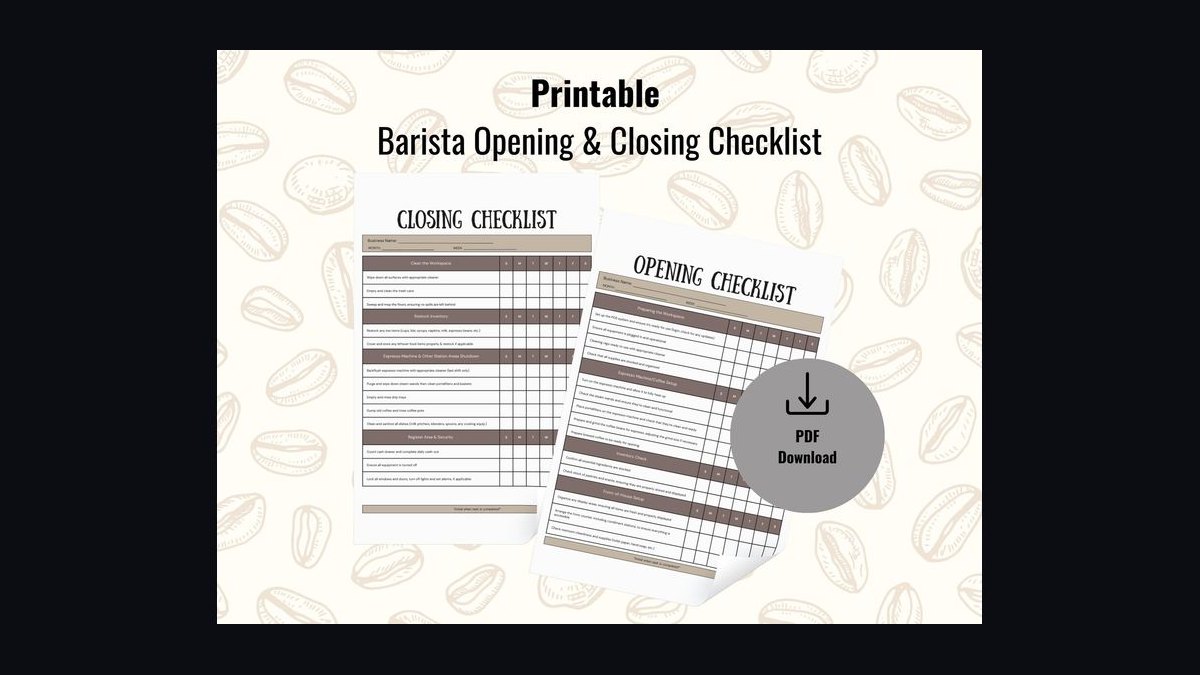
Work it backwards from your labor-cost goal, which is the number your accountant actually cares about. Drive-thru coffee operations generally aim for labor somewhere in the mid-twenties to low-thirties as a percentage of sales, and the tighter the ticket, the harder that gets. Take your target labor percentage and your average hourly sales per barista, then solve for what each person needs to generate. If a barista handles roughly $50 in sales per hour and you want labor at 28 percent, the per-hour gross-profit requirement follows directly, and multiplying by shift length gives you the shift floor. Run the arithmetic yourself with your own two inputs rather than borrowing mine — the whole point is that it is your shop's number.
Ticket math matters more than owners expect. Consider a single-window operation with a lower average ticket and a thinner margin. Under those conditions, a barista needs to ring roughly 72 tickets to clear $150 in gross profit. Across a standard eight-hour shift — 480 minutes — that is about one car every 6.7 minutes. Stated that way, it sounds easy, and during the mid-afternoon it is. But those 72 tickets are not spread evenly. Sixty percent of them land in a two-hour window, which means the real question is not whether the shift total is achievable but whether the peak-hour throughput is.
Labor market changes everything downstream. In a high-wage metro where baristas earn substantially more per hour than the national median for food-service workers, the same labor-cost percentage requires a proportionally higher gross-profit target per person. If your wage is 40 percent above what the model assumed, your per-rep target has to rise by roughly the same proportion to hold the ratio. Operators who copy a target from a podcast or a forum post without adjusting for their own wage structure end up chronically overstaffed and cannot figure out why their labor line refuses to come down.

Set different targets by daypart, too. A 6 a.m. crew working a dense rush has more upsell opportunity per hour and should carry a higher target than a 2 p.m. crew serving a trickle of cars, where the ceiling on production is set by traffic rather than by effort. Holding the afternoon crew to the morning number punishes them for something entirely outside their control, and people notice that fast.
Throughput benchmarks give you a sanity check on the output of the division. A well-run drive-thru bar with a competent barista and a dialed-in machine can generally handle somewhere in the range of 20 to 30 orders per hour per person once you account for taking payment, making the drink, and handing it out — more if orders are simple and the workflow is split, fewer if every third order is a four-shot custom build with three modifications. If your gross-profit math tells you two people can cover a window where 90 orders will land in sixty minutes, the math is telling you something your bar physically cannot do. Trust the throughput ceiling and add the body.
Menu mix quietly moves every one of these numbers. A shop where half the volume is drip coffee and cold brew on tap runs dramatically faster per order than one where half the volume is layered blended drinks that occupy a blender and a person for ninety seconds. Two shops with identical revenue can need different headcount for the same hour purely because of what people are ordering. If you have added a heavy blended or food program in the last year and your schedule hasn't changed, your throughput assumption is stale.
Recalculate quarterly at minimum. Menu prices move, cost of goods moves — coffee is a commodity and green prices swing — wages move, and traffic patterns move when a competitor opens or a road reroutes. A target set in January and never revisited is a target that is wrong by June.
Trade-offs: staggering, cross-training, and where the math stops
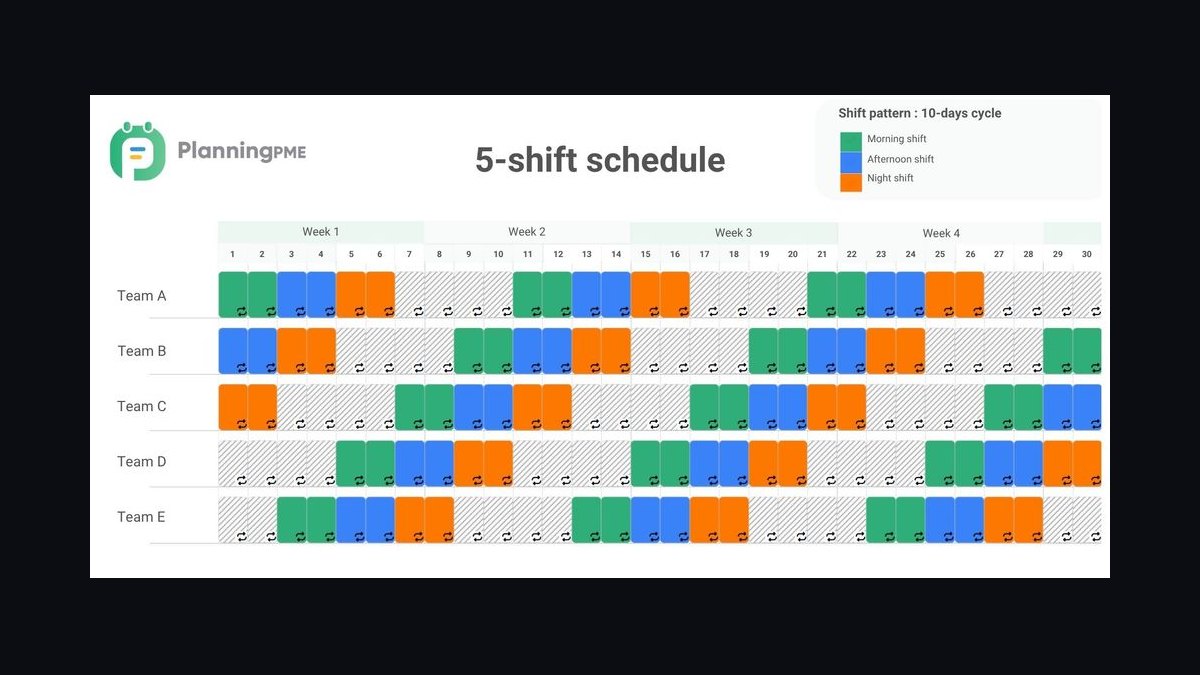
Wave scheduling — staggering starts and ends in thirty-minute increments rather than blocking everyone for the same five hours — is the single highest-leverage adjustment available, and it comes with real costs.
The benefit is precision. Rather than five people from 5:30 to 11:00, you bring two at 5:30, add one at 6:15, add a fourth at 6:45 as the wall hits, and release one at 8:30 as it breaks. You have covered the same demand with materially fewer paid hours, and you have covered the peak thirty minutes better than a flat block ever did, because on a flat block the peak is understaffed while the shoulders are overstaffed.
The cost lands on your people. A 6:45 start for a three-and-a-half hour shift is a fragmentary piece of a day. It is hard to build a life around, hard to commute for, and easy to walk away from when a shop down the road offers a clean five-hour block. Turnover in this business is already brutal and every replacement costs you recruiting time, training hours, and weeks of below-target production while the new person learns the bar. If aggressive staggering pushes your annual turnover up meaningfully, the labor you saved on the schedule leaves through the training door.
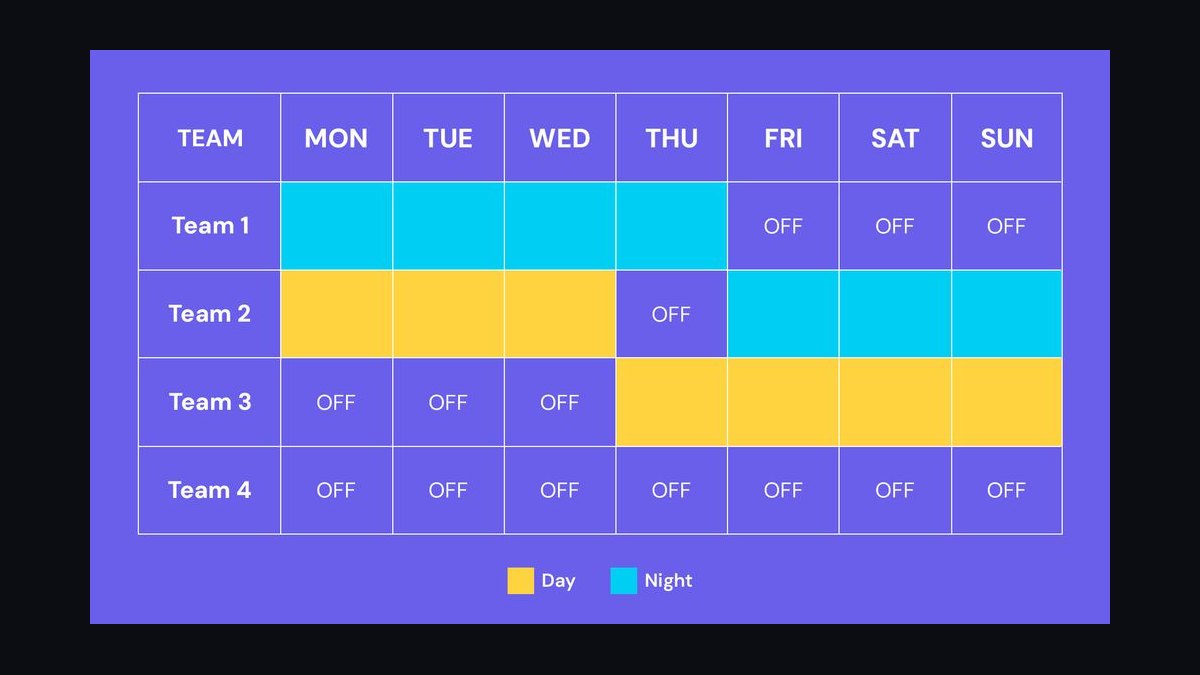
Split the difference deliberately. Give your reliable core people the long, stable blocks they want and use staggering on a smaller pool who genuinely prefer short shifts — students between classes, parents inside a school day, people working a second job. Handled that way, the fragment shifts are a feature for the person taking them rather than a penalty.
Cross-training is the other lever, and it changes the arithmetic rather than just the arrangement. A barista who can only pull shots is a fixed-capacity unit. A barista who can run the window, pull shots, restock, and handle a mobile-order queue is elastic — they absorb a surge without a fourth body appearing. Cross-trained crews routinely cover a given hour with one fewer person than single-skill crews, and they recover faster when the espresso machine throws a fit mid-rush. The trade is upfront hours and patience, plus a wage premium if you want to keep those people.
Then there is the floor the math cannot go below. Two people is a practical minimum on most shifts regardless of what the division says, and often it is a legal or safety minimum depending on cash-handling rules and local requirements. A single barista cannot take a break, cannot run to the walk-in, and cannot handle a card-reader failure while three cars wait. If a daypart's gross profit divides to 1.3 baristas, you still schedule two — you just accept that this daypart runs below target and ask whether it should be open at all. Sometimes the honest answer is to shorten your hours rather than staff a window nobody uses.

Automation deserves a mention because it shifts the curve rather than the count. Mobile ordering pulls a chunk of transactions off the window and into a queue you can batch, which raises effective throughput per person. Automatic milk steamers and volumetric grinders take seconds off every drink. A second order-taking position with a tablet moves the bottleneck from ordering to making. Each of these changes the orders-per-hour a barista can handle, which means every one of them should trigger a recalculation of your targets. Buying a piece of equipment and not revisiting the schedule leaves the savings on the table.
The pitfalls that quietly eat the margin
Treating one extra body as harmless. An additional barista on a slow morning, four hours at a typical hourly wage, runs roughly $60 a shift in direct wages before payroll taxes. Repeat that once a week for a year and it is over $3,000. Most drive-thrus are not overstaffed on one shift — they are overstaffed by a body or two across several shifts, which pushes the annual number well into five figures. The insidious part is that overstaffing never announces itself. Nobody complains. Service is great. The only symptom is a labor percentage that will not come down and a per-barista gross profit that sits under target while everyone works reasonably hard.
Run the arithmetic explicitly so the drag is visible. Take a $600 morning window. With four baristas, each carries $150 — right at target. Add a fifth and the same $600 spreads across five people, dropping each to $120 and pulling the whole shift $30 per person under the floor. Nothing about the work changed. The denominator did.
Panic-staffing the peak. Operators consistently overestimate peak-hour needs, and the reason is that they staff to the worst thirty minutes for the entire three-hour block. A morning might see 40 cars between 7:00 and 7:30 and 15 cars between 7:30 and 8:00 — yet the same five people are on the clock for both halves. That is thirty minutes of correct staffing and thirty minutes of paying two people to restock a pastry case. Slice dayparts finer and staff the slices.
Scheduling to the average instead of the shape. Two mornings can produce identical gross profit with completely different curves. One is a smooth ramp; the other is a wall at 7:15 and dead air on either side. Averages hide shape entirely, and shape is what determines whether four people is comfortable or chaos.
Counting trainees as full producers. A new hire in their first two to four weeks does not produce at the level of a seasoned barista, and pretending otherwise guarantees an understaffed shift. Either add a body during training or lower the target for that shift explicitly. Do not let a trainee's ramp show up as a schedule failure.
Ignoring the second-order effects of understaffing. When the crew is short, window times stretch. Long window times cause balk — cars that see the line and keep driving. Balked cars never enter your data, so your gross profit for that daypart comes in low, and if you naively re-run the division on that suppressed number, the model tells you to schedule *fewer* people next week. That is a doom loop, and it is the most dangerous failure mode of a purely backward-looking method. Guard against it by watching window time alongside gross profit. If window time is climbing while gross profit is flat or falling, you are understaffed, not over-served, and the math needs a manual override.

Never validating against the customer. Gross profit per barista is an input-side metric. Pair it with an output-side one — average window time, or order accuracy, or drive-off count if your camera system tracks it. A shift hitting target on gross profit while running two-minute window times is not a win; it is a shift trading tomorrow's customers for today's labor line.
Letting seasonal creep become permanent. Winter mornings are busier in most markets — hot drinks, dark commutes, holiday traffic. Bodies get added in November. Almost nobody takes them back out in March. Put a calendar reminder on the quarterly recalculation and treat the schedule as something that shrinks as readily as it grows.
Running the schedule off spreadsheets nobody updates. Whatever tool you use, the division has to be re-run against fresh data on a fixed cadence. A schedule template copied forward week over week is a schedule that stopped reflecting reality the day it was created. PULSE publishes a free browser-based Rep Scheduling Matrix that runs this division across every shift and every day at once, with no login and no spreadsheet, if you want the counts without building the workbook yourself.
Related questions
Does this method work for a walk-up coffee window without a drive-thru?
Yes — the division is identical. The difference is the demand curve: walk-up traffic is usually flatter and less commute-driven, so you will see fewer extreme peaks and less benefit from aggressive staggering. Pull your own hourly data rather than assuming a drive-thru shape.
How do I schedule when I have both a drive-thru lane and an interior café?
Calculate the gross profit and headcount separately for each channel, then look for overlap. Interior traffic often peaks later than drive-thru traffic, so one or two cross-trained people can float between them and cover both peaks without a dedicated body on each.
Should the shift lead or manager count toward the barista headcount?
Only for the hours they actually spend producing. A working lead who is on the bar for four of their six hours counts as roughly two-thirds of a producing barista. Administrative and ordering time should be excluded from the production denominator or it will distort every target.
What if my point-of-sale system won't report gross profit by daypart?
Export raw transactions with timestamps and apply a category-level margin to the sales mix. That approximation lands close enough for a staffing decision. Most modern restaurant systems export this natively; older terminals may require a manual pull and a spreadsheet pivot.
How many days of data do I need before trusting the numbers?
Ninety days is a workable minimum, and six months is materially better because it smooths school calendars, weather swings, and one-off closures. A brand-new shop should start with a conservative estimate and recalculate monthly until roughly three months of history exists.
FAQ
How do I calculate the average gross profit per barista for my specific shop?
Pull trailing three-to-six-month gross profit broken out by day of week and by daypart, then divide each block by the number of baristas who were actually scheduled during it. That gives you a real, location-specific baseline to replace the generic $150 example. Adjust upward if your average ticket is higher than typical, downward if you are in a slower-traffic location or a lower-wage market.
If my baristas consistently beat the target, should I schedule fewer people?
Not automatically. Consistently beating the target often means you are understaffed and the crew is absorbing it through speed and stress, which shows up later as burnout and turnover. Check window times and order accuracy first. Only cut a body if service metrics hold steady after the reduction. The target is a floor, not a ceiling.
How do I handle a slow Tuesday morning versus a busy Friday afternoon?
Calculate a separate target and count for each daypart on each day. A slow Tuesday morning might justify two baristas; a Friday afternoon rush might need four. The formula never changes — divide that specific block's average gross profit by the per-rep target you set for that time slot — but the inputs are different for every block.
Do new baristas in training count toward the target?
Not at full weight. Most new hires produce below the standard for their first two to four weeks while they learn the bar, the menu, and the register. Either schedule an extra person during training periods or explicitly lower the shift target to account for the ramp. Once they are up to speed, hold them to the same standard as everyone else.
Can I use this formula across a multi-location drive-thru chain?
Yes, but calculate targets per location. Traffic patterns, menu mix, rent, and prevailing wages all vary enough that a single company-wide number will overstaff some stores and starve others. A dense urban shop with high wages and fast turnover needs a higher target than a rural location with lower wages and steadier traffic. Standardize the method, not the number.
What do I do if I am opening a brand-new shop with no sales history?
Start conservative — schedule to a throughput assumption of roughly 20 to 30 orders per hour per barista rather than a gross-profit target — and track everything from the first day. Recalculate weekly for the first month and monthly after that. You will have a trustworthy per-rep number within about three months of operation.
Sources
- https://www.bls.gov/ooh/food-preparation-and-serving/food-and-beverage-serving-and-related-workers.htm
- https://www.bls.gov/oes/current/oes353023.htm
- https://www.ncausa.org/
- https://sca.coffee/
- https://www.restaurant.org/research-and-media/research/
- https://www.sba.gov/business-guide/manage-your-business/hire-manage-employees
- https://www.dol.gov/agencies/whd/flsa
- https://hbr.org/2015/11/the-hidden-costs-of-unstable-scheduling
- https://squareup.com/us/en/the-bottom-line/operating-your-business
- https://pos.toasttab.com/blog
Related on PULSE
- How Many Baristas Should I Schedule Each Shift at My Coffee Shop?
- How Do I Get My Coffee Shop Staff to Drive Loyalty App Signups?
- Should I open or buy an It's A Grind Coffee franchise in 2027?
- Should I open or buy a The Coffee Bean & Tea Leaf franchise in 2027?
- Should I open or buy a Just Love Coffee Cafe franchise in 2027?
- Should I open or buy a Summer Moon Coffee franchise in 2027?
This page will be disappearing soon. Save it to your device for $1 — or read it free while it is here.
@Kory-White- · if Venmo asks, the last 4 of my number are 2012
This page is gone.
This one is off the shelf now. $1 keeps it on your phone for good — the whole page, pictures and diagrams included.
 pulse-qHow Do I Make My Sales Goals Visible to the Whole Team in 2026?
 pulse-qShould I Hire a Fractional CRO If My VP of Sales Just Quit in 2026?
 pulse-qWhat Service Fees Should a Junk Removal Company Charge in 2026?
 pulse-qShould I Hire a Fractional CRO If I Am Moving From SMB to Enterprise in 2026?
 pulse-qHow Do I Use Service Fees to Cover Back-Office Payroll in 2026?
 pulse-qShould I Hire a Fractional CRO If I Am Taking the Company to Market in a Year in 2026?
 pulse-qShould I Hire a Fractional CRO If My Net Revenue Retention Is Below 100 Percent in 2026?
 pulse-qHow Many Employees Should I Schedule Each Shift at My Cocktail Lounge in 2026?
 pulse-qHow Many Sales Reps Do I Need to Hire for My Smart Home Integration Company in 2027?
 pulse-qShould I Hire a Fractional CRO If I Am Prepping for an Exit in 18 Months in 2026?