

How Many Production Staff Should I Schedule Each Shift at My Print Shop in 2027?
 Curated byKory White · Fractional CRO · Maryland
Quality
Certified
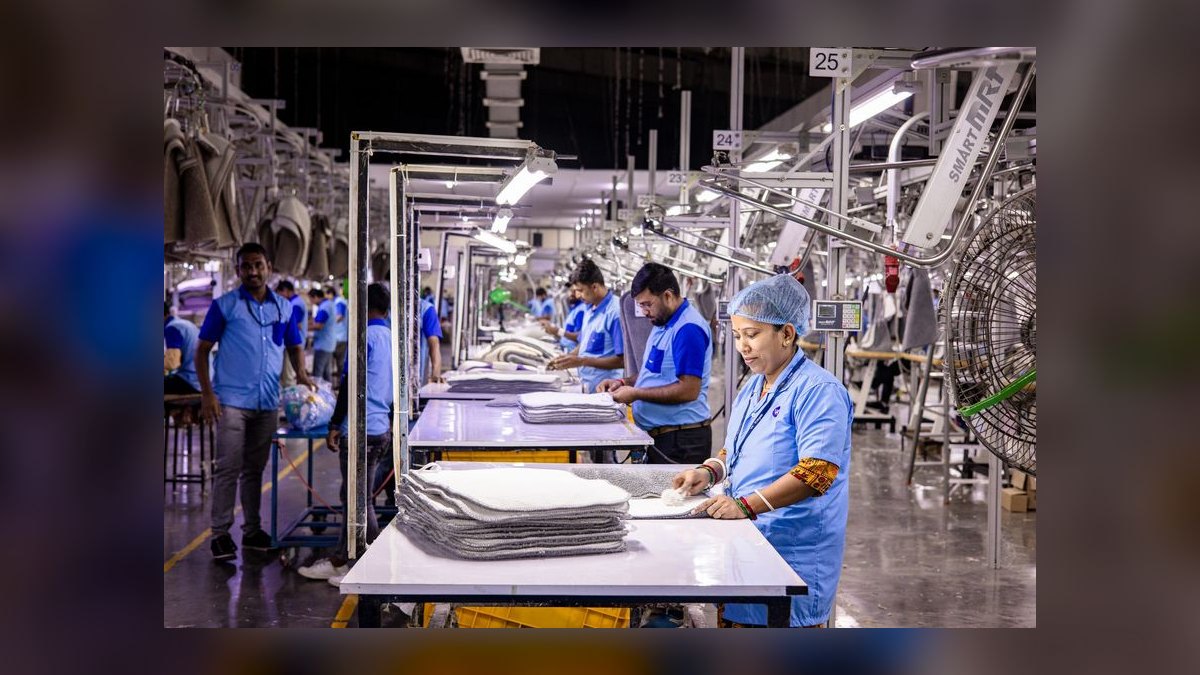
For most small-to-midsize print shops in 2027, schedule three to six production staff per shift — typically one press operator per running press, one prepress or setup person, one bindery/finishing hand, and a floater. Size it off scheduled machine hours, not headcount habit: staff the presses that must run, then add finishing to match.
The outcome you should expect
When you get shift staffing right in a print shop, the visible outcome is not "everyone looks busy." It is that every press you intended to run is actually running, every job that came off a press moved into finishing the same day, and nobody stayed past the scheduled end of shift to rescue a due date. That is the real scoreboard, and it is worth being blunt about because most shop owners judge staffing by the wrong signal — they walk the floor, see idle hands, and cut a person, then spend the next three weeks paying overtime because the bindery backed up.
A well-staffed shift in a commercial or digital print shop typically lands in a band you can measure. Press utilization — the share of the shift where the press is actually producing sellable impressions, not warming up, not waiting on plates, not waiting on an operator who is across the room helping trim — should sit somewhere in the 55% to 75% range for a shop running mixed short-run work, and higher, 75% to 85%, for a shop running long, repeatable runs. If you are below 50%, you almost certainly have a staffing or sequencing problem, not a sales problem. If you are pinned above 90%, you have no slack, and the first jam or plate error will blow a due date.
The second outcome is flow. Work in progress should not pile up between stages. In a healthy shop, a job that comes off the press before 2pm gets cut, folded, or bound the same day. If you have a growing stack of printed-but-unfinished work on a skid in the corner, that stack is telling you your finishing staffing is one person short relative to your press staffing — not that your presses are too fast. Finishing is where most shops are quietly understaffed, because it is easy to see a press sitting idle and hard to see a bindery falling behind by forty minutes a day.
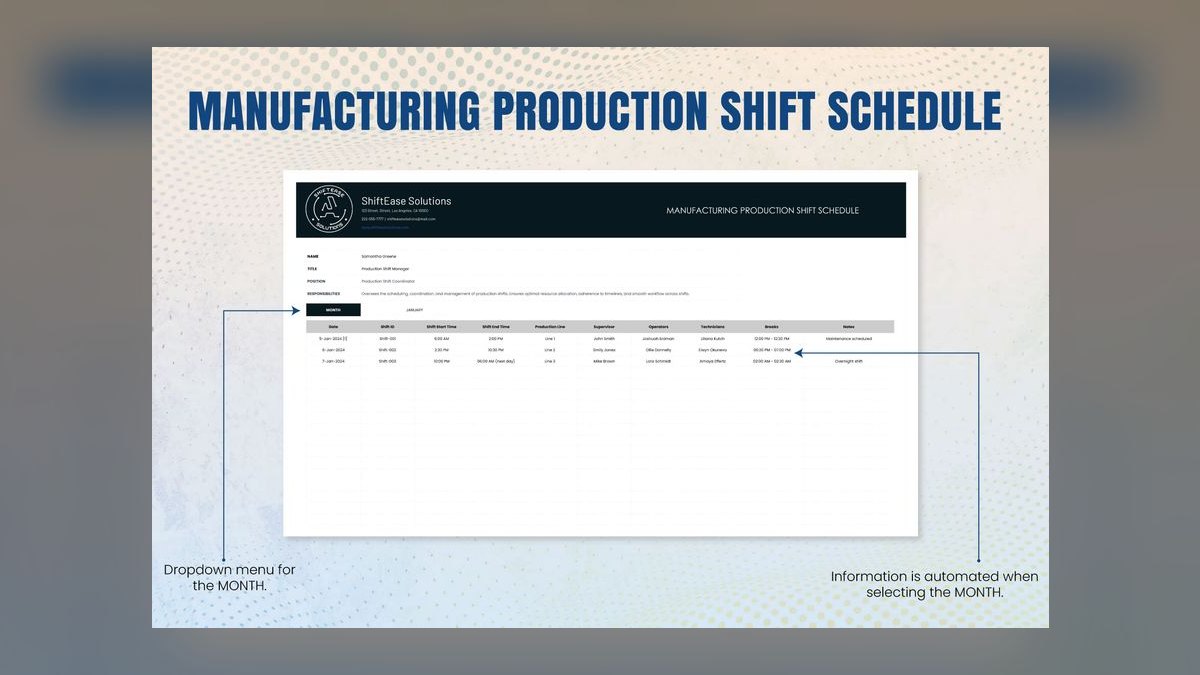
The third outcome is overtime as an exception rather than a habit. A correctly staffed shift produces overtime maybe two or three times a month, driven by a genuine rush or a machine failure. If you are running overtime every week on the same shift, you are not short on hours in the abstract — you are short on the specific skill that is bottlenecking, and adding a generalist will not fix it. That distinction matters more than total headcount.
Finally, expect the right staffing level to feel slightly uncomfortable. There should be roughly 10% to 15% of the shift where someone is doing secondary work — cleaning, restocking, prepping the next job's stock, cross-training — rather than producing. That slack is not waste. It is what absorbs the variability that print work always carries: a customer file that arrives broken, a stock delivery that shows up late, an operator who calls in. Shops that schedule to 100% utilization on paper end up at 70% in reality, because they have no capacity to absorb normal chaos.
What drives that outcome
The number of production staff you need on a shift is driven by four things, and they interact. Get the interaction right and the headcount answers itself.
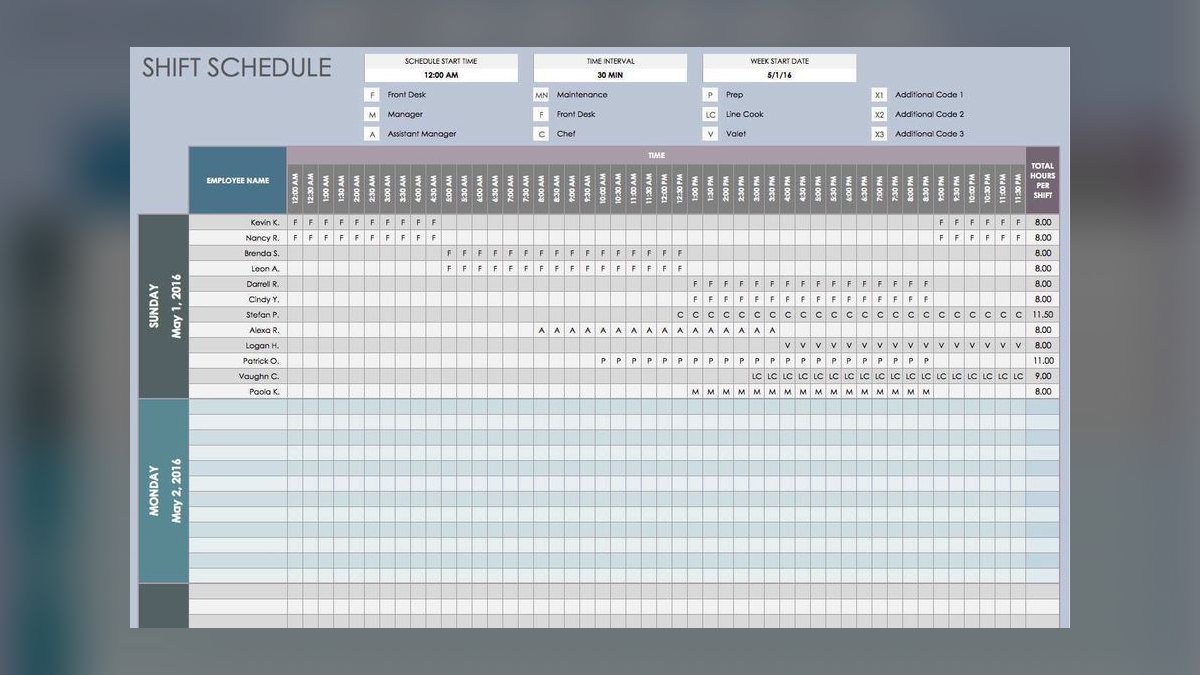
Machine hours scheduled, not orders booked. Start from equipment. Every press that must run during the shift needs an operator; that is a hard floor. A four-color offset press with an in-line coater generally needs one experienced operator plus a second hand during makeready and during long runs where you are pulling and boxing signatures — call it 1.5 people averaged over a shift. A digital production press or a wide-format roll-to-roll unit can often be run one-to-many: one operator covering two or three digital devices is normal if the runs are long and the file prep is clean. If your operator is also doing file fixes, that ratio collapses to one-to-one fast.
The mix of run lengths. This is the single biggest swing factor and the one most shops underweight. A shift with twelve short runs has roughly twelve makereadies; a shift with two long runs has two. Makeready is people-intensive — plate changes, wash-ups, color matching, first-article checks. A short-run digital shop doing 40 jobs a shift needs more prepress and more hands on the floor than a shop doing the same impression count across four long runs, even though both look identical on a monthly volume report. Count setups, not sheets.
Finishing complexity. Cutting alone is fast. Cut plus fold plus stitch plus shrink-wrap plus kit-and-pack is a different animal. A rule of thumb that holds up reasonably well: for straightforward cut-and-pack work, one finishing person supports two to three press operators. For multi-step bindery work — saddle stitch, perfect bind, die cut, hand assembly — you may need one finishing person per press operator, sometimes more. Mailing and fulfillment work skews it further; inserting, addressing, and postal presorting are labor-heavy and often need dedicated people who never touch a press.
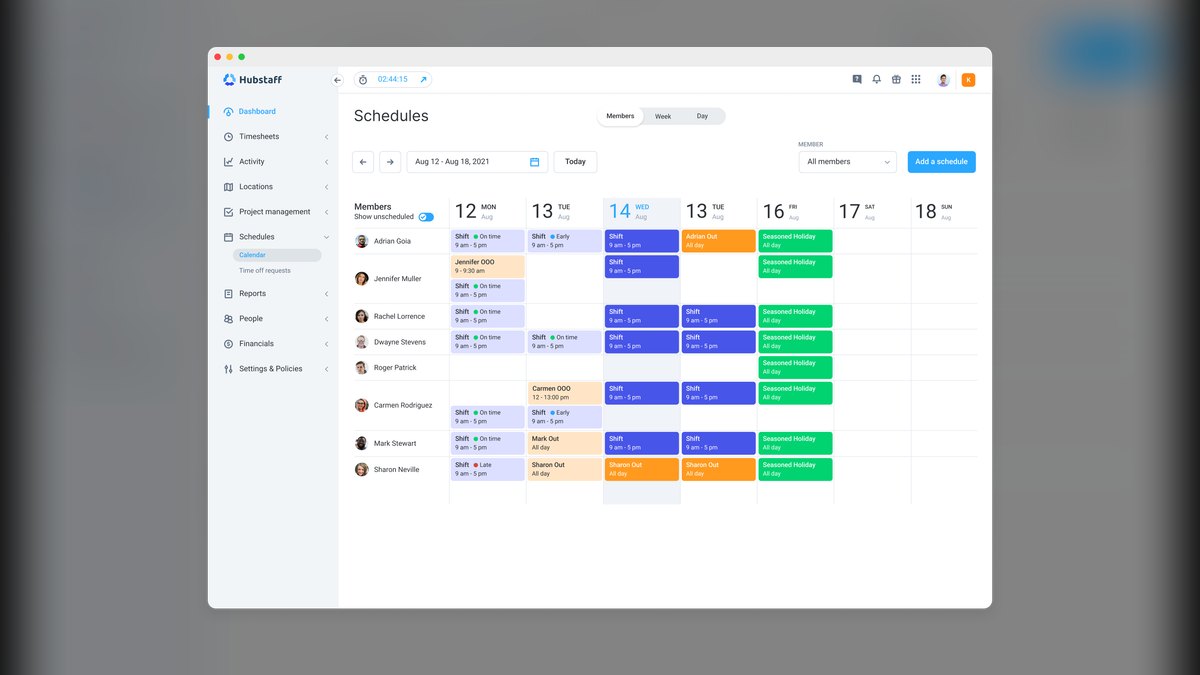
Cross-training depth. A shift of four cross-trained people is worth more than a shift of six specialists, because the four can shift to wherever the queue is deepest. This is the highest-leverage investment most shops can make and the slowest to pay off — figure six to twelve months to get a press operator genuinely competent on the cutter and the folder. But it is what lets you run a lean shift without being fragile.
Benchmarks and realistic ranges
Here are the ranges that hold up across most small and midsize shops in 2027. Treat them as starting points to calibrate against your own numbers, not as gospel.
A one-press digital shop, single shift. Two to three people. One press operator who also handles prepress on clean files, one finishing person on the cutter and folder, and — if you are running more than about 25 jobs a day — a third person splitting customer service and production support. Below 15 jobs a day, two people can genuinely cover it.
A small offset shop with one or two presses, single shift. Three to five. One operator per press is non-negotiable. Add a dedicated prepress person once you are producing more than roughly eight to ten plate sets a day; below that, the press operator can prep between runs. Add one bindery person, and a second if you do any stitching or binding in-house.
A mixed shop running digital plus offset plus some wide format, single shift. Five to eight. This is where the floater becomes essential, because you have three different queues that surge at different times. Typical split: two press operators, one digital operator covering two or three devices, one prepress, two finishing, one floater.

Second shift. Second shifts almost always run leaner, and that is usually correct — they typically handle long runs and overflow rather than the full mix of short-turn work. A second shift at 60% to 70% of first-shift headcount is normal. What is not normal, and what burns shops repeatedly, is a second shift with no one who can troubleshoot. If your only person who can fix a color drift or clear a complex jam works days, your night shift will stop dead at 11pm and you will not find out until morning.
Labor as a share of revenue. Direct production labor in commercial print typically runs somewhere in the 20% to 30% of sales range depending on how much you outsource and how equipment-heavy you are. Highly automated shops with newer digital equipment trend toward the low end; labor-intensive finishing and mailing work trends high. If you are meaningfully above 35%, you are either overstaffed, underpriced, or carrying too much manual finishing that should be automated or outsourced.
Hours per thousand impressions. This is a useful internal metric even though there is no universal benchmark, because the number depends entirely on your mix. Track it for your own shop over a quarter and you will have something more useful than any industry average — you will see exactly which job types eat labor disproportionately, and those are the ones to reprice or automate.
Absence buffer. Plan for 8% to 12% of scheduled hours to disappear to sick days, vacation, and no-shows. On a five-person shift that is effectively half a person, permanently. Either you schedule a floater, you maintain a cross-trained bench, or you accept that one absence a week disrupts production. There is no fourth option, and pretending otherwise is how shops end up with chronic overtime.
Risks, edge cases, and failure modes

Staffing to peak instead of to median. The most expensive mistake. If your busiest week needs seven people and your typical week needs five, staffing seven means you carry two people's cost for forty weeks a year to cover twelve. The better structure is a core of five, a cross-trained part-time or on-call bench of two, and a clear escalation path — planned overtime, a temp agency relationship established before you need it, or a trade-partner shop you can broker overflow to. Set that up in a calm month, not in the middle of a rush.
The single-point-of-failure operator. Almost every shop has one person who is the only one who can run the big press, or the only one who understands the imposition workflow, or the only one who can talk a difficult customer through a color match. That person's vacation is a production crisis. Fix it deliberately: document the setup procedures, schedule paired shifts so a second person shadows, and accept the short-term productivity hit. This is the risk that most reliably turns into a five-figure problem.
Understaffed finishing masquerading as a press problem. When due dates slip, the instinct is to add press capacity. Check the WIP stack first. If printed work is waiting on finishing, adding press hours makes the stack bigger and the problem worse. The tell is simple: measure how long a job sits between coming off the press and shipping. If that gap is growing, your constraint is downstream.
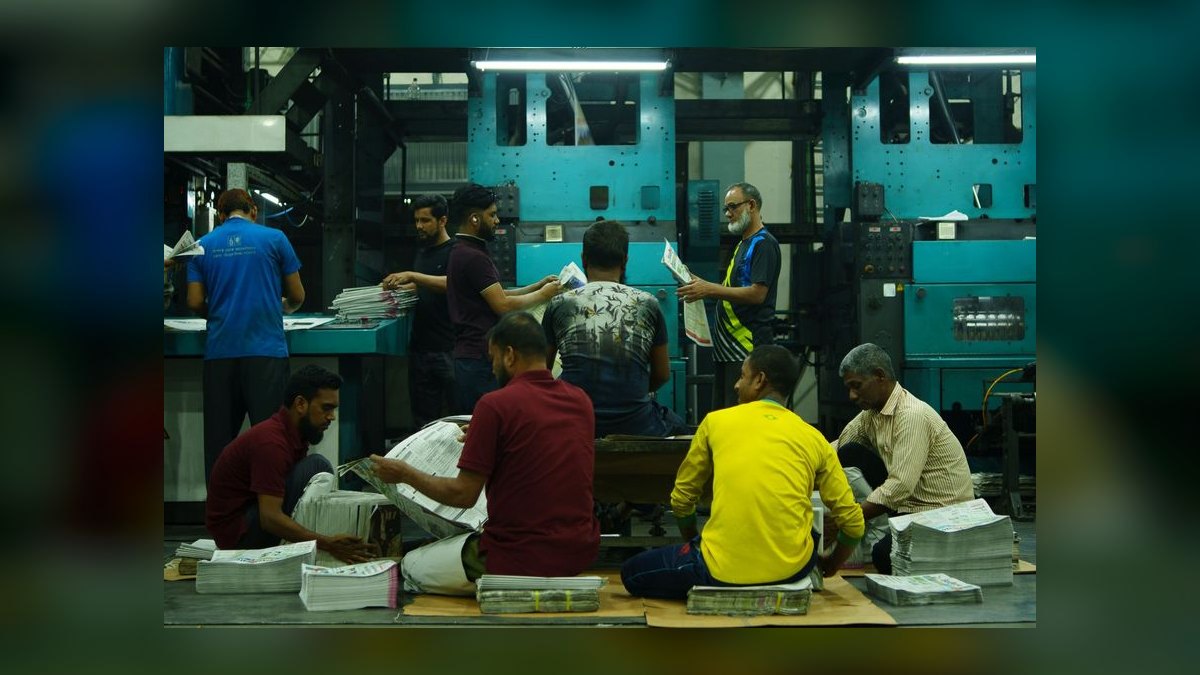
Overreliance on the floater. A floater who is genuinely floating — moving to the deepest queue — is valuable. A floater who has quietly become the full-time second operator on one machine is not a floater anymore, and your buffer is gone without anyone noticing. Audit this quarterly by asking where each person actually spent their hours, not where the schedule said they would.
Shift-change losses. A shop running two shifts loses real production in the handoff — typically 15 to 30 minutes per changeover if there is no structured handoff. Over a year that is meaningful. A written handoff sheet covering job status, machine issues, and stock positions recovers most of it. This is unglamorous and it works.
Seasonality and the annual pattern. Most commercial shops have a rhythm — political and back-to-school work in some markets, annual reports and tax season in others, holiday packaging and direct mail in Q4. Staffing flat across a seasonal business guarantees you are wrong twice a year. Build a seasonal staffing plan and hire the flex capacity in advance of the peak, because the whole market is hiring the same temps at the same time.
The automation trap in reverse. New equipment usually reduces headcount less than the brochure suggests, at least in year one. An automated cutter or a new inline finisher shifts labor rather than eliminating it — you need fewer hands and more skill, and the skill takes time to build. Do not cut staff on the strength of a purchase order. Cut after you have run the new gear at target throughput for a full quarter.
Compliance and scheduling law. Predictive scheduling and fair workweek rules apply in a growing number of jurisdictions, and they carry real penalties for last-minute schedule changes. If you operate in a covered area, the practical effect is that you must post schedules further out and pay premiums for changes — which raises the value of a stable core roster and a planned buffer over reactive call-ins. Check your local rules; they vary substantially.
A practical rollout plan

Do not redesign your schedule in one move. Work through it over about six weeks so you can see the effect of each change.
Week one — measure. Log, for every shift, the machine hours actually run per device, the number of makereadies, the overtime hours, and the size of the WIP stack at end of shift. You are looking for the pattern, not precision. Most shops discover something surprising in this week — a press that is idle far more than anyone believed, or a finishing queue that is quietly the real constraint.
Week two — map the constraint. Take the data and identify the single stage that limits throughput. It is one stage, not three. Everything downstream of it is starved and everything upstream is building inventory. That constraint determines where your next hire goes and where you can afford to be thin.
Week three — set the base roster. Build the shift from the machine schedule: one operator per press that must run, prepress sized to setup count, finishing sized by complexity, plus one floater. Write it down as a standing roster rather than reinventing it weekly. A standing roster is easier to defend, easier for staff to plan around, and easier to compare against actuals.
Week four — build the flex layer. Identify who is cross-trained on what, and where the gaps are. Establish the on-call or part-time bench, and open the temp-agency or trade-partner relationship now. Post the cross-training plan so people can see a path to more valuable skills — this helps retention more than most owners expect.
Week five — run it and instrument it. Track four numbers weekly: press utilization, on-time delivery, overtime hours, and end-of-shift WIP. These four together tell you whether the roster is right. Utilization up and WIP up means you are pushing work into a bottleneck. On-time up and overtime down means you got it right.
Week six — adjust and lock. Make one change, not five. If overtime is concentrated in finishing, add finishing hours. If it is concentrated at setup, add prepress. Then hold the new roster for a full month before changing it again, because print volume is variable enough that a single week tells you almost nothing.
Related questions
How do I know if I should add a second shift instead of more people on first?
Add a second shift when your presses are the constraint and they are running above roughly 80% utilization on first shift. If the constraint is finishing or prepress, a second shift on the presses just builds inventory faster. Also confirm you have a night-capable troubleshooter before committing.
Should prepress be its own role or part of the press operator's job?
Below about eight to ten setups a day, the press operator can handle prep between runs. Above that, the switching cost eats your press time and a dedicated prepress person pays for itself quickly. Watch for operators doing file fixes during what should be run time.
How many people do I need for a wide-format or sign shop specifically?
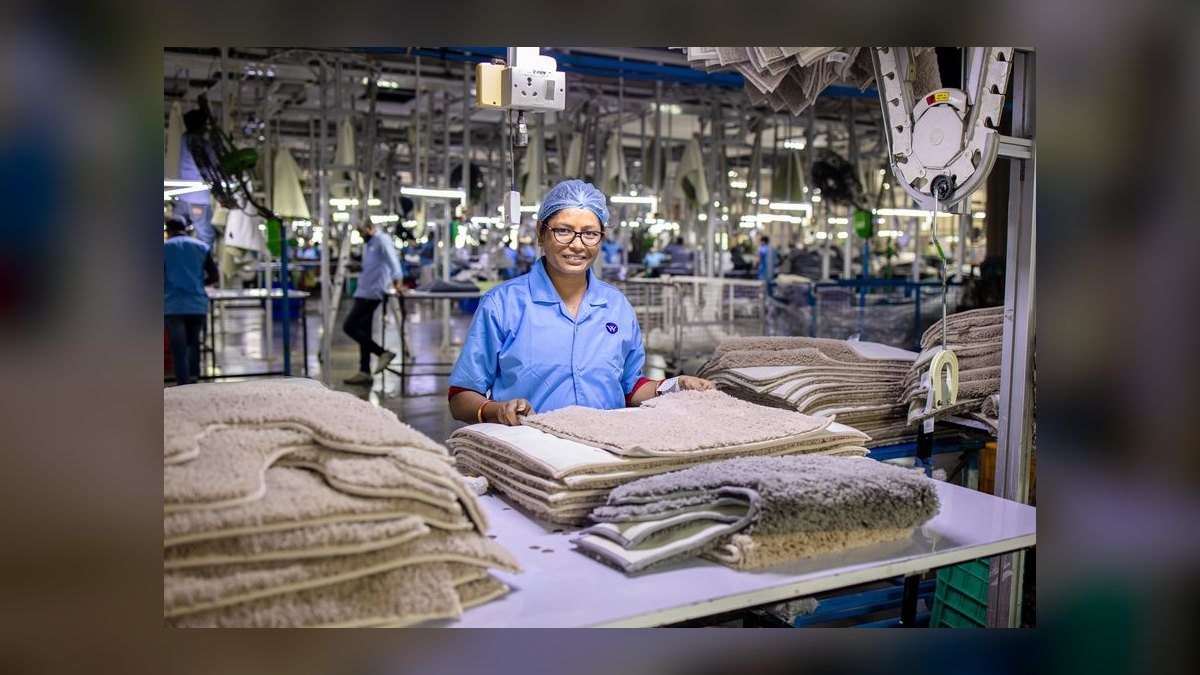
Wide format skews toward finishing labor — weeding, laminating, mounting, trimming, installing. A common split is one printer operator supporting two to three finishing hands, roughly the inverse of a commercial sheetfed shop. Installation crews are typically scheduled separately from production.
What is the right ratio of full-time to part-time production staff?
A core of full-time staff covering median demand, with 20% to 30% of peak capacity in part-time or on-call people, works for most shops. Going much leaner on full-time hurts quality and cross-training depth; going much heavier on part-time raises training cost and turnover.
FAQ
How many production staff should I schedule each shift at my print shop in 2027?
Three to six for most small-to-midsize shops. Build it from the machine schedule rather than from headcount habit: one operator per press that must run during the shift, prepress capacity sized to your setup count, finishing sized to your job complexity, and one floater to absorb absence and variability. A one-press digital shop can run on two to three; a mixed shop with offset, digital, and wide format typically needs five to eight.
What drives the number more than anything else?
Setup count, not volume. Twelve short runs in a shift generate twelve makereadies and twelve finishing setups; two long runs generate two. Two shops with identical monthly impression counts can need very different staffing if one runs short-turn work and the other runs long, repeatable jobs. Count setups per shift and the staffing answer becomes much clearer.
Is it cheaper to run overtime or hire another person?

Occasional overtime is cheaper than carrying a permanent role you only need part of the time. Chronic overtime is not — it costs premium wages, drives errors and rework in the back half of long shifts, and burns out your most capable people, who are the ones who end up covering it. If the same shift is running overtime most weeks, the hire is almost certainly cheaper.
How do I staff around seasonality without over-hiring?
Set your permanent roster at median demand, not peak. Cover the peak with a cross-trained part-time bench, planned overtime, a temp-agency relationship you establish in a quiet month, and a trade-partner shop you can broker overflow to. Line all four up before the busy season, because everyone in your market goes looking for the same flex capacity at the same time.
What should I track weekly to know if my staffing is right?
Four numbers: press utilization by device, on-time delivery percentage, overtime hours by department, and the size of the work-in-progress stack at end of shift. Read them together. Rising WIP with high utilization means you are feeding a bottleneck. Falling overtime with steady on-time delivery means the roster is correct — hold it.
How long does it take to cross-train a press operator on finishing equipment?
Basic competence on a programmable cutter or a folder takes a few weeks of regular exposure. Genuine proficiency — running unfamiliar jobs without supervision and troubleshooting problems — takes six to twelve months. Schedule the training as paired shifts on real work rather than as classroom time; it sticks better and produces sellable output while it happens.
Sources
- https://www.bls.gov/ooh/production/printing-workers.htm
- https://www.bls.gov/iag/tgs/iag323.htm
- https://www.osha.gov/printing
- https://www.sba.gov/business-guide/manage-your-business/hire-manage-employees
- https://www.dol.gov/agencies/whd/flsa
- https://www.printing.org/
- https://www.nist.gov/mep
- https://www.census.gov/programs-surveys/economic-census.html
Related on PULSE
- How do I price short-run print jobs profitably?
- What equipment should a small print shop buy first?
- How do I reduce makeready time on offset presses?
- When should a print shop outsource finishing instead of buying equipment?
- How do I set realistic turnaround times for a print shop?
This page will be disappearing soon. Save it to your device for $1 — or read it free while it is here.
@Kory-White- · if Venmo asks, the last 4 of my number are 2012
This page is gone.
This one is off the shelf now. $1 keeps it on your phone for good — the whole page, pictures and diagrams included.
 pulse-qHow Many Sales Reps Do I Need to Hire for My Water Treatment Company in 2026?
 pulse-qShould I open or buy a Frenchies Modern Nail Care franchise in 2027?
 editorialShould I Hire a Fractional CRO If My Service Fees Are Outperforming My Local Competitors in 2027?
 pulse-qHow Many Sales Reps Do I Need to Hire for My Septic Service Company in 2026?
 editorialShould I Outsource My Payroll or Keep It In-House for My Landscaping Company in 2027?
 pulse-qShould I open or buy a Spiffy franchise in 2027?
 pulse-qHow Many Sales Reps Do I Need to Hire for My Background Screening Company in 2026?
 pulse-qShould I Hire a Fractional CRO If I Want a Revenue Audit Before I Commit Budget in 2026?
 editorialHow Do I Decide Whether to Charge a Service Fee or a Subscription Fee in 2027?
 editorialShould I open or buy a Nothing Bundt Cakes franchise in 2027?