


Should I Hire a Fractional CRO If My CEO Wants a Full-Time Hire by Next Quarter in 2027?
Quality
Certified
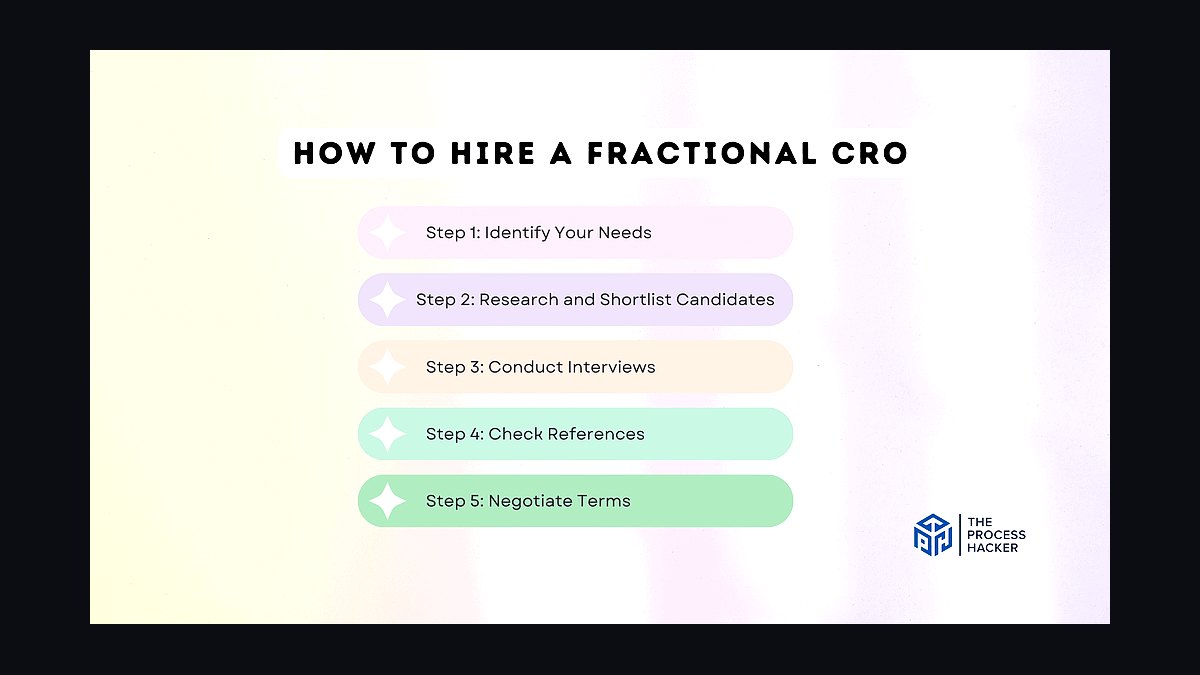
Hire the fractional CRO only as a bridge, not a substitute. Your CEO wants a full-time leader by next quarter; a good search realistically takes five to seven months. Bring in a fractional operator now to stabilize pipeline, define the scorecard, and de-risk the hire — then hand off cleanly to the permanent CRO.
What a fractional CRO actually is, and why the timing conflict matters
A fractional CRO is an experienced revenue executive who works for you on a contracted slice of their week — commonly one to three days, sometimes as little as eight hours — under a rolling agreement rather than an employment offer. They carry real authority over sales, marketing handoffs, partnerships, and often customer success, but they do not carry the multi-year identity, the equity grant, or the recruiting-and-retention mandate that a full-time chief revenue officer carries. The distinction is not seniority. It is duration, bandwidth, and the class of problems the role can absorb.
The conflict you are describing is very common and it is almost never actually a disagreement about the person. Your CEO wants a full-time hire by next quarter. That preference usually encodes three separate wishes stacked into one sentence: *I want accountability I can point at, I want the board to see we filled the gap, and I want this off my desk.* All three are legitimate. But the calendar is doing something dishonest here. "Next quarter" implies roughly ninety days. A competent CRO search — role definition, retained or embedded recruiter, first slate, four to six panel loops, references, compensation negotiation, and then a notice period that is rarely under a month and frequently two — runs five to seven months from kickoff to first day. A CRO search that closes in ninety days closed because someone was already available, and "already available" is worth understanding before you celebrate it.
So the honest framing is not fractional *versus* full-time. It is: what happens to revenue in the six-month gap that will exist whether or not anyone admits it exists? Left unfilled, that gap is usually absorbed by the CEO, who is the most expensive and least available person to run a weekly forecast call. Or it is absorbed by an interim VP of Sales who takes the job title as an audition and starts making decisions optimized for looking good rather than for compounding. Both outcomes are worse than a paid operator with no political stake in the outcome.
There is a second reason to bring in fractional help before the search: you probably do not yet know what you are hiring. Companies at $3M–$15M ARR routinely open a CRO search with a job description assembled from three competitor postings. The fractional operator's most valuable output is often not the pipeline lift. It is the scorecard — a written, evidence-backed definition of the actual constraint. Is this a demand-generation problem, a pricing and packaging problem, a sales-productivity problem, or a churn problem being misdiagnosed as an acquisition problem? Those four constraints map to four genuinely different CRO profiles, and hiring the wrong profile is a $400K mistake that takes fourteen months to surface.
Adjacent to this, the same logic applies to the fractional CFO and fractional CMO market, and to the interim-CTO pattern in engineering. The mechanism is identical: senior judgment is lumpy demand, and buying it in slices lets a company front-load diagnosis before committing to a headcount that becomes very hard to reverse. What differs for revenue specifically is that the CRO seat touches quota-carrying humans whose comp plans and territories cannot be churned every six months without real damage. That constraint should shape how you scope the fractional engagement — diagnose and build freely, but be conservative about restructuring territories and comp until the permanent leader owns them.
The step-by-step process for running both tracks at once
Do not sequence these. Run the fractional engagement and the executive search in parallel from week one, with the fractional operator explicitly contributing to the search rather than competing with it.
Week 0 — Align the CEO on the arithmetic, not the philosophy. Do not argue that fractional is better. Show the search timeline with real dates: kickoff, first slate, loops, offer, notice period, start date. Let the CEO see that "by next quarter" produces a start date in month six even under an optimistic plan. Then propose the bridge. The framing that lands: *we are hiring full-time on your timeline; the fractional engagement is how we protect the number while that search runs, and how we make sure the person we hire is the right one.* You have not opposed the CEO. You have made their goal achievable.

Weeks 1–2 — Diagnosis and instrumentation. The fractional CRO's first deliverable is not a strategy deck. It is a pipeline audit: stage definitions rewritten so they are exit-criteria-based rather than optimism-based, conversion rates recalculated on trailing four quarters, win/loss reviewed on the last twenty closed-lost deals, and a segmentation of which reps are actually producing versus which are producing once. Expect this to be uncomfortable. Most companies discover their reported pipeline coverage is inflated by 30–50% once stages get honest definitions.
Weeks 3–4 — Stabilize the operating cadence. Weekly forecast call with a fixed agenda, a deal-inspection standard, a pipeline-generation review separated from the forecast review, and a single source of truth in CRM. This is unglamorous and it is where most of the near-term revenue protection comes from. A forecast call that surfaces slipping deals four weeks earlier is worth more in a quarter than any repositioning exercise.
Weeks 4–8 — Write the scorecard and feed the search. By now the operator knows what the constraint is. The scorecard should name the constraint, define three to five outcomes the permanent CRO owns in their first year with numbers attached, and specify the profile: enterprise versus velocity, first-CRO versus scale-CRO, player-coach versus pure builder. This document becomes the recruiter brief, the interview rubric, and later the new CRO's onboarding plan.
Weeks 6–20 — Search execution with the fractional operator on the panel. Have them run one interview loop — ideally a working session where the candidate reviews the real pipeline data and says what they would do. This is the single highest-signal interview stage available to you, and only someone with current inside knowledge can run it. Guard against the obvious conflict by writing into the contract, up front, that the fractional operator is not a candidate for the permanent seat and has no veto — advisory input only.

Weeks 20–28 — Overlap and handoff. Two to six weeks of paid overlap once the permanent CRO starts. The fractional operator steps down to advisory hours, transfers relationships, and leaves. Then they leave for real. A handoff that drags past eight weeks creates two bosses and the team will route around both.
Costs, timelines, and the ranges you should budget against
Talk about this in total cost of the gap, not in day rates, because day rates make fractional look expensive and headcount look cheap when the opposite is usually true for a short window.
Fractional engagement structure. Most fractional revenue leaders contract on a monthly retainer tied to a committed number of days per month, not hourly. One day a week is advisory — useful for a company that already has a functioning VP of Sales and needs judgment above them. Two days a week is the common bridge configuration and is enough to own a forecast cadence and drive a diagnosis. Three or more days a week starts to resemble a part-time employee and is usually a sign the scope has drifted or the underlying problem is bigger than a bridge. Retainers vary widely by market, seniority, and equity component; get three quotes and compare on committed days and named deliverables rather than on headline price. Insist on a defined engagement length — three or six months — with a renewal decision point, not an open-ended arrangement that quietly becomes permanent.

Full-time CRO cost. Base plus variable at on-target earnings, plus equity, plus employer taxes and benefits loading of roughly 25–30% on top of cash. Then the costs nobody puts in the model: recruiter fee if retained (commonly a percentage of first-year cash comp), signing bonus to buy out unvested equity, relocation if applicable, and the ramp period. A CRO is rarely net-productive before month three and rarely fully productive before month six. Add it up and a CRO hire is a meaningful multi-hundred-thousand-dollar commitment in year one before they influence a single deal.
The severance math is the part that changes decisions. CRO tenure is famously short — median tenure for chief revenue and chief marketing officers sits well under three years, and first-time CRO hires at companies that have never had one wash out at a high rate. If the hire is wrong, you are paying severance, eating six to nine months of lost momentum, and reopening a search with a demoralized sales team that has now watched a leader fail. That failure cost is the thing the fractional bridge is actually insuring against. A three-to-six-month fractional engagement costs a fraction of one bad CRO year and materially raises the odds the permanent hire is right.
Timeline realism, stated plainly. Search kickoff to signed offer: 3–5 months with a good recruiter and an engaged CEO, longer if the scorecard keeps changing. Notice period: 4–8 weeks, sometimes twelve for executives with garden leave clauses. First day to owning the forecast: 6–10 weeks. So a search that starts today produces a leader who genuinely owns the number somewhere between month seven and month ten. Every week you delay the bridge is a week that gap runs unmanaged.
Where the fractional engagement pays for itself in-quarter. Honest stage definitions and a real deal-inspection standard typically recover deals that were slipping invisibly. Fixing the handoff between marketing-qualified and sales-accepted leads is often a two-week project with immediate throughput effect. Killing three initiatives that are consuming rep hours without producing pipeline frees selling capacity you already pay for. None of these require a permanent leader. All of them require someone senior with the standing to say no.
Where teams get this wrong

Treating it as a competition. The most common failure is framing the conversation as fractional *instead of* full-time, which makes the CEO defensive because it reads as opposition to a decision they have already made publicly, possibly to the board. Never do this. The bridge framing costs you nothing and gets you the same outcome.
Letting the fractional operator become a candidate. If the fractional CRO wants the permanent seat, every diagnostic they produce is now an audition artifact. They will over-index on visible wins and under-report structural problems that would make the job look hard. Write the non-candidacy clause into the contract on day one. If you later decide you want them full-time, that is a fresh conversation with the clause explicitly waived — not a drift.
Buying advice when you needed authority. A fractional engagement scoped as "advisory" produces recommendations nobody implements. The bridge configuration needs real decision rights: the operator runs the forecast call, sets the deal-inspection standard, and can stop initiatives. Write the decision rights down. Ambiguity here is the single largest predictor of a wasted retainer.
Under-scoping the days. One day a week cannot own a cadence. If you have contracted one day and are asking for two days of output, you will get shallow work and the engagement will be judged a failure for a reason that was structural, not personal.
Restructuring comp and territories mid-bridge. Tempting, and usually wrong. Comp plans and territory maps are the permanent CRO's primary levers and their first real act of leadership. A bridge operator who redraws territories in month two hands the incoming leader a team that has already been through one disruption and now faces another. Exception: if the comp plan is actively paying for the wrong behavior — commission on bookings with no clawback on rapid churn, for instance — fix that immediately and document why.

No exit criteria. Engagements without a written end condition become permanent by inertia. The company gets comfortable, the search loses urgency, and eighteen months later you have a very expensive part-time executive and no succession. Define the end: permanent CRO starts, or specified metrics hit, or a fixed date — whichever comes first.
Hiding the arrangement from the team. Reps figure out within a week that the new person is not full-time. Announce it as a bridge with a stated purpose and a stated end. Ambiguity breeds the assumption that layoffs or a sale are coming, and your best reps start taking recruiter calls.
Skipping the overlap. Companies cut the overlap to save money and lose the entire institutional transfer. Two to six weeks of paid overlap is cheap relative to the cost of the incoming CRO rediscovering everything from scratch.
Ignoring the board dimension. If the CEO wants a full-time hire by next quarter partly because a board member asked about it, address that directly. A one-page memo showing the bridge plan, the search timeline, and the interim revenue protection usually satisfies the underlying concern better than a rushed hire does.
Decision framework: when the bridge is right and when it is not
The answer is not universal. Run these gates in order.
Gate one — is there a real gap? If a strong candidate is already identified and their start date is within eight weeks, skip the bridge and put the money into a longer, better-designed onboarding plan. Bridges solve gaps; no gap, no bridge.

Gate two — is the constraint diagnosed? If you cannot state in one sentence what is actually broken with evidence behind it, you are not ready to hire a permanent CRO no matter what the calendar says. Diagnose first, with fractional help if needed.
Gate three — can you afford the wrong hire? Companies with more than eighteen months of runway and a forgiving board can absorb a CRO miss. Companies raising in the next twelve months cannot. Tighter runway argues *for* the bridge, not against it, because the bridge is the cheaper insurance policy.
Gate four — is there a credible internal candidate? If a VP of Sales is close to ready, the right move is often a fractional operator working *above and with* them for six months as a developmental coach, then promoting internally. This is the cheapest good outcome available and it is chronically underused.
Gate five — how large is the revenue team? Under roughly fifteen quota-carriers, a strong VP of Sales plus fractional executive coverage is frequently sufficient and a full CRO is premature. Above thirty, with multiple segments and a real marketing function to integrate, you need a permanent CRO and the bridge is purely a stopgap.
Gate six — what happens to the number this quarter if nobody senior owns it? If the answer is "the CEO covers it," ask honestly how many hours a week the CEO has, and what they will stop doing. Usually fundraising or product. Neither is a good trade.
Adjacent scenarios that follow the same logic
The fractional CMO gap. If demand generation is the actual constraint, a fractional CRO will spend their engagement diagnosing a marketing problem they cannot fix. Scope carefully — sometimes the bridge you need is a fractional demand leader, not a fractional revenue leader.

RevOps as the durable investment. Whatever you decide about the executive seat, the instrumentation the bridge produces — clean stages, honest conversion math, a working forecast — should live in RevOps and survive every leadership change. Companies that treat the CRO as the source of operating discipline rebuild from zero every time the seat turns over. Companies that treat RevOps as the source of truth hand the next leader a working instrument panel.
The acquisition or fundraise window. If a transaction is likely in the next two quarters, a permanent CRO hire is exposed to real risk and hard to recruit into honestly. A bridge is often the more ethical arrangement for everyone.
Post-acquisition integration. Merged revenue orgs frequently use fractional leadership deliberately during integration, precisely because the permanent structure is unknowable until the merged pipeline is understood.
The second-time-around case. If you have already failed one CRO hire, do not run the same search again faster. The bridge exists to make the second search different, and skipping it after a wash-out is how companies fail twice.
Related questions
How long should a fractional CRO engagement last?
Three to six months for a bridge, with a written renewal decision point. Longer engagements are legitimate for companies deliberately deferring the permanent seat, but they need explicit annual review or they become permanent by inertia rather than by decision.
Can the fractional CRO become the full-time CRO?
Sometimes, but never plan for it at the outset. Write a non-candidacy clause into the contract so the diagnostic work stays honest. If both sides want it later, waive the clause explicitly and run a real process.
What does the fractional CRO actually own day to day?

Weekly forecast call, deal-inspection standard, pipeline-generation review, CRM hygiene enforcement, and the scorecard for the permanent hire. Avoid giving them comp-plan and territory redesign — those belong to the incoming permanent leader.
How do I tell the sales team about this?
Announce it explicitly as a bridge, with the purpose and the expected end date. Reps discover part-time status within a week regardless. Ambiguity reads as instability and drives your best people toward recruiter calls.
What if the CEO refuses the bridge entirely?
Then run the search hard, cover the forecast cadence with your best available internal operator, and document the timeline in writing so the gap is a known risk rather than a surprise. Revisit at the sixty-day mark with search data.
FAQ
Should I hire a fractional CRO if my CEO wants a full-time hire by next quarter in 2027?
Yes — as a bridge, not a replacement. The two goals are compatible. A realistic CRO search runs five to seven months from kickoff to a productive start date, so "next quarter" produces a gap whether or not you plan for one. The fractional operator protects the number during that gap and produces the scorecard that makes the permanent hire more likely to succeed. Present it to your CEO as an acceleration of their plan, never as an alternative to it.
How do I raise this with a CEO who has already committed to the board?
Bring the calendar, not the argument. Lay out kickoff, slate, loops, offer, notice period, and ramp with real dates. Then present the bridge as the plan that protects revenue while the committed search runs. Most CEOs who resist "fractional" as a concept accept "bridge with a defined end date and a handoff plan" immediately, because it does not require them to walk anything back.

What is the minimum engagement that actually works?
Two days a week for three months. Below that you are buying advice rather than authority, and advice without decision rights does not change a forecast. If budget forces one day a week, narrow the scope to a single deliverable — usually the diagnosis and scorecard — and be explicit that the operating cadence stays with someone internal.
Does hiring fractional slow down the full-time search?
It should speed it up, and it does when the operator is wired into the process. The scorecard becomes the recruiter brief and the interview rubric. The risk is real, though: if the pain goes away, urgency drains. Counter it with a written search milestone schedule reviewed at the same weekly meeting as the pipeline.
What are the warning signs the bridge is failing?
Scope drift past the contracted days without a renegotiation, deliverables that stay as recommendations, the operator avoiding hard conversations because they are not permanent, the search quietly stalling, and comp or territory changes appearing that were explicitly out of scope. Any two of these together warrant an immediate reset conversation or an early exit.
What should be in the contract?
Committed days per month, named deliverables with dates, explicit decision rights, a non-candidacy clause, confidentiality and non-solicit terms, a defined engagement length with a renewal checkpoint, exit criteria, and a paid-overlap provision for handoff to the permanent CRO. Ambiguity in any of these is where fractional engagements go wrong.
Sources
- https://hbr.org/2019/05/the-c-suite-skills-that-matter-most
- https://www.mckinsey.com/capabilities/growth-marketing-and-sales/our-insights
- https://www.bain.com/insights/topics/sales-and-marketing/
- https://www.gartner.com/en/sales
- https://www.spencerstuart.com/research-and-insight
- https://www.shrm.org/topics-tools/topics/talent-acquisition
- https://www.bls.gov/ooh/management/top-executives.htm
- https://sloanreview.mit.edu/topic/leadership/
- https://www.saastr.com/category/sales/
Related on PULSE
- What does a CRO actually own versus a VP of Sales?
- How do you build a CRO scorecard before opening the search?
- How long does an executive revenue search really take?
- When is a company too small for a chief revenue officer?
- How do you structure a paid overlap between an interim and permanent leader?
- What belongs in RevOps versus the CRO seat?
This page will be disappearing soon. Save it to your device for $1 — or read it free while it is here.
@Kory-White- · if Venmo asks, the last 4 of my number are 2012
This page is gone.
This one is off the shelf now. $1 keeps it on your phone for good — the whole page, pictures and diagrams included.
 pulse-qShould I open or buy a Central Bark franchise in 2027?
 pulse-qShould I Hire a Fractional CRO If I Have No RevOps Function Yet in 2026?
 pulse-qShould I open or buy a Jacuzzi Bath Remodel franchise in 2027?
 pulse-qHow Do I Score My Reps Fairly Across Territories in 2026?
 pulse-qShould I open or buy an Any Lab Test Now franchise in 2027?
 pulse-qShould I open or buy a Wayback Burgers franchise in 2027?
 pulse-qHow Many Employees Should I Schedule Each Shift at My Roller Rink in 2026?
 pulse-qShould I Hire a Fractional CRO If I Am Adding a Channel and Partner Motion in 2026?
 editorialAt what point should I hire my first operations manager for my small business in 2027?
 pulse-qShould I open or buy a Frenchies Modern Nail Care franchise in 2027?