
Should I open or buy a Little Caesars franchise in 2027?
 Curated byKory White · Fractional CRO · Maryland
 PULSEKNOWLEDGE LIBRARY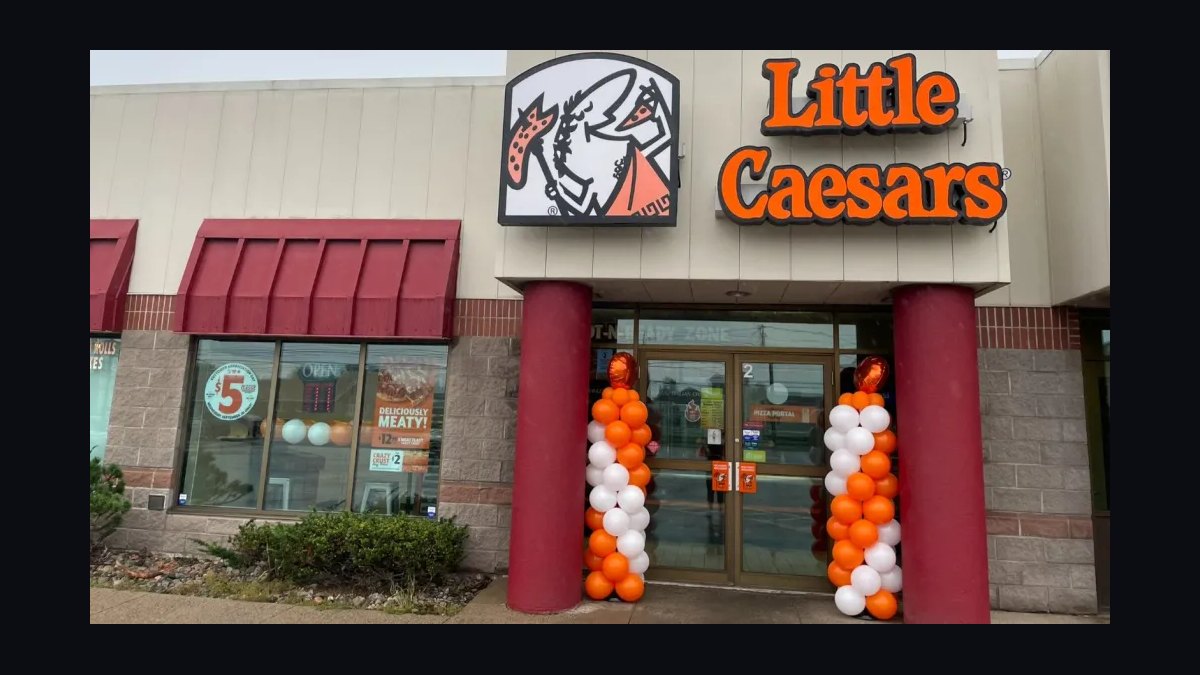
For most first-time buyers, opening a new Little Caesars in 2027 is the weaker path; buying an existing store or a small multi-unit package is usually better. The brand publishes no Item 19 earnings data, carries a 6% royalty plus up to 7% ad fund, and rewards scale operators with $400K+ net worth and $150K+ liquid.
Opening New Versus Buying Existing Little Caesars Units
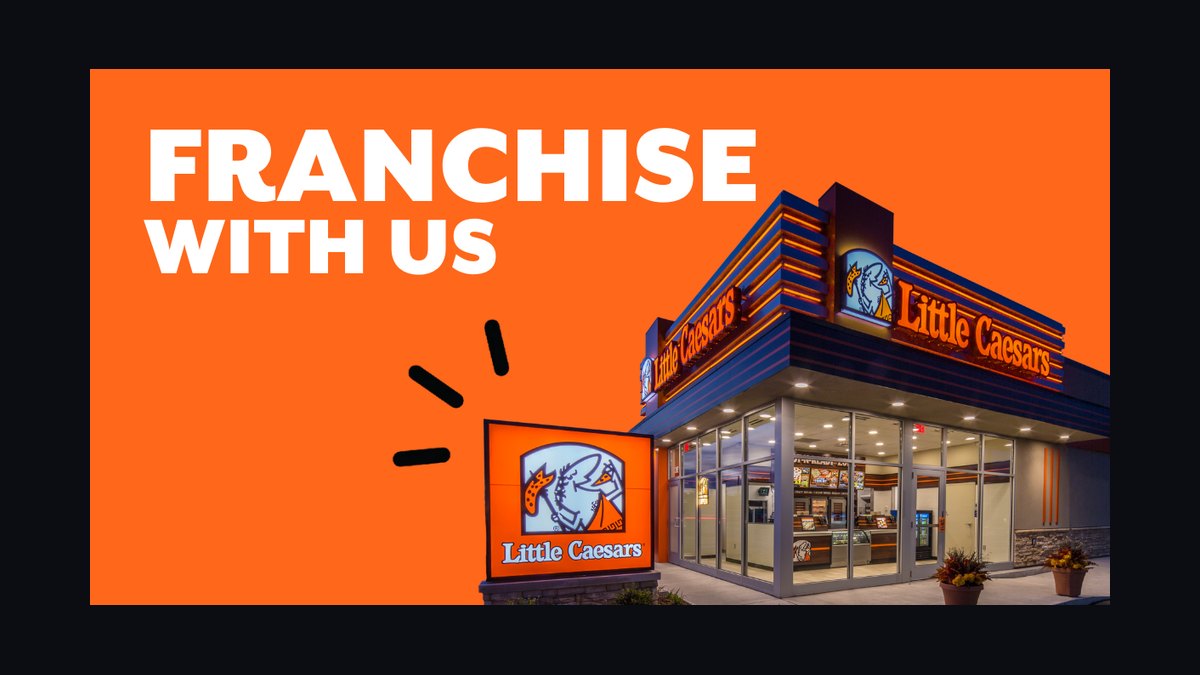
The first real decision is not whether to join the brand — it is which entry route you take. Opening a new Little Caesars means signing a development agreement, finding real estate, building out a shell, hiring a full crew, and absorbing 12 to 24 months of pre-opening spend before a single Hot-N-Ready hits the warmer. Buying an existing franchise means acquiring a cash-flowing asset with known sales history, an installed equipment package, a trained crew, and a lease you can inspect. The trade-offs run in opposite directions on almost every axis.
On the open-new side, you control site selection, store layout, and equipment spec. You get the newest image package, the current operations manual, and a fresh 10-year (or longer) franchise term. You also inherit the full construction risk: permit delays, landlord negotiations, utility hookups, and the gap between signing a lease and passing your soft opening. In practice, a new Little Caesars build in a secondary market takes 9 to 15 months from lease signature to opening day, and the franchisor's field team will hold you to image and equipment standards that push cost toward the upper half of the Item 7 range.
On the buy-existing side, you inherit whatever the previous operator built — good or bad. A well-run store with $1.0M+ average unit volume (AUV), a stable crew, and a lease under $22 per square foot NNN is a genuinely different asset than a new build. You can verify sales through POS reports, tax returns, and supplier invoices during diligence. You can watch the store on a Friday night before you make an offer. The risk shifts from "will this site work?" to "why is the seller exiting, and what are they hiding?" That is a much more answerable question.
The middle path — buying a small multi-unit package of two to five Little Caesars stores — is where the brand's economics actually start to work. G&A spreads across units, a single district manager can cover four to six stores, and you gain leverage with your distributor and your ad fund co-op. If you are set on Little Caesars in 2027, this is the route most likely to produce a return that justifies the fee burden.
How to Decide Between Opening and Buying
The decision tree below is the one a disciplined buyer should walk before spending money on either route. It forces the capital question first, then the operating question, then the market question. If you cannot answer "yes" at every gate, you either adjust your route or walk away.
Two things matter about this flow. First, capital gates everything — the FDD lists a $150,000 minimum liquid capital requirement, but experienced operators carry $80,000 to $120,000 per unit in reserves on top of the build. Second, the "buy" branch requires verifiable financials. If a seller will not open their POS and tax returns to you under an NDA, the deal is not investable regardless of the asking price.
Concrete Numbers Behind Each Route
The cost structures diverge sharply, and the divergence is where most buyers get surprised. Below is a side-by-side of the two routes using the 2025 FDD Item 7 ranges and third-party unit-economics estimates. Treat every number as a planning range, not a promise — the franchisor publishes no Item 19 Financial Performance Representation, so all revenue figures are third-party proxies.
Opening a new Little Caesars (single unit, secondary market):

- Initial franchise fee: $20,000
- Real estate and build-out: $180,000 to $1,150,000 (shell condition drives the spread)
- Equipment and signage: $130,000 to $370,000
- Initial inventory: $14,000 to $24,000
- Training and opening costs: $9,500 to $52,000
- Three months working capital: $25,000 to $200,000
- Total Item 7 range: $378,700 to $1,817,200
- Realistic all-in for a leased secondary-market build: $450,000 to $700,000
- Royalty: 6.0% of gross sales
- Ad fund: 3.0% to 7.0% of gross sales
- Combined ongoing burden: 9.0% to 13.0%
Buying an existing Little Caesars (single unit, stabilized):

- Purchase price: typically 2.5x to 4.0x seller's discretionary earnings for a single unit; 3.5x to 5.0x EBITDA for a small package
- Franchise transfer fee: confirm current amount in Item 5 of the FDD before signing
- Remodel or image upgrade: $50,000 to $250,000 depending on store age and franchisor requirements
- Working capital reserve: $60,000 to $120,000 per unit
- Royalty and ad fund: same 9.0% to 13.0% combined burden; the fee structure does not change with the route
- Diligence costs: $15,000 to $35,000 (attorney, accountant, QSR-specific inspector, environmental Phase I)
The unit economics that determine whether either route works are the same. At a $1.0M AUV with 32% COGS, 28% labor, 8% occupancy, and 13% combined fees, restaurant-level cash flow lands near $120,000 to $150,000 before debt service. Finance $700,000 at SBA 7(a) rates around 10.25% over 10 years and monthly debt service runs roughly $7,900 — about $95,000 a year. That leaves $25,000 to $55,000 of pre-tax cash for a single-unit owner-operator. Multi-unit operators spread G&A and push that number up materially.
Sequencing the Deal and the First 18 Months
Whether you open or buy, the sequencing is what protects you. The 90-day pre-commitment phase below is the minimum diligence window for either route; the buy route adds a seller-verification track that runs in parallel.
On the open-new track, the site study is the single highest-leverage step. Pull average annual daily traffic counts, drive-time demographics, and competitive density within 1.5 miles. A Little Caesars in a corridor with three other value-pizza options inside that radius is a different business than one with none. On the buy-existing track, the seller verification is the highest-leverage step. Ask for 36 months of POS exports, three years of tax returns, and 12 months of supplier invoices. Reconcile the three. If the POS says $1.1M and the tax returns say $780K, you have your answer.
After close, the first 18 months are about stabilizing labor and food cost. Cheese is the swing input — spot block prices have run volatile through 2026, and operators who do not re-engineer portion control and waste monthly bleed 200 to 400 basis points of margin. Labor is the second lever; scheduling to the 15-minute increment and cross-training the crew to cover both the warmer and the make line is what separates a $120K cash-flow store from a $200K one. Neither route changes those fundamentals. The route only changes how much you paid to get to the starting line.
Related questions
Is it cheaper to open a new Little Caesars or buy an existing one?
Buying is usually cheaper at close but not always cheaper overall. A stabilized existing store may sell for $400,000 to $800,000 plus a remodel, while a new build runs $450,000 to $700,000 in a leased secondary market. The buy route adds diligence and transfer costs.
Does Little Caesars publish Item 19 earnings data?
No. Little Caesars does not publish an Item 19 Financial Performance Representation in its FDD. That means you cannot rely on franchisor-disclosed revenue or profit figures. Every AUV and cash-flow estimate must come from third-party analysis or from franchisee interviews you conduct yourself.
What liquid capital do I need for a Little Caesars franchise in 2027?
The FDD lists a $150,000 minimum liquid capital and $400,000 minimum net worth. Experienced operators carry more — $80,000 to $120,000 per unit in reserves on top of the build. If you are buying existing units, budget the purchase price plus a remodel plus that reserve.
How long until a Little Caesars franchise pays back?
Realistic payback is 18 to 30 months for a well-sited new build, and often faster for a bought store with verified cash flow. The 12-month breakeven some marketing materials imply is not supported by third-party data or SBA loan performance in the QSR segment.
FAQ
Should I open or buy a Little Caesars franchise in 2027? Buying an existing store or small multi-unit package is the stronger route for most buyers. It gives you verified cash flow, an installed asset, and a trained crew. Opening new only makes sense if you have site-selection expertise, $450K+ to deploy, and the patience for a 9-to-15-month build cycle.
Why does Little Caesars favor multi-unit operators? The 6% royalty plus up to 7% ad fund creates a 9% to 13% combined fee burden. A single unit at $1.0M AUV leaves $25K to $55K of pre-tax cash after debt service. Spreading G&A, a district manager, and marketing co-op costs across three to fifteen stores is what turns that into a real return.
What are the biggest risks of buying an existing Little Caesars? Hidden sales decline, deferred maintenance, a lease with unfavorable renewal terms, and an under-trained crew. Mitigate by reconciling 36 months of POS data against tax returns and supplier invoices, and by having a QSR-specific inspector walk the store before you waive contingencies.
How much does a Little Caesars franchise cost to open in 2027? The 2025 FDD Item 7 range runs $378,700 to $1,817,200, including a $20,000 franchise fee. A realistic all-in for a leased secondary-market build is $450,000 to $700,000. Real estate condition and equipment package drive the spread more than any other line item.
Can I get SBA financing for a Little Caesars franchise? Yes, SBA 7(a) is the standard vehicle for QSR franchise acquisitions and new builds. Expect lenders to require a 25% to 30% equity injection, 10-year amortization on equipment, and 25-year on real estate. Pre-qualify before you sign a lease or letter of intent.
What ongoing fees will I pay as a Little Caesars franchisee? A 6.0% royalty on gross sales and an advertising fund contribution of 3.0% to 7.0%. Combined, that is 9.0% to 13.0% of gross sales — among the highest ongoing burdens in major pizza. Model it into every scenario before you commit.
Sources
- https://www.littlecaesars.com/en-us/franchising/
- https://www.franchisetimes.com/
- https://www.qsrmagazine.com/
- https://www.restaurantbusinessonline.com/
- https://www.ibisworld.com/united-states/market-research-reports/pizza-restaurants-industry/
- https://www.sba.gov/funding-programs/loans/7a-loans
- https://www.franchise.org/
- https://www.ers.usda.gov/topics/animal-products/dairy/
Related on PULSE
- [Should I open or buy a Marco's Pizza franchise in 2027?](/knowledge/fr0932)
- [Should I open or buy a Hungry Howie's franchise in 2027?](/knowledge/fr0933)
- [Should I open or buy a Papa Murphy's franchise in 2027?](/knowledge/fr0934)
- [Should I open or buy a Jersey Mike's franchise in 2027?](/knowledge/fr0935)
- [Should I open or buy a Peace Love and Little Donuts franchise in 2027?](/knowledge/fr0931)
Read it free — or make it yours for $1.
@Kory-White- · if Venmo asks, the last 4 of my number are 2012
 franchiseShould I open or buy a Wendy's franchise in 2027?
 franchiseShould I open or buy an Andretti Indoor Karting franchise in 2027?
 franchiseShould I open or buy a NAPA Auto Parts franchise in 2027?
 franchiseShould I open or buy a Minuteman Press franchise in 2027?
 franchiseShould I open or buy a Gracie Barra Brazilian Jiu-Jitsu franchise in 2027?
 franchiseShould I open or buy a Massage Envy franchise in 2027?
 franchiseShould I open or buy an Einstein Bros Bagels franchise in 2027?
 franchiseShould I open or buy a Cook Out franchise in 2027?
 franchiseShould I open or buy an F45 Training franchise in 2027?
 franchiseShould I open or buy a Charleys Cheesesteaks franchise in 2027?