
Should I open or buy a Long John Silver's franchise in 2027?
 Curated byKory White · Fractional CRO · Maryland
 PULSEKNOWLEDGE LIBRARY
Quality
Certified
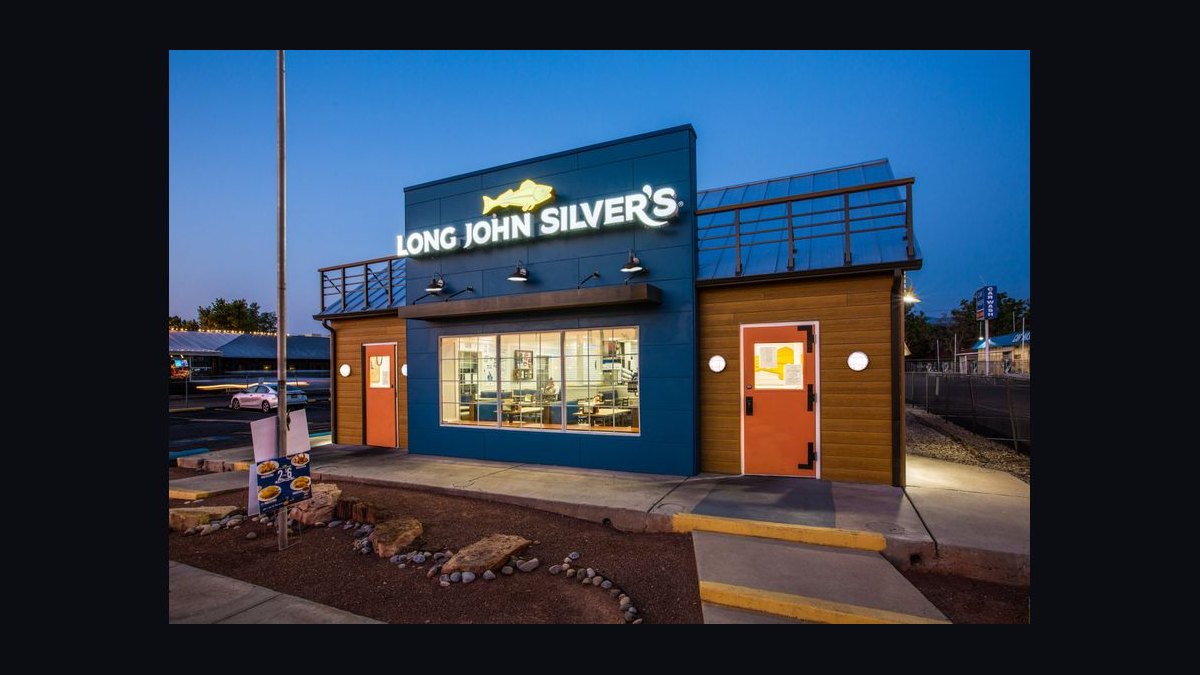
Buying an existing Long John Silver's is defensible in narrow conditions; opening a new ground-up unit generally is not. A traditional build runs $1.9M-$4.16M against a system average unit volume near $1.27M, pushing payback past eight years. An existing, cash-flowing store priced at 2.0-2.5x SDE in a legacy stronghold market can return investment in 3-5 years instead.
The outcome you should expect
Two very different outcomes sit inside the same brand name, and which one you get depends entirely on how you enter. If you sign up to build a freestanding drive-thru unit from raw dirt in 2027, expect a multi-year stretch where the store is running but your capital is not being repaid at any reasonable pace — a new-build LJS at full FDD cost against current average unit volume produces a simple payback window in the nine-to-twenty-year range before debt service, which is longer than most operators plan to hold a single unit, let alone finance one. That is not a franchisee-execution problem; it is a real estate and construction cost problem layered on top of a shrinking system, and no amount of local marketing or crew training closes an $800,000-$1.5M gap between what the build costs and what the store is likely to generate in its first few years.
If instead you buy an already-operating, already-profitable unit from a franchisee who is exiting — and you buy it at a multiple tied to seller's discretionary earnings rather than to gross revenue — the outcome changes completely. You inherit an established customer base, a trained (if imperfect) crew, existing equipment that has already absorbed its depreciation, and often a below-market lease on a pad that would cost hundreds of thousands to replicate today. Under that path, year-one owner cash flow in the $95,000-$160,000 range is realistic for an owner-operator working the store daily, and full payback inside three to five years is achievable without heroic assumptions.
The expected outcome, in other words, is bimodal. There is very little middle ground where a mediocre entry produces a mediocre result — the economics either work because you avoided new-build costs entirely, or they do not work because you didn't. Anyone evaluating this decision in 2027 should frame it as a binary choice between "acquire an existing asset at a distressed multiple" and "do not enter this brand," rather than as a spectrum of more-or-less-attractive new-unit opportunities. A handful of operators will find a third outcome — co-branding an LJS inside an existing A&W, KFC, or Taco Bell footprint under shared Yum!-DNA infrastructure — where shared rent, shared labor, and shared fryer/vendor relationships pull margin up by roughly three to five points versus a standalone store, making an otherwise marginal site workable.
What drives that outcome
Three forces are doing almost all of the work in determining whether an entry succeeds: the gap between build cost and unit volume, the direction of the system itself, and geography. Start with the cost-to-revenue gap. A new unit's total investment (land or lease deposits, building and site work, drive-thru pad, hood system, grease trap, LJS-spec fryers and breading stations, signage, POS, opening inventory, training, insurance, working capital, pre-opening marketing, and soft costs/contingency) lands between $1.9M and $4.16M depending on market and site conditions, while the brand's own disclosed average unit volume sits close to $1.27M. That ratio — roughly 1.5x to 3.3x annual revenue just to open the doors — is the single largest driver of outcome, because it means even a well-run store with healthy margins needs many years just to recover the initial outlay, before any return on that capital is realized.

Second, system trajectory matters because a shrinking brand changes the denominator over time, not just at entry. Long John Silver's has closed roughly 154 units net between 2022 and 2024, and stands near 485 U.S. locations today versus more than 1,000 in 2007. A contracting system typically means declining national marketing fund efficiency (fewer stores splitting the same awareness-building burden), a thinner bench of new franchisees to eventually buy your unit when you want to exit, and a real-estate footprint where remaining pads are disproportionately concentrated in a handful of loyal markets rather than spread evenly nationally.
Third, geography drives outcome because brand equity for Long John Silver's is extremely uneven. Awareness and trial are meaningfully higher in legacy stronghold states — Kentucky, Indiana, Ohio, and Texas foremost among them — than in coastal or urban markets where the chain never built comparable density. A store in a stronghold market inherits decades of existing customer habit; a store opened cold in a market without that history has to build trial from zero against a national seafood-QSR trend that has been soft. Below is how those forces interact from the moment capital becomes available.
Benchmarks and realistic ranges
The numbers below reflect the disclosed FDD structure and typical resale conditions for the brand heading into 2027. Treat the acquisition range as the governing benchmark — it is the number that determines whether this franchise makes sense at all.
| Metric | Realistic Range | Notes |
|---|---|---|
| New-unit total investment | $1,902,500-$4,160,000 | Franchise fee, construction, equipment, working capital, contingency |
| Franchise fee | $35,000 | One-time, non-refundable |
| Royalty | 5% of gross sales | 6% for non-traditional/co-branded formats |
| Marketing fund | 5% of gross sales | National plus local cooperative spend |
| System average unit volume | ~$1,269,000 | Disclosed figure; top-quartile units often report lower due to blended reacquired/non-traditional units |
| Store-level EBITDA margin | 8%-14% | Net of royalty and marketing fund |
| New-build payback | 9-20+ years | Before debt service; highly sensitive to site cost |
| Existing-unit acquisition price | $325,000-$675,000 | Typically 2.0-3.0x seller's discretionary earnings |
| Acquisition payback | 2.5-5 years | Owner-operator, on-site daily |
| Year-1 owner cash (acquisition) | $88,000-$203,000 | Depends on site, absentee vs. owner-operated |
| Transfer fee (existing unit change of ownership) | $15,000-$25,000 | Paid to franchisor at closing |
A few of these ranges deserve context. The royalty and marketing fund percentages are fixed and non-negotiable regardless of entry path, so they should be modeled as a permanent 10% haircut off gross sales in any P&L you build. The EBITDA margin range (8%-14%) is wide because it is driven heavily by whether you are on-site daily; absentee ownership consistently trims several points off that range because seafood QSR operations are labor- and quality-control-intensive — fresh-cooked fryers, high crew turnover, and multi-shift days do not run well unsupervised. When you model a new build, use the low end of the EBITDA range and the high end of the investment range as your base case, since construction cost overruns are the norm rather than the exception in ground-up QSR development. When you model an acquisition, verify the seller's SDE with at least twelve trailing months of P&Ls and tax returns rather than taking a broker's pro forma at face value — sellers frequently add back owner salary, personal vehicle expenses, and one-time repairs in ways that inflate the multiple you're actually paying.
Risks, edge cases, and failure modes
The clearest failure mode is simply building new. Regardless of how skilled an operator you are, a store that costs $2M-$4M to open against $1.27M in average revenue cannot be rescued by superior execution alone — the real estate and construction basis is broken before the doors open, and no marketing plan, staffing model, or menu tweak changes the denominator. If you find yourself justifying a new build with an "above-average unit" argument, treat that as a warning sign rather than a plan.

Absentee ownership is the second major failure mode, and it applies equally to new builds and acquisitions. Because this format depends on daily hands-on quality control (fryer oil rotation, breading consistency, drive-thru speed of service), stores without an on-site owner or an unusually strong general manager tend to lose several points of margin versus owner-operated comparables — often enough to turn a marginal acquisition into an unprofitable one.
Geography is the third risk. Entering a coastal, urban, or otherwise non-stronghold market means fighting for trial in a category (QSR seafood) that has been losing servings share nationally, against fish-forward promotions from larger competitors with far bigger marketing budgets. A site that looks fine on paper — decent traffic count, reasonable rent — can still underperform badly if the surrounding population has no existing relationship with the brand.

Fourth, protein cost exposure is structural, not cyclical. Alaskan Pollock is the primary input, and wholesale pricing tied to Total Allowable Catch constraints in the Bering Sea has pushed costs up meaningfully in recent years, compressing the food-cost line in a way that is largely outside any individual franchisee's control. Model food cost at the high end of typical ranges rather than assuming current pricing holds.
Fifth, leverage risk deserves explicit attention. Financing more than roughly 60% of total investment at prevailing SBA 7(a) rates can produce monthly debt service that exceeds an entire year's cash flow from a median-volume store — meaning an over-leveraged new build isn't just slow to pay back, it can be cash-flow negative from day one even while nominally "profitable" on paper. Finally, remodel obligations are an edge case worth budgeting for separately: brand-mandated remodels run into the mid-six-figures per unit with payback measured in years, and an acquisition that looks attractively priced can become far less attractive once a mandatory remodel is layered on top of the purchase price.
A practical rollout plan
Treat this as a 90-day gated process rather than a single go/no-go decision made up front. In the first one to two weeks, pull the current FDD directly from the franchisor or a state franchise registry (several states require filing, which is often the most current source), and read the unit economics disclosure closely — note the sample size of reporting units and how top-quartile, median, and bottom-quartile figures are broken out, since a low participation rate can distort what "average" really represents.
Over the following two to three weeks, use the franchisor's list of current and former franchisees to call at least fifteen to twenty operators directly — a mix of multi-unit veterans and recently exited franchisees. Ask specifically about same-store sales trend over the last two to three years, food cost and labor cost as a percentage of sales, and what they would personally pay today for another unit; a franchisee unwilling to buy another store at any price is a meaningful signal.

In the following two weeks, build a full five-year pro forma using conservative, not optimistic, inputs on food cost, labor, royalty, marketing fund, occupancy, and other operating expenses, and stress-test it against both the low and high ends of the benchmark ranges above. Then spend roughly two weeks physically visiting every existing unit within your target radius during peak periods — Friday evening and Saturday midday are natural high-traffic windows for this format — and score traffic, drive-thru speed, and building condition directly rather than relying on secondhand reports.
With that field research complete, identify two or three realistic acquisition targets and submit non-binding letters of intent priced against trailing SDE, never against gross sales. Engage a franchise attorney to review the FDD and negotiate transfer terms before signing anything. At the ninety-day mark, apply a firm decision gate: if you cannot secure an existing store priced at or below roughly 2.5x SDE in a market with genuine brand strength, walk away from this brand entirely and redirect the capital elsewhere rather than settling for a marginal new build.

Related questions
How long does it take to break even on a franchise like this?
For a new build, expect eight or more years under conservative assumptions. For an existing store bought at a reasonable multiple of SDE, three to five years is realistic if you operate it yourself.
Is buying an existing unit always safer than building new?
Generally yes in a contracting system, because you skip the construction-cost-versus-revenue gap entirely — but only if the price is tied to earnings, not to optimistic projections from the seller.
Does co-branding change the math?
Yes — sharing rent, labor, and vendor relationships with a companion brand under the same parent company can lift margin by several points versus a standalone unit.
What matters more, the brand or the location?
Location and existing brand density together matter more than the brand name alone — a strong system average unit volume can hide weak performance in markets without established customer habit.
FAQ
Is Long John Silver's still in business? Yes, but the system has been shrinking — roughly 485 U.S. units remain, down from more than 1,000 in 2007, with well over a hundred net closures in the last several years.
How much does it cost to open a new Long John Silver's franchise? A ground-up build runs roughly $1.9 million to $4.16 million all-in, including construction, equipment, and franchise fees.
Can I buy an existing Long John Silver's franchise instead of building new? Yes, and it's typically the more defensible route — existing stores commonly trade for a multiple of seller's discretionary earnings rather than a multiple of the much larger new-build cost.
What are the best states for a Long John Silver's franchise? Legacy stronghold markets — Kentucky, Indiana, Ohio, and Texas among them — carry stronger brand recognition and more stable customer traffic than newer or coastal markets.
Is opening a new Long John Silver's a good investment in 2027? Generally no for a ground-up build, since construction costs run well above what average unit volume supports. Acquiring an established, profitable unit at a reasonable multiple is the stronger path.
What's the biggest risk in evaluating this decision? Overpaying — whether that means paying full new-build cost for a system with contracting volume, or paying too high a multiple of gross sales (rather than earnings) for an existing unit.
Sources
- https://www.franchise.org
- https://www.qsrmagazine.com
- https://www.restaurantbusinessonline.com
- https://www.ibisworld.com
- https://www.bls.gov/cpi/
- https://www.circana.com
- https://www.seafoodsource.com
- https://www.sba.gov/funding-programs/loans/7a-loans
- https://www.ftc.gov/business-guidance/resources/franchise-rule-compliance-guide
- https://longjohnsilvers.com
Related on PULSE
- How long does it take to open a franchise and break even in 2027?
- Should I open or buy a Taco John's franchise in 2027?
- Should I open or buy a Papa John's franchise in 2027?
- Should I open or buy a Jimmy John's franchise in 2027?
This page will be disappearing soon. Save it to your device for $1 — or read it free while it is here.
@Kory-White- · if Venmo asks, the last 4 of my number are 2012
This page is gone.
This one is off the shelf now. $1 keeps it on your phone for good — the whole page, pictures and diagrams included.
 franchiseShould I open or buy a Duck Donuts franchise in 2027?
 franchiseShould I open or buy an Expedia Cruises franchise in 2027?
 franchiseShould I open or buy a Garbanzo Mediterranean Fresh franchise in 2027?
 franchiseShould I open or buy a Rockin’ Jump trampoline park franchise in 2027?
 franchiseShould I open a HVAC repair business in 2027?
 franchiseShould I open or buy a PJ's Coffee of New Orleans franchise in 2027?
 franchiseShould I open or buy a Salata franchise in 2027?
 franchiseShould I open or buy a Yard House franchise in 2027?
 franchiseBest retail franchises to buy in 2027
 franchiseShould I open or buy a Bruster's Real Ice Cream franchise in 2027?