
Should I open or buy a K9 Resorts Luxury Pet Hotel franchise in 2027?
 Curated byKory White · Fractional CRO · Maryland
 PULSEKNOWLEDGE LIBRARY
Quality
Certified
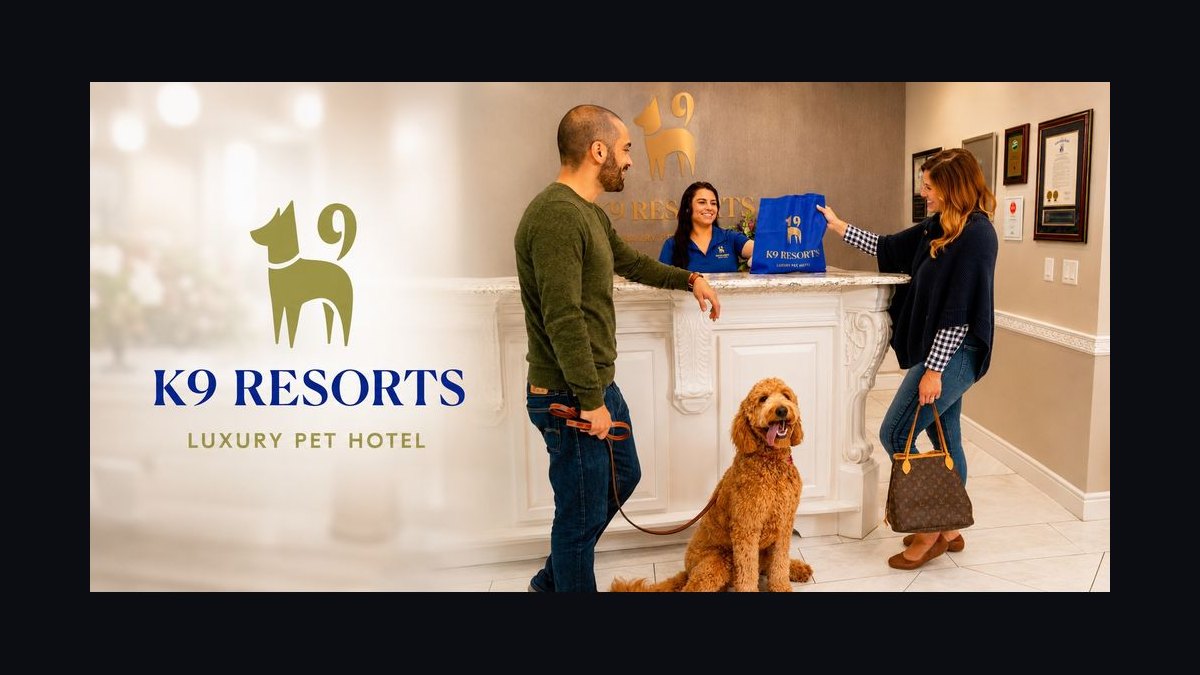
Yes, but only if you have at least $1.5 million in liquid capital, $2.5 million total net worth, and the staying power to absorb 14 to 22 months of thin or negative cash flow. A K9 Resorts Luxury Pet Hotel franchise requires $1,481,374 to $3,604,802 in total initial investment (2026 FDD, Item 7), a 7% royalty, and a realistic 8-to-10-year payback — attractive only in affluent, dog-dense metros with patient capital behind it.
The outcome you should expect
Open a K9 Resorts Luxury Pet Hotel franchise in an affluent metro with real staying power, and the realistic outcome is a business that loses money for over a year before it becomes a genuinely strong asset. The 2026 FDD's Item 19 figures — $1.8 million average franchisee unit volume and $2,111,881 corporate average unit volume — describe a mature, stabilized location open 36-plus months, not a new one. Real-world ramp curves reported by operators and by Vetted Biz put Year 1 revenue at $620,000 to $880,000, Year 2 at $1.1 million to $1.5 million, and Year 3 at $1.6 million to $2.0 million. Only in Year 3 or later does a location approach the Item 19 number the franchisor advertises.
Cash flow follows the same arc. Conservative modeling puts Year 1 cash flow, after debt service on a typical SBA 7(a) loan, at negative $180,000 to negative $340,000. Breakeven on a month-to-month basis typically arrives between month 14 and month 22; a slower-ramping location in a softer market can take up to 30 months. Full payback of the equity an owner put in — as distinct from monthly breakeven — runs 8 to 10 years, per franchisepayback.com's 2026 model. At stabilization, EBITDA margin lands in a 14% to 22% band, driven mostly by labor cost discipline (kennel techs at $17-$22/hour, a facility manager at $62,000-$78,000) and by the mix of boarding versus daycare revenue. At $1.8 million AUV and 18% EBITDA, that is roughly $324,000 in annual operating profit before debt service — a real number, but one that took multiple years and $1.5 million-plus of at-risk capital to reach.
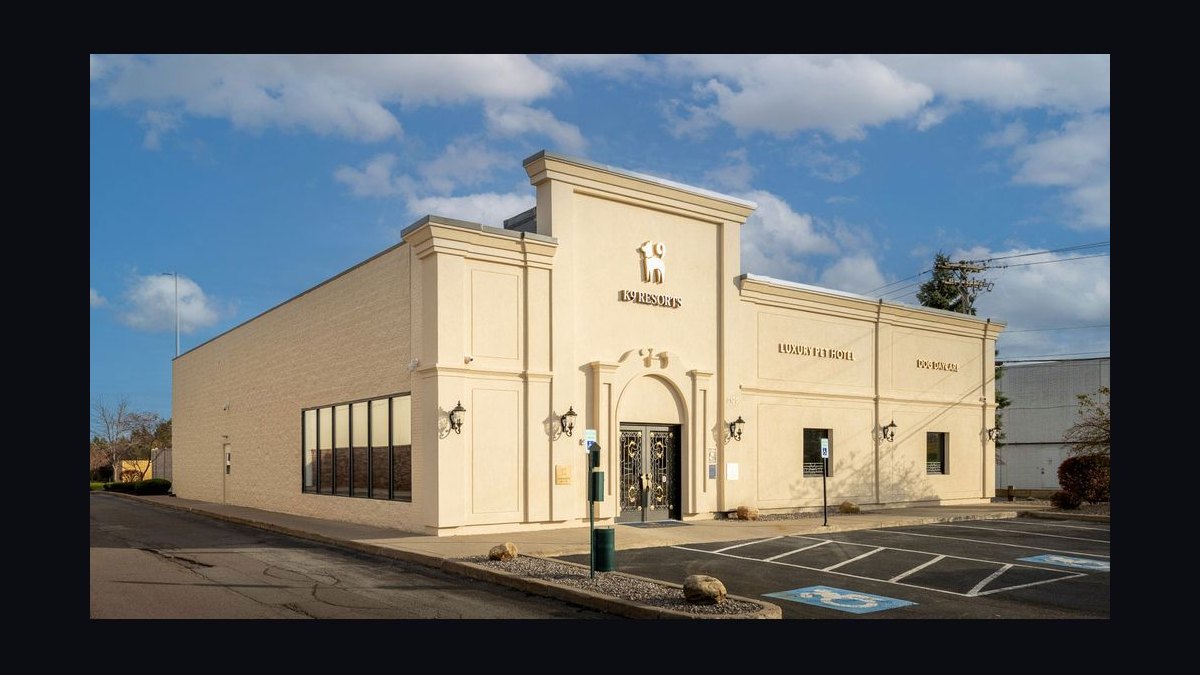
The honest framing: this is a real-estate-anchored hospitality business wearing a franchise wrapper, and the outcome tracks real estate more than it tracks the brand. Owners who control their real estate (own the building, or hold a long-term triple-net lease with fixed escalators) capture 8 to 12 points more margin than owners who lease short-term at market rates, because the premium pricing K9 Resorts depends on ($65-$95/night boarding, $45-$60/day daycare) only works if occupancy stays high across a 8,000-10,000 square foot footprint, and occupancy is directly a function of drive-time demand density around a fixed location.
What drives that outcome
Three forces set the ceiling and floor on a K9 Resorts location's return: the real estate deal, the local demand density, and the owner's operating involvement in Year 1. Get the real estate wrong — a short lease, no renewal options, a Class B retail shell that needs $400,000-$600,000 of hidden mechanical work — and even a great market can't save the unit economics. Get the demand density wrong (a market without enough dog-owning, high-income households within a short drive) and the premium pricing model simply doesn't clear. Get the Year 1 owner involvement wrong — trying to run it absentee from day one — and the hospitality differentiation that justifies the premium price (handwritten report cards, daily photo updates, staff who know each dog by name) erodes, taking pricing power with it.
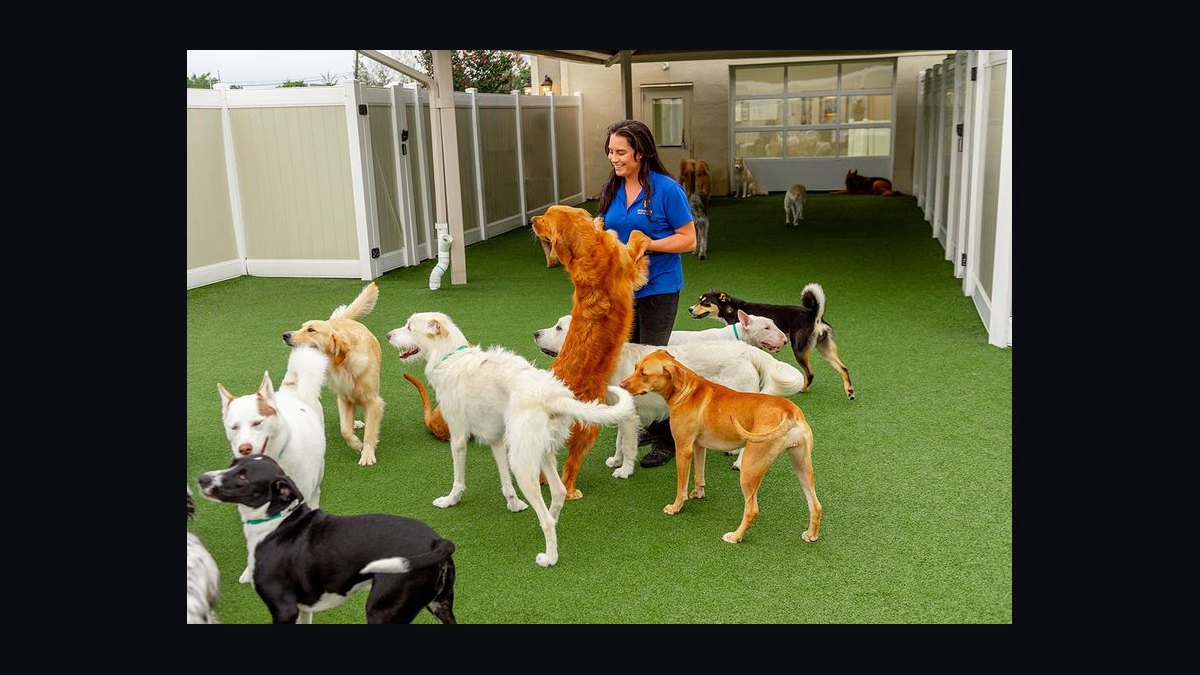
The interaction matters more than any single factor. A great real estate deal in a weak market still underperforms, because the premium pricing model needs volume, not just margin protection. A great market with a bad lease still gets squeezed at renewal once the landlord recognizes the appreciated value of a dog-care use. And even the best real estate and market combination underperforms if the owner treats the first 12 to 18 months as passive, because the brand's entire value proposition rests on a level of daily, visible hospitality that a hired, unsupervised staff rarely sustains on its own in year one.
Benchmarks and realistic ranges
The full cost structure, per the 2026 FDD, breaks out as follows: initial franchise fee $49,500 (fixed); real estate deposit and build-out $980,000 to $2,560,000; equipment and kennel systems $185,000 to $385,000; signage, technology, POS, and cameras $48,000 to $92,000; training and travel $11,500 to $24,800; insurance and permits $14,000 to $28,500; pre-opening marketing $42,000 to $78,000; and 90 days of working capital $151,374 to $387,002. That totals the $1,481,374 to $3,604,802 range disclosed in Item 7. On top of that, ongoing fees are a 7% royalty on gross sales and a 1% marketing fund contribution — a combined 8% of top-line revenue, or roughly $144,000 a year at a $1.8 million AUV.
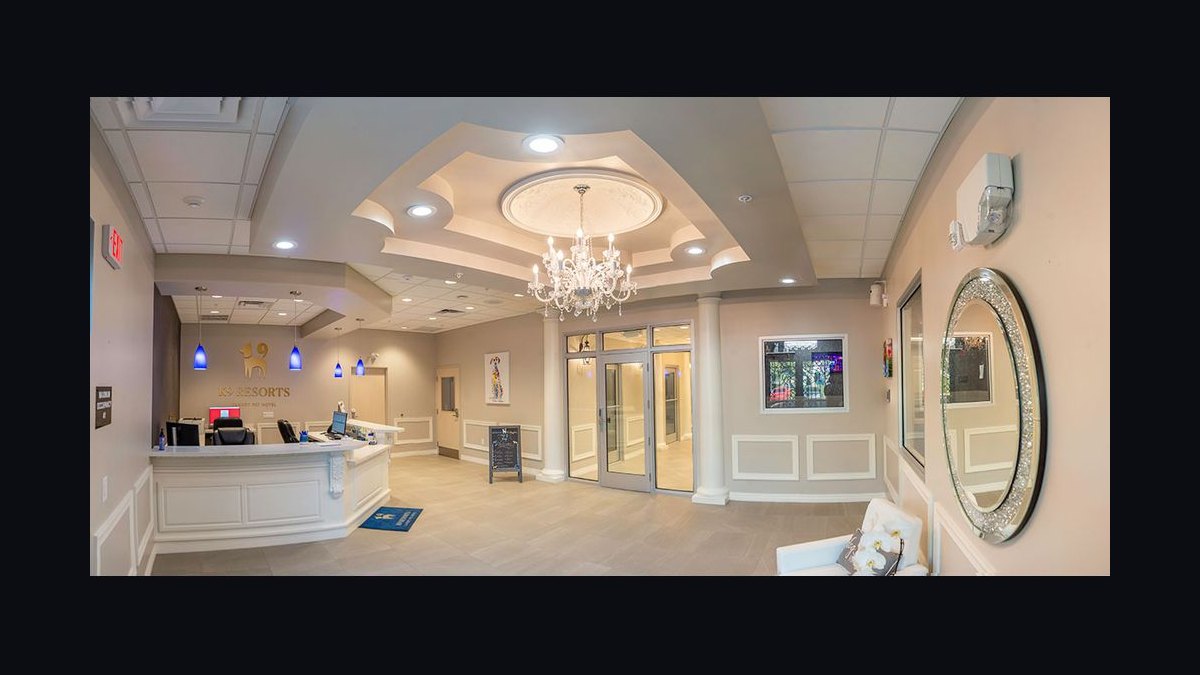
Financing benchmarks: most buyers use an SBA 7(a) loan at roughly prime plus 2.75%, amortized 25 years for the real estate portion and 10 years for equipment, financing up to about 75% of loan-to-cost. That implies an equity contribution of 25% to 30% of total project cost, or $425,000 to $1.1 million in cash depending on where the project lands in the FDD's range. Beyond that equity injection, budget an additional $400,000 of personal liquidity held outside the project budget specifically as a ramp cushion — separate from the FDD's 90-day working capital line, which assumes a ramp timeline that real-world data shows is 5 to 7 times longer than 90 days.
Estimated stabilized yearly earnings, per a 2025 sharpsheets.io disclosure analysis, run $295,664 to $380,139 on roughly $2.1 million of revenue — implying a cash-on-cash return in the 12% to 16% range once stabilized. That is a strong return for a real-estate-anchored asset but middling for a franchise investment without land ownership attached. Site-selection benchmarks that separate winning from losing locations: median household income above $95,000, dog-owning household density above 38%, no competing luxury boarding operator within roughly a 7-mile drive radius, and a commuter base substantial enough to support five-day-a-week daycare utilization above 65% by month 18. Proven geographies meeting this bar include Northern New Jersey, Westchester, Bergen and Fairfield counties, suburban Washington D.C., North Atlanta, Plano, Scottsdale, Bellevue, and suburban Boston, with Naples, Sarasota, Palm Beach, and Jacksonville identified as the emerging 2027 expansion tier following the brand's 13-unit Florida agreement.
Risks, edge cases, and failure modes
The single most common failure mode is treating the FDD's 90-day working-capital assumption as realistic. Real ramp to stabilization runs 14 to 22 months, and an owner who reaches month 9 with no cash cushion, facing $14,000 to $22,000 in monthly debt service, typically ends up forced to sell the lease at a loss rather than ride out the remaining ramp. A second failure mode is build-out cost overrun: the $3.6 million high end of the FDD range is real, and Northeast markets in particular see $400,000 to $600,000 added to original general-contractor bids for HVAC serving 100-plus kennel runs, fire suppression, soundproofing, drainage and grease-trap upgrades, ADA-compliant bathrooms, and outdoor turf systems. Choosing a Class B retail conversion instead of ground-up construction frequently triggers these overruns because the existing structure's electrical and mechanical bones can't support the load without expensive retrofitting.
A third failure mode is lease structure: signing a 7-year term with no renewal options invites the landlord to recapture the appreciated dog-care use value the franchisee's own operation created, at the first renewal negotiation — a predictable, avoidable risk that a longer initial term or explicit renewal options at fixed CPI escalators prevents. A fourth is geographic mismatch: rural and exurban locations structurally cannot hit the 65%-plus weekday daycare occupancy the model needs, because that occupancy depends on a working commuter population that only exists at meaningful density in larger metros. Fifth, absentee ownership from day one erodes the measurable hospitality differentiation — handwritten report cards, daily photo updates, staff who recognize dogs by name — that justifies the premium price point; without an owner physically present through roughly the first 12 months, that differentiation tends to slip, and pricing power slips with it.
Macro-level risk for 2027 specifically: inflation-adjusted discretionary spending on premium pet services peaked in 2023 and softened an estimated 4% to 6% during 2025-2026 as some households traded down from luxury boarding to mid-tier options or to in-home sitting services. That softening concentrated in mid-market suburbia; operators in genuinely affluent ZIP codes (median income above roughly $95,000) held volume better. Labor is a second macro pressure: kennel technician wages are up an estimated 22% since 2023, manager compensation up 18%, with industry-wide annualized turnover near 58%. Operators who don't invest in automating intake, payments, photo updates, and scheduling to hold labor-to-revenue under roughly 38% face compounding margin pressure on top of the ramp-timeline risk above.
A practical rollout plan
Approach the decision as a staged, roughly 90-day qualification and close process rather than a single yes/no call, so each stage can disqualify a bad fit before real capital is at risk. Start with financial qualification: pull a personal financial statement, confirm the $1.5 million liquid / $2.5 million net-worth threshold, and get a pre-qualification letter from an SBA 7(a) lender experienced in pet-care franchising for a roughly 75% loan-to-cost structure. If the liquidity bar isn't met, stop there rather than stretching into thinner capital.
Next, screen markets using demographic data (household income, dog-ownership density) and a drive-time isochrone analysis at 5, 10, and 15 minutes to confirm captive demand and the absence of a competing luxury boarding operator within roughly 7 miles. Then commission a full FDD review with a registered franchise attorney, reading Item 7 cost ranges, Item 19 performance representations, Item 20 outlet counts, transfers and closures over the last three years, and Item 21 audited financials line by line — Item 20 closures/transfers is one of the strongest available predictors of underlying brand and unit health.
After the FDD review, request the full franchisee contact list (available under FTC disclosure rules) and call at least 12 franchisees spanning geography, unit count, and tenure, asking each the same three questions: actual trailing-12-month gross revenue and EBITDA, time to positive monthly cash flow, and whether they would sign the franchise agreement again knowing what they know now. Weight numeric answers over general sentiment. In parallel, engage a retail tenant broker experienced with pet-care users, identify 3 to 5 candidate sites, get letters of intent on at least 2, and negotiate a TI allowance, free-rent period, exclusivity clause, and renewal options with fixed escalators — and do not sign a lease before signing the franchise agreement, or the franchise agreement before securing a viable site LOI. Close by locking SBA loan terms, structuring equity at 25% to 30% of total project cost, and reserving roughly $400,000 of personal liquidity outside the project budget specifically as a ramp cushion before signing anything or breaking ground, since build-out itself typically runs 6 to 9 months from lease signing to opening.
Related questions
How much does a Dogtopia or Camp Bow Wow franchise cost by comparison?
Dogtopia runs roughly $697,000 to $1,728,000 total investment with a $50,000 franchise fee and 7% royalty; Camp Bow Wow runs roughly $516,000 to $1,408,000 with a 6% royalty — both meaningfully cheaper entry points than K9 Resorts' $1.48 million-plus floor.
Can I invest in pet care without buying an operating franchise?
Yes — public companies like Petco, Chewy, and Freshpet, plus pet-services proxies like Trupanion, give sector exposure with daily liquidity, though there's currently no publicly investable roll-up specific to daycare/boarding operators.
What financing structure do most K9 Resorts buyers use?
Most use an SBA 7(a) loan around prime plus 2.75%, financing roughly 75% of project cost, with the owner contributing 25% to 30% equity plus a separate cash reserve for the ramp period.
Is now (2027) a good time to buy, given the market?
The brand's system growth is real (48-plus open locations, 40-plus new 2026 commitments, multi-state expansion), but discretionary pet-service spending softened in mid-market suburbia in 2025-2026 — 2027 favors buyers in genuinely affluent metros over marginal ones.
FAQ
What is the total investment range for a K9 Resorts franchise? The total initial investment ranges from roughly $1.48 million to $3.6 million, per the 2026 FDD. This includes a $49,500 franchise fee, with the remainder varying by real estate cost, building size, and build-out complexity. Most buyers should plan for the middle to upper end of that range.
How much liquid capital do I need to qualify? Franchisees need at least $1.5 million in liquid assets and $2.5 million in total net worth. Lenders typically require 20% to 30% equity in the project, so the liquid-capital requirement has to cover both the down payment and a real operating reserve for the first year or two.
How long until a location becomes profitable? Conservative Year-1 cash flow is negative $180,000 to negative $340,000 after debt service. Realistic monthly breakeven arrives between month 14 and month 22, with some locations taking up to 30 months. Full equity payback is estimated at 8 to 10 years.
What ongoing fees does the franchisor collect? Franchisees pay a 7% royalty on gross sales plus a 1% marketing fund contribution — 8% of revenue combined. These fund brand advertising, operational support, and systemwide improvements, and are the only recurring fees typically disclosed.
What revenue can I realistically expect? Average franchisee unit volume sits around $1.8 million at stabilization, with corporate-owned locations averaging $2.1 million — but that figure describes mature units open 36-plus months. New locations typically see $620,000 to $880,000 in Year 1, ramping over roughly three years.
What markets are best suited to a K9 Resorts location? Target top-50 metro areas with median household income above $95,000 and dog-owning household density above 38%, ideally with no luxury boarding competitor within about a 7-mile drive radius. Rural and low-income markets consistently underperform the model's assumptions.
Sources
- K9 Resorts Franchise FDD 2026, Item 7 and Item 19 summary — https://www.franchisepayback.com/franchise/k9-resorts
- K9 Resorts Franchise FDD, Profits & Costs 2025, Sharpsheets — https://sharpsheets.io/blog/k9-resorts-franchise-fdd-profits-costs/
- K9 Resorts Initial Investment Information, official franchisor site — https://www.k9franchise.com/initial-investment-information/
- Vetted Biz K9 Resorts Franchise Insights — https://www.vettedbiz.com/franchises/k9-resorts
- IBISWorld Pet Grooming & Boarding in the US Industry Analysis, 2026 — https://www.ibisworld.com/united-states/industry/pet-grooming-boarding/1735/
- Grand View Research U.S. Pet Daycare Market Size Report — https://www.grandviewresearch.com/industry-analysis/us-pet-daycare-market-report
- Grand View Research Pet Boarding Services Market — https://www.grandviewresearch.com/industry-analysis/pet-boarding-services-market-report
- International Franchise Association — K9 Resorts 2026 Growth and Oregon Agreement — https://www.franchise.org/2026/02/k9-resorts-accelerates-2026-franchise-growth-with-multi-unit-oregon-agreement-and-strategic-national-expansion/
- International Franchise Association — K9 Resorts 13-Unit Florida Agreement — https://www.franchise.org/2025/04/k9-resorts-inks-13-unit-agreement-in-florida-with-its-largest-franchisee-group/
- Franchise Times — 2026 Fast & Serious Winners, No. 23 K9 Resorts — https://www.franchisetimes.com/issue-archive/2026/january/2026-fast-serious-winners-no-23-k9-resorts-daycare-luxury-hotel/article_d2e5d06b-2149-4ef7-9728-1de18759c934.html
Related on PULSE
- [Best pet care franchises to start in 2027](/knowledge/fr1086)
- [Should I open or buy a Pet Butler franchise in 2027?](/knowledge/fr1007)
- [Should I open or buy an EarthWise Pet franchise in 2027?](/knowledge/fr0796)
- [Should I open or buy a Pet Wants franchise in 2027?](/knowledge/fr0792)
- [Should I open a pet sitting business in 2027?](/knowledge/fr0544)
- [Should I open or buy a Pet Supplies Plus franchise in 2027?](/knowledge/fr0213)
This page will be disappearing soon. Save it to your device for $1 — or read it free while it is here.
@Kory-White- · if Venmo asks, the last 4 of my number are 2012
This page is gone.
This one is off the shelf now. $1 keeps it on your phone for good — the whole page, pictures and diagrams included.
 franchiseShould I open or buy a Domino's franchise or open an independent sandwich shop in 2027?
 franchiseShould I open or buy a Jet’s Pizza franchise or open an independent sandwich shop in 2027?
 franchiseShould I open or buy PJ’s Coffee franchise or open an independent sandwich shop in 2027?
 franchiseShould I open or buy a Crave Cookies franchise in 2027?
 franchiseShould I open or buy a Dunkin' franchise in 2027?
 franchiseShould I open or buy a Five Guys franchise or open an independent sandwich shop in 2027?
 franchiseShould I open or buy a Cook Out franchise in 2027?
 franchiseShould I open or buy a Cheba Hut franchise in 2027?
 franchiseShould I open or buy a Marco's Pizza franchise in 2027?
 franchiseShould I open or buy a Rita's Italian Ice franchise in 2027?