
Should I open or buy a Two Men and a Truck franchise in 2027?
 Curated byKory White · Fractional CRO · Maryland
 PULSEKNOWLEDGE LIBRARY
Quality
Certified
Yes — open or buy a Two Men and a Truck franchise in 2027 if you have $200,000+ liquid, a Mod Market territory (100,000-225,000 pop), tolerance for a 2-3 year ramp before hitting the system AUV, and a willingness to run an operations-heavy labor business with 25-60 movers, 8-15 trucks, and DOT-regulated household-goods compliance. Realistic floor: $165,000-$538,000 all-in startup (Item 7), $650,000-$750,000 Year-1 gross, $30,000-$60,000 owner cash flow at 4-9% pre-royalty operating margin. Probably not if you want a passive investment, can't personally recruit drivers in a 4.0% unemployment labor market, or believe the $2.31M system AUV is a Year-1 number — it is a 5+ year mature-unit figure.
The Real Numbers
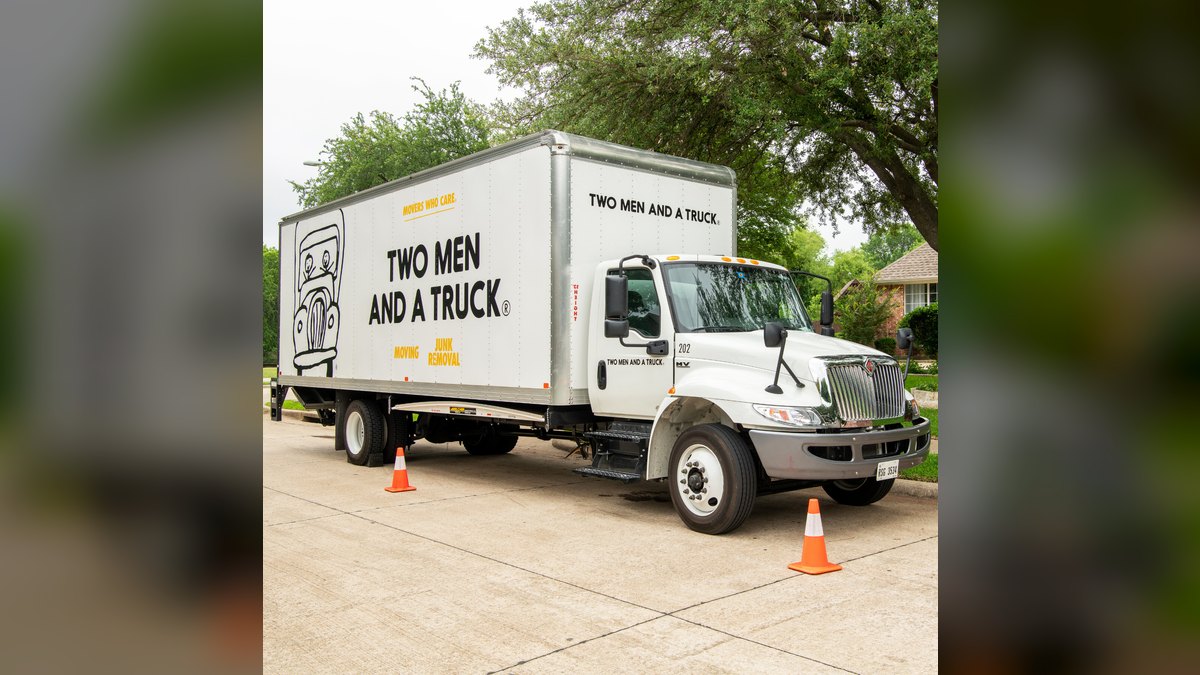
Two Men and a Truck (TMT) is the largest franchised moving brand in North America with ~350 locations across 47 states. The brand was acquired by ServiceMaster Brands (Roark Capital portfolio) in November 2021, putting it under the same parent as Merry Maids, Terminix, and ServiceMaster Restore. Below are the 2025 FDD numbers (issued April 2025, governing 2025-2027 sales) — the 2027 FDD will not be filed until Q2 2027.
| Line Item | 2025 FDD Figure | Source |
|---|---|---|
| Initial Franchise Fee | $50,000-$165,000 (tiered by territory population) | Item 5 |
| Total Initial Investment (Item 7) | $165,150-$538,150 | Item 7 |
| Royalty | 6% of gross revenue | Item 6 |
| National Advertising Fund | 1% of gross revenue | Item 6 |
| Local Marketing Spend Required | ~3-5% of gross revenue | Item 11 |
| Average Unit Volume (AUV) — system | $2,314,000 (mature units) | Item 19 |
| Median Unit Volume | ~$1.85M | Item 19 |
| Year-1 Average Gross Sales | $682,402 | Item 19 |
| Year-3 Average Gross Sales | $1,176,579 | Item 19 |
| Year-5 Average Gross Sales | ~$2,200,000 with ~11% net | Item 19 |
| Reported EBITDA Margin (mature) | 9-14% (multi-unit higher) | Item 19 |
| Net Worth Requirement | $160K Mod / $400K+ Metro | Item 5 |
| Liquid Capital Requirement | $80K Mod / $150K Metro | Item 5 |
| Term | 10 years, renewable | Item 17 |
| Total Franchised Units (YE 2024) | ~350 | Item 20 |
Build-out reality check. TMT is a light-build franchise — no consumer-facing storefront required. The capital stack on a Mod Market typically looks like: $50K franchise fee, $15-25K office/warehouse build-out (2,000-4,000 sqft of yard + dispatch space), $60-120K for two used 26-foot box trucks (or $2,400-3,200/month leased through Penske/Ryder), $10-15K dollies, pads, e-tracks, wardrobe boxes, $8-12K branded uniforms + signage, $15-25K opening marketing (Google LSA, Yelp, direct mail), and $50-150K working capital to cover payroll for the first 90 days. Driver/mover labor runs $18-26/hour loaded in 2026-2027 markets.
Payback math. Using the Year-3 $1.18M gross / 10% net = ~$118K owner cash flow and a $300K all-in Mod Market investment, the average franchisee hits payback at month 30-42. Metro markets with $450-538K all-in investments take 48-60 months but reach a higher AUV ceiling ($3-5M at maturity).
Who Wins With This Business
You win with TMT if you fit five operator profiles.
- The hands-on owner-operator. TMT is not a passive franchise. Multi-unit franchisees in the system who own 3-5 territories average $4.2M+ in combined revenue and 15-18% net margin — but they treat it as a full-time logistics company, not a side hustle. The Item 19 data is bimodal: owner-operators clear 11-14% net, absentee owners clear 3-6%.
- Operators in growth Sun Belt metros. The brand performs best in DFW, Phoenix, Tampa, Charlotte, Nashville, Raleigh, Austin, Jacksonville — markets where inbound migration plus new-home construction drives 8-12% annual move-volume growth. U-Haul's 2025 Growth Index ranks Texas, Florida, and the Carolinas as the top inbound states for the 6th consecutive year.
- B2B-savvy operators. Office relocation, junk removal (TMT Junk add-on), and senior moving (TMT Care) are the three highest-margin segments at 18-25% gross margin vs. 12-15% on residential. Operators who push past 60% B2B mix beat the system AUV by 30-40%.
- Former military / logistics / fleet managers. The job is DOT compliance, route optimization, dispatch, and crew accountability. People with 22A logistics backgrounds, UPS/FedEx supervisor experience, or LTL trucking management hit EBITDA breakeven 6-9 months faster than industry-average franchisees.
- Buy-the-existing-unit operators. Resale TMTs trade at 3.5-5.0x SDE (per Restaurant Brokers International and FranchiseResales.com comps), meaning a $1.5M AUV unit with $180K SDE sells for $650-900K turnkey — often cheaper than greenfield once trucks, customer base, and a trained crew are included.
Who Loses With This Business
You lose with TMT if you check any of these boxes.
- You expect $2.3M revenue in Year 1. That AUV is the system-wide average across mature 5+ year units. The Year-1 mean is $682,402, and 22% of new units do under $400,000 in Year 1 (Item 19 distribution).
- You can't recruit drivers in a 4.0% unemployment market. TMT requires CDL-not-required Class B 26-foot box truck drivers, but you still need clean MVRs, DOT physicals, and drug-screen passes. Operators in Phoenix, Denver, and Boise report 35-50% Year-1 turnover on mover crews. If you cannot personally lead 5 AM crew huddles, you will bleed.
- You hate insurance paperwork. Household-goods movers carry mandatory cargo insurance ($100K min), general liability ($2M), commercial auto ($1M+), workers comp, and umbrella coverage. Total insurance premium for a 3-truck Mod Market runs $28,000-$42,000/year in 2026 — up 18% from 2024 after the Progressive Commercial Auto rate hike.
- You assumed light DOT exposure. TMT operators are regulated by FMCSA (interstate), state PUC/DOT (intrastate), and HHGoods tariff filings in most states. California (CPUC), Texas (TXDMV), Florida (FDACS) all require separate household goods carrier licensing above and beyond franchise paperwork. Expect $3-8K/year compliance overhead.
- You bought in a population-flat or shrinking metro. Markets with negative net migration (parts of the Rust Belt, rural Northeast, central California) see flat move-volume and TMTs there report 6-8 year payback vs. the 30-42 month system average.
2027 Market Conditions
Five forces shape the TMT decision heading into 2027.
1. The moving market is bifurcating. Per IBISWorld's 2025 Moving Services report (NAICS 484210), total US moving revenue sits at $23.4 billion with a projected 3.68% CAGR through 2027. But residential household move counts dropped from ~20% of US population annually (postwar) to ~8% today, and Census ACS 2024 confirmed the all-time-low 8.2% mover rate. Volume is down, ticket size is up — average residential move ticket went from $1,250 (2019) to $1,890 (2025), a 51% increase driven by labor, fuel, and tariff-driven equipment costs.
2. Locked-in mortgages are the headwind. With 57% of US mortgages below 4% APR and the 2027 forward curve pricing 6.0-6.4% 30-year rates (per CME Group Treasury futures), the lock-in effect suppresses voluntary residential moves. TMT operators are pivoting toward junk removal, in-home moves, senior transitions, and B2B office relocations — where TMT Junk grew 38% YoY in 2024 per the ServiceMaster Brands FY24 investor disclosures.
3. Labor is the binding constraint, not demand. BLS Q4 2025 put the truck-driver / mover wage at $22.40/hour median, up 24% from 2021. CDL-not-required Class B box-truck drivers are easier to recruit than tractor-trailer drivers but harder than two years ago. TMT's 2025 franchisee survey flagged labor cost as the #1 issue at 62% of respondents (up from 47% in 2023).
4. AI dispatch is the new edge. TMT rolled out "Move Optimizer" (powered by Onfleet + Routific integrations) to all franchisees in late 2025, enabling route density gains of 12-18% and same-day quote-to-book conversion rates of 41% vs. the legacy 27%. Operators who adopt are outperforming by 15-20% on margin; non-adopters are being out-converted by local independents on Yelp + Google Local Services Ads.
5. The ServiceMaster Brands integration is real. Cross-marketing with Merry Maids ("move-in cleaning bundle") and ServiceMaster Restore (water-damage move-outs) is generating $45-80K incremental revenue per TMT location in 2025-2026, per the ServiceMaster Brands 2025 franchisee bulletin. This is net new revenue TMT operators did not have before the 2021 acquisition.
The 90-Day Decision Tree
- Days 1-10. Request the 2025 FDD from franchise.twomenandatruck.com. Read Item 5 (fees), Item 7 (investment), Item 19 (financials), Item 20 (unit list with turnover/closures), and Item 21 (audited financials). Pull Item 20's full franchisee contact list — TMT discloses all current and former franchisees in the last 3 years.
- Days 11-25. Validate with 8-12 franchisees. Call 3 top-quartile (multi-unit), 3 median, and 3 bottom-quartile or recently-closed. Ask: real Year-1 gross, real labor cost as % of revenue, real owner draw, would they do it again. The bottom-quartile calls are non-negotiable — they reveal what kills units.
- Days 26-40. Drive your target territory. Count U-Haul / PODS / Penske trucks per day on the main arterials. Pull Census ACS migration data for the 3-county area. Check DataUSA for % renter-occupied housing (TMT thrives at 38%+ renter share).
- Days 41-55. Build the unit economics model. Use $22/hour fully-loaded labor, $0.78/mile all-in truck cost, 6% royalty + 1% NAF + 3% local marketing = 10% off the top. Solve for breakeven move count. Target: breakeven at 38-45 paid moves/month.
- Days 56-70. Confirm financing. SBA 7(a) is the dominant TMT path — TMT is on the SBA Franchise Directory, qualifying you for 75-85% LTV at WSJ Prime + 2.75-3.0%. Live Oak, Huntington, Byline are top SBA franchise lenders. Get a conditional commitment, not just pre-qual.
- Days 71-85. Negotiate or buy resale. If a resale is available in your target metro, 2027 buy multiples sit at 3.5-5.0x SDE. A $180K SDE unit with 12 trucks and a 3-year customer database at 4.2x = $756K often beats greenfield on time-to-cash.
- Days 86-90. Sign or walk. If you cannot answer "yes" to: (a) I have $200K+ liquid post-close, (b) I will personally run this, (c) my territory is net-migration positive, (d) I have a financing commitment in writing — walk. There is no shortage of FDD-listed deals.

Alternative Plays
If TMT does not fit, three alternatives compete for the same operator profile.
- College Hunks Hauling Junk & Moving — lower entry ($95K-$300K), higher royalty (7%), AUV $1.4M. Better fit for smaller markets and operators under 35 who can lean into the brand voice.
- You Move Me (a Service Brands International franchise) — $152K-$381K investment, 8% royalty, AUV $1.1M, smaller but flexible territory rules. Less mature system (~30 locations) — higher risk, higher upside.
- Independent moving company under a local brand — skip the franchise fee and 6% royalty, lose the TMT brand recognition, national accounts (USAA, Allied Van Lines partnerships), and ServiceMaster Brands cross-sell. Independents in the NAICS 484210 cohort average $890K revenue and 8% net per IBISWorld — meaning the TMT royalty buys ~$400K incremental AUV, which is roughly breakeven at the median and strongly accretive at the top quartile.
A fourth play: two-step entry. Buy a clean independent for $400-600K, run it for 18 months to learn the unit economics, then convert it to a TMT under their conversion program (often discounted franchise fee of $25-50K for a profitable conversion). Several Sun Belt operators have run this playbook in 2023-2025.
FAQ
What is the realistic startup cost for a Two Men and a Truck franchise in 2027? Startup costs range from $165,000 to $538,000 all-in, per the Item 7 disclosure. The lower end typically covers a smaller territory with used trucks, while the upper end includes a larger fleet and new equipment. Most new franchisees land in the $250,000–$400,000 range.
How long does it take to reach the system average unit volume (AUV) of $2.31 million? The $2.31 million AUV is a mature-unit figure, usually achieved after 5+ years of operation. In Year 1, expect gross revenue around $650,000–$750,000, with steady growth as you build a customer base and repeat business. Reaching the system AUV requires consistent marketing and operational efficiency.
What is the owner's typical cash flow in the first few years? Owner cash flow in Year 1 is typically $30,000–$60,000, based on a 4–9% pre-royalty operating margin. This improves as revenue grows and you optimize labor and routing costs. Many owners reinvest heavily in the first 2–3 years to accelerate growth.
How many employees and trucks does a new franchise need? A new franchise typically starts with 8–15 trucks and 25–60 movers, depending on territory size and demand. You'll need to personally recruit drivers in a tight labor market (around 4.0% unemployment). Staffing is the most time-intensive part of the business.
What kind of territory should I look for? The ideal territory is a "Mod Market" with 100,000–225,000 population. This balances enough moving demand with manageable competition. Avoid overly dense urban areas where real estate and labor costs are high, or very rural areas with low household turnover.
Is this a passive investment? No — Two Men and a Truck is an operations-heavy labor business. You'll be involved daily in dispatching, recruiting, DOT compliance, and customer service. If you want a hands-off investment, this franchise is not a good fit.
Bottom Line
Two Men and a Truck is a proven $2.3M-AUV moving franchise with 350+ units, 35+ years of operating history, and ServiceMaster Brands backing. The 2025 FDD shows a $165-538K investment producing $682K Year-1 / $1.18M Year-3 / $2.2M Year-5 gross, with 11% net at maturity for owner-operators. It works if you are a hands-on operator with $200K+ liquid in a Sun Belt growth metro who can recruit and retain Class B drivers and survive a 2-3 year ramp. It fails if you treat it as passive income, buy in a flat-migration market, or believe the system AUV is a Year-1 number. The 2027 setup — locked-in mortgages suppressing residential volume, but B2B / junk / senior segments growing 15-25% annually with ServiceMaster cross-sell tailwinds — favors multi-unit Sun Belt operators. Single-unit absentee owners in stagnant metros should walk.
Sources
- Two Men and a Truck Franchise Disclosure Document (2025) - franchise.twomenandatruck.com
- Franchise Chatter FDD Review 2025 - Two Men and a Truck Costs, Fees, Profits
- SharpSheets - Two Men and a Truck Franchise FDD Costs & Profits 2025
- Vetted Biz - Two Men and a Truck Franchise Insights
- Two Men and a Truck Franchise Revenue Streams - Official Site
- IBISWorld - Moving Services in the US (NAICS 484210) Industry Analysis 2025
- US Census Bureau ACS 2024 - Geographic Mobility / Migration Data
- Bureau of Labor Statistics - Heavy and Tractor-Trailer Truck Drivers Wages Q4 2025
- U-Haul 2025 Growth Index - Top States for Inbound Migration
- SBA Franchise Directory - Two Men and a Truck Eligibility
- ServiceMaster Brands - FY2024 Franchisee Bulletin
- International Franchise Association - 2026 Franchising Economic Outlook
Related on PULSE
This page will be disappearing soon. Save it to your device for $1 — or read it free while it is here.
@Kory-White- · if Venmo asks, the last 4 of my number are 2012
This page is gone.
This one is off the shelf now. $1 keeps it on your phone for good — the whole page, pictures and diagrams included.
 franchiseShould I open a HVAC repair business in 2027?
 franchiseShould I open or buy a Sunright Tea Studio franchise in 2027?
 franchiseShould I open or buy a BIGGBY Coffee franchise in 2027?
 franchiseShould I open or buy a Domino's franchise in 2027?
 franchiseShould I open or buy a Great American Cookies franchise in 2027?
 franchiseShould I open or buy a Charleys Cheesesteaks franchise in 2027?
 franchiseShould I open or buy a Glory Days Grill franchise in 2027?
 franchiseShould I open or buy a Burn Boot Camp (re-do) franchise in 2027?
 franchiseShould I open or buy an H&R Block franchise in 2027?
 franchiseShould I open or buy a Bibibop Asian Grill franchise in 2027?