
Should I open or buy a Tilden Car Care franchise in 2027?
 Curated byKory White · Fractional CRO · Maryland
 PULSEKNOWLEDGE LIBRARY
Quality
Certified

Probably not — unless you already own real estate zoned for auto repair, have $200,000+ in liquid capital, and want a lower-fee alternative to Midas or Meineke in a market the bigger chains have already saturated. Tilden Car Care runs a $25,000 franchise fee, 6% royalty, and 3% advertising fee on total startup investment of $131,500 to $171,200 per Item 7 of the 2026 FDD. Expect breakeven in 18 to 30 months, Year-1 owner cash flow of $35,000 to $75,000 on $650,000 to $900,000 in gross sales, and a path to $1.0M to $1.4M revenue by Year 3. With only ~60 units versus Midas's 1,100+, brand pull is regional — you are buying a systems-and-supply discount, not foot traffic.
The Real Numbers
Tilden Car Care is a full-service automotive repair franchise founded by Sydney G. Tilden in 1923 and began franchising to existing store managers in 1966. The system operates roughly 60 locations concentrated in Colorado, Florida, Georgia, Massachusetts, North Carolina, New Jersey, New York, Ohio, Rhode Island, and Texas. The 2026 Franchise Disclosure Document Item 7 places total initial investment in the $131,500 to $171,200 range — meaningfully below Midas ($232,000 to $549,000) and Meineke ($176,000 to $544,000) but with correspondingly less brand pull and fewer co-op dollars.
Tilden does not publish a formal Item 19 financial performance representation in publicly indexed FDD digests, which is a material risk flag for prospective buyers. Most franchise consultants infer unit-economic ranges from industry benchmarks: per IBISWorld's 2026 Auto Mechanics report, the average independent shop generates $1.226 million in annual revenue across 303,000 U.S. businesses in an $89.6 billion industry, with 6.3% net margin at the median and 15% to 22% four-wall EBITDA at well-run mature franchise units.

| Line Item | Low | High | Source |
|---|---|---|---|
| Initial franchise fee | $25,000 | $25,000 | FDD Item 5 (2026) |
| Build-out / leasehold improvements | $35,000 | $55,000 | FDD Item 7 |
| Equipment (lifts, alignment, diagnostics) | $40,000 | $55,000 | FDD Item 7 |
| Initial inventory + supplies | $8,500 | $12,000 | FDD Item 7 |
| Signage + POS + tech | $7,000 | $10,000 | FDD Item 7 |
| Insurance + permits + opening costs | $4,000 | $6,200 | FDD Item 7 |
| Working capital (3 months) | $12,000 | $8,000 | FDD Item 7 |
| Total initial investment | $131,500 | $171,200 | FDD Item 7 |
| Royalty (% of gross sales) | 6.0% | 6.0% | FDD Item 6 |
| Marketing / advertising fee | 3.0% | 3.0% | FDD Item 6 |
| Liquid capital required | $150,000 | $150,000 | Franchise disclosures |
| Net worth required | $125,000 | $250,000 | Franchise disclosures |
| Year-1 gross sales (conservative) | $650,000 | $900,000 | IBISWorld benchmark |
| Year-3 gross sales (mature) | $1.0M | $1.4M | IBISWorld benchmark |
| EBITDA margin at maturity | 12% | 18% | ASA / CT Acquisitions 2026 |
| Year-1 owner cash flow | $35,000 | $75,000 | Modeled from royalty + fixed costs |
| Payback period | 30 months | 18 months | Modeled |
The math that matters: a Tilden unit at $900,000 in gross sales pays Tilden $81,000 annually (54K royalty + 27K marketing). The same revenue at Meineke would cost $117,000 (5% royalty + 8% marketing) and at Midas roughly $90,000. The 300-basis-point fee gap is Tilden's structural advantage — that's $30,000+ per year staying in the operator's pocket versus a Meineke unit.
Who Wins With This Business
Existing independent shop owners in Tilden's regional footprint (Northeast, Mid-Atlantic, Southeast) win the most. The conversion play lets a profitable independent add brand legitimacy, national parts buying power, and warranty-backed customer trust for 9% of revenue annually versus the 13% Meineke charges. The technician-turned-owner — someone with 10+ years ASE-certified wrenching, $150K+ liquid, and a working spouse covering household expenses for 24 months — also wins by buying themselves a job at $75K Year-1 plus equity in a real asset. Multi-unit operators in secondary markets (Toledo, Greensboro, Albany) where Midas and Meineke are saturated can stack 3-5 Tilden units with lower royalties and less corporate friction. Owners who already control real estate — a vacant 3,500 to 5,000 square-foot building with 3-5 bays — convert 18 to 24 months faster than ground-up builds.
Who Loses With This Business
Anyone treating Tilden as a passive investment loses. There is no absentee owner path in auto repair at this scale — the operator must be on-site, interviewing techs, chasing warranty claims, and explaining a $1,400 timing-belt job to a skeptical customer for 60 hours a week, every week, for the first 3 years. First-time franchisees with zero auto-repair background lose — a service writer who cannot diagnose a misfire will be systematically overcharged by parts vendors and undercut by techs writing their own labor times. Urban California, Seattle, and Boston operators lose to $45/hour minimum-wage techs, $8,000/month commercial rent, and emissions compliance costs that break the $131K-$171K model. Owners who need $100,000+ in Year-1 personal income lose — that math only works at $1.1M+ in gross sales, which is a Year-2 or Year-3 reality, not Year-1. EV-only markets lose without a $40K+ Level-3 charger and battery-tool upgrade Tilden does not subsidize.
2027 Market Conditions
The U.S. auto-repair industry sits at $89.6 billion in 2027 per IBISWorld, growing roughly 2.4% annually, with 303,000 businesses competing for a fleet of 290 million light vehicles at a record-high average age of 12.6 years per S&P Global Mobility's 2026 data. Three structural tailwinds favor 2027 entrants: (1) vehicle age means more repair work per car, (2) dealer-service prices up 19% since 2022 push customers to independents, and (3) the EV technician shortage — only 3% of U.S. techs are proficient on EVs, fewer than 10% qualified to work on batteries per Automoblog's 2026 industry survey — means early EV-capable shops capture a 14.1% CAGR repair-service segment worth $139 billion globally by 2034 per GMInsights.
Three headwinds matter: (1) labor inflation — ASE-certified tech wages up 11% in 2026 to a national median of $58,400, (2) insurance carrier consolidation is compressing direct-repair-program margins by 200-400 basis points, and (3) right-to-repair legislation in Massachusetts and Maine has fragmented diagnostic-tool access, raising shop tech costs $4,000 to $8,000 per bay. Tilden's 2027 positioning as a low-royalty, full-service brand is strategically sound but undercapitalized for EV transition — owners must self-fund $35K to $50K in EV tooling to stay competitive against Tesla service centers and dealer EV networks.
The 90-Day Decision Tree
- Days 1-14: Request the 2027 FDD directly from Tilden Car Care's franchise development team at tildencarcare.com/franchise-opportunity/request-info. Read all 23 items, paying special attention to Item 19's absence — if no FPR is provided in the 2027 disclosure, demand 5 unit-economic P&Ls from existing franchisees in writing as a condition of further discussion.
- Days 15-30: Validator calls. Speak to at least 8 of Tilden's ~60 operators — half from Item 20's exits list (former franchisees), half from current operators in markets similar to yours. Ask four questions: gross sales by year, EBITDA margin at Year 3, whether they would buy again, and what they wish they had known. If fewer than 60% would buy again, walk away.
- Days 31-45: Market and real estate. Pull demographic data on registered vehicles per ZIP, median household income ($60K+ supports premium full-service repair), and competitor density (target <2 Midas/Meineke/Pep Boys within 3 miles). Identify 3 candidate sites: 3,500-5,000 sqft, 3-5 bays, M-1 or C-2 zoning, 14-foot clear ceiling for lifts. LOI on top site by day 45.
- Days 46-60: Capital stack. Submit SBA 7(a) loan package ($120K-$160K typical, 10-year term, prime + 2.75%); personal injection of $40K-$60K. Tilden is on the SBA Franchise Directory, which accelerates underwriting by 4-6 weeks. Working capital reserve of $35,000 minimum for Months 1-6.
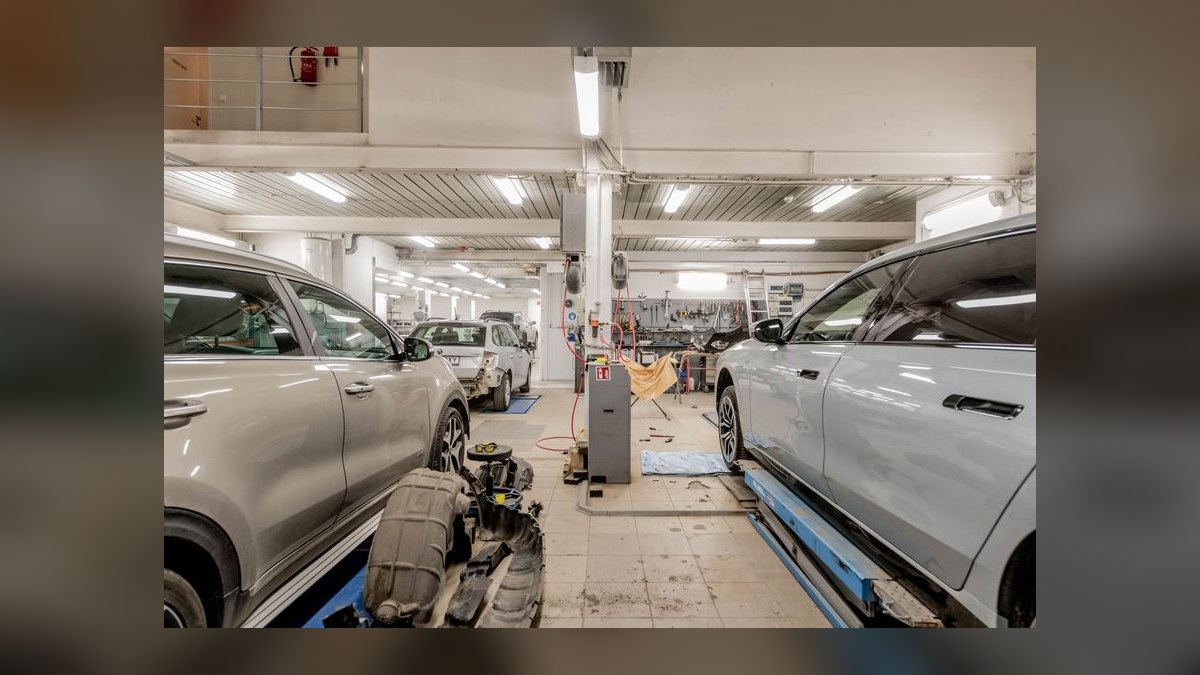
- Days 61-75: Hire the team. Recruit 2 ASE-certified techs (master-level if possible) at $58K-$72K plus 1 service writer at $48K-$58K. Post on iATN, Indeed, and direct-recruit from local dealer service departments offering 5-day weeks as a differentiator. Onboarding signed by day 70.
- Days 76-90: Pre-open execution. Complete Tilden's 3-week training at corporate, install POS and shop-management software (Tilden mandates specific vendor stack), execute soft-open (friends-family + employee discount week), launch local Google + Yelp + Nextdoor paid campaigns ($3,500 pre-open spend), and execute grand opening by day 90.

Alternative Plays
Buy an existing independent shop in your target territory for 2.5x to 3.5x SDE (typically $280K to $450K) — you inherit a customer base, trained techs, and equipment for roughly the same all-in cost as a Tilden new build with zero royalty drag. Conversion play: operate independent for 24-36 months, then convert to Tilden if brand and supply economics warrant. Midas franchise offers stronger national pull, 5% royalty, larger co-op pool, but $232K-$549K total investment — better fit at $300K+ liquid. Take 5 Oil Change ($219K-$444K) targets the quick-lube niche with 15-minute service model and 22%+ EBITDA at maturity. Christian Brothers Automotive ($558K-$769K) is the premium-experience play with $1.78M average unit volume per their 2025 FPR and the highest customer retention in the segment. Big O Tires ($289K-$1.2M) is the tire-led full-service hybrid with stronger inventory financing terms.
FAQ
What is the total investment range for a Tilden Car Care franchise? The startup investment falls between $131,500 and $171,200, as disclosed in the 2026 FDD. This covers equipment, signage, inventory, and other opening costs, but excludes real estate.
How much does Tilden charge in ongoing fees? There is a $25,000 franchise fee, a 6% royalty on gross sales, and a 3% advertising fee. These are lower than many national chains, but still a significant ongoing cost.
How long does it take to break even? Most franchisees reach breakeven in 18 to 30 months. This timeline depends on location, local competition, and how quickly you build a customer base.
What kind of revenue can I expect in the first year? Year-1 gross sales typically range from $650,000 to $900,000, with owner cash flow of $35,000 to $75,000. Revenue can grow to $1.0 million to $1.4 million by Year 3.
Is Tilden a well-known brand compared to Midas or Meineke? No—Tilden has only about 60 units versus Midas’s 1,100+. Its brand recognition is regional, so you’re buying a systems-and-supply discount, not built-in foot traffic.
Do I need to own real estate to open a Tilden franchise? It’s strongly recommended. Most successful owners already own property zoned for auto repair, as leasing suitable space can be difficult and expensive.
Bottom Line
Tilden Car Care is a defensible regional play for capitalized auto-industry insiders — not a turnkey path for outsiders. The lowest total fee load (9% versus Meineke's 13%) and lowest entry investment ($131K-$171K versus Midas's $232K-$549K) make the math attractive on paper. The absence of a formal Item 19, ~60-unit footprint, and slow corporate growth are material risks that demand 10x harder validator-call diligence than a Midas or Christian Brothers buy. If you already own zoned real estate, have $200K+ liquid, hold ASE certifications or have a partner who does, and operate in Tilden's regional footprint, this is a credible alternative to the bigger chains. If any of those four conditions is missing, the math breaks — go independent or buy an existing book of business instead.
Sources
- Tilden Car Care — Franchise Opportunity
- Tilden Car Care — Estimated Initial Investment
- IFPG — Tilden Car Care Franchise Cost and Requirements 2026
- The Franchise Mall — Tilden Car Care Franchise Costs & Fees
- Franchise Gator — Tilden Total Car Care Center 2025 FDD digest
- IBISWorld — Auto Mechanics in the US 2026 Industry Report
- WickedFile — How Much Does an Independent Auto Repair Shop Make in 2026
- CT Acquisitions — Automotive Repair Franchise Opportunities 2026
- Jaken Equities — Auto Repair Shop Valuation EBITDA Multiples
- GMInsights — Electric Vehicle Repair Service Market 2034 Forecast
- Automoblog — EV Technician Shortage 2026
- Midas Franchise vs AAMCO — Royalty Comparison
Related on PULSE
- Should I open or buy a Meineke Car Care franchise in 2027?
- Should I open or buy a Club Car Wash franchise in 2027?
- Should I open a coin-op car wash in 2027?
- Should I open a car wrap business in 2027?
- Should I open a independent car wash business in 2027?
- Should I open or buy a Quick Quack Car Wash franchise in 2027?
This page will be disappearing soon. Save it to your device for $1 — or read it free while it is here.
@Kory-White- · if Venmo asks, the last 4 of my number are 2012
This page is gone.
This one is off the shelf now. $1 keeps it on your phone for good — the whole page, pictures and diagrams included.
 franchiseShould I open or buy a Cold Stone Creamery franchise in 2027?
 franchiseShould I open or buy an Ace Handyman Services franchise in 2027?
 franchiseShould I open or buy a Senske Services franchise in 2027?
 franchiseShould I open or buy a Rockin’ Jump trampoline park franchise in 2027?
 franchiseShould I open a HVAC repair business in 2027?
 franchiseShould I open or buy a World Gym franchise in 2027?
 franchiseShould I open or buy a Yard House franchise in 2027?
 franchiseShould I open or buy an H&R Block franchise in 2027?
 franchiseShould I open or buy a Bath Tune-Up franchise in 2027?
 franchiseShould I open or buy a Fox’s Pizza Den franchise in 2027?