
Should I open or buy a Quick Quack Car Wash franchise in 2027?
 Curated byKory White · Fractional CRO · Maryland
 PULSEKNOWLEDGE LIBRARY
Quality
Certified
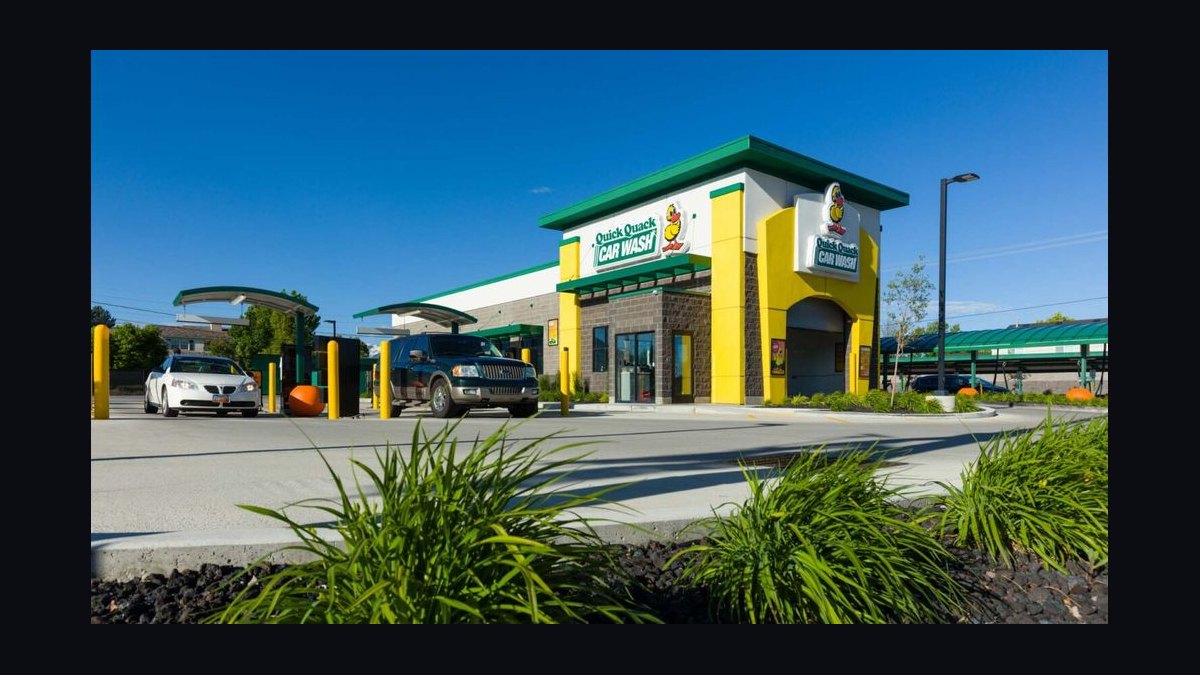
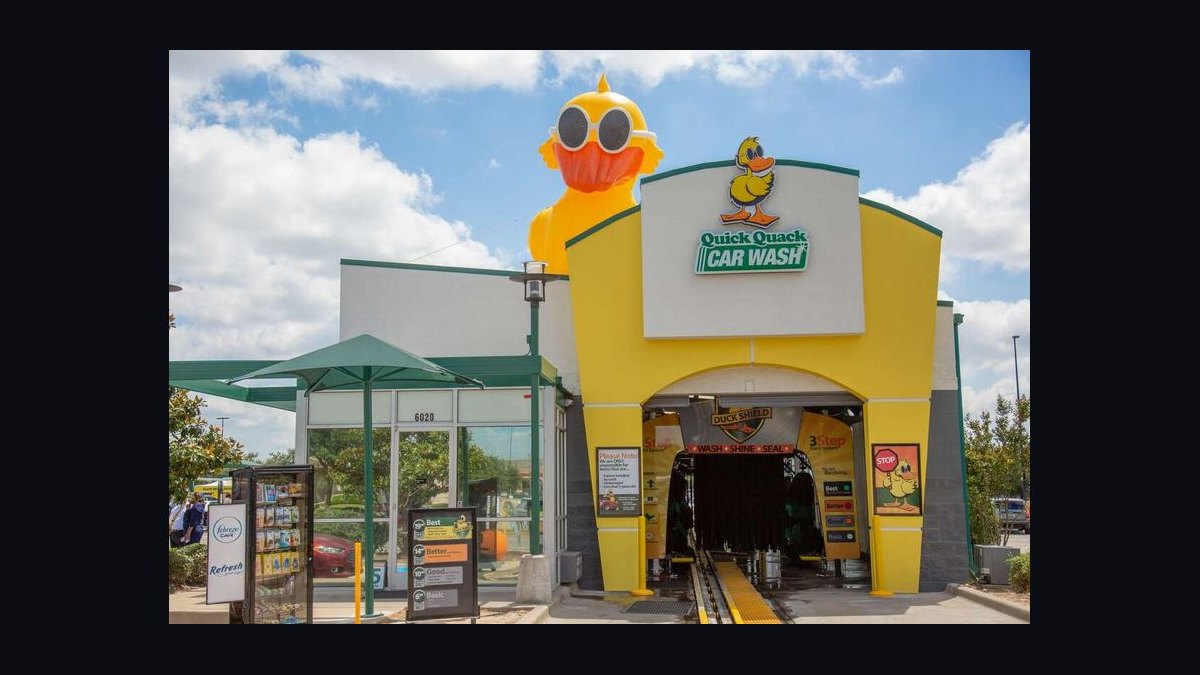
You cannot open or buy a Quick Quack Car Wash franchise in 2027 because Quick Quack does not franchise — every one of its 300+ locations is company-owned and KKR-backed. Your only real paths are buying Quick Quack-anchored real estate as a passive landlord or building a competing express tunnel under a brand that actually sells units.
A concrete scenario: the $6M question in Dallas
Picture a two-unit QSR operator in Dallas-Fort Worth with $2.2M liquid, $6M net worth, and a burning desire to get into express car washes. She sees a Quick Quack on a hard corner doing visible volume, calls the number on the sign, and asks the manager how to get a franchise. The manager laughs — politely — and explains that Quick Quack has never sold a franchise and has no plans to. Our operator then calls three "franchise consultants," two of whom promise they can "get her into a Quick Quack territory" for a $25K consulting fee. Both are lying. The third routes her honestly to Tommy's Express, Take 5, ModWash, and Splash, and tells her to pull the FDDs herself from a state database. She spends the next 90 days doing exactly that, discovers the all-in build is $5.2M-$8.5M, and has to decide whether to stretch her liquidity, partner up, or pivot to buying an existing independent tunnel at 6-8x EBITDA for $2.5M-$4.5M. That fork in the road — franchise a competitor, buy existing, or buy the real estate — is what this page is about. The Quick Quack brand itself is off the table as a franchise, and any 2027 pitch that says otherwise is a scam.
How the mechanism actually works
The reason there is no Quick Quack franchise to open comes down to capital structure. In 2024, KKR closed an approximately $850M strategic investment into Quick Quack Car Wash, taking a significant ownership position in a chain that had already grown past 300 company-operated locations across California, Arizona, Texas, Utah, Colorado, Nevada, Oklahoma, and Washington. When a private-equity sponsor of that size buys into a chain, the entire growth model changes. Instead of collecting 6% royalties from hundreds of independent operators, the sponsor wants to own the real estate, own the membership base, own the data, and eventually exit at a multiple on consolidated EBITDA. Franchising would dilute all four of those. That is why there is no Franchise Disclosure Document, no Item 7, no Item 19, no franchise fee, no royalty schedule, and no Item 20 list of franchisees to call.
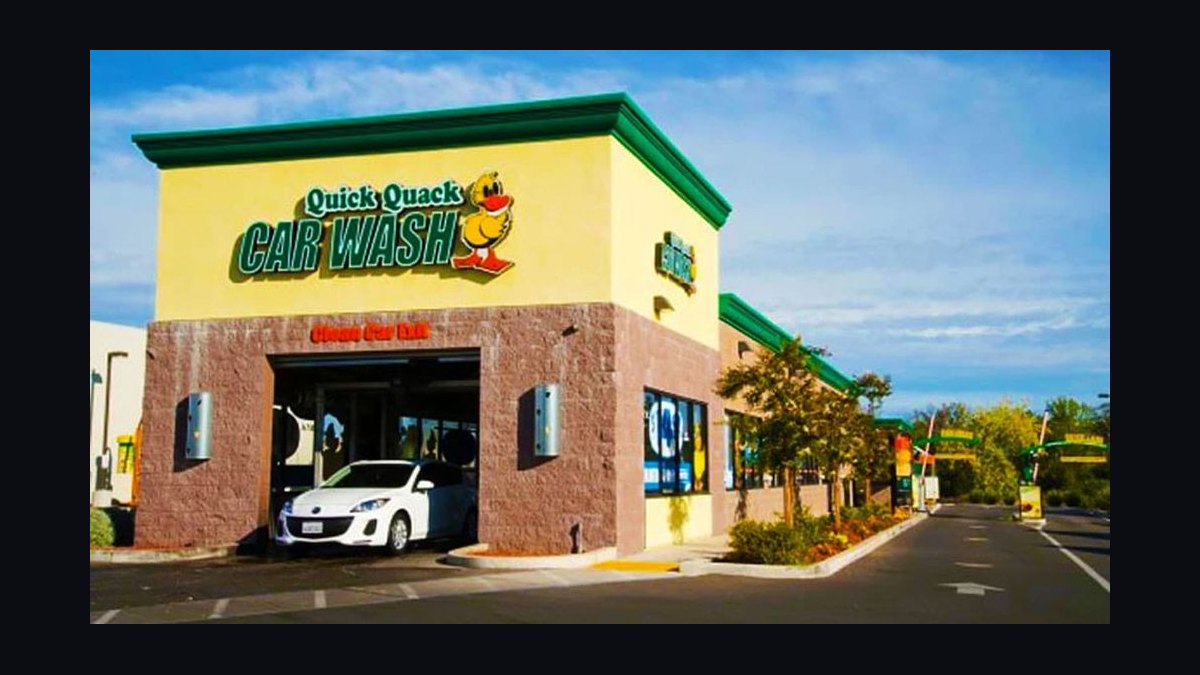
So what does "opening a Quick Quack" actually mean in practice? There are exactly three legal interpretations, and only two of them involve you operating anything:
- Buy real estate already leased to Quick Quack. Quick Quack corporate signs 15-20 year NNN leases on its pads. If you buy one of those pads from the current landlord, you become the landlord. You collect rent. You do not wash cars.
- Build a competing express tunnel under a franchise that actually sells units. Tommy's Express, Take 5 Car Wash (Driven Brands, NYSE: DRVN), ModWash, Splash Car Wash, and WhiteWater Express all actively franchise in 2026-2027.
- Build an independent express tunnel with no brand. Zero royalty, full control, but you carry the entire brand-building burden yourself.
The decision tree below maps how a prospective operator should route themselves. Note that the first branch is a hard liquidity gate — if you do not have $5M+ liquid, the Tommy's Express path is closed to you, and you are realistically looking at Take 5, a conversion play, or an existing-site acquisition.
The critical insight is that the Quick Quack brand is not the asset — the express tunnel format is. The format is what generates the membership annuity, the 60%+ recurring revenue, and the 45-67% adjusted cash flow margins that make these sites attractive to PE buyers. You can capture those economics under a different brand, or under no brand at all, but you cannot capture them by buying a Quick Quack franchise, because there is nothing to buy.
Real numbers, ranges, and benchmarks
Because there is no Quick Quack FDD to cite, the honest comparable is the closest publicly-franchised express tunnel competitor — Tommy's Express — plus industry benchmarks from the International Carwash Association, IBISWorld report 81119 (Car Washes), and Car Wash Advisory's transaction database. The table below lays out the real-money math an operator faces in 2027 if they want Quick Quack-style economics through a franchise that will actually sell them a unit, or through an independent build, or through real estate.
| Line Item | Tommy's Express (2026 FDD Item 7) | Independent Express Tunnel | Quick Quack Real Estate Buy-In |
|---|---|---|---|
| Initial franchise fee | $50,000 | $0 | N/A (corporate-owned) |
| Land acquisition | $1.2M-$2.5M (1-1.5 acres, hard corner) | $1.0M-$2.2M | $2.5M-$5.5M per pad |
| Site work + build-out | $2.1M-$3.4M | $1.6M-$2.8M | Already built |
| Tunnel equipment + IT | $1.2M-$1.8M | $700K-$1.3M | Installed |
| Working capital + pre-opening | $300K-$500K | $200K-$400K | $0 (NNN lease passive) |
| Royalty % | 6% of gross sales | 0% | N/A |
| Brand/marketing fund | 2% of gross sales | $0 (own budget) | N/A |
| Total initial investment | $5,205,184 - $8,522,378 | $3.5M-$6.7M | $2.5M-$5.5M |
| AUV (Item 19) | $1,817,593 gross sales/yr | $1.2M-$2.5M typical | Cap rate 5.0-5.5% |
| EBITDA margin | ~22-30% post-royalty | 40-50% (best-in-class 45-67%) | NNN rent: ~$220K-$300K/yr |
| Year-1 conservative cash flow | $218,112 - $272,639 | $300K-$650K mature | $220K-$300K (lease income) |
| Payback period | 29-31 months | 36-48 months | 18-22 years (real estate) |
| Membership penetration target | 60%+ of revenue | 60%+ | N/A |
A few things jump out of that table. First, the franchise path compresses your margin. A Tommy's Express at $1.82M AUV with a 6% royalty and 2% brand fund is paying roughly $145K/year in fees before you have paid a single dollar of debt service. That is why the operator EBITDA margin lands at 22-30% instead of the 45-67% an independent can achieve at maturity. Second, the independent path is cheaper to build but slower to ramp — you do not inherit a national brand's app, membership base, or advertising, so you carry the customer-acquisition cost yourself. Third, the real estate path is a completely different asset class: you are not an operator, you are a landlord collecting 5.0-5.5% cap rates on a 15-20 year NNN lease with a corporate guarantee from a KKR portfolio company. That is functionally investment-grade industrial yield with no operating headache — but your payback is 18-22 years, not 29-31 months.
Liquidity requirements are non-negotiable. Tommy's Express requires a minimum net worth of $2M and $1M liquid. Lenders on a $6M build want 25-35% equity, which means $1.5M-$2.1M of your own cash at closing, plus 6-12 months of working capital reserves. If you are under $1M liquid, the franchise path is realistically closed and you should be looking at Take 5 at $3.8M-$6.2M, a tunnel-conversion play at $1.8M-$3.2M, or buying an existing single-site independent at 6-8x EBITDA for $2.5M-$4.5M all-in.
Two more numbers matter for 2027 planning. Interest rates on SBA 7(a) through mid-2026 sit at 5.5-6.25%, which adds $30K-$50K per year of debt service versus 2021 lows and pushes breakeven from month 14-18 out to month 22-30. And water-reuse mandates in California (SB 606), Arizona, and Nevada now require 80-85% water recapture, which is a $120K-$200K equipment surcharge that corporate-built Quick Quack sites already meet but independents must engineer in from day one.
Trade-offs and alternatives
The franchise path and the independent path are not just different price points — they are different businesses with different risk profiles. Franchising buys you a proven site-selection model, a national app and membership platform, training, and a brand that customers recognize. It costs you 8% of gross sales in perpetuity, plus territory restrictions and a franchisor who can change the playbook. Going independent saves you that 8% and gives you total control, but you have to build your own app, your own membership program, your own marketing, and your own equipment vendor relationships. For a first-time operator with no car wash background, the franchise premium is usually worth it. For a multi-unit operator who already runs a service-retail brand and has a marketing team, the independent path often pencils better at maturity.
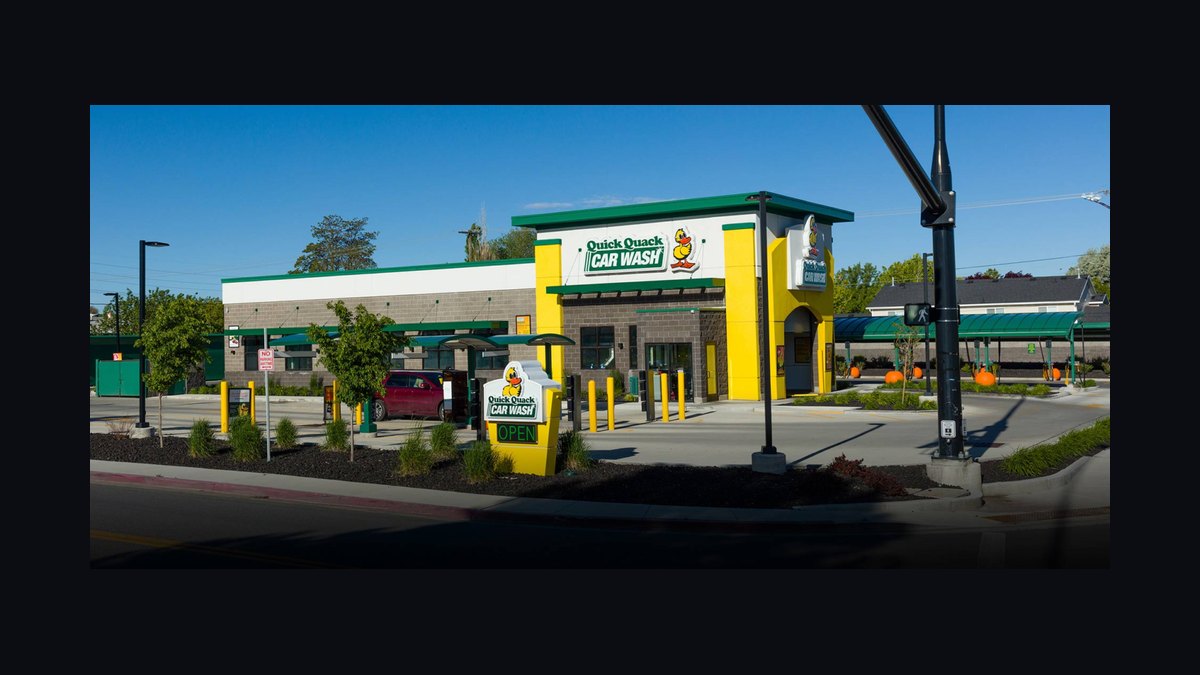
The real estate path is a third animal entirely. If your goal is passive income and you have $2.5M-$5.5M to deploy, buying a Quick Quack-anchored NNN pad at a 5.0-5.5% cap rate gives you a 15-20 year lease with a corporate guarantor that is a KKR portfolio company. Recent comparable sales include a two-property Quick Quack-anchored package that traded around $5.22M total. You will not get rich on the cap rate, but you will get paid every month with essentially no operational involvement, and you have a shot at appreciation if cap rates compress. The trade-off is that you are making a long-duration bet on a single tenant in a single asset class, and if Quick Quack's PE sponsor exits via IPO or strategic sale, your lease survives but your tenant's credit profile may change.
The alternatives map below shows how the three paths diverge after the initial liquidity gate.
One more alternative worth flagging: buying an existing independent single-site express tunnel. Mature single-site deals trade at 6-8x EBITDA, often $2.5M-$4.5M all-in, and you inherit the membership base, the staff, and the ramp. You skip the 14-18 month construction period entirely. The catch is that you are buying someone else's site selection and equipment vintage, so due diligence on tunnel age, membership churn, and deferred capex matters enormously. Conversion plays — buying an aging in-bay automatic site and converting it to express — run $1.8M-$3.2M and can double revenue within 18 months in the right submarket, but they require you to be comfortable with construction and permitting risk.
Common pitfalls and how to avoid them
The single biggest pitfall is believing a broker who says they can get you a Quick Quack franchise. They cannot. Quick Quack is 100% corporate-owned, KKR-backed, and has no FDD. Anyone who takes a deposit for a Quick Quack territory is committing fraud. Verify this yourself by checking the Wisconsin or Minnesota FDD databases — both are free and public — and confirming that no Quick Quack filing exists.
The second pitfall is under-capitalization. Operators routinely sign franchise agreements with $800K liquid, assuming the lender will cover the rest. Lenders will not. On a $6M build, you need 25-35% equity plus reserves, which means $1.5M-$2.1M of your own cash. If you sign without that, you will burn your franchise fee and lose the site.
The third pitfall is site selection. In the 2026-2027 cycle, site selection beats brand selection. A Tommy's Express on a weak corner will underperform an independent on a 25,000+ ADT hard corner with median household income above $65K and fewer than two express tunnels within a 3-mile radius. Pull CoStar or Placer.ai traffic data on every candidate site before you sign an LOI.
The fourth pitfall is membership conversion. The entire express tunnel model depends on converting retail wash customers into $25-$35/month unlimited members within 60 days. If conversion stays below 35%, the unit does not work. Ask every existing franchisee you interview what their actual conversion rate is — not the franchisor's target, the operator's real number.
The fifth pitfall is permitting timelines. California, Oregon, and Washington operators face Conditional Use Permit timelines of 14-26 months that strangle ROI math. If you are building in those states, add six months to every projection and budget for legal fees.
The sixth pitfall is cold-climate revenue loss. Operators in northern markets lose 3-5 months of usable revenue per year unless they install heated tunnels and recycling systems, which adds $400K-$700K to build cost. Model this before you commit to a northern site.
The seventh pitfall is counting on the retail wash. The $10-$15 single wash is not the business. The $25-$35/month membership is the business. Every financial model you build should assume 60%+ of revenue comes from recurring members, or you are modeling the wrong company.
Related questions
Can I buy a Quick Quack Car Wash franchise in 2027?
No. Quick Quack does not franchise. All 300+ locations are company-owned and KKR-backed after the 2024 investment. There is no FDD, no franchise fee, and no royalty schedule. Anyone offering you a Quick Quack franchise is misrepresenting the opportunity.
What is the only legal way to "open" a Quick Quack?
Buy real estate already leased to Quick Quack and become the landlord. Recent two-property packages have traded around $5.22M with cap rates in the 5.0-5.5% range. You collect NNN rent; you do not operate the wash.
How much capital do I need for a competing express tunnel?
Tommy's Express runs $5.21M-$8.52M all-in with a $2M net worth and $1M liquid minimum. Take 5 runs $3.8M-$6.2M. Independents run $3.5M-$6.7M. Plan on $1.5M-$3M liquid before signing anything.
How long until first revenue?
Expect 18-30 months from signing to first wash. This includes site selection, permitting, construction, and training. Payback for top express brands lands around 29-31 months after opening.
Which brands actually sell car wash franchises in 2027?
Tommy's Express, Take 5 Car Wash (Driven Brands, NYSE: DRVN), ModWash, Splash Car Wash, and WhiteWater Express all actively franchise. Pull their FDDs from a state database before you talk to a broker.
FAQ
Can I actually buy a Quick Quack Car Wash franchise? No. Quick Quack Car Wash does not franchise any locations. All 300+ sites are company-owned and backed by KKR. There is no franchise disclosure document, no franchise fee, and no royalty schedule available. Any offer to sell you a Quick Quack franchise is fraudulent.
What is the only way to legally "open" a Quick Quack? The only path is to buy real estate already leased to Quick Quack and become their landlord. Recent sales of two-property packages have traded around $5.22 million, with cap rates in the 5.0-5.5% range. You collect rent; you do not operate the wash.
How much money do I need to build a competing express car wash instead? If you choose a franchise like Tommy's Express, the all-in cost typically ranges from $5.21 million to $8.52 million. You should plan on having $1.5 million to $3 million in liquid capital before signing any agreement, plus a $2M minimum net worth.
How long does it take to open a car wash franchise and start earning revenue? From signing to first revenue, expect 18 to 30 months. This includes site selection, permitting, construction, and training. Payback periods for top express tunnel brands are often around 29 to 31 months after opening.
What are the best car wash franchise alternatives to Quick Quack? Brands that actively sell franchises include Tommy's Express, Take 5 Car Wash, ModWash, and Splash Car Wash. These offer established systems, financing support, and proven unit economics. Take 5 is the most accessible on entry cost; Tommy's has the strongest published AUV.
Is Quick Quack planning to franchise in the future? There is no public indication from Quick Quack or KKR that they will shift to a franchise model. Given their strong company-owned growth and large investment backing, franchising appears unlikely in the near term. Planning around a hypothetical future franchise channel is bad capital allocation.
Sources
- International Carwash Association — State of the Industry reporting on location counts and membership benchmarks
- IBISWorld Industry Report 81119 — Car Washes in the U.S., industry revenue and structure
- Wisconsin Department of Financial Institutions FDD Database — public franchise disclosure filings for Tommy's, Take 5, ModWash, Splash, WhiteWater Express
- KKR & Co. (NYSE: KKR) — investor relations and press releases regarding the Quick Quack Car Wash investment
- Hanley Investment Group — closed transaction reports on car wash-anchored net lease sales
- Mister Car Wash (NYSE: MCW) — public-company earnings releases and membership penetration benchmarks
- Driven Brands (NYSE: DRVN) — Take 5 Car Wash investor materials and 10-K filings
- U.S. Small Business Administration — SBA 7(a) and 504 loan program data and lender lists
- Professional Carwashing & Detailing Magazine — annual Top 50 conveyor car wash chains rankings
- Marcus & Millichap (NYSE: MMI) — net lease and car wash transaction research
Related on PULSE
- [Should I open or buy a Club Car Wash franchise in 2027?](/knowledge/fr0904)
- [Should I open or buy a Mister Car Wash franchise in 2027?](/knowledge/fr0494)
- [Should I open or buy a Tommy's Express Car Wash franchise in 2027?](/knowledge/fr0493)
- [Should I open a coin-op car wash in 2027?](/knowledge/fr0617)
- [Should I open an independent car wash business in 2027?](/knowledge/fr0609)
- [Should I open an independent quick lube business in 2027?](/knowledge/fr0610)
This page will be disappearing soon. Save it to your device for $1 — or read it free while it is here.
@Kory-White- · if Venmo asks, the last 4 of my number are 2012
This page is gone.
This one is off the shelf now. $1 keeps it on your phone for good — the whole page, pictures and diagrams included.
 franchiseShould I open or buy a Weed Man Lawn Care franchise in 2027?
 franchiseShould I open or buy a franchise versus a dealer or distributor model in 2027?
 franchiseShould I open or buy a Dunkin' franchise in 2027?
 franchiseShould I open or buy a The Picklr pickleball franchise in 2027?
 franchiseShould I open or buy a Kona Ice franchise in 2027?
 franchiseShould I open or buy a Public Storage franchise in 2027?
 franchiseShould I open or buy a Window Genie franchise in 2027?
 franchiseShould I open or buy a SafeSplash Swim School franchise in 2027?
 franchiseShould I open or buy a Crave Cookies franchise in 2027?
 franchiseShould I open or buy a Salata franchise in 2027?