
Should I open a deck builder business in 2027?
 Curated byKory White · Fractional CRO · Maryland
 PULSEKNOWLEDGE LIBRARY
Yes — open a deck builder business in 2027 if you can self-perform carpentry, finance $80K-$150K in working capital before your first deposit, and live in a Sun Belt or coastal metro with median home values above $450K. Independents starting lean as an LLC out of a pickup truck can hit $380K-$650K Year-1 revenue at a 12-18% net margin, with breakeven inside 8-11 months if you book one $35K-$55K composite deck per month at a 45-55% gross margin. Franchised plays (Archadeck Outdoor Living) need $120K-$235K all-in and average $1.84M AUV, but the 6% royalty + 1.5% brand fund crushes net to 8-12%. Probably not if you cannot swing hammers yourself, have under $60K liquid, or sit in a stagnant rust-belt market where decks sell for $18K instead of $42K.
The Real Numbers
The deck building category sits at the profitable end of residential remodeling. Industry revenue hit roughly $1.3 billion in 2026 per IBISWorld's Deck & Patio Construction in the US report, growing at a 0.7% five-year CAGR with analysts projecting a "Golden Age of Remodeling" in 2026-2027 as rates stabilize and homeowners unlock record equity. The Freedonia Group's US Wood & Competitive Decking study and the broader decks market are forecasting a 5.26% CAGR from $3.46B in 2024 toward $5.22B by 2032, with composites (Trex, TimberTech/AZEK, Fiberon) taking share from pressure-treated pine.
Here is the 2027 P&L reality for the two paths.
| Metric | Independent LLC (lean) | Independent LLC (year 3) | Archadeck Franchise |
|---|---|---|---|
| Startup investment (Item 7 equivalent) | $12K-$50K | $75K-$150K | $120,400-$139,300 + $59,500 franchise fee |
| Working capital reserve | $25K-$60K | $80K-$150K | $60K-$70K (working capital line item) |
| Year-1 revenue | $380K-$650K | $1.2M-$2.0M | $1.84M AUV (Item 19 average) |
| Gross margin (material + labor) | 45-55% | 48-55% | 42-48% |
| Royalty + brand fund | $0 | $0 | 6% royalty + 1.5% brand fund |
| Net margin (after owner draw) | 12-18% | 15-22% | 8-12% |
| Year-1 cash flow to owner | $45K-$95K | $180K-$420K | $95K-$185K |
| Breakeven | 8-11 months | n/a | 14-20 months |
| Avg ticket (composite, 320 sq ft) | $28K-$48K | $35K-$72K | $42K-$95K |
Real material costs in 2027: pressure-treated lumber runs $3-$6/sq ft, cedar/redwood $7-$12/sq ft, Trex composite boards $43-$68 each, TimberTech/AZEK PVC $65-$91 per board. Installed labor carries another $15-$35/sq ft for ground-level, $25-$40/sq ft for elevated builds. The James Hardie acquisition of AZEK Company ($8.75B, announced March 2025) has tightened composite supply tiers, pushing builders to lock in distributor allocations early in Q1 2027.
Who Wins With This Business
Operators who win in deck building share a profile. Working-owner carpenters who can frame, sister joists, and run a Festool track saw themselves take home $45K-$95K extra in Year 1 by avoiding the $28-$45/hour fully loaded crew cost for every billable framing hour. Sun Belt and coastal-market operators in Charlotte, Raleigh, Nashville, Austin, Tampa, Phoenix, Boise, Denver, Charleston, and Sarasota win because median home values above $450K support $42K-$95K average tickets — Charlotte alone runs 15-22% above national pricing per HomeAdvisor 2026 data.
Specialists in composite-only builds win on margin and recurring referrals: Trex Pro and TimberTech Gold contractors get factory leads delivered free and 5-10% material rebates, lifting gross margin 3-5 points. Operators with a CRM-first ops stack (Buildertrend at $499/month or JobNimbus at $75/month per user) close 24-31% of consults vs. 12-18% for whiteboard operators because the 48-hour 3D rendering SLA wins the decision. Multi-trade upsellers who add pergolas (+$8K-$22K), outdoor kitchens (+$18K-$65K), and screen rooms (+$25K-$80K) triple ticket size — this is exactly the Archadeck Outdoor Living thesis. Finally, veterans and tradesmen pivoting from general construction carry installed OSHA 30 training, existing relationships with 84 Lumber and ABC Supply, and credibility on inspection day.
Who Loses With This Business
The losers have predictable patterns. First-time owner-operators with no carpentry skills burn through reserves paying $28-$45/hour for journeyman crew while they learn — gross margin collapses from 50% to 28% inside a season. Undercapitalized starts under $30K liquid cannot float the 35-45 day AR cycle between deposit and final payment; one $48K composite job that goes into a punchlist dispute can wipe payroll.
Stagnant Rust Belt and rural markets (Toledo, Erie, Youngstown, rural Mississippi) cap average tickets at $18K-$26K because median home values sit below $220K — the same labor hours produce 40-55% less revenue than Charlotte. Builders who quote on volume not value racing competitors to $10/sq ft labor end Year 1 with 6-9% net margin and zero reinvestment cash. Franchisees who buy Archadeck in a market the territory map says is "growth potential" (read: under-developed) often miss the $1.84M AUV average because that figure is skewed by mature 10+ year units; new units in Year 1-2 frequently land $580K-$920K while still paying 6% royalty + 1.5% brand fund + $59,500 sunk franchise fee.
Operators ignoring lead time on composite allocations — especially post-James Hardie/AZEK consolidation — get pushed to back-of-line for TimberTech Advanced PVC in peak May-September, blowing customer install dates and triggering refund demands.
2027 Market Conditions
Three forces define 2027 deck building economics.
First, the rate-stabilization tailwind. With the Fed funds rate sitting in the 3.75-4.25% range through 2027 and 30-year mortgages settling near 5.8-6.4%, homeowners are pulling from $32 trillion in tappable home equity (Federal Reserve Z.1 data) to remodel rather than move. The National Association of Home Builders Remodeling Market Index (RMI) held above 65 for six consecutive quarters entering 2027, the longest expansion since 2017-2019.
Second, material consolidation. The James Hardie/AZEK $8.75B merger (announced March 2025, closed late 2025) plus Trex's continued capacity expansion in Virginia and Nevada mean composite supply is concentrated in three suppliers controlling 78% of US capped-composite volume. Builders without Trex Pro Gold or TimberTech Gold status pay 8-14% higher landed cost and wait 18-26 extra days on allocation in peak season.
Third, tariff and labor pressure. 2027 tariffs on Canadian SPF lumber sit at 14.5% (down from 2026's 17.9%), but PVC and aluminum railing imports carry fresh 12-18% duties from the 2026 trade actions. Construction wage inflation ran 5.8% YoY in 2026 per BLS QCEW data, pushing fully loaded crew costs to $58-$72K/year per journeyman in major metros. Operators winning in 2027 lock in annual price escalators (3.5-5%) in every contract signed after Q2.
The 90-Day Decision Tree
- Days 1-15: Validate the market. Pull Zillow median home values for your 25-mile radius. Reject the market if median is below $320K. Pull Google Trends for "composite deck near me" — if your DMA shows fewer than 40 monthly searches, walk. Interview 6 local builders at supply houses (84 Lumber, ABC Supply, Lowe's Pro) about their closed-ticket size and lead source mix.
- Days 16-30: Choose the path. Independent LLC if you have carpentry experience and $60K+ liquid. Archadeck franchise if you have $235K all-in liquid, prefer turnkey lead-gen, and want operator-not-craftsman role. Form the LLC in your state ($150-$800), get EIN, $1M GL + $2M umbrella ($3,200-$5,800/year), workers comp ($4,800-$11K/year for 2-person crew), and commercial auto ($2,400/year on the truck).
- Days 31-45: Set up the ops stack. Buildertrend ($499/mo) or JobNimbus ($75/mo/user) for CRM + estimating. QuickBooks Online Plus ($90/mo) for books. CompanyCam ($24/user/mo) for photo documentation. 3D design: Trex Deck Designer (free) or Punch! Home Design Architect ($79). Open accounts at 84 Lumber, ABC Supply, and Trex Pro (requires 8 hours online training + first install audit).
- Days 46-60: Build pipeline. Apply for HomeAdvisor Pro and Angi Leads (expect $28-$65/qualified lead in your market). Stand up a Google Business Profile with 18+ project photos and request reviews from any past private clients. Spend $2,400 on Google Local Service Ads for the first 60 days — target 15-22 booked consults.
- Days 61-75: Close first 2 jobs. Quote at 52-55% gross margin with 35/30/35 payment terms (deposit/midway/final). Confirm allocation with Trex distributor before signing the contract. Stage first install with photo documentation every 90 minutes for CompanyCam — this becomes your 2027 portfolio.
- Days 76-90: Install, collect, reinvest. Complete builds on a 9-12 day cycle. Collect final payments. Reinvest $8K-$15K of Year-1 cash flow into a Festool TS 75 track saw kit ($1,800), DeWalt cordless framing nailer ($550), a used Isuzu NPR 16-ft box truck ($28K-$42K), and a Workhorse pop-up trailer ($4,200).
Alternative Plays
If pure deck building feels narrow, adjacent plays unlock leverage. Outdoor living general contracting (the Archadeck model) bundles decks, pergolas, screen rooms, outdoor kitchens, and fire features for $85K-$240K tickets at the cost of a slower sales cycle and more permit complexity.
Fence and deck combination captures the same demographic with simpler ops — fence installs average $8K-$22K with 6-9 day cycles and serve as a fast cash buffer between bigger deck builds. Hardscape patios (pavers, flagstone) route through similar suppliers and let you stay billable in November-February when deck season cools in colder zones. Sunroom and screen room franchising with Patio Enclosures (Great Day Improvements) carries $220K-$385K all-in and a $985K AUV but with higher repeat-purchase upside.
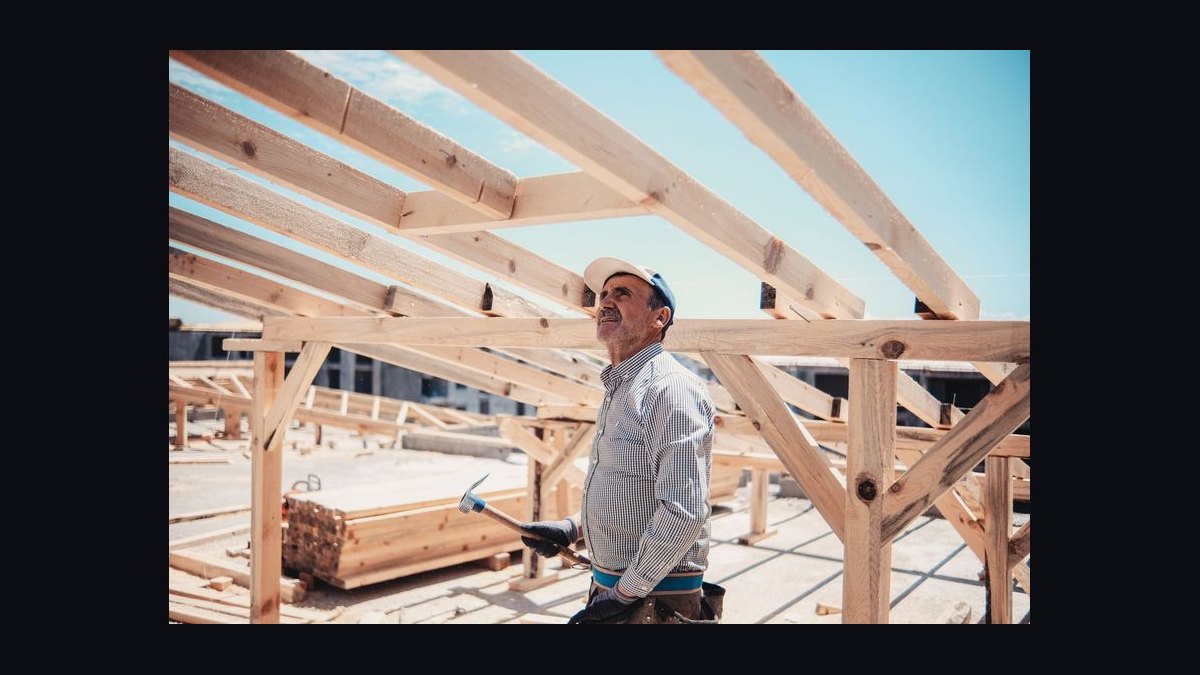
For passive-leaning operators, becoming a Trex Pro Gold installer dispatching to subcontractor crews scales without the carpentry constraint — net margin compresses to 9-13% but you can run 3-5 crews simultaneously. The maintenance and refinishing niche (deck staining, board replacement, railing upgrades) operates at 62-72% gross margin, $1,800-$8,500 tickets, and is a defensible recurring revenue layer for any deck-build shop.
FAQ
What is the realistic startup cost for a deck builder business in 2027? For an independent operator, expect to invest $80K–$150K in working capital before your first deposit, covering a truck, trailer, tools, insurance, and initial marketing. Franchised options like Archadeck Outdoor Living require $120K–$235K all-in, including franchise fees and build-out.
How much revenue can a new deck builder expect in the first year? An independent starting lean can hit $380K–$650K in Year-1 revenue if you book one $35K–$55K composite deck per month. Franchised locations average around $1.84M in annual unit volume, but that typically comes after a longer ramp-up period.
What profit margins are realistic for a deck building business? Gross margins on composite decks typically run 45–55%, while net margins for independents land at 12–18%. Franchised operators see net margins squeezed to 8–12% due to the 6% royalty and 1.5% brand fund fees.
How long does it take to break even in this business? If you can self-perform carpentry and book at least one deck per month, breakeven usually comes within 8–11 months. The key is having that $80K–$150K working capital cushion to cover expenses until deposits and progress payments start flowing.
Which markets are best for starting a deck builder in 2027? Sun Belt and coastal metros with median home values above $450K are ideal, where decks sell for $35K–$55K on average. Avoid stagnant rust-belt markets where typical deck prices drop to $18K, making it much harder to sustain the business.
Do I need to be a carpenter myself to succeed? Yes, unless you have a very large capital reserve. Independents who can swing hammers themselves keep labor costs low and maintain control over quality and scheduling. If you cannot self-perform carpentry, the business is probably not viable without $60K+ in extra liquid capital to hire skilled labor.
Bottom Line
Deck building in 2027 is a real business with disciplined unit economics, stable category tailwinds, and two viable on-ramps depending on whether you are a craftsman or an operator. The independent LLC path wins for skilled carpenters with $60K-$80K liquid, targeting $380K-$650K Year 1 at 12-18% net margin with 8-11 month breakeven. The Archadeck franchise path wins for operators with $235K all-in liquid who want turnkey lead-gen and can absorb a 7.5% royalty + brand fee drag in exchange for $1.84M AUV potential. Skip this category if you live in a sub-$320K median home market, have no carpentry capability and under $60K liquid, or believe you can compete on price — the operators making money in 2027 are selling premium composite installs at $42K-$95K to homeowners pulling from home equity, not bidding $9/sq ft against a guy with a Craigslist ad.
Sources
- IBISWorld — Deck & Patio Construction in the US Industry Analysis, 2026
- Freedonia Group — US Wood & Competitive Decking Study
- Franchise Chatter — Archadeck Outdoor Living Franchise Review 2026: Costs, Fees, News, Average Revenues
- Sharpsheets — Archadeck Outdoor Living Franchise FDD, Profits & Costs (2025)
- Vetted Biz — Archadeck Franchise Insights: FDD, Costs & Fees
- Industry Today — Decks Market to Reach USD 22.81 Billion by 2032 at 5.72% CAGR
- HomeGuide — How Much Does It Cost to Build a Deck? 2026
- Angi — How Much Does It Cost to Build a Deck? 2026 Data
- Trex Protect — Cost of Deck Installation 2026
- NAHB — Remodeling Market Index (RMI) Quarterly Report
- BLS — Quarterly Census of Employment and Wages, Construction (NAICS 23)
- Federal Reserve — Z.1 Financial Accounts of the United States (Household Equity)
Related on PULSE
- [How do I franchise my own business in 2027?](/knowledge/fr1102)
- [Franchise vs. independent business: which should I start in 2027?](/knowledge/fr1091)
- [Should I open or buy a Padgett Business Services franchise in 2027?](/knowledge/fr0811)
- [Should I open a arcade business in 2027?](/knowledge/fr0618)
- [Should I open a ATM business in 2027?](/knowledge/fr0614)
- [Should I open a vending machine business in 2027?](/knowledge/fr0613)
This page will be disappearing soon. Save it to your device for $1 — or read it free while it is here.
@Kory-White- · if Venmo asks, the last 4 of my number are 2012
 franchiseShould I open or buy a Huntington Learning Center franchise in 2027?
 franchiseBest franchise opportunities for veterans in 2027
 franchiseShould I open or buy a Carrabba’s Italian Grill franchise in 2027?
 franchiseShould I open or buy a Flame Broiler franchise in 2027?
 franchiseShould I open or buy a Cinnabon franchise in 2027?
 franchiseShould I open or buy an Einstein Bros Bagels franchise in 2027?
 franchiseShould I open or buy a Popeyes franchise or open an independent sandwich shop in 2027?
 franchiseShould I open or buy an It's A Grind Coffee franchise in 2027?
 franchiseShould I open or buy a Burger King franchise in 2027?
 franchiseShould I open or buy a Panera Bread franchise in 2027?