

Should I open or buy an OpenWorks franchise in 2027?
 Curated byKory White · Fractional CRO · Maryland
Quality
Certified
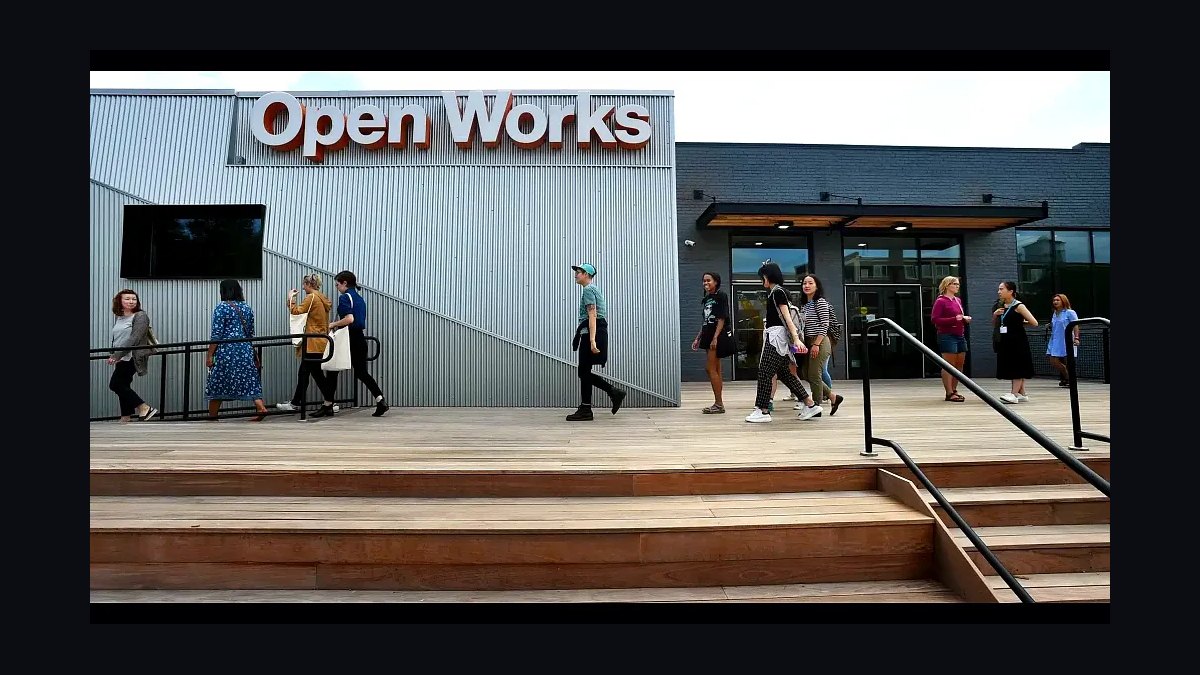
Yes, if you understand OpenWorks' two-tier structure before signing: a unit franchise ($3,000–$50,000) services provided commercial-cleaning accounts for modest, route-like income, while a regional/master franchise ($100,000–$500,000+) builds a scalable facility-services business by securing accounts and supporting units. Open the right tier for your capital and skills, and recurring B2B contracts make 2027 a reasonable window.
The two paths into OpenWorks: unit owner vs. regional developer
OpenWorks, founded in 1983, does not sell one franchise — it sells two very different businesses under one brand, and conflating them is the single biggest mistake a prospective buyer makes. The first path is the unit/franchise-owner tier. A unit owner buys into a low-capital, operationally focused business: OpenWorks (through its regional developer network) hands you a set of provided commercial-cleaning accounts, and your job is to staff, clean, and retain them. You are not prospecting for clients on day one. This is closer to buying a cleaning route than launching a sales-driven company — total startup cost typically runs a few thousand dollars up to roughly $50,000, covering the franchise fee, basic equipment and supplies, minimal training, and working capital to cover payroll before receipts catch up.
The second path is the regional or master developer tier, and it is a fundamentally different franchise. A regional developer does not clean anything. Their job is to secure new commercial accounts in a territory, recruit and sell unit franchises to operators who will service those accounts, and then support those unit owners with training, account management, and the broader facility-services catalog OpenWorks offers beyond basic janitorial work — floor care, window cleaning, HVAC filter replacement, and general facility maintenance and supplies. This is a B2B sales-and-support business layered on top of the unit network, and it requires $100,000 to $500,000 or more in capital because it includes a real office, a sales function, a vehicle fleet, and enough working capital to sustain growth while the territory's unit base builds out.
The relationship between the two tiers is what makes OpenWorks distinct from a single-tier cleaning franchise like a standard Jan-Pro or Coverall unit. The regional developer effectively acts as a local extension of the franchisor: they hold the client relationships and the growth mandate, while unit owners hold the labor and service-delivery relationship. Revenue and fees flow between the tiers — a unit owner typically pays a percentage of gross revenue upward (through the regional developer, and from there to OpenWorks corporate), which funds the account-acquisition and support infrastructure that keeps the pipeline of provided accounts flowing to new unit owners.
This structure explains OpenWorks' core value proposition: the "facility services" angle is broader than cleaning alone, which means a well-run regional territory isn't capped at janitorial revenue — it can grow average account value by layering in additional service lines, deepening the B2B relationship account by account. But it also explains the risk profile. A unit owner's income ceiling is inherently limited by how many accounts one person (or a small crew) can service, while a regional developer's ceiling is set by how well they can sell, recruit competent unit owners, and keep the whole territory's contracts renewing. Neither path is inherently "better" — they serve entirely different kinds of buyers, capital levels, and skill sets, and choosing between them before you read a page of the Franchise Disclosure Document (FDD) is the wrong order of operations. Read the two-tier structure first, decide which business you're actually capable of running, and only then evaluate the specific territory or unit being offered to you.

How to decide between the unit and regional path
The decision isn't about which tier is more profitable in the abstract — regional developer territories generate far larger revenue, but they also require far more capital, a sales skill set, and a multi-year runway before that revenue materializes. The right question is which business matches the capital you actually have, the hours you're willing to work, and the skills you already bring. A unit franchise fits someone with $3,000–$50,000 to deploy, who wants an owner-operated, route-like business, and who is comfortable managing cleaning staff and service quality but has no interest in — or aptitude for — B2B sales. A regional/master franchise fits someone with $100,000–$500,000+ in capital, genuine B2B sales experience, and the patience to build a scalable business over several years rather than draw a paycheck in month three.
Three filters narrow this quickly. First, capital: if you can't comfortably fund $100,000–$500,000 plus a working-capital cushion without straining your finances, the regional tier is off the table regardless of ambition — undercapitalized regional developers are the ones who fail to build out their territory and default on account commitments to unit owners. Second, skill match: cleaning operations knowledge (staffing, quality control, supply management) serves a unit owner well; account-acquisition and relationship-management skill serves a regional developer well. Buying the wrong tier for your skill set means fighting the business every day instead of running it. Third, time horizon: a unit owner can reasonably expect to know within 6–18 months whether the route is profitable; a regional developer is signing up for a 2–4 year build before the investment is recouped, which requires income from other sources or savings to bridge the gap.
If you clear all three filters for one tier but not the other, the decision is largely made. If you clear neither cleanly — modest capital and no sales background, for instance — that's a signal to keep saving or building sales experience rather than forcing entry into a tier that doesn't fit, or to look at a straight single-tier cleaning franchise instead of OpenWorks' two-tier model.
What the numbers actually look like in each tier

The published investment ranges only tell part of the story; the cash-flow timeline matters more than the headline number. For a unit franchise, the $3,000–$50,000 startup range typically breaks down into a franchise fee, equipment and cleaning supplies ($3,000–$18,000), minimal office setup, initial training, and working capital of roughly $3,000–$20,000 to cover the ramp period. That working-capital cushion matters because most new unit owners should plan for 6 to 18 months before reaching consistent net-positive cash flow, not gross revenue — you're paying cleaners, covering general liability and workers' comp insurance (commonly $2,000–$5,000 a year), and paying a royalty (commonly in the 5–8% of gross revenue range across similar commercial-cleaning master models) before anything hits your pocket. A realistic monthly operating cost for a single unit running 5–10 accounts runs roughly $2,500–$6,000, including labor, supplies, vehicle expense, and royalty. Reported unit revenue in this segment often falls in the $40,000–$150,000 range, with net profit after all expenses more commonly landing at $15,000–$35,000 for an operator working 20–30 hours a week — enough that many first-year unit owners keep a part-time job alongside the franchise.
For the regional/master tier, the $100,000–$500,000+ investment covers a franchise fee ($50,000–$180,000), larger equipment and facility-services inventory, regional vehicles ($15,000–$55,000), an actual office buildout ($20,000–$70,000), initial marketing and sales costs to secure accounts ($25,000–$70,000), training and travel for the operator and staff, and a much larger working-capital reserve ($35,000–$100,000) to sustain the business while the unit network is built out. This tier is explicitly built to reach $1M–$5M+ in territory revenue over time, but that scale takes 2–4 years to develop as the developer recruits unit owners, secures new accounts, and builds the sales and support team. Regional developers earn on the spread between what unit owners pay in and what it costs to acquire accounts and support the network — a business model that rewards patience and account-retention discipline far more than fast growth.
One number applies to both tiers and deserves attention regardless of which you choose: contract retention. Commercial cleaning contracts in this segment typically renew at 60–80% annually, and OpenWorks does not grant exclusive geographic territories in the traditional sense — unit owners get "protected accounts" they're assigned, not a protected zone, meaning the franchisor can place additional units nearby. Growth for a unit owner therefore depends heavily on retaining the accounts you have and upselling additional facility-service lines, which can lift average contract value by a meaningful margin when done well. A single account should never represent more than roughly 30% of your revenue, in either tier, because losing one concentrated client can wipe out a year of net profit in a matter of weeks.
Rolling out an OpenWorks franchise step by step

Whichever tier fits, the sequencing from decision to launch follows a similar shape, just with different substance at each step. Start with the FDD itself — read Items 5, 6, 7, and 19 closely for fees, ongoing costs, and any financial-performance representations tied to the tier you're evaluating, and don't skip the training-cost line items (OpenWorks University-style onboarding commonly runs $500–$2,000 for a unit owner, more for a regional operator standing up a team). From there, interview both unit owners and regional developers currently operating — not just references handed to you, but operators you find independently — and ask pointed questions about real net income, account retention, staffing headaches, and how long it actually took them to reach positive cash flow.
Once you've chosen a tier, the setup phase differs by role: a unit owner is buying basic cleaning equipment, securing insurance, and completing operator training before taking over provided accounts; a regional developer is signing a lease, hiring initial sales and support staff, and building the systems that will manage a growing unit network. Launch looks different too — a unit owner begins servicing assigned accounts and immediately focuses on quality control and retention, while a regional developer begins actively securing new commercial accounts and recruiting the first cohort of unit franchisees into the territory.
Past launch, the ongoing job is contract and staffing management for a unit owner, and account growth plus unit-network support for a regional developer — and eventually, exit planning matters for both. OpenWorks agreements commonly run around a 10-year term, and resale value tracks the quality of what you've built: a unit book of 15–20 accounts with multi-year history and 80%+ retention has historically traded around 2–3 times annual net profit, while an established regional territory with a functioning sales pipeline and multiple unit owners underneath it can command a substantially higher price — though finding a qualified buyer often takes 6–18 months, and the franchisor typically holds a right of first refusal plus a transfer fee in the $5,000–$15,000 range. Building toward a clean, diversified, well-documented book of business from day one isn't just good operating practice — it's what determines whether the franchise has resale value at all when you're ready to exit.
Related questions

What is a "provided account" in the OpenWorks model?
A provided account is an existing commercial-cleaning contract handed to a new unit owner at startup, rather than one you prospect yourself. It reduces the need to build a client base from scratch, though staffing and service delivery remain entirely your responsibility.
Can a unit owner become a regional developer later?
The FDD structure treats the two as separate franchise agreements with separate investment levels, so moving from unit owner to regional developer typically means signing a new, larger agreement rather than an automatic upgrade — confirm the exact path with OpenWorks directly.
How is OpenWorks different from Jan-Pro or Coverall?
Those brands are largely single-tier commercial-cleaning franchises. OpenWorks layers a regional/master developer tier on top of unit operations and markets a broader facility-services offering — maintenance and supplies alongside cleaning — rather than janitorial work alone.
Does OpenWorks guarantee exclusive territory?
No. Unit owners receive protected accounts, not an exclusive geographic zone, so the franchisor can place additional units nearby. Growth depends on retaining and upselling your assigned accounts rather than relying on territorial exclusivity.
What happens if a unit owner can't staff cleaners reliably?
Unreliable staffing directly threatens contract retention, since commercial clients expect consistent service. Chronic staffing problems are one of the most commonly cited reasons unit owners underperform relative to the income ranges suggested in the FDD's Item 19.
FAQ
What is the typical investment range for an OpenWorks franchise? The unit franchise investment can run from a few thousand dollars up to roughly $50,000, while regional or master developer roles require approximately $100,000 to $500,000 or more. These figures come from the FDD and vary by tier and territory.
Does OpenWorks provide accounts to franchise owners? Yes, the model includes provided accounts for unit franchise owners, meaning you receive existing cleaning contracts to start rather than prospecting from zero. You remain responsible for staffing and service delivery on those accounts.
How does the two-tier model work in practice? Unit franchise owners focus on cleaning operations with provided accounts, while regional or master developers secure new accounts and support the unit owners underneath them. Revenue and fees flow between the tiers, so understanding both roles before choosing is essential.
What are the ongoing fees for an OpenWorks franchise? Fees and royalties depend on the tier, with unit owners typically paying a percentage of gross revenue that flows up through the regional developer to the franchisor. Exact percentages are outlined in the specific agreement and can vary by territory.
How competitive is the commercial cleaning industry for OpenWorks franchisees? Competition is significant, with national and local janitorial and facility-services providers all competing for the same commercial accounts. OpenWorks differentiates through its broader facility-services catalog and recurring B2B contracts, but success still depends on retention and staffing reliability.
What kind of support does OpenWorks offer to franchise owners? Support includes training, account-acquisition assistance, and operational guidance, with the level varying by tier. Regional developers typically receive more extensive support for sales and territory growth, while unit owners get help with provided accounts and cleaning protocols.
Sources
- https://www.franchise.org
- https://www.entrepreneur.com/franchises
- https://www.ftc.gov/business-guidance/resources/franchise-rule-compliance-guide
- https://www.ibisworld.com
- https://www.statista.com
- https://www.sba.gov/business-guide/plan-your-business/franchise-your-business
- https://www.census.gov/topics/economy/economic-census.html
- https://www.franchisedirect.com
- https://www.franchisetimes.com
Related on PULSE
- How long does it take to open a franchise and break even in 2027?
- Should I open or buy a Tommy Gun's Original Barbershop franchise in 2027?
- Should I open or buy a Painting with a Twist franchise in 2027?
- Should I open or buy a Jan-Pro franchise in 2027?
- Should I open or buy a Buildingstars franchise in 2027?
This page will be disappearing soon. Save it to your device for $1 — or read it free while it is here.
@Kory-White- · if Venmo asks, the last 4 of my number are 2012
This page is gone.
This one is off the shelf now. $1 keeps it on your phone for good — the whole page, pictures and diagrams included.
 franchiseShould I open or buy a Garbanzo Mediterranean franchise in 2027?
 franchiseShould I open or buy a Jersey Mike's franchise in 2027?
 franchiseShould I open or buy a Bojangles franchise or open an independent sandwich shop in 2027?
 franchiseShould I open or buy a Broken Yolk Cafe franchise in 2027?
 franchiseShould I open or buy an Another Broken Egg Cafe franchise in 2027?
 franchiseShould I open or buy a Boston Market (re-do) franchise in 2027?
 franchiseShould I open or buy a World Gym franchise in 2027?
 franchiseShould I open or buy a Goosehead Insurance franchise in 2027?
 franchiseShould I open or buy a Line-X franchise in 2027?
 franchiseShould I open or buy a Beyond Juicery + Eatery franchise in 2027?