


Should I open or buy a Scoop Soldiers franchise in 2027?
Quality
Certified
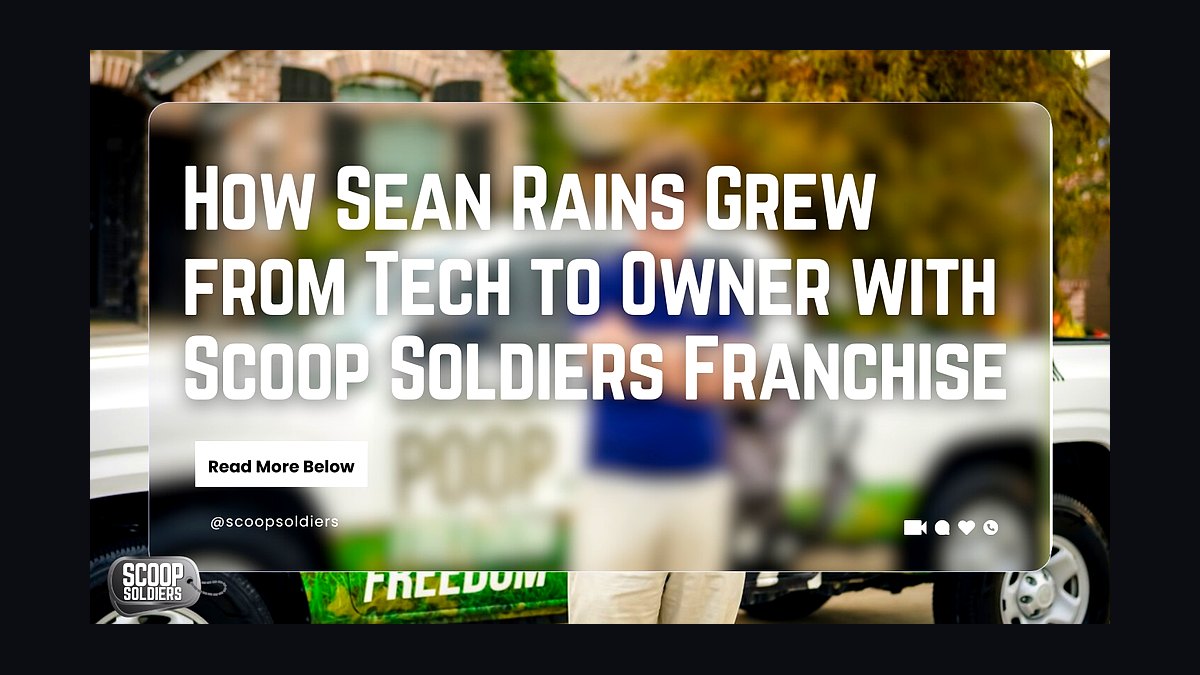
Yes, if you're a hands-on operator who wants to manage technicians and build density rather than work solo — Scoop Soldiers is a strong pick to open in 2027. The franchise combines a very-low investment (roughly $60,000-$120,000), recurring subscription revenue from residential pet-waste cleanup, and a distinctive military-themed brand that drives referrals in an otherwise generic market, but only pays off if you can recruit and retain field technicians.
What it is and why it matters
Scoop Soldiers, founded in 2010, franchises home- and truck-based pet-waste-removal businesses. Franchisees run a team of technicians — branded internally as "the troops" — who perform recurring residential yard cleanup on a weekly or twice-weekly subscription, with some commercial contracts (apartment complexes, HOA common areas, dog parks) layered on top. The category itself matters more than most people assume: pet ownership in the U.S. has climbed steadily for over a decade, and unlike many discretionary services, owners rarely cancel pet-waste removal during a downturn — it's a low-dollar, high-annoyance chore people pay to outsource regardless of the broader economy.
What separates Scoop Soldiers from the dozens of independent "pooper scooper" operators in any given metro is brand distinctiveness. Pet-waste removal is a fragmented, commodity-feeling category with low differentiation — most operators look identical on a Google search. The military theme (reliability, professionalism, "boots on the ground" service language) gives Scoop Soldiers a memorable identity that converts into referrals and online reviews more consistently than a generic scooper name. That branding advantage is the core reason to open rather than go independent: you're buying recognition and systemized customer acquisition, not just a logo.

The other reason the model matters in 2027 specifically is capital efficiency. There's no storefront, no inventory to hold, no commercial lease. The barrier to entry is a vehicle, basic cleanup equipment, and the ability to hire and manage people — which means the ceiling on downside risk is much lower than most franchise categories, but the ceiling on upside is also capped by how many technicians and routes you can realistically staff and supervise. This is fundamentally a labor-management business wearing a lawn-service coat, and evaluating it as anything else — a passive investment, a solo side hustle — will lead to a mismatched decision either way.
The step-by-step process
Opening a Scoop Soldiers franchise in 2027 follows a fairly linear path, and the sequence matters because skipping steps (especially validation and hiring) is where most new franchisees stumble. The process below reflects how the 2026 FDD structures onboarding and how experienced operators describe their first 90-120 days.
First, request and read the Franchise Disclosure Document, paying specific attention to Item 19 (financial performance representations), Item 7 (initial investment), and Item 20 (franchisee turnover and outlet counts). This isn't a formality — the numbers in Item 19 tell you whether the $300,000-$1,200,000+ gross revenue range quoted by the franchisor is being hit consistently or driven by a handful of outlier units.
Second, call existing franchisees — not just the ones the franchisor refers you to. Ask directly about technician turnover, how long it took to reach break-even, and what their actual route density looks like versus what they expected going in. This step alone surfaces most of the red flags that Item 19 numbers smooth over.
Third, validate that your target market is genuinely pet-dense — suburban neighborhoods with high single-family-home ownership and above-average pet ownership rates, ideally where you can identify at least 15,000-30,000 households within a realistic territory boundary, since that's the range Scoop Soldiers uses when assigning exclusive or protected territories.

Fourth, once you sign, you'll go through roughly two weeks of hands-on training, often at an existing territory, covering route software, customer acquisition, and technician management protocols. During this window you should also be recruiting your first 2-4 technicians, since hiring lead time is longer than most new owners expect.
Fifth, launch marketing aggressively in the first 90 days — the franchise recommends targeting 3-5 new recurring accounts per week during ramp-up, because route density (not customer count in isolation) is what determines margin. Finally, once you've built a base of 100-200+ recurring accounts, the focus shifts from acquisition to retention, technician scaling, and — for owners who want to grow beyond a single territory — evaluating a second, discounted-fee territory.
Costs, timelines, and typical ranges
The 2026 FDD lists a franchise fee of roughly $25,000-$40,000, with total Item 7 investment landing between $60,000 and $120,000 — low relative to most franchise categories because there's no build-out. That total typically breaks down into a vehicle and equipment package ($10,000-$35,000), vehicle branding and wrap ($3,000-$12,000), home-office setup ($3,000-$12,000), initial marketing to build a subscription base ($10,000-$30,000), training and travel costs for the operator and early technicians ($5,000-$15,000), general liability insurance and licensing ($4,000-$12,000), and working capital to cover the ramp period ($8,000-$25,000). On top of the initial investment, franchisees pay an ongoing royalty of roughly 7%-9% of gross revenue plus a separate marketing fee of around 2%.

Additional territories carry a reduced franchise fee, generally $15,000-$25,000, and territory fees for expansion scale with household count, typically $5,000-$15,000 per territory. Transfer fees on resale run $5,000-$10,000, paid by the buyer and subject to franchisor approval.
On the revenue side, mature units gross between $300,000 and $1,200,000 annually, with owner net income commonly falling between $80,000 and $350,000 — a wide range driven almost entirely by route density and staffing efficiency rather than territory size. A well-run route with 200+ weekly customers within a five-mile radius can hit gross margins of 55%-65%, while a scattered route under 100 customers often runs below 40% margin, with fuel costs alone consuming 15%-20% of revenue instead of the target 8%-12%.
Timeline-wise, most franchisees who aggressively build density in their first 12-18 months reach break-even around month 8-10. Profitability inside the first 6-12 months is achievable given the low overhead, but that timeline compresses or stretches heavily based on how fast the operator builds recurring subscriptions versus one-off jobs. On the resale side, franchisees who build 200-300 recurring accounts over 3-5 years typically sell for 2.5-3.5 times annual net profit, with recent resales landing in the $80,000-$250,000 range depending on territory density and how many contracts transfer with the sale (90%+ retention is typical among well-run units).
Where teams get it wrong

The single most common failure point is treating technician staffing as an afterthought rather than the core operational challenge it actually is. Field technician turnover runs 40%-60% annually industry-wide in this category, and franchisees who don't build continuous recruiting into their routine — local job boards, referral bonuses of $100-$300 per hire, seasonal hiring fairs — end up perpetually short-staffed, which directly caps how many routes and how much density they can run. New owners frequently underbudget the 2-4 weeks of hands-on training required per new technician, rushing people into the field and compounding turnover.
A second recurring mistake is expanding geography before building density. It's tempting to accept every new customer regardless of location, but a route that's spread too wide eats margin through drive time and fuel long before it generates meaningful revenue. The operators who succeed deliberately concentrate their first 12-18 months of marketing spend on a tight geographic core — even turning down out-of-zone customers — rather than accepting scattered growth that looks good on a customer count but bad on a margin statement.

Third, owners consistently underestimate seasonality in colder climates. Scoop Soldiers is moderately seasonal, with Q1 revenue in northern markets typically running 30%-40% below summer peaks, even though winter service can still generate 60%-70% of peak revenue where yard access holds up. Franchisees who don't build a cash reserve of $8,000-$15,000 before launch specifically to cover that slower stretch — plus ongoing marketing spend during the winter to keep subscription growth from stalling — often hit an unnecessary cash crunch in their first year.
Fourth, some buyers evaluate this as a passive or semi-passive investment because the entry cost is low, when in reality it demands 20-30 hours a week of active owner involvement even at scale, and considerably more before an owner hires a route manager. Franchisees who try to run it remotely or part-time typically see technician quality and customer retention slip quickly, since the brand's "reliability" promise depends on consistent, hands-on oversight.
Finally, some new franchisees discount the brand itself and try to compete purely on price, missing the point of the military-themed positioning entirely — the differentiation is what generates referrals and reviews in a category where most competitors look identical, and owners who lean into that identity in local marketing consistently outperform those who treat the brand as incidental.
Decision framework: when to choose what

The clearest way to evaluate whether to open a Scoop Soldiers franchise is to separate the decision into capital fit, skill fit, and lifestyle fit, then check all three rather than any one in isolation. On capital, you should have $35,000-$60,000 in truly liquid funds available beyond financing, since undercapitalized launches are the fastest way to stall out before reaching the density needed for profitability. On skill fit, the business rewards people who are comfortable with recurring-customer acquisition and, critically, with recruiting, training, and managing hourly or gig-style field staff — if you've never managed frontline labor and have no appetite to start, this is a harder fit than the low entry cost suggests. On lifestyle fit, this suits an owner who wants to build and manage a small operating business full-time, not someone seeking a passive or absentee investment.

If all three line up — you can fund the ramp, you're willing to manage technicians and routes, and you want an active, scalable local business — Scoop Soldiers is a reasonable choice precisely because the brand differentiation and recurring-revenue model give it better odds than an unbranded independent operator in the same category. If you lack the appetite for staffing and route management, an alternative worth considering is a different recurring home-service franchise with less labor intensity, or accepting that an independent, unbranded pet-waste business gives you full control without royalty payments — at the cost of the referral engine the brand provides. If your capital is genuinely constrained below the $60,000 floor, it's worth waiting and saving rather than under-funding the launch, since undercapitalized route-density-dependent businesses rarely recover once they fall behind on marketing spend.
Related questions
How much does it cost to open a Scoop Soldiers franchise? Total investment runs roughly $60,000-$120,000, including a $25,000-$40,000 franchise fee, vehicle and equipment, branding, and initial marketing and working capital.
Is a pet-waste-removal franchise profitable? Mature units gross $300,000-$1,200,000 with owner earnings of $80,000-$350,000, but profitability depends heavily on route density and technician retention, not just territory size.
What's the biggest risk with Scoop Soldiers? Technician staffing — turnover of 40%-60% annually is the main operational bottleneck, more than competition or demand.

How long until a Scoop Soldiers franchise breaks even? Franchisees who build density aggressively in the first 12-18 months typically reach break-even around month 8-10.
Can I run a Scoop Soldiers franchise part-time? Not effectively — it requires 20-30 hours a week of active involvement even at scale, more during launch and ramp-up.
FAQ
What is the typical investment range for a Scoop Soldiers franchise in 2027? The total investment is low for a franchise, ranging roughly from $60,000 to $120,000. This includes a franchise fee of about $25,000 to $40,000 and covers a home- or truck-based operation with no physical storefront required.
How much can I expect to earn as a Scoop Soldiers franchise owner? Mature units typically generate gross revenue between $300,000 and $1,200,000 annually, with owner net income often falling in the $80,000 to $350,000 range. Actual earnings depend heavily on route density, staffing efficiency, and local market conditions.
What are the ongoing royalty and marketing fees?

The royalty fee runs approximately 7% to 9% of gross sales, plus a separate marketing fee of around 2%. These are standard for the pet-services franchise category and fund brand marketing and operational support.
Is pet-waste removal a recession-resistant business to open? Pet ownership tends to remain stable during downturns, and recurring subscription services like Scoop Soldiers often retain customers even when discretionary spending drops elsewhere. No business is fully recession-proof, but demand here holds up better than most.
What are the biggest challenges of running a Scoop Soldiers franchise? The main challenges are recruiting and retaining reliable technicians, building dense enough routes to maximize margin, and competing with local independent scoopers. Staffing turnover is the most persistent operational issue in this labor-intensive model.
How many territories does Scoop Soldiers currently operate? The brand's footprint is roughly 80-100 units across 25 states, concentrated most heavily in the Southeast and Midwest, leaving room for growth in the Northeast, West Coast, and Mountain regions.
Sources
- https://www.franchise.org
- https://www.entrepreneur.com/franchises
- https://www.ibisworld.com
- https://www.statista.com
- https://www.franchisebusinessreview.com
- https://www.census.gov
- https://www.americanpetproducts.org
- https://www.sba.gov
Related on PULSE
- Should I open or buy a Ben & Jerry's scoop shop franchise in 2027?
- How long does it take to open a franchise and break even in 2027?
- Should I open or buy a Tommy Gun's Original Barbershop franchise in 2027?
- Should I open or buy a Pet Butler franchise in 2027?
- Should I open or buy a DoodyCalls franchise in 2027?
This page will be disappearing soon. Save it to your device for $1 — or read it free while it is here.
@Kory-White- · if Venmo asks, the last 4 of my number are 2012
This page is gone.
This one is off the shelf now. $1 keeps it on your phone for good — the whole page, pictures and diagrams included.
 franchiseShould I open or buy a Mr. Gatti's Pizza franchise in 2027?
 franchiseShould I open or buy a Philly Pretzel Factory franchise in 2027?
 franchiseShould I open or buy a Cabinet IQ franchise in 2027?
 franchiseShould I open or buy a Bandana's Bar-B-Q franchise in 2027?
 franchiseShould I open or buy a Pretzelmaker franchise in 2027?
 franchiseShould I open or buy a BJ's Restaurant & Brewhouse franchise in 2027?
 franchiseShould I open or buy a Smart Style franchise in 2027?
 franchiseShould I open or buy a LunchBox Wax franchise in 2027?
 franchiseShould I open or buy a Snap Fitness franchise in 2027?
 franchiseShould I open or buy an Old Spaghetti Factory franchise in 2027?