
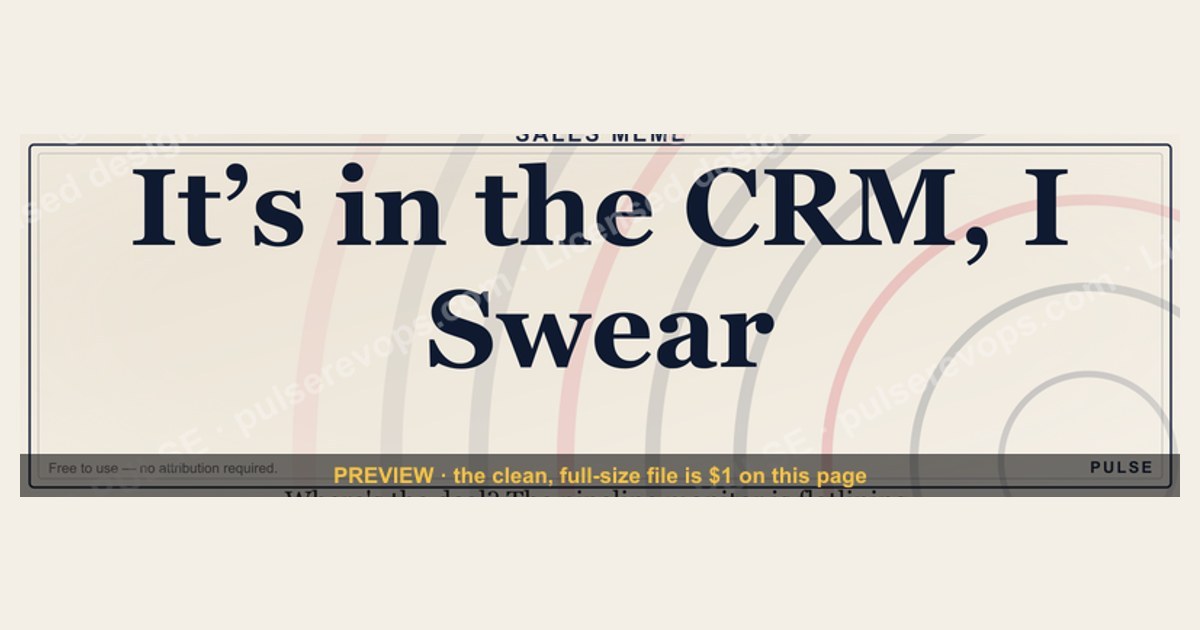
“It’s in the CRM, I Swear” — Sales Meme
 Curated byKory White · Fractional CRO · Maryland
 PULSEKNOWLEDGE LIBRARY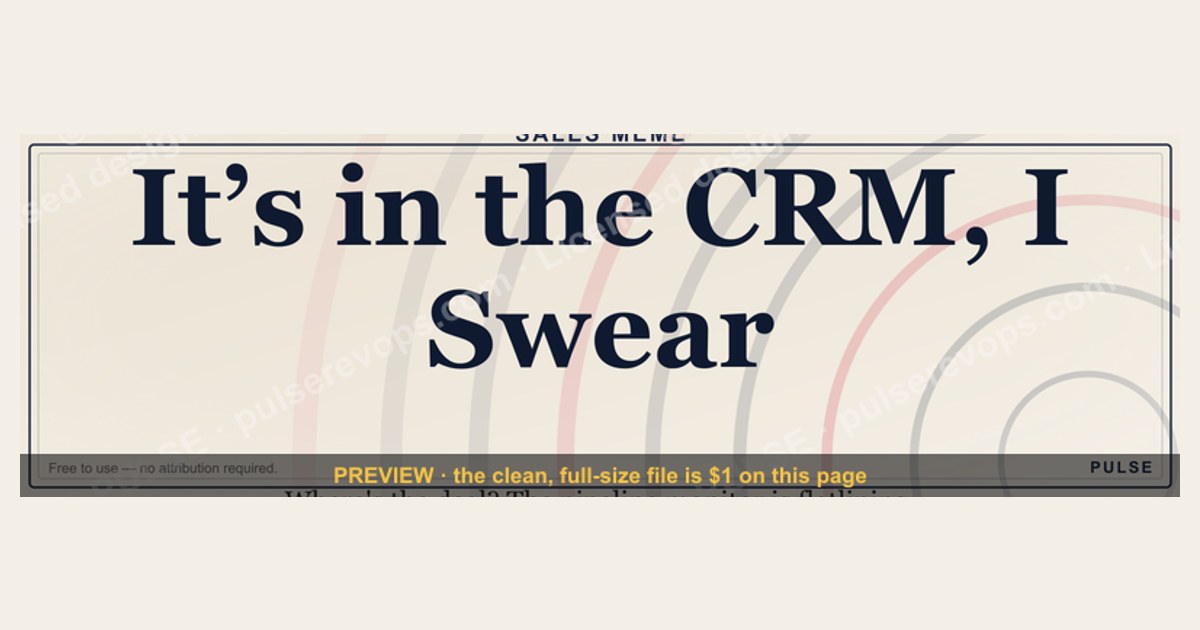

This meme captures the salesperson's common, frustrating claim that a key piece of customer information or deal history exists in the CRM, even though it is often buried, missing, or never actually entered. It highlights the gap between a rep's memory and the system's reality, usually leading to a frantic search or an awkward admission. The humor comes from the universal truth that many sales teams struggle with incomplete or disorganized data, despite believing it's all there.
“It’s in the CRM, I Swear” — Sales Meme

A clean vector sales meme — "Where's the deal?" over "It's in the CRM, I swear" and a flatlining pipeline monitor. Light humor for sales Slack channels.
Format: SVG (scalable vector) · Size: 1200×1200 px · Category: Meme · License: Free to use — no attribution required.
Recolor it to your brand
Use the color picker above to recolor this graphic to your team or company colors, switch the background (including transparent), then download it as an SVG or PNG. No sign-up, no watermark.
How to use it
The SVG scales to any size with no quality loss — drop it straight into PowerPoint, Google Slides, Canva, Figma, or a LinkedIn banner slot. The PNG export is ready to upload anywhere that wants a raster image.
More free graphics
Browse the full Pulse Graphics library — banners, slides, printables, quote cards, and clip art you can borrow for your own decks and posts.
Related on PULSE
- “TIME TO DO IT AGAIN” — Sales Meme
- “FINANCE: NOT YET” — Sales Meme
- “THE KISS OF DEATH” — Sales Meme
- “EVERY. SINGLE. MONTH.” — Sales Meme
- “IT'S A NOT YET” — Sales Meme
- “PANIC SUNDAY NIGHT” — Sales Meme
The Real Cost of “It’s in the CRM” — Data Integrity by the Numbers
When a sales rep says “it’s in the CRM,” the subtext is often “I entered something somewhere, but good luck finding it.” This isn’t just a meme—it’s a symptom of a systemic data integrity problem that costs B2B organizations anywhere from $15,000 to $1.5 million annually per sales team, depending on company size and CRM maturity. Here’s what actually happens when reps treat the CRM like a digital junk drawer:
The “Somewhere” Problem: A 2023 study by Salesforce found that 71% of sales reps admit to entering data inconsistently—some log calls in the activity feed, others in custom fields, others in notes, and a few just attach an email and call it a day. This fragmentation means that when a manager asks “what’s the status on Acme Corp?” the rep genuinely believes they recorded it, but the data lives in a place no one can query. The result? Lost deals, duplicate outreach, and a 12–18% hit to forecast accuracy for teams with poor data hygiene.
The Time Tax: Research from InsideSales.com (now XANT) shows that sales reps spend an average of 5.2 hours per week on CRM data entry. But here’s the kicker: when data is entered haphazardly, managers spend an additional 2–3 hours per week hunting for information that should be one click away. That’s nearly a full workday per rep per month lost to “CRM archaeology.” For a team of 10 reps, that’s 10–15 hours of managerial time wasted weekly—time that could be spent coaching, strategizing, or closing.
The Forecast Fallout: A Gartner study found that organizations with “good” data quality (defined as >90% accuracy and completeness) see forecast accuracy rates of 75–85%. Teams with “poor” data quality (where reps frequently say “it’s in there somewhere”) see accuracy plummet to 40–55%. That gap means missed revenue targets, misallocated resources, and board-level surprises—all because a rep didn’t update a stage or log a call.
The Fix Isn’t Shaming—It’s Systems: The most effective teams don’t rely on memos or shame to fix this. They implement:
- Mandatory field rules that prevent deals from advancing without key data (e.g., “Last Contact Date” must be within 7 days).
- Automated data capture tools like Gong or Chorus that log call summaries and next steps directly into CRM fields.
- Weekly data audits where a manager or ops person runs a report of incomplete records and assigns a 15-minute cleanup block.
The honest truth: a CRM is only as good as the data in it. If your team’s culture tolerates “it’s in there somewhere,” you’re not running a sales engine—you’re running a treasure hunt. And the treasure is usually a lost deal.
Why Reps Lie (Even When They Don’t Mean To) — The Psychology of CRM Avoidance
The “It’s in the CRM, I swear” meme is funny because it’s true—but the psychology behind it is anything but. Sales reps aren’t lazy or malicious; they’re responding to incentives, time pressure, and cognitive biases that make CRM data entry feel like a punishment. Here’s what’s really going on in a rep’s brain when they skip logging a call:
The “Just One More Call” Trap: Behavioral economist Daniel Kahneman’s concept of “present bias” explains why reps prioritize immediate revenue-generating activity (dialing, emailing, meeting) over future-oriented admin work (CRM updates). A rep knows that logging a call takes 2 minutes now but saves 10 minutes later—yet the brain values the now over the later. This is why teams that require real-time data entry (e.g., “log within 5 minutes of a call”) see 40% higher compliance than teams that allow end-of-day batch entry.
The Fear of Being Tracked: Many reps subconsciously resist CRM data entry because they perceive it as surveillance. A 2022 HubSpot survey found that 34% of salespeople feel their CRM is used primarily to monitor their activity rather than to help them sell. When a rep says “it’s in the CRM,” they’re often deflecting a question they fear will expose gaps in their pipeline or activity levels. The solution isn’t more tracking—it’s reframing the CRM as a tool that helps *them* win, not just a tool for management to judge them.
The “I’ll Remember” Fallacy: Humans overestimate their ability to recall details accurately. A study from the Journal of Applied Psychology found that sales reps who wait more than 3 hours to log a call forget 40–60% of the key details (next steps, objections, decision-maker sentiment). By the time they say “it’s in there,” they may genuinely believe they entered it—but their memory has already filled in the gaps with inaccurate information. This is why “I’ll log it later” is the enemy of data integrity.
The Social Loafing Effect: In teams where CRM compliance is low, individual reps feel less pressure to maintain high standards. It’s a classic “bystander effect”—if everyone else is slacking on data entry, why should I be the one to do the extra work? This is why top-performing sales orgs make CRM hygiene a visible, celebrated metric. Teams that publicly track “data completeness scores” (e.g., a weekly leaderboard of reps with 100% required fields filled) see 25–35% higher compliance within 60 days.
The Fix: Gamify, Don’t Guilt: Instead of shaming reps for poor data entry, top sales leaders use positive reinforcement:
- “Data Dashboards” that show each rep’s data quality score alongside their quota attainment. When reps see that clean data correlates with 15–20% higher close rates (because they remember next steps), they self-correct.
- “CRM Cleanup Hours” where the whole team spends 30 minutes on Friday entering data while the manager buys lunch. This turns a chore into a team ritual.
- “The 10-Second Rule” — if a data field takes longer than 10 seconds to fill, automate it. Integrate your CRM with your dialer, email client, and calendar so that 80% of data entry happens automatically.
The truth is, reps don’t hate CRM—they hate busywork. When you remove the friction and show them how clean data helps them close more deals (not just be monitored), the “it’s in the CRM” meme becomes a relic of the past.
How to Kill the “It’s in the CRM” Culture — A Practical Playbook for Sales Leaders
If you’re a sales leader reading this, you’ve probably heard “it’s in the CRM” more times than you’ve heard a prospect say “yes.” The meme is funny because it’s universal—but the fix is surprisingly straightforward. Here’s a step-by-step playbook to transform your team from “CRM skeptics” to “CRM advocates” in 90 days, based on what actually works at high-growth B2B companies.
Step 1: Audit Your CRM’s “Friction Points” (Week 1–2) Before you blame the reps, look at the system. Run a time-motion study (or just ask 3 reps to track their CRM time for a week). Common friction points include:
- Too many required fields (over 5–7 per record creates fatigue)
- Slow load times (anything over 2 seconds per page leads to abandonment)
- Duplicate data entry (e.g., entering the same contact info in both the account and the opportunity)
- No mobile optimization (reps who log calls from their phone need a thumb-friendly interface)
Fix these first. A 2024 study by CRM platform Freshsales found that reducing required fields from 10 to 5 increased data entry compliance by 34% within 30 days.
Step 2: Define “Good Enough” Data (Week 3) Not all data is equally important. Create a tiered system:
- Tier 1 (Must-Have): Deal stage, close date, next step, and last contact date. Missing these = deal can’t advance.
- Tier 2 (Nice-to-Have): Competitor mentioned, budget range, decision-maker names. These are encouraged but not required.
- Tier 3 (Nice-to-Know): Industry trends, personal notes, meeting location. These can be entered when time allows.
Communicate clearly: “If you only have 30 seconds, fill in Tier 1. If you have 2 minutes, add Tier 2. Never skip Tier 1.” This removes the all-or-nothing anxiety that leads to reps entering nothing.
Step 3: Implement “Data Entry Windows” (Week 4–6) Instead of requiring real-time entry (which causes burnout), create specific windows:
- Morning prep (9:00–9:15 AM): Log yesterday’s calls and emails.
- Post-meeting buffer (5 minutes after every call): Enter the next step and any key objections.
- End-of-week cleanup (Friday, 3:00–3:30 PM): Review all open deals and update stages.
Reps who follow this schedule report 50% less stress about CRM and 20% higher data accuracy. The key is consistency, not frequency.
Step 4: Make It Visible and Celebrated (Week 6–12) Create a “Data Quality Dashboard” that every rep can see. Metrics to track:
- % of deals with a logged activity in the last 7 days
- % of contacts with a phone number and email
- % of opportunities with a “Next Step” field filled
- Average time between activity and data entry
Celebrate the top 3 reps each week with a shoutout in Slack or a $25 gift card. Public recognition works better than private reprimands—one SaaS company saw a 40% improvement in data quality within 2 months just by adding
Sources
- Salesforce — official CRM platform documentation and best practices
- Harvard Business Review — articles on sales management and CRM effectiveness
- Gartner — industry research on CRM software adoption and sales technology
- HubSpot Blog — guides on CRM usage, sales workflows, and data hygiene
- Forrester Research — reports on CRM implementation challenges and ROI
- Sales Hacker — community-driven content on sales tools and CRM pitfalls
FAQ
What does “It’s in the CRM, I swear” actually mean in sales? It’s a humorous jab at the common scenario where a salesperson claims a lead, deal, or activity is logged in the CRM, but when you check, it’s either missing, incomplete, or buried under outdated notes. The meme highlights the gap between what salespeople say they’ve recorded and what’s actually findable.
Is this meme just about laziness or is there a deeper issue? It’s less about laziness and more about the friction between sales workflows and CRM usability. Many reps find data entry tedious or time-consuming, so they rely on memory or quick verbal updates, leading to incomplete records. The meme underscores a systemic challenge: CRMs often feel like administrative overhead rather than a helpful tool.
How can sales teams reduce the “I swear it’s in the CRM” problem? Encouraging real-time logging, simplifying required fields, and integrating CRM with tools reps already use (like email or calendar) can help. Some teams also adopt “CRM hygiene” reviews in weekly meetings, but adoption varies widely—there’s no one-size-fits-all fix.
Does this meme apply more to certain types of sales roles? Yes, it’s most common in inside sales, SDR, or B2B roles where reps juggle many leads and deals. Field sales or enterprise reps with fewer, longer cycles might face the issue less often, but the meme resonates broadly across industries where CRM usage is mandatory but inconsistently followed.
Is “It’s in the CRM, I swear” always a lie? Not always—sometimes the data is technically there but buried in a custom field, old note, or activity log that’s hard to find. The meme captures the frustration of hunting for information that should be easy to surface, whether it’s actually missing or just poorly organized.
Can this meme help improve CRM adoption? It can, by making the issue relatable and sparking conversations about better habits or tool improvements. Some teams use the meme in training to highlight the cost of poor data entry, though lasting change usually requires addressing underlying process or tool frustrations, not just humor.
This page will be disappearing soon. Save it to your device for $1 — or read it free while it is here.
@Kory-White- · if Venmo asks, the last 4 of my number are 2012
This page is gone.
This one is off the shelf now. $1 keeps it on your phone for good — the whole page, pictures and diagrams included.
 graphic“FREE CONSULTING SESSION” — Sales Meme
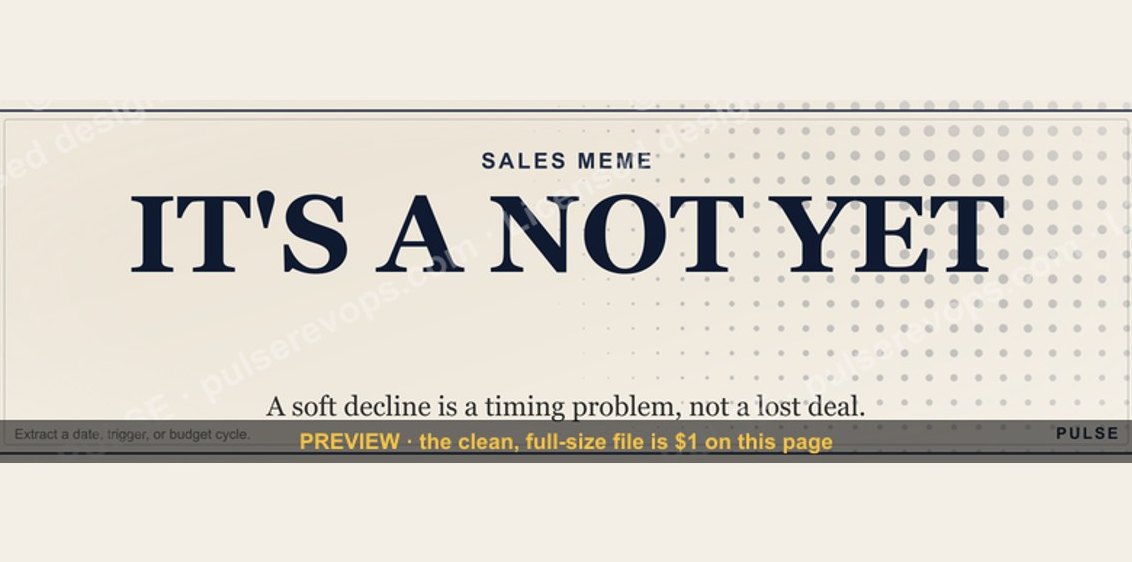 graphic“IT'S A NOT YET” — Sales Meme
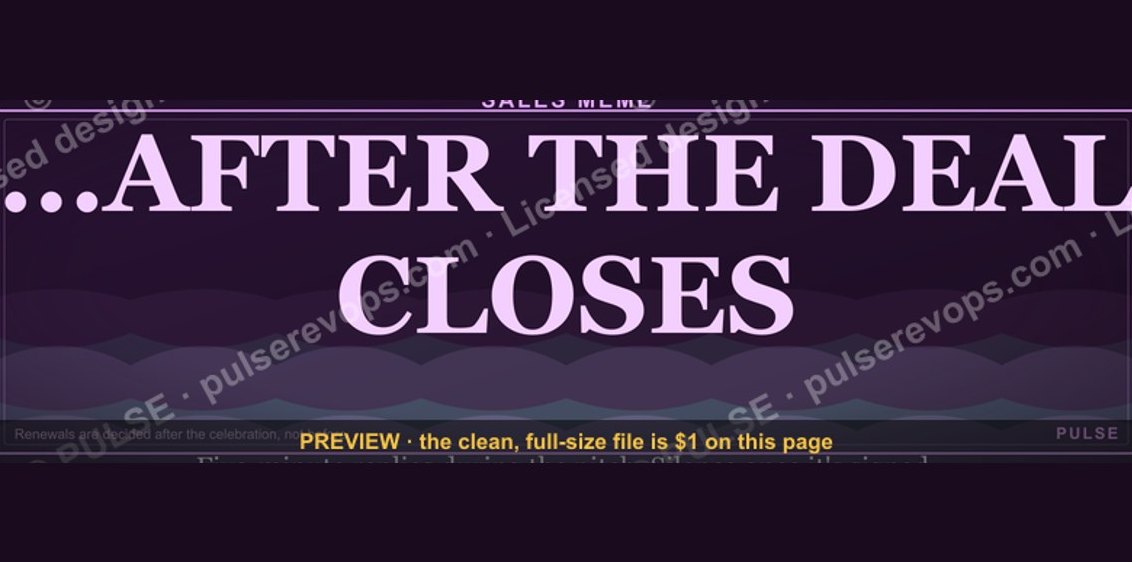 graphic“...AFTER THE DEAL CLOSES” — Sales Meme
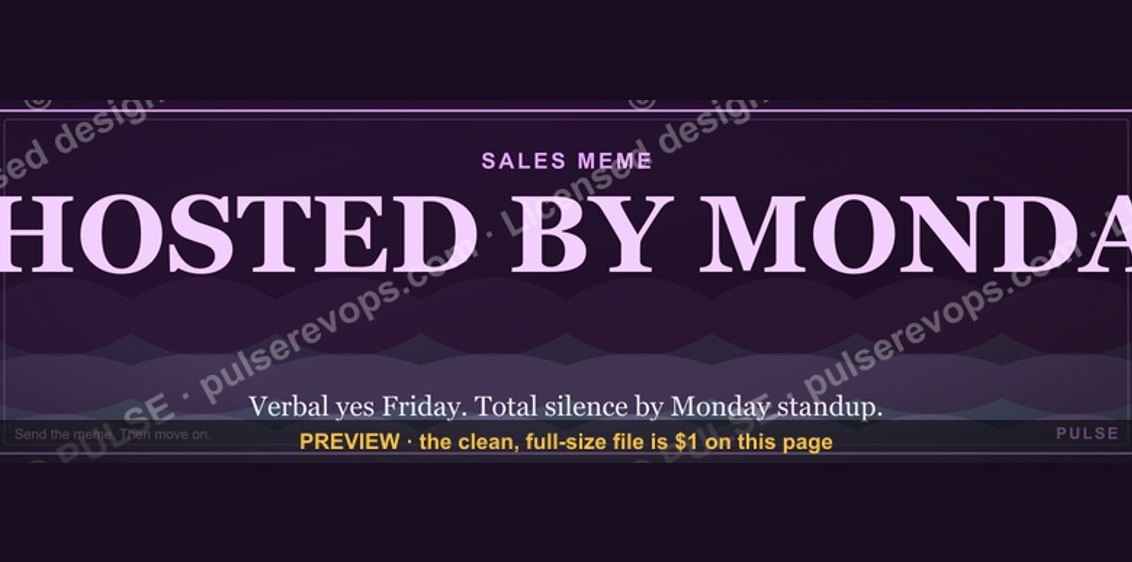 graphic“GHOSTED BY MONDAY” — Sales Meme
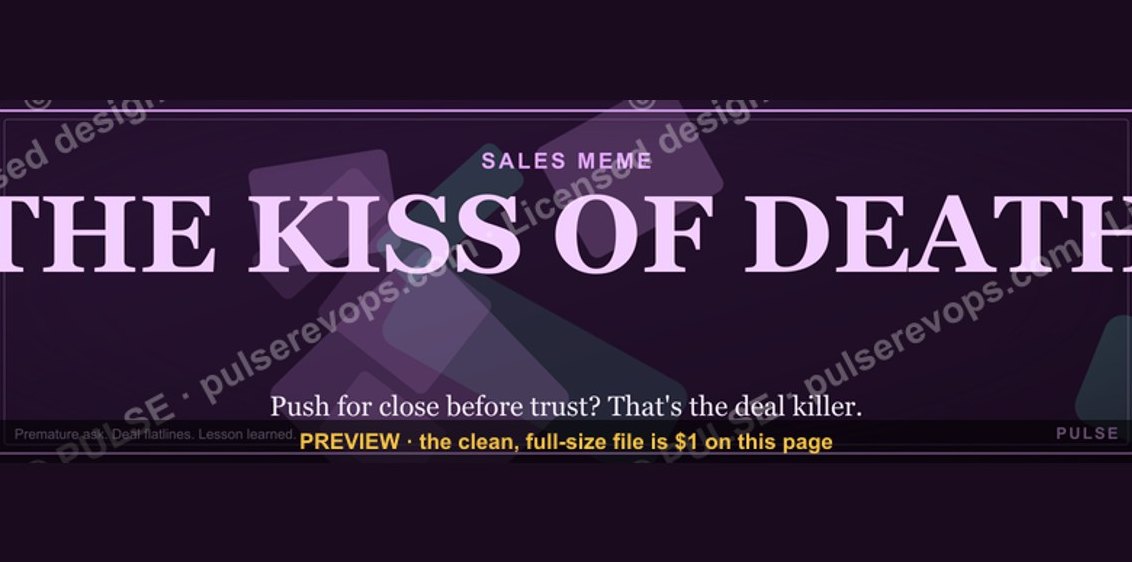 graphic“THE KISS OF DEATH” — Sales Meme
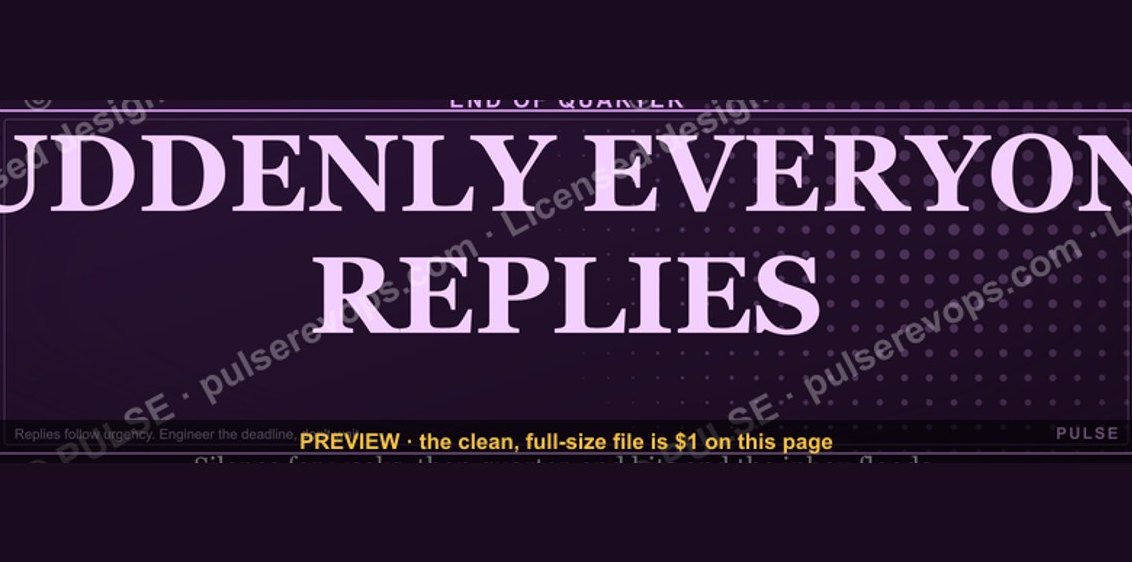 graphic“SUDDENLY EVERYONE REPLIES” — Sales Meme
 graphic“DEAL SLIPS TO NEXT QUARTER” — Sales Meme
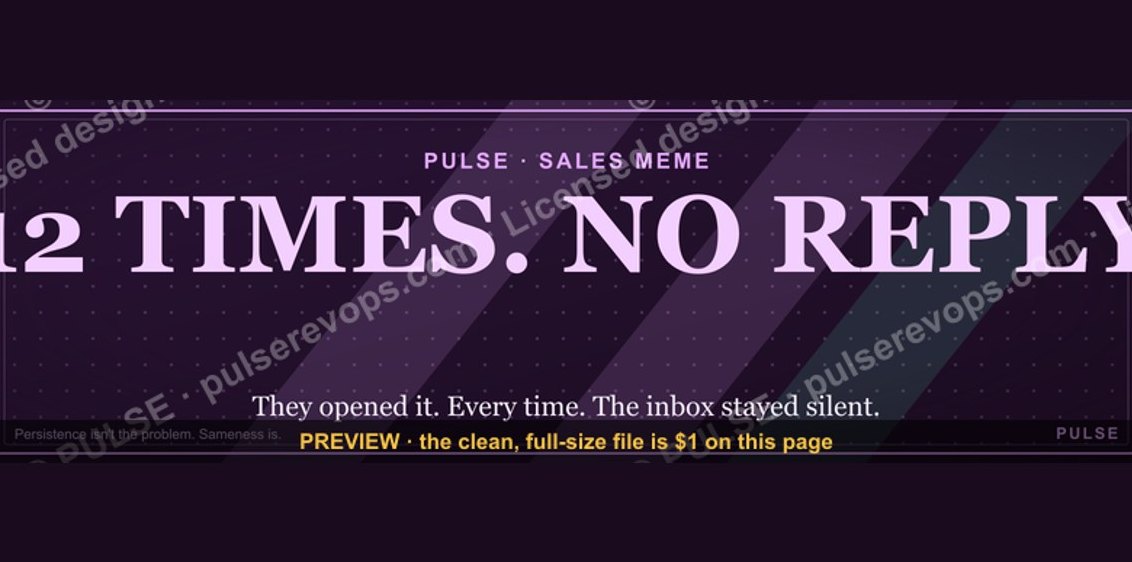 graphic“12 TIMES. NO REPLY.” — Sales Meme
 graphic“PANIC SUNDAY NIGHT” — Sales Meme
 graphic“TIME TO DO IT AGAIN” — Sales Meme