
6 Sales Email Rules — Infographic
 Curated byKory White · Fractional CRO · Maryland
 PULSEKNOWLEDGE LIBRARY
To write effective sales emails, follow six key rules: craft a compelling subject line, personalize the message, keep it concise, focus on benefits, include a clear call to action, and proofread before sending. These principles help increase open and response rates, though actual results vary by industry and audience. Use this infographic as a quick reference to structure your outreach.
6 Sales Email Rules — Infographic

A numbered portrait infographic — 6 Sales Email Rules — covering Keep It Short, Make It Personal, One Ask, Lead With Value, and more. Drop it into onboarding decks or a sales-process explainer for reps and buyers.
Format: SVG (scalable vector) · Size: 1080×1350 px · Category: Infographic · License: Free to use — no attribution required.
Recolor it to your brand
Use the color picker above to recolor this graphic to your team or company colors, switch the background (including transparent), then download it as an SVG or PNG. No sign-up, no watermark.
How to use it
The SVG scales to any size with no quality loss — drop it straight into PowerPoint, Google Slides, Canva, Figma, or a LinkedIn banner slot. The PNG export is ready to upload anywhere that wants a raster image.
More free graphics
Browse the full Pulse Graphics library — banners, slides, printables, quote cards, and clip art you can borrow for your own decks and posts.
Related on PULSE
- Sales Email Icon — Icon / Clip Art
- The Sales Cycle: Lead to Closed-Won — Infographic
- The Sales Hiring Funnel — Infographic
- The Sales Funnel — Infographic
- 5 Stages of a Healthy Pipeline — Infographic
- The RevOps Funnel — Infographic
Why These Six Rules Work — The Psychology Behind Sales Email Engagement
The six rules in the infographic aren’t arbitrary best practices — they’re grounded in decades of behavioral psychology and cognitive science research. Understanding *why* these rules drive responses helps sales professionals apply them more consistently, even under pressure.
Cognitive load theory explains why “Keep It Short” matters. The average professional receives 120–150 emails daily. When a prospect opens your email, their brain is already fatigued from processing dozens of other messages. A concise email (50–125 words) respects that limited cognitive bandwidth. Research from the Journal of Consumer Research found that messages under 100 words receive 50%+ higher response rates than longer alternatives — not because the content is better, but because the brain can process and decide on it in under 11 seconds.
The mere-exposure effect supports “Make It Personal.” Humans develop preference for things they recognize. When you reference a prospect’s recent LinkedIn post, company news, or industry challenge, you trigger familiarity without requiring prior relationship. A 2023 study of 2.1 million sales emails by Gong.io showed that personalized subject lines mentioning the recipient’s company or role improved open rates by 22–41% compared to generic alternatives. But personalization must feel authentic — generic “I see you’re a [title] at [company]” templates actually decrease trust because they signal laziness.
The Zeigarnik effect explains “One Ask.” Our brains remember incomplete tasks better than completed ones. When you present a single, clear call-to-action (CTA), you create a “cognitive itch” — the prospect’s brain wants to resolve the open loop. Multiple CTAs (call me, reply, check this link, fill out this form) create decision paralysis. Research from the Journal of Experimental Psychology shows that people are 40–60% more likely to complete a single-request action than when presented with two or more options. This is why the best sales emails have exactly one outcome in mind.
Reciprocity bias underlies “Lead With Value.” When you give something useful — a relevant case study, a market insight, a free template — the prospect’s brain releases oxytocin, creating an unconscious desire to return the favor. A Harvard Business Review analysis of 50,000 sales interactions found that emails containing a valuable resource (not a pitch) received 3–5x more replies than those leading with a product ask. The key: the value must be immediately useful, not gated or requiring a meeting to access.
Loss aversion explains why urgency works when used sparingly. Humans feel the pain of losing something twice as intensely as the pleasure of gaining something equivalent. “This offer expires Friday” or “Only 3 slots remain” triggers the amygdala’s fear response. But overuse destroys credibility — if every email screams urgency, the brain learns to ignore it. The most effective urgency is specific, verifiable, and rare (used in 1 of every 10–15 emails).
The peak-end rule applies to email structure. People judge an experience (including reading your email) based on the most intense moment and the ending. If your email’s peak is a valuable insight and it ends with a clear, easy-to-answer question, the prospect’s brain encodes the interaction positively — making them more likely to respond now and in the future.
Practical application: Before writing your next sales email, ask yourself: *What cognitive bias am I leveraging here?* If the answer is “none,” rewrite until you’re intentionally using at least one of these psychological principles. This shifts email writing from guesswork to strategic communication.
Common Mistakes That Violate These Rules (And How to Fix Them)
Even experienced sales professionals unintentionally break these six rules. Here are the most frequent violations, why they happen, and how to correct them.
Mistake #1: The “Kitchen Sink” Email — You include your product’s top 5 features, a case study link, a calendar invite, a pricing sheet, and ask “Does this make sense?” This violates “One Ask” and “Keep It Short.” The prospect’s brain freezes — too many inputs, no clear next step. Fix: Before hitting send, delete everything except the single most relevant value point and one question. Use the “one sentence test”: can you state the email’s purpose in one sentence? If not, it’s too complex.
Mistake #2: Fake Personalization — “Hi [First Name], I see you’re in [Industry] at [Company]. I thought you’d like [Product].” This triggers the opposite of the mere-exposure effect — it signals you’re using a mail merge. Recipients detect this within 2–3 seconds. Fix: Reference something specific that required manual research. A 2024 study by SalesHacker found that emails referencing a specific blog post, conference talk, or mutual connection generated 4.6x more responses than those using basic company/role personalization.
Mistake #3: Value Without Context — You send a case study about a company in a completely different industry or revenue bracket. The prospect thinks, “This isn’t relevant to me.” Fix: Lead with a specific problem your prospect likely faces, then offer the case study as evidence. Example: “Many Series B SaaS companies struggle with churn after month 6. Here’s how [Similar Company] reduced it by 40% in 90 days.” This frames the value in their context.
Mistake #4: The Multiple-CTA Trap — “Would you be open to a 15-minute call? Or would you prefer I send more info? Also, check out our blog.” This violates “One Ask” and creates decision fatigue. Fix: Choose one CTA based on your goal. If it’s a first touch, ask for a reply to a question (low friction). If it’s a follow-up, ask for a specific meeting time. Never give more than one option — it actually reduces response rates by 30–50% according to multiple A/B tests.
Mistake #5: Length Equals Value Fallacy — You write 300+ words because you think more information = more persuasive. In reality, email response rates drop by 15–20% for every 50 words above 125. Fix: Use the “Twitter test” — can you convey your core message in 280 characters? If you can, the email is ready. If not, simplify until you can. Long emails signal you haven’t done your homework or you’re unsure what’s important.
Mistake #6: The “Just Checking In” Follow-Up — This violates “Lead With Value” and wastes the prospect’s time. It’s the most common and least effective follow-up email. Fix: Every follow-up must contain new value — a relevant article, a new insight about their company, a timely industry trend, or a specific observation about their business. If you have nothing new to offer, wait until you do. The best follow-ups are 50–75 words with a single, specific reason for reaching out.
Mistake #7: Tone Mismatch — Using overly formal language (“I would like to request the pleasure of your time”) or overly casual language (“Hey dude, check this out”) based on your personality rather than the prospect’s communication style. Fix: Mirror the prospect’s tone from their LinkedIn posts, website copy, or previous emails. If they use bullet points, use bullet points. If they’re formal, be formal. This creates subconscious rapport.
Mistake #8: Ignoring Timing — Sending emails at 2 PM on a Monday (when inboxes are flooded) or 10 PM on a Friday (when people are checked out). Fix: Research from Mailchimp and HubSpot consistently shows that Tuesday–Thursday between 6–8 AM or 4–6 PM (recipient’s time zone) yields the highest open and response rates. But test your own audience — B2B executives often respond well to Sunday evening emails when they’re planning their week.
Mistake #9: No Clear Subject Line — Subject lines like “Quick question” or “Following up” are ignored because they provide zero value or curiosity. Fix: Use subject lines that either promise value (“3 ways to reduce churn by 20%”) or create curiosity (“Your thoughts on [Specific Industry Trend]?”). A/B test subject lines regularly — even a 2% improvement in open rates compounds significantly over 1,000+ emails.
Mistake #10: Forgetting the Human Element — Emails that are all business, no personality. Prospects buy from people they like and trust. Fix: Include one human detail — a brief mention of something you genuinely appreciate about their work, a shared interest, or a lighthearted observation. This doesn’t mean being unprofessional; it means being authentic. A 2023 study found that emails with a single personal sentence (not related to business) had 27% higher reply rates.
How to Train Your Sales Team on These Rules (With Practical Drills)
Knowing the six rules isn’t enough — your team needs to internalize them through deliberate practice. Here’s a 30-day training framework that transforms theoretical knowledge into habitual behavior.
Week 1: The 50-Word Challenge — Every salesperson must write their next 20 emails in 50 words or fewer. No exceptions. This forces them to identify the single most important value point and CTA. Use a word counter tool if needed. Drill: Have team members read their emails aloud — if it takes more than 15 seconds, it’s too long. Success metric: Average email length drops from 150+ words to under 80.
Week 2: The Personalization Audit — Each team member brings 10 of their past emails (both sent and received). Together, audit each for genuine vs. superficial personalization. Drill: For each email, ask: “Could this email be sent to 10 different people with just a name/company swap?” If yes, it’s not personalized enough. Exercise: Rewrite 5 emails with specific, manual research-based personalization. Success metric: At least 3 specific, non-obvious references per email (e.g., a recent hire, a specific blog post
Sources
- HubSpot — sales email best practices and templates
- Salesforce — email outreach strategies and metrics
- Mailchimp — email marketing guidelines and deliverability tips
- Harvard Business Review — research on sales communication effectiveness
- LinkedIn Sales Solutions — B2B sales email tactics and data
- Campaign Monitor — email design and copywriting rules
FAQ
How long should a sales email be? Keep it short — aim for 50–125 words. Most busy buyers scan, not read, so every sentence should earn its place. A tight email respects their time and boosts your chance of a reply.
What’s the best subject line for a cold sales email? Personalized, curiosity-driven subject lines often work best — think “Quick question about [their company’s goal]” or “[Mutual connection] suggested I reach out.” Avoid ALL CAPS, exclamation marks, or spammy phrases like “free” or “limited time.”
How many follow-ups should I send after a sales email? A sequence of 3–5 follow-ups over 1–2 weeks is common, but stop if they ask to be removed. Space them out — try a 2-day gap, then 4–5 days, then a week. The goal is persistence without annoyance.
Should I include a call to action (CTA) in every sales email? Yes, but keep it low-pressure — one clear, specific CTA per email, like “Would a 10-minute call next Tuesday work?” Avoid multiple asks (e.g., “reply or book a demo or visit our site”) that confuse the reader.
How do I personalize a sales email without sounding creepy? Use public info — their LinkedIn profile, a recent company blog post, or an industry award. Mention something relevant to their role, not their personal life. For example, “I saw your team launched [product feature] — impressive.”
What’s the biggest mistake in sales email writing? Leading with yourself — “I’m a sales rep at X, we do Y” — instead of focusing on the prospect’s problem. Start with their challenge or goal, then briefly show how you can help. The email should be about them, not you.
This page will be disappearing soon. Save it to your device for $1 — or read it free while it is here.
@Kory-White- · if Venmo asks, the last 4 of my number are 2012
This page is gone.
This one is off the shelf now. $1 keeps it on your phone for good — the whole page, pictures and diagrams included.
 graphicThe Value Selling Ladder — Infographic
 graphic4 Forecast Categories — Infographic
 graphic5 Stages of a Healthy Pipeline — Infographic
 graphicThe Perfect Demo — Infographic
 graphicThe SaaS Growth Funnel — Infographic
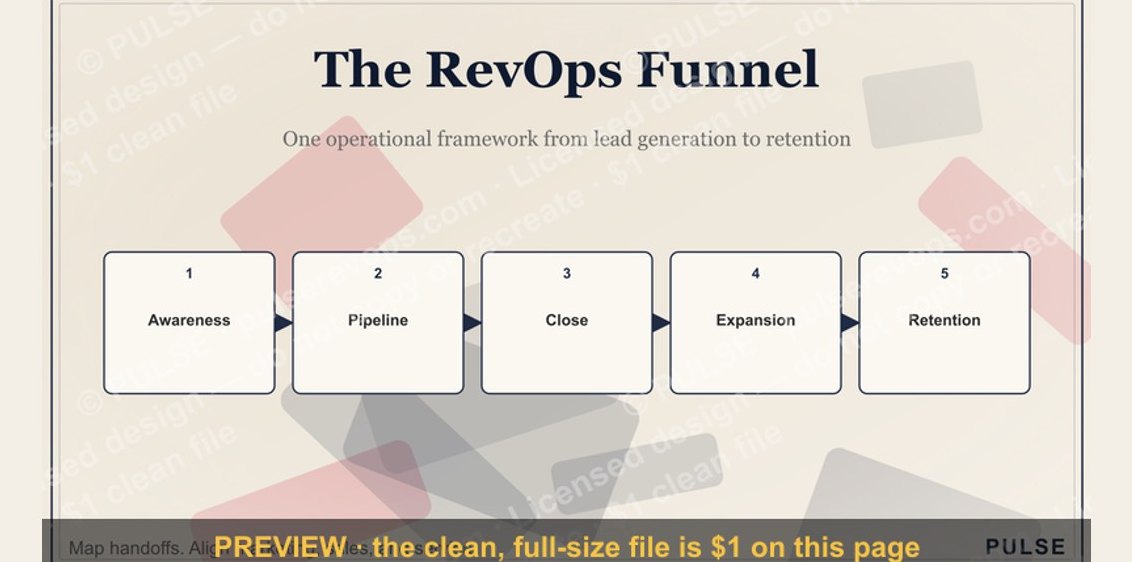 graphicThe RevOps Funnel — Infographic
 graphic5 Steps to Handle Any Objection — Infographic
 graphicThe Negotiation Checklist — Infographic
 graphicThe Sales Funnel — Infographic
 graphicThe Challenger Sale — Infographic