
The 10 Most Expensive Gaming Collector's Editions to Buy in 2027
 PULSEKNOWLEDGE LIBRARY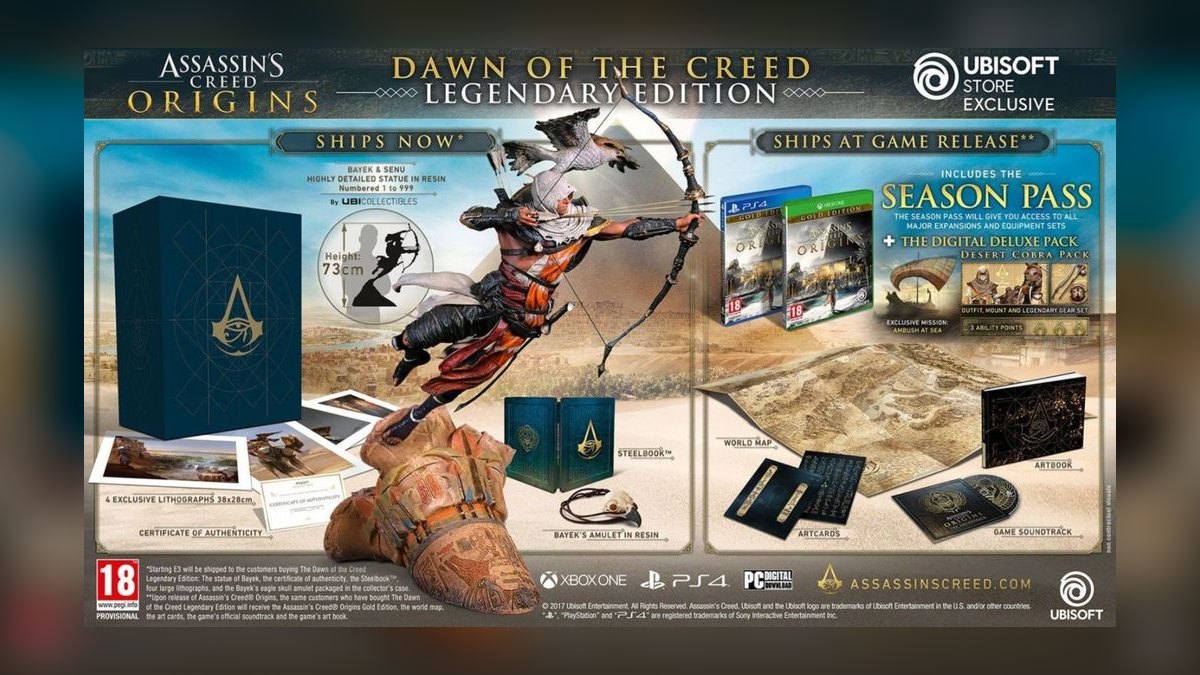
The priciest gaming collector's editions cluster in three bands: mainstream statue boxes at $180–$260, publisher-exclusive "grail" sets around $250–$300, and import or boutique pressings that land past $400 after shipping and duties. Above that sits the stunt tier — Deep Silver's $1,000,000 Saints Row IV package. Budget $250, allocate early, and verify contents before preordering.
What the Most Expensive Gaming Collector's Editions actually are, and why the tier matters
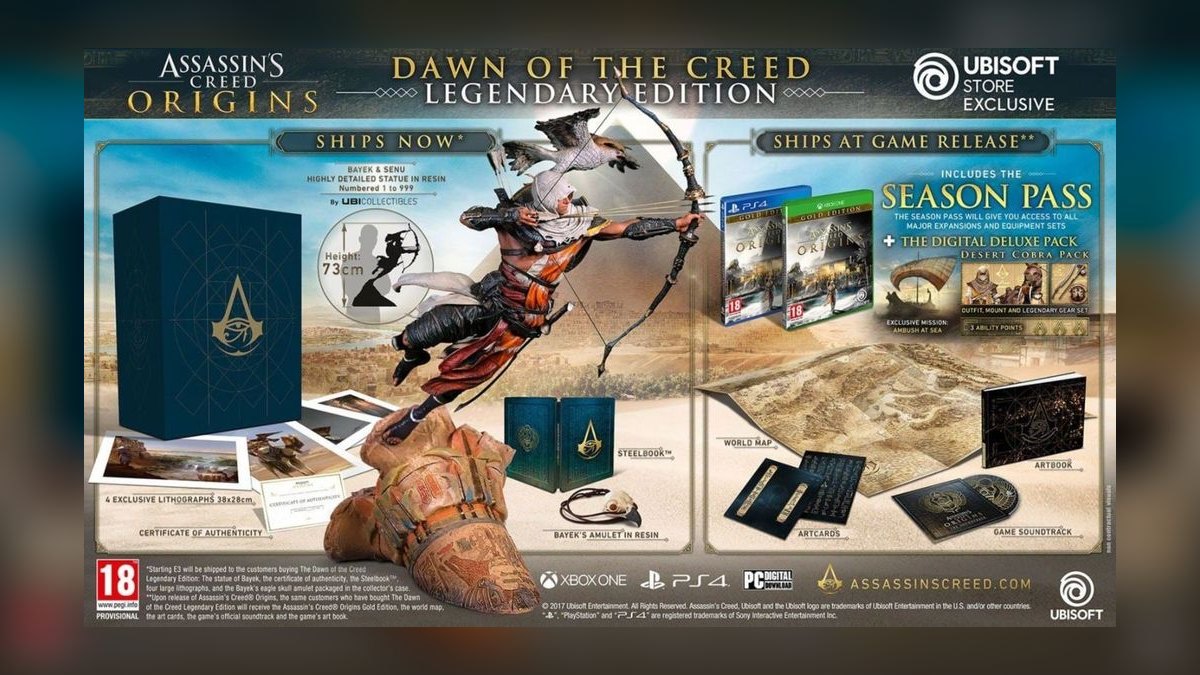
A collector's edition is not the same product as a deluxe edition, and conflating the two is the single most common way buyers overspend. A deluxe or ultimate edition is usually digital-only content — a season pass, cosmetic packs, a few days of early access — bundled at $89.99 to $109.99. A collector's edition is a physical SKU: a rigid box, a statue or resin figure, an art book, a steelbook, a soundtrack disc, sometimes a functional prop, and usually a game key that may or may not be a physical disc. The physical goods drive the price, and the physical goods are what hold value on the secondary market five years later. Digital deluxe content holds nothing.
The expensive end of the category has been remarkably stable in shape for over a decade, even as nominal prices drifted upward. Ten distinct buy-targets dominate that end, and every one of them has recurring precedent you can plan around for 2027:
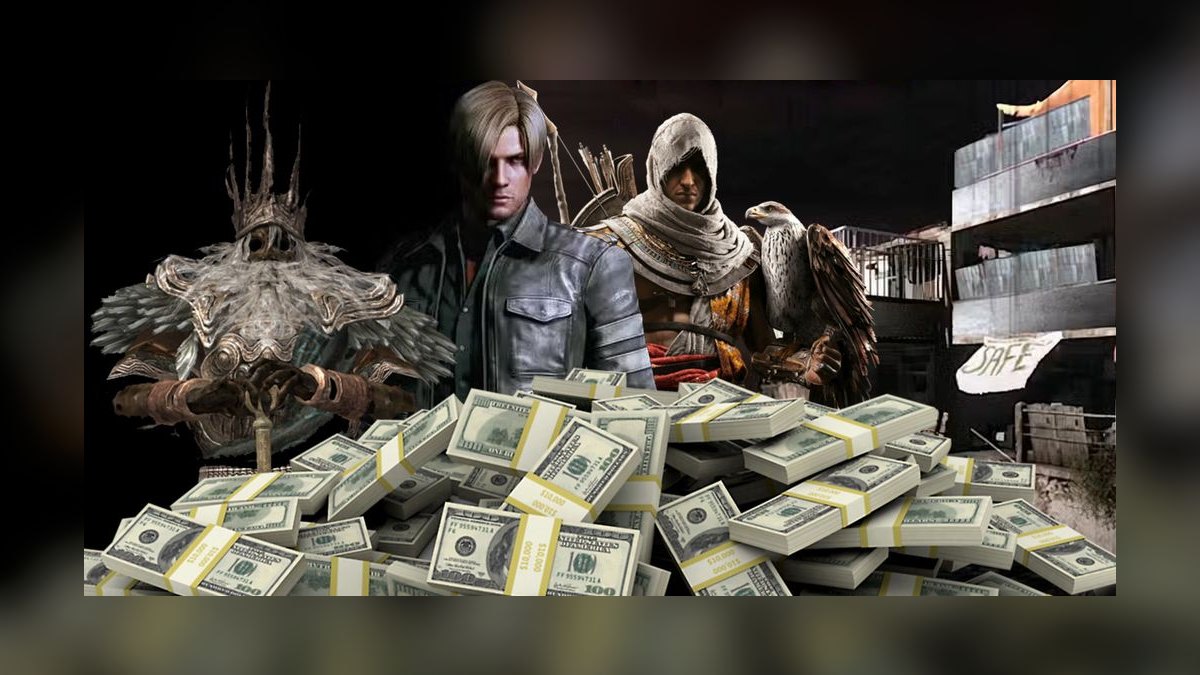
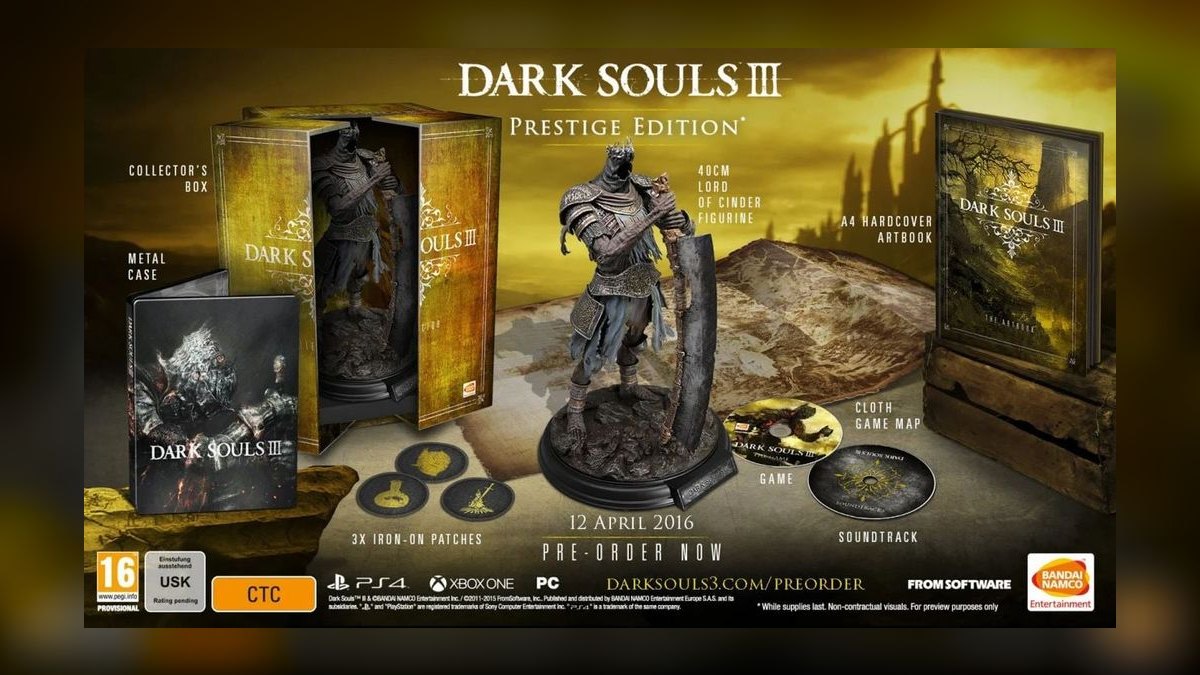
- The publisher-store grail box. The ceiling for a normally-distributed retail product. Bethesda's Starfield Constellation Edition listed at $299.99 with a physical watch; FromSoftware and Bandai Namco's Elden Ring Premium Collector's Edition ran about $259.99 through the publisher store while the standard Collector's Edition sat at $189.99. Expect one or two of these per year.
- The statue-anchored AAA edition. The volume leader in the expensive band. Cyberpunk 2077's Collector's Edition was $249.99; God of War Ragnarök's Jötnar Edition was $199.99; Horizon Forbidden West's Regalla Edition landed at $199.99. A 8–12 inch PVC or resin statue is the cost center.
- The JRPG box set. Square Enix, Atlus, and Bandai Namco reliably push the highest sticker prices in the genre. Final Fantasy XV's Ultimate Collector's Edition was $269.99, Kingdom Hearts III's Deluxe Edition with Bring Arts figures was $229.99, and Armored Core VI's Collector's Edition was $229.99.
- The hardware or peripheral edition. Street Fighter 6's Mad Gear Box was $249.99 and functioned as an actual carrying case. These sell out fastest because the object is useful, not just displayable.
- The Nintendo first-party limited set. Sold only through the My Nintendo Store in most regions, capped quantity, no retail overflow. Xenoblade Chronicles 3's Collector's Edition was $249.99; The Legend of Zelda: Tears of the Kingdom's Collector's Edition was $129.99; Breath of the Wild's Master Edition was $129.99. Nintendo does not restock these.
- The boutique limited pressing. Limited Run Games and similar publishers press small runs of niche or back-catalog titles at $99 to $299, with open preorder windows of two to four weeks and no reprints. Scarcity here is contractual, not accidental.
- The wearable or functional prop edition. Fallout 4's Pip-Boy Edition was $119.99, Fallout 76's Power Armor Edition was $199.99, and Call of Duty: Modern Warfare 2's Prestige Edition shipped genuine night-vision goggles at $149.99. Props carry the highest defect and disappointment rate of any tier.
- The import-only edition. Japanese and European exclusives — Metal Gear Solid V's Premium Package being the canonical example — routinely cost 25% to 60% more than sticker once proxy fees, freight, and duties land. Region-locked discs and region-locked download codes are a separate risk on top of the money.
- The sealed secondary-market grail. Discontinued editions that never got a reprint. Halo 3's Legendary Edition, the Skyrim Alduin statue box, and sealed Pip-Boy Editions all trade above their original MSRP, with pricing set by completed eBay sales rather than any list price.
- The stunt tier. Deep Silver's Saints Row IV Super Dangerous Wad Wad Edition, announced in 2013 at $1,000,000, remains the definitive answer to "what is the most expensive gaming collector's edition." It bundled a car, a shopping spree, and a spaceflight ticket. It was a marketing exercise, not a product line — but it set the category's known ceiling and nothing since has approached it.
Why this matters practically: the expensive tier is allocation-constrained, not demand-constrained. Publishers manufacture a fixed run twelve to eighteen months before launch based on a forecast, and that number does not move once tooling is committed. When a collector's edition sells out in nine minutes, that is not artificial scarcity — it is a manufacturing decision made a year earlier meeting demand nobody modeled correctly. Everything in the buying process below follows from that one fact.
The step-by-step process for actually landing one
Treat this as a pipeline with a known conversion rate rather than a purchase you make on impulse. The people who consistently get grail editions at MSRP run roughly this sequence.
Step one: build a watchlist twelve months out. Publishers announce collector's editions three to nine months before launch, almost always at a beat event — a summer showcase, a State of Play, a Nintendo Direct, a developer stream. Track the publishers, not the games. If you want a 2027 statue box, follow the accounts and newsletters for the four or five publishers that ship them annually, and set alerts on their store domains rather than on retail aggregators.
Step two: pre-register accounts and payment methods before the announcement. The most common failure is not losing the queue — it is timing out at checkout because an address needs verification or a card needs a 3-D Secure challenge. Create the publisher-store account, save the shipping address, save the card, and confirm the account can actually complete a low-value test purchase. Do this weeks ahead. Publisher stores are lightly used most of the year and heavily broken on launch day.
Step three: know the drop mechanics for each storefront. They differ materially. Nintendo's store historically uses a first-come queue with a hard inventory ceiling. Some publishers use a timed virtual waiting room that randomizes position among everyone present at open. Boutique publishers like Limited Run use an open preorder window — no queue at all, no scarcity during the window, hard cutoff at the end. The correct behavior for a randomized waiting room (arrive before open, sit still, do not refresh) is the exact opposite of the correct behavior for a first-come queue.

Step four: verify the manifest, not the render. Announcement imagery is a render. The bill of materials in the fine print is the contract. Check specifically: is a physical game disc included or only a download code; what is the statue's actual height in centimeters and its material (PVC and resin behave very differently over five years); is the art book hardcover and how many pages; is the "soundtrack" a physical disc or a download card. Editions that quietly swap a disc for a code lose a substantial share of their long-run resale value, because a sealed code with an expiry date is not a durable good.
Step five: preorder from exactly one source, then confirm. Duplicate-ordering across three retailers to hedge is how people end up with three $250 charges and a cancellation fee. If you must hedge, cancel the extras within 48 hours of securing the first confirmed allocation. Save the order confirmation email and screenshot the listed contents as they appeared at time of purchase.
Step six: hold the charge and track the ship date. Most publisher stores authorize at order and capture at ship, which means your card's dispute clock generally starts at expected delivery rather than at order. Keep the confirmation. If the ship date slips past the announced window, that documentation is what makes a refund or chargeback straightforward.

Step seven: inspect on arrival, immediately. Photograph the outer carton before opening. Open over a clean surface. Check the statue's paint application and any thin extremities — spears, wings, weapons — which are the standard breakage points in transit. Damage claims filed within the retailer's stated window (commonly 14 to 30 days) resolve; claims filed at month four generally do not.
Costs, timelines, and typical ranges
Sticker bands. Working from a decade of shipped product, the expensive tier sorts cleanly. Entry-level collector's editions run $99.99 to $129.99 — Sekiro's Collector's Edition at $119.99, Fallout 4's Pip-Boy Edition at $119.99, Zelda's Master Edition at $129.99. The mainstream statue band is $169.99 to $199.99 — Ghost of Tsushima at $169.99, Resident Evil Village at $179.99, God of War Ragnarök and Death Stranding and Fallout 76's Power Armor Edition all at $199.99. The premium band is $229.99 to $269.99 — The Last of Us Part II's Collector's Edition, Kingdom Hearts III's Deluxe, Armored Core VI, Cyberpunk 2077, Street Fighter 6's Mad Gear Box, Xenoblade Chronicles 3, Final Fantasy XV's Ultimate. And the grail band starts at $299.99, where Starfield's Constellation Edition sat. Plan a 2027 budget against those bands; the shape has been consistent enough that a genuinely new price ceiling would itself be news.
True landed cost. Sticker is not what you pay. Domestic shipping on a 4–8 kilogram collector's edition box runs $12 to $30 if it is not included, and publisher stores include it less often than retailers do. Sales tax adds 0% to roughly 10% depending on jurisdiction. Imports are where the real spread lives: international freight on a large box commonly runs $40 to $90, a proxy-buying service takes 5% to 10% plus a flat fee, and EU buyers pay import VAT from the first euro under the rules in force since July 2021. The US de minimis exemption has been actively changing, so treat any duty-free assumption as something to re-verify with current customs guidance rather than a fixed rule. A ¥30,000 Japanese exclusive can realistically land at $400 to $450.

Timelines. Announcement to launch is typically three to nine months. The preorder window for a queue-based drop can be under ten minutes; for a boutique open window it is two to four weeks. Manufacturing lead time on a statue is the constraint nobody sees: sculpt approval, tooling, factory run, and freight together take nine to fifteen months, which is why allocation is fixed so early and why a sold-out edition almost never gets a second run. Collector's editions also ship late more often than standard editions — Xenoblade Chronicles 3's Collector's Edition famously shipped months after the game itself, which is normal for the tier rather than exceptional.
Secondary-market spreads. Sealed, in-shipper, complete-in-box editions with a physical disc are the ones that appreciate. Opened boxes with all components typically clear 60% to 90% of the sealed price. Boxes missing the art book or the soundtrack card drop to roughly the statue's standalone value. Editions whose "game" was always a download code face a real cliff once the code's redemption window closes or the platform's storefront changes. Price your target against completed sales — eBay's sold-listings filter covers the trailing 90 days, and PriceCharting aggregates loose, complete, and new comps over longer horizons. Never price against active asking listings; the ask on a scarce collector's edition is aspirational roughly all of the time.
Grading. Third-party grading and encapsulation adds $30 to several hundred dollars per item plus insured shipping both ways, and it takes weeks to months. It makes economic sense only for genuinely scarce sealed items where the grade unlocks a materially higher buyer pool. For a $250 edition from three years ago, grading costs more than the premium it creates.

Where buyers get it wrong
Buying the render. The announcement image is idealized lighting on an approval sample. The retail unit is a factory run with a paint tolerance. Search for unboxing photos of the same publisher's previous collector's edition to calibrate what their factory actually delivers before you commit $250.
Assuming the box is an investment. Most collector's editions do not appreciate. They are consumer goods with a print run sized to demand, and the ones that gained value did so because of unusual circumstances — a franchise that got much bigger afterward, a prop that turned out to be genuinely rare, a run cut short. Buy because you want the object on a shelf. If it appreciates, that is upside, not the thesis.
Ignoring the disc-versus-code distinction. This is the highest-leverage detail in the entire category. A collector's edition with a physical disc is a complete, self-contained artifact. One with a download code is a box of props plus a coupon with a shelf life. Two otherwise identical editions can diverge by 40% in resale value on this single line item.
Mistaking sealed retail copies for collector's editions. The headline sales — a sealed Super Mario 64 at $1.56 million through Heritage Auctions in 2021, sealed NES titles at seven figures — were ordinary retail copies in graded slabs, not collector's editions. That market also drew sustained scrutiny over conflicts of interest between grading and auction houses. Do not use those comps to justify a 2027 purchase; they describe a different asset class under different, contested conditions.
Storing it badly. Sunlight yellows white PVC permanently within a year or two of direct exposure. Attics and garages cycle through temperature and humidity ranges that warp cardboard shippers and delaminate art-book bindings. Store the box flat, indoors, out of UV, in stable humidity. If you care about condition, keep the outer shipping carton — for the highest-value editions the shipper itself is part of what "sealed" means.
Buying open-box sight-unseen. Demand a photo of every listed component laid out together, plus the box's corners and edges. "Complete" in a listing means whatever the seller believes it means. Cross-check against the manifest from the original announcement.

Duplicate preorders that stick. Retailers increasingly cancel obvious duplicates, but publisher stores often do not, and authorization holds on two or three $250 charges can quietly consume a card's available credit for a week or more.
Missing the paperwork window. Consumer protections exist and are usable — in the US, the FTC's Mail Order Rule requires sellers to ship within the promised time or offer notice and a refund option, and card networks generally allow disputes within about 120 days of the expected delivery date. Both depend on you having the order confirmation and the stated ship window in writing. People who lose money on preorders almost always lost the documentation first.
Decision framework: when to buy now, when to wait, when to walk
The framework has three inputs — how scarce the edition genuinely is, whether the physical contents justify the delta over the standard edition, and whether you would still want the object if it never appreciated a dollar.
Buy at announcement when three conditions hold: the run is capped and publisher-exclusive, the manifest includes a physical disc and a substantial statue or functional prop, and the franchise has a track record of these editions clearing MSRP on the secondary market. Nintendo first-party limited sets and boutique limited pressings almost always meet this bar, because there is genuinely no second chance and no restock.
Wait for launch week when the edition is broadly distributed through major retail. Mainstream $199.99 statue editions from large publishers frequently sit in stock through launch and get discounted 20% to 40% within three to six months, especially if the game reviews unevenly. Waiting costs you nothing here and can save $60 to $100.
Wait for the secondary market when the only thing you want is one component. If the statue is the whole appeal and the art book and soundtrack are irrelevant to you, an opened complete-in-box unit at 60% to 90% of sealed price is strictly better value, and standalone statues sometimes surface separately.
Walk when the edition is code-only at a premium price, when the "collector's" premium is mostly digital season-pass content, when the import math pushes landed cost past what a domestic release will cost within a year, or when you are buying primarily on a resale thesis you cannot support with completed-sale comps. Walk also when the seller cannot produce component photos.
One more calibration: set a hard annual budget before the 2027 announcements start, not after. The expensive tier will present six to ten legitimately tempting Editions across the year, and at $200 to $300 each the aggregate is what hurts, not any individual purchase. Two grails a year is a sustainable pace for most buyers. Deciding that number in advance is the difference between a curated shelf and a closet of shippers you never opened.
Related questions
What is the most expensive gaming collector's edition ever sold?
Deep Silver's Saints Row IV Super Dangerous Wad Wad Edition, announced in 2013 at $1,000,000, is the highest-priced package a publisher has ever listed. It bundled a car, a spaceflight ticket, and a shopping spree, and functioned as a marketing stunt rather than a normally distributed retail product.
Do collector's editions hold their value?
Most do not. Sealed editions with a physical disc, a capped print run, and a franchise that grew afterward can exceed MSRP. Broadly distributed retail editions typically depreciate 20% to 40% within a year. Price any purchase against completed sales, never against active asking prices.
Is it worth importing a Japan-exclusive collector's edition?
Only if you have verified region compatibility for both disc and any download code, and you have priced the full landed cost. Proxy fees, international freight, and import VAT or duties commonly add 25% to 60% over sticker, which can push a ¥30,000 set past $400.
How early do publishers announce collector's editions?
Typically three to nine months before launch, at a showcase or a developer stream. Manufacturing lead time on statues runs nine to fifteen months, so allocation is fixed long before announcement — which is why sold-out editions rarely get a second production run.
FAQ
What actually separates a collector's edition from a deluxe edition?
A deluxe or ultimate edition is digital: season passes, cosmetics, early access, usually $89.99 to $109.99. A collector's edition is a physical SKU with tangible goods — statue, art book, steelbook, soundtrack, sometimes a functional prop — priced from roughly $99.99 up past $299.99. The physical contents are what carry long-run value; digital add-ons carry none once the season pass content is consumed.
How much should I budget for a grail edition in 2027?
Budget $250 for a single premium target and $300 if you want the top publisher-exclusive tier. Then add 10% to 20% for shipping and tax on domestic orders, or 25% to 60% for imports. Set a total annual number before announcements begin — the expensive tier will surface six to ten tempting options across a year and the aggregate is what breaks budgets.
Why do collector's editions sell out in minutes?
Because the run size was locked twelve to eighteen months earlier against a demand forecast, and tooling commitments make it impractical to increase. Scarcity in this category is usually a manufacturing artifact rather than a deliberate limiting strategy. It also means restocks are genuinely rare — plan to hit the initial window rather than waiting for a second wave.
Should I get a collector's edition professionally graded?
Rarely. Grading costs $30 to several hundred dollars per item plus insured two-way shipping and takes weeks to months. It only pays on genuinely scarce sealed items where a high grade opens a materially larger buyer pool. For a recent $250 edition, the cost exceeds the premium. Grading also does not fix condition — it certifies it.
What is the single detail most buyers overlook?
Whether a physical game disc is included or only a download code. Two otherwise identical Editions can differ by roughly 40% in resale value on that line alone, because a code has an expiry risk and a platform dependency while a disc is a durable artifact. Read the bill of materials in the fine print, not the announcement render.
What protections do I have if a preorder never ships?
In the US, the FTC's Mail Order Rule obligates sellers to ship within the stated time or provide notice and a refund option. Card networks generally allow disputes within roughly 120 days of the expected delivery date. Both depend on retaining your order confirmation and the announced ship window in writing — save both at purchase.
Sources
- https://www.heritageauctions.com/
- https://www.pricecharting.com/
- https://limitedrungames.com/
- https://www.nintendo.com/us/store/
- https://bethesda.net/
- https://en.bandainamcoent.eu/
- https://www.ftc.gov/business-guidance/resources/business-guide-ftcs-mail-internet-or-telephone-order-merchandise-rule
- https://taxation-customs.ec.europa.eu/customs-4/calculation-customs-duties/customs-tariff_en
- https://www.cbp.gov/trade/basic-import-export
- https://www.polygon.com/
Related on PULSE
- [How to price a limited-run physical product without leaving margin on the table](/knowledge.html?q=limited-run-physical-product-pricing)
- [Preorder demand forecasting: sizing a manufacturing run 12 months out](/knowledge.html?q=preorder-demand-forecasting)
- [Scarcity as a go-to-market lever, and when it backfires](/knowledge.html?q=scarcity-go-to-market-lever)
- [Secondary-market comps: reading completed sales instead of asking prices](/knowledge.html?q=secondary-market-comps)
- [Landed-cost math for imported goods: freight, duties, and VAT](/knowledge.html?q=landed-cost-imported-goods)
 pulse-recentThe 10 Best Gaming Subscriptions for Their Price in 2027
 pulse-recentTop 10 Gaming Subscriptions by Number of Included Games in 2027
 pulse-recentThe 10 Best Budget Gaming Setups for Students in 2027
 pulse-recentHow many gaming subscriptions does the average gamer have in 2027?
 pulse-recentWhat is the average lifespan of a gaming laptop before it needs replacing in 2027?
 pulse-recentHow much does a gaming monitor with 240Hz refresh rate cost in 2027?
 pulse-recentWhat is the average annual cost of maintaining a gaming PC in 2027?
 pulse-recentWhat is the total cost of a gaming setup for a beginner in 2027?
 pulse-recentWhat is the average repair cost for a next-gen gaming console in 2027?
 pulse-recentWhat is the true cost of a gaming laptop over three years in 2027?