
Average Contract Value (ACV) for Cloud Services: Enterprise Sales Metric in 2027
 Curated byKory White · Fractional CRO · Maryland
 PULSEKNOWLEDGE LIBRARY
Quality
Certified

Average Contract Value for cloud services is the annualized committed recurring revenue of an Enterprise deal, excluding one-time fees and variable consumption overage. In 2027, median Enterprise cloud ACV typically runs in the low-to-mid six figures — roughly $150K to $200K — because the metric bundles compute, storage, support tiers, and multi-year commitments.
The quarter where the booked number and the invoice disagree
Picture a RevOps lead at a managed-cloud provider closing the quarter. A rep books what everyone calls a "$1.4M deal." Finance forecasts against $1.4M, capacity planning staffs against $1.4M, and the board deck prints $1.4M. Two quarters later the customer's actual usage settles and the recognized number drifts down to $1.1M. Suddenly the deck is more than 20% off, and nobody did anything dishonest. The team simply treated a billed figure as if it were Average Contract Value, when most of the gap was variable consumption that the customer never committed to.
This is the defining tension of cloud services as an Enterprise sales metric. Unlike a seat-based SaaS agreement — where 1,000 seats at a fixed per-seat rate produces one clean, static number — a cloud services contract almost always carries a committed minimum plus a metered overage that flexes with real compute, storage, and network use. The invoice and the contract disagree on purpose. If you let the invoice define ACV, every downstream system inherits the error: forecasting, quota attainment, commission, and net retention math all drift together.
The reason this scenario matters is that the cost of getting it wrong compounds silently. An inflated ACV baseline makes next year's genuine growth read as contraction. Overpaid commissions are painful and often impossible to claw back once a rep has been paid. And a sales team optimized to book the largest possible billed figure will quietly steer customers toward heavy overage instead of durable commitment — the exact opposite of what a subscription business wants. The rest of this page walks through how the Average Contract Value metric actually behaves for cloud services, what realistic 2027 ranges look like, the trade-offs baked into each modeling choice, and the pitfalls that turn a clean number into a forecasting liability.

How the ACV mechanism actually works
The core rule for cloud services is separation: commitment lives inside ACV, consumption lives beside it. You compute the metric from the recurring, contractually guaranteed portion of the agreement, then track everything variable as its own field so no report ever confuses the two. Three structural features make cloud services different from ordinary SaaS, and each one changes the calculation.
Commitment versus consumption. A cloud services contract commonly specifies a committed floor — a guaranteed annual spend the customer promises regardless of usage — plus metered usage billed above that floor. Only the committed floor belongs in ACV. The overage is real revenue, but it is not contracted recurring value; it is variable revenue that should be modeled probabilistically, never booked as certain. A customer committing $1.0M and consuming $1.4M has a $1.0M ACV and $400K of variable revenue, not a $1.4M contract.
Multi-year terms with escalators. Enterprise cloud deals frequently span three to five years, often with modest annual escalators baked in. To normalize a multi-year commitment into a single annual figure, sum the committed recurring revenue across every year of the term and divide by the term length. A three-year deal with escalating committed values of roughly $1.00M, $1.05M, and $1.10M produces an ACV near $1.05M — not the flat $1.00M first-year figure, which quietly understates the ramp and misprices the account for every downstream calculation.

Bundled services. A single agreement can fold compute, storage, networking, a support tier, and one-time professional services such as migration into one signature. The ACV calculation must strip out the non-recurring professional services and count only the recurring elements. A deal with a recurring platform commitment plus a fixed $200K migration fee should never let that one-time fee inflate the annualized number — otherwise year two reads as a $200K contraction that never actually happened.
Because the metric feeds so many downstream systems, the discipline has to be structural rather than manual. In practice that means committed ACV, variable revenue, and one-time services each get their own dedicated field in the CRM, so a report never has to guess which dollars are durable and which are speculative. When the fields are separated at the point of contract entry, the annualization math becomes deterministic instead of a judgment call a different analyst re-litigates every quarter.
Real numbers, ranges, and benchmarks
Concrete ranges keep the metric honest. The figures below are directional 2027 benchmarks a practitioner can sanity-check against — not guarantees, since every company's segment mix shifts them — but if your reported numbers sit far outside these bands, the first suspect is your calculation method, not your market.
ACV distribution. For Enterprise cloud services spanning IaaS, PaaS, and managed cloud, a common spread runs from a bottom quartile under roughly $80K, a median in the neighborhood of $150K to $200K, and a top quartile north of $500K to $600K. Average deal size skews higher than the median whenever one-time professional services get counted, which is precisely why you exclude them. Pure SaaS medians sit far below this — often in the low tens of thousands — so an Enterprise cloud ACV several times larger than a comparable SaaS number is expected, not anomalous.

Net new, expansion, and contraction. Split total ACV movement into three streams and report them separately. Net new ACV comes from brand-new logos and is the purest growth signal; growth-stage cloud businesses often aim for net new to land around 35% to 50% of total new ACV. Expansion ACV comes from existing accounts through support-tier upgrades, added products, or consumption growth above the committed floor, and it is generally more predictable than net new. Contraction ACV is the value lost to downgrades, churn, or unmet renewal minimums; it is the most under-reported of the three and frequently lands in the low-to-mid teens as an annual percentage. Contraction persistently above the mid-teens usually signals a retention problem, not a selling problem.
Retention metrics. Logo retention rate measures how many customers you keep regardless of ACV change and commonly sits around the mid-80s percent for Enterprise cloud. Net revenue retention — starting ACV plus expansion minus contraction, divided by starting ACV — often clears 100% because expansion offsets churn; a median near 110% is typical, and best-in-class consumption businesses have publicly reported figures well above 130%. NRR under 100% means existing customers are shrinking faster than they grow, which no volume of new logos fully fixes.
Sales cycle and win rate. Cycle length scales with deal size. Smaller cloud deals under roughly $200K ACV often close in about 60 to 90 days; mid-range deals in 120 to 180 days; the largest Enterprise deals can stretch to 180 to 270 days through procurement and legal. Win rates for qualified Enterprise cloud opportunities commonly cluster in the low-to-mid 20s percent, with disciplined teams reaching the mid-30s. Win rate also inverts with size — small deals close at higher rates, large deals lower — so blending them into one average hides the real picture and misleads capacity planning.
Trade-offs when you route a deal by ACV
There is no single correct way to sell, forecast, or compensate against cloud ACV — every choice trades precision for simplicity or speed for coverage. The practical decisions cluster around three axes: how you segment by ACV band, how you model variable revenue, and how you compensate reps.

Segmentation by ACV band. Routing deals by ACV — inside sales for smaller commitments, field sales for the mid-band, dedicated Enterprise teams above a threshold — matches cost of sale to deal value. The trade-off is that a rigid threshold can misroute a small-but-strategic logo or an account hiding enormous expansion potential behind a modest initial commitment. A deliberate land-and-expand motion accepts a low first-year ACV to capture consumption growth later, exactly the kind of deal a pure ACV gate would wrongly reject.
Modeling variable revenue. You can forecast conservatively (committed only), aggressively (committed plus expected overage at face value), or probabilistically (committed at high confidence plus a discounted slice of expected overage). Conservative modeling protects the board deck but understates real revenue and can starve capacity planning. Aggressive modeling flatters the forecast and sets up the exact miss from the opening scenario. The probabilistic middle — weighting committed heavily and overage lightly — is usually the defensible choice, at the cost of more modeling effort and a discount factor you must revisit each quarter as consumption data accumulates.
Compensation basis. Paying reps on committed ACV keeps incentives aligned with durable revenue but can feel unfair to a rep whose account genuinely drives large, sticky overage. Paying on total billed revenue rewards short-term booking behavior and risks overpayment when consumption normalizes downward. A blended structure — the majority of commission on committed ACV plus a smaller, capped portion on variable revenue — balances the two and keeps reps interested in usage growth without inflating the core metric.
The meta-trade-off underneath all three is standardization versus nuance. A uniform ACV metric across the whole Enterprise book is easy to report and audit, but it blurs the consumption dynamics of individual accounts. Layering variable revenue and retention alongside it restores the nuance at the cost of a busier dashboard — which is the right call, because a single number can never carry a consumption business on its own.

Common pitfalls and how to avoid them
Most ACV failures for cloud services trace back to a handful of repeatable mistakes, and each has a concrete fix that is almost always a data-hygiene change rather than a selling change.
Counting consumption as committed ACV. The headline pitfall from the opening scenario: a billed figure gets reported as ACV, the forecast inflates, and normalization later reads as a miss. Fix it structurally — keep committed ACV and variable revenue in separate CRM fields, forecast overage at a discount rather than face value, and audit closed-won deals quarterly for any case where reported ACV exceeds committed value by more than about 10%.
Ignoring contraction. Teams celebrate gross new plus expansion and quietly omit downgrades and unmet minimums, so reported growth overstates real growth. Fix it by making contraction ACV a mandatory field on every renewal and expansion opportunity, and by reporting gross new, gross expansion, and gross contraction as three distinct lines so net growth is always visible on the same screen.

Over-indexing on logo count. Fifty new logos feels like momentum, but if their Average ACV is a fraction of your Enterprise median you may be burning cash on low-value accounts with high support cost. Fix it by segmenting ACV by tier, setting a minimum ACV threshold for Enterprise routing, and qualifying deals early enough to disqualify sub-threshold opportunities before they consume field-sales capacity.
Long cycles without disciplined qualification. Enterprise cloud deals stall in legal and procurement when reps have not diagnosed pain, the economic buyer, and a quantified metric early. A structured qualification framework — identifying metrics, the economic buyer, decision criteria and process, pain, champion, and paper process — measurably compresses the cycle. Fix it by scoring calls against those criteria and making them stage-gate requirements rather than optional notes a rep fills in retroactively.
Compensating on billed revenue. Pay reps on total billed and they will push customers toward heavy overage to hit quota, leaving you overpaying when usage settles. Fix it by anchoring the majority of commission to committed ACV and capping the variable-revenue portion, so incentives track durable value instead of a temporary consumption spike.
One-time fees polluting the number. Migration and professional-services fees inflate ACV if they slip into the recurring bucket, then manufacture a phantom contraction at renewal. Fix it by isolating one-time revenue at the point of contract entry so it can never be annualized in the first place. The through-line across all six: nearly every pitfall is a data-hygiene problem wearing a sales-problem costume — get the fields right and most of them disappear.
Related questions
How is ACV different from ARR and TCV for cloud deals?
ACV is annualized committed recurring value per contract; ARR is the run-rate across all active recurring contracts; TCV sums everything over the full term including one-time fees. For a multi-year cloud deal, TCV is the largest figure, ARR reflects the current base, and ACV normalizes a single contract into one comparable annual number.
Should variable consumption ever count toward quota?
Only through a separate, usually capped incentive. Committed ACV should drive the primary quota because it is durable and forecastable. Consumption overage can fund a secondary variable-revenue bonus so reps still care about usage growth, without inflating the core ACV metric or risking clawbacks when usage normalizes back toward the committed floor.
What NRR signals a healthy cloud services business?
Net revenue retention comfortably above 100% — often around 110% median, with strong consumption businesses exceeding 130% — means expansion is outrunning contraction. Below 100%, existing customers are net shrinking, and new-logo volume rarely compensates. NRR is the single best gauge of whether your installed base is an appreciating asset or a slow leak.
How often should ACV benchmarks be recalculated?
Recompute committed ACV, expansion, and contraction monthly, and run a deeper audit quarterly that re-derives ACV from closed-won contracts with one-time fees and overage stripped out. Cloud consumption drifts continuously, so a stale baseline silently corrupts forecasting within a quarter or two if nobody re-checks the method.
FAQ
What counts as ACV for an Enterprise cloud services contract? Only the committed, recurring, annualized portion — the guaranteed platform and support commitment. Exclude one-time professional services and variable consumption overage. Compute it by summing committed recurring revenue across the term and dividing by the number of years, so multi-year escalators are normalized rather than reported as a flat first-year figure.
How do I calculate ACV for a multi-year deal with escalators? Add up the committed recurring revenue for each year, then divide by the term length. A three-year contract with committed values near $1.00M, $1.05M, and $1.10M yields an ACV around $1.05M. This spreads the escalator evenly across the term instead of understating the metric with a first-year-only number.
Should consumption overage be included in ACV? No. Overage is variable revenue and should live in its own field, modeled probabilistically for forecasting. Folding it into ACV inflates the baseline, distorts quota attainment, and manufactures a forecast miss when usage settles back toward the committed floor. Track it — just never annualize it as committed value.
Why is cloud services ACV so much higher than SaaS ACV? Because the metric bundles compute, storage, networking, a support tier, and a multi-year commitment into one Average, whereas seat-based SaaS typically prices a single dimension. The larger scope and longer term naturally produce a much bigger per-contract number for the same customer, which is why cross-comparing the two raw figures misleads.
What sales cycle should I expect for Enterprise cloud deals? It scales with ACV band. Smaller commitments often close in roughly 60 to 90 days, the mid-band in about 120 to 180 days, and the largest Enterprise deals in 180 to 270 days as procurement and legal review lengthen. Disciplined early qualification meaningfully compresses each band without cutting corners on scope.
How should reps be compensated on cloud ACV? Anchor the majority of commission to committed ACV and add a smaller, capped incentive on variable revenue. This keeps reps focused on durable, forecastable value while still rewarding genuine consumption growth — and it prevents overpayment when overage normalizes downward after the initial ramp.
Sources
- Gartner: Cloud and Edge Infrastructure research
- Winning by Design: revenue architecture and SaaS metrics
- Clari: revenue operations and forecasting resources
- Gong: sales methodology and deal-velocity research
- Salesforce: enterprise sales metrics guidance
- HubSpot: ACV and B2B sales metric guides
- Snowflake: investor relations and NRR disclosures
- Amazon Web Services: enterprise pricing and support tiers
Related on PULSE
- Average Contract Value (ACV) Growth Rate for Mid-Market SaaS
- What are the key sales KPIs for Enterprise Software License Agreement (ELA) Renewals in 2027?
- Average Revenue Per User in SaaS: MRR vs. Annual Contract Value
- Top 10 Cloud Computing Provider Revenue KPIs
- What are the key sales KPIs for the GPU Cloud Provider industry in 2027?
This page will be disappearing soon. Save it to your device for $1 — or read it free while it is here.
@Kory-White- · if Venmo asks, the last 4 of my number are 2012
This page is gone.
This one is off the shelf now. $1 keeps it on your phone for good — the whole page, pictures and diagrams included.
 pulse-industry-kpisTop 10 Dialysis Center Revenue KPIs in 2027
 pulse-industry-kpisRevenue per Brewery Barrel: Craft Beer Production and Wholesale Pricing in 2027
 pulse-industry-kpisTop 10 Cruise Line Revenue KPIs in 2027
 pulse-industry-kpisSession Revenue Per Player in Free-to-Play Mobile Gaming in 2027
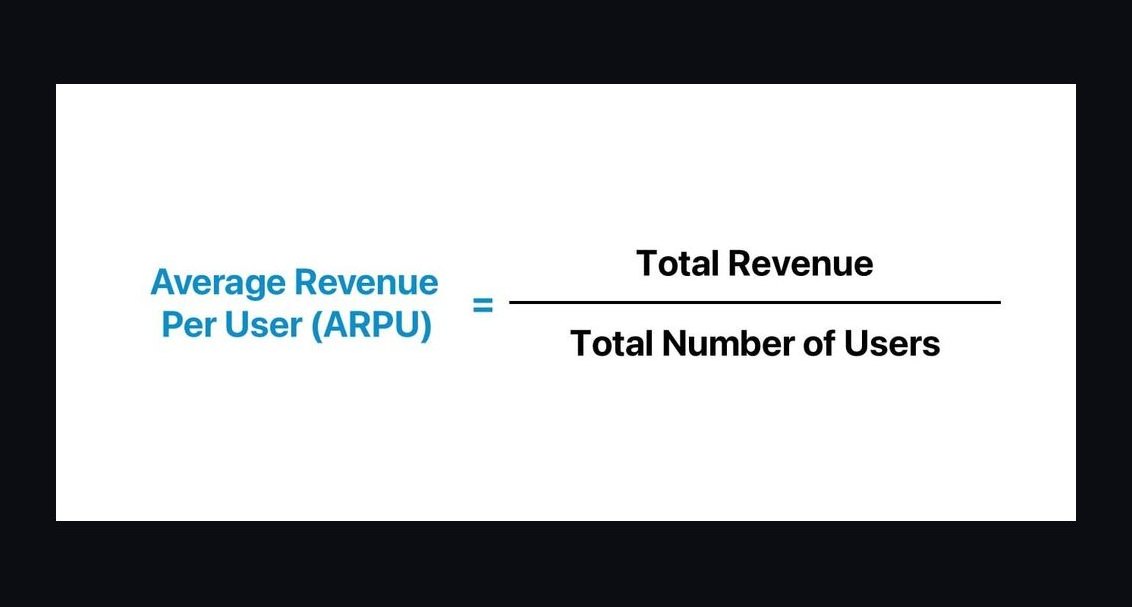 pulse-industry-kpisTop 10 Console Gaming Revenue KPIs in 2027
 pulse-industry-kpisAd Revenue per Thousand Impressions (CPM) in Publishing: Digital Monetization in 2027
 pulse-industry-kpisTop 10 RIA Wealth Management Revenue KPIs in 2027
 pulse-industry-kpisRevenue Per Available Room (RevPAR) Recovery in Urban Luxury Hotels in 2027
 pulse-industry-kpisAverage Revenue Per User (ARPU) in Telecom: Beyond Subscriber Counts in 2027
 pulse-industry-kpisTop 10 Banking Return on Assets and Net Interest Margin KPIs in 2027