

Why is my aquarium pH dropping overnight and how to prevent it?
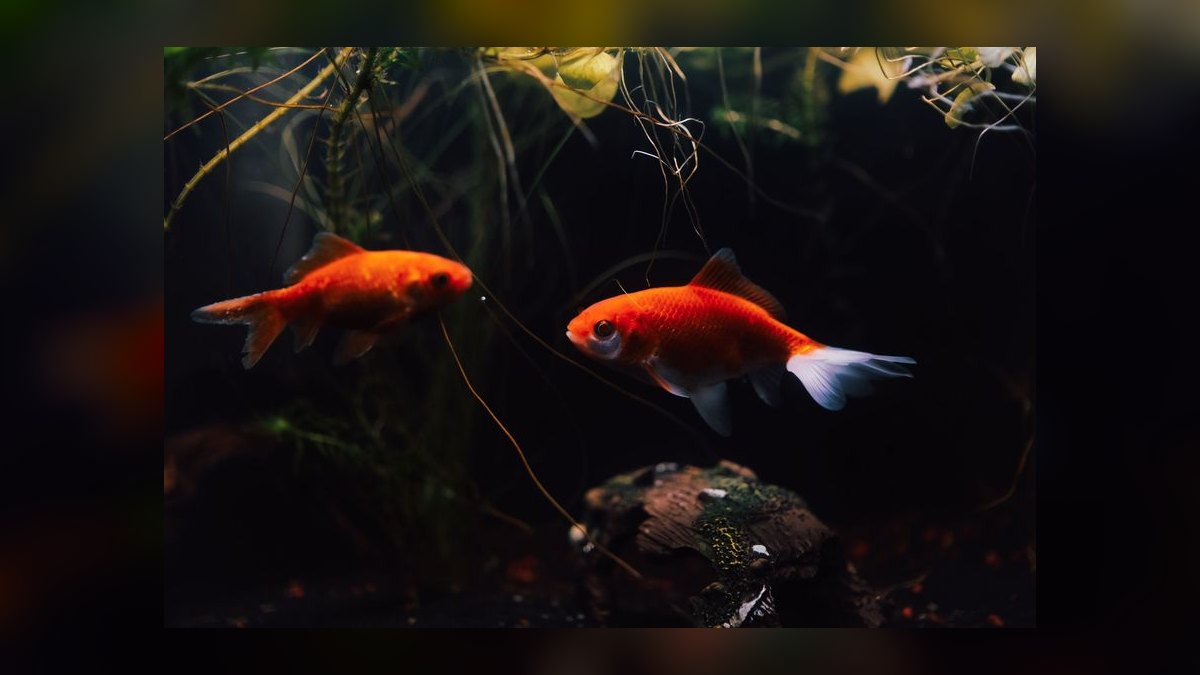
Overnight pH drops in an aquarium happen because photosynthesis stops after lights-out while fish, bacteria, and plants keep respiring, so dissolved CO₂ accumulates and forms carbonic acid. Weak carbonate hardness lets that acid move pH freely. Prevent it by raising KH to 4–8 dKH and adding nighttime surface agitation.
The two levers: buffer the water or vent the gas
Almost every fix for a pH that keeps dropping overnight falls into one of two camps, and understanding which camp you're in saves weeks of guessing. The first camp is buffering — you add carbonate alkalinity so the acid produced overnight gets neutralized before it can move the pH needle. The second camp is gas exchange — you physically remove the CO₂ from the water before it has a chance to form carbonic acid at all. They attack the same problem from opposite ends, and the correct choice depends on what kind of tank you're running.
Buffering works chemically. When CO₂ dissolves in water it forms carbonic acid, which dissociates into bicarbonate and a free hydrogen ion. That hydrogen ion is what lowers pH. Carbonate and bicarbonate in the water soak up those hydrogen ions and convert them into more bicarbonate, so the pH barely moves. KH — carbonate hardness, measured in degrees (dKH) or ppm — is a direct measure of how much of that acid-eating capacity you're holding. A tank at 1 dKH has essentially no shock absorber; a tank at 8 dKH has a thick one. The relationship is not linear in feel: going from 1 to 3 dKH produces a dramatically more stable tank, while going from 6 to 8 produces a modest additional gain.
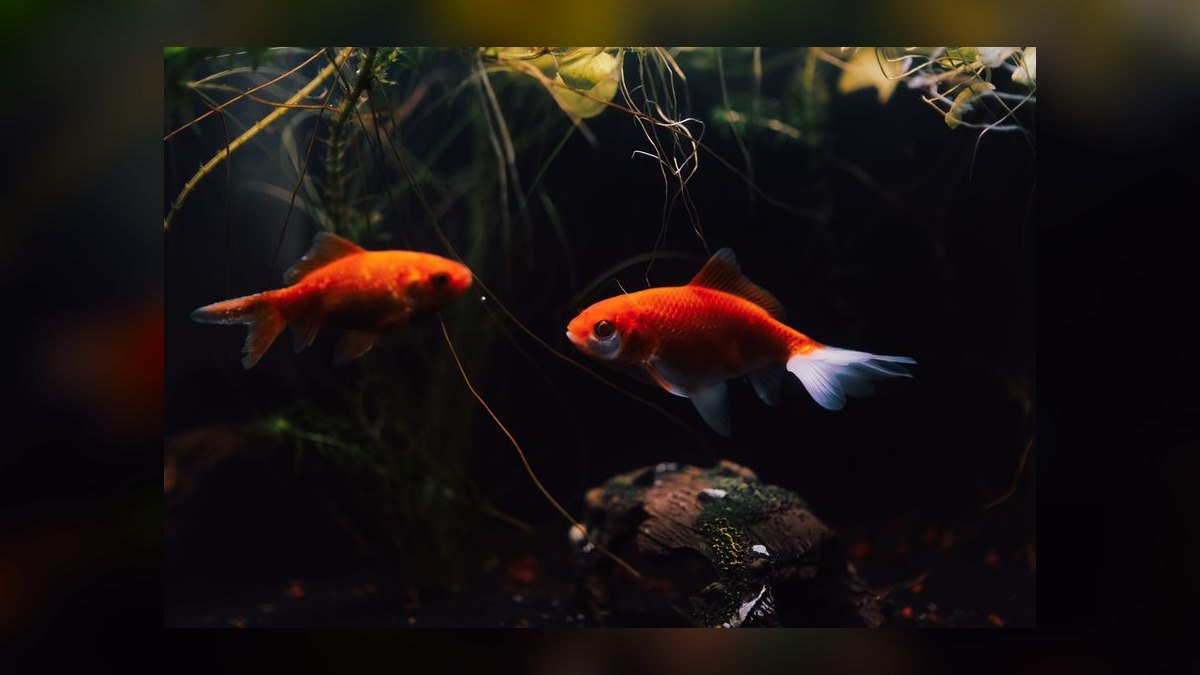
Gas exchange works physically. CO₂ leaves water at the air-water interface, and the rate depends on surface area, turbulence, and the concentration gradient between the water and the room air. Atmospheric equilibrium for CO₂ in freshwater sits around 2–3 ppm at typical room concentrations. Any tank sitting above that number is actively trying to off-gas; your job is just to give it a faster route. Break the surface film, add turbulence, and CO₂ falls toward equilibrium — often within two to four hours.
The trade-off between the two is real and it bites planted-tank keepers hardest. If you're injecting pressurized CO₂ to grow demanding stem plants, aggressive round-the-clock aeration fights your injection directly: you burn gas, your bubble counter runs hotter, and your daytime CO₂ concentration becomes unstable. Conversely, if you have a fish-only tank with driftwood and soft tap water, buffering alone might be all you need, and adding an air stone is just insurance. Most stable tanks end up using both — buffer as the baseline, aeration as the nighttime top-up — but you should know which one is doing the heavy lifting so you can troubleshoot when something changes.
There's a third quiet lever worth naming even though it isn't a "fix" so much as a precondition: organic load. Decaying food, dying leaves, an overstocked bioload, and a filter that hasn't been rinsed in eight months all push acid into the system continuously, not just overnight. Nitrification itself consumes alkalinity — the bacteria converting ammonia to nitrate burn through KH as a byproduct. A heavily stocked tank can strip 1–2 dKH per week purely through biofiltration. If your KH is falling week over week no matter what you dose, the load is your real problem and buffering is just a treadmill.
How to decide between them
Diagnosis before intervention. The single most useful test costs you nothing but two measurements: read pH right at lights-out and again right before lights-on, three nights running. Log both numbers plus KH. That gives you the swing magnitude and the buffer level simultaneously, and those two numbers together point directly at the fix.
Interpretation guide for the swing you measure. A drop under 0.2 units is normal and needs nothing. A drop of 0.2–0.4 units is typical for a modestly buffered tank and is not harming healthy fish. A drop of 0.5–0.8 units means your buffer is thin relative to your CO₂ production and you should act. Anything past 1.0 unit overnight is a genuine stressor and warrants intervention this week, not next month.
Cross-reference that against KH. If KH is under 3 dKH, buffer first — no amount of aeration will make a 1 dKH tank stable, because you're trying to hold a position with no reserves. If KH is 4 dKH or higher and you're *still* dropping more than 0.5 units, the problem is CO₂ volume, not buffer thinness, and aeration or injection timing is your lever. If KH is falling on its own between water changes, chase the organic load and the source water before you dose anything.
One caution on measurement technique that trips people up constantly. Liquid test kits with a bromothymol-blue reagent have limited resolution — often 0.2 units per color step — which is barely finer than the swing you're trying to detect. If your kit reads in 0.2 steps, a "0.4 drop" might be 0.3 or 0.5. For diagnosis that's fine. For dialing in a CO₂ system it isn't; a calibrated digital pen with two-point calibration against 4.0 and 7.0 buffer solutions gives you 0.01 resolution and costs less than replacing a tank of fish. Calibrate monthly — probes drift.
Also check your source water before blaming the tank. Municipal water can vary seasonally, and a utility switching source reservoirs in spring can drop your tap KH by several degrees without announcement. Anyone topping off with RO or distilled water is diluting KH with every evaporation cycle, which is a slow-motion version of the same problem: the tank looks stable for a month, then the swings get worse and worse as the reserve thins.
Concrete numbers behind each option
Crushed coral or aragonite. Roughly 1–2 cups per 20 gallons, in a mesh bag in the filter or under the substrate flow path. Dissolution is self-regulating — it goes faster in acidic water and nearly stops above about pH 7.6 — so it's difficult to overshoot. Expect 1–2 dKH of rise per week at first, then a plateau. Media stays effective for six to twelve months before the surfaces glaze over with biofilm and mineral crust; a rinse in tank water restores much of the rate, and a full swap restores all of it. Cost is a few dollars a pound and one bag lasts most hobbyists a year.
Sodium bicarbonate (plain baking soda). About 1 teaspoon per 20 gallons raises KH by roughly 1 dKH. Pre-dissolve in a cup of tank water and add over 10–15 minutes, ideally near the filter intake. Hard ceiling: no more than 1–2 dKH of change per day. It's instant, cheap, and does nothing for GH or calcium, which matters for shrimp and snails — they need calcium for shell and exoskeleton development, and bicarbonate alone won't provide it. Treat baking soda as the stabilizer you reach for when a swing is already hurting fish, and crushed coral as the thing that keeps you from needing it.
Commercial alkalinity buffers. Convenient, dose-by-label, and consistent batch to batch. Two cautions: some pH-targeting products are phosphate-buffered, and surplus phosphate is algae fuel in a tank with decent light. Read the ingredient list — carbonate/bicarbonate blends are the safer default. Second, "pH 7.0" style products fight the tank's natural chemistry rather than raising its reserve, which can produce yo-yo behavior worse than the original drop. Prefer products that state a KH change over products that promise a pH number.
Surface agitation. A filter return angled up 10–15 degrees to dimple the surface typically buys back 0.2–0.4 units of overnight swing in a tank that was previously running with a still, film-covered surface. A dedicated air stone running through the dark period gets you further — commonly 0.3–0.5 units — because it moves far more water past the interface. Fine-pore stones outperform coarse ones for the same air volume: smaller bubbles mean more total surface area, and the plume itself drives a vertical current that keeps turning over the surface layer.
Solenoid timing on injected systems. Shutting CO₂ off 60–90 minutes before lights-out and restarting it 60–90 minutes before lights-on lets the residual gas dissipate during the dark hours while ensuring plants have gas ready the moment light arrives. This alone frequently cuts overnight drift by more than half in tanks that were previously running injection 24/7, and it saves a meaningful share of your CO₂ consumption.
pH controllers. A probe-driven controller cuts injection when pH hits a setpoint and restarts it when pH rises past a deadband. Entry-level units start in the sub-$100 range and go up substantially for reef-oriented systems with multi-parameter logging. They're excellent at preventing daytime overshoot, but understand what they can and can't do: a controller regulates *injected* CO₂, so it does nothing about biological respiration overnight in a non-injected tank. If you don't inject, you don't need one — you need a monitor.
Water changes. A 25–30% weekly change with dechlorinated, KH-matched water replenishes buffer and exports the nitrate and dissolved organics that are consuming it. Match temperature within a couple of degrees and match KH within about 1 dKH between tank and replacement water. A large change with very different water is a bigger shock than the swing you were trying to fix.
Fish tolerance context. Most community fish handle gradual drift far better than they handle a rapid step change. A 0.3-unit nightly cycle that has run for a year is a non-event for established stock. A 1.0-unit crash inside two hours — the kind that happens when a CO₂ solenoid sticks open or a large bag of peat goes into a soft-water tank — causes visible distress: gasping at the surface, rapid gill movement, fish hovering near the outflow. If you see those signs, a large water change with matched-temperature water is the emergency lever, not a chemical.
Implementation and sequencing
Order matters more than any single product, because several of these interventions change the same variable and stacking them blind produces a swing in the opposite direction — which is just as stressful.
Week one: measure, change nothing. Log lights-out pH, lights-on pH, KH, and GH. Test your source water separately. Note stocking level, feeding schedule, plant mass, and whether CO₂ is injected. This baseline is what tells you afterward whether anything worked. Skipping it is the most common reason people spend three months and forty dollars and still don't know what fixed the tank.
Week two: fix the free things. Angle the filter return so it dimples the surface. Remove any surface film — a still, oily film is a gas-exchange blocker and is often the entire problem in a quiet HOB-filtered tank. Cut feeding to what's consumed in 60–90 seconds. Siphon detritus from the substrate. Rinse filter media in old tank water, never tap. Trim melting leaves. None of this costs anything and it frequently moves the swing by 0.2 units on its own.
Week three: add the buffer, slowly. If KH is under 3 dKH, start crushed coral in the filter. Re-test KH twice that week. If a fish is in acute distress and you need speed, use bicarbonate to bring KH up 1 dKH per day until you reach 4, then let the coral hold it. Don't do both aggressively at once.
Week four: address the gas. Air stone on a timer through the dark period only. On an injected tank, move the solenoid to shut off 60–90 minutes before lights-out. Re-log three nights.
Ongoing: automate the watching, not the dosing. A pH monitor with an alert threshold is worth more than an automatic doser for most freshwater keepers, because it tells you when the routine has stopped working — a spent crushed coral bag, a stuck solenoid, a seasonal shift in tap KH — rather than silently compensating until something breaks.
Adjacent situations that follow the same logic. A shrimp tank on remineralized RO behaves like an extreme version of this problem — you're building KH from zero, so a remineralizer that sets both GH and KH deliberately is mandatory rather than optional, and skipping KH entirely in pursuit of low-TDS conditions is what produces sudden crashes. A blackwater or soft-water biotope inverts the goal: keepers of wild-caught soft-water species deliberately run low KH and accept swings, using peat, leaf litter, and botanicals as intentional acid sources, and they manage risk with large water volumes and light stocking rather than with buffer. A marine or reef system tracks alkalinity in dKH for the same chemical reason but with much tighter tolerance — typically 8–11 dKH — because coral calcification consumes alkalinity continuously and drifting is a coral-health problem, not just a pH one. In every case, the underlying mechanic is identical: alkalinity is the reserve, CO₂ is the load, and stability comes from keeping the reserve comfortably larger than the nightly load.
Upstream and downstream effects worth tracking. Lower pH shifts the ammonia/ammonium equilibrium toward the less toxic ammonium form, which is why a soft acidic tank tolerates a small ammonia reading better than a hard alkaline one — and why a *rising* pH after a crash can suddenly convert a harmless reading into a dangerous one. Nitrifying bacteria slow noticeably below about pH 6.5 and can stall in very soft, very acidic water, which is one route to a tank that never quite finishes cycling. And plants themselves respond: in a low-KH tank, aggressive photosynthesis can strip so much CO₂ that plants begin pulling carbon out of bicarbonate, driving daytime pH upward and widening the very swing you're trying to close.
Related questions
Is a nightly pH swing always harmful to fish?
No. Gradual swings of 0.2–0.4 units are routine in planted tanks and in natural bodies of water, and established fish handle them without stress. Harm comes from magnitude and speed — drops past 1.0 unit, or fast crashes within a couple of hours, are what cause gill irritation and visible distress.
Why does my KH keep falling between water changes?
Nitrification consumes alkalinity as a byproduct, so a heavily stocked tank steadily burns KH. Driftwood, botanicals, and active aquasoil substrates add acid too. Topping off with RO or distilled water dilutes what's left. Test your source water — its KH may have shifted seasonally.
Should I use a pH-down or pH-up product to stop the swing?
Generally no. Products that target a pH number fight the tank's buffer rather than adjusting it, which often produces bigger rebounds than the original problem. Adjust KH instead and let pH settle where the chemistry puts it. Stability at an imperfect number beats instability at a perfect one.
Does turning the lights off later or running a shorter photoperiod help?
Slightly, but it's an indirect lever. A shorter dark period means fewer hours of CO₂ accumulation, so the swing has less time to develop. However, cutting the photoperiod also reduces plant growth and can encourage algae if you get the balance wrong. Fix buffer and aeration first.
Can driftwood alone crash an aquarium's pH?
In a low-KH tank, yes — fresh driftwood leaches tannins and humic acids that consume alkalinity for weeks or months. In a tank holding 5+ dKH the effect is mostly cosmetic tinting. Pre-soaking or boiling new wood reduces the initial leaching curve considerably.
FAQ
How much overnight pH drop is normal in a healthy aquarium?
A tank holding 4–6 dKH typically shows a 0.2–0.4 unit decline between lights-out and lights-on, and that is a non-event for healthy fish. Under 0.2 units means your buffer is comfortably ahead of your CO₂ production. Beyond 0.6 units, the buffer is thin relative to the nightly load and it's worth acting. Past 1.0 units, treat it as urgent, especially with sensitive species.
Can live plants cause pH to drop at night?
Yes. Plants photosynthesize under light and respire in the dark like every other organism in the tank, so a heavily planted aquarium adds meaningful CO₂ overnight on top of what the fish and bacteria produce. The plants aren't the problem though — the missing buffer is. A densely planted tank at 6 dKH is perfectly stable; the same plant mass at 1 dKH swings hard.
What KH level actually prevents overnight pH swings?
Aim for 4–8 dKH for most freshwater community tanks. Below 3 dKH the reserve is too thin to absorb a night's worth of carbonic acid. Above 8 dKH you're holding pH higher than some soft-water species prefer, though stability at a higher number still beats instability at an ideal one. Soft-water biotopes run deliberately lower and manage the risk with volume and light stocking instead.
How do I stop a pH crash right now without dosing chemicals?
Do a 30–50% water change with dechlorinated water matched on temperature and with a KH at least as high as the tank's. Then add strong surface agitation and stop feeding for 48 hours to cut the acid load. That combination replenishes buffer, vents CO₂, and reduces the input all at once — it's the fastest non-chemical stabilizer available.
Does substrate affect whether pH keeps dropping?
Yes. Inert sand and gravel are neutral and contribute nothing either way. Active aquasoils are deliberately acidic — they're formulated to pull pH down for soft-water plants and shrimp, and they consume KH as they do it. That effect fades over roughly the first several months as the substrate's capacity exhausts. If you're running active soil and fighting crashes, buffer in the filter rather than swapping the substrate.
Do I need a pH controller, or is a monitor enough?
If you inject pressurized CO₂, a controller earns its cost by preventing daytime overshoot and shutting injection at a setpoint. If you don't inject, a controller has nothing to control — biological respiration isn't something it can switch off — so a monitor with an alert threshold serves you better. Set the alert to fire on absolute floor and on rate of change, since a fast 0.3-unit move often matters more than a slow 0.5.
Sources
- EPA — pH and Water Quality Monitoring
- USGS Water Science School — pH and Water
- USGS Water Science School — Dissolved Oxygen and Water
- Seachem — Alkaline Buffer product information
- API Fish Care — Water Testing Kits
- Florida Department of Environmental Protection — Alkalinity
- NOAA — Ocean Acidification and Carbonate Chemistry
- Practical Fishkeeping — Water Chemistry
Related on PULSE
- [Top 10 pH level adjustments 2027](/knowledge/pt0265)
- [Top 10 ways to prevent algae 2027](/knowledge/pt0222)
- [Top 10 Blackwater Aquarium Fish 2027](/knowledge/pt0562)
- [Top 10 Cold Water Aquarium Fish 2027](/knowledge/pt0559)
- [Top 10 Arowana Aquarium Species 2027](/knowledge/pt0551)
 petsHow to treat ich in a planted tank without harming invertebrates?
 petsTop 10 Biodegradable Cat Litter Substrates for Eco-Conscious Owners in 2027
 petsTop 10 Canister Filters for Large Cichlid Tanks Over 100 Gallons (2027)
 petsHow do I remove brown diatom algae from aquarium glass without chemicals?
 petsWhat is the safest cat collar with quick-release buckle for indoor cats?
 petsCan guinea pigs eat fresh tomato leaves or just the fruit?
 petsHow to brush a cat's teeth if they hate the taste of toothpaste?
 petsWhat is the easiest way to set up my first planted aquarium as a complete beginner in 2027?
 petsHow do I safely treat tap water for a shrimp-only nano aquarium?
 petsTop 10 Nano Reef Tank Builds for Beginners in 2027