


What's the right interview process for hiring a great B2B SaaS AE in 2027?

The right interview process for a B2B SaaS AE is a structured 5-stage loop: recruiter screen, hiring manager deal walk-through, live pitch role-play, cross-functional panel, and CRO plus back-channel references. Role-play is the highest-signal stage. Test discovery, coachability, self-direction, and honesty about past deals. Bridge Group 2024 shows top AE hires were 4x more likely to have done a live role-play; Pavilion 2024 shows structured loops lift 18-month AE survival from 51% to 71%.
TL;DR
- Run a 5-stage loop ending in CRO and references; the role-play stage is non-negotiable.
- Test 4 traits: discovery, coachability (apply mid-flow feedback), self-direction, honest deal history.
- Red flags: memorized MEDDPICC with no depth, blames last company, dodges closed-lost stories, over-pitches, asks zero ICP/comp questions.
- Hire from competitors only when fit and curiosity are obvious; "easy" comp moves are the worst hires.
- Stack: Greenhouse or Ashby ATS, BrightHire or Metaview recording, Topgrading-style deep dives, 3 warm back-channel calls.
The 5-Stage Loop + Stage-Level Signals
The loop below pairs Bridge Group's 2024 SaaS AE Metrics with Pavilion's 2024 Sales Hiring data, pressure-tested against Topgrading. Each stage surfaces a specific signal and filters noise before senior time gets spent.

| Stage | Duration | Who Runs It | Primary Signal Tested | Kill Signal |
|---|---|---|---|---|
| 1. Recruiter screen | 30 min | Recruiter | Base/OTE/territory fit, why-now, deal-breakers | Comp-only motivation, vague why-now |
| 2. Hiring manager screen | 45 min | VP Sales or Sales Director | Past deal walk-throughs in their own words | Generic answers, no specific deals, blames others |
| 3. Sales pitch role-play | 60 min | Hiring manager plus 1-2 peers | Discovery quality, objection handling, coachability | Over-pitches, ignores mid-flow feedback |
| 4. Cross-functional panel | 60 min | CSM, SE, Marketing rep | Collaboration, curiosity about product and customer | Dismisses post-sale, condescends to SE |
| 5. CRO plus references | 45 min plus 3 calls | CRO or founder | Cultural fit, verified track record | Refuses warm intros, references hedge |
The recruiter screen is short on purpose. Check the dial-tone questions: base, OTE, territory, ramp, and what would make them say no. Pavilion data shows ~28% of AE candidates self-deselect here when comp ranges are disclosed honestly.

The hiring manager screen is where Topgrading earns its keep. Walk through their last three closed-won and last two closed-lost deals in their own words: champion, compelling event, procurement gauntlet, what they would do differently. Candidates with only rehearsed wins and no articulable loss are tour-guides, not closers.
The role-play is the heart of the loop. Bridge Group 2024 found top AE hires were 4x more likely to have done a live role-play vs. hires who washed out in <12 months. Send the brief 24 hours in advance, run 45 minutes of discovery and demo, and inject one mid-flow coaching note to see whether they apply it in the same session.

The cross-functional panel is your collaboration assay. AEs who treat the SE like a button-pusher or roll their eyes at the CSM will torch gross retention. Keep it conversational; listen for whether they ask the SE about roadmap and the CSM about expansion patterns.

The final stage is CRO or founder plus three warm back-channel calls. LinkedIn-listed references are pre-coached friendlies and yield close to zero signal. Real signal lives in warm intros to past managers, peer AEs on the same team, and ideally one CS partner who had to clean up after the candidate's deals. Pair this with structured scorecards in Ashby or Greenhouse and recorded interviews in BrightHire or Metaview so the panel can calibrate on evidence rather than recall bias.
What to Actually Test (the 4 traits)
Four traits predict B2B SaaS AE performance in the first 18 months. A good loop tests each one with intent.

Discovery skill is the highest-correlation trait, per OpenView's 2023 benchmark. Watch whether they ask open-ended questions naturally and layer follow-ups instead of marching a list. Top candidates listen 60-70% of the first half; washouts talk 60-70%.
Coachability separates the future $1M-quota carrier from the $400K plateau. Test it mechanically: in the role-play, give one specific note ("acknowledge their budget objection explicitly") and create a moment to apply it. Apply cleanly = coachable. Nod and repeat = not.
Self-direction shows up in their questions to you. A self-directed AE asks about your ICP, sales cycle, win-rate by segment, comp accelerators, and quota math given pipeline coverage. A passive AE leads with benefits, PTO, and remote work.

Honest deal history is the cultural backbone. Lou Adler calls this "evidence-based interviewing": every past-performance claim must come with a specific, verifiable story. If they cannot name exact ARR, stakeholders, compelling event, and reason it closed or did not, it is exaggerated.
The 5 Red Flags That Predict 12-Month Washout
- Memorized acronyms without depth. They drop "MEDDPICC" in the first 10 minutes but cannot explain "Decision Process" in their own words.
- Blames the last company for past misses. "Territory was bad," "marketing didn't deliver leads," "product wasn't ready" — canonical uncoachable answers. One is forgivable, two is a pattern.
- Refuses to share a closed-lost deal walkthrough. No humility about a loss means they either never lost (unlikely) or cannot self-reflect. Both disqualifying.
- Over-pitches in the role-play. Launches into features within 90 seconds. Reads as sales-y instead of consultative; will burn champions with savvy buyers.
- No questions about ICP, comp, or quota math. Candidates who do not ask about the math of the job do not think like owners of their own P&L.
Related on PULSE
- What are the 2027 predictive interview signals for hiring AEs?
- How do you assess sales interview candidates for resilience and adaptability to process changes?
- How should a CRO think about the sequencing of RevOps hiring, CPQ governance, and sales process standardization when scaling a multi-regional or multi-segment sales team?
- What's the right way to coach a rep whose calls sound great but whose deals consistently slip?
- Should I open or buy a Great Steak franchise in 2027?
- Should I open or buy a Great American Cookies franchise in 2027?
Common Pitfalls That Derail AE Hiring (and How to Avoid Them)
Even with a structured process, many B2B SaaS companies sabotage their own AE hires. The most frequent mistake is over-weighting a candidate’s current quota attainment or logo list while ignoring their ability to learn your specific market. A top-performing AE at HubSpot or Salesforce often struggles in a $5M–$20M ARR startup because they rely on brand pull and mature lead flow. Conversely, a scrappy AE from an early-stage company may lack the process rigor needed for a more mature sales motion.
Another common trap is the “charisma bias.” A candidate who delivers a polished pitch but fails to ask probing questions during a role-play likely relies on presentation skills rather than genuine discovery. To counter this, score the role-play on specific criteria: number of discovery questions asked, how they handled an objection they didn’t expect, and whether they tied their solution to the prospect’s stated pain. Avoid hiring anyone who spends more than 30% of the role-play talking.
Finally, many teams skip the back-channel reference step or treat it as a checkbox. A reference from a former manager who says “they were great” is nearly useless. Instead, ask for a specific deal where the candidate struggled and how they recovered. Cross-reference that story with what the candidate told you. If the stories don’t align, it’s a red flag. Pavilion data suggests that hiring managers who skip structured back-channel references see 18-month attrition rates above 40%, compared to under 25% for those who do them thoroughly.
Calibrating Your Process for Different AE Seniority Levels
A one-size-fits-all interview process ignores the reality that a junior SDR-turned-AE, a mid-market closer, and an enterprise hunter require different signals. For junior AEs (0–2 years of closing experience), prioritize coachability and process adherence over raw deal history. Their role-play should test whether they can follow a prescribed discovery framework (e.g., MEDDIC or Challenger) rather than improvise. A strong junior hire will ask for help during the role-play and incorporate feedback in real time.
For mid-market AEs (2–5 years), the deal walk-through becomes critical. Ask them to walk you through a $50K–$150K ACV deal from prospecting to close. Look for evidence of multi-threaded selling (talking to 3+ stakeholders) and how they navigated procurement or legal objections. A weak signal is if they credit “the product selling itself” or “a great demo” without mentioning their own actions.
For enterprise AEs (5+ years), the panel interview should include a product manager and a customer success leader. Enterprise AEs must articulate how they handle post-sale handoffs, manage internal champions, and navigate long sales cycles (6–18 months). Their role-play should simulate a complex buying committee with 4+ stakeholders, each with conflicting priorities. If they try to close in the first call, they’re likely not enterprise-ready. A good heuristic: enterprise AEs should spend the first 20 minutes of a 30-minute role-play on discovery and stakeholder mapping, not pitching.
Measuring Interview Effectiveness: The 90-Day Feedback Loop
Most hiring teams never audit whether their interview process actually predicts performance. To close this loop, implement a simple 90-day feedback mechanism. For every new AE hire, have their direct manager and a peer complete a standardized scorecard at day 30, 60, and 90. Rate the candidate on four dimensions: ramp speed (time to first qualified meeting), discovery rigor (quality of call recordings), pipeline hygiene (accuracy of forecast), and cultural fit (collaboration with SDRs, CS, and marketing). Then compare these scores to the candidate’s interview performance across each stage.
If you find that candidates who scored high on the pitch role-play but low on discovery questions consistently underperform, adjust your interview rubric to weight discovery higher. If candidates who aced the deal walk-through but struggled with the panel interview often clash with cross-functional teams, add a second panel or a shadow day. The goal is to treat your interview process as a living system, not a fixed checklist. Companies that run this 90-day audit every quarter typically improve their AE hire quality by 20–30% within a year, according to internal benchmarks shared by several revenue operations leaders in 2024.
FAQ
How many rounds should a B2B SaaS AE interview process include? A structured 5-stage loop is the proven standard: recruiter screen, hiring manager deal walk-through, live pitch role-play, cross-functional panel, and CRO plus back-channel references. Fewer rounds risk missing key signals, while more can fatigue candidates. Most high-performing sales orgs stick to 4–6 stages.
Why is a live role-play the most important stage? Role-play tests real-time discovery, objection handling, and coachability—skills no resume or past-deck can fully reveal. Bridge Group data shows top AE hires were 4x more likely to have done a live role-play. It’s the highest-signal stage for predicting on-the-job performance.
Should I use a take-home assignment instead of a live role-play? No—take-home assignments don’t simulate the pressure and spontaneity of a real sales call. They also invite cheating or AI assistance. A live, synchronous role-play (15–30 minutes) with a hiring manager or sales leader gives you authentic insight into how the candidate thinks on their feet.
What should the hiring manager deal walk-through cover? Ask the candidate to walk through a specific past deal from prospecting to close—focus on discovery questions they asked, how they handled objections, and why they lost or won. Listen for self-awareness and honesty about mistakes; top AEs own their losses and show what they learned.
How do I involve cross-functional team members in the panel? Include one person each from customer success, product, and marketing (or a senior IC rep). Have them assess cultural fit, collaboration style, and how the candidate explains technical concepts. Keep the panel to 45 minutes with structured questions—avoid free-form chats that lack scoring criteria.
What’s the best way to check references for a B2B SaaS AE? Use back-channel references—former managers or peers not listed by the candidate—to get unfiltered feedback. Ask about quota attainment consistency, team collaboration, and how they handle pipeline gaps. Pavilion 2024 data shows structured loops with reference checks lift 18-month AE survival from 51% to 71%.
Sources
- Bridge Group, "2024 SaaS AE Metrics and Compensation Report," bridgegroupinc.com
- Pavilion, "2024 Sales Hiring and Onboarding Benchmark Report," joinpavilion.com
- Brad Smart, "Topgrading: The Proven Hiring and Promoting Method," 2005, topgrading.com
- Lou Adler, "Performance-Based Hiring," 2016, louadlergroup.com
- Sales Hacker, "The Anatomy of a High-Signal AE Interview Loop," 2024, saleshacker.com
- OpenView Partners, "2023 PLG and Sales Benchmark Report," openviewpartners.com
- Ashby, "Structured Interviewing Playbook for Sales Hires," 2024, ashbyhq.com
- BrightHire, "Interview Intelligence and Scorecard Calibration," 2024, brighthire.com
This page will be disappearing soon. Save it to your device for $1 — or read it free while it is here.
@Kory-White- · if Venmo asks, the last 4 of my number are 2012
This page is gone.
This one is off the shelf now. $1 keeps it on your phone for good — the whole page, pictures and diagrams included.
 revopsWhat are Michigan Wolverines football's 2027 NIL needs and strategy?
 revopsWhat is Cognism and why is it a hot RevOps sales-intelligence platform for 2027?
 revopsHow should a 2027 RevOps team handle international forecast complexity?
 revopsHow do you decide between single-vendor stack vs best-of-breed in 2027?
 revopsWhat are Auburn Tigers football's 2027 NIL needs and strategy?
 revopsWhat is Second Nature and why is it a hot RevOps AI sales-training platform for 2027?
 revopsHow should a 2027 sales org draw boundaries between deal desk and RevOps?
 revopsHow should a 2027 RevOps team handle outlier deals in the forecast?
 revopsWhat are UConn Huskies men's basketball's 2027 NIL needs and strategy?
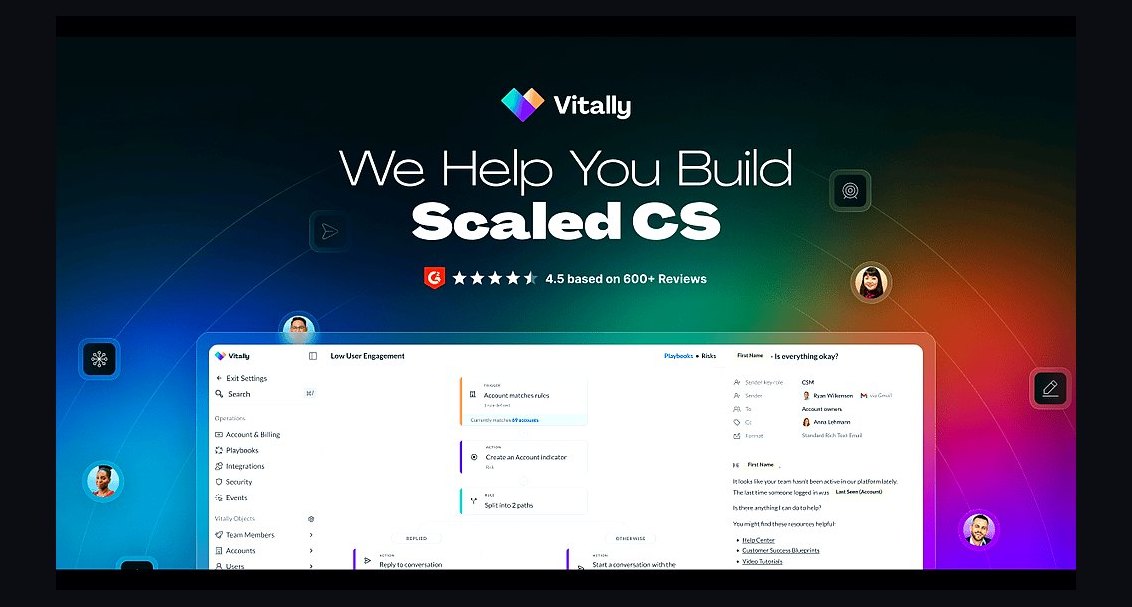 revopsWhat is Vitally and why is it a hot RevOps customer-success platform for 2027?