


Chief vs Ellevate Network — which is right for your career stage in 2027?
Quality
Certified

Chief is an invitation-only peer network for women already at VP, SVP, or C-suite level, costing roughly $5,800–$7,900 per year. Ellevate Network is an open professional association for women at every career stage, at about $480 per year. Choose Chief if you hold P&L authority; choose Ellevate if you are still climbing toward it.
A tale of two women, same city, different rooms
Picture two women in Chicago in early 2027, both in RevOps-adjacent functions, both ambitious, both deciding where to spend their professional development budget for the year.
The first is Danielle, a 29-year-old revenue operations analyst at a Series C SaaS company. She earns $118,000, reports to a director, and her entire team is four people. She wants to be a RevOps manager within 18 months and a director within four years. Her company offers a $1,000 annual learning stipend. Danielle has been circling three options: a Chief membership she cannot afford and probably cannot get into, an Ellevate Network membership at roughly $480 per year, and a free RevOps Slack community she already lurks in.
The second is Priya, a 41-year-old VP of Revenue Operations at a public software company. She earns $310,000 plus equity, owns a $4M operating budget, and manages 22 people across three time zones. She was promoted 14 months ago and has discovered something nobody warned her about: she has no peers. Her direct reports cannot hear her doubts about org design. Her CRO is her boss, not her confidant. Her CEO wants answers, not questions. Priya's company will reimburse an executive network membership up to $8,000 per year. She is deciding between Chief and simply hiring an executive coach at $500 per hour for 20 sessions.

These two women are the entire decision. Danielle and Priya are not choosing between the same two products at different price points — they are choosing between fundamentally different mechanisms. Danielle needs surface area: many conversations, many industries, many skill-building sessions, low cost, low friction. Priya needs density: eight women who have sat in her chair, who understand what it feels like to inherit a broken forecast process and a skeptical sales org, who can tell her honestly whether her reorg plan is sound. Ellevate sells surface area. Chief sells density. The pricing gap — roughly fifteen times — is not a markup on the same thing. It is the price of a different thing entirely.
The mistake both women could make is the same one: choosing based on brand prestige rather than mechanism. Danielle could stretch to afford Chief and find herself the most junior person in a Core Group of VPs, unable to contribute to conversations about board presentations and compensation philosophy. Priya could buy Ellevate, save $7,400, and discover that a 280,000-member association cannot give her the confidential peer board she actually needs. Both would waste a year. The rest of this page is about how to avoid that.
How the mechanism actually works
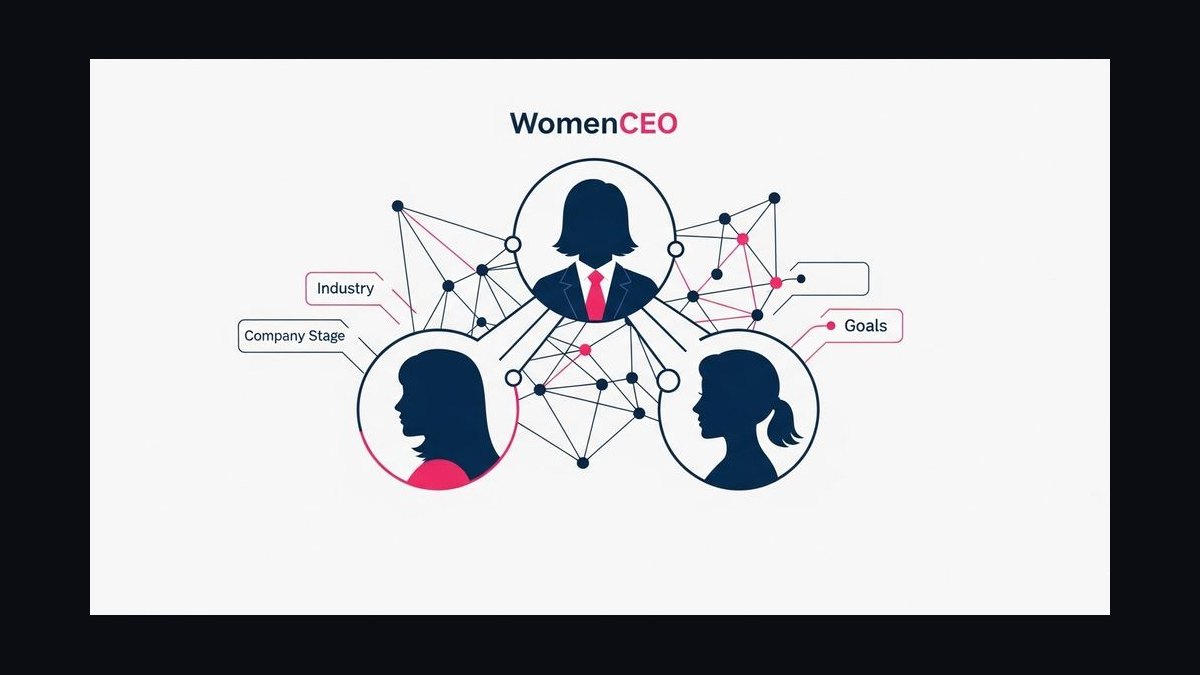
The two networks deliver value through completely different structures, and understanding those structures is what makes the decision obvious.
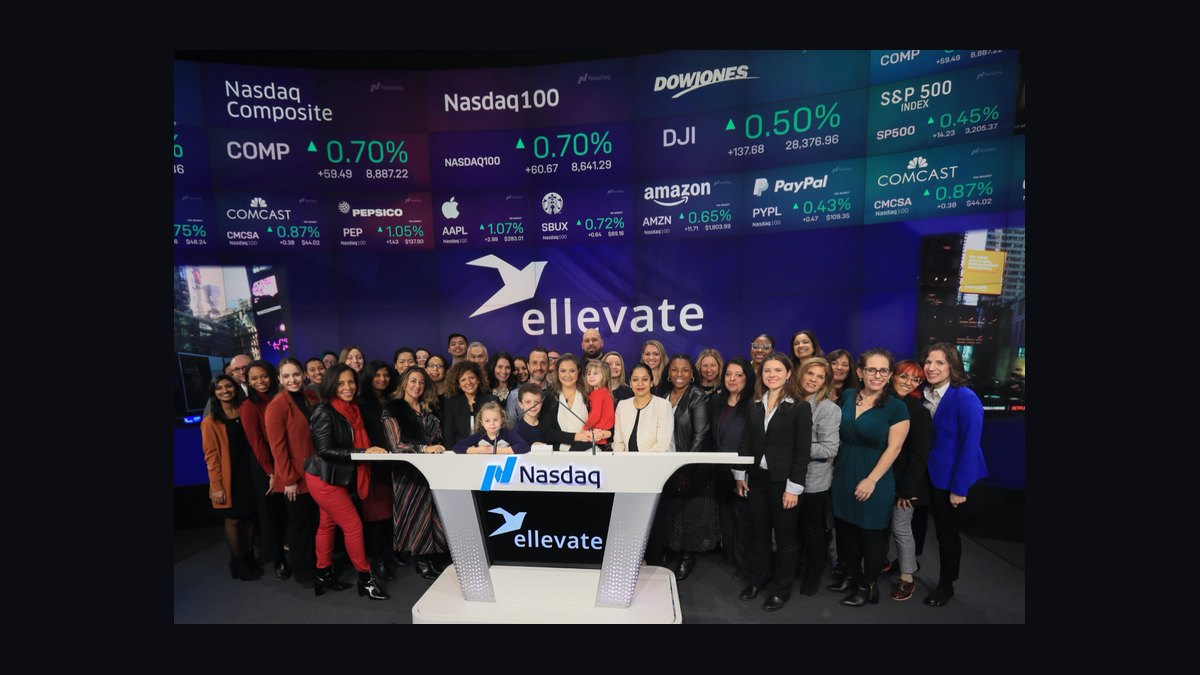
Ellevate Network operates as a scaled professional association. Founded in 1997 and reshaped after Sallie Krawcheck acquired 85 Broads in 2013 and rebranded it, Ellevate is now run by majority owner Allyson McDonald. Its core unit is the "Squad" — a small peer group of roughly eight women that meets regularly, usually monthly, around a shared career goal. Squads reform periodically, which keeps exposure broad but limits how deep any single relationship goes. Layered on top are chapter events in 130-plus cities, a global conference, webinars, and an online community. The membership model is pay-and-you-are-in: no application, no vetting, no title requirement. That openness is the product. It means a 24-year-old marketing coordinator and a 55-year-old retired CFO can both belong, and the network's value comes from the sheer breadth of that mix.
Chief operates as a curated executive network. Founded in 2019 by Carolyn Childers and Lindsay Kaplan, Chief is application-only and screens for seniority — typically VP, SVP, C-suite, or founder. Its core unit is the "Core Group": eight to twelve non-competing women at similar executive levels who meet roughly twice a month for a full year, usually with a trained facilitator or executive coach. Core Groups are built for confidentiality and continuity — the same women, the same trust, month after month. On top of that sit physical clubhouses in major cities, marquee speaker events, and a members-only digital community. Chief's model is velvet-rope by design: the vetting is what makes the room safe for a VP to say "I think I'm failing at this" without it reaching her board.

The structural consequence is this: Ellevate optimizes for reach and affordability, Chief optimizes for trust and seniority density. A Squad that reforms every few months cannot build the kind of trust a year-long Core Group can. A 280,000-member association cannot guarantee that the woman across the table from you has ever owned a P&L. Neither model is better in the abstract. They are better or worse for a specific career stage.
Note what the diagram makes clear: the two branches never converge. There is no career stage at which both networks are equally correct. The only genuine ambiguity is the newly promoted VP who might still benefit from Ellevate's breadth while needing Chief's depth — and even there, the honest answer is that Chief is the primary purchase and Ellevate becomes optional.
Real numbers, ranges, and benchmarks
Numbers make the decision concrete. Here is what each network actually costs and delivers, with the caveats that matter.
Ellevate Network individual membership runs roughly $40 per month, or about $480 per year when paid annually. Corporate tiers exist and cost more, typically negotiated per organization, and are designed for companies sponsoring multiple employees. Ellevate reports a membership base north of 280,000 globally and chapters in more than 130 cities, including many secondary markets — Nashville, Charlotte, Portland — that Chief does not serve with physical space. Coaching through Ellevate is generally à la carte, in the $150–$250 per session range depending on the coach.

Chief's pricing sits at roughly $5,800 per year for the VP tier and $7,900 per year for the executive tier, with virtual-only membership available at a lower price point — commonly cited around $4,200 per year — for members outside clubhouse cities. Chief's membership base is roughly 20,000, and its clubhouses are concentrated in about a dozen major U.S. cities plus London. Chief has historically included a set number of one-on-one executive coaching sessions per year as part of membership, typically in the four-to-six range, which is a meaningful offset against the sticker price: at $400–$600 per session for comparable external coaching, that benefit alone is worth $1,600–$3,600.
The comparison that matters most is not Chief versus Ellevate. It is either network versus the next-best use of the same money. For a director earning $220,000 and considering Chief, the real question is whether $7,900 buys more career velocity than ten to twelve sessions with a strong executive coach at $400–$600 per hour. For most directors, the coach wins — because the director's bottleneck is usually a specific skill or a specific relationship, not a shortage of senior women to talk to. For a newly promoted VP earning $300,000-plus, the calculus flips: the peer board fills a gap no coach can fill, because the coach is one person and the Core Group is eight.
A useful benchmark: if your employer reimburses executive network memberships, the effective cost of Chief drops toward zero and the decision becomes almost purely about fit and time. If you are paying out of pocket, Chief consumes roughly 2.5 to 3 percent of a $300,000 salary — real money, but not irrational if you attend. The threshold question is attendance. Anecdotally, a substantial share of Chief members — commonly cited in the range of 30 percent or more — never consistently attend their Core Group. At that point the membership is a status pin, not a network, and $7,900 is a very expensive pin.
Trade-offs and alternatives
Every choice here has a shadow. The trade-offs are real, and pretending otherwise is how people waste a year.
Choosing Ellevate when you are already a VP means you are the most senior person in most rooms you enter. That can feel flattering and be genuinely useless. The conversations that would sharpen you — how to handle a board that second-guesses your forecast, how to structure a comp plan that survives a downturn — are not happening in a generalist association at the $480 price point. You will meet interesting people and learn about industries you do not work in. You will not get a peer board.
Choosing Chief when you are a director means paying executive prices for a room you cannot fully use. Core Group dynamics assume you have direct reports, budget authority, and org-level problems. If you do not, you will spend the year listening rather than contributing, and the women in your group will sense it. The vetting process exists partly to prevent exactly this mismatch, but people slip through, and the experience is rarely good for the junior member.

The alternatives deserve honest weight. For women in tightly defined functional verticals — RevOps, product marketing, infosec, clinical research, ESG, M&A — a free or low-cost vertical community plus a self-assembled peer board of five trusted women at similar stages can outperform both networks for functional career velocity. You build the room yourself: five women, non-competing companies, monthly meetings, one shared goal each. Cost approaches zero. Conversation quality is often higher than Chief because everyone understands your specific function deeply. The limitation is that this DIY stack does not deliver brand-name proximity or curated introductions to board seats — and for women whose next move is a board seat or a CEO role, those things are the actual product.
For founders specifically, neither network is optimized. Chief requires corporate seniority; Ellevate is built for employees climbing ladders. Founder-focused networks exist and target fundraising, cap tables, and board composition — a different problem set entirely.
The cleanest way to read this diagram: identify your bottleneck first, then match the tool. Most people do it backwards — they pick the prestigious option and then look for a reason to justify it. That is how a director ends up with a Chief membership she cannot use and a VP ends up in a generalist association she has outgrown.
Common pitfalls and how to avoid them
The same mistakes show up repeatedly in comparison threads, and each has a fix.
Pitfall one: treating the two as substitutes. They are not. Ellevate and Chief serve different stages, and the most common error is assuming that because both advance women, one must be the "better" version of the other. Fix: decide your career stage first, then pick the network that matches it. If you are pre-VP, Ellevate. If you are VP-plus, Chief. If you are a director, Ellevate plus a coach.
Pitfall two: buying Chief for the brand. The Chief name carries weight on a LinkedIn profile and in certain rooms. If that is the primary reason you are joining, you are paying $7,900 for a signal. Fix: write down, before you pay, the three specific problems you expect the Core Group to help you solve. If you cannot name three, you are buying a signal.
Pitfall three: joining both. Some women pay for Chief and Ellevate simultaneously "to cover both bases." This almost always produces two shallow memberships instead of one deep one. Fix: pick one. If you are a newly promoted VP, make Chief primary and let Ellevate lapse unless your employer pays for both.
Pitfall four: not checking the attendance math. Chief's value is entirely contingent on showing up — roughly two 90-minute Core Group sessions per month, plus quarterly events, plus anything else you want to extract. If your calendar cannot hold that, the membership degrades into a pin. Fix: block the time before you join, not after.
Pitfall five: ignoring geography. If you live outside Chief's clubhouse cities, you lose the in-person advantage that justifies much of the premium, though virtual membership at a lower price exists. Ellevate's 130-plus chapters reach markets Chief does not. Fix: check whether a physical room exists near you before paying for one.
Pitfall six: assuming industry fit is neutral. Chief's membership skews toward finance, tech, and professional services; Ellevate has stronger representation in healthcare, education, nonprofit, and government. Fix: if your sector is niche, ask current members whether the peer matching actually placed them with relevant women.
Avoid these six and the decision becomes clean: match the mechanism to your stage, pay for the one that fits, and show up.
Related questions

Is Ellevate Network worth it for someone already at director level?
Yes, if you are still climbing toward VP. Ellevate's roughly $480 annual cost buys broad exposure, chapter events, and Squad accountability that help directors build the sponsor network and executive presence a VP promotion requires. It is not a peer board, so pair it with a coach.
Can you get into Chief without a VP title?
Generally no. Chief screens for VP, SVP, C-suite, or founder-level seniority, and the Core Group model assumes budget and people authority. Some exceptions exist for founders and high-growth operators, but a director without P&L ownership is usually not a fit.
What does Chief cost compared with Ellevate in 2027?
Chief runs roughly $5,800 per year at the VP tier and $7,900 at the executive tier, with a lower virtual-only option commonly around $4,200. Ellevate Network individual membership is about $40 per month, or roughly $480 per year. The gap is about fifteen times.
Does Ellevate offer corporate memberships?

Yes. Ellevate sells corporate tiers above the individual rate, designed for companies sponsoring multiple employees, often with custom programming. Pricing is typically negotiated per organization rather than published, so ask directly.
Is there a network that beats both for founders?
For founder-CEOs scaling a company, founder-specific networks that focus on fundraising, board composition, and cap tables are usually a better fit than either Chief or Ellevate, because both are built around corporate employment trajectories rather than company ownership.
FAQ
What is the core difference between Chief and Ellevate Network? Chief is a curated, invitation-only peer network for women at VP level and above, built around year-long Core Groups of eight to twelve executives, costing roughly $5,800–$7,900 per year. Ellevate Network is an open professional association for women at all career stages, built around shorter-cycle Squads and 130-plus city chapters, costing about $480 per year. One sells density among senior peers; the other sells breadth across a large membership.
Which is better for a director aiming at a VP role? Ellevate Network, with a supplement. At director level you need volume of conversations and sponsor exposure, not a peer board of women two rungs above you. Spend the roughly $480 on Ellevate and put the difference toward ten to twelve executive coaching sessions at $400–$600 per hour. The coach accelerates the specific skill gap; Ellevate widens the network.

Is Chief worth $7,900 for a mid-career professional? Only if you already hold a VP-plus role with budget authority and you will actually attend. The value comes from the Core Group, which assumes you own org-level problems. If you cannot commit to roughly two 90-minute sessions a month plus events, you are buying a status pin rather than a network, and the money is better spent elsewhere.
Can you belong to Chief and Ellevate at the same time? You can, but it is rarely wise. The two networks target different stages, so paying for both usually produces two shallow memberships instead of one deep one. If you are a newly promoted VP, make Chief primary. If you are pre-VP, Ellevate alone is sufficient.
How much of Chief's value depends on attendance? Almost all of it. Chief's mechanism is a confidential peer board that compounds over a year of consistent meetings. Anecdotally, a substantial share of members — commonly cited around 30 percent or more — never consistently attend Core Group, which converts the membership into a credential rather than a support system.
Does geography change the calculus? Yes, meaningfully. Chief's clubhouses are concentrated in about a dozen major U.S. cities plus London, so members outside those markets lose much of the in-person advantage and may prefer the lower-priced virtual tier. Ellevate's 130-plus chapters reach many secondary markets Chief does not serve.
Sources
- Ellevate Network — Wikipedia
- Ellevate Network membership benefits
- Chief official site
- CNBC: How the founders of Chief expanded amid the pandemic
- Adweek: Opportunities for women to connect
- Sallie Krawcheck — Institute for Global Affairs
- Ellevate Network announces new CEO
Related on PULSE
- Is Chief the right network for women in B2B SaaS in 2027 — or should you join Women in Revenue?
- What does Chief do BETTER than any other women's executive network in 2027?
- Chief network reviews in 2027 — what current and former members actually say
- Chief vs Athena Alliance — which women's executive network should you join in 2027?
- How do you get into Chief women's network in 2027 — application, requirements, and what actually gets you in?
- How do you measure whether a Chief membership improved RevOps pipeline coverage without double-counting member referrals?
This page will be disappearing soon. Save it to your device for $1 — or read it free while it is here.
@Kory-White- · if Venmo asks, the last 4 of my number are 2012
This page is gone.
This one is off the shelf now. $1 keeps it on your phone for good — the whole page, pictures and diagrams included.
 women-execWhat Chief's March 2024 UK shutdown really cost — the international expansion failure
 women-execWhat does Fortune's 2023 reporting on Chief's retention tell us heading into 2027?
 women-execChief's Confusing 2026-27 Pricing: VP, C-Suite, Premium Tiers, and Grants
 women-execIs Chief the right network for women in B2B SaaS — or should you join Women in Revenue in 2027?
 women-execChief's unintended exclusion problem — how the no-men rule blocks male allies in 2027
 women-execWhy your boss won't pay for Chief — the corporate dev-budget squeeze in 2027
 women-execChief's biggest unforced error — the October criteria expansion in 2026
 women-execIs a Series C unlikely for Chief — and what that means for the company in 2027
 women-execChief vs Hampton — why founders are choosing Hampton over Chief in 2027
 women-execDid Chief earn its $1.1B valuation — or was it pure ZIRP fantasy in 2027?