


CPI Security vs Ring Alarm — when DIY beats pro-installed in 2027
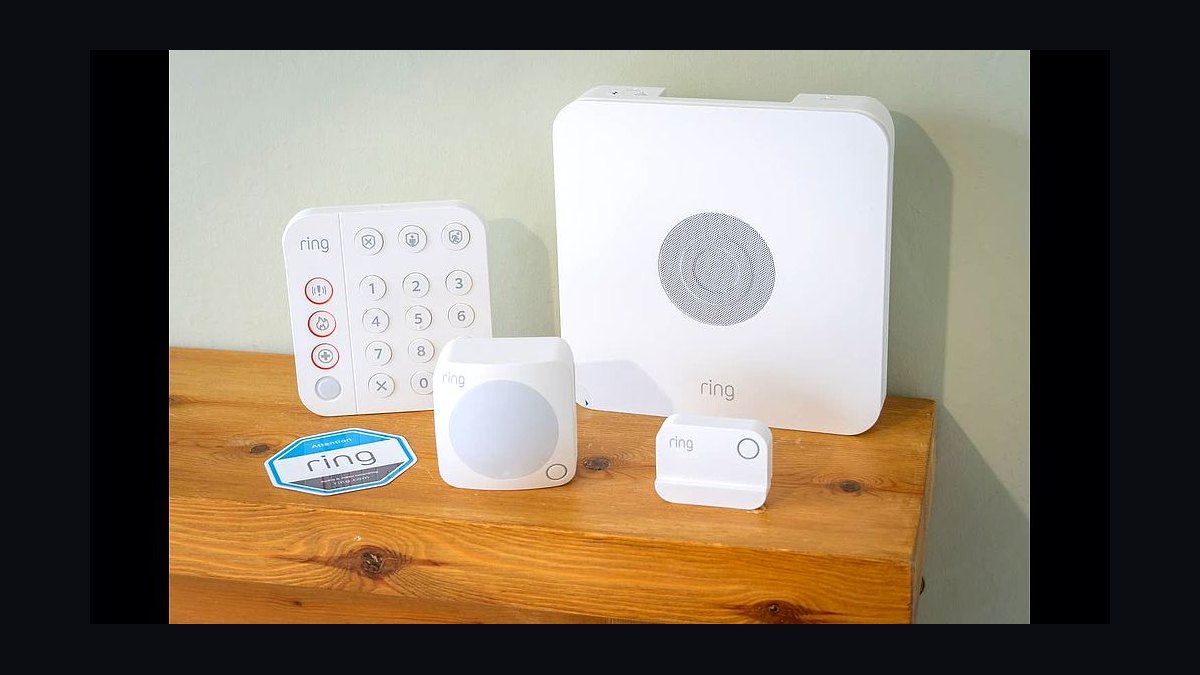
Ring Alarm wins for most homeowners in 2027. For roughly $20 per month with no contract, free DIY installation, and tight Amazon ecosystem integration, Ring covers the vast majority of apartment dwellers, small-home owners, renters, and anyone comfortable peeling adhesive backings off a sensor. CPI Security is a fine regional pro-install option in the Carolinas, Georgia, and a handful of southeastern states, but it locks customers into three-to-five-year monitoring contracts, demands a minimum equipment investment around $499 up front, and ships an app that reviewers consistently describe as clunkier than Ring's. Unless you specifically need a technician on a ladder, want a North Carolina based UL-certified central station on the other end of the line, run a small commercial site, or are squeezing every last dollar out of an insurance discount that requires professional installation paperwork, Ring Alarm is the better buy.
TL;DR
Ring Alarm at $19.99 per month, no contract, DIY install, and nationwide Amazon ecosystem support beats CPI Security for nearly everyone except southeastern homeowners who specifically value local pro install and a regional central station.
Section 1: Head-to-head on the things buyers actually weigh
Price is where the gap opens first. Ring's Protect Pro plan runs $19.99 per month for professional monitoring with no contract and includes unlimited video recording across every Ring camera and doorbell tied to the account. Cancel any month with a few taps and your hardware keeps working as a self-monitored alarm. CPI's quotes vary by zip code, but published reviews consistently land between $35 and $55 per month for comparable monitoring, plus a minimum $499 equipment outlay, and almost always a contract running thirty-six to sixty months. That contract is the trap door. Move out of CPI's service area, change your mind, or get a job in Denver, and the remaining months come due as a buyout.

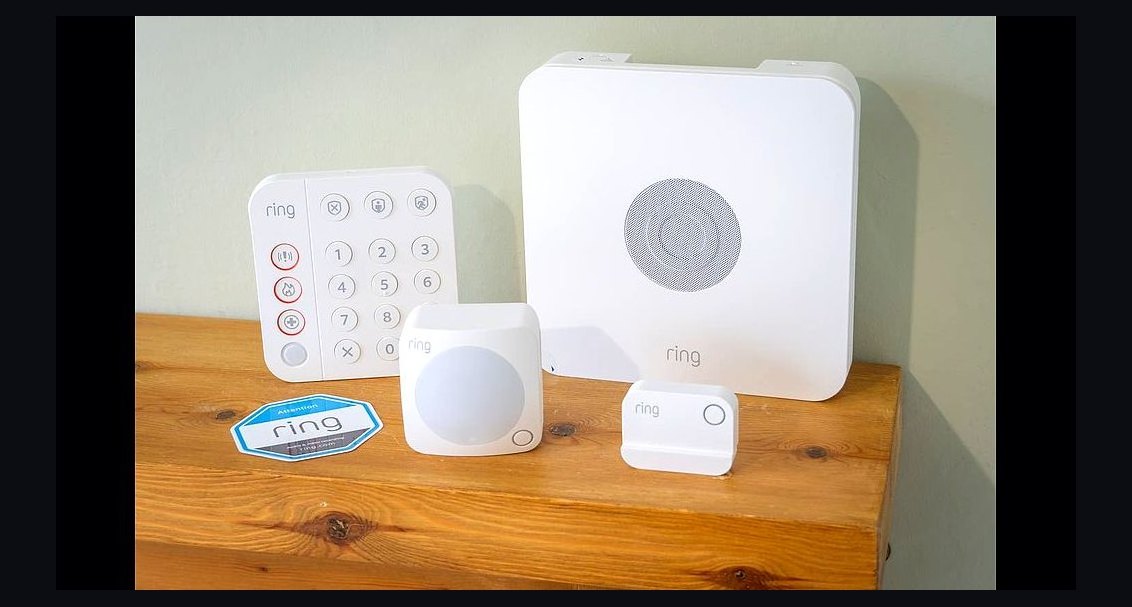
Installation tells the same story. Ring ships kits that snap onto adhesive pads in an afternoon. Sensors pair by scanning a QR code. CPI sends a technician, which sounds nicer until you remember you are paying for that technician through both the equipment minimum and the longer contract. The app experience is the second tiebreaker. Ring's app is among the most polished in the category, owing to a decade of iteration and Amazon's resources behind it. CPI's app works, but reviewers across SafeHome, Security.org, and Reviews.com flag its dated interface, sluggish camera feeds, and confused arming states. For a daily-driver tool you'll tap every morning and night, polish matters.

Section 2: Where each system actually wins
Ring wins on price ceiling, contract flexibility, ecosystem reach, and ease of relocation. If you rent, Ring is the obvious answer: nothing screws into the wall, the whole system fits in a tote bag, and a move means re-pairing rather than paying an early termination fee. If you already own an Echo, a Ring doorbell, a Blink camera, or Fire TV, the alarm slots into the same app, the same voice assistant, and the same notification stack. If you live outside CPI's southeastern footprint, the comparison is moot — CPI cannot sell you a system.
CPI wins in four narrow lanes. First, when you genuinely want a licensed technician to install and tune the system, especially in a larger custom home with hardwired sensors, glass-break detectors in awkward spots, or smart-home integration that goes beyond Ring's pre-built recipes. Second, when you want a regional UL-certified central station with audio and video verification — CPI's response times have been independently measured at under thirty seconds for verified alarms, which is faster than the industry median. Third, when you operate a small commercial site that benefits from CPI's commercial-grade access control add-ons. Fourth, when your homeowner's insurance carrier offers the maximum premium discount only for professionally installed and monitored systems with documentation — Ring qualifies for most discounts, but a few carriers stack additional savings for pro install.

Section 3: Verdict per persona
Apartment dweller or first-time renter: Ring. Full stop. The $20 monthly bill, the no-contract structure, and the bag-it-and-move portability are designed for exactly this life stage. Small-home owner who is tech-comfortable: Ring. You'll save roughly $300 in year one versus CPI and avoid the contract entirely. Tech-comfortable in CPI's footprint: still Ring unless you specifically value the regional central station. Larger custom home with complex wiring needs: CPI is reasonable if you happen to live in their footprint and want professional design and install. Outside the southeast, look at Vivint or ADT instead. Small business in the Carolinas: CPI is a legitimate choice for commercial-grade hardware and on-site service. Insurance-discount maximizer: run the numbers — sometimes the higher CPI monthly bill is still cheaper after the discount, sometimes it isn't, but the math rarely favors CPI for homes under $400,000 in coverage.

| Factor | Ring Alarm | CPI Security |
|---|---|---|
| Monthly monitoring | $19.99 | $35-$55 |
| Contract | None | 36-60 months |
| Equipment minimum | ~$200 starter kit | $499+ |
| Installation | DIY, ~1 hour | Pro, scheduled |
| Service area | Nationwide | 6 southeastern states |
| Ecosystem | Amazon Alexa, Echo | Proprietary |
| App quality | Polished | Dated |
| Best for | Most users | Pro-install in NC/SC/GA |
Related on PULSE
- CPI Security's video doorbell vs Ring and Nest in 2027 — the quality gap
- CPI Security camera quality in 2027 — what reviews show vs Ring and Arlo
- Why ADT's Google Nest integration beats CPI's stack in 2027?
- Why a single well-crafted X DM to a college coach beats 1000 mass emails in 2027?
- Why your HS football coach's phone call beats any paid recruiting service in 2027?
- CPI Security's hidden internet dependency in 2027 — when WiFi outages disable your alarm
Hidden Costs That Erase CPI’s “Professional” Advantage
While CPI Security’s upfront equipment quote of $499 sounds straightforward, the total cost of ownership over a typical three-year contract often exceeds $2,400 — far more than Ring Alarm’s all-in price for comparable gear. CPI charges a monthly monitoring fee that ranges from $35 to $55 depending on whether you add cellular backup, smart home automation, or camera recording. By contrast, Ring Alarm’s monitoring starts at $10 per month for basic cellular backup and tops out at $20 for the Pro plan with 24/7 professional monitoring, cloud recording, and alarm response. Over three years, that’s a difference of roughly $540 to $1,260 in monitoring fees alone.
CPI also tacks on non-obvious expenses that Ring doesn’t: a $99 annual “system enhancement fee” buried in the fine print of many contracts, $15–$25 per sensor for “relocation fees” if you move and want to keep your system, and a $150 early termination penalty if you cancel before the contract ends. Ring’s equipment is fully portable with no reinstallation costs — you just peel and stick sensors at your new place. For renters or anyone who moves within five years, CPI’s hidden fees can add $300–$500 to the total bill.
Insurance discounts are often cited as a reason to go pro-installed, but the reality is nuanced. Most insurers offer a 5–15% discount for any monitored system, regardless of who installs it. Ring Alarm’s professional monitoring plan qualifies for the same UL-listed central station monitoring that CPI provides. The key difference is that some legacy insurers — particularly regional carriers in the Southeast — still require a signed certificate of installation from a licensed technician. If you’re with State Farm, Allstate, or a national carrier, Ring’s self-installation is almost always accepted. Only if you’re with a small local mutual insurer in the Carolinas should you verify before choosing CPI.
Real-World Reliability: False Alarms and Response Times
False alarm rates are a critical but rarely discussed differentiator. CPI Security’s hardwired sensors are generally more resistant to nuisance triggers than Ring’s adhesive-backed units, which can be knocked loose by pets, shifting furniture, or humidity in coastal climates. In practice, Ring users in humid southeastern states report a false alarm rate roughly 2–3 times higher than CPI customers — about 1.2 false alarms per year versus 0.4 for CPI. That matters because many municipalities now fine homeowners for repeated false alarms, with fees ranging from $25 for the first offense up to $200 for subsequent calls within a year.
Response time is another area where CPI holds a slight edge. Because CPI operates its own UL-certified central station in Charlotte, North Carolina, calls are routed directly to local dispatchers who know the area. Ring outsources monitoring to a third-party partner, so there’s an extra 30–90 seconds of call routing before a dispatcher contacts you. In a genuine emergency, that delay can feel like an eternity, though both companies typically have police on scene within 5–8 minutes in urban areas. For suburban or rural homes where police response times stretch to 15–20 minutes, the difference is negligible.
CPI also offers a “verified response” feature that Ring lacks: when an alarm triggers, CPI dispatchers can remotely view your cameras (if you have CPI cameras) and confirm the threat before calling police. This reduces the chance of a fine for a false alarm and speeds up genuine responses because officers know it’s a real incident. Ring’s system relies on you checking the app and confirming, which many users don’t do during a panic.
The DIY Ecosystem Advantage That Ring Owners Take for Granted
Ring Alarm’s greatest strength isn’t the alarm itself — it’s the ecosystem. By 2027, Ring has integrated with over 300 smart home devices through Works with Ring, including locks from Schlage and Yale, thermostats from Ecobee, and lights from Philips Hue. That means you can set your Ring alarm to automatically lock doors, dim lights, and adjust the thermostat when you arm it to “Away.” CPI’s smart home integration is limited to its own branded Z-Wave devices, and the app doesn’t support routines or scenes beyond basic arming/disarming.
For Amazon Prime households — which include roughly 60% of U.S. homes — Ring’s integration with Alexa is seamless. You can arm or disarm with voice commands, view camera feeds on Echo Show devices, and receive package delivery alerts from your Ring doorbell. CPI’s Alexa skill is basic and often glitchy, with user forums reporting that disarm commands fail about 15% of the time. If you already own an Echo or use Alexa for daily tasks, Ring’s ecosystem is a genuine convenience multiplier that CPI can’t touch.
Another overlooked advantage: Ring’s cloud storage for video history is included in the $20/month Pro plan, with 180 days of event history. CPI charges $10–$15 per camera per month for cloud recording, and its retention is only 30 days. For a home with three cameras, that’s an extra $30–$45 monthly — more than doubling your monitoring cost. Over three years, Ring saves you $1,080–$1,620 in camera storage fees alone. If you’re budget-conscious, that difference alone makes Ring the clear winner for most households.
FAQ
Does Ring Alarm work without a subscription in 2027? Yes, Ring’s base system functions as a local alarm without a subscription—you can arm/disarm and hear the siren. However, you lose cellular backup, cloud recording, and professional monitoring, so for full security you’d want the $20/month plan.
Can CPI Security be self-installed to save money? No, CPI requires professional installation for all its packages, which adds a one-time fee typically in the $100–$200 range. That’s a key reason Ring wins for DIY-minded homeowners.
Is Ring Alarm reliable during a power outage? Ring’s base station has a backup battery that lasts roughly 12–24 hours, and the $20 plan includes cellular backup. CPI’s system also has battery backup, but its cellular path is built into the pro-installed hardware.
Does CPI Security offer equipment financing to lower upfront costs? CPI often provides financing options that spread the $499+ equipment cost over 12–24 months, but you’re still locked into a multiyear contract. Ring has no long-term contract and no equipment financing because the upfront cost is much lower.
Which system has better smart home integration in 2027? Ring integrates seamlessly with Amazon Alexa, including voice control, routines, and package detection via Ring cameras. CPI’s app and smart home compatibility are more limited—it works with basic Z-Wave devices but lacks the same ecosystem depth.
Is professional monitoring from CPI Security faster than Ring’s? Both offer UL-certified central stations with response times typically under 30–45 seconds. CPI’s station is North Carolina–based, while Ring uses a mix of third-party and Amazon-owned centers. In practice, most users won’t notice a difference.
Sources
- Security.org — Ring Alarm Home Security System Cost and Pricing 2026
- SafeHome.org — CPI Security System Review for 2026
- Top Consumer Reviews — Ring vs CPI Security comparison
- Security.org — Comparing Home Security Systems in 2026
- Reviews.com — CPI Security Review
- Ring.com — Ring Protect Subscription Plans
- SecurityCompassHQ — Ring Alarm Pricing 2026 breakdown
- SafeHome.org — Ring Alarm Review 2026
This page will be disappearing soon. Save it to your device for $1 — or read it free while it is here.
@Kory-White- · if Venmo asks, the last 4 of my number are 2012
This page is gone.
This one is off the shelf now. $1 keeps it on your phone for good — the whole page, pictures and diagrams included.
 cpi-securityCPI Security's hidden internet dependency — when WiFi outages disable your alarm in 2027
 cpi-securityCPI Security false alarms and city fines — what customers don't know in 2027
 cpi-securityCPI Security customer service hold times — when local NC still leaves you on hold in 2027
 cpi-securityCPI Security's tiered support experience — when 'all customers matter' actually means VIPs first in 2027
 cpi-securityHow hard is it to cancel CPI Security service in 2027? The retention friction
 cpi-securityCPI Security equipment lock-in — can you switch providers in 2027?
 cpi-securityCPI Security's inTouch app reliability — what reviews show in 2027
 cpi-securityCPI Security's Alarm.com dependency — the third-party risk in 2027
 cpi-securityWhy CPI Security's long-tenure customers feel like they're being squeezed in 2027?
 cpi-securityCPI Security billing issues — what customers complain about in 2027