


What is the Penn State Nittany Lions football NIL and roster strategy for the 2027 season?
Quality
Certified

Penn State's 2027 approach pairs a roughly $20M revenue-share-plus-collective pool with portal-first roster construction under Matt Campbell, prioritizing retention of developed linemen and linebackers over five-star bidding wars. The Nittany Lions spend efficiently rather than richly, accepting a 30-45% gap behind Ohio State, Michigan, and Oregon.
The two paths in front of Happy Valley: buy the class or build the room
Every athletic department operating in the post-House settlement environment faces a version of the same fork, and Penn State's version is unusually stark because the program sits fourth in its own conference by spending power while carrying top-five expectations. Path one is acquisition-heavy: pour the majority of the football pool into signing-day premiums and portal splashes, chase the four- and five-star skill players who move the recruiting-ranking needle, and accept that a meaningful fraction of that money walks out the door within eighteen months. Path two is retention-heavy: pay your third-year offensive linemen and your rotational edge rushers enough that they never enter the portal, treat the high school class as a development pipeline rather than a scoreboard, and spend the marginal dollar on the players who already know your protection calls.
The distinction is not academic. An acquisition-heavy pool front-loads risk. You are paying market rate for projected performance in a new scheme, with a new position coach, in a stadium the player has visited twice. A retention-heavy pool pays above-market for known performance in a known system, which is the cheaper form of certainty even when the per-player number looks higher. The catch is that retention-heavy rosters age out in waves — if you protect a senior-laden interior line for two cycles, you inherit a cliff in year three, and the cliff arrives exactly when your collective is fatigued from two years of retention spending.
Penn State's institutional history pushes toward path two. The program's identity assets — the linebacker development reputation, the offensive line pipeline, the tight end production — are all development assets, not acquisition assets. They compound over time and they are cheap to advertise because the NFL draft board advertises them for free. Central Pennsylvania's geography works against acquisition: the campus is a real drive from any major airport, the in-state four-star supply has thinned relative to the Barkley and Parsons era, and Philadelphia and Pittsburgh prospects increasingly look south. You cannot out-glamour Eugene or Columbus from State College. You can out-develop them, and you can pay to keep what you developed.

The realistic 2027 answer is a blend weighted roughly 60/40 toward retention, with acquisition dollars concentrated at two or three positions where development cannot solve the problem fast enough — most obviously quarterback, where a transfer who already ran the offensive coordinator's system elsewhere is worth a genuine premium, and secondary, where scheme fit is faster to install than technique is to build.
How to decide between them
The decision framework a practitioner would actually use starts with positional replacement cost, not with recruiting rankings. Ask, for each position group: how many months does it take to make a freshman into a rotational contributor here? Offensive line and quarterback are the slowest — eighteen to thirty months. Running back, edge, and slot receiver are the fastest — some contribute at eight months. Positions with long development curves should be funded through retention, because the money you spend keeping a developed player buys you something you cannot buy any other way. Positions with short curves can be funded through acquisition, because the market is liquid and the ramp is short.
The second input is scheme volatility. A coaching staff in year two of installing a system has a higher internal cost for turnover than a staff in year six. Every departure resets install time. That argues for spending disproportionately on retention during the first two cycles of a new regime, which is precisely where Penn State sits going into 2027, and then rebalancing toward acquisition once the system is embedded and new players plug in faster.

The third input is the marginal-win curve. In an eighteen-team conference with nine league games, the difference between an eight-win and a ten-win season is usually one game against a top-ten opponent and one road game you were supposed to lose. Neither is won by a marginal five-star freshman. Both are won by depth at the line of scrimmage in the fourth quarter of November. That points the marginal dollar at the two-deep, not the headline.
A useful discipline borrowed from RevOps territory: treat the roster like a pipeline with stages and conversion rates rather than a list of names. Each recruiting class is a cohort. Each cohort has a retention rate through year two, a contribution rate by year three, and a cost-per-retained-contributor that you can actually compute. Programs that manage this well know their numbers per position group; programs that manage it badly know only their aggregate spend and their class ranking. The former can tell you whether a $600K retention bonus for a third-year guard is a good trade; the latter can only tell you they finished eleventh.
The fourth input, and the one most often skipped, is the donor-fatigue curve. Collective fundraising is not a flat annuity. Enthusiasm spikes after a signature win and decays through a mediocre November. A strategy that requires the collective to grow twenty percent year over year for three straight years is not a strategy, it is a hope. The sober version budgets flat-to-modest growth, front-loads multi-year commitments while enthusiasm is high, and keeps a reserve for the in-season emergency — the starting tackle who tears an ACL in week four and whose replacement's replacement suddenly needs a reason not to enter the December portal.
Concrete numbers behind each option

Start with the pool itself. Under the House settlement framework, the school-wide revenue-share cap sits in the low $20M range across all sports, and football typically absorbs roughly 40 to 45 percent of it at a program of this profile. That puts the school-side football allocation somewhere near $8M to $9M. Layer in collective NIL from Happy Valley United — the entity formed from the merger of Success With Honor and the Lions Legacy Club — and the total working football number lands in the neighborhood of $20M for a competitive 2027. The relevant comparison set is unforgiving: the top of the Big Ten operates in the $26M to $32M range. That is a gap of roughly 30 to 45 percent, and it is structural, not cyclical.
What does a 30 percent gap actually buy the other side? At the margin it buys about eight to twelve players per cycle who would otherwise be available to you. It does not buy them a better strength program or a better tight end coach. This is why efficiency is the only viable answer: if you spend $20M and your opponent spends $30M, you need roughly a 50 percent better return per dollar to break even on talent, and the only levers that produce that kind of return are development, retention, and evaluation.
Break the $20M into working buckets. A defensible 2027 allocation looks something like this. Offensive line: $3.5M to $4M across roughly fifteen scholarship bodies, weighted heavily toward the third- and fourth-year players who are one season from being someone else's starter. Defensive front seven: $4M to $4.5M, including the edge rushers who are the single most portal-liquid asset in the sport and therefore the most expensive to retain. Quarterback room: $2.5M to $3.5M total, which sounds enormous until you remember it covers a starter, a genuine backup who has to be paid enough not to transfer, and a developmental freshman. Secondary: $3M. Skill positions — running back, receiver, tight end: $3.5M. Specialists and the back half of the roster: $1M to $1.5M. Reserve for in-season emergencies and December retention fires: $1.5M, and the programs that skip this line item are the ones that lose three starters in the winter window.

Now the per-player math. A program spending $20M across an eighty-five-scholarship roster averages roughly $235K per player, but averages lie badly here because the distribution is not remotely flat. A realistic curve: a starting quarterback in the $1.5M to $2M range, four or five other players between $500K and $1M, fifteen to twenty in the $200K to $500K band, and the remaining fifty-plus between $25K and $150K. Compare that to a $30M program and the difference shows up almost entirely in the top two tiers — they can carry three players at $1M-plus where you can carry one, and they can pay a backup quarterback starter money to prevent him from becoming someone else's starter.
Incoming-class economics tell the same story from another angle. Average per-recruit payouts at the top of the conference run well above $100K; a program operating at Penn State's tier is realistically closer to $85K to $95K for a strong class. That $40K-per-head delta is manageable at the three- and four-star tier, where evaluation quality can genuinely close it, and unmanageable at the five-star tier, where the money is the message. The strategic implication is blunt: do not fight for the top fifteen players in the country. Fight for players ranked forty to one-fifty whom your staff evaluates as top-forty talents, and pay them like the top-forty talents you believe they are. That is an evaluation bet, and it is the only bet available at this budget.
Transfer portal pricing deserves its own note because it moves fastest. A proven Power Four starting quarterback with two years of production commands $1.5M to $2M in the current market. A starting-caliber edge rusher runs $1M to $1.6M. A productive receiver from a Group of Five program with a year of eligibility left sits closer to $400K to $800K depending on how many bidders surface. Interior offensive linemen are historically underpriced relative to their impact, which is exactly the inefficiency a $20M program should be exploiting.
Finally, the facility variable. A stadium renovation in the $700M range does two contradictory things at once. During construction it costs you — reduced capacity in the affected seasons translates directly into lost single-season ticket revenue, plausibly several million dollars, and it complicates the choreography of a recruiting visit, which is a real and underrated cost when your closing pitch has always been the atmosphere. After completion, premium seating and club inventory become the most reliable long-term feed into collective and revenue-share capacity, because premium buyers are the same population as major donors. The strategy question is whether you can bridge the two-to-three-year trough without a talent dip that costs you the wins that fund the next fundraising cycle.
Implementation details and sequencing

Sequencing is where most programs lose the plot, because the NIL calendar and the football calendar are not the same calendar. The money year effectively begins in January, when retention conversations for the following December have to start. The talent year begins in August. Running them on the same clock produces the classic failure: a collective that has already committed its capital by October and has nothing left when the winter portal window opens and three starters get offers.
The workable sequence runs in four blocks. January through March is retention and structure. This is when you identify every player entering year three, every rotational contributor who is one injury from being a starter, and every specialist quietly worth more elsewhere than you are paying. You convert as many as possible to multi-year structures with descending guarantees, so that the cap impact is front-loaded when enthusiasm is high and the out-year obligation is manageable. Spring practice is a talent evaluation, but it is also a pricing event — the moment a redshirt sophomore separates in the spring game is the moment his market price starts moving, and the program that signs him in March pays less than the one that reacts in December.
April through July is acquisition and evaluation. The spring portal window is thinner than the winter one but far better priced, because the players in it are typically moving for playing-time reasons rather than money reasons, and they arrive in time for a full summer of installation. This is also the block where the high school evaluation work happens — camps, film, the unglamorous cross-checking that determines whether your $90K-average class outperforms someone else's $140K-average class. The single highest-leverage investment at a budget-constrained program is not a player, it is the personnel department that finds the mispriced ones.

August through November is protection and proof. Protection means the reserve fund: the in-season injury that promotes an unpaid player into a starting role creates an immediate retention liability, and the program that addresses it in week seven pays a fraction of what it pays in week fifteen. Proof means the fundraising narrative — every home win in a renovated stadium, every draft-eligible linebacker who confirms the development pitch, is raw material for the December ask. Collectives that fundraise only in the winter are fundraising at their weakest moment if the season went badly. Collectives that convert every October Saturday into pledged capital are insulated.
December through the winter window is the compressed nightmare, and it is won by preparation rather than reaction. Every program has a board of its own players ranked by flight risk and by replacement cost. The ones with high flight risk and high replacement cost were supposed to be handled in January. The winter window is for the ones you got wrong, plus the acquisitions that fill the holes you could not prevent.
Two operational details separate programs that execute this from programs that describe it. First, contract structure beats contract size. A three-year deal with a descending guarantee and a genuine performance escalator costs less in expected value than a one-year deal at the same headline number, and it removes the player from the market for two additional winters. Second, communication cadence matters more than anyone admits. Players enter the portal for money less often than they enter it because nobody told them what their role was going to be in April. The cheapest retention tool in the sport is a specific, honest, calendar-scheduled conversation about depth chart position, and it costs nothing.

There is a genuine parallel here to how a disciplined revenue organization runs its own retention motion, and it is worth naming because the borrowed vocabulary is useful. RevOps teams do not treat churn as a December surprise; they score accounts for risk continuously, they know the cost to replace a given account versus the cost to save it, they hold a retention budget separate from their acquisition budget, and they measure the whole thing on net revenue retention rather than on new logos. Swap accounts for players and the framework transfers almost intact. A football program that knows its cost-per-retained-contributor by position group and holds a real reserve is running a better operation than one that knows only its class ranking, in exactly the way a company tracking net retention is running a better operation than one tracking only new bookings.
What the strategy has to survive
Any honest version of this includes the failure modes, because a plan that only works in the good case is not a plan. The schedule is the first one. An eighteen-team conference with nine league games plus a protected annual rivalry produces rotations where a program draws multiple ranked road opponents in a single season. That is variance you cannot roster your way out of at a $20M budget, and it means a genuinely well-run 2027 could still produce eight wins. The program has to be prepared to tell its donor base that eight wins with a young roster is progress, and the donor base has to be prepared to believe it — which is a communication problem, not a football problem, and it is the one most likely to break the funding model.
The second failure mode is quarterback. A room rebuilt around a portal starter, a developmental redshirt, and a young high-ceiling prospect is fragile in a specific way: if the portal starter is merely adequate, you have spent quarterback-premium money on average quarterback play while the developmental player watches from the sideline and considers his options. The mitigation is to structure the backup's deal seriously — pay the number two enough that he stays through a year of not playing — because the alternative is an annual quarterback search, which is the most expensive recurring line item in modern roster building.

The third is regional supply. When the in-state four-star population thins, a program that has historically recruited its own backyard has to become a national evaluator overnight, and that is an organizational capability, not a decision. It requires more area scouts, more film hours, more travel, and a willingness to sign players nobody else has ranked highly. Building that capability costs money that does not appear on any player's ledger, which makes it the easiest thing to underfund and the most damaging thing to skip.
The fourth is coordinator turnover. Success at a budget-constrained program produces exactly one predictable consequence: someone hires your coordinators. Every staff departure resets install time and gives every player on that side of the ball a reason to reevaluate. Programs that survive this budget for it — assistant salary pools that are competitive rather than merely adequate, and a clear internal succession plan so a coordinator departure promotes rather than restarts.
The last is the one nobody wants to name: patience. A retention-weighted, development-first strategy at a 30 percent budget disadvantage produces its best results in year three, not year one. It is the correct strategy and it is also the strategy most likely to get abandoned in month fourteen after a bad November. The programs that actually close talent gaps are the ones that keep the same plan through the bad November, and the ones that do not are the ones that fire a coach, pay a buyout, lose a class, and start the whole cycle over at a worse budget than they had before.
Related questions
How does the House settlement revenue-share cap change roster math?
It converts informal collective spending into a partially capped, school-administered budget. Football typically absorbs 40-45% of a school-wide cap in the low $20M range, meaning collectives now supplement rather than carry the load — and compliance and accounting overhead become real operating costs.
Is the transfer portal cheaper than high school recruiting?

Per-win, often yes at short-development positions and no at long-development ones. Portal players cost more per head but contribute immediately; high school signings cost less but pay off in year three. The efficient program uses both, matched to positional development curves.
Why do offensive linemen represent the best value in the current market?
Because rankings and public attention concentrate on skill positions, interior linemen are systematically underpriced relative to their effect on wins. A program with a genuine line-development reputation can retain them at below what their on-field impact would command in an efficient market.
What actually causes a player to enter the portal?
Role uncertainty more often than money. Players who receive specific, honest depth-chart conversations in spring enter the winter window at materially lower rates than those who do not. Communication cadence is the cheapest retention tool available and the most frequently neglected.
How should a collective budget for donor fatigue?
Assume flat rather than growing revenue, convert enthusiasm into multi-year pledges immediately after signature wins, and hold roughly ten percent in reserve. Collectives that budget for twenty percent annual growth are describing a hope, not a plan.
FAQ
How much NIL money does a program at this tier realistically have for football in 2027?
The working number is roughly $20M combined revenue share and collective NIL. That is competitive with the Big Ten median and materially behind the conference's top spenders, who operate in the $26M to $32M range. The gap is structural rather than temporary, which is why efficiency per dollar — not total dollars — is the operative goal.
Why prioritize retention over signing a higher-ranked class?

Because retention buys certainty at a lower risk-adjusted price. A developed third-year lineman is a known quantity in a known scheme; a portal acquisition at the same price is a projection. Class rankings measure acquisition, not roster quality, and a program at a 30 percent budget disadvantage cannot afford to pay for projections at scale.
What happens to the plan if the season goes badly?
Donor fatigue is the transmission mechanism. A sub-eight-win season shrinks the December fundraising ask, which shrinks the following year's pool, which weakens the roster, which risks another bad season. Breaking that loop requires either an unusually patient donor base or a communication strategy that frames a young roster's record honestly and in advance.
Does a stadium renovation help or hurt the NIL picture?
Both, in sequence. During construction it reduces capacity and ticket revenue and complicates recruiting visits. After completion, premium seating and club inventory create the most durable long-term feed into collective capacity, because premium ticket buyers and major donors are largely the same population. The strategic question is bridging the trough.
How should quarterback money be allocated in a rebuilt room?
Fund the starter at market, but do not underfund the backup. A number two who leaves because he was paid like a reserve forces an annual quarterback search, which is the single most expensive recurring cost in roster building. A genuinely paid backup is insurance priced well below the claim.
What is the single highest-leverage investment for a budget-constrained program?
The personnel and evaluation department. Finding players the market has mispriced is the only lever that produces a 50 percent better return per dollar, which is what closing a 30 percent budget gap actually requires. It is spending that never appears on a player's ledger, which makes it the easiest line item to cut and the most costly one to lose.
Sources
- https://www.ncaa.org/
- https://www.espn.com/college-football/
- https://www.on3.com/nil/
- https://247sports.com/
- https://sports.yahoo.com/college-football/
- https://www.si.com/college/
- https://bigten.org/
- https://apnews.com/hub/college-football
Related on PULSE
- How do college athletic departments budget under the House settlement revenue-share cap?
- What does transfer portal pricing look like by position group?
- How do NIL collectives structure multi-year retention deals?
- What is the real cost of coaching staff turnover on roster retention?
- How does stadium renovation revenue feed athletic department NIL capacity?
This page will be disappearing soon. Save it to your device for $1 — or read it free while it is here.
@Kory-White- · if Venmo asks, the last 4 of my number are 2012
This page is gone.
This one is off the shelf now. $1 keeps it on your phone for good — the whole page, pictures and diagrams included.
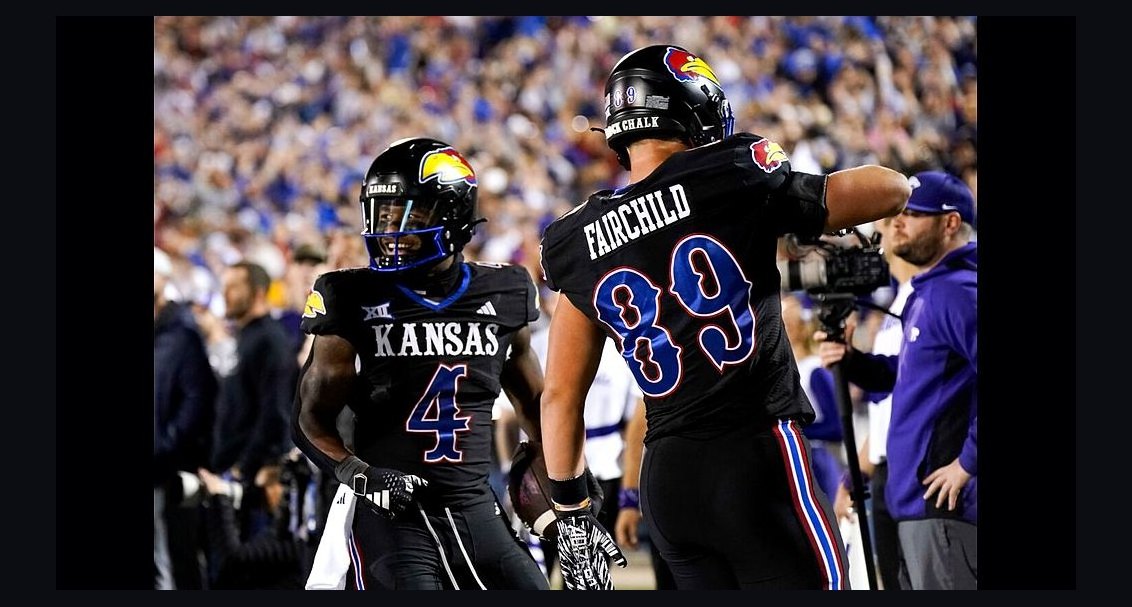 nilHow much do Kansas football players earn from NIL in 2027?
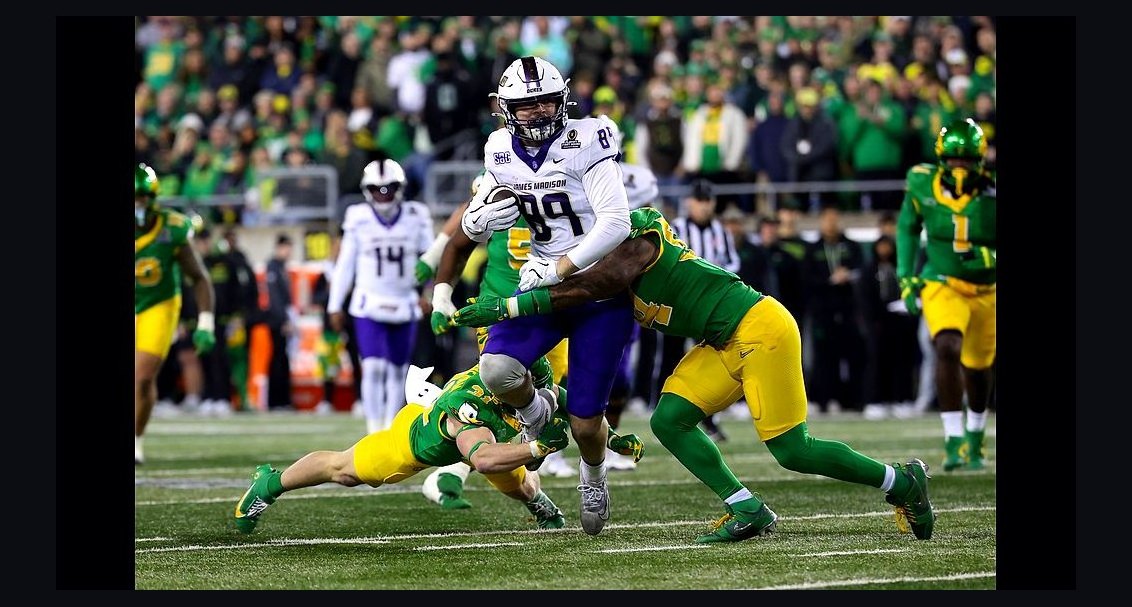 nilHow much do James Madison football players earn from NIL in 2027?
 nilHow much do Wofford football players earn from NIL in 2027?
 nilHow much do West Virginia football players earn from NIL in 2027?
 nilHow much do North Dakota football players earn from NIL in 2027?
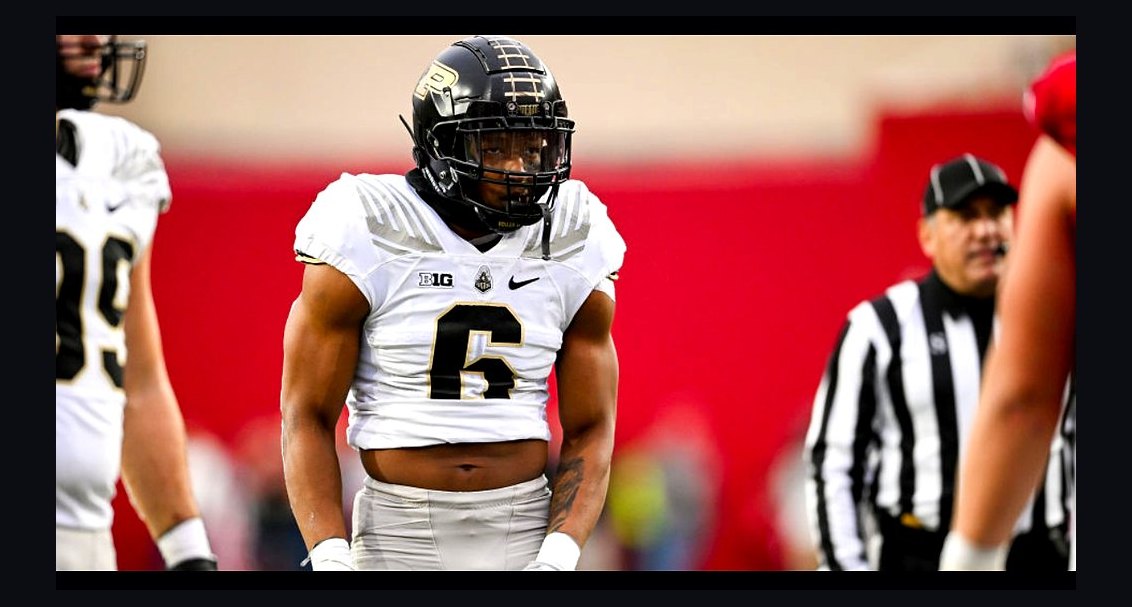 nilHow much do Purdue football players earn from NIL in 2027?
 nilHow much do Howard football players earn from NIL in 2027?
 nilWhat are Cincinnati Bearcats football's 2027 NIL needs and strategy?
 nilHow much do Utah State football players earn from NIL in 2027?
 nilHow much do Miami football players earn from NIL in 2027?