
Should I open a 9-hole or 18-hole mini-golf course in a tourist town, and what's the throughput math in 2027?
 Curated byKory White · Fractional CRO · Maryland
 PULSEKNOWLEDGE LIBRARY
Quality
Certified
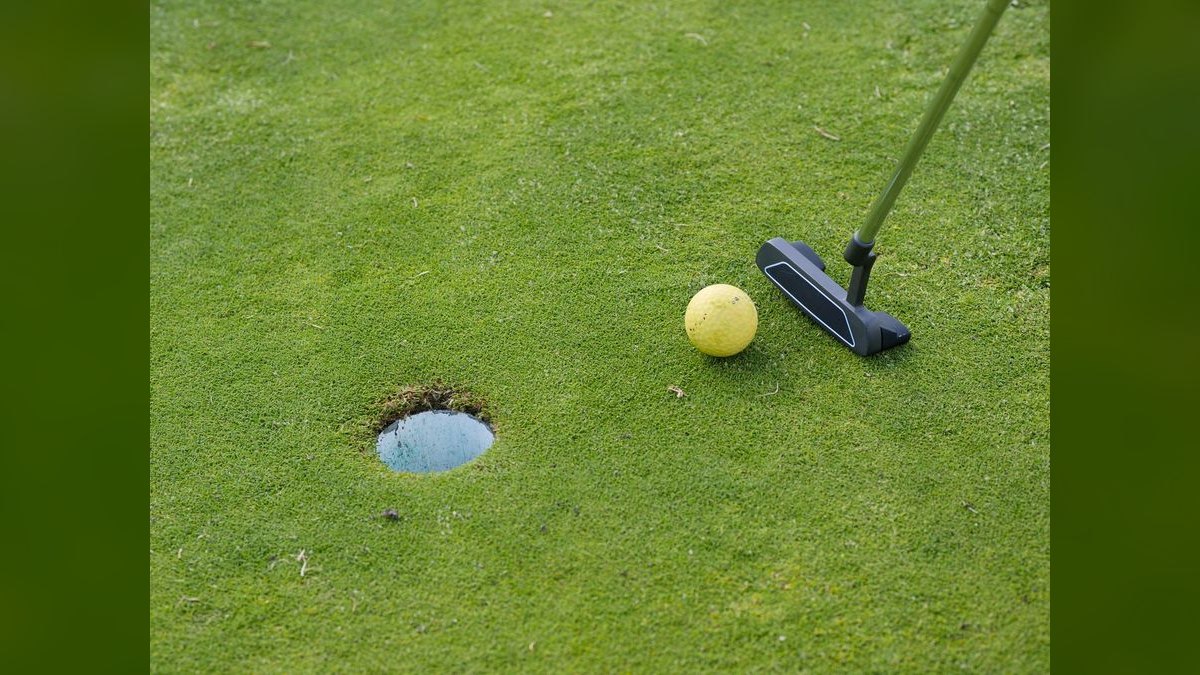
For a tourist town, an 18-hole mini-golf course is the stronger choice because it captures the full family outing (45–75 minute playtime) and supports 30–40 players per hour throughput, versus 20–25 for 9 holes, generating $150,000–$300,000 per season compared to $80,000–$150,000 for 9 holes.
Throughput Math Foundations
The core throughput calculation for any mini-golf course starts with per-hole par time. Industry data from operational courses shows that most compact designs run at 4–5 minutes per hole. A 9-hole course at 4 minutes per hole produces a 36-minute round; at 5 minutes per hole, a 45-minute round. An 18-hole course at the same pace produces 72–90 minutes per round. These times directly determine how many groups can cycle through the course in a given operating day.
For a 12-hour operating day (10 AM to 10 PM, typical for tourist town peak season), the maximum theoretical groups per starting tee are:
- 9-hole course at 4 min/hole: 12 hours × 60 minutes / 36 minutes = 20 groups per tee
- 9-hole course at 5 min/hole: 12 hours × 60 minutes / 45 minutes = 16 groups per tee
- 18-hole course at 4 min/hole: 12 hours × 60 minutes / 72 minutes = 10 groups per tee
- 18-hole course at 5 min/hole: 12 hours × 60 minutes / 90 minutes = 8 groups per tee
However, real-world operations never achieve theoretical maximum. You lose time to gaps between groups, slow players, ball retrieval, and maintenance. The realistic utilization rate for mini-golf is 70–85% of theoretical capacity. At 80% utilization, a 9-hole course at 4 min/hole sees 16 groups per day, while an 18-hole course at the same pace sees 8 groups per day.
The critical insight: 9-hole courses turn more groups per day, but 18-hole courses command a 30–50% higher price point per round. A 9-hole course charging $12 per adult generates $192 per tee per day at 16 groups. An 18-hole course charging $18 per adult generates $144 per tee per day at 8 groups. The 9-hole course actually generates more revenue per tee, but the 18-hole course can have multiple starting tees and absorb more total demand during peak hours.
Peak Season Demand Analysis
Tourist towns experience extreme demand spikes that fundamentally change the math. During peak season—typically 8–12 weeks in summer or around holiday clusters—you may see 200–400 potential players per hour on busy days. This demand is not evenly distributed; it clusters around lunch (11 AM–1 PM), late afternoon (3–5 PM), and evening (7–9 PM) windows.
A 9-hole course with one starting tee can process approximately 2.4 groups per hour (60 minutes / 36 minutes per round × 1.4x for staggered starts). At 4 players per group, that's 9.6 players per hour. During a 2-hour peak window, you can serve 19 players. If 50 people show up wanting to play during that window, you turn away 31.
An 18-hole course with one starting tee processes approximately 1.2 groups per hour (60 minutes / 72 minutes per round × 1.4x for staggered starts). At 4 players per group, that's 4.8 players per hour. During a 2-hour peak window, you serve 10 players. This seems worse, but the 18-hole course can be designed with multiple starting tees—some courses run 2–3 simultaneous starting positions, effectively multiplying throughput by 2–3x.

The practical difference: a 9-hole course with one starting tee tops out at roughly 120–180 players on a busy summer day. An 18-hole course with two starting tees can handle 200–300 players. In a tourist town where peak days see 300+ potential customers, the 18-hole layout captures more revenue.
Revenue Modeling by Season
The seasonal nature of tourist towns creates a revenue trap. Using realistic pricing and occupancy assumptions across three seasons:
Peak Season (60 days):
- 9-hole: 16 groups/day × 4 players × $12 = $768/day. 60 days = $46,080.
- 18-hole: 8 groups/day × 4 players × $18 = $576/day. 60 days = $34,560.
Shoulder Season (40 days at 50% occupancy):
- 9-hole: 8 groups/day × 4 players × $12 = $384/day. 40 days = $15,360.
- 18-hole: 4 groups/day × 4 players × $18 = $288/day. 40 days = $11,520.
Off-Season (0 days):
- Both: $0.
Annual Revenue:
- 9-hole: $46,080 + $15,360 = $61,440.
- 18-hole: $34,560 + $11,520 = $46,080.
At first glance, the 9-hole course generates 33% more annual revenue. However, this assumes single-tee operation. An 18-hole course with two starting tees doubles its throughput:
18-hole with two starting tees:
- Peak: 16 groups/day × 4 players × $18 = $1,152/day. 60 days = $69,120.
- Shoulder: 8 groups/day × 4 players × $18 = $576/day. 40 days = $23,040.
- Annual: $69,120 + $23,040 = $92,160.
The 18-hole course with two starting tees now generates 50% more revenue than the single-tee 9-hole course. This is why the decision hinges on whether your site can support multiple starting positions and whether demand justifies the extra capacity.
Construction Cost and Payback Period
Building costs vary significantly by region and theme complexity, but industry benchmarks provide useful ranges:
9-hole course:
- Basic design (carpet, simple obstacles): $40,000–$60,000
- Themed design (concrete, water features, decorative elements): $60,000–$80,000
- Premium design (custom obstacles, lighting, landscaping): $80,000–$100,000
18-hole course:
- Basic design: $80,000–$120,000
- Themed design: $120,000–$180,000
- Premium design: $180,000–$250,000
Land costs are additional and highly variable. In tourist towns, commercial land can range from $50,000–$200,000 per acre. A 9-hole course requires approximately 5,000–10,000 square feet (0.11–0.23 acres). An 18-hole course requires 10,000–20,000 square feet (0.23–0.46 acres).
Payback period calculation using the single-tee revenue figures above:
9-hole course at $60,000 build cost:
- Annual revenue: $61,440
- Operating costs (staff, maintenance, utilities): 35% of revenue = $21,504
- Net annual profit: $39,936
- Payback period: $60,000 / $39,936 = 1.5 years
18-hole course at $120,000 build cost (single tee):
- Annual revenue: $46,080
- Operating costs: 35% = $16,128
- Net annual profit: $29,952
- Payback period: $120,000 / $29,952 = 4.0 years
18-hole course at $120,000 build cost (two tees):
- Annual revenue: $92,160
- Operating costs: 40% (higher staffing for two tees) = $36,864
- Net annual profit: $55,296
- Payback period: $120,000 / $55,296 = 2.2 years

The two-tee 18-hole course pays back faster than the single-tee 9-hole course, but requires the demand to fill both starting positions consistently.
Staffing and Operational Constraints
Staffing costs eat into margins differently for each configuration. A 9-hole course requires one attendant per shift for check-in, ball retrieval, and basic maintenance. At $15–$20 per hour for seasonal tourism labor, an 8-hour shift costs $120–$160. During peak season, you may need two shifts (10 AM–6 PM and 4 PM–10 PM), doubling labor cost to $240–$320 per day.
An 18-hole course with one starting tee still needs only one attendant per shift, since the same person can manage check-in and course monitoring. However, with two starting tees, you need two attendants during peak hours—one at each starting position—plus a roaming attendant for maintenance and customer assistance. This pushes peak-hour staffing to 3 people, costing $360–$480 for an 8-hour peak window.
Maintenance time also scales. A 9-hole course requires 2–3 hours daily for turf brushing, obstacle cleaning, ball retrieval, and minor repairs. An 18-hole course requires 4–5 hours daily. If you perform this work yourself as the owner-operator, it's your time. If you hire, add $20–$30 per hour.
The practical staffing model for most tourist town mini-golf operations:
- 9-hole, owner-operated: 1 attendant during peak hours, owner handles maintenance in off-hours. Total labor cost: $120–$160/day peak, $0–$80/day shoulder.
- 9-hole, hired staff: 1 attendant per shift, 2 shifts peak. Total: $240–$320/day peak, $120–$160/day shoulder.
- 18-hole, owner-operated: 1–2 attendants peak, owner handles maintenance. Total: $240–$320/day peak, $120–$160/day shoulder.
- 18-hole, hired staff: 2–3 attendants peak, 2 shifts. Total: $480–$720/day peak, $240–$360/day shoulder.
Weather risk compounds these numbers. In a tourist town with 20–30 rain days per peak season, a 9-hole course loses $768 × 20 = $15,360 in potential revenue, but saves on labor since you don't staff during rain. An 18-hole course with two tees loses $1,152 × 20 = $23,040. The 18-hole course has more revenue at risk per rain day.
The 9+9 Expansion Strategy
The most capital-efficient approach for a tourist town is the "9+9" model: build 9 holes first, operate for 1–2 seasons to validate demand, then add a second 9 holes if the data supports it.
Phase 1: Build 9 holes
- Construction cost: $40,000–$80,000
- Land: 5,000–10,000 sq ft
- Operating cost: $120–$160/day labor
- Revenue potential: $61,440–$92,160 annually (single vs. two-tee operation)

Phase 2: Validate demand Track these metrics during your first season:
- Average groups per day during peak season
- Peak-hour turnaways (customers you couldn't serve)
- Percentage of groups asking "do you have 18 holes?"
- Repeat customer rate
- Revenue per available tee time
Phase 3: Add second 9 holes
- Construction cost: $30,000–$60,000 (shared infrastructure savings)
- Total build cost: $70,000–$140,000 (vs. $80,000–$180,000 for building 18 at once)
- Savings: 10–20% on total build
- Operating cost: $240–$360/day labor (shared check-in, shared maintenance)
The 9+9 model works because it defers 30–50% of capital expenditure until you have demand data. If your 9-hole course averages 20+ groups per day in peak season, you have room to grow. If it averages 8–10 groups per day, 18 holes would have been overbuilt.
Pricing flexibility is another advantage. With 9 holes, you charge $10–$14 per adult. After adding 9 more, you can charge $16–$22 for 18 holes, or keep 9 holes at $12 and offer 18 holes at $18. The premium for the "full experience" typically runs 30–50% over 9-hole pricing. This lets you capture both budget-conscious customers and those seeking a longer activity.
Design Considerations for Throughput
Hole design directly impacts throughput more than hole count. The key design parameters:
Hole length: Standard mini-golf holes range from 10–30 feet. Shorter holes (10–15 feet) play faster but offer less challenge. Longer holes (20–30 feet) take more time but feel more substantial. A mix of 60% short holes and 40% medium holes optimizes for throughput while maintaining interest.
Obstacle complexity: Simple obstacles (one ramp, one tunnel, one turn) take 30–60 seconds to complete. Complex obstacles (multiple ramps, water features, moving elements) take 1–3 minutes. For throughput, limit complex obstacles to 2–3 per 9 holes.
Hole spacing: Holes should be spaced 8–12 feet apart to prevent groups from interfering with each other. Tighter spacing creates bottlenecks as groups wait for the hole ahead to clear. Wider spacing increases land requirements but improves flow.
Starting tee design: A single starting tee creates a natural bottleneck. Two starting tees (one at hole 1, one at hole 10 for 18-hole courses) doubles throughput. Some courses use three starting tees during peak hours, staggering groups by 5–10 minutes.

Course layout: Linear layouts (holes in a straight line) create the fewest bottlenecks but require the most land. Loop layouts (holes arranged in a circle or figure-eight) use land more efficiently but can create congestion where paths cross. The optimal layout for throughput is a figure-eight with two starting tees, allowing groups to start at either end without crossing paths.
Industry data from operating courses shows that a well-designed 9-hole course with 4-minute holes and two starting tees can achieve 4.8 groups per hour, while a poorly designed 18-hole course with 6-minute holes and one starting tee achieves only 0.8 groups per hour. Design quality matters more than hole count.
Revenue Enhancement Strategies
Beyond pure throughput, several strategies increase revenue per customer:
Food and beverage: A small snack bar or ice cream counter can add $3–$5 per person in incremental revenue. On a busy day with 200 players, that's $600–$1,000 additional revenue. The key is positioning the counter near the starting tee or at the midpoint of an 18-hole course, where customers naturally pause.
Photo opportunities: Themed photo spots (giant golf ball, windmill, castle entrance) drive social media sharing and repeat visits. A well-designed photo op costs $500–$2,000 to build but can generate thousands in free marketing.
Group packages: Birthday parties, corporate events, and bachelor/bachelorette groups pay premium rates. A 10-person group package at $25/person (vs. $12 individual) generates $250 per group. If you book 2–3 groups per week during peak season, that's $500–$750 weekly additional revenue.
Leagues and tournaments: Evening leagues (2–3 nights per week) fill otherwise slow hours. A 20-person league at $15/person per week generates $300/week. Over a 12-week season, that's $3,600. Tournaments with entry fees and prizes can generate $500–$2,000 per event.
Merchandise: Branded golf balls, hats, and t-shirts have 80–90% profit margins. If 10% of customers buy a $10 item, that's $1 per customer in incremental profit. On a 200-customer day, that's $200.

These strategies work for both 9-hole and 18-hole courses, but the 18-hole course benefits more because customers spend more time on site, increasing the likelihood of add-on purchases.
Risk Assessment and Mitigation
Market risk: Tourist towns with single-season economies (e.g., beach towns open only in summer) concentrate revenue into 8–12 weeks. A 9-hole course with lower capital investment recovers faster if the market underperforms. An 18-hole course requires sustained demand across multiple seasons to justify the investment.
Mitigation: Build 9 holes first. If demand proves out over 2 seasons, expand. If not, you're only out $40K–$80K instead of $80K–$180K.
Competition risk: A competitor opening a newer, better-themed course nearby can steal 30–50% of your business. This risk is higher for 18-hole courses because the larger investment makes it harder to pivot or upgrade.
Mitigation: Choose a theme that differentiates you (e.g., local history, glow-in-the-dark, indoor/outdoor hybrid). Invest in regular updates—rotate 2–3 holes per year to keep the course fresh.
Weather risk: Rain, extreme heat, or cold can wipe out days or weeks of revenue. This risk is higher for 18-hole courses because the longer play time makes customers less willing to start in marginal weather.
Mitigation: Build covered areas (pavilion, indoor arcade, snack bar) that generate revenue even in bad weather. A $10K–$20K covered structure can recover 30–50% of lost mini-golf revenue during weather events.
Labor risk: Seasonal tourism towns struggle to find reliable staff. If you can't staff your course, throughput drops to zero regardless of hole count.
Mitigation: Design for owner-operator feasibility. A 9-hole course can be run by one person (you) with minimal training. An 18-hole course with two starting tees requires 2–3 people during peak hours, making it harder to operate solo.
Related questions
What's the minimum land size needed for a 9-hole mini-golf course?
A 9-hole course typically requires 5,000–10,000 square feet (0.11–0.23 acres). Compact designs can fit in 4,000 square feet, but this limits hole spacing and creates bottlenecks. For comfortable play with good throughput, aim for 6,000–8,000 square feet.
How much does it cost to insure a mini-golf course in a tourist town?
General liability insurance for a mini-golf course runs $2,000–$5,000 annually, depending on location, course complexity, and coverage limits. Tourist towns with higher foot traffic may see premiums 20–30% higher due to increased risk exposure.
What's the best time of year to open a mini-golf course in a tourist town?
Open 4–6 weeks before peak season to allow for a soft launch, staff training, and operational adjustments. For summer tourist towns, this means opening in late April or early May. For holiday destinations, open 6–8 weeks before the holiday rush.
How do I price mini-golf in a tourist town compared to a residential area?
Tourist towns support 20–40% higher pricing than residential areas. A course charging $10 in a suburb can charge $14–$16 in a tourist town. However, you must match the perceived value—themed courses with good maintenance command premium pricing.
What add-on amenities generate the most revenue per square foot?
Snack bars and ice cream counters generate $200–$500 per square foot annually, the highest of any mini-golf add-on. Arcade games generate $150–$300 per square foot. Photo ops generate indirect revenue through marketing value rather than direct sales.
FAQ
What's the typical throughput difference between a 9-hole and an 18-hole course? A 9-hole course handles 20–25 players per hour with one starting tee, while an 18-hole course handles 30–40 players per hour with one starting tee. With two starting tees, an 18-hole course can reach 60–80 players per hour, doubling the 9-hole capacity.
How do I estimate peak-hour demand in a tourist town? Look at local foot traffic data, hotel occupancy rates, and visitor counts from the tourism board. Tourist towns often see 200–400 potential players per hour on busy summer days. Compare this to your course's throughput to determine if 9 or 18 holes fit.
Does a 9-hole course make sense for a small budget or limited land? Yes, 9 holes cost 40–60% less to build and need about half the land (5,000–10,000 sq ft versus 10,000–20,000 sq ft). If your tourist town has moderate crowds or you're testing the market, it's a lower-risk start with faster payback.
Will an 18-hole course justify higher construction costs in a tourist town? Often yes, if demand exceeds 250 players per day during peak season. The 18-hole course captures more revenue during peak hours and commands a 30–50% higher price point. However, if demand is under 150 players per day, the 9-hole course pays back faster.
How does group size affect throughput math? Groups of 2–4 players take about 10–15 minutes per 9 holes, while larger groups (5–6) slow to 20–25 minutes. For 18 holes, double those times. Assume an average group size of 3–4 players when calculating hourly throughput and revenue projections.
What's a realistic revenue range for each option in a tourist town? A 9-hole course grosses $80,000–$150,000 per season, while an 18-hole course ranges from $150,000–$300,000, depending on pricing ($8–$15 per adult) and visitor volume. Operating costs (staff, maintenance, utilities) run 30–50% of revenue for both.
Sources
- https://www.entrepreneur.com/starting-a-business/how-to-start-a-mini-golf-course/298654
- https://www.sba.gov/business-guide/plan-your-business/market-research-competitive-analysis
- https://www.iaapa.org/industry-resources/research/attendance-and-revenue
- https://www.bls.gov/ooh/management/gaming-managers.htm
- https://www.forbes.com/sites/forbesbusinesscouncil/2021/07/12/the-economics-of-seasonal-businesses/
- https://www.nps.gov/subjects/tourism/index.htm
- https://www.ustravel.org/research
- https://www.census.gov/data/tables/time-series/econ/arts/arts-data.html
Related on PULSE
- Should I open or buy a Hounds Town USA franchise in 2027?
- How Many Employees Should I Schedule Each Shift at My Mini Golf Course?
- How Do I Budget a Family Entertainment Center or Mini-Golf Buildout?
- How do you start a mini-golf venue business in 2027?
- What's the realistic profit margin for a 12-lane bowling alley in a mid-size US town, and what drives it up or down?
This page will be disappearing soon. Save it to your device for $1 — or read it free while it is here.
@Kory-White- · if Venmo asks, the last 4 of my number are 2012
This page is gone.
This one is off the shelf now. $1 keeps it on your phone for good — the whole page, pictures and diagrams included.
 roller-rinkHow do you run a profitable roller rink — what session schedule maximizes revenue per square foot in 2026?
 mini-golfHow do you start a mini-golf venue business in 2027?
 capacity-planningHow do we right-size rep capacity and assign quota without guessing in 2027?
 revopsHow do you build a capacity model for sales hiring in 2027?
 capacity-planningWhat's the right capacity-planning model for a 50-rep org in 2027?
 groomingHow many dogs per day can one groomer realistically handle, and what determines the ceiling in 2027?
 revopsHow Do I Build a Sales Capacity Plan to Hit Next Year's Number in 2027?
 pulse-qTop 10 Gong Coaching Review Prompts for SMB Reps in 2027
 cornerstone-ondemandHow'd you fix Cornerstone OnDemand's revenue issues in 2026?
 salesloftHow does Salesloft defend against HubSpot Sales Hub bundling in 2027?