


What is an agentic CRM and what does it mean for RevOps in 2027?
Quality
Certified

An agentic CRM is a system of action rather than a system of record: embedded AI agents autonomously capture activity, update records, draft follow-ups, flag at-risk deals, and run multi-step workflows inside defined guardrails. For RevOps in 2027, it does mean a role shift — from manual data janitor to orchestrator and governor of a supervised agent fleet, where data quality, autonomy policy, and measurement become the core deliverables.
The two options compared: traditional CRM versus agentic CRM
The decision facing most revenue teams in 2027 is not whether to adopt AI features — nearly every platform ships them — but whether to move from a human-maintained system of record to an agent-operated system of action. These are genuinely different operating models, and they fail in different ways.
A traditional CRM assumes a human is the source of truth. A rep places a call, then logs it. A rep runs a discovery meeting, then updates the stage. A rep remembers to change the close date after the buyer mentions a budget cycle slip. The CRM is passive infrastructure: it stores what it is told, and its accuracy is a direct function of rep discipline. The well-documented consequence is that pipeline data decays continuously. Deals sit in stages they left weeks ago, contacts carry titles people no longer hold, and forecasts are built on a subset of reality. RevOps historically absorbs this cost, spending a large share of its capacity on hygiene, deduplication, field standardization, and chasing reps to close out records.

An agentic CRM inverts the direction of data flow. Agents perceive signals — meeting transcripts, email threads, calendar events, call recordings, product usage telemetry, external enrichment sources — and then decide and act. Concretely, that looks like an agent transcribing a discovery call, extracting the buyer's stated timeline and budget authority, updating the opportunity fields, drafting a recap email for rep approval, and scheduling the next touch. It looks like an agent noticing that an opportunity has had no inbound activity for 14 days, checking whether the champion changed roles, and raising a re-engagement task with suggested language. It looks like an agent executing a routing rule end to end when a lead matches the enterprise ICP, without a human touching the record.
The critical distinction from earlier "AI in CRM" waves is agency. A suggestion engine in a sidebar waits to be clicked. An agent takes the action, ideally with a human checkpoint placed where the risk justifies it. That single difference is what makes governance — not capability — the central RevOps problem.
The trade-offs are real in both directions. Traditional CRMs are predictable, auditable by default because a human did every action, and cheap to reason about. Their weakness is that they are only as good as the least disciplined rep, and they scale their inaccuracy with headcount. Agentic CRMs are faster, self-maintaining, and capable of operating on far more signal than any human team could process. Their weakness is that they multiply whatever foundation they are given. An agent acting on a stale job title, a wrong ICP definition, or a broken routing rule does the wrong thing at machine speed across thousands of records before anyone notices.

For RevOps, the practical framing is this: the traditional model asks "how do we get reps to update the CRM?" The agentic model asks "how do we make sure the agents capturing and acting are accurate, bounded, and measured?" That is a better problem, but it is a different job with a different skillset.
How to decide between them
The decision is not binary and it is not permanent. Most organizations in 2027 run a hybrid for at least two to four quarters, granting autonomy incrementally as evidence accumulates. The useful way to frame it is a graduated autonomy ladder: start agents in suggest-only mode, promote them to act-with-approval, then to fully autonomous on reversible low-stakes tasks, and only then to autonomous on customer-facing or forecast-affecting actions.

Three decision criteria matter most. First, reversibility: an agent logging a meeting is trivially reversible; an agent sending a pricing email to a customer is not. Second, blast radius: an agent updating one record is contained; an agent triggering a sequence across a 4,000-contact segment is not. Third, data confidence: if the underlying field the agent depends on has a known error rate, autonomy on that action should wait. A practical rule many RevOps teams adopt is that no action touching a customer directly or a forecast category goes autonomous until the agent has demonstrated sustained accuracy on that specific action type, measured over a meaningful sample, not a demo.
The failure mode to avoid is the all-or-nothing rollout. Teams that switch on every agent capability at once lose trust the first time an agent sends an embarrassing email or mis-stages a large deal, and recovery is slow because the organization stops believing the system. Teams that promote capabilities one at a time, with published accuracy numbers, build the internal credibility that lets them expand autonomy faster later.
Concrete numbers behind each option
Numbers here should be treated as planning ranges rather than guarantees, because outcomes depend heavily on data quality, process design, and how much of the workflow is genuinely automatable. Still, the ranges are useful for building a business case and for setting expectations with leadership.
Time returned to sellers. Auto-capture of activity replaces manual logging, and the reclaimed time typically lands in the range of 5 to 12 hours per rep per week. The low end reflects teams that only automate logging; the high end reflects teams that also automate follow-up drafting, meeting prep, and CRM hygiene tasks. For a 40-rep team, even the low end is roughly 200 hours per week of recovered capacity — meaningful, but only if that time is redirected deliberately rather than absorbed by more meetings.

Data accuracy. The honest baseline for manually maintained CRM data is poor. Field completeness on non-required fields is often well under half, and contact data decays continuously as people change roles. Agentic capture does not produce perfect data, but teams that audit it typically target above 90% of auto-captured records passing a random audit without correction. That target is achievable only with confidence thresholds — for example, accepting an AI-generated field update only above a defined confidence level, and routing lower-confidence updates to a human review queue.
Agent error reduction from upfront data work. A commonly cited planning benchmark is that teams investing two to four weeks in deduplication, field standardization, and taxonomy definition before enabling autonomous actions see roughly 30 to 50% fewer agent errors in the first quarter. Teams that skip that work face pipeline contamination that takes months to unwind, because bad agent output gets propagated into sequences, forecasts, and downstream reporting.
Cost per automated action. Agentic task execution in 2027 typically runs in the range of a few cents per automated task, with variation driven by vendor pricing model and the size of the model tier used. That number matters because it makes some automations obviously worthwhile and others marginal. An agent that drafts a follow-up email for a $50,000 opportunity is trivially cost-justified. An agent that runs an expensive multi-step enrichment on a long-tail contact who will never convert is not. RevOps should instrument cost per action and cost per outcome, not just cost per seat.

Escalation rate. This is the most diagnostic metric and the one most teams underuse. Escalation rate is how often an agent hands off to a human because it cannot resolve an ambiguity. Above roughly 20% suggests poor agent configuration or dirty data — the agent is constantly hitting situations it was not designed for. Below roughly 5% suggests the opposite risk: the agent may be overconfident, resolving situations it should have escalated, and quietly making judgment calls it is not equipped to make. The healthy band is narrow and worth tuning toward deliberately.
Pipeline velocity. Agent-triggered follow-ups and proactive risk flagging tend to compress stage-to-stage time. Teams commonly report deals moving from discovery to demo 15 to 25% faster when follow-up is agent-initiated rather than dependent on rep availability. The caveat is that velocity gains are only good if win rates hold; faster movement through stages with flat or falling win rates usually means deals are being pushed, not progressed.
Rollout timeline. A phased transition from traditional to agentic operation typically runs three to six months: data cleanup and guardrail definition first, then suggest-only deployment, then graduated autonomy. Compressed rollouts that skip the data phase consistently produce the error spikes described above.
Implementation details and sequencing

Sequencing is where most agentic CRM programs succeed or fail. The temptation is to start with the most impressive capability — autonomous outreach, autonomous forecasting — because that is what vendors demo. The correct sequence starts at the foundation and works outward, because every later step depends on the earlier ones holding.
Phase one: data foundation. Deduplicate records, standardize field formats and taxonomies, define the ICP precisely enough that an agent can apply it without interpretation, and document routing rules. Establish confidence thresholds for auto-captured data. This phase produces no visible agent behavior, which makes it politically difficult, but skipping it is the single most common cause of program failure.
Phase two: visibility and suggest-only. Turn on capture and suggestion agents — auto-logging, meeting summarization, next-step recommendations — with no autonomous action. The purpose is twofold: it gives the organization immediate time savings, and it generates the accuracy data needed to justify the next phase. Instrument override rate from day one: every time a human rejects or corrects an agent suggestion, that is a training signal and a data quality signal.
Phase three: bounded autonomy on reversible actions. Promote agents to act autonomously on low-stakes, reversible tasks: updating activity records, enriching account fields, creating tasks, advancing stages where the evidence is unambiguous. Keep approval requirements on anything customer-facing or forecast-affecting.
Phase four: governed autonomy on higher-stakes actions. Only after sustained accuracy on the specific action type, promote agents to send follow-ups, trigger sequences within defined segments, and propose forecast changes. Maintain audit trails, rollback capability, and daily review of agent action logs for drift.

Governance artifacts to build alongside the phases. An autonomy matrix that names every agent action and its tier. An escalation path for each agent, specifying what it does when uncertain. An audit log retaining every agent action with timestamp, triggering signal, and outcome. A rollback procedure for customer-facing actions. A monthly agent health dashboard covering action volume, accuracy, override rate, escalation rate, cost per action, and pipeline impact. Without these, autonomy expands faster than the organization's ability to detect when it goes wrong.
Process redesign, not process acceleration. The largest gains come from redesigning workflows on the assumption that agents handle the busywork. Reps spend reclaimed time on selling and relationships. Customer success managers focus on strategic conversations while agents handle health-score updates and routine check-ins. RevOps automates the routing, enrichment, and hygiene that previously consumed analyst hours. The human-agent handoff — when an agent escalates to a person and when a person hands work back to an agent — should be designed explicitly, not left to emerge.
Skillset shift. The RevOps role moves from SQL and spreadsheet cleanup toward agent governance, workflow logic, prompt and policy design, and agent behavior testing. Cross-agent coordination becomes a real concern: a prospecting agent should not schedule a demo that conflicts with a renewal agent's outreach, and a support agent's sentiment flag should not silently override a sales agent's scoring without a defined precedence rule. That orchestration layer is where teams differentiate.

Failure modes to design against. Acting on bad data, which amplifies a weak foundation. No governance, which erodes trust permanently after the first visible mistake. Automating a broken process, which makes the bad workflow faster rather than better. No measurement, which loses budget and credibility when leadership asks what the agents delivered. And over-automation, which removes humans from high-stakes judgment before the system has earned that trust. The common thread is that an agentic CRM is a force multiplier: it multiplies whatever foundation, governance, and process you give it, good or bad.
Related questions
Does an agentic CRM replace RevOps?
No. It shifts the role from manual data entry and cleanup toward governing agent behavior, defining guardrails, and ensuring agents act on accurate data. The demand for strategic oversight and orchestration increases rather than decreases, because someone must own the autonomy policy and the measurement.
What makes a CRM agentic rather than just AI-enabled?
Agency. Traditional AI features suggest or generate; you trigger them. An agentic CRM autonomously completes tasks — updating records, sending follow-ups, flagging risks — within defined rules, ideally with human checkpoints placed where risk justifies them.
How do agentic CRMs handle privacy and compliance?
Most major platforms embed compliance controls directly into agent workflows, restricting what data agents can access or share by role and region. The configuration burden falls on RevOps: agents only follow the boundaries you set, and unset boundaries are effectively open.
What happens when an agent makes a mistake?

Platforms provide audit trails and rollback capability, but mistakes still occur when agents act on stale or incorrect data. Best practice is to run critical actions in suggest-only mode first, then grant autonomy incrementally as accuracy is validated on that specific action type.
How long does a transition take?
Most organizations plan a three- to six-month phased rollout: data cleanup and guardrail definition, then suggest-only deployment, then graduated autonomy. Rushed deployments without clean data and clear policy produce errors that erode trust in the system.
FAQ
What exactly is an agentic CRM in plain terms? It is a CRM where AI agents do the work rather than just storing it. Instead of waiting for a rep to log a call or update a stage, agents capture activity from email, calendar, and calls, then act — updating records, drafting follow-ups, flagging at-risk deals, and running multi-step workflows within boundaries you define.
What does agentic CRM mean for RevOps day to day? It means less time on hygiene and more time on governance. RevOps defines which actions agents can take autonomously, which need approval, and which stay human-only. It instruments accuracy, override rate, escalation rate, and cost per action, and publishes a monthly agent health view to leadership.

Will agents fix our bad CRM data? No. Agents act on the data they are given, faster and at greater scale than humans would. A stale job title can trigger a sequence of wrong outreach within hours. Data cleanup must happen before autonomy, not after.
How do we know when to grant an agent more autonomy? Promote an agent when it has demonstrated sustained accuracy on that specific action type over a meaningful sample, with a low override rate. Reversibility and blast radius set the bar: reversible single-record actions can go autonomous early; customer-facing and forecast-affecting actions need much more evidence.
Which metrics should we track first? Start with override rate, accuracy on a random audit, escalation rate, and hours saved per rep per week. Add cost per automated action and pipeline velocity once the basics are stable. Escalation rate is the most diagnostic: too high means poor configuration, too low means the agent may be overconfident.
What is the biggest mistake teams make? Skipping the data foundation and switching on full autonomy at once. The first visible agent error — a wrong email, a mis-staged deal — costs credibility that takes quarters to rebuild. Graduated autonomy with published accuracy numbers expands faster in the long run than a big-bang launch.
Sources
- https://www.salesforce.com/agentforce/
- https://www.hubspot.com/products/artificial-intelligence
- https://www.microsoft.com/en-us/dynamics-365
- https://www.gartner.com/en/sales
- https://www.forrester.com/research/
- https://www.mckinsey.com/capabilities/quantumblack/our-insights
- https://hbr.org/topic/subject/ai-and-machine-learning
- https://www.nist.gov/itl/ai-risk-management-framework
Related on PULSE
- What is agentic commerce and how should RevOps sell to AI buyers in 2027?
- What is Tofu and why is it a hot RevOps agentic demand generation platform for 2027?
- What is Outreach and why is it a hot RevOps agentic sales-execution platform for 2027?
- How is agentic AI changing the GTM stack and RevOps in 2026?
- How big is the agentic AI market and what is the adoption reality in 2027?
- How do you secure agentic browser AI in 2027?
This page will be disappearing soon. Save it to your device for $1 — or read it free while it is here.
@Kory-White- · if Venmo asks, the last 4 of my number are 2012
This page is gone.
This one is off the shelf now. $1 keeps it on your phone for good — the whole page, pictures and diagrams included.
 revopsWhat's the difference between RevOps and Sales Ops in a 2027 B2B SaaS company?
 revopsWhat is allbound and how do you run an allbound GTM motion in 2027?
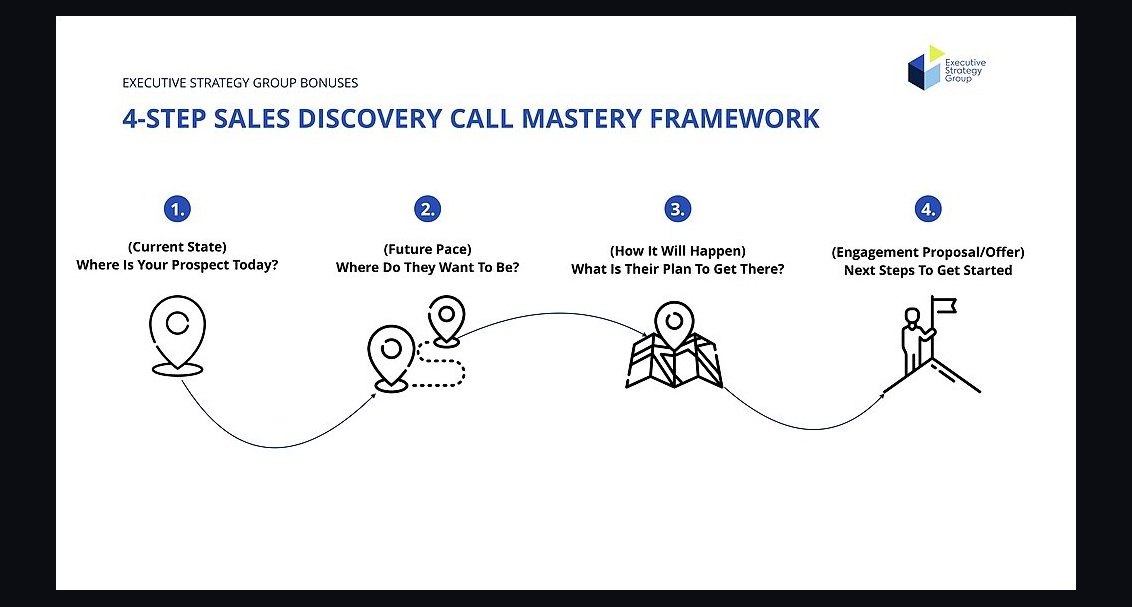 revopsWhat's the best discovery call framework for complex B2B sales in 2027?
 revopsWhat's the right cadence and structure for sales 1-on-1s in a remote-first 2027 team?
 revopsHow do you handle deal slippage at quarter-end without sandbagging the forecast in 2027?
 revopsHow does AI roleplay change sales training and rep ramp in 2027?
 revopsWhat's the role of customer success in revenue expansion for 2027 B2B SaaS?
 revopsHow do you build a sales hiring scorecard that predicts rep success in 2027?
 revopsHow do you forecast revenue in a usage-based pricing model in 2027?
 revopsHow do you run a multi-threaded enterprise deal across 8 or more stakeholders in 2027?